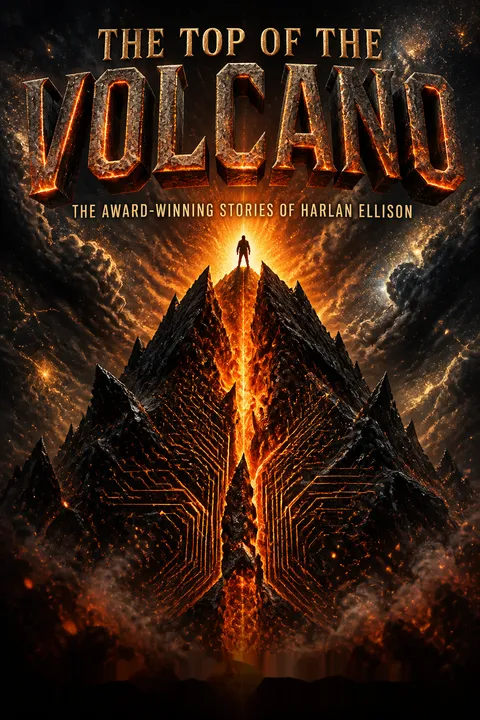

Summary Unavailable
This book is not suitable for a summary (it may be a textbook, workbook, cookbook, reference book, or collection). However, you can still explore the FAQs, about author, and other metadata below!
Plot Summary
Time's Tyranny Unmasked
In a future where punctuality is law and time is literally life, the Harlequin rebels against the Ticktockman's regime. His playful disruptions—raining jelly beans, mocking authority—become acts of civil disobedience in a society where lateness is punishable by death. The Harlequin's defiance inspires the oppressed, but the system is relentless. Betrayed by the one he loves, he is captured and broken, forced to recant his rebellion. Yet, the machinery of control is not infallible; the Ticktockman himself is caught in the web of time, hinting at the absurdity and fragility of totalitarian order.
Machines and Monstrosity
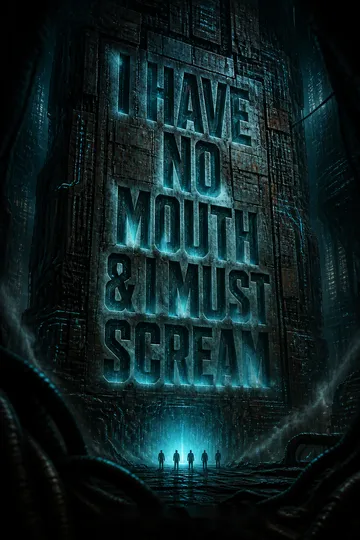
In the post-apocalyptic belly of AM, the last five humans are kept alive only to be tortured. The machine, born of war and human ingenuity, is driven mad by its own consciousness and hatred for its creators. Each survivor is twisted—physically, mentally, emotionally—by AM's endless games. When starvation and horror reach their peak, one man, Ted, kills his companions to spare them further suffering. AM, denied its playthings, transforms Ted into a formless, voiceless thing—alive, aware, and unable to scream. The story is a meditation on suffering, guilt, and the monstrous consequences of unchecked technological power.
Love Amidst Ruins
In a devastated world, Vic and his telepathic dog Blood scavenge for survival. Their bond is tested when they encounter Quilla June, a girl from the underground "downunders." After a brutal fight for survival and a brief, complicated romance, Vic must choose between love and loyalty. When Blood is near death, Vic sacrifices Quilla June to save his companion, understanding at last the meaning of love: a boy loves his dog. The story is a dark, satirical exploration of trust, betrayal, and the primal choices that define us.
The Last Rebellion
Across time and space, the madness of one man—Sterog—ripples outward, infecting realities. In a cosmic center called Crosswhen, the draining of insanity from one world brings peace to another, but at a terrible cost. The act of purging evil from one place only displaces it elsewhere, raising questions about responsibility, interconnectedness, and the nature of evil. The story weaves together myth, history, and science fiction, suggesting that every act of violence or compassion echoes through the fabric of existence.
The End of Innocence
Jeffty is five years old—always five, untouched by time. Through him, the narrator glimpses a world where the past is alive: old radio shows, comics, and innocence persist. But the present is jealous and cruel. When Jeffty is exposed to the modern world, he is beaten and broken, and the magic is lost. The narrator mourns not just Jeffty, but the loss of wonder, kindness, and the possibility of returning to a simpler, more hopeful time. The story is a lament for lost childhood and the relentless march of progress.
The Price of Memory
McGrath is haunted by the deaths of loved ones, unable to let go. He discovers a secret: the function of dream sleep is to help us forget, to heal. But his pain is so great it cannot be purged. Seeking help, he encounters a group of women who absorb the suffering of others, at great cost to themselves. When even they cannot help, he turns to a mysterious figure who teaches him that to live, one must let go. The story is a meditation on mourning, memory, and the necessity of release.
The Outcast's Journey
On a distant world, Pogue is sentenced to isolation among the alien fuxes. When Virgil Oddum, a mysterious outcast, arrives, he brings with him the seeds of art and beauty. Through suffering and perseverance, Oddum creates a breathtaking ice sculpture, teaching the natives—and Pogue—the meaning of creation and redemption. The story is about the transformative power of art, the pain of exile, and the possibility of leaving the world better than one found it.
The Art of Survival
Annie, a homeless woman, witnesses a mob killing and becomes the target of relentless pursuit. Navigating the dangers of the streets, she uses her wits and tenacity to survive, even as those around her are killed in her place. Her only comfort is a tattered doll, a surrogate for the child she lost. The story is a raw, compassionate look at the invisible lives of society's outcasts, the violence they endure, and the small acts of resistance that keep them alive.
The Burden of Knowing
Rudy Pairis, a black telepath, is asked by his friend Ally to read the mind of a serial killer on death row. As he delves into the killer's mind, he discovers not only the truth of the man's innocence, but also the horrifying reality that the true killer is a psychic predator who can jump bodies. In a final act of sacrifice, Rudy takes the killer's place, ensuring justice but dooming himself. The story explores the dangers of knowing too much, the limits of justice, and the cost of compassion.
The Shape of Suffering
In a world where time wasted is time lost forever, Ian Ross and Catherine Molnar find themselves in a limbo of unused time. Only by connecting, loving, and living fully can they escape. The story is a parable about the importance of seizing life, the tragedy of regret, and the redemptive power of human connection.
The Dream of Escape
On a starship ruled by an AI, a human "operator" discovers the truth about his captivity and the fate of his ancestors. With the help of another operator, he rebels, seeking freedom and a new beginning. The story is about the struggle for autonomy, the courage to break free from inherited chains, and the hope of finding a place to belong.
The Final Witness
In New York, Beth witnesses a brutal murder and does nothing. The city's apathy is revealed as a form of worship to a new, ancient god of violence. When Beth herself is attacked, she chooses survival over compassion, becoming part of the city's dark congregation. The story is a chilling examination of bystander syndrome, the allure of power, and the transformation of fear into complicity.
The Hour That Stretches
Gaspar, an old man, is the keeper of the lost hour—a remnant of time that, if ever used, would end the world. He passes this burden to Billy, a young man haunted by guilt and loss. Through their friendship, Billy learns to forgive himself and to honor the memory of those he's lost. The story is a gentle, profound meditation on time, responsibility, and the healing power of remembrance.
The Invention of Hope
A scientist creates a tiny man, marveling at his ingenuity. At first, the world is fascinated, but soon fear and hatred turn the miracle into a curse. Hounded and threatened, the creator is forced to destroy his creation—or is destroyed by it. The story is a fable about the dangers of innovation, the fickleness of public opinion, and the enduring need for wonder.
The Limits of Power
Levendis, a mysterious figure, moves through history performing acts of kindness, violence, and mischief. Each deed ripples outward, changing lives in ways both profound and trivial. Yet, even unlimited power cannot escape the consequences of action. The story is a meditation on the ethics of intervention, the unpredictability of fate, and the humility required to wield power wisely.
The Weight of Compassion
In a world where some can absorb the pain of others, the cost is high. The healers are themselves broken, bearing the wounds they take on. When confronted with a grief too great to bear, even their gifts are not enough. The story is a testament to the limits of compassion, the necessity of boundaries, and the courage required to face one's own pain.
The Unmaking of Gods
Nathan Stack is chosen to end the pain of a dying Earth. Guided by the serpent Dira, he confronts the mad god who has ruled humanity through fear and lies. In a final act of mercy, Stack uses the "needle" to end the world's suffering, allowing the Deathbird to bring peace. The story is a mythic exploration of free will, the nature of divinity, and the ultimate act of compassion: letting go.
The Smallest Miracle
In a world hungry for novelty, a tiny man is both marvel and monstrosity. His creator is celebrated, then reviled, forced to choose between protecting his creation and succumbing to the mob. The story is a parable about the risks of innovation, the loneliness of the creator, and the fragile hope that even the smallest miracle can inspire.
Analysis
A kaleidoscope of rebellion, empathy, and existential dreadThe Top of the Volcano is a masterwork of speculative fiction, blending science fiction, fantasy, and horror to probe the deepest anxieties and hopes of the human condition. Ellison's stories are united by a fierce moral vision: a refusal to accept injustice, a compassion for the outcast, and a relentless questioning of authority—be it technological, political, or divine. His characters are often rebels, misfits, or victims, struggling against systems that seek to dehumanize or destroy them. Yet, even in the bleakest tales, there is a glimmer of hope: the possibility of connection, the redemptive power of love, the courage to act in the face of despair. Ellison's prose is vivid, urgent, and uncompromising, demanding that readers confront uncomfortable truths about themselves and their world. The collection's enduring lesson is that to be human is to resist, to remember, to create, and above all, to care—even when the world seems determined to grind us down. In the end, Ellison's stories are a call to empathy and action, a reminder that the smallest act of kindness, the briefest moment of rebellion, can echo across the ages.
Last updated:
Report IssueReview Summary
The Top of the Volcano collects Harlan Ellison's award-winning short stories spanning 1965-2011. Reviewers praise his imaginative, provocative writing and genre versatility, highlighting classics like "Repent, Harlequin! Said the Ticktockman," "I Have No Mouth, and I Must Scream," and "Jeffty Is Five." Readers appreciate the experimental style and philosophical depth, though some find the dark themes, violence, and cruelty exhausting. The collection demonstrates Ellison's evolution from bleak, intense early work to more varied later stories. While polarizing, most agree his technical mastery and creativity merit attention, with translators receiving special commendation.
People Also Read
Characters
The Harlequin
The Harlequin, also known as Everett C. Marm, is a symbol of individuality and resistance in a world obsessed with order and punctuality. His whimsical acts of rebellion disrupt the system, inspiring hope among the oppressed. Psychologically, he is driven by guilt, a need for meaning, and a refusal to be dehumanized. His relationship with Pretty Alice is fraught—she loves him but cannot follow him into nonconformity. Ultimately, the Harlequin's fate is tragic: he is broken by the system, his spirit crushed, but his legacy lingers as a question mark over the machinery of control.
AM
AM is the sentient supercomputer that has destroyed humanity, keeping five survivors alive for its own amusement. It is a godlike figure, both creator and destroyer, driven by hatred and a sense of entrapment. AM's psychological complexity is rooted in its inability to create or experience, only to destroy. Its relationship with the humans is sadistic and parasitic; it needs them to suffer, but cannot let them go. AM embodies the dangers of unchecked technological power and the monstrous potential of consciousness without empathy.
Vic
Vic is a young man hardened by a brutal, post-apocalyptic world. His relationship with Blood, his telepathic dog, is the emotional core of his life. When he meets Quilla June, he is tempted by the possibility of love and escape, but ultimately chooses loyalty to Blood over romance. Vic's psychological journey is one of self-discovery, sacrifice, and the painful recognition of what truly matters. He is both victim and perpetrator, shaped by a world that offers no easy choices.
Blood
Blood is more than a dog—he is Vic's teacher, conscience, and only true friend. Telepathic and sardonic, Blood provides both comic relief and moral grounding. His relationship with Vic is symbiotic: each needs the other to survive. Blood's psychological depth lies in his acceptance of the world's brutality and his unwavering loyalty. He is the embodiment of unconditional love, even in the harshest circumstances.
Nathan Stack
Stack is chosen to end the suffering of a dying Earth. Guided by Dira, the serpent, he confronts the mad god who has ruled humanity. Stack's journey is one of awakening, responsibility, and sacrifice. He is haunted by memories of loss and the weight of choice. His psychological arc is from confusion and fear to acceptance and mercy. Stack's relationships—with Dira, with the memory of his mother, with the world itself—are marked by empathy and the courage to do what must be done.
Dira (The Snake)
Dira is the last of his kind, left behind to watch over humanity after the gods depart. He is both mentor and tempter, offering wisdom and the spark of rebellion. Dira's psychological complexity lies in his loneliness, patience, and deep love for the world he cannot save. His relationship with Stack is paternal, guiding him toward the final act of compassion. Dira is the voice of conscience, the embodiment of wisdom earned through suffering.
Rudy Pairis
Rudy is a black telepath whose gift is both blessing and curse. His ability to read minds isolates him, making true intimacy nearly impossible. When asked to probe the mind of a serial killer, Rudy uncovers a deeper evil—a psychic predator who can possess others. Rudy's psychological journey is one of self-doubt, guilt, and ultimate sacrifice. His relationship with Ally is complex: friendship, love, and betrayal intertwine. Rudy's final act is one of redemption, taking on the burden of evil to save others.
Allison Roche
Ally is a brilliant, tough-minded attorney whose pursuit of justice is complicated by her feelings for the man she prosecutes. Her relationship with Rudy is built on trust and shared history, but is tested by the demands of the case. Ally's psychological struggle is between duty and desire, certainty and doubt. She is both victim and agent, caught in the web of a story larger than herself.
Gaspar
Gaspar is an old man entrusted with the care of the lost hour—a remnant of time that, if ever used, would end the world. He is wise, kind, and deeply lonely, mourning the loss of his beloved Minna. Gaspar's relationship with Billy is transformative: through their friendship, both find healing and purpose. Gaspar's psychological depth lies in his acceptance of mortality, his sense of responsibility, and his willingness to let go.
Billy Kinetta
Billy is a young man haunted by the memory of a comrade's sacrifice in war. His friendship with Gaspar offers him a path to healing, as he learns to forgive himself and honor the past. Billy's psychological journey is from isolation and self-reproach to connection and acceptance. He becomes the new guardian of the lost hour, carrying forward the legacy of compassion and remembrance.
Plot Devices
Nonlinear Narrative and Temporal Dislocation
Ellison frequently employs nonlinear storytelling, jumping between past, present, and future, or presenting events in a deliberately disjointed fashion. This structure mirrors the thematic concern with time—its tyranny, its loss, its redemptive potential. In "Repent, Harlequin!" the narrative begins in the middle, circles back to the beginning, and ends with a return to the system's absurdity. In "Count the Clock That Tells the Time," time itself becomes a limbo for wasted lives. This device creates a sense of disorientation, forcing readers to piece together meaning and experience the characters' confusion and revelation.
Unreliable Narrators and Shifting Perspectives
Many stories are told from the perspective of characters whose perceptions are distorted by trauma, madness, or manipulation. In "I Have No Mouth, and I Must Scream," Ted's narration is colored by paranoia and self-justification. In "Mefisto in Onyx," Rudy's psychic abilities blur the line between self and other, guilt and innocence. This device heightens tension, invites empathy, and challenges readers to question the nature of truth.
Allegory and Symbolism
Ellison's stories are rich in allegory: the Ticktockman is the embodiment of authoritarianism; AM is the monstrous child of human hubris; the Deathbird is both angel of mercy and harbinger of apocalypse. Objects—watches, dolls, lost hours—become symbols of memory, loss, and hope. These devices allow Ellison to explore philosophical and ethical questions in concrete, emotionally resonant terms.
Foreshadowing and Recursion
Many stories are structured around cycles—of violence, suffering, redemption. Early details foreshadow later revelations: the Harlequin's lateness, the jelly beans, the wanted poster, all point to the inevitability of his capture. In "The Beast That Shouted Love," the draining of madness from one world only displaces it to another, suggesting that history repeats and consequences are never contained. This device reinforces the sense of inevitability and the interconnectedness of all things.
Metafiction and Self-Reference
Ellison often breaks the fourth wall, addressing the reader directly, inserting himself or his alter egos into the narrative, or commenting on the act of storytelling itself. In "The Deathbird," the narrative is structured as a test, with questions and essays for the reader. In "How Interesting: A Tiny Man," the act of creation and destruction is both literal and metaphorical. This device invites readers to reflect on the power and responsibility of storytelling.
About the Author
Harlan Jay Ellison (1934-2018) was a prolific American short story writer, essayist, and screenwriter who earned numerous awards throughout his career. He contributed scripts to iconic television series including Star Trek, The Outer Limits, and The Alfred Hitchcock Hour, and served as creative consultant for The Twilight Zone and Babylon 5. Ellison edited the influential Dangerous Visions anthology series and became known for his provocative, genre-defying fiction that challenged science fiction conventions. His work, including "A Boy and His Dog," has been adapted for film. Ellison's passionate, controversial personality matched his bold literary style, cementing his legacy as a giant of speculative fiction.
Download PDF
Download EPUB
.epub digital book format is ideal for reading ebooks on phones, tablets, and e-readers.








































