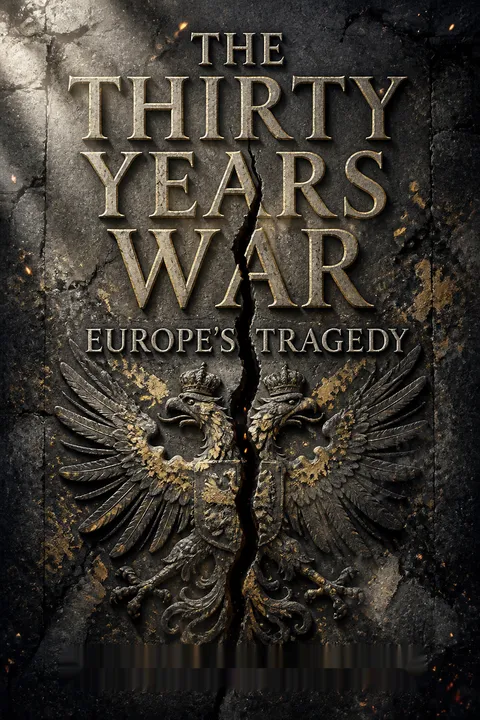

Key Takeaways
1. The Holy Roman Empire: A Complex, Decentralized Powder Keg
The Empire appears a slow, cumbersome juggernaut, operated by an intricate, elaborate yet surprisingly robust internal system of weights and balances.
A unique political entity. The Holy Roman Empire, far from a unified nation-state, was a sprawling, decentralized entity comprising thousands of communities, hundreds of principalities, and dozens of imperial cities. Its intricate constitution, developed since 1480, balanced the authority of the Emperor with the "German Freedom" of its constituent Estates, creating a system that was both cumbersome and remarkably resilient. This complex web of overlapping jurisdictions and feudal ties meant that power was diffused, making decisive, unilateral action difficult but also fostering a culture of negotiation and compromise.
Confessional fault lines. The Reformation introduced deep religious divisions, with Catholicism, Lutheranism, and Calvinism vying for influence. The Peace of Augsburg (1555) attempted to stabilize this by recognizing Lutheranism and establishing the principle of cuius regio, eius religio (whose realm, his religion), but it left crucial ambiguities unresolved. These "Dubia" concerned the fate of church lands secularized after 1552, the status of mediate ecclesiastical property, and the religious freedoms of subjects, creating a legal and political minefield.
Fragile stability. Despite these tensions, the Empire enjoyed a period of relative peace for over six decades after Augsburg, a stark contrast to the brutal religious wars in France and the Netherlands. This stability was maintained by a political culture that favored temporizing and arbitration through imperial courts like the Reichskammergericht. However, the inherent ambiguities of the religious settlement, coupled with growing confessional militancy and the Emperor's reluctance to act decisively, meant that the Empire remained a powder keg, vulnerable to any spark that could ignite wider conflict.
2. Habsburg Ambition and the Seeds of Revolt
The dynasty’s fortunes had been a long time in the making.
A vast, composite monarchy. The Habsburgs, though holding the imperial title, ruled a sprawling, financially strained composite monarchy encompassing Austria, Bohemia, Hungary, and scattered territories across the Empire. This vastness brought immense prestige but also immense challenges, as each region maintained its own Estates, laws, and often, a distinct religious identity. The dynasty's attempts to centralize power and consolidate their rule often clashed with the entrenched privileges of these powerful local aristocracies.
Protestant strength in Habsburg lands. By the late 16th century, Protestantism had made significant inroads, particularly among the nobility in Bohemia, Moravia, and Upper and Lower Austria. These powerful Estates leveraged their financial control over the monarchy to extract "Religious Assurances," granting them and their tenants freedom of worship. This created a paradoxical situation where the staunchly Catholic Habsburgs were dependent on their Protestant subjects, leading to constant tension and a delicate balance of power.
Ferdinand II's Catholic Revival. The accession of Ferdinand II, a devout and determined Counter-Reformer, marked a turning point. Influenced by Jesuit advisors, he initiated a systematic program of re-Catholicization, targeting crown towns and noble estates. While presented as a restoration of order, these measures were deeply divisive, alienating many loyal Protestant subjects and fueling a growing sense of grievance. This aggressive policy, coupled with the unresolved Habsburg succession and the Emperor's perceived disregard for traditional liberties, set the stage for the Bohemian Revolt.
3. The Long Turkish War and the Brothers' Quarrel: Habsburg Weakness Exposed
The thirteen-year struggle contributed to a chain of problems that kept the Ottoman empire out of the Thirty Years War and ensured a period of relative tranquillity for Hungary.
A costly distraction. The Long Turkish War (1593-1606) against the Ottoman Empire, though ultimately inconclusive, was a massive drain on Habsburg resources. It forced the Emperor to rely heavily on imperial subsidies and the cooperation of his Estates, exposing the monarchy's financial fragility. While it diverted Ottoman attention from Central Europe, it left the Habsburgs deeply indebted and militarily exhausted, unable to effectively project power elsewhere.
Military innovation and experience. Despite its costs, the Turkish War served as a crucial training ground for a generation of military leaders who would later play prominent roles in the Thirty Years War, including Wallenstein, Tilly, and Mansfeld. It also saw the development of the "Military Frontier," a militarized zone in Hungary, and influenced tactical adaptations, blending Spanish siege warfare with eastern light cavalry tactics. This period highlighted the evolving nature of warfare, with increasing reliance on gunpowder, disciplined formations, and complex logistics.
Internal dynastic strife. The war's failures exacerbated internal tensions within the Habsburg family, culminating in the "Brothers' Quarrel" between Emperor Rudolf II and his ambitious brother Matthias. Rudolf's erratic behavior and growing isolation led to a power struggle that further weakened the monarchy, forcing Matthias to grant significant concessions to the Estates in Hungary and Bohemia (the Letters of Majesty). This precedent of armed resistance and the extraction of privileges would directly inspire the Bohemian rebels in 1618.
4. Spain's Global Empire: A Distracted Giant in European Conflicts
Though the colonial economy did diversify over time, silver remained Spain’s primary interest.
A vast, financially strained empire. Spain, a global superpower, commanded immense resources from its American silver mines and extensive European dominions (Netherlands, Italy, Portugal). However, this wealth was largely mortgaged to creditors, and the monarchy faced chronic financial strain. The concept of "reputación" – maintaining prestige – became paramount, driving costly military commitments even as the economy stagnated and debt spiraled.
The Dutch Ulcer. The protracted Dutch Revolt (1568-1648) was Spain's most pressing concern, consuming vast resources and manpower. Spanish military strategy, characterized by methodical siege warfare (the "Flanders School"), aimed to reconquer the rebellious northern provinces. The Dutch, in turn, developed a resilient republican state, fueled by a booming maritime economy and military reforms under Maurice of Nassau, turning the conflict into a costly war of attrition.
Strategic peace-making. Despite its military might, Spain engaged in a series of peace treaties (Vervins 1598, London 1604, Twelve Years Truce 1609) to manage its multiple conflicts. These were not signs of decline but strategic maneuvers to consolidate resources and focus on key objectives. However, the eventual resumption of the Dutch War in 1621, coupled with Spain's entanglement in Italian affairs and later internal revolts, meant that its involvement in the Holy Roman Empire's troubles would always be secondary and driven by its own imperial priorities.
5. The Baltic Power Struggle: Sweden's Rise and Denmark's Ambition
The struggle for dominance of the Baltic followed the collapse of the Union of Kalmar in 1520–3 when the Swedish nobility rejected the Danish king and chose their own monarch.
A volatile northern front. The Baltic region was a theater of intense rivalry between Denmark, Sweden, and Poland-Lithuania, each vying for economic and political dominance. Denmark, initially the most powerful, leveraged its control over the Sound tolls to amass wealth and project influence, particularly in northern Germany where its king held imperial territories. This ambition, however, often clashed with the interests of German princes and the Hanseatic League.
Sweden's military transformation. Sweden, emerging from civil war, underwent a remarkable military and administrative transformation under Gustavus Adolphus. His reforms, including national conscription, a modernized financial system, and innovative battlefield tactics, created a formidable army and navy. While initially focused on conquering Livonia from Poland, these developments positioned Sweden as a rising power, capable of projecting force far beyond its borders.
Poland-Lithuania: A sleeping giant. The Polish-Lithuanian Commonwealth, though vast and religiously pluralistic, was hampered by a decentralized political system dominated by its powerful nobility. Its military, effective in eastern-style raiding, struggled against Sweden's modernized forces. Entangled in wars with Russia and the Ottomans, Poland's internal divisions and focus on its eastern frontiers prevented it from fully asserting its potential in the Baltic, inadvertently creating opportunities for Swedish expansion.
6. The Bohemian Revolt: An Aristocratic Gamble with Devastating Consequences
This event has entered history as the Defenestration of Prague that triggered the Bohemian Revolt, the commonly accepted start of the Thirty Years War that claimed eight million lives and transformed the political and religious map of Europe.
A desperate aristocratic coup. The Defenestration of Prague (1618) was not a popular uprising but a calculated act by a minority of militant Protestant nobles, led by Count Thurn, to force concessions from the Habsburgs. They aimed to solidify their privileges and religious freedoms, which they felt were being eroded by Ferdinand II's re-Catholicization policies. However, their leadership was fragmented, lacking a unifying figure like William of Orange, and their "Confederation" failed to garner widespread popular support or overcome deep internal divisions.
Frederick V's fateful decision. The Bohemian Estates' election of Frederick V, the Calvinist Elector Palatine, as their king was a desperate gamble. Frederick, swayed by millenarian beliefs and the illusory promise of international Protestant support, accepted the crown, transforming a regional revolt into an imperial crisis. His iconoclastic actions in Prague, however, alienated many Bohemian subjects, including Utraquists and moderate Lutherans, further undermining the rebel cause.
White Mountain: A decisive defeat. The Battle of White Mountain (1620) proved catastrophic for the Bohemian rebels. Despite numerical parity, their army, plagued by disunity, poor discipline, and chronic pay arrears, was decisively routed by the combined imperial-Liga forces under Tilly. The defeat, though not a massacre in terms of casualties, led to the swift collapse of the Bohemian Confederation and allowed Ferdinand II to impose a harsh settlement, fundamentally altering the political and religious landscape of his hereditary lands.
7. Ferdinand II's Catholic Ascendancy: Reshaping the Empire by Force
The victories after 1620 enabled Ferdinand to extend his existing patronage to the rest of the Empire.
Consolidating Habsburg power. Following White Mountain, Ferdinand II systematically dismantled the Bohemian Estates' power, revoking the Letter of Majesty and declaring the monarchy hereditary. This "renewed constitution" eliminated the right of election and curtailed the Estates' legislative authority, shifting influence to permanent, salaried committees loyal to the crown. Similar measures were applied in Upper and Lower Austria, though with less severity, as Ferdinand sought to create a more centralized and obedient Habsburg monarchy.
The Blood Court and land transfers. The executions of 27 Bohemian nobles in Prague (1621) and the subsequent confiscation of vast rebel properties were pivotal. This massive redistribution of land, the largest in Europe before 1945, enriched loyal Catholic families (both native and foreign) and created a new Habsburg elite whose fortunes were inextricably linked to the dynasty. This policy, while economically disruptive, effectively broke the power of the old Protestant aristocracy and cemented Catholic dominance in the hereditary lands.
Re-Catholicization and its limits. Ferdinand's program of re-Catholicization, driven by his fervent belief and Jesuit influence, aimed to restore Catholicism as the sole official faith. Protestant pastors and teachers were expelled, churches and schools transferred, and general mandates forced conversion or emigration. While successful in establishing a solidly Catholic elite and significantly reducing Protestant populations, the process was often superficial, met with local resistance, and hampered by a shortage of qualified Catholic clergy, demonstrating the enduring strength of local religious identities.
8. The Edict of Restitution: A Catalyst for Wider War
Ferdinand committed a grave error by issuing the Edict of Restitution in March 1629.
A unilateral decree. Buoyed by military victories and the defeat of Denmark, Ferdinand II issued the Edict of Restitution, a sweeping decree demanding the return of all Catholic church lands secularized by Protestants since 1552. Intended to restore what Ferdinand considered the "true" interpretation of the Peace of Augsburg, the Edict was a unilateral assertion of imperial authority that bypassed the Reichstag and alienated moderate Lutherans, who had previously sought compromise.
Widespread alarm and Catholic divisions. The Edict, which explicitly excluded Calvinists and threatened the loss of numerous bishoprics and monasteries, caused widespread consternation across the Empire. It fueled fears of a return to the religious oppression of Charles V's era and undermined the fragile peace established at Prague. Crucially, many prominent Catholics, including Wallenstein and some senior clergy, opposed the Edict, recognizing its political divisiveness and the unrealistic expectations it fostered among militant Counter-Reformers.
A blunder of the first order. Despite its legalistic justification, the Edict was a political blunder. It alienated potential allies, strengthened the resolve of Ferdinand's enemies, and provided a powerful pretext for foreign intervention. While its implementation was often slow and met with resistance, it fundamentally shifted the nature of the conflict, transforming it from a struggle over Habsburg authority into a broader war for the religious and constitutional future of the Holy Roman Empire.
9. Gustavus Adolphus and the Swedish Empire in Germany
At last, Gustavus had achieved the spectacular victory that had eluded him since his landing.
The Lion of the North. Gustavus Adolphus's landing in Pomerania (1630) marked a new phase of the war. Despite initial logistical challenges and a smaller-than-expected army, his military reforms—including lighter artillery, disciplined infantry brigades, and combined arms tactics—proved devastatingly effective. His decisive victory at Breitenfeld (1631) shattered the imperial-Liga forces, transforming his image into that of a Protestant savior and a new Alexander, destined to reshape Germany.
Swedish ambitions and German collaborators. Gustavus's aims, initially framed as "security" and "German liberty," quickly expanded to include "satisfaction" in the form of territorial gains (Pomerania, Wismar, Bremen, Verden). He established a network of strategic bases (Erfurt, Mainz, Würzburg) and relied heavily on German collaborators, offering them confiscated church lands ("donations") and promises of constitutional reform. However, these alliances were often fragile, driven by opportunism, and undermined by Swedish demands for "absolute direction" and heavy contributions.
Wallenstein's controversial return. The rapid Swedish advance and the collapse of imperial authority in much of Germany forced Ferdinand II to recall Wallenstein in 1632. Granted unprecedented "absolute" military and plenipotentiary powers, Wallenstein rebuilt the imperial army, but his strategic inactivity, secret diplomacy with Saxony and Sweden, and perceived disloyalty led to his assassination at Eger in 1634. His death, orchestrated by a cabal of imperial officers, cleared the way for a more unified Habsburg command but also exposed deep divisions within the imperial military.
10. The War's Shifting Tides: From Nördlingen to Rocroi
The defeat extinguished the last flicker of an independent Palatine cause, leaving it wholly dependent on unscrupulous foreign backers.
Nördlingen: A turning point. The decisive imperial-Spanish victory at Nördlingen (1634) over the Swedish-led Heilbronn League shattered Swedish power in southern Germany. It forced the remaining German Protestant allies to seek peace with the Emperor and allowed France to strategically absorb the remnants of the Swedish forces under Bernhard of Weimar. This victory, achieved through effective Habsburg-Spanish cooperation, marked a high tide for imperial power and temporarily shifted the military balance.
France's direct intervention. Richelieu, alarmed by the Habsburg resurgence and the threat to French influence, formally declared war on Spain in 1635. This opened new fronts in the Spanish Netherlands, Italy, and along the Pyrenees, stretching Spanish resources to their breaking point. Despite initial French setbacks (Corbie 1636) and internal challenges (Huguenot rebellions, aristocratic plots), Richelieu's "reason of state" strategy aimed to wear down the Habsburgs through a protracted war of attrition.
Spain's imperial overstretch. By the early 1640s, Spain faced a deepening crisis. Financial collapse, naval defeats (the Downs 1639), and widespread revolts in Catalonia and Portugal (1640) severely hampered its ability to project power. While Spanish forces achieved some tactical victories (Honnecourt 1642), they were increasingly on the defensive. The French victory at Rocroi (1643), though costly, signaled a shift in the balance of power in the Low Countries and further weakened Spain's position, paving the way for peace negotiations.
11. The Westphalian Peace: A New Order for a Transformed Europe
The Westphalian treaties continued to be invoked in major European settlements up to the Congress of Vienna in 1814–15 that ended the Napoleonic Wars.
An unprecedented diplomatic gathering. The Westphalian Congress (1644-1648) was a groundbreaking event, the first truly secular international gathering of its kind. It brought together representatives from across Europe, particularly the Holy Roman Empire, to negotiate a "Christian, general and permanent peace." Despite initial delays and complex procedural disputes, the congress established new norms for international relations, emphasizing negotiation among sovereign states as equals, a model that would influence European diplomacy for centuries.
A new constitutional and religious order. The Peace of Westphalia fundamentally reshaped the Holy Roman Empire. It formally endorsed the Peace of Augsburg but modified it by establishing 1624 as the new "normative year" for religious possessions and extending legal protection to Calvinists. Princely rulers retained their "right of Reformation" but lost the power to impose their faith on subjects, fostering a limited, corporate form of religious toleration. The Empire remained a mixed monarchy, but the imperial Estates gained greater autonomy and a more active role in collective decision-making, curbing imperial absolutism.
Territorial adjustments and power shifts. The treaties formalized significant territorial changes: Sweden gained Western Pomerania, Bremen, and Verden, while Brandenburg received Eastern Pomerania, Magdeburg, and Halberstadt. France acquired Alsace and secured its protectorate over Metz, Toul, and Verdun. These concessions, though painful for the Emperor, were necessary to achieve peace and were balanced by a blanket exemption for the Habsburg hereditary lands from the restitution clauses. The peace also recognized Dutch independence, marking a significant shift in the European balance of power.
12. The Enduring Scars: Demographic, Economic, and Cultural Devastation
Even a 15 percent decline would make the Thirty Years War the most destructive conflict in European history.
Catastrophic human cost. The Thirty Years War inflicted immense suffering, with overall population declines in the Holy Roman Empire estimated at between 15% and 33%, and up to 60% in some regions. While direct combat casualties were significant (estimated at 1.8 million soldiers), disease, particularly typhus and bubonic plague, was the primary killer, exacerbated by malnutrition and the constant movement of armies. Civilian populations also suffered from widespread violence, plunder, and forced displacement, leading to a sense of living in an "iron century" of hardship.
Economic ruin and slow recovery. The war caused severe economic disruption, most notably the "Kipper and Wipper" hyperinflation of 1621-1623, which devastated purchasing power and ruined many. Agriculture suffered from abandoned land, livestock theft, and labor shortages, with grain production only returning to pre-war levels by 1670. Trade routes were disrupted, industries declined, and widespread indebtedness became endemic. While some areas recovered relatively quickly, others, like Magdeburg, remained desolate for decades, highlighting the uneven and long-lasting economic scars.
Cultural disruption and adaptation. The conflict led to the destruction of cultural institutions, including libraries and universities, and forced many artists and intellectuals into exile. However, it also spurred cultural adaptation and creativity. Poets and writers, like Grimmelshausen, grappled with the trauma of war, producing works that reflected both despair and resilience. The war discredited religious fundamentalism and fostered a more pragmatic approach to coexistence, while the need for reconstruction and effective governance spurred state-building efforts and a gradual shift towards secular rationalization in daily life.
Review Summary
The Thirty Years War is widely regarded as an authoritative, comprehensive resource on the conflict, praised for Wilson's mastery of the subject and detailed coverage of all war phases, including the often-neglected later years. Most reviewers acknowledge its scholarly value while criticizing its density, dry writing style, and lack of sufficient maps. Many found it challenging due to the overwhelming number of names, places, and events. It suits dedicated history enthusiasts but is generally considered inaccessible to casual readers seeking an engaging narrative experience.
People Also Read



Download PDF
Download EPUB
.epub digital book format is ideal for reading ebooks on phones, tablets, and e-readers.








































