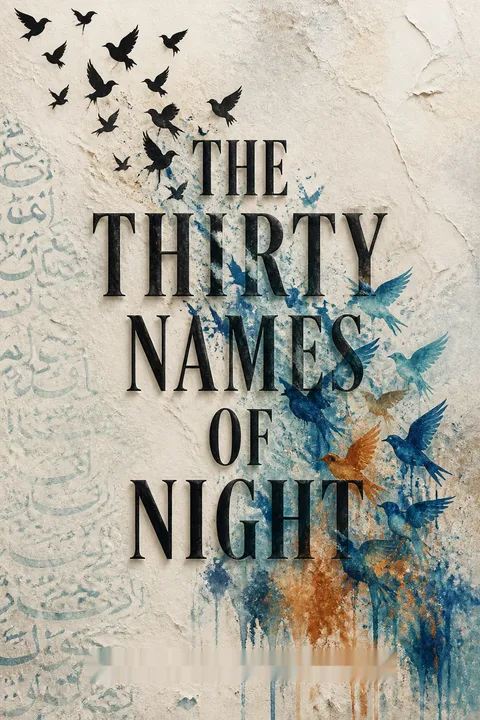

Plot Summary
Forty-Eight Sparrows Fall
On the fifth anniversary of his mother's death, a young Syrian American trans man, unnamed at first, witnesses forty-eight white-throated sparrows plummet from the sky in Brooklyn. The city's indifference to this omen mirrors his own sense of loss and alienation. He cares for his ailing grandmother, Teta, and is haunted by his mother's ghost, whose presence is both comfort and torment. The sparrows' fall becomes a symbol of grief, migration, and the fragility of life, setting the tone for a story where the boundaries between the living and the dead, the past and the present, are blurred. The protagonist's longing for connection and understanding is palpable, as is his struggle to find a place in a world that feels increasingly unrecognizable.
Ghosts on Rooftops
The protagonist navigates the city's shifting landscape, feeling the weight of gentrification and erasure. He finds solace in small rituals with Teta—coffee, stories, and the scent of za'atar. The apartment is filled with reminders of his mother: feathers, sketchbooks, and the ghostly presence that lingers in every room. The city's history, layered with the stories of immigrants and the dispossessed, echoes his own sense of displacement. The rooftop becomes a liminal space where the past intrudes on the present, and the protagonist's grief is both personal and collective. The chapter explores the tension between holding on and letting go, between remembering and surviving.
The Body's Unraveling
The protagonist's discomfort with his body intensifies, exacerbated by a painful IUD and the medical system's inability to see him beyond gendered assumptions. Visits to the gynecologist are fraught with dysphoria and invisibility. Art, once a source of joy, now feels inaccessible, tainted by grief and self-doubt. Encounters with art in museums highlight the objectification and erasure of bodies like his. The protagonist's longing for transformation—for a body that feels like home—is mirrored in his fascination with birds and their ability to transcend boundaries. The chapter is a meditation on embodiment, suffering, and the search for self-definition.
Murals and Memories
Unable to paint on canvas, the protagonist turns to graffiti, creating murals of birds on the remnants of Little Syria in Lower Manhattan. These acts of creation are both homage to his mother and an assertion of presence in a city that erases its marginalized histories. The murals become a way to reclaim space and memory, to bear witness to what has been lost. The protagonist's connection to his mother deepens as he uncovers her old sketchbooks, filled with notes about a mysterious bird, Geronticus simurghus. The search for this bird becomes intertwined with the search for identity and belonging.
The Hidden Notebook
Guided by an owl, the protagonist breaks into an abandoned community house and finds a hidden notebook belonging to Laila Z, a Syrian American artist from the 1930s. Laila's diary, filled with sketches and confessions, reveals a parallel journey of migration, loss, and forbidden love. Her story unfolds in letters to a beloved "B," chronicling her childhood in Syria, her family's flight to America, and her own struggles with gender and desire. The notebook becomes a bridge across generations, offering the protagonist a lineage of queer and trans resilience within his own community.
Laila's Flight
Laila recounts the story of Hawa, a woman in her Syrian village who built a flying machine and soared briefly before crashing to her death. This tale of audacity and tragedy becomes a metaphor for Laila's own longing for freedom and transcendence. Laila's coming-of-age is marked by war, famine, and the burdens of family expectation. Her bond with B is deepened by shared grief and the creation of a wing made from the feathers of a fallen bird—a symbol of love, hope, and the possibility of transformation. Laila's narrative is one of survival, adaptation, and the costs of dreaming beyond prescribed roles.
Letters Across Time
As the protagonist reads Laila's diary, he uncovers hidden histories of migration, queerness, and resistance. Laila's journey from Syria to New York mirrors his own family's path, and her struggles with identity and love resonate across decades. The diary reveals the silences and sacrifices required to survive in a world hostile to difference. The protagonist begins to see himself not as an anomaly, but as part of a lineage of people who have always existed, even if their stories were hidden. The act of reading and remembering becomes an act of reclamation and healing.
Naming and Becoming
The protagonist grapples with the power of names—those given, those erased, and those chosen. He resists the violence of deadnaming, refusing to reveal his birth name even to the reader. Inspired by Laila's courage and his mother's legacy, he begins to imagine a new name for himself: Nadir, meaning "rare." The process of naming is both painful and liberating, a way to assert agency over his own story. The chapter explores the intersections of language, memory, and selfhood, and the ways in which naming can be both a wound and a balm.
The Birds That Remain
The city is increasingly filled with birds—sparrows, goldfinches, owls—drawn to sites of trauma and transformation. These birds become companions, witnesses, and symbols of endurance. The protagonist's search for Geronticus simurghus intensifies, as he seeks validation for his mother's discovery and a sense of connection to something miraculous. Encounters with friends and chosen family—Sami, Sabah, Aisha—offer moments of solidarity and joy amid the struggle. The birds' migrations mirror the movements of people across borders and generations, and their presence is both mystery and comfort.
Family, Found and Lost
The protagonist's relationships with Teta, his estranged sister Reem, and his friends are tested by secrets, misunderstandings, and the weight of survival. Reem's return brings old wounds to the surface, as both siblings confront the ways they have failed and protected each other. Teta's own hidden love story with Laila is gradually revealed, adding layers to the family's history of silence and longing. The chapter explores the complexities of kinship, the necessity of chosen family, and the ways in which love endures despite loss and erasure.
The Search for Simurghus
The quest for the elusive bird and Laila's missing painting becomes a collective effort, involving Qamar (descendant of Dr. Benjamin Young), Sabah, and others. The search leads through archives, foundations, and the remnants of Little Syria, uncovering stories of marginalized artists and scientists whose work was dismissed or forgotten. The discovery of Laila's aquatints and the final, unfinished painting becomes a metaphor for the reclamation of erased histories. The protagonist realizes that the act of searching, of bearing witness, is itself an act of resistance and survival.
Knots of Witness
Sami's project of tying knots around the city—at sites of violence, loss, and love—becomes a way to make invisible histories visible. The knots are talismans, acts of witnessing that bind the past to the present. The protagonist participates in rituals of remembrance: baking with friends, praying on the rooftop, painting murals. These acts create spaces of belonging and healing, even as the city continues to change. The chapter explores the power of art, ritual, and community to hold grief and joy together.
The Fire and the Name
A fire at the community house threatens to destroy the last traces of Little Syria and the protagonist's connection to his mother and Laila. In a harrowing escape, he retrieves Laila's box, containing the wing made by B, and narrowly survives. The fire becomes a crucible, burning away old identities and fears. In its aftermath, the protagonist claims his new name, Nadir, and is recognized by his friends and family. The act of naming is completed, and with it comes a sense of wholeness and possibility.
The Unseen City
The demolition of Little Syria and the displacement of its residents echo the broader histories of colonization, gentrification, and loss. The protagonist and his community gather to mourn, remember, and rebuild. The city's layers of memory—immigrant, queer, trans—are honored through stories, art, and acts of care. The chapter reflects on the costs of survival, the necessity of adaptation, and the enduring power of hope. The unseen city becomes a metaphor for all that is hidden, forgotten, or denied, and for the resilience of those who refuse to disappear.
The Last Migration
As the protagonist and his loved ones prepare to leave their old home, they confront the pain of departure and the uncertainty of what lies ahead. Laila's final letters reveal her decision to withhold the painting of Geronticus simurghus from the collector, choosing instead to keep it as a private act of love and defiance. The protagonist learns that not all migrations end in return, and that sometimes survival means letting go of what cannot be saved. The chapter is a meditation on grief, memory, and the courage to begin again.
The Unfinished Painting
The discovery of Laila's studio, filled with paintings of the miraculous bird, offers a vision of what might have been—a world where queer and trans artists are celebrated, not erased. The protagonist, now Nadir, is entrusted with the final aquatint, a symbol of all that has been lost and found. The act of releasing the painting to the world becomes an act of collective healing, honoring the generations who came before and those yet to come. Art becomes both a record and a promise.
Reunion and Release
Nadir, Teta, and their friends gather with Laila and her family, bridging the gaps of time, memory, and silence. Old wounds are acknowledged, and love—once forbidden or hidden—is finally spoken. The reunion is bittersweet, marked by the realities of aging and loss, but also by the possibility of forgiveness and renewal. The act of release—of art, of secrets, of grief—makes space for new beginnings. The chapter affirms the power of truth-telling and the necessity of community.
Becoming Nadir
In the aftermath of fire, loss, and revelation, Nadir steps fully into his name and identity. Surrounded by chosen family, he paints a mural of the birds that have guided him, signs it with his true name, and claims his place in the world. The story ends with a sense of hope and continuity: the migrations of birds, the cycles of memory, and the enduring bonds of love. Nadir's journey is both singular and universal—a testament to the resilience of those who refuse to be erased, and to the beauty that emerges when we dare to name ourselves.
Analysis
A luminous meditation on identity, memory, and survivalThe Thirty Names of Night is a profound exploration of what it means to seek belonging in a world that erases, marginalizes, and forgets. Through its dual narrative, the novel bridges generations of Syrian American immigrants, queer and trans people, and artists whose stories have been hidden or denied. Joukhadar's prose is both lyrical and incisive, weaving together the personal and the political, the bodily and the spiritual. The novel insists on the importance of naming—not only as an act of self-definition, but as a means of reclaiming history and possibility. It interrogates the costs of silence and the necessity of truth-telling, even when it is painful. The symbolism of birds—migratory, rare, miraculous—serves as a powerful metaphor for the resilience of those who refuse to be caged or erased. Ultimately, the novel offers a vision of healing rooted in community, art, and the courage to become oneself. It is a testament to the enduring power of love, memory, and the stories we dare to tell.
Review Summary
Reviews for The Thirty Names of Night are largely positive, averaging 4.01 out of 5. Readers consistently praise Joukhadar's lyrical, poetic prose and rich bird imagery. Many highlight the powerful transgender representation, Syrian American history, and the dual-timeline narrative connecting Nadir and Laila Z. The exploration of Little Syria, grief, identity, and magical realism resonated deeply with most readers. Some found the writing too dense or descriptive, the plot difficult to follow, or felt the novel attempted too many themes simultaneously, but even critical reviewers acknowledged the author's remarkable talent.
People Also Read
Characters
Nadir (The Narrator)
Nadir is a Syrian American trans man in his twenties, haunted by the death of his mother and the weight of unspoken family histories. His journey is one of self-discovery, as he navigates grief, gender dysphoria, and the complexities of immigrant identity. Nadir's relationship with his grandmother, Teta, is both nurturing and fraught, shaped by generational trauma and silence. His longing for connection leads him to uncover the hidden stories of his family and community, particularly through the discovery of Laila's diary. Nadir's psychological arc is marked by shame, resilience, and the gradual claiming of his name and selfhood. His relationships—with Teta, his estranged sister Reem, his best friend Sami, and his chosen family—are central to his healing and transformation.
Laila Zeytouneh
Laila is a Syrian American artist whose life unfolds in the 1930s and '40s through diary entries and letters to her beloved "B." Her story is one of migration, survival, and forbidden love, as she navigates the expectations of family, the trauma of war, and her own queer and trans desires. Laila's artistry is both a refuge and a battleground, as she struggles for recognition in a world that dismisses women and immigrants. Her relationship with B is a source of joy and pain, marked by longing and loss. Laila's psychological complexity is revealed in her ambivalence about belonging, her yearning for flight, and her ultimate decision to withhold her most precious work as an act of autonomy. Her legacy becomes a lifeline for Nadir and others seeking to understand themselves.
Teta (Badra)
Teta is Nadir's grandmother, a survivor of migration, war, and personal loss. Her life is shaped by the burdens of caretaking and the silences required for survival. Teta's relationship with Laila is a hidden love story, one that informs her interactions with Nadir and her own daughter. She embodies both strength and vulnerability, holding the family together while mourning what could not be. Teta's reluctance to speak openly about the past is both a protective mechanism and a source of pain. Her gradual acknowledgment of her own desires and regrets becomes a model for Nadir's journey toward truth and self-acceptance.
Sami
Sami is Nadir's closest friend and eventual lover, a queer Arab American artist who marks the city with knots as acts of remembrance. His humor, creativity, and emotional intelligence provide Nadir with support and affirmation. Sami's own grief—over the loss of his mother and the challenges of being openly queer—parallels Nadir's struggles. Their relationship evolves from friendship to intimacy, offering both characters a space to be seen and loved without pretense. Sami's role as a witness and co-creator is crucial to the novel's exploration of chosen family and collective healing.
Reem
Reem is Nadir's older sister, living in Boston and estranged from the family after their mother's death. Her return to Brooklyn brings unresolved tensions to the surface, as both siblings confront their failures and the ways they have protected each other. Reem's own secrets—about love, loss, and identity—mirror Nadir's, and their eventual reconciliation is hard-won. Reem's pragmatism and resourcefulness are assets, but her emotional distance is a barrier that must be overcome. Her journey is one of mourning, acceptance, and the recognition that family is both chosen and inherited.
Aisha Baraka
Aisha is a Black Muslim ornithologist and friend of Nadir's mother, who runs a bird sanctuary in Queens. She is a visionary and a realist, offering Nadir both scientific knowledge and emotional wisdom. Aisha's own experiences of marginalization—within science, as a widow, as a Black woman—inform her mentorship. She is a keeper of stories and a connector of generations, helping Nadir understand the significance of Geronticus simurghus and the importance of bearing witness. Her sanctuary is both literal and symbolic, a space of care and resistance.
Sabah
Sabah is a gallerist and friend of Nadir's mother, deeply invested in preserving Arab American art and history. She is practical, nurturing, and fiercely protective of her community. Sabah's bakery and gallery are gathering places, sites of both sustenance and cultural memory. Her skepticism about the miraculous bird is balanced by her respect for Nadir's mother and her willingness to support Nadir's search. Sabah's role as a connector—between generations, between art and activism—is vital to the novel's exploration of legacy and survival.
Qamar
Qamar is a nonbinary art historian and the grandchild of Dr. Benjamin Young, the Black ornithologist who first documented Geronticus simurghus. Their research into lost histories parallels Nadir's quest, and their friendship becomes a source of mutual recognition and support. Qamar's own journey of naming and becoming is interwoven with Nadir's, and their collaboration is a model of solidarity across difference. Qamar's presence affirms the importance of intergenerational connection and the ongoing work of recovery and truth-telling.
Laila's Mother
Laila's mother is a figure of strength and sorrow, a midwife who has witnessed both birth and death. Her expectations for Laila are shaped by tradition and the need for respectability in a hostile world. Her eventual discovery of Laila's secrets leads to acts of destruction and denial, but also to moments of vulnerability and regret. She embodies the generational tensions between survival and authenticity, between love and fear.
Ilyas
Ilyas is Laila's beloved, a trans man who navigates the dangers and possibilities of early twentieth-century America. His relationship with Laila is a source of joy, struggle, and mutual recognition. Ilyas's own migration story, his experiences of passing and exclusion, and his commitment to building a life with Laila are central to the novel's exploration of queer and trans resilience. His presence in Laila's life is both a gift and a challenge, forcing her to confront her own desires and the costs of living authentically.
Plot Devices
Dual Narrative Structure
The novel employs a dual narrative, alternating between Nadir's contemporary journey and Laila's historical diary. This structure allows for thematic resonance across time, highlighting the persistence of queer and trans experiences within immigrant communities. The interplay between the two narratives creates suspense, deepens character development, and invites readers to draw connections between personal and collective histories. The structure also enables the gradual revelation of secrets, building toward moments of recognition and catharsis.
Symbolism of Birds
Birds—especially the rare Geronticus simurghus—function as central symbols throughout the novel. They represent the longing for flight, the pain of displacement, and the possibility of miraculous survival. The recurring motif of birds falling, migrating, or appearing at moments of crisis underscores the interconnectedness of human and nonhuman worlds. The search for the elusive bird mirrors the characters' search for selfhood, belonging, and meaning.
Art as Witness and Resistance
Art—painting, graffiti, aquatints, murals—is both a means of survival and a form of resistance. The act of creating and preserving art becomes a way to mark memory, assert presence, and challenge erasure. The search for Laila's missing painting is a quest for lost histories, and the eventual creation of a mural by Nadir and his friends is an act of communal healing. Art is also a site of struggle, as characters confront the barriers of racism, sexism, and transphobia in the art world.
Naming and Erasure
The novel foregrounds the significance of naming—of people, birds, places—and the violence of erasure. Nadir's refusal to reveal his deadname is a radical act of self-protection and agency. The process of choosing a new name is fraught with fear and hope, reflecting the broader struggles of trans and immigrant characters to define themselves. The motif of censored or hidden names recurs, emphasizing the stakes of visibility and the costs of survival.
Intergenerational Trauma and Healing
The novel explores the ways in which trauma, loss, and longing are transmitted across generations. Family secrets, hidden love stories, and unspoken grief shape the lives of characters in both timelines. The act of uncovering and telling these stories is both painful and necessary, offering the possibility of healing and connection. The motif of the hidden notebook, the lost painting, and the buried wing all serve as metaphors for the work of recovery and truth-telling.
Ritual and Community
Rituals—prayer, baking, knot-tying, storytelling—are woven throughout the narrative as means of sustaining community and marking memory. These acts create spaces of belonging and resistance, even in the face of displacement and violence. The formation of chosen family, the sharing of food and art, and the collective work of rebuilding after loss are central to the novel's vision of survival.
Foreshadowing and Circularity
The novel employs foreshadowing through recurring images (falling birds, fire, migration) and the repetition of phrases and motifs. The circular structure—beginning and ending with acts of naming, migration, and creation—reinforces the themes of continuity and renewal. The past is never truly past; it shapes and is reshaped by the present.
Download PDF
Download EPUB
.epub digital book format is ideal for reading ebooks on phones, tablets, and e-readers.








































