
Key Takeaways
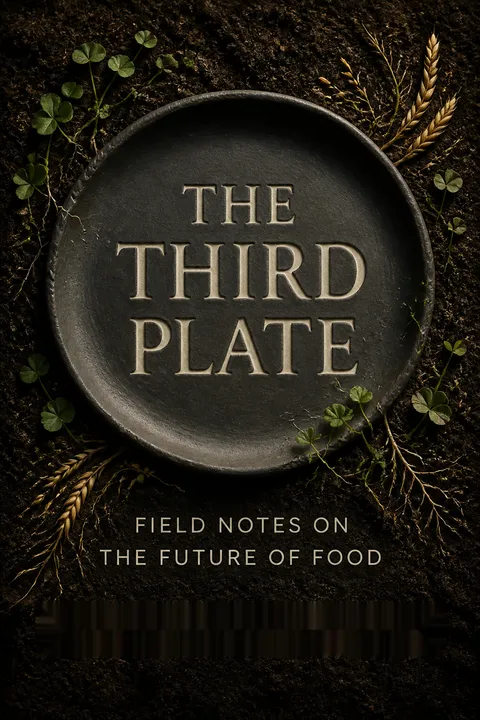
1. The "Third Plate" Redefines Cuisine
The Third Plate goes beyond raising awareness about the importance of farmers and sustainable agriculture. It helps us recognize that what we eat is part of an integrated whole, a web of relationships, that cannot be reduced to single ingredients.
Beyond farm-to-table. The conventional "farm-to-table" movement, while well-intentioned, often cherry-picks ingredients, focusing on desirable cuts or popular vegetables without considering the entire agricultural system. This approach, exemplified by a seven-ounce steak with a side of vegetables, fails to address the deeper ecological imbalances. The "Third Plate" proposes a paradigm shift, reversing these proportions to prioritize what the land can truly provide.
Integrated whole. The author's awakening came from tasting an ancient Eight Row Flint corn polenta, whose phenomenal flavor was a direct result of a holistic Native American "Three Sisters" planting strategy (corn, beans, squash). This experience revealed that truly delicious food is contingent on an entire system of agriculture, not just individual ingredients. It speaks to the entirety of the landscape and how its parts fit together.
A new culinary vision. The Third Plate is less a specific dish and more a philosophy of cooking and eating that defies ingrained expectations. It champions integral, often uncelebrated, crops and cuts of meat that are essential for a healthy ecosystem. This approach aims to create a cuisine that is constantly evolving, reflecting the best of what nature can offer in a balanced and sustainable way.
2. Soil Health is the Foundation of Flavor
If soil is compromised, there can be no such thing as great food.
Living, breathing soil. Soil is a complex, living ecosystem teeming with billions of microorganisms, worms, and fungi. These subterranean communities are constantly interacting—cooperatively and violently—to break down organic matter into nutrients that plants can absorb. This ceaseless activity is the engine of soil fertility and the ultimate source of flavor.
The language of soil. Farmers like Klaas Martens learned to "listen" to the soil, understanding its needs through indicators like weeds.
- Chicory/wild carrot: Low fertility
- Milkweed: Lacks zinc
- Wild garlic: Low sulfur
- Foxtail: Poor water filtration
- Thistle: Compact soil
By addressing these underlying issues, farmers can strengthen plants, making them naturally resistant to pests and diseases, rather than relying on chemical interventions.
Taste as a guide. The author's experience with a "16.9 Brix" carrot, bursting with sugar and minerals, contrasted sharply with a "0.0 Brix" conventional carrot. This demonstrated that flavor is a direct expression of a plant's nutritional health, which in turn depends on biologically rich, well-mineralized soil. When soil is starved of life, plants become "biomass diluted," lacking both taste and essential micronutrients.
3. Nature's Design for Animals: Freedom and Diversity
If you make sure the geese are relaxed and happy, you’ll be rewarded with the gift of fatty livers. That is God’s way of thanking us for providing so much good food for the geese.
Beyond force-feeding. Eduardo Sousa's "natural" foie gras, produced without force-feeding, revealed that animals, when allowed to express their natural instincts, can produce superior products. His geese, free to roam and gorge seasonally on diverse forage (olives, lupins, acorns), developed livers with deep, complex flavors, unlike the predictable taste of corn-fed, confined birds.
The dehesa model. Spain's dehesa, a 2,000-year-old agro-silvo-pastoral system, exemplifies an integrated landscape where diverse animals (Iberian pigs, sheep, cattle) graze among ancient oak trees. This system thrives on:
- Diversity: Pigs forage acorns, cattle eat overlooked grasses, sheep consume leftovers.
- Exercise: Constant movement oxygenates muscles, creating deeper flavor and better fat integration (e.g., jamón ibérico).
- Ecological balance: Animal manure fertilizes the land, hooves break down organic matter, and diverse plant life supports a rich ecosystem.
This interconnectedness ensures the land's long-term health and the exceptional quality of its products.
"Growing nature." Human intervention in systems like the dehesa is not about domination but about working in service to the ecology. Farmers prune oaks for better acorn production, manage grazing rotations, and accept "revolutionary taxes" like losing half their goose eggs to hawks. This approach, which promotes nature's "frustrating inefficiencies," ultimately yields more diverse and delicious food than systems focused solely on maximizing single-product output.
4. The Ocean's Interconnectedness Demands a "Sea Ethic"
Simply by offering the sea’s creatures membership in our own extended family of life we can broaden ourselves without simplifying or patronizing them.
Beyond the tide line. Just as land management affects soil, human actions profoundly impact the oceans. Industrial fishing practices like bottom trawling destroy habitats and generate massive bycatch, while agricultural runoff creates dead zones. The decline of phytoplankton, the ocean's primary producers, due to climate change, threatens the entire marine food web and global oxygen production.
Chefs' influence on depletion. Chefs, by demanding high-trophic level fish (salmon, tuna, cod) and promoting specific species, inadvertently contribute to overfishing. This creates a "positive feedback loop" where demand drives up prices, making these fish seem more desirable, further depleting stocks. The author's own lapse in serving bluefin tuna, despite knowing its endangered status, highlighted this complicity.
A new approach to seafood. Visionary chefs like Ángel León, "Chef of the Sea," demonstrate a "sea ethic" by:
- Utilizing bycatch: Creating markets for unpopular or damaged fish (e.g., tonaso, decapitated shrimp).
- Embracing lower trophic levels: Highlighting sustainable, herbivorous fish like mullet.
- Innovating with marine ingredients: Using phytoplankton in bread and sauces, or fish fat for charcuterie.
- Supporting extensive aquaculture: Farms like Veta la Palma, which integrate with natural estuaries and prioritize ecological balance (e.g., flamingos as indicators of health), offer a sustainable alternative to conventional fish farming.
5. Seeds are Blueprints for Culture and Cuisine
The seeds he distributes are blueprints for a certain kind agriculture, and a certain kind of culture, too. Which means, over time, a certain kind of cuisine.
The lost taste of grain. Modern wheat, bred for yield, uniformity, and industrial processing, has lost much of its flavor and nutritional value. The practice of fresh milling, as demonstrated by Glenn Roberts's Anson Mills, is crucial because the flavorful oils in the wheat germ spoil quickly. However, the deeper issue lies in the genetic choices made by breeders over decades.
Landrace farming and genetic diversity. Glenn Roberts champions "landrace" farming, which encourages genetic variation within a crop. Unlike uniform modern varieties, landraces adapt to local environments and offer natural insurance against disease or drought. This diversity also holds the potential for unexpected "sports" – mutations that can reveal superior flavors or traits, which farmers historically selected for.
Breeding for flavor and local adaptation. Steve Jones, a renegade wheat breeder, actively works to develop new wheat varieties that prioritize flavor, nutrition, and local adaptation, rather than just high yield for industrial purposes. His "Bread Lab" brings together farmers, millers, bakers, and chefs to experiment with these new wheats, fostering a community that values quality and regional distinctiveness. This collaborative approach aims to create a resilient local grain economy and a richer bread culture.
6. Industrial Agriculture's "Failure of Success"
This wheat won out, but what you’re looking at is the failure of success.
The Green Revolution's paradox. Norman Borlaug's dwarf wheat, a cornerstone of the Green Revolution, dramatically increased yields and saved a billion lives. However, this success came at a cost:
- Monocultures: Replaced diverse ecosystems with vast, uniform fields.
- Chemical dependence: Dwarf wheat required massive inputs of synthetic fertilizers, leading to soil degradation and water depletion.
- Genetic erosion: Displaced thousands of locally adapted landrace varieties, reducing biodiversity.
This relentless pursuit of yield, without considering the broader ecological impact, created a system that is environmentally unsustainable and nutritionally compromised.
Miscalculating true yields. Focusing solely on the yield of a single crop (e.g., wheat) overlooks the total food production of a diversified farm. An acre of organic wheat might yield less than conventional wheat, but if that organic system also includes barley and oats in rotation, the total food output can be greater. Industrial agriculture's math often ignores the value of these "bycatch" crops and the long-term health of the soil.
Dumbing down cuisine and culture. The industrialization of food has led to a homogenization of taste and a disconnect from the origins of our food. By prioritizing convenience and uniformity, we've lost the nuanced flavors of diverse, locally adapted ingredients. This "dumbing down" of cuisine reflects a deeper cultural loss, where food becomes mere fuel rather than a reflection of a place's history, ecology, and traditions.
7. The Power of "The Middle" in Agriculture
In our search for solutions to modern agriculture’s seemingly intractable problems, we would do well to consider the ingenuity and nimbleness of midsize farmers like Klaas and Mary-Howell as examples of what’s possible for the future of agriculture.
Beyond small and mega. The debate about food often polarizes between small, artisanal farms and large-scale industrial agriculture. However, the "agriculture of the middle" – midsize farms like Klaas and Mary-Howell's – offers a crucial, often overlooked, path to sustainability. These farms are too large for farmers' markets but too small to compete in the commodity game, making them ripe for innovative, diversified approaches.
Building local infrastructure. Klaas and Mary-Howell Martens transformed their community in Penn Yan by:
- Converting to organic: Inspiring neighbors to follow suit after seeing their success.
- Establishing Lakeview Organic Grain: Providing milling and storage for organic grains, filling a critical infrastructure gap.
- Creating a market for diverse crops: Paying for "other" grains (triticale, oats, barley) that improve soil fertility, incentivizing farmers to diversify their rotations.
This created a self-sustaining local economy and a vibrant social fabric, demonstrating how midsize farms can drive regional change.
Community as a blueprint. The success of Penn Yan's organic farming community, and the Martens's mill, illustrates that a truly sustainable food system is more than just individual farming practices; it's a robust culture. By fostering collaboration, sharing knowledge, and creating local markets for diverse products, these "middle" operations build resilience and ensure that good farming practices can endure across generations, even without the deep historical roots of places like the dehesa.
8. Chefs as Conductors of Change
Today’s food culture has given chefs a platform of influence, including the power, if not the luxury, to innovate. As arbiters of taste, we can help inspire a Third Plate, a new way of eating that puts it all together.
From obscurity to influence. Historically, chefs were anonymous laborers. The nouvelle cuisine movement of the 1960s, led by figures like Paul Bocuse, elevated chefs to artists and public figures. This newfound authority, further amplified by chefs like Jean-Louis Palladin and David Bouley, allowed them to:
- Redefine quality: Introducing Americans to fresh, regional ingredients and previously ignored cuts of meat or fish.
- Create markets: Inspiring farmers and fishermen to produce higher-quality, more diverse products by guaranteeing demand.
- Shape public taste: Influencing what diners expect and value in their food, moving beyond commodity-driven choices.
Taste as a powerful lens. Truly great flavor, the kind that produces "jaw-dropping wonder," is a potent tool for understanding the natural world. When chefs prioritize and highlight ingredients that are ecologically sound and grown with care, they can educate diners about the interconnectedness of food systems. This makes taste a "soothsayer, a truth teller," guiding us toward better food choices and inspiring a deeper appreciation for sustainable practices.
Beyond the plate. Chefs have the unique ability to translate complex ecological messages into delicious, tangible experiences. By crafting meals that tell the story of the land, sea, and seed, they can ignite a "consciousness" in eaters. This consciousness, in turn, can foster an "ecological conscience" and drive collective action to support a more sustainable food system, making the restaurant a place of connection rather than mere escape.
9. A Menu for the Future: Cooking the Whole Farm
Rooted in the natural world, it becomes a blueprint for one big farm—forever in flux, connected to a larger community, narrated by a cook through his food.
The whole farm approach. A truly sustainable cuisine must move beyond cherry-picking ingredients to embrace "whole farm cooking." This means utilizing every part of the farm's output, from cover crops and overlooked cuts of meat to diverse grains and vegetables, all in balance with what the land can provide. This approach mirrors ancient peasant cuisines that evolved from what the land demanded, not just what was desired.
A menu for 2050. The author envisions a future menu that reflects this holistic philosophy:
- Milky Oat Tea & Cattail Snacks: Celebrating soil-improving cover crops and water-filtering wild plants, creating a market for ecological services.
- Blue Wheat Brioche & Single Udder Butter: Showcasing new, flavorful wheat varieties bred for local adaptation and diverse, grass-fed dairy products that reflect the pasture's health.
- Rotation Risotto & 898 Squash: Utilizing soil-building grains and legumes from crop rotations, paired with new, super-sweet vegetable varieties bred for flavor and yield.
- Grilled Crossabaw, Blood Sausage, & Pig-Bone Charcoal: Embracing nose-to-tail eating with heritage pig breeds raised in dehesa-like systems, utilizing every part of the animal.
- Trout with Phytoplankton: Featuring sustainably raised fish from integrated aquaculture systems, highlighting the "origin of life" in the oceans.
- Parsnip Steak, Grass-Fed Beef: Elevating vegetables to center stage, with underutilized cuts of grass-fed beef playing a supporting, flavorful role.
- Rice Pudding, Beer Ice Cream: Celebrating new, locally adapted grain crops (like dry-farmed black rice) and the community of brewers and millers they support.
A blueprint for change. This future menu is not just about delicious food; it's a strategic blueprint designed to create demand for crops and practices that improve ecological health. By making these connections explicit and irresistible through taste, chefs can inspire a broader cultural shift, transforming our food system into "one big farm" where every component is interconnected and valued.
Review Summary
The Third Plate receives mostly positive reviews, praised for its engaging writing style and in-depth exploration of sustainable food systems. Readers appreciate Barber's passionate approach to agriculture, cooking, and environmental stewardship. Many find the book informative and thought-provoking, offering insights into the complexities of food production and consumption. Some criticize its focus on high-end cuisine and potential elitism. Overall, reviewers commend Barber's vision for the future of food, emphasizing the interconnectedness of farming, flavor, and ecological health.
People Also Read


Download PDF
Download EPUB
.epub digital book format is ideal for reading ebooks on phones, tablets, and e-readers.








































