
Plot Summary
Boyhood Shadows and Stutters
Born frail and stuttering, Mizoguchi's childhood unfolds in rural Japan, haunted both by his father's tales of the dazzling Golden Temple and cruel mockery from the local children. His stutter locks him inwards, fostering dreams of retribution and grandeur—he imagines himself as both tyrant and misunderstood artist, secretly destined for a special mission. Reality always seems hostile, the external world's beauty unreachable. In escapist reveries, the Golden Temple becomes the axis of Mizoguchi's yearnings, a distant symbol shimmering beyond petty everyday humiliations, casting golden echoes into both landscape and psyche. Early isolation and pain make him acutely self-aware, convinced that his flaws set him irrevocably apart, sowing the seeds of both longing for beauty and latent violence.
Cursed Love and First Death
Mizoguchi's fantasies about Uiko, a neighbor girl, spiral from distant longing into humiliation when an attempt to confront her early one morning ends only in her pity and dismissal. Rejected and exposed, he nurses a vengeful hatred, wishing her dead—and soon Uiko is killed in a tragic affair with a navy deserter. Witnessing her denial, her betrayal, and her ultimate murder, Mizoguchi is transfixed by the spectacle of innocence and doom. The episode brands him: he becomes convinced of the power of curses and the ugliness of being seen by others. It marks a formative trauma, turning shame and desire into twin agents of future cruelty—blending sex, violence, and alienation from the very world he both fears and yearns for.
The Golden Temple Revealed
Mizoguchi's father, ill and sensing his end, brings his son at last to the Golden Temple, centerpiece of years of fantasy. The reality is jarringly small, aged, and dim; its beauty fails to move him. Yet, as Mizoguchi studies the structure and listens to the stories of its history and his father's memories, the temple's symbolism deepens within him, shifting from a simple object to a vast, ambiguous locus of meaning. The temple's disappointment transforms into psychic fuel: more than a building, it becomes for Mizoguchi a metaphysical ideal—enduring, silent, and aloof—into whose silence he can invest infinite private significance. Upon his father's death, the yearning for unattainable beauty intensifies his alienation and ambition.
Father's Death, Beauty's Burden
Mizoguchi's father dies, but the son feels no genuine grief—only a remote observation of death's physicality, further hardening his sense of detachment. As he enters priestly training at the Golden Temple, the structure becomes intimately present, no longer a distant fantasy but a daily and sometimes oppressive reality. War isolates life there; the beauty of the temple stands in stark relief against mounting violence elsewhere. Yet, the more Mizoguchi tries to align himself with the temple's beauty, the more acute becomes the chasm between his inner turbulence and the building's serene exterior—a dynamic sowing resentment and blurring the boundary between self and sacred object.
Life as an Acolyte Begins
Acolyte life in wartime Kyoto provides solace—routine and shelter—but cannot resolve Mizoguchi's estrangement from beauty and others. He meets Tsurukawa, a gentle, compassionate fellow acolyte who becomes both friend and positive foil. Their friendship offers glimpses of intimacy and acceptance unmediated by Mizoguchi's stutter or shame. Yet, in Tsurukawa's straightforward purity and ability to make darkness light, Mizoguchi senses both attraction and an increasingly painful sense of contrast: his own twisted desires and inability to be simply happy or good exacerbate alienation, stimulating new anxieties about the self's fundamental apartness from others and the world's possibilities.
War's Shadow, Friendship's Light
As air raids threaten Kyoto, Mizoguchi's anxiety becomes entwined with the fate of the Golden Temple. The potential destruction draws him closer to Tsurukawa and to the building itself—danger gives beauty a mortal intensity, briefly closing the gap between Mizoguchi and a world he otherwise finds indifferent. Yet, the anticipated catastrophe never arrives. In the heightened, almost mystical, ambience of shared vulnerability, Mizoguchi discovers that while war can burn the world to ash, true beauty allies itself with evanescence—yet remains ultimately just out of reach, deepening the contradiction between fleeting life and the changeless, cold eternity of aesthetic stasis.
The Night of Air Raids
In a rare moment away from routine, Mizoguchi and Tsurukawa witness a surreal, intimate ritual at another temple—war officer and lover mingling loss, desire, and transcendence. The episode blurs the line between beauty and flesh, sacred and profane; Mizoguchi's memory fuses erotic and spiritual images, echoing and amplifying his unresolved yearning for acceptance, self-forgetting, and the annihilation of boundaries. The world's hidden rituals and the persistence of beauty amidst horror haunt him, reinforcing both his sense of isolation and his conviction that only through some drastic, incomprehensible act can the gap between self and world be bridged.
Mothers, Memories, and Ambition
Mizoguchi's mother reappears, bringing hope both for spiritual solace and for advancement—a hope Mizoguchi finds repellent and binding. She reveals she has given up their family temple, pressing him to seize the Golden Temple as his own future. The conversation reactivates childhood traumas—including her betrayal and Mizoguchi's simultaneous sense of debt and loathing. Physical illness follows, blending symbolism and bodily breakdown. With war ending and Japanese society transformed, this collision of filial duty, resentment, ambition, and material loss intensifies his embattled relationship with the Temple—now not just a symbol of beauty, but of fate and inescapable, alien inheritance.
Tsurukawa's Friendship and Loss
The bond with Tsurukawa, so vital to Mizoguchi's fragile engagement with light and possibility, is abruptly severed by his friend's tragic, accidental death—though later it's revealed to have been suicide. This loss devastates Mizoguchi; all remaining ties to innocence, compassion, and the ordinary consolations of life are incinerated. Grieving, Mizoguchi sees in his friend's fate both a metaphysical lesson (the collapse of "symbolism" and unity) and a confirmation that he himself is exiled from both happiness and death, doomed to a long, cursed life of isolation. The world's mysterious, dazzling brightness now feels cold and impenetrable.
Kashiwagi's Cruel Wisdom
Enter Kashiwagi, a sharp-tongued, club-footed student who becomes Mizoguchi's new companion and philosophical challenger. Kashiwagi's life is built around embracing deformity and manipulating desire; he teaches that "love is impossible," and that the only solace is to observe life coldly, transform suffering into awareness, and seek out the manipulations of knowledge. Through tales of erotic cunning, acts of staged cruelty, and confessions of both impotence and power, he seduces Mizoguchi toward an intellectualized immorality—away from the craving for innocent beauty and toward a perpetual, knowing struggle with life's meaninglessness.
Beauty that Burns and Corrupts
Inspired (and distorted) by Kashiwagi's example, Mizoguchi attempts to experience love and sex through devious means, but every approach is blocked by the apparition of the Golden Temple. Whether with women Kashiwagi supplies or during awkward, failed attempts at intimacy, beauty and desire are always subverted. Instead of satisfaction, Mizoguchi is haunted by the Temple's image, paralyzed by the impossibility of becoming both fully alive and fully possessed by beauty. Each failure further fuses the Temple with both impossible longing and profound resentment—a beauty that wounds because it cannot be possessed.
Lust, Failure, and the Temple's Spell
Attempting to seize pleasure and "life" only deepens Mizoguchi's awareness of failure and exile. Try as he might, carnal union is always interrupted by visions of the Temple, whose beauty asserts itself at the crucial moment, humiliating both lust and selfhood. The lesson becomes clear: the Temple's beauty is jealous, rejecting any competition. Rather than containing or redeeming life, beauty exacts a harrowing price—it separates Mizoguchi from both others and himself, making life itself feel unlivable so long as beauty persists, unassailable, unmoved, and indifferent.
Knowledge, Deceit, and Isolation
The narrative thickens with plots, confessions, and double-crosses. Mizoguchi becomes entangled in accusations at the temple—a prostitute is trampled under the encouragement of an American soldier; the Superior and others collude in silence and passive aggression. Attempts to atone or confess paradoxically further isolate Mizoguchi, while the atmosphere of conspiracy accentuates both his alienation and his taste for hidden vengeance. All human interaction—whether with mentors, acolytes, or rival apprentices—becomes pervaded by the theme of understanding and not understanding, exposure and hiding, further sharpening Mizoguchi's conviction that only something absolute (like the destruction of the Temple itself) could transcend these corrosive, impossible dynamics.
The Superior's Powerlessness
Meanwhile, the Father Superior—once a possible surrogate father, now a figure of despised authority—functions occasionally as confidant, enemy, and object of sexualized contempt. His flesh and attitude, simultaneously indulgent and ascetic, symbolize the coexistence of discipline and appetite, enlightenment and moral bankruptcy. Mizoguchi's need for acknowledgment, punishment, or recognition from the Superior alternately draws him toward and away from confession and final action. Ultimately, Mizoguchi sees the Superior as powerless—a shell who embodies both the inheritance of tradition and the futility of seeking justification or salvation from institutions or their human representatives.
Festival of Resentments
As social order is restored after the war and rituals resume, Mizoguchi's inner contradictions deepen. The temple's routines—sermons, lectures, holiday meals—become backdrops to resentment and surging fantasy. Debts mount, friendships dissolve, and attempts to find meaning in logic and philosophy only serve to confirm the sterility of "ordinary" knowledge and culture. Kashiwagi's nihilism and manipulations serve to further radicalize Mizoguchi: it is not mere action, but catastrophic, world-changing action that is needed. Burning the Temple emerges as both metaphysical solution and irresistible compulsion—the only conceivable act that could cut the knot of solipsistic suffering, social rot, and the deadening fixity of beauty.
To Burn or to Live
The anticipated destruction of the Temple becomes Mizoguchi's supremely paradoxical goal—preparing to kill the thing he loves, to be free of the spell of beauty. In feverish solitude, he acquires poison, a knife, and rehearses the mechanics of arson. At night, visions of the Temple's intricate architecture and beauty taunt him, fueling doubt and lethargy. Is action ever possible, or is it always defeated by knowledge and anticipation? Kashiwagi's arguments—knowledge transforms, action is futile—echo in his mind, yet something more visceral, primal, compels him onward, beyond the brink of philosophy, and toward a radical breaking of all ties.
The Final Night's Decision
On the night set for his deed, Mizoguchi is seized by alternating waves of ecstatic resolve and paralyzing weariness. Every step—removing nails, gathering fuel, discarding his possessions—is accomplished with careful deliberation, but on the verge of ignition, beauty itself nearly halts him. The vision of the Temple, more vivid than ever, overwhelms his sense of agency—its perfection seems inexhaustible and unassailable. But then, reciting the Zen koan about killing all attachments, he finds himself propelled by an almost unconscious necessity. Action and futility fuse; nothing is left but to burn what has marked and ruled him.
Conflagration and Aftermath
The fire at last engulfs the Golden Temple. Mizoguchi attempts to die within the flames, finds himself locked out, and instead flees through the night as the Temple is consumed. He discards the arsenic and the knife, sits to witness his deed, and in the aftermath discovers no mystical transformation—only exhaustion, wounds, and a strange sense of life's stubborn persistence. Smoking, reflecting on his act as both fulfillment and negation, he faces an ambiguous freedom: neither comprehended nor redeemed by his crime, but released—at least temporarily—from the intolerable spell of beauty and history.
Analysis
Yukio Mishima's The Temple of the Golden Pavilion is an anatomization of obsession, the corrosion of the self by unattainable ideals, and the catastrophic consequences of alienation. Through its psychologically intricate first-person narration, the novel deconstructs how beauty—when experienced as exclusionary, absolute, and indifferent—can become a force of both inspiration and annihilation. The central paradox is that the Golden Temple offers the protagonist not solace, but a standard against which he is eternally found wanting, inciting both worship and murderous resentment. Mishima's narrative interrogates the Buddhist idea of non-attachment—rendering it literal, terrifying, and ambiguous: "to become free, kill beauty, parents, self, and meaning itself." The protagonist's journey from stuttering childhood to arson is both intensely personal and emblematic of modern alienation: in a world where neither tradition nor philosophy can heal the split between the self and the world, only a gesture of monstrous destruction seems able to break the spell—though such a gesture yields neither redemption nor clarity, but a bleak, suspended liberation. Mishima's lesson is twofold: the quest for purity destroys what it seeks, and the hunger for meaning in an indifferent world will often end not in comprehension, but in fire and ash. The novel thus stands as a modern meditation on nihilism, the dangers of spiritual absolutism, and the tragic drama of being human—hopelessly, destructively, and eternally in search of beauty.
Review Summary
Reviews for The Temple of the Golden Pavilion are largely enthusiastic, praising Mishima's psychological depth and lyrical prose. Readers frequently compare the novel to Dostoevsky, particularly Crime and Punishment, noting its penetrating study of obsession, beauty, and moral corruption. The stuttering protagonist Mizoguchi is described as compelling yet deeply unsympathetic—a proto-incel whose fixation on the temple's beauty ultimately drives him toward destruction. Some readers found philosophical passages occasionally excessive, while others celebrated them. The real-life inspiration adds weight to the narrative's exploration of ugliness, alienation, and the devastating power of beauty.
People Also Read




Characters
Mizoguchi
Mizoguchi, the stuttering, frail protagonist, is psychologically defined by alienation, self-loathing, and a deep obsession with beauty—especially the Golden Temple, which comes to represent an unattainable ideal and a crushing burden. His formative traumas—humiliation by peers, the curse and death of Uiko, and the coldness surrounding his father's death—forge a temperament both yearning and resentful. Mizoguchi's relationships vacillate between seeking intimacy (friendship, love, parental guidance) and acting out fantasies of destruction, cruelty, and retribution. He is sensitive, highly introspective, and incapable of harmonizing desire with reality—forever blocked, diverted, or mortified by the intervention of symbols, especially the Temple itself. As the narrative progresses, Mizoguchi's desire turns destructive—his ultimate act of burning the Temple becomes an attempt to annihilate the very standard that condemns him, fusing self-hatred and longing into one fatal explosion.
Tsurukawa
Tsurukawa, Mizoguchi's first true friend at the Golden Temple, is characterized by purity, kindness, and directness. He sees the world—and Mizoguchi—through a lens of compassion, translating darkness into light, making gentle sense of what he cannot understand. Tsurukawa is in some ways everything Mizoguchi is not: at ease in his body, untainted by self-consciousness, able to express affection and meaning without irony or violence. His death, later discovered to be suicide, devastates Mizoguchi—severing his one connection to a simple, life-affirming perspective, and intensifying his solitude. Tsurukawa's presence (and absence) embodies the possibility of human solidarity, innocence, and the everyday happiness forever denied to the protagonist.
Kashiwagi
Kashiwagi, the club-footed university acquaintance, becomes Mizoguchi's dark guide to the world of flesh and cunning. Brash, intelligent, emotionally detached, and proudly amoral, Kashiwagi boasts of his erotic conquests (including of women attracted to his deformity), his power to manipulate people, and his nihilistic embrace of suffering, knowledge, and cruelty. He rejects sentimentality as a "trap," teaching that love is, for the deformed and the knowing, impossible. His presence draws out Mizoguchi's latent destructiveness, offers intellectual weapons against the tyranny of beauty, and, ultimately, becomes a double-edged catalyst: providing the logic for annihilation as well as a foil showing the limits of philosophy. Kashiwagi himself is both pitiful and threatening, his spiritual barrenness rivaled only by his wit.
The Superior (Father Dosen)
The Superior of the Golden Temple is at once a symbol of inherited tradition, moral expectation, and spiritual inertia. Plump, worldly, and secretly indulgent (particularly in matters of flesh and comfort), he alternates between showing kindness, hypocrisy, and cold discipline to Mizoguchi. For much of the novel, Mizoguchi seeks his approval, fears his judgment, and later, despises his powerlessness—a projection of all that feels empty or corrupt in Buddhist authority and the broader society. The Superior functions as both adversary and negative mirror: his inability to truly understand, intervene, or save his charge ultimately presages the collapse of all conventional mediation between the protagonist and the absolute, destructive need for freedom.
Mother
Mizoguchi's mother is a figure of ambiguity: loving, pragmatic, and persistent in her ambitions for her son, yet forever tainted in his eyes by past humiliation and her earthy realism. Her sharpness and physicality evoke both yearning and revulsion; she remains for Mizoguchi a representative of the "ordinary world" of necessity, sentimentality, and shameful hope. Their relationship, marked by unspoken wounds and mutual incomprehension, epitomizes the central opposition between the protagonist's inward, aestheticized suffering and the inescapable claims of kinship, history, and need.
Uiko
Uiko is the neighborhood girl Mizoguchi both idealizes and curses. Her initial beauty and haughtiness inspire sexual and romantic longing, but her exposure of Mizoguchi's awkwardness later turns to hatred, culminating in his "successful" curse—her death in a scandalous affair. Uiko remains a powerful, haunting figure—embodying the dangerous mixture of erotic desire, vulnerability, and the gaze of others. Her role as both victim and agent (of betrayal) plays a recurring part in shaping Mizoguchi's complex relationship with beauty, guilt, shame, and the compulsion to erase or destroy that which most wounds and entices him.
Father (the Priest)
Mizoguchi's father, a country priest, is both an absent presence and a formative influence—his tales of the Golden Temple spark the protagonist's lifelong obsession, yet he himself is marked by frailty, detachment, and eventual disappearance. His mixture of spiritual traditionalism and bodily decline serve as both warning and inheritance. His death—met without feeling—intensifies Mizoguchi's rootlessness; the "mission" father instills becomes a void the son can neither fill with reverence nor escape by rebellion, complicating the cycles of longing and negation at the heart of the novel.
Mariko (the Prostitute)
Mariko is the professional Mizoguchi visits as a final attempt to "enter life" before his ultimate deed. She is well-intentioned, practical, and entirely untouched by his intensity—her body is a space indifferent to metaphysics, her laughter renders Mizoguchi's confessions and threats absurd. Serving as a symbol of life that is pure, self-contained, and incomprehensible to those seeking absolute meaning, Mariko's role is to expose both the futility of Mizoguchi's attempts at redemption and the superfluity of his agony in the face of ordinary, routine survival.
Father Zenkai
An old friend of Mizoguchi's father, Father Zenkai is vivid, straightforward, and endowed with a presence and vitality lacking in the other priests. His simplicity and self-possession make him a mirror in which Mizoguchi recognizes both his own evasions and the possibility of being truly ordinary in the world. Father Zenkai's clear-sighted acceptance, unaffected by Mizoguchi's torments, offers a final, missed opportunity for salvation—a vision of reality that does not require cataclysm, but his gentleness and normality are painfully unreachable.
The Golden Temple
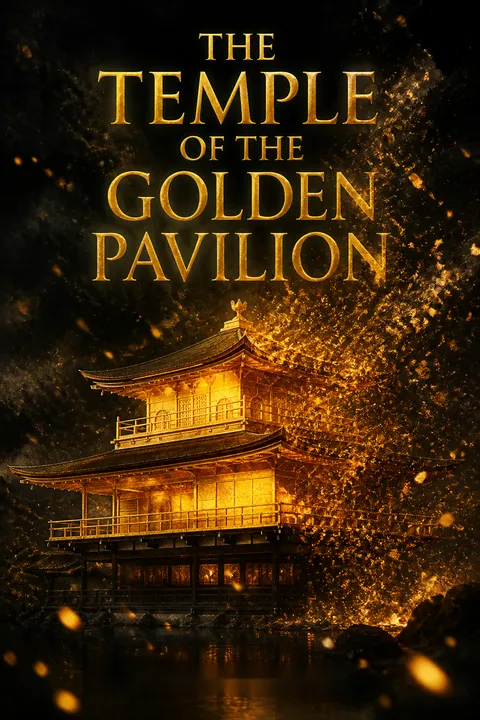
Not a person, but a character of overwhelming force: the Golden Temple (Kinkakuji) is at once symbol and substance, Mizoguchi's obsession, nemesis, and hope. By turns envisioned as ship, cathedral, phoenix, shadow, and immortal super-structure, its beauty offers Mizoguchi nothing but exclusion—its perfection both inspiration and curse. At key moments, the Temple's image blocks love, paralyzes action, and incites violence: it becomes the negative absolute at the heart of the protagonist's struggle—something to be worshiped, possessed, annihilated, and finally, set aflame as the only conceivable act of self-liberation.
Plot Devices
Obsession with Unattainable Beauty
The central narrative device is Mizoguchi's lifelong obsession with the Golden Temple—a symbol of beauty at once transcendent and unattainable. The Temple's perfection continually disrupts efforts at connection, pleasure, or self-acceptance, catalyzing all other themes: the struggle between inner and outer worlds, ugliness and art, love and isolation, action and impotence. Mishima weaves the obsessions into a dynamic structure, using reflection, doubling, and episodes of failed intimacy to escalate both tension and alienation, so that destruction seems the only authentic response to beauty's stifling tyranny.
Foreshadowing and Recurrence
The narrative is seeded with cyclic foreshadowing: childhood humiliation, curses, betrayals, and visions of violence all anticipate later repetition—especially the burning of the Temple. Encounters with death, ritual, and failed sexual initiation return with increasing symbolic force. The Zen koan of "killing" attachments is introduced early and consistently revisited, framing the final act not simply as a crime, but as a metaphysical zenith—echoing and critiquing the Buddhist paradox of liberation from all tie.
Narrative Structure of Gradual Descent
The plot unfolds as a carefully staged slide into solipsism, despair, and extremity. The "arc" is meticulously paced: initial episodes of wounding, exclusion, and longing gradually give way to philosophical and sexual experimentation, the loss of friendships, and ultimately, perverse liberation through violence. Mishima's technique is to substitute conventional character development with a kind of telescoping inwardness: rather than a moral or psychological recovery, the protagonist's journey is an anti-development—a progressive narrowing in which all options besides destruction are exhausted.
Intimate First-Person Confession
The entire novel is mediated through the first-person voice of Mizoguchi—honest, unreliable, confessional, and mercilessly introspective. His stutter and self-consciousness shape the prose into loops of reflection, denial, and sudden bursts of clarity. The effect is both distancing (magnifying the sense of solitude) and hypnotically immersive—readers are gradually drawn into the psychological logic of his actions, experiencing the Temple's spell and the final violence less as a horror than as an inevitability constructed line by line from private wounds and metaphysical yearnings.
Ritual and Repetition
The day-to-day rituals of temple life—sutra recitation, sweeping, eating—are rendered both soothing and oppressive, providing a framework for the protagonist's inward dramas and the ceaseless cycle of hope and disappointment. Each repetition heightens the contrast between the order of tradition and the mounting chaos within. Ritual becomes both a screen for pathology and a springboard for rupture; the everyday world's inability to heal or contain suffering gives the final act of arson its sacrilegious, revelatory resonance.
About the Author
Other books by Yukio Mishima






Download PDF
Download EPUB
.epub digital book format is ideal for reading ebooks on phones, tablets, and e-readers.








































