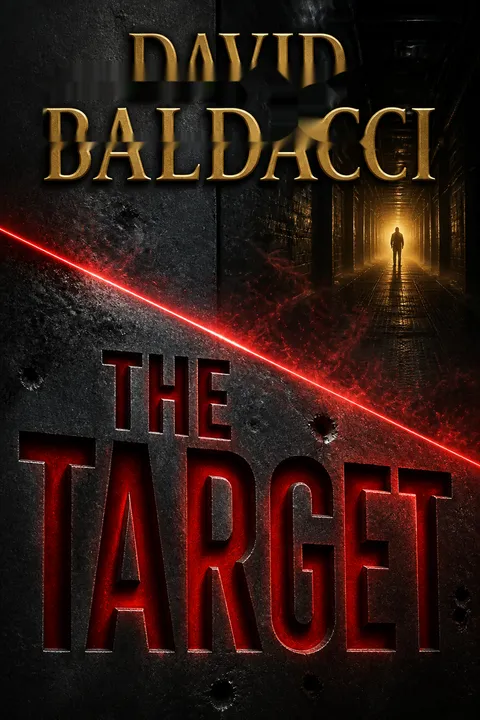

Plot Summary
Prisoner's Last Wish
In a grim Alabama prison, Earl Fontaine, a terminally ill and unrepentant killer, schemes for one last act before death. Chained to his hospital bed, he manipulates staff and visitors, feigning remorse and longing for his estranged daughter. But his request to see her is a ruse, a calculated move to draw her into a web of danger. Fontaine's actions ripple outward, setting off a chain of events that will entangle government agents, old enemies, and innocent lives, all while he clings to the hope of one final, twisted victory.
The President's Gamble
In the White House Situation Room, the President, his advisors, and CIA Director Evan Tucker debate a covert operation that could reshape the world order. North Korea's regime is targeted for destabilization, with the help of a high-ranking defector, General Pak. The plan is fraught with risk—if exposed, it could lead to impeachment, war, or worse. The President's resolve is tested as he weighs the cost of action against the specter of nuclear escalation, ultimately authorizing a mission that must remain in the shadows, no matter the personal or political cost.
Agents Under Scrutiny
Will Robie and Jessica Reel, elite government assassins, are summoned back to Langley. Their recent actions—defying orders, killing traitors within their own agency—have made them both heroes and pariahs. Under the watchful eye of Deputy Director Amanda Marks, they are forced into a brutal "recalibration" at the Burner Box, a clandestine training facility designed to break or remake agents. Their loyalty, judgment, and psychological fitness are relentlessly tested, as powerful figures within the CIA hope for their failure—and perhaps their deaths.
Reel's Reckoning
Jessica Reel's journey is shadowed by trauma: a childhood marked by abuse, a father's monstrous legacy, and the loss of her own child. As she endures the agency's punishing trials, she is also drawn into a deadly game orchestrated by her dying father, Earl Fontaine. His manipulations reach across decades, threatening to destroy the fragile trust she's built with Robie and to endanger the innocent. Reel's struggle is not just for survival, but for redemption and the hope of breaking free from the cycle of violence.
The Burner Box Ordeal
At the Burner Box, Robie and Reel are pushed to their physical and psychological limits. Waterboarded, isolated, and interrogated, they are forced to confront their own doubts and the agency's mistrust. Their only hope lies in their partnership and the emergence of Amanda Marks as a reluctant ally. As the tests grow more dangerous, the line between training and assassination blurs. The ordeal forges a deeper bond between Robie and Reel, but also leaves them marked by suspicion, trauma, and the knowledge that their survival is far from assured.
Unlikely Alliances
The agents' ordeal at the Burner Box is interrupted by new threats: a neo-Nazi group seeking revenge on Reel, and a North Korean assassin, Yie Chung-Cha, whose own tragic past mirrors Reel's. As Robie and Reel navigate betrayals within their own agency, they must also contend with external enemies—Fontaine's old associates, a vengeful white supremacist, and the machinations of North Korean operatives. Unexpected alliances form, as Amanda Marks and others recognize the necessity of Robie and Reel's skills in the face of escalating dangers.
North Korean Shadows
In Pyongyang, Yie Chung-Cha, a survivor of the infamous Yodok labor camp, is chosen for a suicide mission: to assassinate the American president's family in retaliation for U.S. interference. Haunted by the memory of killing her own family to escape the camp, Chung-Cha is both weapon and victim, her humanity eroded by years of brutality. She adopts a young girl, Min, as cover for her mission, hoping to save at least one innocent even as she prepares to kill others. The North Korean plot moves inexorably toward its target, with global consequences.
The Assassin's Child
The neo-Nazi leader Leon Dikes, Reel's former abuser and the father of her lost child, resurfaces, kidnapping Julie, a girl close to Robie and Reel. Dikes demands the return of his biological daughter—Reel's child—in exchange for Julie's life. The revelation of Reel's past and the existence of her daughter force her to confront old traumas and impossible choices. With Robie's help, she orchestrates a daring rescue, exposing the depths of her own pain and the lengths she will go to protect the innocent.
The Nazi Ultimatum
Reel and Robie, aided by the FBI, track Dikes and his followers to a remote compound. The rescue of Julie becomes a battle not just against armed fanatics, but against the ghosts of Reel's past. In a brutal confrontation, Reel faces Dikes, exacting justice for herself and for all his victims. The ordeal leaves her scarred but resolute, determined to break the cycle of violence that has defined her life. The rescue of Julie is a hard-won victory, but it comes at the cost of reopening old wounds and exposing new vulnerabilities.
The Rescue of Julie
The operation to save Julie is a test of everything Robie and Reel have learned—about trust, loyalty, and the price of their profession. With the help of allies old and new, they outmaneuver Dikes's men, rescue Julie, and ensure that Reel's daughter remains safe and hidden. The aftermath is bittersweet: justice is served, but the scars remain. Reel's willingness to sacrifice herself for Julie and her child cements her bond with Robie and marks a turning point in her journey toward healing.
The Target: General Pak
The original operation to destabilize North Korea unravels when General Pak, the key defector, is exposed and forced to flee. Robie and Reel are dispatched to France to assassinate him, but arrive only in time to witness his suicide. Pak's final words—"Don't let them hurt my family. Tell your president to go to hell."—echo the moral ambiguity of the mission. The fallout is immediate: Pak's family is sent to a labor camp, and the U.S. government is left scrambling to contain the diplomatic and ethical disaster.
The Mission Unravels
The exposure of the U.S. plot against North Korea leads to a crisis at the highest levels of government. The President, wracked by guilt, authorizes a desperate rescue mission to save Pak's family from the camps. Robie and Reel, joined by a North Korean defector, undertake a near-suicidal operation to extract the children from Bukchang. The mission is a success, but it triggers a new wave of North Korean vengeance, setting the stage for an attack on American soil and a confrontation that will test every character's limits.
The Price of Betrayal
As the North Korean plot to assassinate the president's family takes shape, Chung-Cha struggles with her conscience and her loyalty to Min, the girl she has saved from the camps. The plan is ruthless: a suicide attack during a Halloween parade on Nantucket. Meanwhile, Robie and Reel, now unofficially attached to the First Lady's security detail, sense danger but cannot prevent the attack from unfolding. The cost of betrayal—personal, political, and moral—becomes clear as the characters are forced to choose between duty and humanity.
The Labor Camp Escape
Robie, Reel, and their North Korean ally infiltrate Bukchang, navigating electrified fences, armed guards, and the ever-present threat of betrayal. The escape is harrowing, marked by violence and sacrifice. Robie is wounded and nearly left behind, but is rescued at the last moment by a U.S. Navy helicopter. The rescued children are granted asylum, but the operation's success only deepens the enmity between the U.S. and North Korea, ensuring that the cycle of violence will continue.
The President's Family in Peril
On Nantucket, the First Lady and her children become the focus of the North Korean assassination plot. Robie and Reel, sensing the threat, work with the Secret Service to protect the family. The attack comes during a Halloween event, with North Korean operatives disguised among the revelers. The ensuing battle is brutal and chaotic, with lives hanging in the balance. The agents' skills and courage are tested as they fight to save the innocent and prevent a global catastrophe.
Nantucket: The Final Stand
In the cellar of the Nantucket town hall, Robie, Reel, and the Cassions are cornered by North Korean assassins. The situation seems hopeless—until Chung-Cha turns on her own team, killing her fellow operatives to save the family. Her act of mercy is both a final rebellion against her past and a sacrifice for Min, the girl she loves. Mortally wounded by a panicked deputy, Chung-Cha dies asking only that Min be helped. Her death is both a tragedy and a redemption, a testament to the possibility of change even in the darkest of lives.
The Assassin's Mercy
In the aftermath of the attack, the world teeters on the brink of war, but a diplomatic compromise averts disaster. Robie and Reel are hailed as heroes, but they know the true debt is owed to Chung-Cha. Min, now orphaned, is taken in by Julie and her guardian, offered a chance at a life free from violence. Reel and Robie, changed by their experiences, contemplate their own futures—haunted by the past, but determined to seek peace and meaning beyond the cycle of killing.
The Legacy of Min
Min's adoption by Julie and her guardian is a symbol of hope, a chance to break the chain of trauma that has defined so many lives in the story. Robie and Reel, moved by Chung-Cha's sacrifice, commit to helping Min adjust and thrive. The novel ends with a visit to Chung-Cha's grave, a quiet moment of reflection on the cost of violence and the possibility of redemption. The legacy of Min is not just survival, but the hope that even in a world of darkness, compassion and courage can light the way forward.
Analysis
A meditation on violence, loyalty, and the cost of redemptionThe Target is more than a high-octane thriller; it is a profound exploration of the psychological and moral toll of violence—on individuals, families, and nations. Through its parallel narratives, the novel interrogates the nature of loyalty: to country, to institution, to self, and to those we love. The characters are shaped by trauma, betrayal, and the relentless demands of their professions, yet they are also capable of change, compassion, and sacrifice. The story's emotional core lies in the relationships forged in adversity—Robie and Reel's partnership, Chung-Cha's bond with Min, and the fragile connections between parents and children. The novel ultimately suggests that redemption is possible, but only through acts of mercy that break the cycle of violence. The legacy of Min, and the memory of those who chose compassion over vengeance, offer a glimmer of hope in a world where the line between good and evil is never clear, and where the greatest victories are those of the heart.
Review Summary
The Target receives mostly positive reviews (4.18/5), with readers praising its fast-paced action, compelling characters Will Robie and Jessica Reel, and emotional depth. Many highlight the vivid depiction of North Korea and the standout character Chung-Cha. Common criticisms include an overloaded plot with too many subplots, stretches of believability with superhuman protagonists, and predictable elements. Several readers note the book works as a standalone but benefits from reading the series in order. The emotional ending particularly resonated with many reviewers.
People Also Read








Characters
Will Robie
Will Robie is the CIA's most skilled and reliable assassin, a man whose life has been defined by violence, secrecy, and sacrifice. His relationship with Jessica Reel is both professional and deeply personal, marked by mutual respect, loyalty, and unspoken emotional complexity. Robie is introspective, often questioning the morality of his actions and the cost of his profession. Throughout the story, he is tested physically and psychologically, forced to confront his own limitations, his capacity for trust, and his desire for a life beyond killing. Robie's arc is one of gradual self-awareness, as he moves from detached operative to a man willing to risk everything for others, especially those he cares about.
Jessica Reel
Jessica Reel is a brilliant, deadly agent whose past is marred by abuse, betrayal, and loss. Her father's monstrous legacy and her own experiences as a victim and survivor have left her fiercely independent, emotionally guarded, and driven by a need for justice. Reel's relationship with Robie is her anchor, offering her a rare sense of trust and belonging. The revelation of her lost child and her willingness to sacrifice herself for Julie and others reveal a deep well of compassion beneath her hardened exterior. Reel's journey is one of confronting her trauma, seeking redemption, and ultimately choosing mercy over vengeance, even as she remains a formidable force.
Yie Chung-Cha
Chung-Cha is a North Korean assassin forged in the crucible of the Yodok labor camp, where she was forced to kill her own family to survive. Her life is a study in trauma, resilience, and the corrosive effects of violence. Tasked with assassinating the American president's family, she adopts Min as both cover and a desperate attempt to save at least one innocent life. Chung-Cha's internal conflict—her loyalty to her country versus her longing for humanity—culminates in her decision to spare the Cassions and sacrifice herself. Her final act is one of mercy and rebellion, a testament to the possibility of change even for the most damaged souls.
Earl Fontaine
Earl Fontaine is a dying killer whose final wish is not reconciliation, but revenge. His manipulations set the plot in motion, drawing his estranged daughter, Jessica Reel, into a deadly web involving neo-Nazis and old enemies. Fontaine is a study in narcissism and cruelty, using his illness and impending death as tools to control and harm others. His actions force Reel to confront her past and the cycle of violence that has shaped her life.
Amanda Marks
Deputy Director Amanda Marks is tasked with overseeing Robie and Reel's rehabilitation, initially serving as their judge and potential executioner. Over time, she becomes an unexpected ally, recognizing the necessity of their skills and the injustice of the agency's vendetta against them. Marks is pragmatic, principled, and ultimately willing to risk her career to do what is right. Her evolution from adversary to supporter reflects the story's themes of trust, loyalty, and the complexity of institutional morality.
Evan Tucker
CIA Director Evan Tucker is a political appointee whose insecurity and desire for control lead him to orchestrate the Burner Box ordeal and to manipulate Robie and Reel for his own ends. Tucker is both antagonist and tragic figure, ultimately forced to confront the consequences of his actions and to acknowledge the value of those he sought to destroy. His arc is one of reluctant self-awareness, culminating in an admission of error and a decision to step down.
Julie Getty
Julie is a bright, resilient teenager who becomes a surrogate daughter to Robie and Reel. Her kidnapping by neo-Nazis is a catalyst for Reel's confrontation with her past and her willingness to sacrifice herself for others. Julie's adoption of Min at the novel's end is a symbol of hope and the possibility of healing, offering a future free from the violence that has defined so many lives in the story.
Leon Dikes
Dikes is the neo-Nazi leader who raped Reel as a teenager and fathered her lost child. His reemergence and ultimatum force Reel to confront her deepest wounds and to choose between vengeance and mercy. Dikes is a manipulator, abuser, and fanatic, ultimately undone by Reel's courage and the support of her allies.
Min
Min is a ten-year-old girl rescued from the Yodok labor camp by Chung-Cha. Her presence humanizes Chung-Cha and becomes the catalyst for the assassin's final act of mercy. Min's adoption by Julie and her guardian represents the possibility of breaking the cycle of trauma and building a new life, even in the aftermath of unimaginable suffering.
President Tom Cassion
The President is a man torn between duty, ambition, and guilt. His authorization of the North Korea operation and subsequent rescue mission are acts of both courage and desperation. Cassion's struggle to balance personal morality with political necessity is mirrored in his relationship with his family, particularly his son Tommy. His arc is one of reckoning with the cost of power and the limits of control.
Plot Devices
Dual Narrative Structure
The novel employs a dual narrative structure, following Robie and Reel's journey through institutional betrayal, personal trauma, and redemption, while simultaneously tracing Chung-Cha's path from victim to assassin to reluctant savior. The convergence of these threads on Nantucket creates a powerful climax, highlighting the interconnectedness of personal and political violence.
Psychological Testing and Rehabilitation
The Burner Box serves as both a literal and metaphorical crucible, testing the agents' physical and psychological limits. The repeated questioning of loyalty, judgment, and the capacity for independent thought reflects the novel's exploration of institutional trust, the dangers of blind obedience, and the necessity of moral agency.
Foreshadowing and Symbolism
The novel is rich in foreshadowing: Earl Fontaine's manipulations, the President's guilt, and Chung-Cha's adoption of Min all signal the coming crises and the possibility of change. Symbols such as the medal, the rice cooker, and the grave serve as touchstones for the characters' journeys, representing both the weight of the past and the hope for a different future.
The Cycle of Violence
The story repeatedly examines how violence begets violence—through families, institutions, and nations. The characters' struggles to break this cycle, whether by saving a child, sparing an enemy, or seeking redemption, are central to the novel's emotional arc.
Redemption Through Sacrifice
The climax hinges on acts of mercy: Reel's willingness to die for Julie, Chung-Cha's decision to spare the Cassions and save Min. These choices are framed as both personal and political rebellions, challenging the logic of vengeance and offering a vision of hope in a world defined by brutality.
Will Robie Series





About the Author




Download PDF
Download EPUB
.epub digital book format is ideal for reading ebooks on phones, tablets, and e-readers.








































