
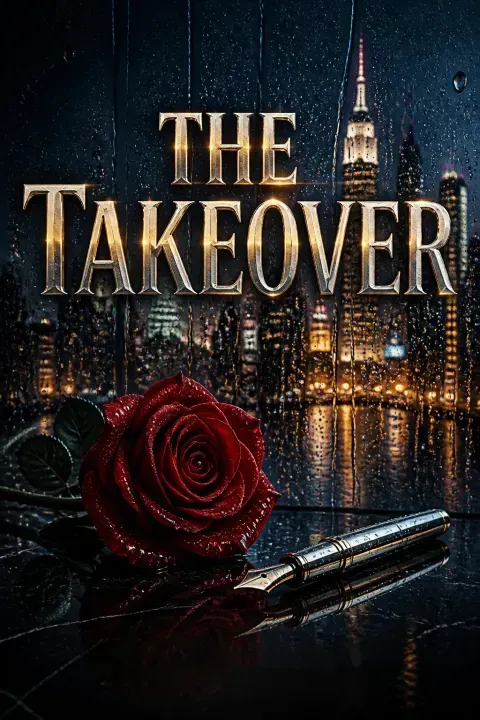


Plot Summary
The Vulture's Offer
Claire Anderson,1 widow and mother of three, runs Anderson Media, the company her late husband Wade10 built. It is bleeding accounts and staff, and Tristan Miles,2 head of acquisitions at Miles Media, has been circling for months. At a Manhattan restaurant, he lays out his terms with surgical calm: take a good price now or face bankruptcy in six months.
Claire1 slams the table, eyes wet, and tells him about Wade10's labor of love and his dream of handing the business to their sons. She calls him a rich, spoiled bastard, then storms out. Her assistant Marley6 apologizes for the cake and follows. Tristan2 stands alone, unsettled by a woman who refuses to be acquired.
This first encounter frames the entire novel's conflict. Tristan's corporate prowess meets Claire's visceral grief, and he discovers a language he cannot manipulate. Her explosion reveals that Anderson Media is not a failing asset but a family shrine. The attraction that sparks in him is born from her authenticity: she values memory over money, a currency foreign to him. The scene plants the question: can he ever be more than a predator to her?
A Dinner Invitation Spurned
Days after the meeting, Tristan2 phones Claire1's office. His voice is husky and uncertain as he fumbles toward a dinner invitation, wanting to start again. Claire1 laughs, calls him a cold, soul-sucking bastard, and tells him to find a bimbo. She hangs up. Tristan2 stares at the phone, adrenaline pumping.
He googles her name and learns about Wade10's death, the three sons, the five-year struggle. For the first time, a woman has rejected him outright, and the sting is mixed with curiosity. He cannot stop replaying her words, the fire in her eyes. Six months later, he still has not forgotten.
Tristan's clumsy attempt at personal connection betrays his inexperience with genuine intimacy. Claire's refusal, rooted in grief and principle, short-circuits his usual charms. His subsequent internet search indicates a shift: she becomes a person, not a conquest. Yet his interest is still partly the hunter's thrill, and her insult lodges under his skin because it might be true. The six-month gap before their next meeting allows both to simmer in unresolved tension.
Masters of Mind Games
Marley6 bullies a worn-down Claire1 into a motivational conference in Épernay. On opening day, Claire1's horror is complete when Tristan Miles2 strides on stage as the keynote speaker. He catches her trying to sneak out and commands her to sit back down. Later, he calls her out to share a proud moment.
Claire1 announces her proudest memory was refusing a date with a cold, soul-sucking bastard. He deflects smoothly, but the exchange crackles through the room. Over the next days, he singles her out, circles her during workshops, and watches her across the bar, each glance a silent dare.
The conference becomes an arena stripped of corporate hierarchy. Tristan uses his public platform to provoke and engage Claire, turning their private animosity into theater. Her retort shows she will not be shamed into submission, and his unperturbed response signals respect. The crowd's laughter humanizes him; for the first time, Claire sees him not as a shark but as a performer. The setting is a liminal space where their true selves can surface, away from offices and grief-stained houses.
The Kiss in the Alley
In a group session led by psychologist Elouise, Claire1 is asked the hardest thing in her life. She describes her husband Wade10's death at the hands of a drunk driver, then pauses. The worst part, she whispers, is watching her sons look into the stands at Little League games and remember their father is not there.
Tristan,2 standing at the edge of the circle, hears every word. That night, he finds her outside and pushes her against a wall, kissing her hard. He tells her pity is the last thing he feels. She kisses back, then flees, shaken. The wall between hatred and desire has cracked.
Vulnerability is the catalyst. Claire's raw admission bypasses Tristan's cynicism and triggers a physical response he cannot control. The kiss is not strategic or seductive; it is impulsive, almost desperate. For Claire, the kiss is terrifying because it proves she is still alive as a woman, not just a mother and widow. Her flight afterward shows how much her identity is still anchored to grief. Tristan, for once, is not in control of his own actions.
One Weekend in Paris
Tristan2 leaves the conference without a proper goodbye, but Claire1 finds roses and a card in her room: 'We have unfinished business. Come to Paris for the weekend.' She hesitates, then calls her mother to extend childcare and boards his company jet. In Paris, he takes her to the Four Seasons George V, to his favorite restaurant, to the Louvre and the Eiffel Tower.
They hold hands and laugh like teenagers. He speaks French on the phone and orders her granny tea after dinner. In bed, he makes her feel beautiful, every scar and stretch mark worshiped. By Sunday, she has glimpsed the man behind the suit: multilingual, close to his brothers, searching for something he cannot name.
Paris functions as a fairy tale bubble, a suspension of real-world rules. Here, Tristan is not the takeover king but a tour guide, a lover, a man hungry for connection. Claire's decision to come, despite her guilt, is her first act of self-forgiveness. He reveals his family dynamics (boarding school isolation, shared responsibility with brothers) and she reciprocates with pieces of her past. The weekend proves they can exist beautifully together, but the question remains whether this can survive the gravity of her New York life.
Office Hour Endings
Tristan2 arrives at Claire1's office, expecting to continue what they started. She immediately stops him: the weekend was a one-time escape. She rattles off reasons: she has three sons, she's too old, he dates young blondes, he is not boyfriend material.
Tristan,2 insulted, argues that he is excellent boyfriend material and that she is being absurd. He kisses her, but she pushes him to the door. He warns her they are not over until he says they are over, then leaves. Alone, Claire1 admits to herself she is falling for him but cannot risk her children getting attached to a man who eventually leaves.
Claire's wall goes back up the moment they return to her territory. Her list of incompatibilities is a shield: if she frames it as a mismatch, she can avoid the real fear of another loss. Tristan's outrage reveals that his self-image is tied to being chosen, and her rejection cracks his confidence. The scene exemplifies the book's central tension: she measures love by permanence and safety, he by passion and pursuit, and neither yet sees that the boys could be the glue, not the wedge.
The Unwanted Intern
Fletcher Anderson,3 Claire1's seventeen-year-old, has spent months secretly applying for an internship at Miles Media. When he walks into the final interview, he and Tristan2 recognize each other immediately: Fletcher3 is the boy who attacked him with underpants.
Tristan,2 still limping, is furious but listens as Fletcher3 explains he wants to learn the business to help his mother. Despite the assault, Tristan2 sees raw potential and fierce loyalty. He hires him. When Claire1 finds out, she forbids it, mortified and angry that Tristan2 would hire her son without consulting her. But Fletcher3 insists, and reluctantly, she lets him go.
This twist forces Claire and Tristan into ongoing contact through the son. Tristan's decision to hire a kid who humiliated him demonstrates that beneath the arrogance lies an eye for talent and a respect for grit. Fletcher, by pursuing the internship alone, shows a determination to shoulder his mother's burden. The job becomes a bridge: through mentoring Fletcher, Tristan begins to earn his place in the Anderson family, one lesson at a time.
Chaos at the Anderson Home
After a late work session, Tristan2 offers Fletcher3 a ride to Long Island. At the house, he finds a junkyard of shoes and bikes, a cat named Muff, a dog with a cone, and a flooded kitchen from a broken dishwasher. Middle son Harry4 glares and makes death threats; youngest Patrick5 is sweet and clingy.
While waiting for Claire1 to return from a date with Pilates Paul, Tristan2 drinks her wine and ends up babysitting so Fletcher3 can go on his first date. He endures a ticking clock, a cat that climbs on him, and Harry4's psychological warfare. When Claire1 comes home, she is furious and cold, yet he refuses to leave, sleeping on the couch.
This immersion into Claire's world is Tristan's trial by fire. The luxury penthouse dweller confronts chaos and finds it oddly compelling. His willingness to endure discomfort, even to sleep on the cement couch with a cat, signals a shift from casual lover to potential partner. The household dysfunction, rather than repelling him, awakens a protective instinct. Claire's mixed reaction, anger mixed with reluctant gratitude, reveals her fear of letting someone into this sacred, messy space.
Monogamy with a Catch
Weeks later, Tristan2 spots Claire1 at a bar with Gabriel Ferrara,7 head of a rival media company. He approaches, jealous and bristling, and insinuates loudly that she is on a date. Gabriel7 fumes, but Claire1 sends him away. Alone in a hallway, Tristan2 kisses her and demands she stop seeing other men.
He proposes 'casual monogamy': they only see each other, no strings attached. Claire,1 unable to deny her body's craving, agrees. They begin a pattern of lunchtime hotel meetings where Tristan2 draws the curtains, orders her favorite food, and slowly dismantles her defenses, one hour at a time.
Tristan's jealousy reveals emotional investment, and his solution, casual monogamy, is a compromise that allows Claire to maintain control while giving him access. The hotel rendezvous become a ritual of slow seduction where he teaches her to accept pleasure without guilt. She negotiates the terms, but he sets the stage: curtains drawn to protect her insecurities, shower caps for practicality. It's a halfway house between their first wild weekend and the full real-life partnership they both fear.
Wizard vs. the Takeover King
Harry,4 the middle son, escalates his hostility after Tristan2 begins staying over. He pours sugar into Tristan2's Aston Martin gas tank, then swaps his expensive conditioner with hair-removal cream. Tristan2's hair turns to cotton wool.
Furious but unwilling to tattle to Claire,1 he retaliates silently: he removes all the wheels from Harry4's skateboard and bikes, and disables the internet. When Harry4 complains, Tristan2 delivers a cryptic 'tick tock.' The household watches the silent war with amusement. Harry4 seethes but also begins to respect a man who fights back on his own terms.
The prank war is a form of male bonding, a test of Tristan's spine and ingenuity. Harry, who lost his father too young, needs to know if this replacement will crumble or engage. Tristan's decision not to complain to Claire shows respect for Harry's autonomy and a willingness to meet him on the boy's turf. Each act of sabotage and counter-sabotage brings them closer, converting hostility into a coded language of mutual acknowledgment.
Wedding Rings Returned
After a tender evening with Tristan2 and the boys, Claire1 has a breakdown in the shower. Guilt overwhelms her for letting another man into Wade10's house. She puts her wedding rings back on for comfort. The next morning, Tristan2 sees them and his face hardens.
He says he does not sleep with married women, throws on his clothes, and storms out. Claire1 does not chase him, convinced she is too broken to deserve love. Days of silence follow. She misses him desperately but believes his departure was inevitable, that her heart still belongs to a ghost and always will.
The rings become the ultimate symbol of Claire's divided loyalties. Tristan's reaction is not just jealousy but existential despair: he fears he will always be the understudy, forever in Wade's shadow. Her retreat into mourning reveals that grief can be a habit as much as a feeling, a security blanket she is terrified to release. This is the moment where their relationship must either break permanently or evolve past the past.
The Family Vote
After reconciling, Claire1 stays at Tristan2's Tribeca penthouse. He declares he is done with games. At a family dinner, he stands and, in front of the three boys, formally asks Claire1 to be his girlfriend. To win over hostile Harry,4 he pitches himself against alternatives: moving to Paris (losing the pets), dating Pilates Paul (pink sweatband), or a hypothetical new man whose kids would steal their bedrooms and internet.
He lists his own assets: good looks, no relocation, baking skills. He calls for a vote. Patrick5 and Fletcher3 vote yes, Tristan2 votes for himself, and Harry,4 cornered and outmaneuvered, reluctantly agrees. The motion carries.
Tristan's 'vote' is strategic genius. By framing the decision as a democratic process, he acknowledges the boys' stake in the relationship. He translates his corporate takeover skills into family diplomacy, treating the children as stakeholders rather than obstacles. The humorous presentation masks his sincere desire to belong, and by giving Harry a sense of agency, he disarms the boy's resistance. The vote becomes a new family origin myth.
Smoke Signals at the Grave
After Harry4 lies about his whereabouts, Tristan2 pieces together clues: Harry4 has been biking fifteen miles to the Suffolk County Cemetery to visit his father10's grave. Tristan2 finds him there, muddy and wet, and confronts him without anger. Harry4 admits he goes alone because Claire1 always cries for a week afterward.
Tristan2 produces a packet of expensive cigars, the same brand Wade10 loved, and lights one for himself and one for the boy. Then, with a hand on the cold stone, he introduces himself to Wade.10 Claire,1 who followed them, watches from behind a tree, tears streaming down her face.
This scene is the emotional keystone of the book. Tristan honors Wade not as a rival but as the man who helped shape the children he now loves. Lighting the cigar becomes a silent communion, a passing of the torch. Harry, for the first time, is not alone in his grief. Claire's witness of this private ritual shatters her belief that embracing Tristan means betraying Wade. The act proves Tristan understands that to love her family, he must love what came before.
The Adoption Ultimatum
Months into their happy domestic life, Tristan2 surprises Claire1 with a grand new house, then announces he wants to legally adopt all three boys. Claire1 erupts. She screams that they are Wade10's sons and will never be his, that he cannot take them like a corporate acquisition.
Tristan,2 eyes wet, says he would give up having biological children to have them as his own. She remains unmoved, accusing him of trying to erase Wade.10 The fight escalates until he walks out, flies to Paris, and does not return. Claire,1 devastated, emails him to accept his old offer to buy Anderson Media as a final surrender.
This fight crystallizes their deepest wounds: his fear of never having a family of his own, and her terror of erasing Wade. Both are right and both are wrong. The house symbolizes the new life Tristan wants to build, but Claire sees only demolition. His demand to adopt, while loving, ignores her need for continuity. Her refusal, while loyal, denies the living what they need. The business email marks her complete capitulation, a surrender of her last connection to Wade.
Runaways and a Ring
While Claire1 reports her sons missing, Harry4 and Patrick5 have used Tristan2's emergency credit card to fly to Paris. They show up at his hotel, declaring they want him as their dad, no matter what their mother says. Claire1 and Fletcher3 follow; she arrives distraught, begging Tristan2 not to leave, promising to do whatever he wants.
He relents, saying they can do things her way. Months later, at Christmas in Aspen, Tristan2 proposes with the boys' help. Claire1 says yes, then reveals she is two months pregnant. Later, Tristan2 resigns from Miles Media to run Anderson Media alongside Fletcher.3
The children's autonomous action flips the power dynamic. They are not passive objects to be fought over but active agents choosing their own father. Claire's surrender comes not from weakness but from the realization that the love she tried to protect is what held them captive. Tristan's resignation from the family empire is the ultimate proof: he is not taking over; he is joining. The pregnancy seals a new beginning where past and present merge, and Wade's legacy continues through the next generation, now with Tristan's stewardship.
Analysis
This novel explores how love, grief, and control intertwine in the aftermath of loss. Claire1's primary struggle is not financial but psychological: she has frozen her emotional life at the moment of Wade10's death, believing that to move forward is to betray him. Tristan,2 raised in a world of acquisitions, has spent his life 'taking over' failing entities, and he initially treats Claire1's family as another restructuring project. What he discovers is that this family cannot be acquired; it must be joined. The book's title works on multiple levels: Tristan2's literal business, his emotional takeover of Claire1's heart, and the final takeover of Anderson Media by the next generation under his guidance. The narrative deftly shows that the boys, often sidelined in romance plots, are not obstacles but the very heart of the relationship. Harry4's pranks and grave visits, Patrick5's innocent attachment, and Fletcher3's professional ambition all become pathways through which Tristan2 proves his worth. The climax, where the children fly to Paris on their own to reclaim their chosen father, is a powerful inversion: they are not passive prizes but active architects of their own family. The novel ultimately argues that a legacy is not a fixed monument but a living, evolving story, and that the greatest honor to a lost partner might be to allow new love to flourish in the space they left behind.
Review Summary
The Takeover is a popular romance novel that has received overwhelmingly positive reviews. Readers praise the chemistry between the main characters, Tristan and Claire, as well as the humorous and heartwarming interactions between Tristan and Claire's children. Many reviewers found the book to be a perfect blend of steamy romance, emotional depth, and laugh-out-loud moments. While some readers had minor issues with certain plot points or character decisions, the majority found it to be an enjoyable and engaging read that left them eager for more from the series.
People Also Read








Characters
Claire Anderson
Widowed CEO and mother of threelost her husband Wade10 five years ago to a drunk driver. She runs Anderson Media alone while raising three sons. Her identity is fused with Wade10's memory; she wears her wedding rings like armor and measures every decision against the promises she made to him. Beneath the capable exterior, she is exhausted, sexually dormant, and terrified of moving on. Her grief has made her rigid, but Tristan2's arrival awakens a playful, passionate side she thought had died. Her journey involves learning that loving again does not erase her first love, and that the best way to honor Wade10 is to let their sons be fully loved by another man.
Tristan Miles
Takeover king turned devoted partnerRaised in boarding schools with his brothers, he learned to value control and success. His romantic history is a string of short-term relationships with women who never truly challenged him. Under the arrogance, he hides a deep need to belong and to fix things, a trait his mother Elizabeth9 identifies. Claire1 and her chaotic family become the ultimate 'fix': not a company to restructure but a home to join. His arc traces the transformation from detached playboy to committed family man, culminating in his resignation from the family business to safeguard Claire1's legacy.
Fletcher Anderson
Protective eldest sonHe is fiercely protective of his mother Claire1, as demonstrated when he attacks Tristan2 with underpants. Secretly ambitious, he applies for a Miles Media internship to learn skills to help her. Under Tristan2's tough mentorship, he matures from a hotheaded boy into a confident young professional. His approval of Tristan2, once earned, becomes a crucial validation for the relationship.
Harrison 'Harry' Anderson
Rebellious middle childHis hostility toward Tristan2 manifests in creative sabotage (sugar in gas, hair-removal cream). But beneath the rebellion is a boy who secretly bikes miles to his father's Wade10 grave and smokes cigars in tribute. His prank war with Tristan2 is a test; once Tristan2 proves he will not abandon them, he becomes fiercely attached. He needs a father who can match his intensity without breaking.
Patrick Anderson
Youngest son with a tender heartHe was only four when his father Wade10 died and has no real memories of him, only stories. He latches onto Tristan2 immediately, sitting on his lap, holding his hand, and worrying when Tristan2 drives home at night. His open-hearted acceptance models for his brothers how to welcome a new parent, and his fears about drunk drivers reveal the lingering trauma of his father's death.
Marley
Claire's best friend and assistantShe pushes Claire1 to attend the conference and to take chances, acting as the voice of reason and comic relief. Her unwavering support and blunt honesty help Claire1 navigate the turbulence of work and romance.
Gabriel Ferrara
Rival media mogul and friendHe runs Ferrara Media, a competitor to Miles Media, and is a platonic friend to Claire1. He offers to buy half of Anderson Media to help her, but his presence often sparks Tristan2's jealousy. He serves as a foil, highlighting Tristan2's more romantic, less transactional approach.
Jameson Miles
Tristan's CEO brotherHe is the eldest Miles brother, runs the family business. Stern but supportive, he provides dry commentary on Tristan2's chaotic new life. His acceptance of Claire1 helps legitimize the relationship within the Miles family.
Elizabeth Miles
Tristan's protective motherShe is concerned about Tristan2's relationship with Claire1, fearing he is sacrificing his chance to have biological children and settling for a 'fixer' role. She meddles by urging him to see his ex-girlfriend Mary, but eventually accepts Claire1 after realizing Tristan2's happiness is genuine.
Wade Anderson
Claire's deceased husbandHe was a loving father and the founder of Anderson Media. His memory is a constant presence in the story, a benchmark for Tristan2 and a source of Claire1's guilt. The novel ultimately suggests that his love for his family might have led him to send someone like Tristan2 to them.
Christopher Miles
Tristan's younger brotherHe works in human resources at Miles Media and is the most easygoing of the brothers. He immediately warms to Claire1, providing a contrast to his mother Elizabeth9's reservations.
Elliot Miles
Tristan's art-collector brotherHis pursuit of reclusive artist Harriet Boucher mirrors Tristan2's pursuit of Claire1, both brothers drawn to what resists them.
Plot Devices
Anderson Media's Financial Decline
Drives initial conflict and ongoing tensionThe company Claire1's late husband Wade10 built is hemorrhaging money, forcing her to consider takeover offers. This serves as the initial meeting point with Tristan2 and later becomes a symbol of her struggle to preserve Wade10's legacy. Her eventual acceptance of Tristan2's original offer, sent in a moment of defeat, marks her complete emotional surrender before the turnaround. The device ties business to emotion, showing that saving the company requires saving the family first.
The Mind Masters Conference
Setting for reconnection and affairThe conference in Épernay, France, provides a neutral ground where corporate roles dissolve. It is here that Claire1 and Tristan2 move from adversaries to lovers, away from their New York contexts. The conference metaphor of 'mastering your mind' parallels their journey of overcoming mental barriers (grief for her, fear of intimacy for him). Tristan2's keynote speaker status gives him a stage to both challenge and charm her.
Claire's Wedding Rings
Symbol of grief and divided loyaltiesClaire1's rings represent her ongoing marriage to Wade10's memory. She removes them at Marley6's urging, but puts them back on during moments of guilt. Tristan2 sees the rings as a barrier, and his explosive reaction when she wears them after sleeping with him forces the central crisis. The rings' final removal symbolizes her acceptance of a new life.
The Adoption Ultimatum
Central relationship crisisTristan2's demand to legally adopt the three boys becomes the emotional wedge that nearly destroys them. It crystallizes his deep need for a family of his own and her fear of erasing Wade10. The ultimatum forces both to confront what they truly want and what they are willing to sacrifice. Its resolution, where the boys themselves act as agents of reconciliation, redefines the family as a choice rather than an acquisition.
The Cigar Ritual at Wade's Grave
Symbolic transfer of guardianshipWhen Tristan2 follows Harry4 to the cemetery, he does not scold but shares a cigar, performing a silent ritual that honors Wade10. Placing his hand on the tombstone and introducing himself signifies a respectful passing of the torch. This moment, witnessed by Claire1, proves to her that Tristan2 is not replacing Wade10 but joining him in caring for the family. The cigars, Wade10's favorite, become a recurring motif of connection across the divide of death.
FAQ
Synopsis & Basic Details
What is The Takeover about?
- A Widow's Fight: Claire Anderson, a fiercely independent widow and mother of three, desperately battles to save her late husband's struggling company, Anderson Media, from financial ruin and a predatory corporate takeover.
- The Ruthless Suitor: Her primary antagonist is Tristan Miles, a notoriously charming yet cold-hearted acquisitions expert, whose relentless pursuit of Anderson Media clashes with Claire's deep loyalty to her husband's legacy.
- Unexpected Connection: What begins as a high-stakes business negotiation quickly evolves into a complex personal entanglement, as Claire and Tristan find themselves unexpectedly drawn to each other, forcing them to confront their pasts, desires, and definitions of family.
Why should I read The Takeover?
- Emotional Depth & Growth: The novel offers a compelling exploration of grief, healing, and the courage it takes to embrace new love after profound loss, particularly through Claire's journey of letting go of the past.
- Dynamic Character Arcs: Readers will be captivated by the evolution of both Claire and Tristan, as the ruthless businessman reveals unexpected tenderness and the grieving widow rediscovers passion and joy.
- Engaging Banter & Chemistry: Beyond the emotional core, the book is filled with witty, often hilarious, dialogue and undeniable sexual tension between the protagonists, making for a truly entertaining read.
What is the background of The Takeover?
- Corporate Predator vs. Legacy: The story is set against the backdrop of New York's competitive media industry, where Miles Media, a powerful conglomerate, targets smaller, struggling family-owned businesses like Anderson Media for acquisition.
- Grief and Single Parenthood: Claire's personal background is deeply rooted in the unexpected death of her husband, Wade, five years prior, leaving her as a sole parent navigating financial hardship and the emotional complexities of raising three boys.
- Miles Family Dynamics: Tristan's background reveals a privileged but emotionally distant upbringing, with his family's immense wealth and corporate expectations shaping his ruthless exterior, contrasting with his hidden longing for genuine connection.
What are the most memorable quotes in The Takeover?
- "I always get what I want.": This declaration by Tristan Miles early in the narrative encapsulates his relentless drive and serves as a recurring motif, initially a threat to Claire but later a testament to his unwavering pursuit of her and their family.
- "You're everything I never knew I wanted.": Tristan's heartfelt admission to Claire signifies his profound shift from seeking superficial relationships to valuing Claire's strength, vulnerability, and the chaotic family life she brings, marking a pivotal turning point in his character arc.
- "He sent Tristan for us, Mom.": Fletcher Anderson's tearful revelation to Claire about his deceased father, Wade, "sending" Tristan, highlights the children's profound acceptance of Tristan and redefines Claire's understanding of love, loss, and divine intervention.
What writing style, narrative choices, and literary techniques does T.L. Swan use?
- Dual Narration and Shifting Perspectives: Swan primarily employs alternating first-person perspectives (Claire and Tristan), offering intimate access to their thoughts, insecurities, and desires, which deepens reader empathy and highlights their contrasting internal worlds.
- Witty Banter & Sexual Tension: The dialogue is sharp, often humorous, and laden with subtext, particularly in the early interactions between Claire and Tristan, effectively building their undeniable chemistry and playful antagonism.
- Emotional Honesty & Vulnerability: Swan doesn't shy away from raw emotional portrayal, especially Claire's struggle with grief and guilt, and Tristan's hidden longing for belonging, grounding the romance in relatable human experience.
Hidden Details & Subtle Connections
What are some minor details that add significant meaning?
- Tristan's "Fixer" Trait: His mother, Elizabeth, reveals that Tristan has a deep-seated psychological need to "fix" things and is drawn to people and businesses in distress, explaining his initial attraction to Anderson Media and, later, to Claire and her chaotic family. This subtle detail, revealed late in the book, reframes his entire motivation.
- Harry's "Tick-Tock" Pranks: Harry's seemingly random acts of mischief, like putting sugar in Tristan's car and hair removal cream in his conditioner, are not just childish antics but a manifestation of his deep-seated grief and protective instincts, symbolized by his "tick-tock" phrase, indicating a countdown to Tristan's departure, which he fears.
- The Spaceship Model: Tristan's purchase of the complex spaceship model for Harry, initially a bribe, becomes a symbol of his genuine effort to connect with the boys on their terms, fostering shared activity and demonstrating his commitment to their world, even if it means enduring chaos.
What are some subtle foreshadowing and callbacks?
- Tristan's "I always get what I want": This early declaration by Tristan, initially perceived as a corporate threat regarding Anderson Media, subtly foreshadows his relentless pursuit of Claire and his eventual integration into her family, demonstrating his unwavering determination in both business and personal life.
- Claire's Wedding Rings: Her struggle to remove her wedding rings in Chapter 3, and her later re-wearing them during a moment of emotional distress, subtly foreshadows the central conflict of letting go of the past and her deep-seated guilt, which Tristan eventually confronts.
- The "Grandma Tea" Joke: Tristan's playful mockery of Claire's preference for "grandma tea" evolves into a tender callback when he orders it for her at a fancy dinner, symbolizing his growing attentiveness to her small preferences and his acceptance of her "normal" life.
What are some unexpected character connections?
- Tristan and Harry's Shared Grief: The most unexpected connection is revealed when Tristan takes Harry to Wade's grave, where they share cigars. This moment, hidden from Claire, shows Tristan's profound empathy for Harry's unspoken grief and establishes a unique, healing bond between them, transcending their initial antagonism.
- Tristan's Bond with Patrick: Despite his initial aversion to children, Tristan forms an immediate and deep connection with Patrick, the youngest. Patrick's innocent adoration and Tristan's patient, playful responses (e.g., watching movies, calling him "Tricky") highlight Tristan's innate capacity for fatherly love, surprising both Claire and himself.
- Fletcher's Loyalty to Tristan: Fletcher, initially fiercely protective of Claire and suspicious of Tristan, eventually develops a deep respect and loyalty towards him, even defending Tristan to Claire. This shift is unexpected given their initial physical altercation and Fletcher's strong desire to protect his mother's legacy.
Who are the most significant supporting characters?
- Marley Smithson: Claire's best friend and assistant, Marley serves as a crucial catalyst for Claire's emotional growth, consistently pushing her out of her comfort zone, encouraging her to embrace new experiences (like the conference), and providing a much-needed dose of pragmatic, humorous reality.
- Elizabeth Miles (Tristan's Mother): Beyond her initial traditionalist concerns, Elizabeth plays a pivotal role in revealing Tristan's core psychological trait – his "fixer" complex – which provides profound insight into his motivations and past relationships, forcing Tristan to confront his own patterns.
- Harry Anderson: As the rebellious middle child, Harry's actions, particularly his pranks and eventual runaway attempt, are significant drivers of the plot and emotional turning points, forcing both Claire and Tristan to confront their deepest fears and re-evaluate their priorities.
Psychological, Emotional, & Relational Analysis
What are some unspoken motivations of the characters?
- Claire's Guilt-Driven Self-Sabotage: Claire's deep-seated guilt over Wade's death and her promise to uphold his dreams subconsciously drives her to self-sabotage new relationships and opportunities for happiness, believing she doesn't deserve to move on. Her reluctance to fully embrace Tristan stems from this internal conflict, fearing it dishonors Wade.
- Tristan's Quest for Unconditional Belonging: Beneath his ruthless corporate exterior, Tristan is driven by an unspoken longing for a genuine, unconditional family connection, a void left by his emotionally distant upbringing. His pursuit of Claire and her children is less about conquest and more about finding a place where he truly belongs and is needed.
- Harry's Cry for Stability: Harry's rebellious behavior, including his pranks and running away, is an unspoken cry for stability and a desperate attempt to control his environment after the profound loss of his father. His actions are a manifestation of his fear of further abandonment and his desire for a consistent male figure.
What psychological complexities do the characters exhibit?
- Claire's Trauma-Induced Stagnation: Claire exhibits a complex psychological state of stagnation, where her grief over Wade's death has frozen her emotional and personal life for five years. She clings to familiar routines and objects (the house, the rings) as a defense mechanism against further pain, making her resistant to change and new relationships.
- Tristan's "Fixer" Archetype: Tristan embodies the "fixer" archetype, a psychological compulsion to solve problems and rescue those in need, stemming from his own unaddressed emotional needs. This trait, revealed by his mother, explains his attraction to struggling businesses and, more profoundly, to Claire's vulnerability and her family's chaos, highlighting a potential blind spot in his understanding of love.
- The Children's Manifestations of Grief: Each of Claire's sons displays distinct psychological complexities related to their father's death: Fletcher's overprotective nature, Harry's rebellious acting out and "tick-tock" pranks (symbolizing his fear of loss), and Patrick's innocent clinging to memories and need for a consistent male presence.
What are the major emotional turning points?
- Claire's Removal of Wedding Rings: A significant emotional turning point occurs when Claire, urged by Marley, finally removes her wedding rings. This act symbolizes her conscious decision to begin letting go of her past grief and open herself to the possibility of a future, even if it's terrifying.
- Tristan's Visit to Wade's Grave with Harry: Tristan's decision to take Harry to his father's grave and share a cigar marks a profound emotional shift for Tristan, demonstrating his empathy and willingness to embrace the complexities of Claire's family, solidifying his commitment beyond mere attraction.
- The Children's Runaway to Paris: The boys' desperate act of running away to Paris to find Tristan is a critical emotional turning point, forcing Claire to fully acknowledge the depth of their bond with him and compelling her to surrender her fears and accept Tristan's place in their lives.
How do relationship dynamics evolve?
- Antagonism to Passion: The dynamic between Claire and Tristan dramatically evolves from initial mutual disdain and corporate antagonism to intense physical attraction and, eventually, deep emotional love, driven by their witty banter and unexpected vulnerabilities.
- Parental Protection to Shared Responsibility: Claire's relationship with her children shifts from her sole, often overwhelming, protective role to a shared responsibility with Tristan, as he gradually earns their trust and actively participates in their lives, offering a different kind of support and perspective.
- Miles Family's Emotional Opening: Tristan's relationship with his own family, particularly his brothers and mother, evolves as he becomes more emotionally open and vulnerable about his feelings for Claire, leading to greater acceptance and support from them, culminating in his mother's crucial revelation about his "fixer" trait.
Interpretation & Debate
Which parts of the story remain ambiguous or open-ended?
- The Long-Term Impact of Tristan's "Fixer" Trait: While Tristan's mother identifies his compulsion to "fix" things, the story leaves open how this trait might manifest in his long-term relationship with Claire and the children once their initial "problems" are resolved, or if he will truly overcome it.
- The Children's Full Acceptance of Tristan: Although the boys eventually accept Tristan, the narrative doesn't fully explore the long-term psychological impact of their father's death and how they will navigate having a new father figure, leaving room for future challenges in their blended family dynamic.
- The Future of Anderson Media: While Tristan takes over as CEO, the specific strategies and challenges of rebuilding Anderson Media under his leadership, and how this new professional dynamic will impact his relationship with Claire, remain largely unexplored beyond the initial decision.
What are some debatable, controversial scenes or moments in The Takeover?
- Tristan's Initial Pursuit of Anderson Media: His ruthless corporate tactics, described as "gutting" companies and acting like a "leech," are highly debatable. Readers might question if Tristan's initial predatory behavior can be fully redeemed by his later romantic actions, or if it's simply a different form of "takeover."
- The Adoption Conflict: The heated argument over Tristan's desire to adopt Claire's children is a controversial moment. Claire's refusal, rooted in loyalty to Wade's memory, clashes with Tristan's desire for legal recognition and a "real" family, sparking debate about the boundaries of new love and honoring the deceased.
- Harry's Pranks and Tristan's Response: Harry's extreme pranks (sugar in the car, hair removal cream) and Tristan's initial, equally extreme reactions (threatening to "kill" him, calling him "psychotic") can be controversial. It raises questions about appropriate discipline and the psychological impact of such intense conflict on a child.
The Takeover Ending Explained: How It Ends & What It Means
- Reconciliation and Family Unity: The ending sees Claire and Tristan reconcile after the boys run away to Paris, forcing Claire to confront her fears and Tristan to accept the children without legal adoption. This signifies a shift from control to unconditional love, forming a united, albeit unconventional, family.
- New Beginnings and Personal Growth: Tristan proposes to Claire, involving the boys in the decision, and Claire reveals she is pregnant. This symbolizes a new chapter, not just for their relationship but for their individual growth, as Claire fully embraces a future beyond grief and Tristan finds the family he always craved.
- Sacrifice and Redefinition of Success: Tristan leaves his powerful CEO position at Miles Media to become CEO of Anderson Media, working alongside Fletcher. This profound sacrifice redefines his personal success, prioritizing family and love over corporate power, and fulfilling Wade's dream in an unexpected way.
Miles High Club Series

About the Author



Download PDF
Download EPUB
.epub digital book format is ideal for reading ebooks on phones, tablets, and e-readers.








































