
Plot Summary
Awakening in Shadowed Halls
She is surrounded by darkness and flickering red orbs, with no memory of how she arrived. The place feels both alien and familiar, and a sense of panic threatens to overwhelm her. She discovers a door carved with crowns and suns, and behind it, a sumptuous chamber where a chained, battered man—her husband, Erolas—lies in pain. She is invisible to him, a phantom in a dream, and can only watch as he suffers. Rage and helplessness fill her, and she vows to find and free him, even as the dream is shattered by the arrival of a terrifying, angelic woman who claims Erolas as her own and banishes Valera in a blaze of pain and light.
The Dream of Chains
She is not in her own world, but in the fae realm, far from home, wrapped in a magical shadow-cloth. Memories of betrayal and fear flood her—she broke her husband's trust, and now he is lost. Alone in the Whispering Wood, she struggles to survive, using the magical gifts Erolas gave her: a necklace of lockets, each containing enchanted cloth. Driven by hunger and desperation, she attempts to use a wind-cloth to escape the forest, but is attacked by a monstrous creature. At the last moment, her sister Brielle appears, saving her with a well-placed arrow.
Lost in Whispering Wood
Brielle, now a hardened huntress, is both relieved and frustrated to find her sister. She questions Valera about her time with Erolas, convinced her sister was enchanted and abused. Valera, wracked with guilt and confusion, cannot explain her feelings or the truth of her marriage. Brielle reveals she obtained a magical candle from a mysterious pale woman, meant to break the fae's spell. But the price of the candle is unclear, and both sisters sense they have been manipulated. Despite Brielle's efforts to bring Valera home, Valera is determined to find and save Erolas.
Sister's Rescue, Sister's Doubt
The sisters navigate the strange folds of the Whispering Wood, passing through magical gates and returning to their mortal world. Valera is numb, haunted by dreams of Erolas and the Pale Woman, who now possesses him. Brielle is fiercely protective, but cannot understand Valera's longing for her fae husband. At home, Valera is treated as a broken, tainted girl, locked away for her own good. She escapes, desperate to find answers, and seeks out the local ward witch, Mother Ulla.
The Candle's Price
Using a blood-magic ritual, the witch proves Valera is not under a fae spell—her love for Erolas is real. Brielle is forced to accept this painful truth. Valera begs for help to find Erolas, but Mother Ulla refuses, warning her of the dangers of fae-human unions and the cost of seeking the Starglass, a magical scrying pool. Undeterred, Valera and Brielle set out to find their grandmother, Granny Dorrel, a powerful and dangerous witch who may know the way.
Home, But Not Whole
The sisters brave the perils of the wood and Granny's monstrous guardians to reach her. Granny agrees to help Valera reach the Starglass, but demands a precious memory in payment: Valera's last moment with her dying mother. The loss is sharp and irrevocable, but Granny gives Valera a magical ointment to protect her from the Myar, the Starglass's deadly guardian. The sisters rest uneasily, knowing the hardest part of their journey lies ahead.
The Witch's Test
Guided by robins and ugly iefyr blossoms, Valera and Brielle navigate the shifting, treacherous folds of the Whispering Wood. They face monstrous creatures, the vertigo of the Hinter, and the threat of losing themselves in the madness between worlds. At last, they reach Hatharal Hill and the Grotto of Inamyar, where the Starglass waits, surrounded by the bones of those who failed before them.
The Bargain with Granny
Using Granny's ointment, Valera is able to look into the Starglass without succumbing to the Myar's despair. She sees Erolas, trapped and enthralled by the Pale Queen, doomed to die at dawn after his third wedding night. Brielle, exposed to the Myar, loses her hope and nearly her life. Valera bargains with Granny Dorrel to save her sister, sacrificing seven years of Brielle's freedom. The sisters part, their bond tested but unbroken, and Valera sets out alone to save her husband.
The Path of Holly and Stars
She follows the cryptic instructions Brielle recovered from her lost memory, seeking the path to Druindar, the Pale Queen's kingdom. She bargains with a trickster, survives the deadly valley of unicorns and burning star-flowers, and walks the starlit path between Sun and Moon, where she witnesses the passage of ancient, godlike beings. Each step tests her courage, resolve, and the magic in her blood.
The Starglass and the Myar
She faces burning rivers, monstrous salamanders, and the endless, folding landscape that keeps her from reaching Gorzana, the Pale Queen's palace. Only by saving a wounded salamander and receiving the blessing of Urym, the god of fire, does she unlock her own latent magic and find her way to the palace walls. She repairs her wind-cloth with newfound power and prepares for the final confrontation.
The Price of Hope
Disguised and aided by her goblin friend Birgabog, she witnesses the cruel mockery of her own story and the debauchery of the fae court. She learns the Pale Queen's plan: to sacrifice Erolas at dawn, as she has done to every Dymaris king for centuries, to maintain her power. Valera risks everything, sewing a gown of sunlight to outshine the queen and bargains for the last night with the Sunfire King.
The Road to Druindar
In a chamber heavy with memory and magic, she breaks through his enchantment with the power of his true name and their love. They share the fourth kiss, sealing their marriage and breaking the Pale Queen's claim. But the queen's vengeance is swift, and Erolas urges Valera to flee as the palace erupts in chaos.
The Queen's Wedding, The King's Doom
Erolas is paraded before the court, and Valera, refusing to abandon him, follows into the pit of sacrifice. There, she faces the queen's monsters and the threat of death. At the last moment, the god Urym appears, drawn by the breaking of the cycle and the courage of Valera's love. The Pale Queen is unmade, her power consumed, and the curse on Orican is lifted.
The Gown of Sunlight
The palace and its people return to the mortal world, the scars of the Pale Queen's reign fading. Valera is hailed as a heroine, but her heart aches for her sister and the cost of her journey. Erolas, now truly himself, welcomes her home, and the goblins and nymphs celebrate their liberation.
The Last Night's Bargain
In the quiet of their restored home, they share the truth of their hearts, forgive each other's failings, and embrace the love that has survived betrayal, loss, and death. Valera, once a frightened seamstress, is now a woman of courage and magic, ready to claim her place as Lady Dymaris.
The Sacrifice and the God
Urym's appearance marks the end of the old order, and the fae realms begin to heal. The cost of hope and love is high, but Valera's journey proves that even the most impossible curses can be undone by courage, sacrifice, and the willingness to be truly known.
The Cycle Broken
She is no longer the girl who woke in darkness, but a woman who has faced gods and monsters, and found her own power. The bonds of family, love, and memory endure, even as the world changes. The story ends with a promise of new beginnings, and the hope that love, once found, can never be lost.
Homecoming and Healing
In the moonfire-lit peace of Orican, they share the fourth kiss, consummating their marriage and sealing their bond. The wounds of the past begin to heal, and Valera, at last, is home—not just in a place, but in the heart of the one she loves.
Analysis
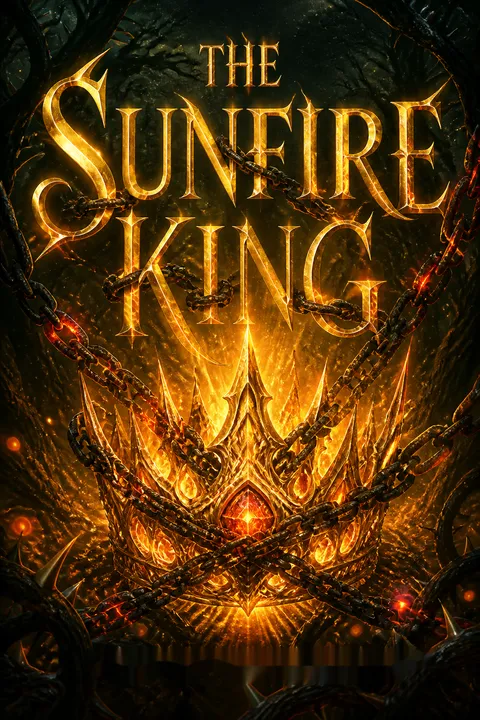
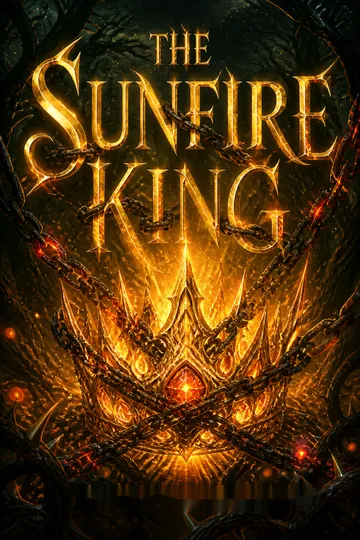
Sylvia Mercedes's The Sunfire King is a lush, emotionally charged reimagining of the "Cupid and Psyche" myth, filtered through the lens of fae fantasy and the heroine's journey. At its heart, the novel is about the cost and power of love—how true intimacy requires vulnerability, sacrifice, and the courage to face both one's own darkness and the darkness of the world. The story interrogates the nature of agency, especially for women: Valera's journey is from passivity and guilt to active choice, as she learns to bargain, to fight, and ultimately to claim her own power. The plot's reliance on bargains and the price of magic is a metaphor for the real costs of growth and healing—nothing is gained without loss, and every act of love is also an act of risk. The novel's use of dreams, visions, and magical rituals blurs the line between inner and outer worlds, suggesting that the greatest battles are fought within. Ultimately, The Sunfire King is a story of hope: that cycles of pain can be broken, that love can heal even the deepest wounds, and that home is not a place, but the heart of the one who truly knows and accepts us.
Review Summary
People Also Read
Characters
Valera
Valera begins as a frightened, guilt-ridden seamstress, lost in a world of fae magic and betrayal. Her journey is one of self-discovery, as she confronts her own fears, the consequences of her choices, and the depths of her love for Erolas. Psychoanalytically, Valera is driven by a need for belonging and understanding, torn between loyalty to her family and the pull of a love that defies reason. Her development is marked by increasing agency and courage—she bargains with witches, faces gods, and ultimately claims her own power. Her relationships, especially with Brielle and Erolas, are fraught with misunderstanding and pain, but ultimately grounded in forgiveness and trust. By the end, Valera is no longer a passive victim, but a woman who has remade her world through love and sacrifice.
Erolas (The Sunfire King)
Erolas is a fae lord bound by a centuries-old curse, forced to marry and die for the Pale Queen's power. He is both captor and captive, his kindness and restraint masking profound loneliness and fear. His relationship with Valera is complex—he loves her deeply, but is unable to share the full truth of his plight due to magical constraints. Psychoanalytically, Erolas embodies the tragic hero, burdened by duty and the sins of his ancestors, yet yearning for connection and redemption. His development is a slow unveiling, as Valera's love and courage break through his defenses and the enchantments that bind him. In the end, he is both saved and savior, his fate intertwined with Valera's in a union that breaks the cycle of sacrifice.
Brielle
Brielle is Valera's younger sister, transformed by years of loss and hardship into a hardened huntress. Her love for Valera is both her strength and her weakness, driving her to desperate bargains and acts of violence. Psychoanalytically, Brielle is shaped by abandonment and the need to protect, her identity forged in the crucible of trauma. Her relationship with Valera is fraught with misunderstanding—she cannot accept her sister's love for Erolas, seeing only danger and enchantment. Brielle's journey is one of painful acceptance, as she sacrifices her own freedom to save Valera, and ultimately finds hope in letting go.
The Pale Queen
The Pale Queen is the immortal troll queen of Druindar, sustained by the blood of her husbands. She is both victim and villain, her power rooted in ancient wounds and the need to appease the god Urym. Psychoanalytically, she represents the devouring mother, consuming all who come near, yet driven by a desperate need for love and validation. Her relationship with Erolas is transactional and cruel, but her true enemy is Valera, whose love threatens the cycle of power. The Pale Queen's downfall is both a moment of horror and pity, as she is unmade by the very god she sought to appease.
Mother Ulla
Mother Ulla is the local witch who stands between the mortal world and Faerieland. She is both helper and obstacle, testing Valera's resolve and warning her of the dangers ahead. Psychoanalytically, she is the archetypal crone, dispensing hard truths and demanding payment for every favor. Her relationship with Valera is transactional, but not unkind—she recognizes the power of love, even as she doubts its wisdom.
Granny Dorrel
Granny Dorrel is Valera's grandmother, a witch whose own losses have twisted her into a figure of both aid and threat. She bargains for memories, exacts harsh prices, and guards the secrets of the fae paths. Psychoanalytically, she is the shadow of the family, embodying the generational pain and the cost of survival. Her relationship with Valera and Brielle is marked by both cruelty and a strange, grudging love.
Birgabog
Birgabog is one of the goblin men who serve in Orican, providing both comic relief and crucial aid. He is fiercely devoted to Valera, helping her navigate the dangers of the fae world and the palace. Psychoanalytically, Birgabog represents the trickster, subverting expectations and providing unexpected solutions. His relationship with Valera is one of genuine affection and loyalty.
Ellie
Ellie is a nymph servant in Orican, whose quiet presence and subtle aid prove vital to Valera's survival. She is a figure of compassion and resilience, enduring her own enchantments and ultimately helping Valera at great personal risk. Psychoanalytically, Ellie is the anima, the soul's guide through the underworld.
Mage Larune
Mage Larune is a Miphata, a human magician who seeks her own advantage at the Pale Queen's court. She is both rival and ally, her actions driven by desire, pride, and a grudging respect for Valera. Psychoanalytically, she is the shadow self—what Valera might become if she chose power over love. Her final act of aid is a crucial turning point in the story.
Urym
Urym is the ancient deity whose hunger for sacrifice drives the Pale Queen's curse. He is both terrifying and awe-inspiring, a force beyond mortal comprehension. Psychoanalytically, Urym is the archetype of the devouring father, the force of fate that must be confronted and appeased. His appearance marks the breaking of the old order and the possibility of new beginnings.
Plot Devices
The Power of Names and Kisses
The story's central magic is the power of names and the ritual of three (or four) kisses to seal or break enchantments. Valera's use of Erolas's true name is the key to breaking the Pale Queen's hold, while the fourth kiss consummates their marriage and ends the cycle of sacrifice. This device is both a literal and symbolic expression of intimacy, trust, and agency.
Magical Bargains and the Cost of Power
The narrative is structured around bargains—candles for memories, ointments for hope, sunlight for a night with the king. These exchanges reinforce the story's theme that nothing is gained without sacrifice, and that the true cost of power is often personal and painful. Foreshadowing is used throughout, as each bargain hints at future consequences and the need for courage in the face of loss.
The Heroine's Journey and the Labyrinth
The story follows the classic heroine's journey, with Valera descending into the underworld (both literally and metaphorically), facing monsters, witches, and gods, and returning transformed. The labyrinthine structure of the fae world, with its shifting paths, magical gates, and folded realities, mirrors her internal journey from fear to agency. The use of dreams, visions, and scrying pools provides both foreshadowing and a sense of inevitability, as Valera's fate is both chosen and discovered.
The Cycle of Sacrifice and Renewal
The central plot device is the cycle of sacrifice—the Pale Queen's ritual murder of her husbands to sustain her power. Valera's love and courage break this cycle, not just for herself and Erolas, but for the entire fae realm. The appearance of Urym, the god of fire, marks the end of the old order and the possibility of healing and renewal. The story's structure, with its repeated motifs and mirrored scenes, reinforces the theme that cycles can be broken, and that love is the force that makes new beginnings possible.
Of Candlelight and Shadows Series
About the Author
Download PDF
Download EPUB
.epub digital book format is ideal for reading ebooks on phones, tablets, and e-readers.








































