
Plot Summary
Rush Hour, Missed Connections
Ellie, a young Taiwanese-American physicist, navigates a Boston subway at rush hour, her life complicated by her older sister Chris's unpredictable attempts to "keep her sharp"—which often take the form of elaborate, sometimes deadly, pranks. Their mother lies comatose in Chris's home, and the sisters' relationship is fraught with resentment and obligation. When a stranger at the station suddenly channels Chris's voice, Ellie is reminded of her sister's controlling nature and the family's burden: maintaining the "skunkworks," a hidden machinery that literally keeps the universe running. Chris tasks Ellie with a solo repair, hinting at deeper problems in the fabric of reality. Ellie's journey is not just physical but existential, as she's swept into a world where family, duty, and the laws of physics are inseparable.
Skunkworks: Universe Maintenance
Ellie slips into the skunkworks, a surreal, infinite labyrinth of pipes and valves that generate the laws of her universe. She's joined by her cousin Daniel, a verifier whose job is to check that the universe's machinery matches its design. The skunkworks is malfunctioning: fundamental constants are shifting, threatening reality itself. Ellie methodically diagnoses the problem, ruling out hardware and design errors, and discovers that the issue originates from changes in the physics of the universe one level "out." Daniel's edible equivalence reports and their banter reveal a deep, familial camaraderie. Ellie's determination to fix the root cause, not just the symptoms, sets her apart. The chapter establishes the metaphysical stakes: the universe is fragile, and its caretakers are flawed, human, and deeply interconnected.
Diagnosing the Impossible
As Ellie and Daniel delve deeper, they discover a hidden mechanism in the skunkworks designed to alter physics for personal gain—specifically, to save their dying mother. The machinery is a kludge, causing unintended side effects across reality. Ellie is faced with an agonizing choice: dismantle the device and let her mother die, or allow the universe to become increasingly unstable. Daniel offers support but leaves the decision to her. The emotional weight is immense; Ellie's love for her mother clashes with her responsibility as a maintainer. Ultimately, she chooses the universe over personal desire, sacrificing hope for a miracle in favor of integrity. The chapter explores the cost of doing the right thing when the stakes are cosmic and personal.
Dinner, Grief, and Family
After the repair, Ellie meets Daniel and his boyfriend Belt for dinner. The meal is a respite, filled with laughter, cultural references, and subtle tensions. Belt, an opera singer, brings warmth and curiosity, while Daniel's culinary prowess and gentle teasing provide comfort. The conversation turns to Ellie's strained relationship with Chris, her mother's death, and the burden of being a maintainer. The dinner table becomes a microcosm of Ellie's world: love, loss, and the search for connection amid chaos. The chapter highlights the importance of chosen family and the healing power of shared meals, even as unresolved grief and sibling rivalry linger in the background.
Funeral of the Maintainer
At her mother's funeral, Ellie is surrounded by mourners but feels utterly alone. Chris orchestrates the event, ensuring Ellie is marginalized and blamed for their mother's death. Relatives and fellow maintainers accuse Ellie of neglect and betrayal, while Chris basks in the role of the dutiful daughter. Daniel offers quiet support, but even he is caught in family politics. The funeral becomes a battleground for legacy and guilt, with Ellie cast as the scapegoat. A mysterious note from the Chief Architect summons Ellie, hinting at larger forces at play. The chapter captures the suffocating weight of familial expectation and the pain of being misunderstood by those closest to you.
The Chief Architect's Test
Ellie and Daniel visit the Chief Architect, who oversees the universe's design. Through a series of seemingly trivial tests—guessing which hand holds a key—the Architect reveals a dangerous bug in the skunkworks: a side channel that allows anyone to extract artifacts from unrealized futures. Daniel's unique verification methods and Ellie's builder's intuition are put to the test. The Architect tasks them with investigating whether this vulnerability is an accident or the work of a secret cabal. Ellie's reputation for integrity, earned by dismantling the device that could have saved her mother, makes her the Architect's choice for the job. The chapter explores trust, responsibility, and the subtle ways power and knowledge are wielded.
Bombs, Betrayal, and Allies
As Ellie and Daniel begin their investigation, they narrowly avoid a car bomb—one of many assassination attempts that have become routine, thanks to Chris's twisted "training." The bomb's sophistication suggests new enemies. The cousins reflect on Chris's history of violence and manipulation, and Ellie finally admits the truth about her sister's abuse. Their bond deepens as they face danger together, relying on each other's strengths. The chapter underscores the psychological toll of living under constant threat and the resilience required to keep moving forward.
The Audit and the Cabal
Ellie and Daniel interview Jerry Neeson, the Chief Verifier, and other maintainers involved in a massive audit of the skunkworks. They encounter stonewalling, evasions, and polite hostility. Neeson, who secretly leads a cabal intent on rewriting the universe's rules for personal gain, tries to recruit Ellie and praises Chris's skills. The investigation reveals a culture of secrecy and self-interest among maintainers, with side channels and covert channels blurring the line between accident and sabotage. The chapter exposes the fragility of institutional trust and the ease with which power can be abused.
Ahdi's Table of Truth
Seeking answers, Ellie and Daniel visit Ahdi, a legendary builder and Daniel's mentor. Over a meal that evokes memories of Ellie's mother, Ahdi helps them unravel the technical and ethical complexities of the skunkworks' vulnerabilities. He demonstrates the interconnectedness of universes and the unintended consequences of even well-intentioned changes. Ahdi's wisdom and compassion provide a moral anchor, reminding Ellie that maintenance is about stewardship, not control. The chapter is a meditation on legacy, mentorship, and the importance of humility in the face of cosmic responsibility.
Into the Skunkworks Cache
Ahdi takes Ellie and Daniel into the skunkworks' cache, a surreal landscape where discarded and potential futures are stored. They witness the chaotic interplay of realities, understanding how side channels arise from the system's complexity. The cache is both a marvel and a warning: shortcuts and optimizations can have unforeseen, universe-altering effects. Ahdi urges them to verify his account in the archives, emphasizing the need for transparency and vigilance. The chapter is a journey through the metaphysical infrastructure of reality, blending wonder with existential dread.
Car Bombs and Deadly Puzzles
Returning to Ahdi's home, Ellie and Daniel discover another, even more sophisticated car bomb. They collaborate to model and safely disarm it, pushing their skills to the limit. The exercise is both a test and a bonding experience, reinforcing their trust and highlighting the escalating danger posed by their enemies. Ahdi observes, offering guidance but letting them find their own solutions. The chapter is a tense, technical thriller, showcasing the ingenuity and determination required to survive in a world where even the laws of physics can be weaponized.
Chris's House of Grief
Ellie returns to Chris's house, the epicenter of her trauma. The sisters' confrontation is raw and unresolved, with Chris blaming Ellie for their mother's death and refusing to acknowledge her own role in the family's suffering. Ellie is kicked out, but Daniel is waiting, offering her a place to stay. The chapter is a reckoning with the past, as Ellie begins to accept that reconciliation with Chris may be impossible. The emotional stakes are as high as the metaphysical ones, and Ellie's journey toward self-acceptance takes a painful but necessary step forward.
Morning After, New Realities
The next morning, Ellie reflects on her relationship with Chris and the possibility of moving on. Belt, Daniel's boyfriend, visits and becomes an unwitting victim of Chris's body-hijacking—a disturbing display of her power and disregard for boundaries. The incident forces Ellie to confront the reality of her sister's abuse and the need to set boundaries. The chapter is a quiet moment of introspection, as Ellie contemplates the future and the possibility of healing, even as the scars of the past remain.
Archives and Side Channels
Ellie and Daniel visit the archives, guided by Xu, an archivist made of iridescent insects. They sift through mountains of documentation, tracing the origins of the side channels and the cabal's manipulations. The process is tedious and overwhelming, but their persistence pays off: they uncover evidence that the vulnerabilities are the result of both historical accidents and deliberate sabotage. The chapter is a testament to the power of research, collaboration, and the slow, painstaking work of uncovering the truth.
The Secret Cabal Unveiled
Their investigation leads Ellie and Daniel to the isolationists' archive, where they learn that multiple secret cabals have vied for control of the skunkworks over the centuries. The isolationists, far from being the villains Chris claimed, are dedicated to preserving the integrity of the universe. Ellie discovers that her mother worked with them to undo the damage caused by self-serving maintainers—including Chris. The chapter is a revelation, shattering old assumptions and exposing the true stakes of the conflict: the soul of the universe itself.
Home Invasions and Hidden Powers
Back in Daniel's apartment, Ellie and Daniel are confronted by Tom, an agent of Neeson's cabal. A tense standoff ensues, with Daniel revealing unexpected combat prowess and Ahdi arriving to reinforce their defenses. The encounter exposes the depth of the cabal's reach and the necessity of secrecy and solidarity among the maintainers who oppose them. The chapter is a turning point, as Ellie and Daniel fully commit to the fight against those who would corrupt reality for personal gain.
Isolationists' Archive
Ellie and Daniel are welcomed by the Head Archivist of the isolationists, who reveals the true history of the maintainers' schisms and the role of Ellie's mother in resisting corruption. Ellie confronts the painful truth about Chris's betrayal and her own complicity in family myths. The archivist offers support and access to critical records, recognizing Ellie's integrity and potential as a maintainer. The chapter is a moment of reconciliation—with the past, with allies, and with the responsibilities that come with knowledge.
The Abomination's Blueprint
In a study room, Ellie and Daniel dissect the blueprint of the device that trapped their mother between life and death. The design is a mess, a testament to desperation and hubris. They trace Chris's involvement and the technical flaws that made the device both ineffective and dangerous. The emotional impact is devastating: Ellie must accept that her sister's actions were not just misguided but actively harmful. The chapter is a catharsis, as Ellie grieves not just for her mother but for the relationship with Chris that can never be restored.
Change Records and New Physics
Ellie and Daniel analyze the cabal's latest changes to the skunkworks, realizing that they are on the verge of rewriting the laws of physics to benefit a select few. The new system would create a permanent overclass, with maintainers like Neeson and Chris wielding godlike power. The changes would also destabilize the universes nested within their own, causing cascading failures. Ellie's technical brilliance and Daniel's unique skills allow them to model and counteract the changes, but the threat remains imminent. The chapter is a race against time, blending technical mastery with moral urgency.
The Trap and the Coffin
Chris lures Ellie into a trap, locking her in a coffin designed to use her body as a vessel to resurrect their mother. The room is a fortress, impervious to outside intervention. Daniel is bound and nearly crushed, but escapes through a flaw in Chris's design. Ellie, suffocating, confronts Chris with the truth: her actions are not love but obsession and self-aggrandizement. In a final twist, Chris locks herself in the coffin, determined to prove her devotion. Ellie ensures her sister's survival, but the relationship is irrevocably broken. The chapter is a harrowing confrontation with the limits of love, duty, and forgiveness.
Sisters, Sacrifice, and Survival
Ahdi arrives, freeing Ellie and Daniel and ensuring Chris's survival. The failed resurrection attempt leaves Chris devastated, forced to confront the reality of her actions and the impossibility of bringing their mother back. Ellie, exhausted and emotionally spent, accepts that some wounds cannot be healed and that her responsibility is to the living, not the dead. The chapter is a somber reflection on sacrifice, survival, and the necessity of moving forward, even when closure is impossible.
Blackmail and the Endgame
Ellie and Daniel, with Ahdi's help, confront Neeson in his office, using evidence of his blackmail and sabotage to force him to revert the dangerous changes to the skunkworks. The confrontation is tense but decisive, with Ahdi's mastery and Daniel's strength ensuring victory. The immediate threat is neutralized, but the underlying issues—corruption, secrecy, and the fragility of the system—remain unresolved. The chapter is a hard-won victory, tempered by the knowledge that the struggle for integrity is ongoing.
Aftermath and Unanswered Questions
Ellie visits the Chief Architect to report on the resolution of the crisis. Neeson has covered his tracks, and the official narrative is one of technical glitches and successful audits. Ellie and Daniel are left to ponder the limits of their influence and the persistence of systemic flaws. The chapter is a meditation on the nature of progress: victories are partial, and the work of maintenance—of both universes and relationships—is never truly finished.
The Next Train Home
As Ellie prepares to return to Boston, she reflects on the events of the past days: the loss of her mother, the final break with Chris, the dangers averted, and the friendships forged. Ahdi offers wisdom and encouragement, reminding her that the work of maintaining the universe is thankless but essential. Daniel's presence is a comfort, and the promise of future collaboration—both in maintenance and in life—offers hope. Ellie boards the train, uncertain but resolved, carrying with her the lessons of grief, responsibility, and the subtle art of folding space.
Analysis
A meditation on maintenance, power, and the cost of integrityThe Subtle Art of Folding Space is a genre-bending exploration of what it means to care for a world—literal or metaphorical—that is always on the brink of collapse. Through the lens of cosmic maintenance, John Chu interrogates the ethics of power, the dangers of unchecked ambition, and the necessity of humility. The novel's central lesson is that the work of keeping things running—whether a universe, a family, or a community—is invisible, thankless, and essential. The characters' struggles with grief, betrayal, and responsibility mirror the larger battle to preserve the integrity of reality itself. The book warns against the seduction of shortcuts and the rationalization of self-interest, arguing that true stewardship requires sacrifice, transparency, and the willingness to let go. In a world where the machinery of existence is always breaking down, the art of folding space is not about control, but about care, resilience, and the courage to do what is right—even when no one is watching.
Review Summary
Characters
Ellie
Ellie is a Taiwanese-American physicist and builder, responsible for maintaining the machinery that generates her universe. Her journey is one of reluctant heroism: she is thrust into cosmic responsibility by family legacy and personal loss. Ellie's relationship with her sister Chris is fraught with abuse, rivalry, and unfulfilled longing for connection. Psychoanalytically, Ellie is shaped by guilt, duty, and a desperate need for approval—first from her mother, then from the maintainer community. Her arc is one of painful growth: she learns to set boundaries, accept loss, and act with integrity even when it means sacrificing her deepest desires. Ellie's technical brilliance is matched by emotional vulnerability, making her a deeply human protagonist in a world of metaphysical stakes.
Chris
Chris is Ellie's older sister, a builder whose brilliance is matched by her cruelty and need for control. She orchestrates deadly "tests" for Ellie under the guise of training, but her actions are rooted in resentment and a desperate need to be seen as the "good daughter." Chris's relationship with their mother is central: she seeks validation through self-sacrifice, ultimately perverting the laws of physics in a doomed attempt to save her. Psychoanalytically, Chris is driven by envy, insecurity, and a pathological inability to accept loss. Her arc is tragic: she becomes the architect of her own isolation, unable to reconcile love with control, and ultimately destroys the very relationships she seeks to preserve.
Daniel
Daniel is Ellie's cousin and a verifier, responsible for ensuring the universe's machinery matches its design. Physically imposing but emotionally gentle, Daniel is both protector and confidant. His unique verification methods (edible reports) and combat prowess are matched by deep empathy and humility. Daniel's relationship with Ellie is sibling-like, marked by mutual support and shared trauma. His mentorship under Ahdi shapes his moral compass, and his romantic relationship with Belt provides warmth and stability. Daniel's arc is one of quiet strength: he navigates danger and betrayal with resilience, always choosing compassion over violence, and serves as Ellie's anchor in a chaotic world.
Ahdi
Ahdi is a legendary builder and Daniel's mentor, revered for his technical mastery and ethical clarity. He serves as a surrogate parent to both Daniel and, indirectly, Ellie, offering wisdom, support, and tough love. Ahdi's role is that of the wise elder: he guides the protagonists through metaphysical and moral dilemmas, emphasizing the importance of stewardship and humility. Psychoanalytically, Ahdi represents the superego—the internalized voice of conscience and tradition. His arc is one of steadfastness: he resists the temptations of power, prioritizes the greater good, and empowers the next generation to carry on the work of maintenance.
Jerry Neeson
Neeson is the Chief Verifier and leader of a secret cabal intent on rewriting the universe's rules for personal gain. Charismatic and cunning, he embodies institutional corruption and the dangers of unchecked power. Neeson's relationship with Chris is transactional, exploiting her skills and resentment for his own ends. Psychoanalytically, Neeson is the embodiment of the shadow: the part of the system that rationalizes self-interest as necessity. His arc is one of hubris and eventual defeat, but his influence lingers, a reminder that systems are only as good as those who maintain them.
The Chief Architect (Mary)
The Chief Architect oversees the design and integrity of the universe's machinery. She is both mentor and judge, testing Ellie's integrity and entrusting her with the investigation into the skunkworks' vulnerabilities. Her relationship with Daniel is tinged with both respect and wariness, recognizing his unique talents and potential for disruption. Psychoanalytically, she represents the superego's institutional face: upholding rules, delegating responsibility, and navigating the politics of power. Her arc is one of cautious stewardship, balancing trust and skepticism in a world where even the architects are fallible.
Belt
Belt is Daniel's boyfriend, an opera singer whose warmth and curiosity provide a counterpoint to the technical and emotional intensity of the main cast. As an outsider to the world of maintainers, Belt offers perspective, humor, and a grounding presence. His experiences—being body-hijacked by Chris, witnessing the family's dysfunction—highlight the human cost of cosmic conflict. Belt's arc is one of adaptation: he learns to navigate the metaphysical complexities of Daniel's world while maintaining his own identity and passions.
The Head Archivist (Isolationists)
The Head Archivist of the isolationists' archive is a non-human entity dedicated to preserving the integrity of the universe's history. They serve as a foil to the maintainers, emphasizing documentation, transparency, and the dangers of unchecked change. Their relationship with Ellie is one of cautious mentorship, recognizing her potential and offering support. Psychoanalytically, the Archivist represents the collective memory and the superego's archival function: the keeper of norms, history, and accountability.
Tom
Tom is an agent of Neeson's cabal, tasked with intimidation and sabotage. His confrontations with Daniel and Ellie reveal the cabal's ruthlessness and the limits of brute force in a world governed by subtlety and skill. Tom's arc is that of the failed antagonist: outmatched, outmaneuvered, and ultimately irrelevant in the face of true mastery and integrity.
Vera (Ellie's Mother)
Though comatose or deceased for most of the narrative, Vera's influence permeates every character and decision. As the former Chief Builder, her legacy is one of integrity, sacrifice, and quiet rebellion against corruption. Her relationships with Ellie and Chris are complex: she is both idolized and misunderstood, her expectations shaping their destinies. Psychoanalytically, Vera is the lost object, the unattainable ideal that drives both growth and tragedy.
Plot Devices
Nested Universes and Skunkworks
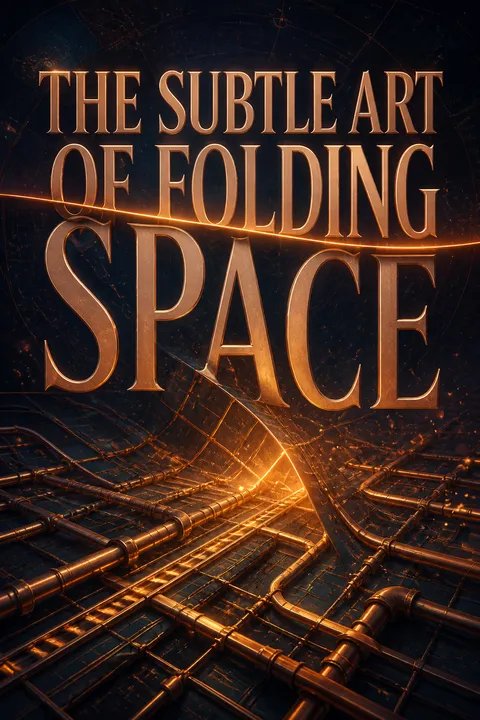
The narrative's central device is the concept of nested universes, each generated and maintained by a skunkworks—a vast, surreal machinery of pipes, valves, and reservoirs. This literalizes the metaphor of maintenance: reality is not self-sustaining but requires constant, imperfect human intervention. The skunkworks' complexity allows for both accidental bugs (side channels) and deliberate sabotage (covert channels), mirroring the ambiguities of institutional power. The nested structure also enables recursion: changes in one universe propagate outward and inward, raising the stakes of every decision.
Side Channels and Covert Channels
The discovery of side channels—unintended ways to extract information or artifacts from unrealized futures—serves as both a technical and thematic device. It blurs the line between honest mistake and malicious intent, forcing characters to confront the consequences of their actions and the limits of their knowledge. The possibility of covert channels—deliberate backdoors—introduces paranoia, secrecy, and the need for trust and verification. This device drives the investigation, the formation of alliances, and the ultimate confrontation with the cabal.
Family as Microcosm
The dysfunctional dynamics between Ellie, Chris, and their mother are mirrored in the larger conflicts among maintainers. Sibling rivalry, parental expectation, and the longing for approval become metaphors for the struggle to maintain integrity in the face of temptation and loss. The personal is cosmic: the fate of the universe hinges on the ability to set boundaries, forgive, and let go.
Food and Ritual
Shared meals—whether at Daniel's table, Ahdi's, or in Belt's company—serve as islands of warmth and humanity amid metaphysical chaos. Food becomes a ritual of remembrance, reconciliation, and resistance, grounding the characters in sensory experience and cultural identity. These moments provide respite, foster intimacy, and remind the characters (and readers) of what is at stake.
Foreshadowing and Recursion
The narrative is rich with foreshadowing: missed trains, repeated assassination attempts, and the ever-present threat of side channels all hint at deeper patterns. Recursion—universes within universes, cycles of abuse and repair—reinforces the theme that maintenance is never finished, and that every solution contains the seeds of future problems. The structure itself is a folded space, looping back on itself in both plot and emotion.
Download PDF
Download EPUB
.epub digital book format is ideal for reading ebooks on phones, tablets, and e-readers.








































