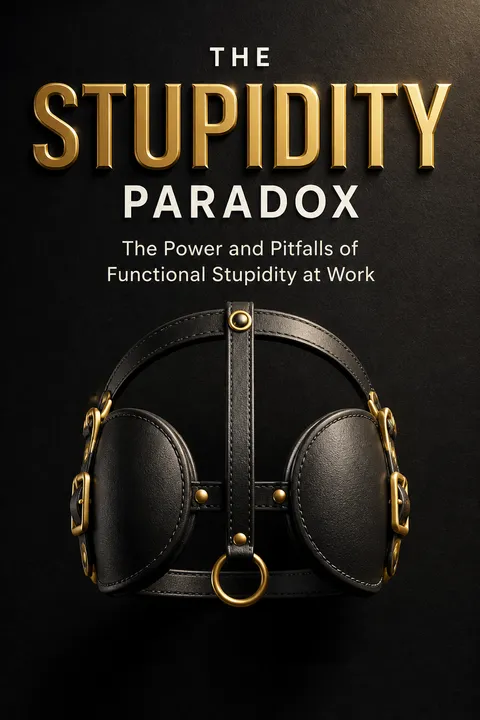

Key Takeaways
1. The "Knowledge Economy" is a pervasive myth, masking widespread organizational thoughtlessness.
It is time to question much of the hype about the knowledge economy, smart companies and brain workers.
Challenging the narrative. The widespread belief that modern economies are driven by "knowledge workers" in "knowledge-intensive firms" is largely a myth. Despite billions spent on education and innovation, many jobs remain routine, requiring minimal intellectual engagement, and a significant portion of highly educated individuals end up in roles that don't fully utilize their skills. This creates a disconnect between aspirations and reality.
Education inflation. The expansion of higher education has not necessarily led to a smarter workforce. Studies show many university students exhibit no significant improvement in cognitive abilities, and degrees are often sought more for credentials than for genuine learning. Similarly, the push for more scientific research often yields marginal insights rather than fundamental breakthroughs, and increased internet access frequently facilitates mindless activities over knowledge sharing.
Superficial smartness. Many organizations brand themselves as "knowledge-intensive" to project an image of sophistication, even when their core work is routine. This "smartness" is often a confidence trick, boosting self-esteem and external perception, but masking a reality where deep expertise is rarely needed or utilized. The focus shifts to appearing smart rather than genuinely being so, leading to a pervasive, unacknowledged thoughtlessness.
2. Smart individuals are prone to cognitive biases and organizational designs that foster "stupid" work.
The only way out of doing stupid things is critical thinking and reflection.
Beyond IQ. While organizations often recruit highly intelligent individuals, high IQ, emotional intelligence (EQ), or even practical "street smarts" do not guarantee immunity from stupidity. Cognitive biases like anchoring, availability, overconfidence, and framing effects can lead even experts to make irrational decisions, relying on mental shortcuts rather than rigorous analysis.
Designed thoughtlessness. Many jobs are intentionally "dumbed down" through specialization and routinization, limiting individual initiative and reflection. This "McDonaldisation" of work extends beyond industrial production lines to service sectors and even professional roles, where strict procedures reduce the need for employees to think critically about their tasks or purpose.
Bounded rationality. Herbert Simon's concept of "bounded rationality" highlights that decision-makers, despite their best efforts, operate with limited information, processing capacity, and time. This leads to "satisficing" – seeking satisfactory rather than optimal solutions. In today's information-overloaded world, this tendency is exacerbated, pushing individuals towards mindlessness and reliance on pre-programmed "social scripts" that bypass deeper thought.
3. Functional Stupidity: A deliberate narrowing of thought that offers short-term benefits but long-term risks.
Functional stupidity is the inclination to reduce one’s scope of thinking and focus only on the narrow, technical aspects of the job.
Defining the paradox. Functional stupidity is not outright idiocy, but a commonplace, organized narrowing of thought. It involves avoiding deep reflection on assumptions (lack of reflexivity), not seeking or providing justifications for actions, and disregarding the broader consequences or meaning of one's work (lack of substantive reasoning). This allows individuals to perform tasks "correctly" without questioning their purpose or context.
Short-term gains. This selective thoughtlessness can be highly functional in the short term. It helps individuals:
- Avoid taxing intellectual effort and irksome doubts.
- Fit in and avoid being seen as a "troublemaker."
- Display resolute certainty, often valued in "leadership material."
- Focus on "delivering the goods" and advancing their careers.
For organizations, it minimizes conflict, ensures smooth operations, and helps maintain a positive image by repressing inconvenient truths.
Long-term pitfalls. However, functional stupidity is a double-edged sword. By ignoring contradictions and avoiding critical questions, minor problems can fester and accumulate, eventually leading to larger crises or disasters, as seen in the 2008 financial crisis. It can also lead to stunted personalities, a disengagement from meaningful work, and a widening gap between rhetoric and reality, eroding trust among employees and stakeholders.
4. Leadership-Induced Stupidity: The leadership industry and managerial aspirations often cultivate uncritical compliance.
Much of the often-repeated conventional wisdom about leadership is based more on hope than reality, on wishes rather than data, on beliefs rather than science.
The leadership delusion. The multi-billion-dollar leadership industry propagates idealized, often pseudo-scientific notions of leadership, promising transformative results. This creates a "leadership delusion" where managers aspire to be heroic figures, even when their daily work is mundane administration. This focus on an idealized self-image can prevent leaders from critically assessing their own effectiveness or the actual needs of their subordinates.
Followers' role. While leaders are often portrayed as superior, many subordinates do not see themselves as "followers" and are skeptical of high-profile leadership efforts. They often prefer autonomy and effective management over "transformational" leadership. However, the pervasive rhetoric encourages a form of "stupidity management" where followers are subtly or overtly pushed to dampen independent thinking and comply with the leader's vision.
Cultivating compliance. Leadership, particularly "transformational" or "SuperLeadership" models, can actively cultivate functional stupidity by encouraging followers to switch off critical thought and commit to a leader's vision. This creates a sense of order and shared purpose, but at the cost of critical reflection. The "secular religion of leadership" provides moral order and meaning, making mundane administrative tasks feel heroic, but often relies on overlooking contradictions and poor reasoning.
5. Structure-Induced Stupidity: Bureaucracy and hyper-specialization lead to mindless rule-following and superficial scrutiny.
Most of the time, structures, rules and routines do the thinking for us.
Bureaucracy's persistence. Despite claims of a "post-bureaucratic" era, organizations remain heavily reliant on rules, regulations, and procedures. While these structures can provide order and impartiality, they often foster thoughtlessness, as employees mindlessly comply with bureaucratic imperatives rather than engaging in critical reflection about their purpose or effectiveness.
Professional idiots. The rise of hyper-specialization creates "professional idiots" (Fachidioten) – experts deeply knowledgeable in narrow domains but blind to broader issues. This tunnel vision, combined with the desire for professional identity and lucrative niches, leads to boxed-in thinking. These specialists often create more plans and procedures, demanding compliance and multiplying bureaucracy, which further entrenches functional stupidity.
Superficial scrutiny. Organizations operate in a "society of superficial scrutiny," where external pressures (regulators, media, interest groups) demand compliance with formal standards. This leads to "corporate window-dressing," where organizations prioritize looking good and ticking boxes over substantive work. Resources are diverted to ceremonial activities and producing nice-looking statistics, while core tasks and genuine problem-solving are neglected, fostering inefficiency and a lack of accountability for actual outcomes.
6. Imitation-Induced Stupidity: Organizations copy others for legitimacy and to avoid blame, often without genuine understanding.
Often companies decided to focus on core competencies because other organisations were doing the same.
Herd mentality. Organizations frequently adopt new practices not because they are proven to be effective, but because "everyone else is doing it." This "bandwagon effect" is driven by uncertainty, the desire to appear up-to-date, and the fear of lagging behind peers. Executives, like "fashion-conscious teenage girls," readily follow management trends, often with little critical assessment of their suitability or impact.
Isomorphism and legitimacy. Paul DiMaggio and Walter Powell identified three drivers of organizational similarity (isomorphism):
- Coercive: Responding to external regulations and laws.
- Mimetic: Copying successful firms to reduce uncertainty.
- Normative: Conforming to social norms and professional expectations.
This leads to superficial imitation, where organizations adopt practices for legitimacy rather than genuine effectiveness, often ignoring the unique context of the original "best practice."
Learning from winners (and losers). The tendency to only study "winning" companies for "best practices" creates a biased sample, overlooking the many failures and the risky strategies that might have led to success. True learning requires examining both successes and failures. Superficial imitation, however, allows organizations to avoid the difficult work of genuine adaptation and critical assessment, often leading to disappointing results despite the appearance of progress.
7. Branding-Induced Stupidity: An obsession with image and "meaning" over substance creates a culture of persuasion.
Our attachment to brands can make people incapable of looking at products, services, or the organisations that produce them in a sober way.
Brand fetishism. In an age of abundance and indistinguishable products, brands have become central to differentiation, often creating "illogical loyalty" by attaching deep meaning to mundane items. This "brand fetishism" encourages consumers and employees alike to fixate on the brand's superficial qualities, overlooking the actual product, service, or organizational reality.
Gold-plating and meaning-making. Branding often involves "gold-plating" – magnifying minor differences to justify massive price premiums. This extends beyond products to entire organizations, where "rebranding" initiatives aim to rejuvenate image, even for non-profit entities like the military. For employees, branding can transform dull jobs into exciting ones, creating a sense of worthiness and meaning, even if it requires a "serious lack of reflection."
Manufacturing consumers. The "economy of persuasion" thrives on creating dissatisfaction and an "unappeasable appetite" for goods and experiences. Marketing aims to convince people they need what is produced, often by promising improved status, self-esteem, or personal fulfillment. In this context, critical thinking is outsourced to "the market" or "the customer," allowing marketers to avoid ethical dilemmas and perpetuate a cycle of consumption and manufactured desire.
8. Culture-Induced Stupidity: Optimism, change-fixation, and perceived uniqueness can stifle critical thinking and adaptation.
Organisational culture calls for people to take certain assumptions and beliefs for granted and refrain from thinking about them.
The cultural compass and prison. Organizational culture provides a shared compass, guiding thought and action, reducing conflict, and fostering identity. However, it can also become a "psychic prison," trapping individuals in homogeneous thinking and shared blindness. Unconscious forces, like treating leaders as father figures or an obsessive need for order, can reinforce these cultural rigidities, stifling divergent thought and critical inquiry.
Optimism's dark side. Many organizational cultures are dominated by relentless optimism, where negative news is taboo and critical questions are discouraged. This "preference for optimism" can boost morale and commitment in the short term, but it leads to a reluctance to face problems, cover-ups, and an inability to adapt to significant challenges, as seen in Nokia's downfall. It creates a false sense of positivity and an unawareness of underlying issues.
Fixation on change and uniqueness. Organizations often exhibit a "change fixation," driven by a bloated change-management industry, leading to "repetitive change syndrome" and cynicism. Similarly, a strong belief in an organization's "uniqueness" can foster pride and loyalty but also lead to self-obsession and an unwillingness to learn from outsiders. These cultural themes, while seemingly positive, actively discourage the critical thinking necessary for genuine learning and adaptation.
9. Stupidity Management: Organizations actively encourage functional stupidity through various subtle and overt tactics.
Stupidity management involves interventions that reduce or narrow thinking at work.
The dilemma of smartness. Encouraging unbridled smartness in organizations can be risky, potentially leading to conflicts, doubts, and challenges to established norms and power structures. Therefore, "stupidity management" becomes a crucial, albeit unacknowledged, managerial activity. It aims to reduce or narrow thinking, ensuring people operate within prescribed mindsets and focus on means rather than ends.
Four tactics of stupidity management:
- Authority: Using formal position and the threat of rewards/punishments to discourage independent thought, reminding subordinates that "the boss knows best."
- Seduction: Enlisting attractive ideas, buzzwords, and impressive presentations to persuade people and foster uncritical acceptance of corporate narratives and future promises.
- Naturalization: Making even strange practices appear self-evident and unavoidable, often by claiming "this is how we've always done it" or "everyone else is doing it."
- Opportunism: Aligning incentives to encourage individuals to overlook doubts and buy into questionable trends for personal gain, rationalizing self-interest.
Balancing act. Stupidity management presents a trade-off: more functional stupidity can facilitate quick decisions, create a positive climate, and secure identities, but too much can obstruct problem-solving, foster conformity, and desensitize people to critical issues. Effective managers must navigate this dilemma, understanding when to encourage focused thought and when to allow for broader reflection, accepting the associated costs.
10. Countering Stupidity: Cultivating "negative capabilities" and critical reflection is essential for organizational health.
For us, negative capabilities are the ability to think critically – the ability not to be constrained by the false necessities which are set up by rules, routines, cultures, brands, and many more of the mechanisms of organisational life.
Beyond relentless optimism. To destupidify organizations, we must move beyond the myth of relentless positivity and cultivate "negative capabilities" – the ability to tolerate uncertainties, mysteries, and doubts without prematurely seeking facts or reasons. This involves facing paradoxes and ambiguities, allowing for new thoughts and perceptions to emerge, and challenging the "false necessity" of established institutions.
Practicing critical thinking. Critical thinking is not just for experts; it's a practice accessible to most. It involves three key steps:
- Observe: Asking "What is going on here?" by carefully looking beyond pre-established categories and avoiding premature problem-definition.
- Interpret: Asking "What do the natives think is happening here?" by understanding diverse perspectives and resisting professional myopia.
- Question: Asking "What the hell is going on here?" by querying assumptions, demanding justifications, and considering broader implications, addressing cognitive, emotional, moral, and motivational aspects.
Strategies for anti-stupidity management. Organizations can foster critical reflection through various interventions:
- Reflective routines: Regular "what the hell" sessions or critical questions in meetings.
- Devil's advocates: Appointing individuals to challenge consensus and articulate counter-arguments.
- Post-mortems & Pre-mortems: Systematically learning from past failures and anticipating future problems.
- Newcomers & Outsiders: Leveraging fresh perspectives to identify unquestioned norms.
- Engage critics: Actively listening to internal and external critics.
- Competitions & Anti-slogans: Using humor to challenge corporate clichés and jargon.
- Anti-stupidity task forces: Dedicated groups to systematically identify and eliminate pointless activities.
This requires a difficult balance, pragmatism, and sensitivity, but ultimately leads to more meaningful work, better contributions, and healthier organizations.
Review Summary
People Also Read









Download PDF
Download EPUB
.epub digital book format is ideal for reading ebooks on phones, tablets, and e-readers.








































