
Plot Summary
Wind and Welcome Signs
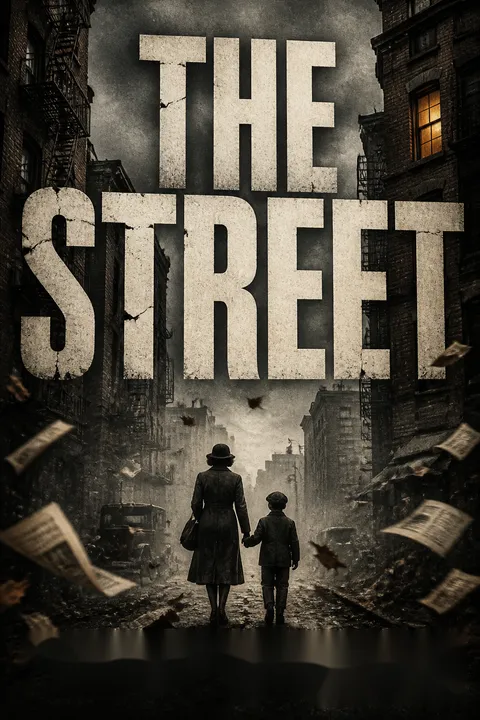
Lutie Johnson, a determined Black woman, faces the biting November wind on 116th Street as she searches for a new apartment for herself and her young son, Bub. The wind is more than weather—it's a force that strips away comfort and dignity, a metaphor for the relentless hardships she faces. The building she considers is old, dark, and filled with the noise and smells of too many lives crammed together. Yet, for Lutie, anything is better than the chaos of her father's crowded home, where her son is exposed to bad influences. The street, the wind, and the people—especially the snake-eyed Mrs. Hedges and the predatory Super, Jones—signal that this new home will be no refuge, but Lutie's resolve to protect Bub and carve out a better life is undiminished.
Connecticut's Costly Lessons
Lutie's memories drift to her years as a domestic in Connecticut, where she worked for the wealthy Chandlers to support her family. The Chandlers' world is one of privilege, but also of coldness, hypocrisy, and casual racism. Lutie absorbs their relentless pursuit of money, believing hard work and thrift can buy security. Yet, her absence from home leads to the collapse of her marriage—her husband, Jim, succumbs to despair and infidelity. Lutie's sacrifice, meant to save her family, instead destroys it. The lesson is bitter: the American Dream is not equally available, and the cost of striving for it is often paid by the most vulnerable.
Harlem's Daily Struggle
Now living in Harlem, Lutie juggles work, motherhood, and the daily grind of poverty. She is haunted by the fear that Bub will be swallowed by the street's dangers—gangs, crime, and the lure of easy money. The women around her are exhausted, working in white homes all day and returning to their own neglected families. Lutie's pride and hope are battered by the realities of her environment: the meager food, the endless bills, and the ever-present threat of eviction. Yet, she clings to the belief that, with careful planning and relentless effort, she can still give Bub a better future.
The Super's Obsession
William Jones, the building's superintendent, is a man twisted by loneliness and years spent in basements and boiler rooms. He becomes obsessed with Lutie, his desire for her growing into a dark fixation. He befriends Bub, helps him build a shoeshine box, but his motives are predatory. Jones's presence is a constant threat, his silent longing and barely contained violence making the building feel like a trap. Lutie senses his danger but is forced by circumstance to remain, always wary, always on guard.
Min's Desperate Measures
Min, Jones's long-suffering companion, feels her place threatened by his obsession with Lutie. Fearing eviction and violence, she turns to Mrs. Hedges for advice and is sent to the Prophet David, a root doctor. Min's visit to the Prophet is both an act of desperation and defiance—she buys charms and powders to keep Jones's wrath at bay. The rituals give her a sense of agency, but also highlight the limited options available to women like her, trapped by poverty and men's whims.
Junto's Glittering Mirage
The Junto Bar and Grill is the neighborhood's social hub, owned by the powerful and enigmatic Junto. For Lutie, it represents a fleeting escape from her cramped life—a place of music, laughter, and possibility. She meets Boots Smith, a charismatic bandleader, who offers her a chance to sing with his band. The promise of a singing career becomes Lutie's new hope, a way out of the street. But the Junto's glitter is deceptive; behind its warmth lies exploitation, and Lutie is soon entangled in the schemes of men who see her as a means to their own ends.
Marriage, Money, and Men
Lutie's memories of her marriage to Jim resurface, revealing how poverty and systemic racism destroyed their love. Jim's inability to find work, the loss of their home, and the relentless pressure to make ends meet drove them apart. Lutie's belief in hard work and self-reliance is tested by the realities of Harlem, where opportunities are scarce and the cost of survival is high. The men around her—her father, Jim, Jones, Boots, and Junto—are all shaped and broken by the same forces that threaten to consume her.
Street's Relentless Grip
The street is not just a setting but a living force, shaping the lives and destinies of everyone who lives on it. Lutie watches as children play in garbage, women trudge home from work, and men idle away their days. The street's violence, poverty, and despair are inescapable. Lutie's efforts to shield Bub from its influence seem increasingly futile. The street's grip is relentless, and every small victory is overshadowed by new challenges and dangers.
Bub's Innocence Lost
Bub, eager to help his mother and prove himself, is manipulated by Jones into stealing mail. The promise of easy money and the thrill of secret missions seduce him, but he is too young to understand the consequences. When he is caught by postal inspectors, Lutie's worst fears are realized. Bub's innocence is shattered, and the system is poised to punish him harshly. Lutie is consumed by guilt and desperation, knowing that her efforts to protect him have failed.
Min's Escape Plan
Min, empowered by her charms and the realization that Jones will never change, decides to leave. She packs her few belongings and her beloved table, and with the help of Mrs. Hedges, finds the courage to move out. Her departure is both a small victory and a testament to the resilience of women who, despite everything, find ways to survive and assert their dignity.
The Street's Watchers
Mrs. Hedges, the brothel-keeper, and Junto, the bar owner, are the street's silent watchers and manipulators. Mrs. Hedges knows everyone's secrets and uses her power to protect her interests. Junto, obsessed with Lutie, orchestrates events to bring her under his control, using Boots as his intermediary. Their machinations reveal the hidden networks of power and exploitation that govern the street, trapping its residents in cycles of dependence and betrayal.
Bub's Fall and Betrayal
With Bub's arrest, Lutie is forced to confront the full weight of the system's indifference and cruelty. She scrambles to find a lawyer, but the cost is beyond her means. The street's betrayals are compounded by the betrayals of those she trusted—Jones, Boots, and even the institutions meant to protect children. Bub's fate is sealed not by his actions, but by the poverty and racism that define his world.
Lutie's Descent
Lutie, frantic to save Bub, turns to Boots for help. He offers her money, but only if she will sleep with Junto. The proposition is the final insult, the culmination of all the exploitation and humiliation she has endured. In a fit of rage and despair, Lutie kills Boots with a candlestick. The act is both a crime and a symbolic rebellion against the forces that have destroyed her life. Realizing she can never return, she flees into the night, leaving Bub behind.
The Price of Survival
Lutie's flight is both an escape and a defeat. She boards a train to Chicago, knowing she will never see Bub again. Her dreams of a better life are shattered, and her belief in hard work and self-reliance is exposed as a cruel illusion. The price of survival has been her dignity, her family, and her soul. The street has claimed another victim, and Lutie's story ends not with triumph, but with exile and loss.
The Final Blow
As Lutie disappears into the darkness, the street remains—unchanged, indifferent, and undefeated. The snow falls softly, covering the grime and ugliness, but the underlying reality persists. The people left behind—Mrs. Hedges, Jones, Min, Bub—continue their lives, shaped and scarred by the same forces that destroyed Lutie. The street's power is absolute, and its victims are countless.
Flight into Darkness
On the train to Chicago, Lutie reflects on the twists of fate that brought her to this point. She is haunted by guilt, regret, and the knowledge that she has abandoned her son. The city recedes behind her, and the future is a blank, unknowable darkness. The street's lessons are bitter and inescapable: for people like Lutie, there is no escape, only endurance.
The Street Remains
The novel closes with the street itself—silent, snow-covered, and eternal. The lives of its residents are fleeting, their struggles and hopes swallowed by the relentless cycle of poverty and oppression. The street remains, a monument to the failures of society and the resilience of those who endure its hardships. Lutie's story is over, but the street's story continues, indifferent to the fates of those who pass through it.
Analysis
Ann Petry's The Street is a searing exploration of the intersection of race, gender, and class in mid-20th-century America, and its themes remain urgently relevant today. Through the story of Lutie Johnson, Petry exposes the myth of the American Dream, showing how systemic racism and economic exploitation conspire to keep Black women and their children trapped in cycles of poverty and despair. The novel's power lies in its unflinching realism and its deep psychological insight—Petry refuses to romanticize her characters or their struggles, instead presenting their choices and failures as the inevitable result of forces beyond their control. The street itself becomes a symbol of the broader social order: indifferent, relentless, and ultimately triumphant. Lutie's journey—from hope to desperation, from striving to violence—serves as both a personal tragedy and a scathing indictment of a society that offers so little to those at its margins. The novel's lessons are clear: individual effort is not enough in the face of structural injustice, and true change requires a transformation of the systems that shape our lives. The Street endures as a powerful reminder of the costs of inequality and the resilience of those who struggle against it.
Review Summary
People Also Read


Characters
Lutie Johnson
Lutie is the novel's protagonist, a Black woman fiercely committed to providing a better life for her son, Bub. Scarred by her experiences as a domestic in white households and the collapse of her marriage, she is driven by the belief that hard work and thrift can overcome poverty. Lutie is intelligent, proud, and resourceful, but also vulnerable to the relentless pressures of racism, sexism, and economic exploitation. Her relationships—with men, with her son, with the street itself—are shaped by her longing for dignity and security. Over the course of the novel, Lutie's optimism is eroded by betrayal, violence, and the realization that the system is rigged against her. Her final act of violence and flight is both a tragedy and a testament to her refusal to be broken, even as she is forced to abandon everything she loves.
Bub Johnson
Bub is Lutie's eight-year-old son, a bright and loving boy who wants nothing more than to please his mother and be a man. Left alone after school, he is vulnerable to the dangers of the street and the manipulations of adults like Jones. Bub's innocence is gradually eroded as he is drawn into petty crime, not out of malice, but out of a desire to help his struggling mother. His arrest and impending reform school sentence are the novel's most devastating blow, symbolizing the way the street destroys the futures of its children. Bub's fate is a direct result of the systemic forces that shape his world, and his story is a heartbreaking indictment of a society that fails its most vulnerable.
William Jones (The Super)
Jones is the building's superintendent, a man warped by years of isolation and disappointment. His obsession with Lutie is both sexual and possessive, fueled by his own sense of powerlessness and resentment. Jones's relationship with Min is loveless and abusive; his interactions with Bub are manipulative and self-serving. Psychologically, Jones is a study in alienation and the corrosive effects of poverty and racism. His eventual betrayal of Bub is an act of revenge against Lutie and the world that has denied him love and respect. Jones is both a victim and a perpetrator, his violence a product of the same forces that destroy Lutie.
Min
Min is Jones's companion, a woman who has endured a lifetime of abuse and disappointment. She is resourceful and pragmatic, turning to folk magic and the Prophet David for protection when her place in Jones's life is threatened. Min's decision to leave Jones is a rare act of agency, a small but significant victory in a life marked by powerlessness. Her character embodies the resilience of women who, despite everything, find ways to survive and assert their dignity. Min's story is a counterpoint to Lutie's, showing that escape is possible, but always at a cost.
Mrs. Hedges
Mrs. Hedges is the brothel-keeper who sits in her window, observing and controlling the lives of those on the street. Scarred by fire and hardened by experience, she is both a protector and an exploiter. Mrs. Hedges knows everyone's secrets and uses her knowledge to maintain her position of power. Her relationship with Junto is complex—she is both his ally and his equal, the only person he seems to respect. Mrs. Hedges represents the street's capacity for both cruelty and community, her actions motivated by self-interest but occasionally tempered by a rough sense of justice.
Junto
Junto is the owner of the Junto Bar and Grill, the Casino, and much of the neighborhood's real estate. He is a white man who wields enormous influence over the lives of Harlem's residents, manipulating events from behind the scenes. Junto's obsession with Lutie is both sexual and possessive; he sees her as another commodity to be acquired. His power is insidious, operating through intermediaries like Boots and Mrs. Hedges. Psychologically, Junto is a study in entitlement and the corrupting effects of unchecked power. He is the embodiment of the systemic forces that oppress and exploit the novel's Black characters.
Boots Smith
Boots is a bandleader and Junto's right-hand man, a figure of charisma and menace. He offers Lutie the promise of escape through music, but his motives are self-serving. Boots is a survivor, shaped by the same forces that shape Lutie, but he has chosen to exploit rather than resist. His relationships are transactional, and his loyalty is always to himself. Boots's eventual betrayal of Lutie is both personal and symbolic, a reminder that in the world of the street, trust is a luxury few can afford.
Pop
Pop is Lutie's father, a man who has survived by adapting to the street's demands. He is sly, resourceful, and deeply cynical, having long since abandoned any hope of escaping poverty. Pop's home is a chaotic refuge for Lutie and Bub, but also a place of danger and bad influences. His relationships are transactional, and his advice is always tinged with resignation. Pop represents the older generation's accommodation to the realities of the street, a warning of what awaits those who give up the fight.
The Prophet David
The Prophet David is a root doctor who provides Min with charms and rituals to protect herself from Jones. He is a figure of mystery and comfort, offering hope in a world where traditional sources of power are inaccessible. The Prophet's remedies are ultimately powerless against the larger forces at work, but they provide a sense of agency and control for those who have none. His character highlights the role of superstition and folk belief as coping mechanisms in a world of relentless hardship.
The Street
The street itself is the novel's most important character—a living, breathing force that shapes the destinies of everyone who lives on it. It is both a setting and a symbol, representing the systemic forces of poverty, racism, and exploitation that define the lives of Harlem's residents. The street is indifferent to individual suffering, swallowing dreams and hopes with equal ease. Its power is absolute, and its victims are countless. The street endures, unchanged, long after its residents have come and gone.
Plot Devices
The Street as Living Force
Ann Petry uses the street not just as a backdrop, but as an active, almost sentient force that shapes the lives of her characters. The wind, the cold, the noise, and the crowding are described in visceral detail, making the environment itself a character. The street's relentless pressure is a constant source of tension, driving the plot and influencing every decision Lutie makes. This device underscores the novel's central theme: that environment and circumstance are as powerful as individual will.
Foreshadowing and Symbolism
Petry employs foreshadowing and symbolism throughout the novel to build suspense and deepen meaning. The wind in the opening scene, the recurring images of darkness and confinement, and the ever-present threat of violence all signal the dangers ahead. Objects like the candlestick, the cross, and the mail key take on symbolic weight, representing both hope and doom. These devices create a sense of inevitability, making Lutie's descent feel both tragic and unavoidable.
Multiple Perspectives
The novel shifts perspectives between Lutie, Jones, Min, Mrs. Hedges, and others, providing a multifaceted view of life on the street. This narrative structure allows Petry to explore the psychological motivations of her characters, revealing how each is shaped by their environment and experiences. The use of multiple perspectives also highlights the interconnectedness of the community, showing how individual actions reverberate through the lives of others.
Social Realism and Naturalism
Petry's narrative is grounded in social realism and naturalism, depicting the daily struggles of Harlem's residents with unflinching honesty. The novel's events are driven by systemic forces—poverty, racism, sexism—rather than individual failings. Characters' choices are constrained by circumstance, and their fates are often determined by forces beyond their control. This approach emphasizes the novel's critique of the American Dream and the myth of self-reliance.
Irony and Tragic Structure
The novel is structured as a tragedy, with Lutie's hopes and dreams leading inexorably to her downfall. The irony is that her virtues—her ambition, her work ethic, her love for Bub—are the very things that make her vulnerable to exploitation and betrayal. Each attempt to escape the street only tightens its grip, and every act of resistance is met with greater force. The tragic structure reinforces the novel's central message: that for people like Lutie, the system is rigged, and escape is nearly impossible.
Download PDF
Download EPUB
.epub digital book format is ideal for reading ebooks on phones, tablets, and e-readers.








































