
Key Takeaways
1. Homeostasis: Life's Unseen Imperative for Flourishing
Homeostasis is the powerful, unthought, unspoken imperative, whose discharge implies, for every living organism, small or large, nothing less than enduring and prevailing.
Life's fundamental drive. At the core of all life, from the simplest bacterium to the most complex human, lies homeostasis. This isn't merely about maintaining a static balance, like a thermostat, but an active, relentless drive to not just survive, but to flourish—to optimize life and project it into the future. It's an inherent "intention" to persist, a force Spinoza called the conatus, present at every cellular level.
Beyond mere survival. Homeostasis ensures that life operates within a range conducive to optimal function and reproduction, not just minimal viability. This "upregulation" of life is a constant, unwilled endeavor, driving organisms towards positive energy balances and greater efficiency. It's the reason cells repair themselves, extract energy, and reproduce, all without conscious thought or deliberation.
Evolution's guiding hand. This imperative has guided natural selection for billions of years, favoring biological structures and mechanisms that enhance life maintenance and flourishing. It underpins the very existence of genetic machinery, which, rather than initiating life, likely evolved to assist the homeostatic imperative in its quest for perpetuity.
2. The Strange Order: Social Intelligence Precedes Minds
When a living organism behaves intelligently and winningly in a social setting, we assume that the behavior results from foresight, deliberation, complexity, all with the help of a nervous system. It is now clear, however, that such behaviors could also have sprung from the bare and spare equipment of a single cell, namely, in a bacterium, at the dawn of the biosphere.
Intelligence without a brain. The conventional wisdom that complex social behaviors require sophisticated minds and nervous systems is profoundly mistaken. Billions of years ago, single-celled bacteria exhibited astonishingly intelligent social behaviors:
- Quorum sensing: Assessing group strength to defend territory.
- Cooperation: Forming clumps for protection, secreting biofilms.
- "Moral attitude": Shunning "defectors" even if genomically related.
- Strategic alliances: Joining non-kin for survival.
These actions, though un-minded, foreshadow human cultural responses.
Insect societies' marvels. Even more complex "cultural" manifestations are seen in social insects like ants and bees, which, 100 million years ago, developed:
- Intelligent labor division: Adapting worker numbers to available resources.
- Altruistic sacrifice: For the group's survival.
- Architectural feats: Building intricate nests with ventilation and waste removal.
These behaviors are genetically programmed, fixed schemas, not products of conscious deliberation, yet they rival many human achievements in complexity.
Challenging human exceptionalism. This "strange order" reveals that the scaffolding for human cultural minds—cooperation, sociality, defense—was laid down by homeostasis in simple life-forms long before minds, feelings, or consciousness emerged. Our unconscious literally goes back to these early life-forms, demonstrating that many fundamental principles of social organization are deeply ingrained biological strategies.
3. Nervous Systems: Body's Servants, Mind's Architects
Nervous systems emerged as servants to the rest of the organisms—to bodies, more precisely—not the other way around.
Evolutionary latecomers. For about 3 billion years, life, even multicellular life, managed perfectly well without nervous systems. When they finally appeared around 500-600 million years ago, nervous systems were not masters but sophisticated tools designed to enhance the body's global homeostatic regulation. They coordinated complex functions like movement, chemical distribution (with the endocrine system), and overall organism behavior.
The rise of mapping. The key innovation of nervous systems was the ability to map objects and events, both external and internal, using neural circuits. This wasn't just sensing; it was creating analog representations—images—of configurations in space and time. This map-making capability was the foundational step for the emergence of minds.
From nerve nets to complex brains. Early nervous systems were simple "nerve nets" (like those in hydras), primarily managing digestion and basic locomotion. Over millions of years, these evolved into complex, centralized systems with:
- Peripheral probes: Specialized sensory organs (eyes, ears, skin).
- Central processors: Spinal cord, brain stem, cerebellum, basal ganglia, and eventually the cerebral cortex.
These advancements allowed for fine multisensory perceptions, learning, memory, and the intricate processes of thinking, reasoning, and language.
4. Minds are Built from Images, Inside and Out
The depictions produced by this web of nervous activity, the maps, are none other than the contents of what we experience as images in our minds.
The "Big Conquest" of representation. The ability to generate internal images was a transformative step. Organisms could now create private representations of:
- The external world: Objects, other creatures, events, described by integrated sensory inputs (vision, hearing, touch, taste, smell).
- The internal world (old): Viscera, metabolism, chemistry, experienced as spontaneous feelings (well-being, malaise, pain, pleasure).
- The internal world (new): Musculoskeletal frame, sensory portals, providing a sense of the body's overall structure and position.
These images, flowing in time, constitute the essence of our minds.
Beyond raw sensation. Before images, organisms could sense and respond, but not describe or represent the configuration of stimuli. Images allowed for:
- Precise action guidance: Visual images, for instance, enable accurate targeting of movements.
- Internal narratives: Stringing together images to tell stories about internal and external events.
- Conceptualization: Forming "ideas" and "concepts" from collections of related images.
The universal token of mind. All mental content, from direct perceptions to abstract thoughts, concepts, and even verbal language, is ultimately made of images. Words themselves are mental images of sounds or visual symbols. This image-based foundation allows for the rich, multisensory, and narrative-driven nature of human thought, enabling the creative flood that defines human cultures.
5. Feelings: The Mind's Valenced Report on Life
Feelings are the mental expressions of homeostasis, while homeostasis, acting under the cover of feeling, is the functional thread that links early life-forms to the extraordinary partnership of bodies and nervous systems.
The core of affect. Feelings are conscious mental experiences that uniquely refer to the body's internal state, particularly the "old interior world" of viscera and chemistry. They are imbued with valence—an inherent quality of pleasantness or unpleasantness—which directly translates the condition of life, moment to moment, as good, bad, or in-between.
More than mere information. Feelings are not abstract data points; they are compelling experiences that reveal the efficiency and viability of the body's homeostatic operations.
- Positive feelings: (e.g., delight, well-being) signify effective homeostasis, conducive to flourishing.
- Negative feelings: (e.g., pain, malaise, sadness) signal homeostatic deficiencies or threats.
This constant, valenced report is crucial for guiding an organism's behavior towards survival and optimal living.
Spontaneous vs. provoked. Feelings arise from two main sources:
- Spontaneous feelings: The continuous background hum of life processes, reflecting overall homeostatic status.
- Provoked feelings: Resulting from "emotive responses" triggered by sensory stimuli, drives (hunger, lust), motivations (play), or conventional emotions (joy, fear, anger). These emotive responses are action programs that alter the body's homeostatic state, and the mental experience of these alterations is the feeling.
6. Consciousness: Subjectivity and Integrated Experience
The term “consciousness” applies to the very natural but distinctive kind of mental state described by the above traits. That mental state allows its owner to be the private experiencer of the world around and, just as important, to experience aspects of his or her own being.
The "mine-ness" of experience. Consciousness is fundamentally about subjectivity—the automatic recognition that mental contents belong to "me," the private experiencer. This "ownership trick" transforms unmoored images into meaningful, personally relevant experiences. Without subjectivity, mental contents would float unmoored, and consciousness would vanish.
Two pillars of subjectivity:
- Perspective: Images are formed from the unique vantage point of our sensory portals (eyes, ears, skin) within our body's musculoskeletal frame. The brain continuously images the body's actions in the act of perceiving, creating a subtle "body phantom" that anchors our perspective.
- Feelingness: The continuous stream of spontaneous and provoked feelings provides a rich, valenced background state. Feelings, by their very nature, are about the organism's internal state, making them inherently self-referential and contributing to the sense of "being."
Integrated multimedia show. Beyond subjectivity, consciousness involves integrated experience—the ability to place diverse mental images (external perceptions, internal feelings, memories, language) into a unified, multidimensional panorama. This is like a "super movie-in-the-brain," where different brain regions contribute specific elements (visual, auditory, emotional, linguistic) that are coordinated and highlighted in sequence, creating a coherent, owned narrative of reality.
7. Cultures: Feeling-Driven Solutions to Life's Challenges
The idea, in essence, is that cultural activity began and remains deeply embedded in feeling.
Feelings as catalysts. Human cultures, with their arts, sciences, moral systems, and governance, are not solely products of intellect or language. They are profoundly motivated by feelings—from pain and suffering to well-being and pleasure. Feelings act as:
- Motives: Prompting the detection of homeostatic deficiencies or desirable states.
- Monitors: Assessing the success or failure of cultural interventions.
- Negotiators: Guiding adjustments over time.
Early technologies like toolmaking, shelter, and medicine directly addressed fundamental homeostatic needs signaled by feelings like hunger, cold, and pain.
Beyond individual needs. While individual feelings are primary motivators, many cultural responses address social needs. Grief from loss, for instance, spurred religious beliefs offering solace and meaning beyond death. Empathy and compassion drive moral codes and justice systems aimed at reducing collective suffering. Even destructive emotions like anger and greed, though problematic, have shaped cultural expressions, from warfare to competitive sports.
Cultural selection. Just as natural selection favors advantageous biological traits, cultural selection favors ideas, practices, and instruments that effectively manage homeostasis and promote flourishing. These cultural products, transmitted non-genetically through language and tradition, evolve on their own merits, complementing and sometimes even overriding genetic mandates.
8. The Body-Brain Continuum: Where Feelings are Forged
Feelings are, through and through, simultaneously and interactingly, phenomena of both bodies and nervous systems.
Beyond neural events. Feelings are not solely products of the brain; they arise from an intimate, continuous, and interactive partnership between the nervous system and the rest of the body. This "incestuous" relationship means:
- Direct chemical communication: The body's internal chemistry (hormones, immune molecules) directly influences brain regions without a blood-brain barrier.
- Ancient neural pathways: Interoceptive signals from viscera travel via slow, unmyelinated C-fibers, which are open to chemical modulation and lateral electrical transmission (ephapsis), allowing for a "blending" of body and neural activity.
- The "first brain": The enteric nervous system (gut brain), with its vast intrinsic neurons and unmyelinated fibers, plays a crucial, often overlooked, role in mood and overall well-being, suggesting its historical primacy in life regulation.
Valence from intimacy. The unique intimacy between body and brain, where the nervous system is literally inside and continuous with the body it serves, is crucial for generating valence. The brain doesn't just perceive the body state; it's deeply interwoven with it, translating the goodness or badness of homeostasis into the compelling, attention-grabbing quality of feelings.
Evolution's ingenious solution. This hybrid body-brain process ensures that feelings are not mere decorations but vital, compelling reports on life's status. Evolution preserved feelings because they provided a decisive advantage: they made life's conditions matter mentally, enabling organisms to respond more adaptively and increasing their chances of survival and reproduction.
9. Beyond Algorithms: The Irreducible Nature of Human Experience
Saying that living organisms are algorithms is in the very least misleading and in strict terms false.
The limits of computation. While algorithms and codes are fundamental to both natural organisms (genetics) and artificial intelligence, reducing living organisms to mere algorithms is a profound misunderstanding. Living organisms are:
- Palpable stuff: Collections of vulnerable, living cells, proteins, lipids, and sugars, not just lines of code.
- Substrate-dependent: The specific organized chemistry of life is essential for phenomena like feelings. Artificial substrates might produce "something like" feelings, but not human feelings.
- Context-sensitive: Life's operations are deeply intertwined with their environment, a factor often overlooked in algorithmic analogies.
Feelings ground morality. The unique, feeling-based nature of human experience is critical for morality and justice. Our values arise from reward and punishment processes, which are fundamentally rooted in the feelings of pleasure and pain. Without this biochemical grounding, artificial systems might simulate moral behavior, but they would lack the intrinsic, felt basis for those values.
Freedom from determinism. The human cultural mind, with its conscious feelings and creative intelligence, allows us to transcend purely algorithmic, genetically prescribed behaviors. We can reflect, choose, and even act against natural impulses. This "burden of freedom" or "burden of consciousness" means human actions are not necessarily foretold, challenging the predictability implied by a purely algorithmic view of humanity.
10. The Human Condition: An Unresolved Clash of Homeostatic Scales
The human condition encompasses two worlds. One world is made up of the nature-given rules of life regulation, the strings of which are pulled by the invisible hands of pain and pleasure. ... There is, however, another world. We could and did work around the conditions imposed on us by inventing cultural forms of life management to complement the basic variety.
A paradox of progress. We live in an era of unprecedented scientific and technological advancement, offering comfort, knowledge, and extended longevity. Yet, we face profound societal crises: political polarization, misinformation, moral bankruptcy, and a decline in civility. This paradox stems from a fundamental biological tension:
- Parochial homeostasis: Basic homeostasis prioritizes the individual, family, and small group, not large, heterogeneous societies or civilizations.
- Cultural ambition: Human cultures strive for broader harmony and collective well-being, often clashing with these ingrained, self-interested biological defaults.
The burden of consciousness. Our ability to diagnose problems and invent solutions, driven by felt pain and pleasure, is a privilege. However, this very capacity leads us to bias solutions towards individual interests, often disrupting homeostasis at a global cultural level. This "unwashable original sin" of our biological origins, combined with the destructive potential of human anger, greed, and malice amplified by knowledge and technology, leads to repeated failures in achieving lasting peace and equity.
Hope through enlightened negotiation. Despite periodic setbacks and the "death wish" of destructive impulses, hope lies in a sustained civilizational effort. This requires:
- Education: Fostering ethical and civic behaviors, classical moral virtues, and a broader circle of concern for all humans and the planet.
- Partnership of feelings and reason: Rejecting pure rationalism or pure emotionalism, instead cultivating nourishing emotions and filtering negative ones through knowledge.
- Transcending self-interest: Promoting an intelligent, well-rewarded form of altruism to counter self-absorption.
The human condition is an ongoing drama, a constant negotiation between our ancient biological mandates and our uniquely human capacity for conscious, feeling-driven invention.
Review Summary
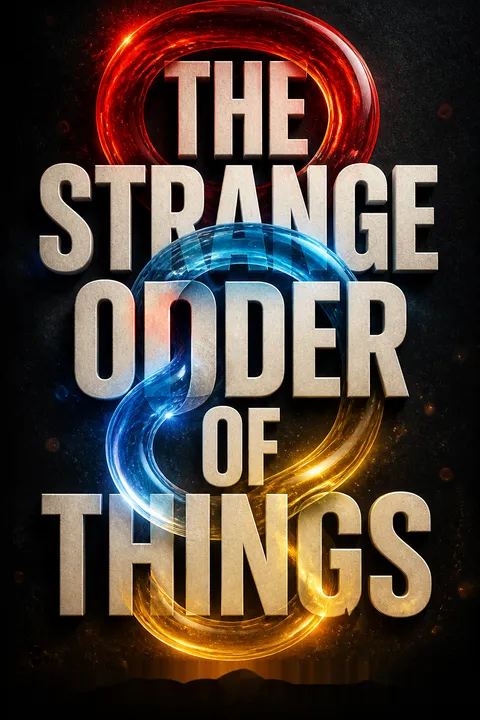
The Strange Order of Things by António Damásio explores how homeostasis—the body's drive to maintain equilibrium and flourish—underlies human feelings, consciousness, and culture. Reviewers praise Damásio's argument that feelings, as expressions of homeostatic processes, shaped cultural evolution from single cells to complex civilizations. The book traces how emotions predated genes and drove cooperation, creativity, and social systems. While many admire the first sections on neurobiology and evolution, several critics find the later philosophical discussions repetitive, overly dense, or insufficiently developed, particularly regarding artificial intelligence and transhumanism. Responses range from calling it "hugely important" to "pedantic" and "disappointing."
People Also Read

About the Author
Other books by António Damásio
Download PDF
Download EPUB
.epub digital book format is ideal for reading ebooks on phones, tablets, and e-readers.








































