
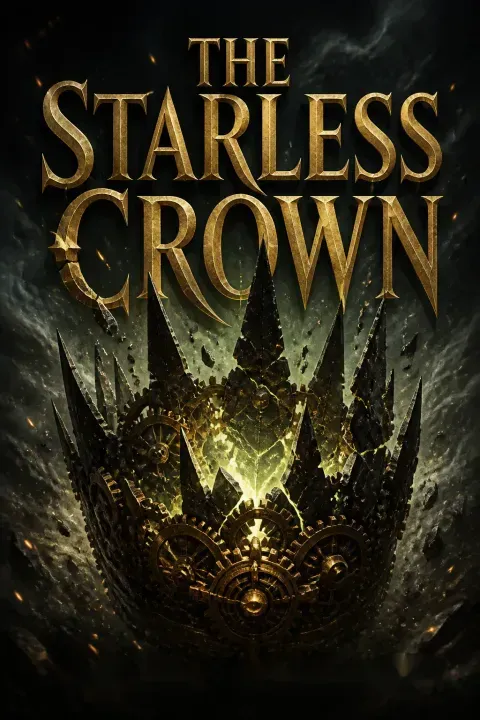


Plot Summary
Prologue
A tongueless pleasure serf squats in the mud of the Mýr swamps, fleeing the king's hunters. She gives birth to a girl, and her first instinct is to slit the infant's throat, to spare her the brutal life of a serf. Before she can act, a giant reptile attacks, drawn by the blood.
A massive Mýr bat drops from the sky, kills the reptile, and the dying mother sees the creature bend over her child. Her last prayer is that the baby dies free. Instead, the bat gently gathers the newborn and carries her away.
This prologue establishes the novel's primal themes: the cruel calculus of mercy, the blurring of human and animal, and the question of what constitutes a proper mother. The serf's impulse to kill her daughter is framed as an act of love, a dark mirror to the bat's subsequent rescue. The scene sets up the central mystery of Nyx's origin and introduces the Mýr bats not as monsters, but as sentient beings capable of compassion, upending the reader's expectations and the world's assumptions.
The Orrery's Secret Truth
Fourteen-year-old Nyx,1 nearly blind from birth, attends a lesson at the Cloistery of Brayk. When the teacher insists the Urth is fixed and unmoving, Nyx1 runs her fingers over the ancient bronze orrery and feels the truth: the world slowly rotates as it circles the sun, one turn per year.
Prioress Ghyle overhears and challenges Nyx1 further, who deduces the planet's tilted axis causes seasons. Her insight humiliates Sister Reed,15 the teacher, and infuriates the other students, particularly the sadistic Byrd and his twin sister Kindjal. After the lesson, Nyx1 accidentally breaks a piece off the orrery in her flustered retreat, earning threats of a brutal switching.
Nyx's understanding comes through tactile intuition rather than sight, positioning her blindness not as a deficit but as a unique way of knowing. The scene dramatizes how institutional power fears and punishes those whose insights challenge orthodoxy. Ghyle's fascination hints at a hidden agenda, while the cruelty of Nyx's peers reveals a social order that enforces conformity through violence. This moment seeds the conflict between revealed truth and accepted dogma that will drive much of the novel.
Fangs on the Ninth Tier
Fearing expulsion and violation at the hands of Byrd and his gang, Nyx1 flees up the forbidden stairs to the Cloistery's ninth tier. Byrd pursues, intent on raping her. As he closes in between the two ceremonial pyres, a massive Mýr bat descends. It rips Byrd's head from his shoulders and tosses his body into the flames.
The creature pins Nyx,1 sinks its fangs into her throat, and pumps her full of venom. Her heart stops. When she wakes a month later, the poison has not only spared her life but inexplicably cleared the cloudy membranes from her eyes, granting her perfect vision for the first time.
The attack operates on multiple symbolic levels. The bat is both an agent of brutal justice and an instrument of transformation. Nyx's 'death' and resurrection, coupled with her restored sight, casts her as a figure of prophetic significance. The location, between the twin pyres of alchymy and religion, places her at the exact convergence of the world's two knowledge systems. Her new sight is not merely a physical gift but a re-forging of her identity, separating her irrevocably from her past self.
The Brother in the Rafters
During her first night with restored sight, a small Mýr bat14 enters Nyx's1 cell. Its high-pitched keening resonates inside her skull, triggering a cascade of forgotten infant memories. She relives suckling at a furry breast alongside another pup, feeling the warmth of leathery wings, and finally being gently deposited on a floating mat of fenweed, her vision already clouding from the tainted milk.
Nyx1 understands the truth: she was raised by a Mýr bat for six moons, then abandoned when the milk began blinding her. The bat in the rafters is her 'lost brother',14 the pup who shared her nest, now grown and come looking for her.
This revelation fundamentally rewrites Nyx's origin story. The abandonment she resented her whole life is reframed as an act of cross-species compassion; the bats recognized their milk was harming her and returned her to her own kind. The bond she forms with her winged brother becomes a channel to the Mýr bats' collective consciousness, a psychic bridge that will later expand into a world-altering connection. The scene also introduces the novel's core metaphor: family is not defined by blood but by shared nurture and sacrifice.
The Bronze Goddess in the Dark
Rhaif,3 a thief sentenced to the chalk mines, survives a cave-in and stumbles through the darkness. His stolen wayglass leads him to a glowing chasm where a massive slab of brimstan has cracked open. Behind it sits a crumpled copper egg, its interior lined with glass piping and golden fluid.
In an alcove stands a woman sculpted of bronze,4 her expression one of profound sadness. When Rhaif3 whispers to her, her eyelids part, and golden light shines from within. Before he can investigate further, a group of Shriven arrives, led by the sinister Wryth13 and the local archsheriff. Rhaif3 hides and watches.
Rhaif's discovery of Shiya is the novel's other inciting event, introducing the ancient technology of the 'Sleepers.' The bronze woman is both a work of art and a functional machine, a fusion of aesthetic beauty and alchymical engineering. Her response to Rhaif's voice suggests a dormant consciousness seeking connection. The Shriven's immediate arrival, with their arcane tools and sacrificial methods, establishes them as a dark mirror to the scholars of the Cloistery: they seek knowledge, but through torture and blood rather than study and contemplation.
A Blood Sacrifice Wakes Her
In a hidden chamber beneath the mines, the Shriven wheel in a 'bloodbaerne ': a young girl with her chest flayed open, kept alive by bellows and tubes, her heart visibly pumping. They drain her lifeblood through copper pipes into the bronze statue's core. The statue's eyes snap open, an arm lifts, and its head turns with unnerving awareness.
After the Shriven depart to examine the copper egg, Rhaif3 tries to escape but finds the exit barred. Shiya4 wakes fully, smashes through an iron door, and together they flee onto a desert caravan heading to Anvil. Rhaif3 kills an overseer in the process, committing himself irrevocably to this strange alliance.
The bloodbaerne ritual is the novel's most explicit depiction of institutional cruelty justified as necessary progress. The Shriven's willingness to murder children to power ancient machines positions them as the true monsters, far worse than any swamp predator. Shiya's awakening is partial and dependent; she moves with Rhaif's guidance but remains mute and driven by an internal compass he cannot fathom. Their escape solidifies Rhaif's transformation from self-interested thief to reluctant protector, a role he never sought but cannot abandon.
The Prince and the Falling Moon
Prince Kanthe,2 the disfavored 'Prince in the Cupboard,' is summoned by his mentor, Alchymist Frell,6 who has spent a decade measuring the moon. Comparing historical records with his own observations, Frell6 proves the moon is drawing closer to the Urth and will eventually crash into the world, ending all life.
Before they can act, Kanthe2 is ordered by his father, King Toranth, to join a military expedition to the swamps of Mýr. The official mission is to harvest Mýr bat venom for weaponry and retrieve the girl who miraculously survived the poison.1 Kanthe2 recognizes the assignment for what it is: his father wants him out of the capital during his twin brother Mikaen's12 wedding, perhaps permanently.
This turning point introduces the cosmic stakes and the political machinery that will oppose any effort to address them. Frell's scientific method, painstakingly documented, clashes with a court that values prophecy and power over empirical truth. Kanthe's position as the spare heir makes him simultaneously disposable and potentially dangerous; sending him to Mýr is a convenient exile that could easily become a fatal one. The chapter establishes the parallel journeys: Nyx heading toward revelation, Kanthe heading toward confrontation with his family's dark secrets.
The Pyre That Summoned Death
Despite Kanthe's2 attempt to steal the caged bat,14 the legion recaptures it and throws it into the pyre atop the Cloistery. The moment the flames touch its fur, a psychic scream tears through Nyx's1 skull. From the south, a black storm of thousands of Mýr bats descends upon the school and the town of Brayk.
The swarm crashes through the tiers, ripping knights and students apart with claws and fangs. Nyx,1 still connected to the collective consciousness, experiences the slaughter through dozens of bat eyes simultaneously, a dizzying barrage of violence and blood. She cannot stop it, can barely hold onto her own identity within the fury.
The bat attack is the novel's first large-scale set piece and a turning point from which there is no return. The slaughter is presented not as a mindless animal rampage but as a targeted, grief-fueled act of communal vengeance. Nyx's psychic immersion into the bats' perspective forces her (and the reader) to experience the horror from both sides, collapsing the distinction between victim and perpetrator. This event permanently fractures the political order: the king's legion is decimated, the school is traumatized, and Nyx becomes both a wanted fugitive and a vessel for a power she does not understand or control.
Blood in the Mud, Vengeance from the Sky
As the bat attack wanes, Highmayor Goren, whose son Byrd was killed by the bat, confronts Nyx's1 adoptive father on the shore. Blaming Nyx1 for his son's death, Goren stabs the old man in the belly, driving the blade up into his heart. Nyx,1 still fused to the bats' senses, witnesses the murder through their eyes. Grief and rage consume her.
She merges fully with a nearby bat and dives, seizing Goren. She carries him aloft, then methodically dismembers him in the air with claws and fangs, scattering his remains across the swamp. When she returns to her own body, she is horrified by what she has done, the savage darkness she now knows lives inside her.
This scene represents the most complete dissolution of Nyx's self into the collective bat consciousness. Her vengeance is not premeditated but instinctual, an eruption of the bats' protective fury channeled through her personal grief. The act cements her bond to the bats while also revealing its terrifying cost: she can become a passenger in her own mind, capable of atrocities she would never consciously commit. The death of her father cuts her last tether to her old life and propels her into the wider world's conflicts.
The Knight Breaks His Oath Again
In the Rimewood, the exiled knight Graylin sy Moor5 lives alone with his two vargr brothers, Aamon and Kalder. His former ally, Symon, arrives with a skrycrow message from Prioress Ghyle: Marayn's child somehow survived the swamps and now lives at the Cloistery.
The note asks Graylin5 to travel to Havensfayre and take the girl1 to safety. Though Graylin5 swore oaths never to return to Hálendii or touch a sword, he accepts Symon's gift of his ancestral blade, Heartsthorn, and sets out.
He bargains with the pirate Darant11 for passage, promising one of his vargr as payment. A flashback reveals his history: he fell in love with Marayn, a mute pleasure serf, and helped her escape the king, only to be captured and tortured while she perished in the swamps.
Graylin's return to Hálendii is an act of profound existential compromise. He has constructed his entire exile identity around the inviolability of his broken oaths; now he must break them again for a higher purpose. The flashback structure allows his past love story to inform his present quest without derailing momentum. His relationship with the vargr, whom he raised from pups after they orphaned him, mirrors Nyx's bond with Bashaliia: both are about chosen kinship across species lines, suggesting this capacity for cross-species loyalty may be inherited or otherwise significant.
The Skriitch's Nest and a Brother's Mercy
Fleeing through the Path of the Fallen, Nyx's1 group enters territory infested with skriitch, parasitic insects that paralyze prey and lay eggs in living flesh. Nyx's1 bat brother, Bashaliia,14 is stung and infected while protecting them. By the time they clear the pass, the eggs have hatched inside him. He lingers in agony, unable to move.
Nyx1 takes Kanthe's2 dagger and, weeping, sings a soft keening to detach Bashaliia's14 consciousness from his tortured body, then slits his throat. She buries him under a white-barked tree called Ellai Sha, the Spirit's Breath, and takes a curl of its bark as a keepsake, a vessel for speaking to the dead.
This is the novel's emotional nadir, a necessary sacrifice that completes Nyx's separation from her old life. Her ability to soothe Bashaliia's passing with song demonstrates how her bridle-song can be used for mercy as well as destruction. The mercy killing parallels the prologue, where a mother considered killing her child as an act of love. The bark curl becomes a powerful symbolic object, a tangible link to the dead that will later prove crucial. The scene also reinforces the cost of Nyx's journey: everyone who protects her seems to die.
Plummeting into the Greenwood
Rhaif,3 Shiya,4 and their companions escape the burning wyndship on a sailraft. Overweight, the craft descends toward the Cloudreach forest. As the pilot steers toward Havensfayre for a landing, Shiya4 stands and, without a word, walks out the open stern door, plummeting through the canopy.
Rhaif3 is devastated but Pratik,9 the Klashean scholar, notes Shiya4 had been slowly turning eastward throughout their journey, as if pulled by a magnetic force. They crash-land and set out to find her, soon joined by a Kethra'kai elder named Xan,10 who claims she can hear Shiya's4 'song' on the wind and leads them on a two-day search through the misty forest.
Shiya's jump is an act of absolute compulsion, demonstrating that whatever consciousness inhabits the bronze body operates on imperatives that override all human logic. Her eastward fixation aligns her mysterious goal with the Shrouds of Dalalæða, a place of ancient, forbidden power. The introduction of Xan bridges the technological mystery of Shiya with the organic magic of bridle-song; the elder's ability to 'hear' a bronze woman suggests a deep compatibility between the ancient technology and the Kethra'kai's inherited gifts. Rhaif's grief at losing Shiya reveals how thoroughly this thief has been emotionally captured by a being he barely understands.
Two Fathers, Two Daughters, One Inn
At the Golden Bough inn in Havensfayre, Nyx1 comes face to face with Graylin sy Moor.5 He falls to his knees, seeing Marayn's face in hers. She feels only cold resentment. Their tense reunion is interrupted by his vargr brothers, Aamon and Kalder, who approach Nyx1 and, through her bridle-song, recognize her as pack.
Before any bond can form, the king's warships begin bombing the town. The inn's patrons scatter. Rhaif's3 group arrives with the damaged Shiya,4 and the two parties converge. Xan,10 the Kethra'kai elder, insists they all flee into the tunnels beneath the ancient alder tree called Oldenmast, where a copper passage will lead them to the Shrouds.
This chaotic convergence of all the novel's major characters is orchestrated under fire, mirroring the converging threads of the plot itself. Nyx's rejection of Graylin is psychologically complex: she has built her identity around being abandoned, and his return, however repentant, threatens that foundation. The vargr's immediate acceptance of her bypasses social convention and suggests a biological or spiritual recognition of kinship. The bombing of Havensfayre by the king's forces transforms the town from sanctuary to slaughterhouse, raising the stakes to their highest point yet.
The Song That Opened the Door
Deep beneath Oldenmast, the group reaches a copper door embedded in black rock. Xan10 and Shiya4 sing together, their combined bridle-song weaving complex patterns of light into the metal. The door does not open. Nyx1 realizes the 'lock' has been changed over the millennia and adds her own voice, channeling the memory of Bashaliia's14 keening through the curl of bark she carries.
Her unique frequency, blended with the others, realigns the ancient mechanism. The door pivots open, revealing a seamless copper tunnel that stretches for leagues toward the cliffs of the Shrouds. They descend, leaving Kanthe2 and Jace7 behind to signal the Sparrowhawk.
The opening of the door is the novel's most explicit demonstration of bridle-song as technology, not magic. The 'lock' is a physical mechanism that responds to specific vibrational frequencies. Nyx's ability to complete the key, drawing on her hybrid connection to both human song and bat keening, positions her as a unique bridge between the ancient Sleepers and the living world. The separation of the party at this point splits the narrative into two parallel climaxes and forces characters to confront their individual destinies without the comfort of the full group.
The Doom Laid Bare
Inside the ancient copper chamber beneath the henge, Shiya4 activates a holographic globe of the Urth. She shows the group the planet's history: it once spun freely, but something stopped it eons ago, locking one face toward the sun and creating the frozen wastes and scorched deserts.
Then she projects the future: the moon's orbit is decaying. Within three to five years, it will crash into the Urth, cracking the world like an egg and extinguishing all life.
Shiya4 explains that the only way to avert this is to somehow restart the world's rotation, a feat that will itself kill millions but preserve the species. She identifies a distant site in the frozen dark, called the City of Angels, where the necessary knowledge or power might still exist.
This revelation transforms the novel's conflict from personal survival to existential stakes. The moral calculus is deliberately brutal: even the solution will cause mass death, forcing the characters to weigh immediate compassion against species-level survival. Shiya's incomplete knowledge, attributed to the destruction of the chamber's records, introduces fallibility into the ancient technology; the Sleepers are not omniscient gods but damaged machines operating on fragmented data. The time pressure, a mere handful of years, ensures that every subsequent decision carries fatal urgency.
Lightning and Blood on the Henge
The legions assault the henge. Shiya4 channels lightning from the standing stones, destroying skiffs and scattering knights, while Xan10 and the Kethra'kai sing the jungle into a frenzy to defend the gates.
Wryth13 descends with Shrive Vythaas, who unleashes Nyx's1 captured brothers, Ablen and Bastan,16 their brains impaled with copper needles that render them puppets. They march on Nyx1 to kill her. A colossal Mýr bat, reborn from the shared consciousness into a new body, crashes down. It is Bashaliia,14 returned.
He kills Ablen and Bastan16 and destroys Vythaas, but Aamon is mortally wounded shielding Nyx1 from a Monger's hammer. The chamber below fires a devastating energy beam that splits the warship Pywll in half and collapses the henge. The Sparrowhawk arrives to extract the survivors.
The battle is a convergence of every power system the novel has established: alchymical technology (Shiya's lightning), biological magic (bridle-song), military force (the legion), and psychological horror (the mind-controlled brothers). Bashaliia's return through the bats' collective immortality provides a rare moment of earned grace, suggesting that death in this world is permeable under the right conditions. Aamon's death, protecting Nyx despite his mortal wounds, completes the vargr's arc of loyalty and provides the catalyst for Graylin and Nyx's eventual reconciliation through shared grief.
A Pack Divided, Two Quests Begun
Back at the pirate cove, the surviving group buries Aamon in the heartwood forest where Graylin5 first found him. In the aftermath, plans crystallize. Shiya,4 Rhaif,3 Nyx,1 Jace,7 and Darant11 will take the Sparrowhawk across the frozen wastes to the City of Angels, where Shiya4 hopes to find the means to restart the Urth's spin.
Meanwhile, Kanthe,2 Frell,6 and Pratik9 will journey to the Southern Klashe to find another Sleeper marked on Shiya's4 map and seek ancient knowledge in the Abyssal Codex. Llyra8 departs to build a network of spies and thieves to support both missions. Nyx1 and Graylin,5 estranged all this time, finally embrace in their shared grief over Aamon, a tentative father-daughter bond forged in blood and loss.
The epilogue functions as both resolution for this volume and launch for the series. The party's division follows emotional lines: Nyx and Rhaif are bound to Shiya by bridle-song, while Kanthe must confront his family's political legacy. The novel closes by emphasizing chosen family over biological connection. Llyra's mission to recruit an underworld army suggests the coming conflict will require more than ancient technology or magical song; it will need the messy, human work of espionage and resistance. Wryth's final scene, torturing a captured Mýr bat into a weapon, promises that the enemy is already adapting, using the same copper-needle technology that destroyed Nyx's brothers.
Epilogue
In the Shrivenkeep, Wryth13 oversees the fruits of his new research. Following Vythaas's journal, he has captured a live Mýr bat and driven copper needles into its brain, slowly corrupting its consciousness into a weapon of pure hatred. Prince Mikaen,12 his face now ruined and masked in silver, visits to observe the progress.
Wryth13 assures him the bat will be ready soon. Meanwhile, far to the south, Kanthe2 studies the Klashean language with Jace,7 preparing for his diplomatic mission to the emperor's court, knowing he must persuade an ancient enemy to ally against a common doom.
Wryth's bat-torture scene establishes that the villains are learning from the heroes' advantages, corrupting the very bonds that saved Nyx. The parallel between Nyx's loving connection to Bashaliia and Wryth's violent enslavement of another bat creates a stark thematic contrast: bridle-song can be used for communion or domination. Mikaen's silver mask literalizes his transformation from a bright prince into something monstrous and hidden. Kanthe's language lessons signal his commitment to a role he never wanted, a final maturation from drunken spare prince to reluctant diplomat willing to sacrifice comfort for the world's survival.
Analysis
The Starless Crown is a novel about the cost of waking up: to knowledge, to power, to one's true identity. Every major character begins in a state of willful or imposed blindness. Nyx1 is literally blind, then metaphorically so about her origins. Kanthe2 has blinded himself with drink to avoid confronting his family's cruelty. Rhaif3 is blind to his own capacity for loyalty. Graylin5 is blind to the possibility of redemption. The plot systematically strips away these protections, forcing each character to see clearly and act on what they see.
The novel's central innovation is its treatment of magic as a natural phenomenon, a kind of bio-acoustic technology that operates through frequency and resonance. Bridle-song is not incantation but vibration; the copper needles are not curses but crude instruments. This grounding in a quasi-scientific framework gives the fantasy elements a satisfying materiality while preserving their sense of wonder. The Mýr bats' collective consciousness, in particular, functions as a distributed network where individual identity can survive bodily death, a concept that feels simultaneously ancient and cutting-edge.
Politically, the book critiques monarchy not through revolution but through exposure. The king is not a tyrant but a weak man manipulated by crueler minds. The true villainy lies in the institutions that prop up power: the Shrivenkeep with its hidden torture chambers, the Legionary that trains princes to view mercy as weakness. Mikaen12 is the logical product of such a system, a golden boy forged into a monster by the expectation that ruthlessness equals strength.
The story's emotional core, however, is about found family across every conceivable boundary: species, class, nation. Nyx1 is raised by a swamper, nursed by a bat, protected by a thief,3 a pirate,11 and a disgraced knight.5 The climactic image is not a triumphant battle but a dying vargr's head in a girl's lap, surrounded by her bronze sister4 and her winged brother.14 In a world frozen between fire and ice, warmth comes only from the pack you choose.
Review Summary
The Starless Crown received mixed reviews, with an average rating of 3.79 out of 5. Readers praised the unique world-building, intriguing characters, and fast-paced plot. Many enjoyed the blend of fantasy and science fiction elements. However, some found the book too long and filled with tropes. Critics noted issues with pacing, character development, and excessive violence. Despite these concerns, many readers were excited for the sequel and appreciated Rollins' return to fantasy writing after a long hiatus.
People Also Read
Characters
Nyx
Bat-bonded visionary, prophecy's childA foundling raised in the swamps, then at the Cloistery. Nyx begins the story nearly blind, navigating the world through touch and memory. After a Mýr bat's venom restores her sight, she discovers she was nursed by the creatures as an infant, which forged a permanent psychic bond. This connection grants her access to the bats' collective consciousness and awakens a latent bridle-song ability. She is stubborn, intellectually gifted, and burdened by the weight of a prophecy that she will end the world. Her arc traces a movement from fearful obscurity toward claiming her power, even as that power frightens her. She struggles to reconcile her love for her adoptive family with her growing awareness of a larger destiny.
Prince Kanthe
The disgraced spare princeThe second-born twin of King Toranth, Kanthe has spent his life as the 'Prince in the Cupboard,' a backup heir kept on a shelf. He copes with his irrelevance through drinking and self-debasement, earning nicknames like the Tallywag and the Dark Trifle. Despite his cultivated uselessness, he is a skilled archer and hunter, trained by a Cloudreach scout. When he learns his brother Mikaen12 tried to have him assassinated, Kanthe's journey becomes one of self-discovery. He proves unexpectedly brave and resourceful, slowly shedding his performative incompetence. His dark complexion and quiet manner set him apart from his golden twin. He harbors complicated feelings for Nyx1, who may be his half-sister.
Rhaif hy Albar
Thief turned protector of ShiyaA career thief from the squalid port city of Anvil, Rhaif is wiry, clever, and deeply cynical. Betrayed by his guildmaster and sentenced to the mines of Chalk, he discovers the bronze woman Shiya4 and impulsively steals her during his escape. Despite his self-interest, he develops a fierce loyalty to her that surprises even himself. His mixed heritage (Hálendiian father, Kethra'kai mother) gives him both a taller frame and a latent bridle-song sensitivity, which Xan10 later identifies. He is haunted by the destruction his actions have caused, including the accidental triggering of a Klashean retaliation. His arc moves from survivalist selfishness to a sacrificial commitment to Shiya's4 world-saving mission.
Shiya
Ancient bronze Sleeper awakenedA woman sculpted from living bronze, Shiya is one of the 'Sleepers,' ancient beings placed throughout the Urth eons ago to monitor and preserve the world. She was discovered in a copper egg in the mines of Chalk, revived by a blood sacrifice. Her consciousness is incomplete and fragmented; she speaks rarely and with difficulty, often as if remembering a language long unused. She draws power from sunlight and from contact with copper channels infused with ancient energies. She is driven by an internal imperative to reach the City of Angels in the frozen wastes, carrying the knowledge of how to restart the Urth's rotation. Despite her metallic form, she displays tenderness, curiosity, and a profound loneliness.
Graylin sy Moor
The Forsworn Knight, Nyx's fatherOnce the captain of the king's guard and Toranth's closest friend, Graylin broke every oath to help Marayn, a pregnant pleasure serf he loved, escape the king's wrath. Captured and tortured, he was exiled to the Rimewood and forbidden to ever wield steel or return to Hálendii. He survived by bonding with two vargr brothers, Aamon and Kalder, whom he raised from pups. Learning that his daughter1 survived the swamps, he abandons his exile oaths to find and protect her. He is physically scarred, emotionally guarded, and carries a crushing weight of guilt for Marayn's death. His relationship with Nyx1 is initially one of rejection and resentment before grief begins forging a fragile bond.
Alchymist Frell
Kanthe's mentor, moonfall discovererA young alchymist at Kepenhill and member of the Council of Eight. Frell is methodical, brilliant, and burdened by the knowledge that the moon's orbit is decaying. Originally from the Cloistery, he was taught by Prioress Ghyle, which gives him connections to both Nyx's1 world and the court. He is also a latent bridle-singer, a fact he rejects until Xan10 reveals it. His arc involves moving from pure scholarship to active engagement, accepting that knowledge without action is worthless. He carries alchymical weapons embedded in his sleeves, a sign of his willingness to breach academic neutrality for the greater good.
Jace
Nyx's loyal scribe and friendA failed student at the Cloistery who was kept on as a journeyman scribe rather than being sent home. He serves as Nyx's1 eyes before her sight is restored, reading aloud to her and helping her study. Rotund, red-haired, and endlessly patient, Jace harbors an unspoken romantic love for Nyx1 that manifests as fierce protectiveness. His years of copying ancient texts in the scriptorium have given him a deep, eclectic knowledge that proves surprisingly useful. He wields a Guld'guhlian stonehart ax with more skill than his soft appearance suggests. His loyalty to Nyx1 is absolute, even when she cannot reciprocate his feelings.
Llyra hy March
Guildmaster of thieves, reluctant allyThe cunning and ruthless leader of the thieves' guild in Anvil. Llyra betrayed Rhaif3 to the mines to strengthen her political position, but later becomes his uneasy ally when she recognizes the value of the bronze woman4. She is pragmatic to the point of coldness, weighing every decision in terms of profit and survival. She and Rhaif3 share a physical history but never emotional intimacy. After witnessing Shiya's4 revelation of moonfall, her greed transforms into a calculating commitment to the cause; if the world ends, there is nothing to steal. She departs at the novel's end to build an underworld network to support the coming conflict.
Pratik
Klashean eunuch alchymistA Chaaen scholar, castrated and enslaved as a child in the Klashe's brutal House of Wisdom. He earned an iron collar signifying his Highcryst in alchymy and was bound to a Klashean trader named Rellis. Rhaif3 frees him from the Anvil gaol in exchange for his help understanding Shiya4. Pratik is cautious, intellectually rigorous, and carries deep psychological scars from his training and mutilation. His knowledge of ancient Klashean texts and prophecies proves essential. He agrees to guide Kanthe2 and Frell6 to the Southern Klashe, knowing that returning without his master means almost certain death if caught.
Xan
Kethra'kai elder, bridle-song matriarchThe ancient leader of the Kethra'kai tribe in Cloudreach, Xan has mismatched eyes (one green as Eitur, one blue as Heilsa) and carries a staff carved with the phases of the moon. She is a powerful bridle-singer who can both cast and perceive the 'songs' of other beings, including Shiya4. She reveals that Rhaif3 is her great-grandson, making his lost mother her granddaughter. Her wisdom guides the group through the trials of the Shrouds. She dies on the henge, pierced by an arrow meant for Nyx1, but her song continues through those she taught and through the legacy of bridle-song she helped preserve.
Darant
Pirate captain of the SparrowhawkThe charismatic and reckless leader of a pirate clan based in the fjords of Aglerolarpok. Darant wields twin Klashean whipswords with lethal skill and commands the swyftship Sparrowhawk with his two daughters, Glace and Brayl, as his crew. He is motivated by profit but honors his bargains with scrupulous precision. He agreed to ferry Graylin5 to Hálendii in exchange for one of the knight's vargr. His ship becomes the primary transport for the group's missions. Beneath his flippant exterior lies a sharp tactical mind and a genuine affection for his daughters.
Prince Mikaen
The bright prince turned monsterKanthe's2 golden-haired twin and the heir to Hálendii's throne. Mikaen is everything Kanthe2 is not: handsome, martial, publicly adored. But beneath the shining exterior lurks a cold ruthlessness. He ordered Kanthe's2 assassination in the Nethers and again in the swamps, viewing his brother as a potential threat to his succession. He allies with Haddan and Wryth13, believing the kingdom requires a harder hand than their merciful father will provide. He personally leads the hunt for Kanthe2 in Cloudreach, where Jace's7 ax cleaves his face down to the bone, leaving him permanently disfigured. He adopts a silver mask thereafter, his external beauty now matching his inner corruption.
Shrive Wryth
Iflelen sorcerer-scholar, lead antagonistA member of the Iflelen, a secret cabal within the Shriven order that worships the dark god Đreyk and pursues forbidden alchymies. Wryth is ancient (over eighty years old, preserved by blood alchymy), utterly amoral, and obsessed with acquiring the lost knowledge and power of the ancient world. He orchestrates the recovery of the bronze artifacts, using child sacrifices to power his machines. He serves as the dark whisperer in King Toranth's ear, steering the kingdom toward war with the Klashe to further his own ends. His defeat at the Shrouds only deepens his resolve; the novel ends with him torturing a captured Mýr bat, preparing to turn the bats' own gifts against Nyx1.
Bashaliia
Nyx's winged brother, twice-bornNyx's1 'lost brother,' a Mýr bat who shared her nest as an infant. Initially a small bat no larger than a goose, Bashaliia becomes Nyx's1 constant companion after her sight is restored. He serves as her bridge to the bats' collective consciousness, allowing her to see through their eyes and feel their emotions. He dies in the Path of the Fallen, infected by skriitch, and Nyx1 mercifully kills him. However, because Mýr bats share a collective consciousness across generations, his memory and 'self' are preserved. He returns at the Shrouds in a much larger body, suggesting the bats can transfer individual identities into new physical forms.
Sister Reed
Cruel teacher, petty antagonistA young novitiate at the Cloistery who teaches the seventhyears. She despises Nyx1 for upstaging her during the astronomy lesson and for her lowborn origins. She conspires with Byrd and Kindjal to humiliate Nyx1, later physically threatening her. Her cruelty is small-scale but consequential: it creates the conditions for the attack that changes Nyx's1 life.
Ablen and Bastan
Nyx's adoptive brothersThe two sons of Trademan Polder, the swamper who found and raised Nyx1. They are strong, protective, and deeply loyal to their adopted sister. After their father's murder, they are captured by the king's legion and turned into mind-controlled assassins using copper needles driven into their brains. They are forced to attack Nyx1 atop the Shrouds before Bashaliia14 kills them, an act that is presented as a mercy release from their tortured enslavement.
Plot Devices
Bridle-Song
Vocal frequencies that control or connectBridle-song is an inherited ability, strongest in the Kethra'kai tribes, to produce vocal frequencies that can calm animals, communicate across species, or in its corrupted form, enslave minds. It was originally seeded into humanity by the ancient Sleepers as a method of preserving knowledge across generations. The Mýr bats use a form of keening that operates similarly, allowing Nyx1 to access their collective consciousness. The copper-needle technology of the Iflelen is an artificial, violent perversion of bridle-song that destroys the victim's will. The novel positions bridle-song as the fundamental language of connection in the world, capable of both profound healing and devastating violation depending on the intent of the singer.
The Bronze Sleepers
Ancient sentinels with world-saving knowledgeThe Sleepers are humanoid figures sculpted from living bronze and powered by a combination of solar energy and alchymical fluids extracted from blood sacrifices (or, originally, more ethical sources). They were placed throughout the Urth eons ago, before the world stopped spinning, to monitor the planet and preserve the knowledge needed to restart its rotation if necessary. Shiya4 is one such Sleeper, awakened prematurely by the Iflelen. Another bronze bust exists in the Shrivenkeep, serving as a talisman that can detect other Sleepers. The Sleepers' consciousnesses are fragmented and incomplete due to the damage of ages, making them imperfect guides who need human bridle-singers to unlock their sealed chambers.
The Wayglass and Lodestones
Tracking the bronze artifactsA wayglass is a navigational tool containing a sliver of lodestone suspended in fluid, which orients itself to the world's magnetic field. The Shriven discover that these lodestones also respond to the unique emanations produced by the bronze Sleepers, allowing them to track Shiya4 across vast distances. Skerren later develops a more sensitive version using a crystal orb filled with oil and multiple copper-wrapped lodestones. This device cracks under the strain of a powerful signal from the Shrouds. The lodestones' sensitivity to the Sleepers' 'song' suggests that the ancient technology operates on frequencies that interact with the same forces that guide migratory birds, hinting at a unified physics underlying both natural and 'magical' phenomena.
The Bloodbaerne
Child sacrifice to power ancient techA bloodbaerne is a horrific alchymical apparatus that keeps a victim alive while their heart pumps blood through a series of copper tubes and glass vessels, distilling some essential life-force into a golden elixir. This elixir is used to fuel or revive the bronze Sleepers. The Iflelen have refined the process over centuries, learning that children's blood is particularly potent. The concept represents the darkest perversion of the ancient knowledge: what the original builders may have fueled through sunlight or voluntary donation, the Iflelen extract through torture and murder. The bloodbaerne is the most explicit symbol of institutional evil in the novel, a machine that literally consumes innocence to power ambition.
Copper Needle Technology
Mind control through skull-piercingDeveloped by Shrive Vythaas from studies of the bronze bust in the Shrivenkeep, copper needles are driven through holes drilled in the skull directly into the brain. The needles emit frequencies that suppress the victim's will and can transmit commands, effectively turning them into puppets. This technology was used on Prioress Ghyle to extract information and on Ablen and Bastan16 to force them to attack Nyx1. Wryth13 later applies the technique to a captured Mýr bat, attempting to create a weaponized, controllable bat. The needles represent the complete corruption of bridle-song: where natural song connects and communes, the needles dominate and destroy, leaving only hollow shells.
FAQ
Synopsis & Basic Details
What is The Starless Crown about?
- A blind girl's destiny: The Starless Crown follows Nyx, a nearly blind girl from a remote village, who discovers she has a unique connection to the world and a role to play in a looming prophecy.
- A world on the brink: The story unfolds in a world divided into a scorched side and a frozen side, with humanity clinging to life in the habitable "Crown" between them, threatened by a cataclysmic event known as Moonfall.
- A quest for survival: Nyx, along with a disgraced prince, a cunning thief, and a scholarly alchymist, embarks on a perilous journey to uncover ancient secrets and find a way to prevent the impending disaster.
Why should I read The Starless Crown?
- Intriguing world-building: Rollins crafts a unique and imaginative world with a rich history, diverse cultures, and compelling mysteries, drawing readers into a fully realized setting.
- Compelling characters: The story features a diverse cast of characters with complex motivations and compelling backstories, making their journeys and struggles emotionally resonant.
- Action-packed adventure: The Starless Crown delivers a thrilling and suspenseful narrative filled with action, intrigue, and unexpected twists, keeping readers engaged from beginning to end.
What is the background of The Starless Crown?
- Geographical division: The world is divided into a perpetually sun-scorched side and a frozen side, creating a unique geographical and environmental context that shapes the lives of its inhabitants.
- Political tensions: The Kingdom of Hálendii is a dominant power, but tensions with the Southern Klashe and internal conflicts create a complex political landscape that influences the story's events.
- Ancient mysteries: The story is steeped in ancient prophecies, lost alchymies, and forgotten gods, adding layers of intrigue and mystery to the world and its history.
What are the most memorable quotes in The Starless Crown?
- "Life is full of holes.": This opening line sets a tone of imperfection and incompleteness, reflecting the characters' struggles and the broken state of the world.
- "Better to die free, my daughter.": This quote encapsulates the mother's sacrifice and her desire to spare her child from a life of servitude, highlighting the theme of freedom.
- "A curse allesweis growes from a wyssh.": This proverb from The Book of El underscores the dangers of unchecked desires and the unintended consequences of even well-intentioned actions.
What writing style, narrative choices, and literary techniques does James Rollins use?
- Descriptive and evocative: Rollins employs vivid descriptions to bring the world of The Starless Crown to life, immersing readers in its unique landscapes, cultures, and atmosphere.
- Multiple perspectives: The story is told from various points of view, allowing readers to experience the events through the eyes of different characters and gain a broader understanding of the world and its conflicts.
- Foreshadowing and suspense: Rollins masterfully uses foreshadowing and suspense to create a sense of unease and anticipation, hinting at future events and keeping readers engaged.
Hidden Details & Subtle Connections
What are some minor details that add significant meaning?
- The significance of the orrery: The ancient orrery in the Cloistery of Brayk, initially presented as a teaching tool, later symbolizes the characters' limited understanding of the cosmos and the forces shaping their world.
- The recurring presence of Mýr bats: These creatures, initially portrayed as monstrous denizens of the swamps, later become symbols of connection, protection, and even guidance, challenging initial perceptions.
- The use of specific colors: The recurring use of colors like blue (Nyx's eyes, the sky) and gold (the sun, the alchymical elixir) subtly reinforces thematic connections and character traits throughout the narrative.
What are some subtle foreshadowing and callbacks?
- Nyx's early fascination with the orrery: Her tactile exploration of the orrery foreshadows her later ability to "see" beyond the limitations of her physical sight, hinting at her unique connection to the world.
- The story of the Forsworn Knight: The tale, initially presented as a cautionary legend, foreshadows Graylin sy Moor's own journey of redemption and the difficult choices he must make to protect his daughter.
- The emphasis on the twin pyres: The description of the twin pyres at the Cloistery's summit foreshadows the alchymical and religious forces that will shape Nyx's destiny and the conflict between them.
What are some unexpected character connections?
- The link between Nyx and Graylin sy Moor: The revelation of their familial connection adds a layer of complexity to their individual journeys and highlights the theme of legacy and inherited destiny.
- The shared history of Frell and Prioress Ghyle: Their past connection as teacher and student adds depth to their interactions and underscores the importance of mentorship and guidance in a world of uncertainty.
- The connection between the Shriven and the Iflelen: The revelation of the Iflelen's worship of Đreyk adds a layer of intrigue to the religious orders and highlights the presence of dark forces within seemingly holy institutions.
Who are the most significant supporting characters?
- Jace: As Nyx's friend and aide, Jace provides unwavering support and guidance, acting as her eyes and ears and helping her navigate the challenges of the Cloistery.
- Prioress Ghyle: As the head of the Cloistery, Ghyle plays a crucial role in shaping Nyx's destiny, offering her opportunities and guidance while also grappling with her own secrets and responsibilities.
- Trademan Polder: Nyx's adoptive father provides a source of unwavering love and support, grounding her in the values of family and community and reminding her of her humble beginnings.
Psychological, Emotional, & Relational Analysis
What are some unspoken motivations of the characters?
- Kanthe's desire for recognition: Despite his outward apathy, Kanthe deeply craves his father's approval and recognition, driving him to prove his worth and escape his brother's shadow.
- Frell's guilt and responsibility: Frell feels a deep sense of responsibility for the impending disaster, stemming from his research and his connection to the ancient knowledge that may hold the key to preventing it.
- Nyx's fear of abandonment: Haunted by her past, Nyx struggles with a deep-seated fear of abandonment, driving her to seek connection and belonging while also pushing others away.
What psychological complexities do the characters exhibit?
- Nyx's internal conflict: Nyx grapples with the burden of her newfound sight and the responsibility of her destiny, struggling to reconcile her past with her present and future.
- Kanthe's self-destructive tendencies: Kanthe's self-deprecating humor and penchant for self-destructive behavior mask a deep-seated insecurity and a fear of failure.
- Frell's obsession with knowledge: Frell's relentless pursuit of knowledge borders on obsession, driving him to disregard personal safety and ethical boundaries in his quest for answers.
What are the major emotional turning points?
- Nyx's survival of the Mýr bat attack: This event marks a turning point in Nyx's life, transforming her from a nearly blind girl into a figure of prophecy and power.
- Kanthe's discovery of his father's betrayal: This revelation shatters Kanthe's perception of his family and forces him to confront the dark side of power and ambition.
- The destruction of Dalalæða: This event marks a turning point for all the characters, forcing them to confront the reality of the impending disaster and the sacrifices they must make to prevent it.
How do relationship dynamics evolve?
- Nyx and Jace: Their relationship evolves from a student-teacher dynamic to a deep friendship and perhaps something more, as they support each other through challenges and share a bond of trust and loyalty.
- Kanthe and Frell: Their relationship evolves from a mentor-student dynamic to a partnership, as they work together to uncover the truth and fight against the forces threatening their world.
- Nyx and Graylin sy Moor: Their relationship evolves from a distant connection to a bond of understanding and acceptance, as they confront their shared past and work together to protect the future.
Interpretation & Debate
Which parts of the story remain ambiguous or open-ended?
- The true nature of the old gods: The story hints at the existence of powerful, ancient beings, but their true nature and motivations remain ambiguous, leaving readers to speculate about their role in the world's fate.
- The extent of the Mýr bats' intelligence: The story raises questions about the intelligence and sentience of the Mýr bats, leaving readers to wonder whether they are simply creatures of instinct or something more.
- The ultimate fate of the Crown: While the characters strive to prevent Moonfall, the story leaves the ultimate fate of the Crown ambiguous, suggesting that even if they succeed, the world will be forever changed.
What are some debatable, controversial scenes or moments in The Starless Crown?
- The attempted infanticide: The opening scene, in which the mother contemplates killing her newborn daughter, is a controversial moment that raises questions about the value of life and the desperation of those living in a harsh world.
- The bloodbaerne sacrifices: The Shriven's use of bloodbaerne sacrifices is a disturbing element that raises ethical questions about the pursuit of knowledge and the cost of power.
- The destruction of Havensfayre: The decision to destroy Havensfayre to prevent the spread of the skriitch is a controversial moment that raises questions about the morality of sacrificing innocent lives for the greater good.
The Starless Crown Ending Explained: How It Ends & What It Means
- The journey continues: While the first book concludes with the group setting off on a new path, the ultimate fate of the world and the characters remains unresolved, leaving readers eager for the next installment.
- Hope amidst despair: Despite the many losses and challenges, the ending offers a glimmer of hope, as the characters find strength in their bonds and resolve to continue fighting for a better future.
- The power of choice: The ending underscores the importance of individual choices in the face of destiny, suggesting that even in a world shaped by prophecy, the characters have the power to determine their own fates.
Moonfall Series
About the Author
Other books by James Rollins
Download PDF
Download EPUB
.epub digital book format is ideal for reading ebooks on phones, tablets, and e-readers.








































