
Plot Summary
Checkpoint: A Failed Escape
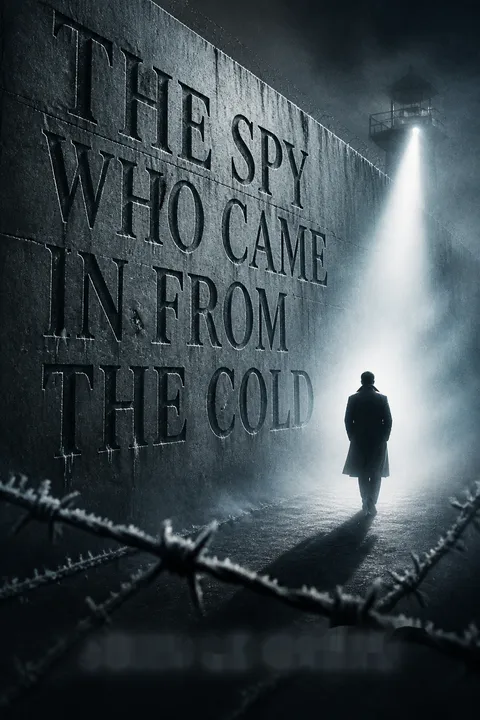
Alec Leamas, a weary British spy, waits at the Berlin Wall for his last agent, Karl Riemeck, to escape from East Germany. The tension is palpable as Leamas, haunted by past failures, clings to hope. But the operation ends in tragedy: Karl is gunned down just short of safety, a victim of the relentless East German security chief, Mundt. The futility and brutality of the Cold War are laid bare in this moment, as Leamas is left with nothing but loss and the bitter knowledge that his network has been destroyed. The scene sets the tone for a story where loyalty, trust, and humanity are casualties of espionage.
The Circus's Last Mission
Back in London, Leamas is summoned to the Circus, the British intelligence headquarters. He is a man written off, his career in tatters, his agents dead. Control, the enigmatic head of the Circus, offers Leamas one last mission: to help destroy Mundt, the man responsible for his failures. The plan is audacious—Leamas must appear to defect, feeding the East Germans a story that will implicate Mundt as a British double agent. The mission is as much about revenge as it is about strategy, and Leamas, battered and cynical, agrees to stay "out in the cold" a little longer, setting the stage for a dangerous game of deception.
Leamas in Decline
Leamas's public life unravels. He is demoted, drinks heavily, and is eventually dismissed from the Circus. His decline is orchestrated to attract the attention of the enemy, but it is also real—Leamas is isolated, angry, and adrift. He takes menial jobs, lives in squalor, and becomes a figure of pity and suspicion. The line between performance and reality blurs as Leamas's bitterness grows. His only solace comes from a new relationship, but even that is shadowed by the demands of his secret mission. The cost of espionage is not just professional but deeply personal.
Liz Gold's Kindness
Liz Gold, a gentle and idealistic librarian, befriends Leamas at his lowest. She is drawn to his vulnerability and offers him compassion and care. Their relationship deepens into love, providing Leamas with a rare sense of warmth and belonging. Liz, a member of the Communist Party, is earnest and principled, believing in the possibility of a better world. Her innocence and hope stand in stark contrast to Leamas's cynicism. Yet, their love is doomed by the secrets Leamas keeps and the machinations of the world he inhabits. Liz's kindness becomes both his refuge and his undoing.
The Trap is Set
Leamas's decline reaches its nadir when he assaults a grocer in a public altercation, ensuring his arrest and imprisonment. This act, seemingly the result of desperation, is in fact the final piece in the Circus's plan to make Leamas appear disillusioned and expendable. Liz, heartbroken and confused, nurses him through illness, only to be pushed away as Leamas prepares for the next phase of his mission. The trap is set: Leamas's apparent fall from grace is bait for the East Germans, who are watching closely for signs of a potential defector.
Prison and Recruitment
In prison, Leamas endures the indignities of captivity, maintaining a stoic distance from his fellow inmates. Upon release, he is approached by Ashe, a supposed journalist with links to the East. Their encounter is a test, and Leamas plays his part, feigning bitterness and desperation. Ashe introduces Leamas to Kiever, a recruiter for the East German intelligence service. The machinery of the operation is in motion: Leamas is offered money and a new life in exchange for information. The line between hunter and hunted blurs as Leamas is drawn deeper into the enemy's web.
The Bait is Taken
Leamas is whisked away to Holland, where he is interrogated by Peters, a Soviet handler. The process is methodical and relentless, as Peters seeks to extract every detail of Leamas's knowledge. Leamas, battered and wary, plays his role, feeding the East Germans a carefully constructed narrative designed to implicate Mundt as a British agent. The tension mounts as Leamas navigates the dangers of double-cross and the ever-present threat of exposure. The stakes are life and death, and the cost of failure is absolute.
Le Mirage Interrogation
At a safe house called Le Mirage, Leamas endures days of questioning by Peters. The interrogation is both psychological and factual, probing the depths of Leamas's experience and loyalty. Peters is shrewd, seeking inconsistencies and hidden motives. Leamas, under immense pressure, must maintain his cover while sowing the seeds of doubt about Mundt. The process is exhausting, and the boundaries between truth and deception become increasingly blurred. The game is perilous, and Leamas's survival depends on his ability to outthink his interrogators.
Fiedler's Suspicion
Leamas is transferred to East Germany, where he is interrogated by Fiedler, Mundt's ambitious and intelligent deputy. Fiedler, a Jew and an outsider, is already suspicious of Mundt and eager to find evidence of his treachery. He and Leamas form a tenuous alliance, united by their mutual distrust of Mundt. Fiedler's investigation uncovers financial irregularities and secret payments, strengthening the case against Mundt. But the political stakes are high, and the forces arrayed against them are formidable. The truth is a weapon, but it is also a trap.
The Tribunal Convenes
Fiedler brings his case against Mundt before a secret tribunal, presenting Leamas as the star witness. The proceedings are tense and surreal, a blend of legal theater and political purge. Mundt, cold and implacable, is defended by Karden, who turns the tables by exposing inconsistencies and suggesting that Leamas's story is a British fabrication. The trial becomes a battleground of ideologies and personal vendettas, with Fiedler's fate hanging in the balance. The machinery of the state grinds inexorably toward a predetermined outcome.
Liz Drawn In
Liz, unwittingly caught in the web, is summoned to East Germany under the guise of a Party exchange. She is interrogated and used as evidence against Leamas, her relationship with him twisted to serve the purposes of the tribunal. Liz's presence is both a comfort and a torment to Leamas, who realizes too late the extent to which she has been manipulated. Her testimony, honest and naive, is used to discredit Leamas and Fiedler, sealing their doom. The personal and the political collide, with devastating consequences.
The Truth Unveiled
The tribunal's verdict is a foregone conclusion: Fiedler is condemned, and Leamas is exposed as a pawn in a larger game. The true nature of the operation is revealed—Mundt is a British agent, and the entire scheme was designed to protect him by eliminating Fiedler, the only man who suspected the truth. Leamas and Liz are released, but the victory is hollow. The cost is measured in lives destroyed and ideals betrayed. The machinery of espionage grinds on, indifferent to the suffering it causes.
The Wall's Final Test
Leamas and Liz are given a chance to escape, guided to a secret crossing at the Berlin Wall. The plan is fraught with danger, and the sense of impending doom is palpable. As they attempt to climb the wall under the cover of a searchlight, Liz is shot and killed. Leamas, faced with the choice of saving himself or staying with her, chooses to die by her side. The final moments are a testament to love, loyalty, and the ultimate futility of the games played by states and spies. The wall, both literal and symbolic, claims its final victims.
In from the Cold
The story closes with Leamas's death, a man who has given everything and gained nothing. The machinery of espionage has consumed him, and the ideals for which he fought are revealed as hollow. The cost of victory is too high, and the survivors are left to reckon with the consequences. The cold, both physical and moral, is inescapable. The final image is one of loss and resignation, a stark reminder of the human cost of the Cold War.
Analysis
John le Carré's The Spy Who Came In from the Cold is a masterful deconstruction of the Cold War spy novel, stripping away the glamour and heroism to reveal a world defined by moral ambiguity, betrayal, and the expendability of individuals. The novel's central message is the futility and inhumanity of systems—whether capitalist or communist—that justify any means for their own survival. Through the tragic arc of Alec Leamas and Liz Gold, le Carré exposes the personal cost of political gamesmanship, where love, loyalty, and innocence are sacrificed on the altar of expediency. The Berlin Wall, both setting and symbol, encapsulates the divisions that define the era, while the show trial and the manipulation of truth reflect the broader dangers of ideological certainty. In today's world, the novel remains a powerful warning against the dehumanizing effects of power and the dangers of believing that the ends can ever justify the means. Its lessons are as relevant now as they were at the height of the Cold War: that the true enemy is not the other side, but the systems that demand we betray our own humanity.
Review Summary
The Spy Who Came In from the Cold receives overwhelmingly positive reviews, with readers praising its intelligent, realistic portrayal of espionage that contrasts sharply with glamorized spy fiction. Reviewers highlight le Carré's masterful prose, intricate plotting, and morally complex characters who blur lines between good and evil. The novel depicts the Cold War's psychological toll and the heartlessness of intelligence work. Most appreciate protagonist Alec Leamas over the backgrounded George Smiley, finding the story gripping despite its bleakness. Some readers unfamiliar with Cold War history found it confusing or slow, but the majority hail it as a genre-defining masterpiece.
People Also Read









Characters
Alec Leamas
Alec Leamas is the protagonist, a seasoned British intelligence officer whose life has been defined by the moral ambiguities and personal costs of espionage. Haunted by the deaths of his agents and the collapse of his Berlin network, Leamas is a man on the edge—cynical, weary, and deeply wounded. His relationship with Liz Gold offers a fleeting glimpse of redemption, but his commitment to the mission and his own sense of duty ultimately doom him. Leamas's psychological complexity lies in his struggle to reconcile his actions with his conscience, and his final sacrifice is both an act of love and a rejection of the system that has used him.
Liz Gold
Liz Gold is a young, compassionate librarian and member of the British Communist Party. Her kindness and belief in a better world stand in stark contrast to the cynicism of the espionage world. Liz's love for Leamas is genuine and selfless, but she is ultimately manipulated and destroyed by forces beyond her understanding. Her innocence is both her strength and her vulnerability, and her fate serves as a devastating indictment of the human cost of political machinations. Liz's presence in the story is a reminder of what is lost when ideals are sacrificed to expediency.
Control
Control is the enigmatic head of the Circus, orchestrating the operation that ensnares Leamas and Liz. He is a master strategist, willing to sacrifice individuals for the perceived greater good. Control's detachment and rationalization of morally questionable actions reflect the ethical compromises inherent in intelligence work. His relationship with Leamas is paternal yet exploitative, and his ultimate betrayal of both Leamas and Liz underscores the cold calculus of the spy game.
Hans-Dieter Mundt
Mundt is the head of East German security and the primary antagonist. Cold, efficient, and utterly ruthless, Mundt is both hunter and hunted—a man who survives by betraying others. His true allegiance is to himself, and his role as a British double agent is the linchpin of the novel's central deception. Mundt's survival comes at the cost of countless lives, and his victory is a testament to the moral bankruptcy of the systems he serves.
Fiedler
Fiedler is Mundt's deputy, a Jewish intellectual and a man of integrity. His suspicion of Mundt and determination to uncover the truth make him both a threat and a target. Fiedler's alliance with Leamas is born of mutual distrust of Mundt, but his idealism and faith in justice are ultimately his undoing. Fiedler's fate is a powerful commentary on the dangers faced by those who challenge the system from within.
Peters
Peters is the Soviet agent who interrogates Leamas in Holland. Methodical, intelligent, and emotionally detached, Peters represents the impersonal machinery of the Eastern bloc's intelligence apparatus. His interactions with Leamas are a battle of wits, and his role is to extract information while maintaining plausible deniability. Peters's presence underscores the international dimensions of the Cold War and the expendability of individuals in the pursuit of state interests.
Ashe
Ashe is the intermediary who first approaches Leamas after his release from prison. Superficially charming and adaptable, Ashe is a tool of the East German intelligence service, tasked with testing and recruiting potential defectors. His interactions with Leamas are marked by duplicity and self-interest, and he serves as a reminder of the moral compromises required in the world of espionage.
Kiever
Kiever is the East German agent who oversees Leamas's recruitment and initial interrogation. He is careful, calculating, and always aware of the risks involved. Kiever's role is to facilitate the operation while protecting his own interests, and his interactions with Leamas are marked by a wary professionalism. Kiever embodies the bureaucratic side of intelligence work, where loyalty is secondary to survival.
George Smiley
Smiley is a former intelligence officer, now semi-retired, who provides background and support to Leamas. Thoughtful, introspective, and morally conflicted, Smiley represents the possibility of ethical reflection within the system. His reluctance to participate in the operation and his concern for Liz highlight the human cost of espionage. Smiley's presence is a subtle critique of the system he once served.
Karden
Karden is the lawyer assigned to defend Mundt at the tribunal. He is shrewd, manipulative, and skilled at turning evidence to his advantage. Karden's cross-examination of Leamas and Liz is designed to discredit their testimony and protect the interests of the state. His role in the story is to demonstrate the power of rhetoric and the futility of seeking justice in a system designed to protect itself.
Plot Devices
The Double Agent Trap
The central plot device is the creation of a false defection by Leamas to convince the East Germans that Mundt is a British agent. This elaborate ruse involves orchestrating Leamas's public decline, feeding carefully constructed information to the enemy, and manipulating both allies and innocents. The device relies on layers of deception, with each character playing a role in a script written by Control. The ultimate twist is that the operation is not about defeating the enemy but about protecting a valuable asset—Mundt—at the expense of truth, justice, and human life.
Foreshadowing and Irony
The novel is rich in foreshadowing, from the opening scene at the Berlin Wall to the repeated references to betrayal and sacrifice. The irony is that the very qualities that make Leamas and Fiedler effective—loyalty, integrity, and a desire for justice—are the ones that lead to their destruction. The use of Liz as an unwitting pawn is foreshadowed by her innocence and idealism, making her fate all the more tragic.
The Show Trial
The tribunal that judges Mundt and Fiedler is a classic show trial, designed to legitimize a predetermined outcome. The proceedings are a blend of legal formality and political theater, with evidence manipulated to serve the interests of those in power. The trial serves as a microcosm of the larger Cold War, where truth is subordinate to expediency and individuals are sacrificed for the sake of appearances.
The Wall as Symbol
The Berlin Wall is both a literal and symbolic barrier, representing the divisions of the Cold War and the impossibility of escape. It is the site of both the novel's opening tragedy and its final, fatal act. The wall is a constant reminder of the forces that separate people, destroy lives, and render individual agency meaningless in the face of history.
Narrative Structure
The novel's structure is a linear descent into darkness, with each chapter bringing the characters closer to their inevitable doom. The pacing is relentless, and the sense of claustrophobia grows as the options narrow and the consequences of each action become more dire. The narrative is tightly controlled, with each revelation building on the last, leading to a climax that is both shocking and inevitable.
George Smiley Series

About the Author

Download PDF
Download EPUB
.epub digital book format is ideal for reading ebooks on phones, tablets, and e-readers.








































