
Plot Summary
Death Is a Beginning
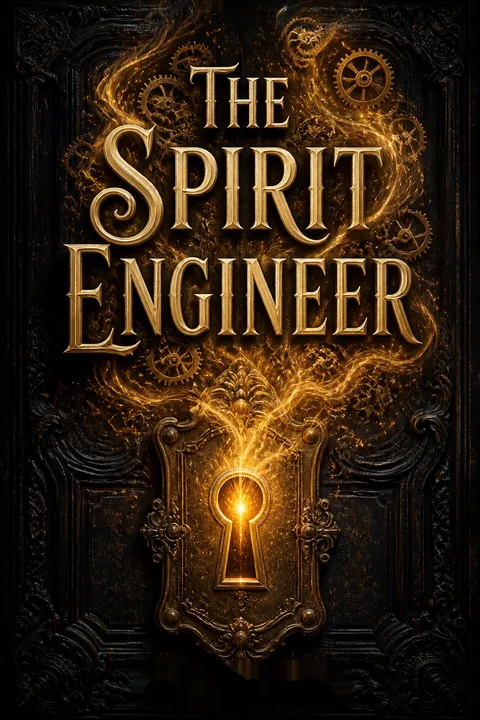
William Jackson Crawford, a once-respected engineer, sits on the rocks at Bangor, Northern Ireland, in 1920, preparing to end his life. Haunted by years of failed experiments and the collapse of his reputation, he mixes potassium cyanide into his whisky, reflecting on his journey through spiritualism, science, and self-deception. The sea's relentless whisper is his only companion as he contemplates the irony of having spent years seeking proof of the afterlife, only to be paralyzed by fear and regret at the threshold of death. He is a man broken by the weight of his own illusions, ready to surrender to oblivion, convinced that death is not an end, but a beginning—though what lies beyond is emptiness.
Domestic Discord and Ghosts
In 1914 Belfast, William's household is fraught with tension. His wife Elizabeth is brittle with grief, his children squabble, and the absence of a housemaid amplifies the chaos. The family is haunted by the loss of Elizabeth's brother Arthur on the Titanic, a wound that festers in silence. Strange noises and the children's talk of a "lady in white" hint at supernatural disturbances, but William, ever the rationalist, dismisses them as childish fancy. Yet, beneath the surface, the family's pain and secrets begin to manifest in ghostly ways, setting the stage for the intrusion of spiritualism into their lives.
The Arrival of Rose
Rose, a mute and physically imposing young woman, arrives as the new housemaid. Her presence is unsettling—she is both a figure of pity and an object of suspicion. The children are drawn to her, but William is skeptical, questioning her origins and abilities. Elizabeth insists Rose is a blessing, but the locked attic room and the shrine to Arthur reveal deeper layers of grief and secrecy. Rose's silence becomes a canvas onto which the family projects their anxieties, and her arrival marks a turning point, as the boundaries between the living and the dead, the rational and the irrational, begin to blur.
Locked Doors and Secrets
The locked attic room, once the maid's quarters, becomes a symbol of the family's hidden sorrows. Elizabeth's secret shrine to her drowned brother Arthur is discovered by William, igniting a bitter confrontation. Their marriage, already strained by loss and unspoken resentments, fractures further. William's sense of control slips as he realizes how little he understands his wife's inner life. The house itself seems to conspire against him, filled with unexplained noises and the children's persistent belief in ghosts. The locked door is both literal and metaphorical—a barrier to truth, intimacy, and peace.
The Séance Circle
Elizabeth, seeking solace, is drawn into the world of séances and spiritualist circles led by the Goligher family. William, initially dismissive, is reluctantly pulled in after witnessing inexplicable phenomena: rapping sounds, levitating tables, and voices that seem to speak from beyond. The medium, Kathleen Goligher, becomes the focus of his obsession. The séances offer comfort to the bereaved, but also open the door to manipulation and self-deception. William's scientific curiosity is piqued, and he resolves to investigate the phenomena, convinced he can expose the truth behind the spirits.
The Medium's Powers
Kathleen Goligher's abilities as a medium astonish and unsettle William. He observes her in trance, producing physical manifestations—plasmic rods, levitating objects, and voices that mimic the dead. The séances are both theatrical and intimate, blending grief, hope, and deception. William's skepticism wars with his longing for contact with his lost son Robert and his mother. He devises increasingly elaborate experiments to test Kathleen, tying her down, controlling the environment, and recording the events. Yet, the more he investigates, the more ambiguous the results become, and the deeper he is drawn into the circle's emotional and psychological web.
The Engineer Investigates
William's investigations become an obsession. He publishes articles, gains notoriety, and attracts the attention of prominent spiritualists and skeptics alike. His experiments grow more invasive and controlling, as he seeks to isolate the source of the phenomena. He is both investigator and participant, unable to maintain objectivity as his own grief and guilt cloud his judgment. The boundaries between science and spiritualism begin to dissolve. William's need for certainty drives him to the brink, as he becomes both the architect and the victim of his own spiritual engineering.
The Gala and Accusations
At a prestigious gala, William's reputation is publicly challenged. Accusations of infidelity, fraud, and madness swirl around him, fueled by jealous colleagues and the manipulations of Lady Adelia. Elizabeth, exhausted by grief and William's emotional distance, confronts him with her own suspicions and pain. The family's fragile unity shatters as secrets are exposed and trust is broken. William's sense of self unravels, and he is left isolated, clinging to his experiments as the only source of meaning in a world that has turned against him.
Loss and Grief
Tragedy strikes as Robert, the Crawfords' youngest child, succumbs to illness. The loss devastates the family, plunging Elizabeth into despair and William into a desperate search for meaning. The séances become a lifeline, offering the hope of contact with Robert's spirit. William's grief becomes entwined with his scientific quest, blurring the line between experiment and ritual, evidence and faith. The house is suffused with sorrow, and the boundaries between the living and the dead grow ever more porous.
The Search for Truth
As William's fame as the "Spirit Engineer" grows, so does the scrutiny of his work. Skeptics like Houdini and Beadnell challenge his findings, exposing flaws in his methods and suggesting trickery. William's experiments become increasingly elaborate and desperate, as he seeks to silence his critics and prove the reality of the spirits. He is haunted by doubts—about the medium, about his own perceptions, and about the possibility that he is being deceived. The search for truth becomes a labyrinth, with no clear exit.
The Spirit Engineer Emerges
Despite mounting criticism, William achieves international recognition. He is celebrated by spiritualists, courted by the famous, and lauded as a pioneer. The allure of fame and the comfort of belief seduce him, even as his personal life disintegrates. He becomes a public figure, giving lectures and demonstrations, but the pressure to deliver ever more spectacular results leads him to compromise his integrity. The line between investigator and charlatan blurs, as William becomes both the creator and the captive of his own legend.
Fame, Doubt, and Deceit
The edifice of William's achievements begins to crumble. Evidence of fraud emerges—trickery in the séances, manipulated photographs, and the complicity of those around him. Friends and colleagues turn away, and William is forced to confront the possibility that he has been both deceiver and deceived. His mental state deteriorates, haunted by guilt, shame, and the ghosts of his past. The truth becomes unbearable, and the distinction between reality and illusion collapses. William's final experiments are acts of desperation, seeking redemption or oblivion.
The Final Experiment
Determined to settle the question once and for all, William orchestrates a final, tightly controlled séance. He binds and gags the participants, floods the room with light, and watches for any sign of trickery. The phenomena persist, but the mechanisms are revealed—hidden panels, accomplices, and sleight of hand. The voices that haunted him are exposed as products of ventriloquism, suggestion, and his own fractured mind. The experiment is both a revelation and a catastrophe, destroying the last vestiges of William's faith and sanity.
Unmasking the Spirits
In the aftermath of the final séance, William's world unravels completely. He confronts Rose, the mute maid, convinced she is the source of the voices, and in a fit of rage and confusion, kills her—only to discover she was his own mute sister, Agnes, sent from New Zealand. Elizabeth reveals the full extent of William's madness: his sleepwalking, his violence, and the family's desperate attempts to protect themselves. The voices, the hauntings, the entire edifice of spiritualism are revealed as manifestations of William's own trauma and mental illness.
Madness and Revelation
William is forced to confront the reality that the spirits he sought were always within himself. The séances, the voices, the phenomena—all were products of his own mind, abetted by the complicity and desperation of those around him. His pursuit of truth has led only to madness, violence, and ruin. The boundaries between self and other, past and present, living and dead, dissolve in a final, shattering revelation. William is left alone, bereft of family, reputation, and hope, haunted by the ghosts of his own making.
The Last Séance
Driven by guilt and despair, William returns to the rocks at Bangor, completing the circle begun at the novel's opening. He drinks the poisoned whisky, succumbing to a painful death. In his final moments, he is visited by visions—of his mother, his son, his sister, and the medium—who welcome him into the darkness. Death, he realizes, is not an end, but a beginning: a passage into the unknown, where the boundaries between reality and illusion, self and other, are forever blurred.
The End of Illusion
In the aftermath, the story lingers in ambiguity. The truth of the séances, the reality of the spirits, and the nature of William's madness remain unresolved. The narrative closes with a sense of haunting—by the past, by grief, by the human need for meaning in the face of loss. The Spirit Engineer's legacy is one of both caution and wonder: a reminder of the dangers of self-deception, the power of belief, and the enduring mystery at the heart of human experience.
Analysis
A.J. West's The Spirit Engineer is a gothic meditation on grief, belief, and the human hunger for meaning in the face of loss. Set against the backdrop of early twentieth-century Belfast—a city haunted by tragedy and divided by faith—the novel explores the rise of spiritualism as both a comfort and a con. Through the tragic arc of William Jackson Crawford, West interrogates the limits of science, the seductions of self-deception, and the destructive power of unresolved trauma. The séances at the heart of the story are both literal and symbolic: rituals through which the living attempt to bridge the unbridgeable gap to the dead, but also stages on which the characters' psychological wounds are laid bare. The novel's structure—circular, recursive, and ultimately ambiguous—mirrors the endless return of grief and the persistence of mystery. In the end, The Spirit Engineer offers no easy answers: the truth of the spirits, the reality of the phenomena, and the nature of William's madness remain unresolved. Instead, the novel cautions against the dangers of certainty, the allure of belief, and the human tendency to manufacture meaning where none may exist. It is a story about the ghosts we create, the truths we evade, and the price we pay for seeking solace in illusion.
Review Summary
The Spirit Engineer receives generally positive reviews, averaging 3.64/5. Readers praise its atmospheric gothic setting in 1914 Belfast, compelling unreliable narration, and a shocking, memorable ending. Many highlight the dark humour woven throughout and the fascinating exploration of spiritualism post-Titanic. Criticisms include an uneven pace, a difficult-to-like protagonist, and underdeveloped supporting characters. The historical basis, featuring real figures like Houdini and Conan Doyle, adds authenticity. Most agree the explosive finale elevates the overall experience, making it a recommended Halloween read.
People Also Read
Characters
William Jackson Crawford
William is a brilliant but troubled engineer, driven by a need for certainty and control. His rational mind is at war with his emotional vulnerabilities—grief for his lost son, guilt over his mother's death, and a desperate longing for connection. As he becomes entangled in the world of spiritualism, his scientific rigor is undermined by his psychological wounds. William's journey is one of self-destruction: his pursuit of proof leads him to madness, violence, and ultimately suicide. He is both a victim and a perpetrator, deceived by others and by himself, his story a tragic exploration of the limits of reason and the dangers of unchecked belief.
Elizabeth Crawford
Elizabeth is a woman marked by loss—her brother Arthur's death on the Titanic, the death of her son Robert, and the slow unraveling of her marriage. She seeks solace in spiritualism, hoping for contact with the dead, but is ultimately forced to confront the reality of her husband's madness. Elizabeth is both victim and agent: she tries to protect her children, manage William's instability, and maintain the family's dignity. Her relationship with William is complex—marked by love, resentment, and fear. In the end, she is the voice of truth, revealing the family's secrets and surviving the collapse of their world.
Kathleen Goligher
Kathleen is the young medium at the heart of the séances. She is both a performer and a pawn, manipulated by her family and the spiritualist community. Her abilities—real or faked—become the focus of William's obsession and the engine of the novel's mysteries. Kathleen's own motivations are ambiguous: she seeks validation, escape, and perhaps genuine connection with the dead. She is both innocent and complicit, her role shifting between victim and perpetrator as the truth of the séances is revealed. Her relationship with William is fraught with tension, admiration, and mutual exploitation.
Rose / Agnes
Rose, introduced as a mute housemaid, is later revealed to be William's long-lost sister, Agnes. Her silence is both literal and symbolic—she is the repository of the family's secrets, the victim of William's violence, and the unwitting catalyst for the final tragedy. Rose's presence unsettles the household, and her murder by William is the ultimate act of self-destruction. She embodies the novel's themes of miscommunication, hidden trauma, and the destructive power of denial.
Arthur
Arthur, Elizabeth's brother, is a spectral presence throughout the novel. His death on the Titanic haunts the family, and his imagined voice becomes a tool of manipulation in the séances. For William, Arthur is both a rival and a symbol of guilt—his role in Arthur's departure and death is a source of shame and self-reproach. Arthur's "spirit" is invoked as both comfort and threat, blurring the line between memory and haunting.
Margaret and Helen Crawford
Margaret and Helen are the Crawford daughters, caught in the crossfire of their parents' grief and madness. They embody the vulnerability of childhood, their lives shaped by loss, fear, and the collapse of their family. Margaret, the elder, is perceptive and protective; Helen is more innocent and impressionable. Their fate is a silent testament to the destructive consequences of adult secrets and unresolved trauma.
Lady Adelia Carter
Adelia is a wealthy relative who supports the Crawfords financially but also exerts control over their lives. She is both a believer in spiritualism and a source of skepticism, using her influence to shape the family's choices. Adelia's motivations are complex—part genuine concern, part self-interest, part social maneuvering. She is a catalyst for conflict, her presence both a blessing and a curse.
Seamus Stoupe
Stoupe is William's colleague and confidant, a photographer who assists in documenting the séances. He is both loyal and self-serving, ultimately revealed to have manipulated evidence and contributed to William's downfall. Stoupe's actions are driven by a mix of admiration, envy, and a desire for recognition. His betrayal is a key turning point, exposing the fragility of trust and the ease with which truth can be manufactured.
The Goligher Family
The Golighers—Kathleen's family—are both victims and perpetrators. They exploit spiritualism for survival, manipulating the bereaved and the credulous. Their motivations are pragmatic, shaped by poverty and desperation, but their actions have profound consequences for those who seek solace in their circle. The family's complicity in the séances is both a survival strategy and a moral failing, reflecting the ambiguous ethics of the spiritualist movement.
Harry Houdini and Sir Arthur Conan Doyle
Houdini and Conan Doyle represent the broader cultural debate over spiritualism. Houdini, the magician and skeptic, challenges William's findings, exposing the tricks and demanding rigorous proof. Conan Doyle, the famous author and believer, champions William's work, seeking validation for his own faith. Their presence situates the novel's events within a larger context, highlighting the tension between science and belief, skepticism and hope.
Plot Devices
The Séance as Psychological Theatre
The séance is the central plot device, serving as both a literal event and a metaphor for the characters' psychological states. Each séance is a performance, blending ritual, suggestion, and manipulation. The phenomena—rapping, levitation, voices—are both evidence and illusion, shaped by the participants' needs and fears. The séances provide comfort to the bereaved, but also open the door to exploitation and self-deception. They are stages on which the characters' traumas are enacted and their secrets revealed.
Locked Rooms and Hidden Spaces
Locked doors, hidden rooms, and secret compartments recur throughout the novel, symbolizing the characters' repressed memories and unspoken grief. The attic, the locked maid's room, the hidden panels in the séance room—all serve as metaphors for the barriers between self and other, past and present, truth and illusion. These spaces are both sites of revelation and concealment, their contents shaping the narrative's unfolding mysteries.
Unreliable Narration and Self-Deception
The novel employs an unreliable narrator—William—whose perceptions are shaped by grief, guilt, and psychological instability. His scientific rigor is undermined by his emotional needs, leading him to misinterpret evidence and ignore contradictions. The narrative structure mirrors his descent into madness, with reality and illusion becoming increasingly indistinguishable. The reader is drawn into William's perspective, experiencing the seduction and terror of self-deception.
Foreshadowing and Circular Structure
The novel opens with William's suicide and circles back to it at the end, creating a sense of inevitability and fatalism. Early hints—strange noises, locked doors, the children's fears—foreshadow the later revelations. The structure reinforces the themes of repetition, haunting, and the inescapability of the past. The final return to the attic, the last séance, and William's death complete the circle, suggesting that some mysteries can never be resolved.
The Interplay of Science and Spiritualism
The tension between science and spiritualism is a central device, embodied in William's dual role as engineer and seeker of the supernatural. His experiments are meticulously designed, but the results are always ambiguous, undermined by trickery, suggestion, and his own psychological needs. The novel explores the limits of rational inquiry, the seductions of belief, and the dangers of conflating evidence with desire. The interplay of science and spiritualism drives the plot and shapes the characters' fates.
Download PDF
Download EPUB
.epub digital book format is ideal for reading ebooks on phones, tablets, and e-readers.








































