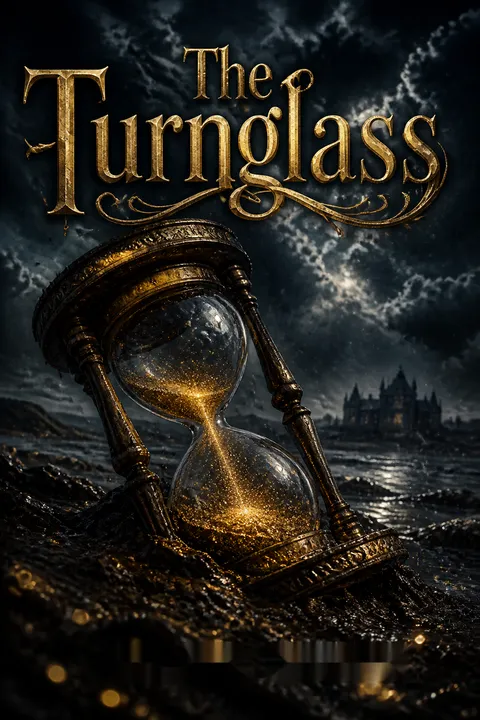

Plot Summary
A House of Glass
In 1881, Dr. Simeon Lee, a struggling, ambitious physician, travels from London to the remote Essex island of Ray to treat his distant relative, Parson Oliver Hawes. The house, Turnglass, is isolated, surrounded by treacherous tides and local suspicion. Simeon is drawn into the family's dark history: a brother murdered, a woman—Florence—imprisoned behind a glass wall, and a community haunted by secrets. The house itself feels malign, as if it holds the family's sins within its walls. Simeon's arrival is not just a medical call, but the beginning of an unraveling of generations-old mysteries.
The Woman Behind Glass
Simeon discovers Florence, the parson's sister-in-law, living in a glass-walled cell inside the house, accused of killing her husband, James. She is beautiful, enigmatic, and drugged nightly with laudanum. Her silence is both a shield and a challenge, and her presence unsettles Simeon. The glass cell is both protection and punishment, a symbol of the family's inability to confront the truth. Florence's only communication is through gestures and art, hinting at deeper layers of trauma and injustice. Simeon is both repelled and fascinated, sensing that Florence's story is the key to the house's corruption.
Secrets in the Mud
As Simeon investigates the parson's mysterious illness, he stumbles upon a corpse buried in the mudflats—John White, a local oysterman. The discovery stirs up old resentments and fears among the villagers and the household. Simeon's medical instincts tell him that the parson's sickness is not natural, and the body in the mud suggests violence and betrayal. The island's isolation becomes suffocating, and the sense of danger grows. The mud, like the house, hides secrets that refuse to stay buried, and Simeon realizes he is entangled in a web of lies, guilt, and retribution.
The Gold Field's Reflection
Florence gives Simeon a strange tête-bêche novel, The Gold Field, whose story of a Californian family in a glass house mirrors the events at Turnglass. The book-within-a-book structure blurs reality and fiction, suggesting that the sins and patterns of the past repeat themselves. The Gold Field becomes a cipher for understanding the family's fate, and Florence's cryptic references to "premonition" and "warning" hint that the present is haunted by echoes of another time and place. Simeon senses that the answers he seeks are hidden in stories, both written and lived.
Poison and Paranoia
Parson Hawes grows weaker, convinced he is being poisoned. The household turns inward, suspicion falling on Florence, the servants, and even the villagers. Simeon's medical tests reveal nothing conclusive, but the parson's paranoia infects everyone. The isolation of the house amplifies fear, and the boundaries between sanity and madness blur. Florence's silence becomes more pointed, and her nightly drawings and gestures suggest she knows more than she lets on. The sense of impending doom grows, as if the house itself is conspiring to destroy its inhabitants.
The Sin-Eater's Legacy
Through journals and confessions, Simeon uncovers the Hawes family's legacy of sin-eating—a ritual of taking on the sins of the dead. The parson's brother, James, was involved in smuggling and violence; Florence's act of violence was both crime and retribution. The family's history is one of secrets, betrayals, and the desperate attempt to contain guilt within the walls of Turnglass. The glass cell, the mud, and the rituals all serve to keep the past alive, refusing forgiveness or forgetting. Simeon realizes that the family's suffering is a self-perpetuating curse.
A Tale in Two Times
The narrative shifts to 1939 Los Angeles, where Ken Kourian, a young actor, is drawn into the orbit of the Tooke family—descendants of the Hawes. The glass house on the California coast is a mirror of Turnglass, and the family's tragedies echo those of the past. Ken's friendship with Oliver Tooke, a writer obsessed with his family's history, leads him into a labyrinth of secrets, guilt, and identity. The two timelines intertwine, each illuminating the other, as the sins of the fathers are visited upon the children. The past is never truly past.
The American Mirror
In California, Ken becomes entangled with Oliver, his sister Coraline, and their enigmatic mother, Florence, long thought dead. The family's wealth and ambition mask deep wounds: a brother abducted in childhood, a mother institutionalized, and a father—now a powerful governor—driven by eugenic ideals. Oliver's new novel, The Turnglass, is a roman à clef that threatens to expose the family's darkest secrets. As Ken investigates, he realizes that the Tookes' present is shaped by the unresolved crimes and guilt of their English ancestors.
Guilt's Inheritance
Ken and Coraline travel to England, retracing the steps of the past. They discover that Florence, the mother, is alive, hidden in a convent, and that the story of Alexander's abduction was a lie. The truth is more terrible: the family sacrificed one child to preserve the other, and the legacy of guilt has poisoned every generation. The glass house, both in Essex and California, is a symbol of transparency and entrapment—a place where nothing can be hidden, yet no one is truly free. The inheritance is not wealth, but shame and sorrow.
The Disappearance of Alexander
The mystery of Alexander's disappearance is finally revealed: the crippled elder son was quietly killed, and the younger, healthy son was raised in his place to preserve the family's reputation and ambitions. The act was justified as a sacrifice for the greater good, but it destroyed the family from within. Florence's madness, the father's coldness, and Oliver's lifelong sense of displacement all stem from this original sin. The truth, once unearthed, cannot bring healing—only reckoning.
The Return of Florence
Florence is brought back to California, but her mind is broken by years of guilt and isolation. She is obsessed with atonement, wearing a cilice to mortify her flesh, and haunted by visions of her lost son. Her return triggers the final unraveling of the family: Oliver is dead, Coraline is adrift, and the father's political ambitions are threatened. Florence's suicide is both an escape and a final accusation, her death the last act in a tragedy set in motion decades before.
The Past Unearthed
Ken, now a suspect in Florence's death, pieces together the evidence: the family's crimes, the cover-ups, and the pattern of violence and sacrifice. The past, long buried in mud and glass, refuses to stay hidden. The storm outside mirrors the chaos within, as the family's secrets are finally exposed. The revelation brings no peace—only the end of illusions and the collapse of the house of glass.
The Storm Breaks
As a literal and metaphorical storm rages, Ken and Coraline are pursued by those who wish to silence them. The family's enemies, both within and without, close in. The final confrontation with the governor reveals the full extent of his ruthlessness and the depth of his self-justification. The storm destroys the last barriers, and the truth is laid bare for all to see. The house, the family, and the legacy are shattered.
The Truth in the Egg
A tiny model horse, hidden in a china egg, contains a note from Alexander, written in an adult's hand. This final clue confirms the substitution and murder at the heart of the family's history. The egg, like the glass house, is both container and symbol—a vessel for secrets, guilt, and the hope of redemption. The truth, once revealed, cannot be undone, and the survivors must live with the consequences.
The Governor's Sacrifice
Governor Tooke confesses to Ken and Coraline that he orchestrated the death of his crippled son and the substitution of the healthy one, all for the sake of family legacy and political ambition. He justifies his actions as necessary, even noble, but the horror of his choices is undeniable. The family's suffering is the price of his pride, and the cycle of guilt and retribution is complete. The confession is both an end and a beginning—a reckoning with the past that leaves no one unscathed.
Retribution and Release
With the truth exposed, the family's power is broken, and the survivors are left to pick up the pieces. The storm passes, but the damage remains. Ken, forever changed by what he has witnessed, leaves the house of glass behind, carrying with him the lesson that the past cannot be buried, only faced. The story ends with a sense of release, but not forgiveness—a recognition that some wounds never heal, and some debts can never be paid.
Analysis
The Turnglass is a masterful meditation on the inescapability of the past and the corrosive power of family secrets. Through its innovative tête-bêche structure, the novel explores how trauma, guilt, and the desire for control are passed down through generations, shaping lives and destinies. The mirrored narratives—one Victorian, one modern—reveal that the sins of the fathers are never truly buried; they resurface in new forms, demanding acknowledgment and atonement. The symbolism of glass and mud underscores the tension between transparency and concealment, while the recurring motif of sin-eating dramatizes the futility of trying to contain or expiate guilt through silence or sacrifice. The novel's psychological depth lies in its portrayal of characters who are both victims and perpetrators, trapped by their own justifications and denials. Ultimately, The Turnglass warns that the only path to freedom is through the painful excavation of truth, and that the cost of denial is the endless repetition of suffering. In a modern context, the book resonates as a critique of inherited privilege, the dangers of eugenic thinking, and the human tendency to rewrite history for the sake of comfort or ambition. Its lesson is clear: the past cannot be buried, only faced—and only then can the cycle of retribution and release begin.
Review Summary
The Turnglass receives mixed reviews, with praise for its innovative tête-bêche format and intriguing dual narrative structure. Readers appreciate the interconnected stories set in 1881 England and 1939 California, exploring family secrets and mysteries. Some find the Victorian-era story more compelling, while others enjoy the noir-style 1930s tale. Critics note underdeveloped characters and predictable plot twists. Overall, the book is praised for its originality and engaging premise, but some feel the execution falls short of its potential.
People Also Read
Characters
Dr. Simeon Lee
Simeon is a young, ambitious doctor whose arrival at Turnglass House sets the story in motion. Driven by scientific curiosity and a sense of justice, he is both a healer and a detective, unraveling the family's secrets. His outsider status allows him to see what others cannot, but also makes him vulnerable to the house's malign influence. Psychologically, Simeon is torn between empathy and detachment, drawn to Florence's suffering but wary of being consumed by it. His journey is one of disillusionment, as he learns that some wounds cannot be healed by reason or medicine.
Florence Hawes / Florence Tooke
Florence is the tragic heart of the story—a woman imprisoned for a crime that is both act and accusation. In the 1880s, she is locked behind glass, silenced by laudanum and family shame. In the 1930s, she reappears as a broken, penitent mother, obsessed with atonement. Her suffering is both personal and symbolic: she bears the weight of the family's sins, and her silence is a form of resistance. Psychologically, Florence is a study in trauma, guilt, and the desperate search for meaning in suffering. Her final act is both escape and indictment.
Parson Oliver Hawes
Oliver is the parson of Turnglass House, a man consumed by guilt, paranoia, and the need to control. He imprisons Florence "for her own good," but is himself trapped by the family's legacy of sin-eating and sacrifice. His illness, both physical and mental, is a manifestation of the house's corruption. Oliver's journals reveal a man who justifies cruelty as duty, and whose faith is both solace and weapon. His death is the inevitable result of a life spent denying the truth.
James Hawes
James, the murdered brother, is both absent and omnipresent. His death is the original sin that sets the family's tragedy in motion. In life, he was charming, reckless, and involved in criminal activity; in death, he becomes a symbol of the family's inability to confront its own darkness. His relationship with Florence is fraught with passion, jealousy, and violence. Psychologically, James represents the destructive power of secrets and the impossibility of redemption without confession.
Ken Kourian
Ken is the protagonist of the 1939 timeline—a young actor drawn into the Tooke family's orbit. His outsider status mirrors Simeon's, and his curiosity drives the investigation into the family's past. Ken is both empathetic and skeptical, struggling to make sense of the layers of deception and self-justification. His relationship with Coraline is marked by longing and frustration, as both are haunted by the past. Ken's journey is one of awakening to the reality that the sins of the fathers are never truly buried.
Oliver Tooke
Oliver is the modern mirror of the Hawes family—a writer obsessed with his family's history, desperate to uncover the truth of his own identity. Raised in the shadow of a missing brother and a broken mother, Oliver is consumed by guilt and the need for vindication. His novel, The Turnglass, is both confession and accusation, a coded message to those who would understand. Psychologically, Oliver is a study in displacement, self-doubt, and the destructive power of secrets. His death is both murder and suicide—a final act of despair and defiance.
Coraline Tooke
Coraline is Oliver's sister, a woman marked by loss, anger, and the struggle to find her own identity. She is both participant and observer, drawn into Ken's investigation but wary of its consequences. Her relationship with her family is fraught with resentment and longing, and her emotional reserve is both shield and wound. Psychologically, Coraline embodies the cost of generational trauma—the inability to trust, to love, or to forgive. Her journey is one of painful awakening and reluctant acceptance.
Governor Oliver Tooke Sr.
The Governor is the embodiment of ambition, pride, and moral blindness. His belief in eugenics and the "greater good" leads him to sacrifice his own child and to justify every cruelty as necessary. He is both victim and perpetrator, haunted by the consequences of his actions but unable to repent. Psychologically, he is a study in self-justification, denial, and the corrosive effects of power. His confession is both climax and anti-climax—a revelation that brings no peace, only reckoning.
Dr. Kruger
Dr. Kruger is the physician who enables the family's crimes, both in the past and present. His medical authority is used to justify the removal of the "defective" child and the institutionalization of Florence. He is a man of science without conscience, a tool of the Governor's will. Psychologically, Kruger represents the dangers of detached rationality and the abdication of moral responsibility. His role is crucial but ultimately secondary—a reminder that evil often requires the complicity of the ordinary.
The Ordinary Man / The Pursuer
The unnamed, nondescript man who pursues Ken and Coraline is both literal and symbolic—a representative of the forces that seek to keep the past buried. He is the hand of the Governor, the enforcer of silence, and the final obstacle to truth. Psychologically, he is the shadow self—the part of the family and society that will do anything to avoid reckoning. His death in the storm is both justice and warning: the past, once unleashed, cannot be controlled.
Plot Devices
Tête-bêche Structure and Mirrored Narratives
The novel's most striking device is its tête-bêche structure: two stories printed head-to-foot, each reflecting and inverting the other. The 1880s English narrative and the 1939 American narrative are mirrors, each illuminating the other's secrets and themes. The use of a book-within-a-book (The Gold Field, The Turnglass) blurs the boundaries between fiction and reality, past and present. This structure allows for foreshadowing, dramatic irony, and the gradual revelation of truth through parallel investigation. The mirrored houses, characters, and crimes reinforce the idea that history repeats itself, and that the sins of the past are never truly buried.
Unreliable Narrators and Hidden Journals
The story is driven by journals, letters, and confessions—each offering a partial, self-serving, or misleading account of events. The characters' attempts to control the narrative are constantly undermined by new revelations and the discovery of hidden documents. The unreliable narrator device creates suspense and ambiguity, forcing the reader (and the protagonists) to question every account. The final truth is only revealed through the piecing together of multiple, conflicting perspectives.
Symbolism of Glass, Mud, and Eggs
Glass is both barrier and window, symbolizing the family's desire for transparency and their inability to escape their own secrets. The glass cell, the glass house, and the glass weather vane all represent the tension between exposure and concealment. Mud is the medium of burial and revelation—the place where bodies and truths are hidden, only to resurface. The china egg, containing the final message, is a symbol of both containment and birth—a fragile vessel for the truth that, once cracked, cannot be restored.
Guilt, Sin-Eating, and Generational Trauma
The motif of sin-eating—taking on the guilt of others—runs through both timelines. The family's attempts to contain or expiate their sins only perpetuate the cycle of suffering. The psychological inheritance of guilt, shame, and secrecy is depicted as a curse that destroys each generation in turn. The novel uses foreshadowing and repetition to show that the past is never past, and that the only way to break the cycle is to confront the truth, however painful.
Storms and Environmental Metaphor
The literal storms that batter the house in both timelines are metaphors for the emotional and moral chaos within. The breaking of windows, the flooding of roads, and the destruction of the house all symbolize the collapse of the family's defenses and the inevitability of reckoning. The storm is both punishment and release—a force that sweeps away illusions and leaves only the bare truth.
Download PDF
Download EPUB
.epub digital book format is ideal for reading ebooks on phones, tablets, and e-readers.








































