
Plot Summary
Autumn Shadows in Warsaw
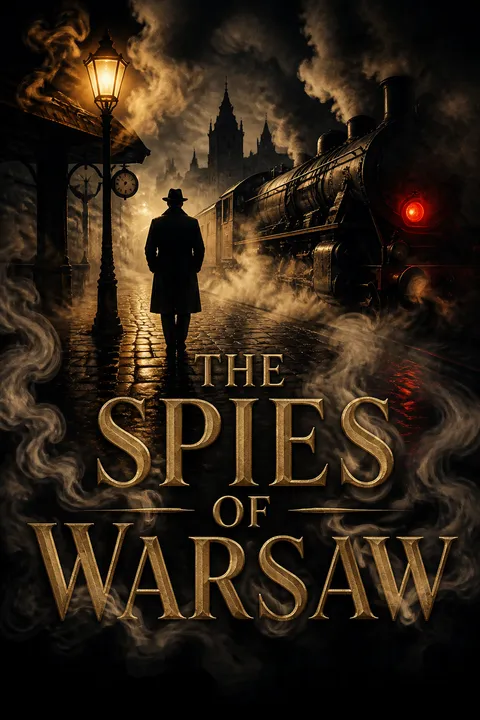
In the dying light of 1937, Edvard Uhl, a German engineer, steps off a train in Warsaw, carrying secrets and a satchel with a false bottom. The city is tense, haunted by old wounds and new suspicions. Uhl, outwardly ordinary, is drawn into a clandestine world, his motivations a mix of desire, fear, and resignation. The city's atmosphere—its history of partitions, its simmering resentments—sets the stage for a drama where personal and political destinies intertwine. Uhl's journey is not just geographical but existential, as he crosses borders both literal and moral, stepping into the shadowy realm of espionage on the eve of war.
Seduction and Betrayal
Uhl's secret trips to Warsaw are fueled by his passionate affair with the enigmatic "Countess Sczelenska." Their relationship, orchestrated by French intelligence, becomes the lever that turns Uhl into a reluctant spy. The countess's financial woes and Uhl's desire to please her make him vulnerable to manipulation. The French, through intermediaries, exploit his weaknesses, drawing him into a web of betrayal. Uhl's rationalizations—his belief that he is simply helping himself and his family—mask the deeper betrayal of his country and his own values. The seduction is both literal and metaphorical, as Uhl is ensnared by forces far larger than himself.
The Attaché's Double Life
Lieutenant Colonel Jean-François Mercier, the French military attaché in Warsaw, moves between the glittering salons of the Polish elite and the grim realities of intelligence work. A decorated veteran, Mercier is haunted by memories of war and loss, yet compelled by duty and a sense of foreboding. His social obligations—tennis clubs, diplomatic dinners—are a cover for his true mission: gathering intelligence on German rearmament. Mercier's personal life is equally complex, marked by loneliness, fleeting affairs, and a growing attraction to Anna Szarbek. His dual existence reflects the broader duplicity of the era, where appearances conceal dangerous truths.
Tangled Loyalties
The intricate dance of alliances between France, Poland, and other European powers is mirrored in the personal and political arcs of the characters. Mercier's friendship with Polish Colonel Vyborg is genuine, yet shadowed by mutual surveillance and the knowledge that nations—even allies—spy on each other. The looming threat of German aggression forces everyone to question loyalties, both public and private. The diplomatic world is rife with coded conversations, hidden agendas, and the ever-present fear of betrayal. In this climate, trust is provisional, and every gesture is fraught with ambiguity.
The Machinery of Espionage
The mechanics of spycraft are revealed through clandestine meetings, coded messages, and the constant threat of exposure. Mercier's interactions with Uhl are businesslike, devoid of sentiment, emphasizing the transactional nature of espionage. The risks are real: Uhl's paranoia grows as he senses Gestapo surveillance, and Mercier must balance operational necessity with the safety of his agents. The narrative delves into the procedures—dead drops, surveillance, agent handling—that define the world of intelligence. Yet beneath the routines lies a pervasive anxiety, as the machinery of espionage grinds inexorably toward catastrophe.
Borderlines and Close Calls
Uhl's journey back to Germany becomes a harrowing ordeal as he is shadowed by Gestapo agents. His fear is palpable, every fellow traveler a potential threat. The border crossing at Glogau is a crucible, testing his nerve and resourcefulness. Uhl's escape—crawling along train tracks, evading passport kontrol—underscores the perilous nature of his double life. The episode crystallizes the vulnerability of spies, caught between competing powers and at the mercy of chance. The border is not just a line on a map but a psychological threshold, marking the boundary between safety and doom.
The Countess and the Engineer
The relationship between Uhl and the "Countess" is revealed as a carefully constructed illusion, maintained by Hana Musser, a resourceful woman playing her own dangerous game. For Uhl, the affair is both an escape and a trap, his longing for intimacy exploited by those who control him. The emotional stakes are high: love, or its semblance, becomes a currency in the world of espionage. The countess's duplicity mirrors the broader deceptions at play, where personal desires are weaponized for political ends. The line between genuine feeling and manipulation blurs, leaving both participants diminished.
The Gathering Storm
The political backdrop intensifies as Germany's ambitions become unmistakable. Mercier's reconnaissance of German tank maneuvers, the discussions of military doctrine, and the diplomatic maneuvering all point to an impending conflict. The characters sense the gathering storm, their actions shaped by the knowledge that time is running out. The narrative captures the mood of late-1930s Europe: anxious, fatalistic, and marked by a desperate hope that disaster can still be averted. Yet the machinery of war is already in motion, and the choices made by individuals are increasingly circumscribed by larger historical forces.
Night Moves and Narrow Escapes
Mercier undertakes dangerous missions, including a nocturnal reconnaissance of German border defenses. The tension is palpable as he and his Polish driver, Marek, risk detection and violence. These episodes highlight the physical and moral courage required of spies, as well as the randomness of survival. The operations yield crucial intelligence—evidence of German preparations for offensive war—but also deepen Mercier's sense of foreboding. The night is both a cover and a threat, its darkness emblematic of the uncertainties that define the world of espionage.
The Web Tightens
The German security services, led by the ruthless Voss, intensify their efforts to root out espionage. Uhl's activities come under suspicion, and the net begins to close. The narrative shifts to the perspective of the hunters, revealing the bureaucratic and psychological machinery of totalitarian control. Interrogations, informants, and surveillance create an atmosphere of pervasive fear. The fate of spies is precarious, their lives subject to the whims of men like Voss, whose own ambitions and frustrations drive the relentless pursuit of enemies, real and imagined.
Love and War Games
Amid the escalating dangers, Mercier's relationship with Anna Szarbek blossoms. Their affair offers a respite from the grim realities of their work, yet is always shadowed by the knowledge that love in wartime is provisional. The narrative juxtaposes moments of tenderness—shared meals, stolen nights—with the ever-present threat of exposure and loss. The personal and the political are inseparable, as choices made in the name of love have consequences that ripple outward. The war games played by nations are mirrored in the intimate games of the heart, both fraught with risk.
The Black Front's Secret
The focus shifts to the Black Front, a dissident faction within the Nazi movement. Mercier, aided by contacts in the Abwehr and the French General Staff, orchestrates a daring operation to penetrate the German General Staff's I.N. 6 section. Through a chain of intermediaries—disillusioned Nazis, desperate for escape—Mercier seeks the ultimate prize: the German invasion plan. The operation is fraught with danger, requiring deception, bribery, and the manipulation of men on the edge. The Black Front's secret becomes the fulcrum on which the fate of nations may turn.
The Trap Springs
Uhl's luck runs out as the SD and Gestapo move to arrest him. An attempted abduction in Warsaw is foiled only by Mercier's intervention, but Uhl's career as a spy is over. The episode underscores the high cost of betrayal—not just for Uhl, but for all those caught in the web of espionage. The machinery of repression is relentless, and the fate of spies is often grim. Uhl's story is a cautionary tale, a reminder that in the world of secrets, no one is truly safe.
The Price of Secrets
The Rozens, Soviet intelligence officers in Warsaw, seek asylum with the French, offering a trove of secrets in exchange for their lives. Their defection is a complex transaction, fraught with suspicion and moral ambiguity. Mercier and his colleagues must weigh the value of the information against the risks of provocation and double-cross. The episode highlights the shifting allegiances and ethical compromises that define the world of intelligence. The price of secrets is measured not just in money or safety, but in the erosion of trust and the corrosion of the soul.
The Defectors
The Rozens' exfiltration from Poland is a tense, meticulously planned operation, involving false identities, clandestine flights, and the ever-present threat of Soviet retribution. Their successful escape is both a triumph and a tragedy, as they leave behind a world of friends, memories, and ideals. The aftermath is equally complex: those named in their confessions face arrest, exile, or worse. The narrative explores the human cost of espionage—the loneliness, the guilt, the sense of exile that haunts even the survivors. In the end, defection is both liberation and loss.
The Final Operation
The culmination of Mercier's efforts is the successful penetration of the German General Staff, yielding documents that reveal the true nature of the impending invasion of France. The operation is a masterpiece of tradecraft, involving the recruitment of desperate men, the use of false identities, and the navigation of a hostile Berlin. Yet the triumph is bittersweet: the intelligence is met with skepticism and bureaucratic inertia in Paris. Mercier's victory is undermined by the very institutions he serves, and the knowledge he has gained becomes a burden rather than a weapon.
Truths Buried, Futures Lost
Despite Mercier's efforts, the French military establishment refuses to act on the intelligence he has provided. The inertia of doctrine, the arrogance of power, and the fear of change conspire to bury the truth. Mercier is promoted and transferred, his achievements acknowledged but their implications ignored. The personal cost is high: relationships are strained, futures are uncertain, and the shadow of war looms ever larger. The narrative confronts the tragedy of foresight unheeded, the futility of heroism in the face of institutional blindness.
The Fall of France
The final chapter leaps forward to the German invasion of France, the collapse of resistance, and the exile of those who saw the danger too late. Mercier and Anna escape to London, joining the ranks of the displaced and the dispossessed. The world they knew is gone, consumed by the fire they tried to prevent. The story ends not with triumph but with survival, a testament to the resilience of the human spirit in the face of overwhelming loss. The lessons of the past echo into the future, a warning and a lament.
Analysis
A meditation on the futility of foresight and the tragedy of missed warningsThe Spies of Warsaw is more than a historical spy novel; it is a profound exploration of the moral and psychological complexities of a world on the brink of disaster. Alan Furst uses the conventions of espionage fiction to probe deeper questions about loyalty, love, and the limits of individual action in the face of overwhelming historical forces. The novel's characters are not just pawns in a geopolitical game, but fully realized individuals whose choices—however courageous or compromised—are shaped by the ambiguities of their time. The narrative's structure, alternating between personal and political, past and present, creates a tapestry of suspense and inevitability. The lessons are clear: institutions often fail those who serve them best; truth is easily buried by convenience and fear; and the cost of inaction is measured in lives lost and futures destroyed. In the end, the novel is both a warning and a lament, a testament to the enduring human struggle to find meaning and agency in a world governed by shadows.
Review Summary
The Spies of Warsaw receives generally positive reviews, averaging 3.9 stars. Admirers praise Furst's atmospheric recreation of pre-WWII Europe, historically accurate details, and compelling characters. Many highlight his evocative writing style, comparing him favorably to le Carré. Critics note the plot can feel slow, with missed opportunities for tension, and some find the characters unrealistically free of period prejudices. Recurring praise focuses on the novel's romantic subplot, rich historical context, and its portrayal of France's failure to heed warnings about German military strategy.
People Also Read

Characters
Jean-François Mercier
Mercier is the French military attaché in Warsaw, a man shaped by the trauma of World War I and the loss of his wife. His aristocratic background and battlefield experience give him both gravitas and a sense of isolation. Mercier is deeply principled, driven by duty but wary of the moral compromises demanded by espionage. His relationships—with colleagues, lovers, and agents—are marked by empathy and restraint. Over the course of the novel, Mercier evolves from a weary observer to an active participant in the struggle against fascism, risking everything for the truth. His psychological complexity—his loneliness, his longing for connection, his capacity for both tenderness and ruthlessness—anchors the narrative, making him both a credible spy and a deeply human protagonist.
Edvard Uhl
Uhl is a German engineer whose descent into espionage is driven by personal weakness and emotional need. His affair with the "Countess Sczelenska" is both his undoing and his only escape from a stifling life. Uhl is not a natural spy; he is anxious, indecisive, and painfully aware of his own inadequacy. His motivations are muddled—part self-preservation, part longing for love, part resentment at the world's injustices. As the net tightens around him, Uhl's psychological unraveling becomes a study in fear and self-delusion. His fate is a cautionary tale about the dangers of compromise and the ease with which ordinary people can be swept up in the currents of history.
Anna Szarbek
Anna is a Polish-French lawyer working for the League of Nations, whose relationship with Mercier provides both solace and complexity. She is independent, sharp-witted, and emotionally guarded, shaped by her own experiences of displacement and loss. Anna's affair with Mercier is a refuge from the chaos around them, yet she is never merely a love interest; her agency and intelligence make her a partner in both life and intrigue. Her psychological depth—her ambivalence, her capacity for both passion and pragmatism—reflects the broader themes of the novel: the search for meaning and connection in a world on the brink.
Hana Musser ("Countess Sczelenska")
Hana is the woman who plays the role of the countess, manipulating Uhl on behalf of French intelligence. Her background—a refugee from Nazi Germany, scraping by in Warsaw—gives her both vulnerability and cunning. Hana is a chameleon, able to adapt to the roles demanded of her, yet not without conscience or regret. Her relationship with Uhl is transactional but not entirely devoid of feeling; she is both exploiter and exploited. Hana's psychological resilience is matched by a deep weariness, a sense that survival in such times requires both deception and sacrifice.
Colonel Anton Vyborg
Vyborg is Mercier's counterpart in the Polish General Staff, a man of Baltic heritage and steely resolve. He is both a friend and a professional rival, embodying the complexities of alliance in a world where trust is always provisional. Vyborg's psychological profile is marked by discipline, loyalty to country, and a clear-eyed understanding of the dangers facing Poland. His interactions with Mercier are marked by mutual respect and occasional tension, reflecting the broader uncertainties of international politics.
August Voss
Voss is the head of the SD office in Glogau, a man whose career is built on ruthlessness and a relentless pursuit of enemies. His psychological makeup is defined by anger, frustration, and a desperate need for recognition. Voss is both a bureaucrat and a predator, his actions driven by a mixture of ideology and personal grievance. His pursuit of Uhl and other spies is as much about self-justification as it is about duty. Voss's eventual downfall is a study in the self-destructive nature of unchecked ambition.
The Rozens (Viktor and Malka)
The Rozens are a married couple working for Soviet military intelligence in Warsaw. Their decision to defect is driven by fear of Stalin's purges and a sense of betrayal by the revolution they once served. Psychologically, they are complex: loyal to each other, cynical about ideology, and haunted by the knowledge that survival requires constant adaptation. Their defection is both an act of desperation and a final assertion of agency in a world that has turned against them.
Colonel Bruner
Bruner is Mercier's superior in Paris, a man more concerned with procedure and reputation than with truth or innovation. His psychological profile is marked by vanity, insecurity, and a tendency to undermine subordinates who threaten his position. Bruner's interactions with Mercier highlight the institutional inertia and self-interest that often sabotage effective action. He is both a product and a perpetuator of the system's failures.
Dr. Lapp
Dr. Lapp is a German intelligence officer who, disillusioned with the Nazi regime, becomes a conduit for secret communication between the Abwehr and the French. His psychological complexity lies in his ability to navigate the treacherous waters of divided loyalties, maintaining a façade of loyalty while quietly working against the regime. Lapp's actions are motivated by a sense of duty to a Germany that no longer exists, and his collaboration with Mercier is both pragmatic and idealistic.
Julius Halbach
Halbach is a former academic and member of the anti-Nazi Black Front, living in exile and haunted by the failures of his ideals. His recruitment by Mercier is both a lifeline and a final compromise, forcing him to betray old comrades for the promise of safety. Halbach's psychological journey is one of resignation, bitterness, and a flickering hope that his actions might still matter. He embodies the tragedy of those caught between the hammer of fascism and the anvil of history.
Plot Devices
Espionage as Moral Labyrinth
The novel uses espionage not just as a plot engine but as a metaphor for the moral ambiguities of the era. Characters are constantly forced to choose between competing loyalties—personal, national, ideological—and the right choice is rarely clear. The routines of spycraft—dead drops, coded messages, clandestine meetings—are depicted with realism, but always with an eye to their psychological and ethical costs. The narrative structure alternates between the perspectives of spies and their hunters, creating a sense of pervasive uncertainty and danger.
Foreshadowing and Historical Irony
The story is suffused with a sense of impending doom, as characters sense but cannot avert the coming war. Foreshadowing is achieved through political discussions, military maneuvers, and the gradual tightening of the security apparatus. The reader, aware of the historical outcome, experiences a deepening sense of irony as the characters' efforts—however heroic—are ultimately insufficient. The use of real historical figures and events grounds the narrative in reality, while also highlighting the tragic futility of foresight unheeded.
Parallel Personal and Political Arcs
The novel weaves together the personal stories of its characters with the larger political drama unfolding in Europe. Romantic relationships, friendships, and betrayals are all shaped by—and in turn shape—the course of events. The emotional arcs of characters like Mercier and Anna are inseparable from the fate of nations, reinforcing the theme that history is lived not just in parliaments and battlefields, but in bedrooms and cafés.
Institutional Inertia and Tragedy
A key plot device is the resistance of institutions—military, diplomatic, intelligence—to new information and unconventional action. Mercier's greatest triumph is met with skepticism and delay, illustrating the tragic consequences of bureaucratic inertia. The narrative structure emphasizes the disconnect between individual agency and systemic failure, turning personal victories into collective defeats.
Night Soldiers Series
Download PDF
Download EPUB
.epub digital book format is ideal for reading ebooks on phones, tablets, and e-readers.








































