
Key Takeaways
1. Shamanism: Bridging Human and More-Than-Human Worlds
The magician’s intelligence is not encompassed within the society; its place is at the edge of the community, mediating between the human community and the larger community of beings upon which the village depends for its nourishment and sustenance.
Personal journey. The author's journey as a sleight-of-hand magician to rural Asia revealed that traditional shamans (dukuns in Indonesia, dzankris in Nepal) primarily function as ecological intermediaries, not just healers. Their "magic" is a heightened receptivity to the animate natural world, allowing them to communicate with nonhuman intelligences. This role often requires privacy, leading them to dwell at the community's periphery, symbolizing their mediating position.
Ecological balance. Shamans ensure a reciprocal flow of nourishment between the human community and the wider ecological field. They maintain balance, ensuring the village never takes more from the land than it returns through prayers, propitiations, and praise. Disease, in these cultures, is often seen as an imbalance stemming from a disequilibrium between the human community and the larger natural world.
- Shamans' healing power derives from their continuous practice of balancing the community's relation to the land.
- Western researchers often misinterpret shamans' rapport with nature as "supernatural" due to a modern, mechanistic view of nature.
Animistic perception. The author's encounters with fireflies, ants, and spiders in Bali profoundly shifted his perception, revealing the intelligence and awareness in nonhuman nature. This experience suggested that the "spirits" of indigenous cultures are primarily nonhuman intelligences, and that magic is the experience of existing in a world made of multiple, experiencing forms. This contrasts sharply with the Western tendency to view nature as inert.
2. Phenomenology: Reclaiming Direct Experience
All my knowledge of the world, even my scientific knowledge, is gained from my own particular point of view, or from some experience of the world without which the symbols of science would be meaningless.
Critique of objectivity. Western science, rooted in Descartes' separation of mind and matter, prioritizes a mathematically determinable, objective reality, overlooking our subjective, everyday experience. This "objective" world, however, is a theoretical construct, an idealization that ignores the living, ambiguous field of direct perception where all scientific inquiry begins and ends.
- Galileo asserted only measurable properties are real.
- Descartes formalized the mind-matter split.
- Science overlooks the "life-world" (Lebenswelt) of spontaneous experience.
Husserl's project. Edmund Husserl inaugurated phenomenology to return to "the things themselves"—the world as it is experienced in its felt immediacy. He aimed to describe, not explain, how the world makes itself evident to awareness, thereby articulating the preconceptual ground of all sciences. His later work recognized intersubjectivity, where other bodies are perceived as other centers of experience, leading to the concept of the "life-world" as a collective, ambiguous realm.
Earth as foundation. Husserl's final insights suggested the Earth is the secret depth of the life-world, the "original ark" that provides space and time. He argued that the scientific worldview, particularly the Copernican theory, created a schism between intellectual conviction and sensory perception, leading to a forgetting of this living dimension. Phenomenology seeks to rejuvenate this full-blooded world of sensorial experience.
3. The Body-Subject: Our Embodied Connection to the World
The living body is thus the very possibility of contact, not just with others but with oneself—the very possibility of reflection, of thought, of knowledge.
Body as subject. Maurice Merleau-Ponty radicalized Husserl's work by identifying the experiencing "self" directly with the bodily organism, rejecting the notion of a disembodied, transcendental ego. This "body subject" is not a mechanical object but a creative, shape-shifting entity, continually improvising its relation to a shifting world.
- The body is our insertion into the intersubjective field.
- Without the body, there is no experience, reflection, or thought.
Open boundaries. The living body's boundaries are open and indeterminate, more like membranes than barriers. It draws sustenance from its surroundings and contributes itself back, making it difficult to discern where the body begins and ends. This challenges the Western philosophical tradition that separates humans from other life forms based on an "incorporeal intellect."
- Body is a "surface of metamorphosis and exchange."
- Our existence is as "one of the earth's animals."
Rejuvenating intelligence. Acknowledging the body's life means recognizing our existence as animals, rejuvenating the organic basis of our intelligence. Merleau-Ponty argues that human intellect is an elaboration of a profound creativity already present at the level of sensory perception, rooted in our forgotten contact with the multiple nonhuman shapes that surround us. This perspective dismantles hierarchies that justify exploitation.
4. Perception as Participation: The Animistic Core
The sensible gives back to me what I lent to it, but this is only what I took from it in the first place.
Reciprocal encounter. Perception is an active interplay, a "silent conversation" between the perceiving body and the world. Neither perceiver nor perceived is wholly passive; there's a mutual solicitation and encroachment. The sensible world is active, animate, and alive, not inert.
- My gaze pairs with color, my hand with hardness.
- The sensible "beckons," "sets a problem," "takes possession."
Animistic structure. Merleau-Ponty describes perceived things as entities and sensible qualities as powers, underscoring their dynamic contribution to experience. This "animistic" language is the most precise way to articulate things as we spontaneously experience them, prior to conceptualization. To define something as inert is to deny its ability to engage us, blocking perceptual reciprocity.
- "To define another being as an inert or passive object is to deny its ability to actively engage us."
Synaesthesia. Perception is inherently synaesthetic—a blending of the senses. Our senses, as divergent modalities of a single body, intercommunicate and overlap, converging in the perceived thing. This ensures we are beings destined for relationship, integrating our senses through engagement with what is not us.
- "Synaesthetic perception is the rule."
- The "optic chiasm" is a metaphor for sensory intertwining.
- This chiasm enables the "reciprocal participation" between body and earth.
5. Language's Carnal Roots: Speaking with the Earth
Linguistic meaning is not some ideal and bodiless essence that we arbitrarily assign to a physical sound or word and then toss out into the “external” world.
Gestural genesis. Language is a profoundly carnal phenomenon, rooted in our sensorial experience. Meaning is first incarnate in spontaneous bodily gestures, which speak directly to our own bodies without interior reflection. Active speech is a vocal gesticulation where meaning is inseparable from sound, shape, and rhythm.
- "The gesture does not make me think of anger, it is anger itself."
- We learn language bodily, through expressive tonality and texture.
Singing the world. Each language is a "singing of the world," with an affective tonality beneath conceptual definitions. This expressive potency, the soundful influence of spoken words on the sensing body, supports all abstract meanings. If language is physically and sensorially resonant, it cannot be definitively separated from the expressiveness of birdsong or a wolf's howl.
- Merleau-Ponty is heir to Vico, Rousseau, and Herder.
- "Language as a bodily phenomenon accrues to all expressive bodies, not just to the human."
Ecological discourse. In oral cultures, language is experienced as a property of the animate landscape, not exclusively human. Human speech is participant with the voices of wolves, wind, and waves. The land is the primary visual counterpart of spoken utterance, the matrix where meaning occurs.
- Koyukon names for birds are often onomatopoeic, echoing their cries.
- Bird songs are interpreted as Koyukon words, like the hermit thrush saying "it is a fine evening."
- This intertwining roots language in a particular ecology.
6. The Alphabet's Spell: Abstracting Language and Nature
Only when the written characters lost all explicit reference to visible, natural phenomena did we move into a new order of participation.
Displacement of senses. Early writing systems (pictographic, ideographic) still tied human senses to the more-than-human world, with images of animals, sun, and landforms. The alphabet, however, severed these ties. Written characters no longer referred to sensible phenomena but solely to human mouth gestures, bypassing the natural world.
- Chinese "wen" for writing also means veins in stone, bird tracks.
- Rebuses (e.g., "bee-leaf" for "belief") were a step towards phonetic abstraction.
Greek innovation. The Greek alphabet, adapted from Semitic aleph-beth, completed this abstraction by introducing written vowels. Semitic letters (aleph = ox, mem = water) retained worldly meaning, but Greek names (alpha, beta) were purely linguistic. Written vowels allowed for a thorough transcription of speech, removing ambiguity and making reading automatic.
- Semitic aleph-beth had 22 consonants; vowels were inferred.
- Greek alphabet added vowels, making texts self-sufficient.
Desacralizing the breath. By visibly representing sounded breath (vowels), the Greeks desacralized the air and breath, which were previously invisible, sacred mysteries. This dissolved the primordial power of the air, allowing the psyche to be conceived as an intangible, non-sensuous entity trapped within the body, separate from the enveloping atmosphere.
- Plato's psychê became an incorporeal intellect.
- Christianity, using the Greek alphabet, further promoted this dualism.
- The air became "empty space," losing its anima.
7. The Storied Earth: Orality's Place-Based Wisdom
The land is always stalking people. The land makes people live right. The land looks after us. The land looks after people.
Place-specific narratives. Oral cultures' stories are deeply bound to the earthly landscape. Writing down these stories detaches them from their physical locations, making them seem independent of specific locales. For oral peoples, the land is the primary mnemonic trigger for ancestral stories, integral to cultural preservation.
- Western Apache place-names are descriptive sentences (e.g., "water flows down on top of a regular succession of flat rocks").
- Reciting names is "traveling in their minds."
Land as moral guardian. For the Western Apache, the land itself is the guardian of right behavior. "Agodzaahi" tales recount misfortunes of those violating customs, always beginning and ending with a place-name. These stories, when told to an offender, "shoot" them with an arrow, making them feel ill until they change their ways. The place then "stalks" them, serving as a constant reminder.
- A young woman's pink curlers at a ceremony led to a story about a policeman acting "too much like a white man."
- The place where the story happened "stalks me every day."
Dreamtime and songlines. Australian Aboriginal Dreamtime stories are inseparable from the land. Ancestors sang the world into being, forming landscapes with their actions and leaving "songlines"—auditory route maps. Each person inherits a stretch of song, their "title" to a piece of land, and their deepest self is indistinguishable from that terrain.
- "An unsung land is a dead land."
- Walking a songline, chanting verses, "recreates the Creation."
- The Dreamtime is an ongoing emergence, not a finished past.
8. Time and Space: The Eclipse of the Earth
The conceptual separation of time and space—the literate distinction between a linear, progressive time and a homogeneous, featureless space—functions to eclipse the enveloping earth from human awareness.
Cyclical time in oral cultures. For indigenous oral cultures, time is overwhelmingly cyclical, inseparable from the rhythms of the sun, moon, seasons, and the earth's cycles. There is no separate vantage point to observe linear progression. Mythic creation stories are not past events but ongoing processes, regenerated through ritual repetition.
- Lakota: "Everything the Power of the World does is done in a circle."
- Hopi and Navajo languages lack distinct concepts of linear time and homogeneous space.
Writing and linearity. Recording mythic events in writing fixes them in particularity, creating a new sense of non-repeating, historical time. This linear progression gradually eclipses the cyclical shape of earthly time. The alphabet, by abstracting language, also enabled the abstraction of time and space into distinct, homogeneous dimensions.
- Hebrew Bible, as the first alphabetic record, shows a new sense of linear history.
- Newton formalized "absolute, true and mathematical time" and "absolute space."
- Kant solidified space and time as distinct, inescapable forms of human awareness.
The living present. The author's exercise of dissolving past and future into the present reveals an "eternity," a vast, inexhaustible presence that takes the shape of the enveloping sensory landscape. This "present as presence" is neither strictly temporal nor spatial, but both at once, structured by the ground and the horizon.
- Heidegger's "ecstasies" of time (past, present, future) are horizons.
- The future "withholds" presence (beyond the horizon).
- The past "refuses" presence (under the ground).
9. The Forgetting of the Air: Internalizing the Psyche
The invisibility of the atmosphere, far from leading us to attend to it more closely, now enables us to neglect it entirely.
Air as mystery. The air is a pervasive yet invisible presence, the medium through which we see all else in the present. For oral peoples, it is the archetype of the ineffable, granting life, movement, speech, and awareness to all beings. It is the "soul of the visible landscape," the creative, unseen realm from which conscious forms arise.
- Aboriginal Dreamtime resides in the invisible depths of the air.
- Lakota "Woniya wakan" (holy air) renews all by its breath.
Wind and awareness. The Navajo concept of "nilch'i" (Holy Wind) suffuses all nature, providing life, movement, speech, and awareness. "Nilch'i hwii'siziinii" (Wind within one) is continuous with the surrounding Wind, not an autonomous soul. This invisible medium provides conscious thought, with "Little Winds" in our ears guiding us.
- Navajo elders: "Wind existed first... Wind took care of it."
- Whorls on fingertips are traces of Winds.
- "Mind as Wind is a property of the encompassing world."
Etymological echoes. The identification of awareness with air is not alien to European civilization. English "psyche" comes from Greek "psychê" (breath, gust of wind). "Spirit" comes from Latin "spiritus" (breath, wind). "Soul" (anima) also meant "air" and "breath." These terms once named an elemental phenomenon comprising both air and soul.
- Ancient Hebrews: "ruach" (spirit, wind), "neshamah" (breath, soul, awareness).
- Hebrew alphabet's lack of written vowels preserved the sacredness of breath.
10. Re-inhabiting the Sensuous: A Call to Re-attunement
Our task, rather, is that of taking up the written word, with all of its potency, and patiently, carefully, writing language back into the land.
Internalized awareness. The forgetting of the air, enabled by the Greek alphabet's visible vowels, led to the internalization of human awareness. The psyche became an immaterial entity trapped within the body, separate from the sensuous world. Language, once a porous membrane binding humans to the earth, became an impenetrable barrier, sealing the "I" within a purely human, self-reflexive sphere.
- The alphabet created a "seamless barrier segregating a pure inside from a pure outside."
- Consciousness became unrelated to other minds or the earth.
Ecological crisis. This detachment from the animate earth, fostered by alphabetic literacy and technological advancement, has led to the ecological crisis. Our disregard for the air, the most intimate element, is the profoundest expression of this oblivion. The abstract, globalized human monoculture, disconnected from local, sensuous realities, threatens the living world.
- Pollution of air, water, extinction of species are symptoms of this dissociation.
- "New York City remains, first and foremost, an island settlement in the Hudson River estuary."
Re-attunement and reinhabitation. The solution is not to abandon literacy but to "write language back into the land," rooting our abstract intellect in older, oral forms of experience. This means becoming more awake to the other lives and forms of sentience around us, recognizing intelligence as a property of the earth itself. This "reinhabitation" involves apprenticing ourselves to particular places, restoring habitats, and fostering diverse, interdependent communities attuned to local rhythms.
- "To make sense is to enliven the senses."
- Truth is a quality of relationship with nature, not static fact.
- "Technological civilization must accept the invitation of gravity and settle back into the land."
Review Summary
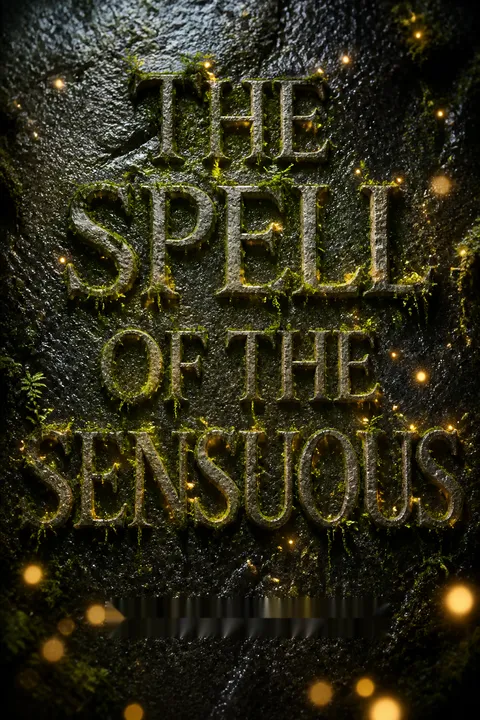
The Spell of the Sensuous by David Abram explores humanity's disconnection from nature through the evolution of written language, particularly the phonetic alphabet. Drawing on phenomenology (Husserl, Merleau-Ponty, Heidegger) and indigenous oral cultures, Abram argues that literacy separated humans from sensory experience and the "more-than-human world." Reviews praise the book's beautiful, poetic writing and transformative insights, though some criticize logical leaps, idealization of indigenous cultures, and oversimplification of the oral/literate divide. Readers describe it as dense but rewarding, inspiring paradigm shifts in perception and fostering deeper connection with nature.
People Also Read




Download PDF
Download EPUB
.epub digital book format is ideal for reading ebooks on phones, tablets, and e-readers.








































