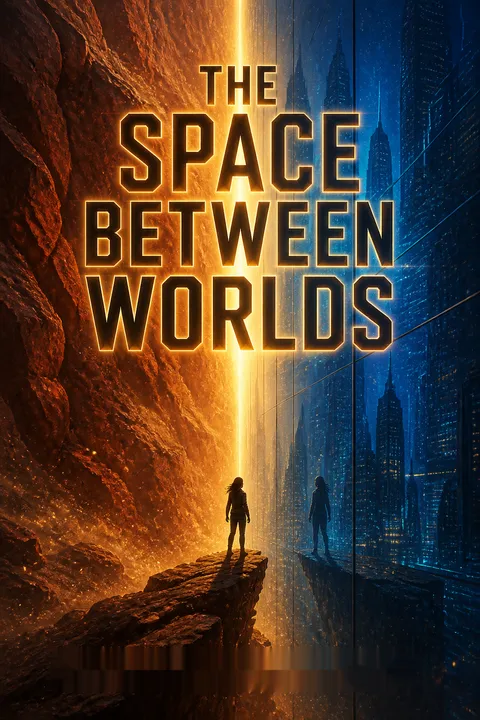

Plot Summary
Worlds Where I Died
Cara, a young woman from the wastelands outside Wiley City, is uniquely valuable because she is dead in nearly every parallel world accessible to her employers. In a future where multiverse travel is possible, only those who have died on other Earths can safely traverse. Cara's many deaths—products of poverty, violence, and neglect—make her a rare asset to the powerful Eldridge Institute. She is a "traverser," gathering data from alternate worlds for the city's elite, but her value is always conditional, her existence precarious. The knowledge of her own deaths haunts her, shaping her sense of self and her relationships with others, as she navigates a world that only values her because she is so often dead elsewhere.
The Value of Death
In Wiley City, death is not just an end but a form of currency. Cara's ability to traverse is rooted in the fact that she is dead in so many worlds, making her both indispensable and disposable. The city's elite exploit this, using traversers like Cara to extract resources and information from other Earths. The system is built on the backs of the marginalized—those whose lives are cheap in one world and valuable in another. Cara's job is a constant reminder of her own mortality and the ways in which power structures commodify suffering. Her survival is a fluke, a twist of fate, and she is acutely aware that her worth is tied to her continued usefulness to those in power.
Family, Faith, and Ash
Cara's journey back to her family in Ashtown, a place defined by faith and scarcity, exposes the deep rifts between her past and present. Her mother, now devout and distant, is a shadow of the woman Cara remembers. Her stepfather, Daniel, and stepsiblings, Esther and Michael, embody the hope and contradictions of the Rurals—a community clinging to faith in the face of hardship. Cara's outsider status is palpable; she is both of this world and apart from it. The dedication of a new church brings together the city's power brokers and the wasteland's survivors, highlighting the uneasy alliances and simmering resentments that define life on the margins.
Stolen Lives, Stolen Names
Cara's true origin is a secret: she is not the original Caramenta, but a survivor from another Earth who took her place after finding her corpse. This act of theft is both survival and betrayal, a way to escape a life of violence and claim a new existence in Wiley City. The journals and memories she inherits are both a guide and a burden, shaping her interactions with those who believe she is someone else. The act of becoming Caramenta is fraught with guilt and longing, as Cara grapples with the cost of her stolen life and the impossibility of ever truly belonging.
The Art of Traversing
The process of moving between worlds is dangerous and painful, leaving physical and emotional scars. Cara's body bears the marks of countless crossings, each one a reminder of the violence inherent in the act. The technology that enables traversing is imperfect, and the risks are ever-present. The traversers are expendable, their deaths and injuries accepted as the price of progress. Yet, for Cara, traversing is also a form of freedom—a way to escape the confines of her world and glimpse the infinite possibilities of the multiverse, even as it exacts a heavy toll.
Love and Other Dangers
Cara's relationships are shaped by longing and loss. Her attraction to Dell, her watcher and handler, is fraught with unspoken tension and the barriers of class, race, and trauma. Dell, privileged and distant, is both a source of comfort and a reminder of all that Cara can never have. The intimacy between them is always on the verge of becoming something more, but is held back by fear, misunderstanding, and the weight of their respective pasts. Love, in Cara's world, is as dangerous as any crossing—a risk that could lead to salvation or destruction.
The Emperor's Shadow
The figure of Nik Nik, the emperor of Ashtown, looms large in Cara's past and present. On her home Earth, he was her lover and abuser, a man whose cruelty was matched only by his need for control. In other worlds, he is a different man—sometimes kinder, sometimes worse—but always a reminder of the ways in which power corrupts and wounds. Cara's encounters with Nik Nik across the multiverse force her to confront the cycles of violence that have shaped her life, and to question whether escape or redemption is possible.
Doppelgängers and Destiny
Cara's journey brings her face-to-face with her own doppelgänger, Nelline, on Earth 175. The encounter is destabilizing, a confrontation with the self she might have been. The rules of traversing dictate that only one version of a person can exist in a world at a time, and the meeting is catastrophic. The violence that ensues is both literal and symbolic—a struggle for survival that exposes the fragility of identity and the arbitrary nature of fate. The death of Nelline is both a loss and a liberation, a moment that forces Cara to reckon with the consequences of her choices.
Betrayal in the Blood
The bonds of family are both a source of strength and a site of betrayal. Cara's relationship with her stepsister Esther is marked by love and secrets, while her stepbrother Michael's choices reflect the pull of violence and belonging. The revelation that Michael has become a runner—a member of the emperor's violent enforcers—shatters the family's fragile peace. The cycles of betrayal and forgiveness play out across worlds, as Cara is forced to confront the ways in which love and loyalty can be both redemptive and destructive.
The Price of Survival
Cara's existence is a constant negotiation between self-preservation and sacrifice. The world she inhabits is one where the powerful exploit the weak, and survival often means complicity in systems of violence and oppression. The choices she makes—to steal a life, to betray a friend, to align with dangerous allies—are never simple, and the cost is always high. The struggle to survive is both physical and moral, a test of character that leaves Cara questioning what, if anything, is worth saving.
The Last Crossing
As the Eldridge Institute prepares to launch a new era of commercial traversing—one that will require the deaths of countless doppelgängers—Cara becomes a catalyst for rebellion. She allies with the runners and the emperor, orchestrating a plan to destroy the traversing hatch and disrupt the cycle of exploitation. The act is both vengeance for Jean's death and a bid for justice, a way to reclaim agency in a world that has always sought to control her. The crossing is both literal and metaphorical—a leap into the unknown that will determine the fate of many worlds.
The Cost of Ambition
Adam Bosch, the architect of traversing, is revealed as both genius and monster—a man whose ambition has left a trail of bodies across the multiverse. Cara's own ambition, her refusal to accept her place, is both her salvation and her undoing. The confrontation between them is a battle of wills, a clash between those who would use the multiverse for power and those who seek freedom. The cost of ambition is measured in lives lost and worlds changed, and the reckoning is both personal and cosmic.
The End of the Line
Cara's actions lead to her exile from Wiley City, stripped of her job and her place in the world she fought to claim. Yet, in the ashes of loss, she finds a new kind of belonging. She returns to Ashtown, forging a life as a bridge between worlds, helping others navigate the boundaries that once confined her. The end of her journey is not a return to the beginning, but the start of something new—a life defined not by survival alone, but by the possibility of connection and change.
Guilt, Grief, and Ghosts
The aftermath of rebellion is marked by grief for those lost—Jean, Nelline, and the countless others whose deaths made Cara's life possible. The ghosts of the past linger, shaping her sense of self and her relationships with the living. Guilt is both a burden and a guide, a reminder of the cost of survival and the need for atonement. In seeking peace, Cara learns to honor the dead without being consumed by them, finding a way to move forward without forgetting where she came from.
The Revolution of the Self
Cara's journey is ultimately one of self-revolution—a transformation wrought by pain, loss, and the hard-won knowledge that survival is not enough. Through her relationships with Esther, Dell, and others, she learns the value of vulnerability and the possibility of joy. The revolution is not just against external oppressors, but against the internalized beliefs that have kept her small. In claiming her own worth, Cara becomes a force for change, not just in her own life, but in the lives of those around her.
The Emperor's Due
The struggle for power in Ashtown and Wiley City is a microcosm of the larger battles that define the multiverse. The emperor's due—the price exacted for survival and dominance—is paid in blood and betrayal. Cara's role in the revolution is both agent and witness, a participant in the cycles of violence that shape her world. The quest for justice is complicated by the realities of power, and the line between victim and perpetrator is always blurred.
The Collapse of Worlds
The destruction of the traversing hatch and the downfall of Adam Bosch mark the collapse of the old order. The worlds that once seemed stable are revealed to be fragile, their boundaries porous and their futures uncertain. In the aftermath, new possibilities emerge—a chance to build something better, to imagine worlds where survival is not the only goal. The collapse is both an ending and a beginning, a moment of chaos that holds the seeds of transformation.
The Space Between Us
In the end, Cara's journey is about the search for connection—in a world, in a family, in love. The space between worlds is mirrored by the space between people, the distances that must be crossed to find understanding and belonging. Through loss and longing, betrayal and forgiveness, Cara learns that the most valuable thing in any universe is the possibility of being seen and loved for who you are. The story closes not with certainty, but with hope—a belief that, in the infinite space between worlds, there is always the chance for something new.
Analysis
A modern parable of power, identity, and survival
The Space Between Worlds is a profound meditation on the intersections of privilege, trauma, and agency in a fractured world. Through the lens of multiverse science fiction, Micaiah Johnson interrogates the ways in which society commodifies suffering and exploits the marginalized, turning death itself into a form of currency. The novel's central conceit—that only those who are dead in a world can traverse to it—serves as a powerful metaphor for the ways in which the most vulnerable are both invisible and indispensable. Cara's journey is emblematic of the struggle to claim agency in a world that constantly seeks to define and confine her. The story's emotional arc is one of loss and longing, but also of resilience and transformation. In the end, the novel offers a vision of hope—not in the promise of escape or erasure, but in the possibility of connection, understanding, and the courage to imagine new worlds. The lesson is clear: survival is not enough; to truly live, we must find the space between worlds where we can be seen, loved, and free.
Review Summary
The Space Between Worlds receives mostly positive reviews for its inventive multiverse concept, compelling protagonist, and exploration of social issues. Readers praise the fast-paced plot, world-building, and thought-provoking themes. Some criticize underdeveloped villains and confusing exposition. The romance subplot and character development garner mixed reactions. Many reviewers appreciate the book's commentary on class, race, and identity. While some found the execution lacking, others consider it one of the best sci-fi novels they've read, praising its emotional depth and originality.
People Also Read




Characters
Cara/Caramenta
Cara is the protagonist, a woman whose value lies in her ability to die—over and over, on hundreds of worlds. Born into poverty and violence in Ashtown, she survives by taking the place of her doppelgänger, Caramenta, in Wiley City. Her journey is one of constant negotiation between self-preservation and the longing for connection. Haunted by guilt and driven by ambition, Cara is both a victim and an agent of change. Her relationships—with her family, with Dell, with Nik Nik—are shaped by trauma and hope, and her development is marked by a gradual acceptance of her own worth and the possibility of love.
Dell Ikari
Dell is Cara's handler at the Eldridge Institute, a woman of privilege and discipline. She is both protector and obstacle, enforcing the rules that keep Cara alive but also at a distance. The attraction between Dell and Cara is fraught with class and cultural barriers, as well as the scars of past betrayals. Dell's own history is marked by loss and longing, and her relationship with Cara forces her to confront her own vulnerabilities. Over time, Dell becomes both ally and lover, her development paralleling Cara's as they learn to trust and need each other.
Nik Nik (Yerjanik)
Nik Nik is the ruler of Ashtown, a figure who embodies both the allure and the danger of power. In Cara's original world, he is her lover and tormentor, a man whose violence is both personal and political. Across the multiverse, Nik Nik's character shifts—sometimes a monster, sometimes a victim, sometimes a potential ally. His relationship with Cara is complex, marked by cycles of intimacy and betrayal. Nik Nik's development is a study in the ways power can corrupt and the possibility, however slim, of redemption.
Adam Bosch/Adranik
Adam Bosch is the creator of the technology that enables traversing, a man whose ambition has left a trail of bodies across worlds. He is both visionary and villain, willing to sacrifice anything and anyone for the sake of progress and control. His relationship to Cara is adversarial, a battle of wits and wills that culminates in mutual destruction. Adam's psychological complexity lies in his ability to justify his actions, his detachment from the suffering he causes, and his ultimate vulnerability to the very systems he created.
Esther
Esther is Cara's stepsister, a figure of compassion and resilience. Raised in the Rurals, she embodies the hope and contradictions of her community. Esther's faith is both a source of comfort and a challenge to Cara's cynicism. Her relationship with Cara is marked by love, honesty, and the willingness to forgive. Esther's development is a testament to the power of kindness and the possibility of change, even in the face of overwhelming odds.
Jean Sanogo
Jean is one of the first traversers, a man who has survived war and loss to become a leader and mentor to Cara. His wisdom and compassion are a guiding force, helping Cara to see her own potential and to navigate the dangers of her world. Jean's own history is marked by trauma, and his relationship with Cara is both paternal and collegial. His death is a turning point, a loss that propels Cara toward rebellion and self-discovery.
Mr. Cheeks
Mr. Cheeks is a runner in Ashtown, a figure who embodies the violence and loyalty of the wasteland. Initially a threat, he becomes an ally to Cara, helping her navigate the dangerous politics of the runners and the emperor. His relationship with Esther adds depth to his character, revealing a capacity for tenderness beneath his tough exterior. Mr. Cheeks represents the possibility of solidarity across lines of class and violence.
Nelline
Nelline is Cara's counterpart on Earth 175, a woman whose life and death are intertwined with Cara's own. Their encounter is a confrontation with destiny, a moment that forces both to reckon with the arbitrary nature of survival. Nelline's death is both a loss and a liberation for Cara, a reminder of the cost of traversing and the fragility of identity.
Esther's Family (Daniel, Michael)
Daniel, Cara's stepfather, is a figure of faith and stability, while Michael, her stepbrother, represents the pull of violence and the search for belonging. Their relationships with Cara are marked by love, disappointment, and the complexities of blended families. Michael's choice to become a runner is a betrayal that echoes across worlds, while Daniel's steadfastness is both a comfort and a source of pain.
Exlee
Exlee is the proprietor of the House in Ashtown, a figure who offers Cara sanctuary and guidance. Their presence is a reminder that family can be chosen as well as inherited, and that survival is often a collective effort. Exlee's wisdom and strength are a counterpoint to the violence of the world, offering Cara a glimpse of what community can be.
Plot Devices
Multiverse Traversal and Death as Access
The central plot device is the technology that allows travel between parallel Earths, but only for those who are dead in the target world. This rule creates a system where the marginalized—those most likely to die young—become valuable commodities. The device is both a literal mechanism (the traversing hatch) and a metaphor for the ways in which society exploits the suffering of the vulnerable. The narrative structure uses this device to explore questions of identity, fate, and agency, as characters confront the versions of themselves that might have been.
Doppelgängers and Identity
The existence of doppelgängers across worlds allows for direct confrontation with alternate selves, forcing characters to reckon with the choices and circumstances that define them. The device is used to explore themes of selfhood, destiny, and the possibility of change. The rules of the multiverse—only one version of a person can exist in a world at a time—create tension and danger, as encounters between doubles are both revelatory and catastrophic.
Power, Exploitation, and Rebellion
The exploitation of traversers by the elite is mirrored in the broader systems of power that define Wiley City and Ashtown. The narrative uses rebellion—both personal and collective—as a plot device to challenge these systems. Foreshadowing is used throughout, as Cara's growing disillusionment and the deaths of those around her build toward a climactic act of sabotage. The destruction of the traversing hatch is both a literal and symbolic breaking of chains, a moment of reckoning that forces all characters to confront the cost of survival.
Love and Betrayal
The relationships between characters—Cara and Dell, Cara and Nik Nik, Cara and Esther—are used to explore the ways in which love can be both a source of strength and a site of vulnerability. Betrayal is a constant threat, as characters navigate the shifting loyalties and hidden agendas of a world defined by scarcity and violence. The narrative structure uses these relationships to heighten tension and to underscore the emotional stakes of the larger conflict.
Guilt, Grief, and Redemption
The story is haunted by the ghosts of those lost—literal and figurative. Guilt and grief are used as plot devices to drive character development and to explore the possibility of redemption. The narrative uses repetition and reflection—Cara's lists, her memories, her encounters with the dead—to create a sense of continuity and to underscore the cyclical nature of trauma and healing.
The Space Between Worlds Series Series
Download PDF
Download EPUB
.epub digital book format is ideal for reading ebooks on phones, tablets, and e-readers.








































