
Key Takeaways
1. The Overview Effect: Earth's Fragility and Our Shared Destiny
From this vantage point, political borders disappear. The tumult of human hustle vanishes in a deafening silence to give way to the realization that we are all aboard the same vessel in space, united by the same fate.
A profound shift. Seeing Earth from space, an experience known as the Overview Effect, profoundly transforms astronauts, instilling a heightened sense of responsibility for our planet and its fragile biosphere. This perspective, first gained by Apollo astronauts and later immortalized by Voyager 1's "Pale Blue Dot" image, reveals Earth as a vulnerable "mote of dust suspended in a sunbeam." It underscores our interconnectedness and the urgent need for global unity.
Cosmic irony. The James Webb Space Telescope (JWST) offers a marvelous cosmic irony: by peering into the universe's origins, it propels us into a future where astrobiology—the search for life—is undergoing a revolution. This era of exploration, marked by discoveries of countless habitable environments in our solar system and thousands of exoplanets, is transforming our species in ways we cannot yet foresee.
Sagan's legacy. Carl Sagan, a founding father of astrobiology, championed bold thinking and the "Sagan standard" (extraordinary claims require extraordinary evidence). His vision of "the shores of the cosmic ocean" has evolved from a philosophical concept to a scientific reality, driven by exponential advancements in technology and data. This journey of discovery is not just about finding life elsewhere, but about understanding our own origins and place in the universe.
2. Life's Elusive Origins: Multiple Theories and the Shadow Biosphere
Life’s origin is still uncertain today and probably the most fundamental and fascinating question of astrobiology for its scientific and philosophical implications.
Earth's early life. Evidence suggests simple, complex life existed on Earth barely 200 million years after its surface solidified, with the oldest fossils found in seafloor hydrothermal vents and hot springs. This rapid appearance of life in a hellish, volcanically active early Earth, bombarded by asteroids, challenges our understanding of abiogenesis.
Competing theories. Various scientific theories attempt to explain life's inception:
- Panspermia: Life originated elsewhere and was delivered to Earth by space dust, asteroids, or comets.
- Oparin-Haldane model ("primordial soup"): Life arose gradually from inorganic molecules forming complex polymers in warm pools, later acquiring lipid membranes.
- RNA world: Life began with simple RNA molecules capable of self-replication and catalysis.
- Hot vs. Cold origins: Debates exist whether life's incubator was extremely hot (volcanic vents) or cold (ice-covered oceans providing stability).
- Clay minerals: Clay particles could have concentrated and catalyzed organic compounds, acting as "genetic candidates."
New paradigms. Emerging concepts like "inevitable life theory" propose that life is an inevitable product of thermodynamics, dissipating energy more efficiently. The "multiple paths to multiple life" theory suggests life could have emerged independently multiple times, even leading to a "shadow biosphere" on Earth with entirely different biochemistry, which we might not recognize with our current detection methods.
3. Venus: A Cautionary Tale of Lost Habitability
Whatever triggered the runaway greenhouse effect was what ultimately doomed the potential for life on Venus, and here, there are various schools of thought.
Earth's mysterious twin. Venus, once potentially similar to early Earth, now stands as a hellish world with surface temperatures hot enough to melt lead and an atmosphere 93 times denser than Earth's. Its extreme conditions offer a stark lesson in how fragile habitability can be, and what fate awaits Earth if a runaway greenhouse effect takes hold.
The phosphine mystery. The alleged detection of phosphine gas in Venus's atmosphere sparked excitement, as it's primarily produced by life on Earth. However, the observation remains controversial, with alternative explanations pointing to volcanic activity. If confirmed, it would require life to thrive in an extremely acidic, dry atmosphere, a scenario challenging our understanding of biology.
Scenarios for Venus's past. Scientists propose different timelines for Venus's habitability:
- Early loss: Oceans evaporated early as the sun became more luminous, leading to a runaway greenhouse effect and cessation of plate tectonics.
- Never habitable: Water remained as steam, preventing ocean formation due to high temperatures.
- Recent loss: Oceans were lost only a few hundred million years ago due to massive volcanic eruptions, explaining Venus's young surface.
Upcoming missions like VERITAS, DAVINCI, EnVision, and the private Venus Life Finder aim to unravel these mysteries, potentially revealing an environmental limit to life.
4. Mars: Our Ancient Cradle, Our Cosmic Mirror
Ultimately, we might be the Martians we so relentlessly strive to discover with our spacecrafts and rovers.
A planet of enduring fascination. Mars, with its Earth-like landscapes and geological history, has long captivated human imagination. Early telescopic observations fueled myths of canals and advanced civilizations, shattered by Mariner 4's images, but renewed by Mariner 9's revelations of a complex, dynamic world.
Viking's inconclusive quest. The Viking missions in the 1970s conducted the first direct search for life on Mars. While some experiments showed intriguing results (e.g., Labeled Release), the lack of organic molecules and later discovery of perchlorates led most scientists to attribute them to non-biological oxidative chemical reactions. This highlighted the critical need for extensive environmental context before declaring life's presence.
Evidence of past habitability. Decades of missions have confirmed early Mars was habitable for simple life:
- Thicker atmosphere: Protected against UV radiation, allowing liquid water.
- Liquid water: Evidence of ancient rivers, lakes, and episodic oceans.
- Energy sources: Sunlight, chemical reactions, volcanism, radiolysis.
- Nutrients: Soluble minerals like potassium, magnesium, chlorides.
The "Black Beauty" meteorite suggests Mars's crust cooled 100 million years before Earth's, with water present, raising the tantalizing possibility that life could have emerged there first and even seeded Earth.
5. Ocean Worlds: Oases Beyond the Habitable Zone
The Earth is only one of many ocean worlds in our solar system, most of them hidden from view under thick covers of rock and ice, except for Titan, where large exotic seas and lakes first suspected in the Voyager 1 and 2 data were later confirmed by Cassini, which observed them at the surface.
Hidden liquid realms. Beyond Mars, the cold outer solar system harbors numerous "ocean worlds" – moons with subsurface liquid water oceans, challenging the traditional definition of a habitable zone. These environments, like deep oceanic hydrothermal vents on Earth, can sustain complex ecosystems independent of surface sunlight.
Energy for life. These frozen kingdoms rely on internal heat sources:
- Tidal friction: Gravitational tugs from gas giants deform moons, generating heat for hydrothermal activity.
- Radioactive decay: Elements in rocks provide internal warming.
- Radiolysis: Cosmic rays interacting with icy shells produce nutrients.
Connectivity between the surface and deep interior, through fractures and plumes, is crucial for nutrient distribution and a resilient biosphere.
Promising candidates. Europa and Enceladus are top candidates due to evidence of active plumes and communication between their oceans and surfaces. Ganymede, the largest moon, also has a vast subsurface ocean and magnetic field. Upcoming missions like Europa Clipper and ESA's Juice will investigate these worlds, searching for indigenous life, a "second genesis" unrelated to Earth.
6. Titan: A Laboratory for Alien Life
Titan increasingly looked like the perfect alchemist’s cauldron. It represented a natural lab, a world similar to early Earth, where we could study the chemical processes that had led to life over 4 billion years ago on our planet.
A world of peculiar familiarity. Saturn's largest moon, Titan, unveiled by the Huygens probe in 2005, presents a landscape eerily similar to Earth's, with hills, riverbeds, and lakes, but composed of exotic materials. Its thick, nitrogen-rich atmosphere, dense enough for easy flight, and surface temperatures of -180°C make it a unique natural laboratory.
Methane's hydrological cycle. Titan boasts a methane-based hydrological cycle, with:
- Methane rain: Falling from clouds, carving riverbeds.
- Lakes and seas: Filled with liquid methane, ethane, and nitrogen, primarily in polar regions (e.g., Kraken Mare).
- Cryovolcanism: Episodic release of methane from the interior.
This cycle, driven by long seasons, shapes a dynamic environment where organic molecules, including tholins (precursors to DNA/RNA nucleobases), rain down from the atmosphere.
Weird life possibilities. The discovery of a subsurface salty water-ammonia ocean, coupled with the unique surface chemistry, opens two distinct scenarios for life:
- Surface life: Methane-based biochemistry, using methane as a solvent, hydrogen instead of oxygen, and acetylene instead of glucose. Acrylonitrile molecules could form cell-like structures.
- Subsurface life: Water-based life in the deep ocean, potentially feeding on inorganic molecules from hydrothermal vents, similar to Earth's "dark biosphere."
NASA's Dragonfly mission, launching in 2027, will explore Titan's surface with a drone-like quadcopter, searching for chemical biosignatures and investigating its prebiotic chemistry.
7. Dwarf Planets: Redefining Habitability's Extremes
With them, we learned that neither size nor distance from the sun should be considered factors to exclude habitability.
Ceres: An asteroid belt anomaly. Dwarf planet Ceres, a relic from the solar system's formation, surprised scientists with evidence of recent geological activity and a subsurface body of briny liquid. Its composition, suggesting formation near Neptune and inward migration, includes ammonia salts and sodium carbonates. Cryovolcanoes like Ahuna Mons and bright salt deposits in Occator crater indicate ongoing hydrothermal activity and the presence of organics, making it a potentially habitable world.
Pluto: A distant, dynamic world. New Horizons' 2015 flyby revealed Pluto as an unexpectedly active world, far from a dull ice ball. Its blue, hazy atmosphere, red organic tholins, and diverse landscapes (water ice mountains, nitrogen glaciers, Sputnik plain) point to a "hot start" and an early liquid ocean.
- Subsurface ocean: Evidence from tectonic features and impact wave patterns suggests a deep, liquid ocean, possibly a water-ammonia mixture, kept from freezing by ammonia's antifreeze properties.
- Cryovolcanism: Features like Wright Mons and Virgil Fossae indicate recent cryovolcanic activity, potentially bringing ocean material to the surface.
Pluto's potential for past, present, and even future habitability (warming up when the sun becomes a red giant) dramatically expands our understanding of life's possible abodes.
Beyond the known. The discoveries on Ceres and Pluto, along with other Kuiper Belt objects like Arrokoth, challenge our preconceived notions of habitability. They suggest that even small, distant worlds can harbor conditions for life, pushing the limits of our search and highlighting the need for missions like NASA's proposed Persephone orbiter to Pluto.
8. Exoplanets: A Universe Teeming with Worlds
As a scientist, I will go out on a limb here and say that if life is an accident, the universe has to be the mother of all pileups.
A cosmic revolution. The modern era of exoplanet detection, beginning in the 1980s, has revolutionized our understanding of the universe. With over 5,573 confirmed exoplanets and thousands more awaiting confirmation, we now know that planetary systems are the rule, not the exception, making the existence of life elsewhere a statistical near-certainty.
Diverse detection methods. Astronomers employ various techniques to find these distant worlds:
- Radial velocity: Detecting stellar wobbles caused by planetary gravity.
- Transit method: Measuring dips in starlight as a planet passes in front.
- Direct imaging: Masking stellar glare to capture reflected light.
- Gravitational microlensing: Using gravity to bend and focus light from distant stars.
- Astrometry: Measuring minute changes in a star's position.
These methods, especially the transit method used by Kepler and TESS, have revealed a staggering diversity of planetary types.
A gallery of alien worlds. Exoplanets range from "hot Jupiters" orbiting incredibly close to their stars to "super-Earths" (larger than Earth, smaller than Neptune) and "Hycean worlds" (ocean planets with hydrogen-rich atmospheres). Rogue planets, wandering interstellar space without a parent star, even suggest habitability can exist in the void. The TRAPPIST-1 system, with three Earth-sized planets in the habitable zone of an ultra-cool red dwarf, offers a compelling case for life, with its star's 12-trillion-year lifespan providing ample time for evolution.
9. The Fermi Paradox: The Great Silence Amidst Abundance
The potential is so high for advanced alien civilizations and for them to be older than we are, so why don’t we see any sign of their presence in the universe?
The perplexing question. The Fermi paradox, "Where is everybody?", highlights the striking contrast between the high probability of advanced alien civilizations (as suggested by the Drake equation and exoplanet discoveries) and the lack of any detectable evidence of their existence. This "Great Silence" challenges our assumptions about life's prevalence and evolution.
Drake equation's framework. Frank Drake's equation provides a probabilistic framework for estimating the number of detectable civilizations. While early terms (star formation, planetary systems) are increasingly supported by data, the later terms (fraction of planets with life, intelligent life, detectable technology, civilization lifespan) remain highly speculative.
- R (star formation):* Milky Way produces about half a dozen stars annually.
- fp (planetary systems): Kepler shows nearly every star has planets.
- ne (habitable planets): Billions of Earth-like planets in habitable zones.
- fl (life appears): At least one (Earth), possibly more in our solar system.
- fi (intelligent life): Highly uncertain, but Earth has multiple intelligent species.
- fc (detectable technology): Humans have only recently achieved this.
- L (civilization lifespan): Most uncertain, with human civilizations having short average lifespans.
Great Filters and Rare Earth. Proposed solutions to the Fermi paradox often involve "Great Filters"—obstacles preventing non-living matter from becoming detectable advanced civilizations. The "Rare Earth hypothesis" suggests complex life is rare due to a unique series of planetary and galactic filters, such as the need for a large moon to stabilize axial tilt or specific galactic habitable zones. Other radical hypotheses include the "Dark Forest theory" (civilizations hide to avoid destruction) or "machine singularity" (aliens are so advanced they're indistinguishable from physics).
10. The Search for Intelligence: SETI, Technosignatures, and Our Future
Making contact and detecting extraterrestrial technosignatures have been the objectives of the SETI search for over six decades now, since Frank Drake, Giuseppe Cocconi, and Philip Morrison converged on the idea that scanning deep space to listen for nonrandom patterns of radio waves could provide a way to search for signs of alien civilizations.
Kardashev's scale of civilizations. Nikolai Kardashev classified civilizations by their energy harnessing capabilities:
- Type I (Planetary): Controls global energy (humanity is not yet Type I).
- Type II (Stellar): Controls its planetary system's energy (e.g., Dyson sphere).
- Type III (Galactic): Controls an entire galaxy's energy.
These classifications guide the search for "technosignatures"—measurable evidence of alien technology, from renewable energy infrastructures to megastructures like Dyson spheres.
SETI's enduring quest. SETI (Search for Extraterrestrial Intelligence) projects, like Frank Drake's Project Ozma and the privately funded Project Phoenix, have systematically scanned the skies for nonrandom radio and optical signals. Modern initiatives, such as the Allen Telescope Array (ATA), Breakthrough Listen, and collaborations with global observatories like FAST, leverage advanced signal processing and AI to expand the search.
METI and UAPs. METI (Messaging Extraterrestrial Intelligence) actively transmits messages into space, a controversial practice due to "Dark Forest" concerns. Separately, the investigation of Unidentified Aerial Phenomena (UAPs) by governments and scientific projects like the Galileo Project seeks to understand unexplained observations in Earth's airspace. While SETI focuses on distant technosignatures, UAP research aims to determine if extraterrestrials have already visited, emphasizing the need for rigorous scientific analysis over speculation.
11. The Grammar of Life: A Universal Blueprint?
Life acts as if it is a process that fundamentally aims to improve and broaden our experience of being, of our awareness of being alive, by multiplying the sources of stimuli and information, the interactions and connections with the environment—whether this environment is physical, mental, or spiritual, real or virtual—and to seek an ever-increasing complexity to ultimately give more dimensions to our consciousness and to the universe.
The paradox of definition. A central paradox in astrobiology is the lack of a consensus definition for life. While NASA uses "a self-sustaining chemical system capable of Darwinian evolution," other definitions range from Edward Trifonov's "almost exact self-reproduction with variations" to Erwin Schrödinger's "avoiding the decay into equilibrium" (fighting entropy).
The "plumbing of life." The "Ladder of Life Detection" provides an eight-step method for accumulating converging evidence of life, focusing on biosignatures that are improbable to form abiotically and emphasizing environmental context. This framework acknowledges that life's "plumbing" (metabolism, growth, reproduction) defines what it does, but not necessarily what it is.
Beyond standard biology. New paradigms suggest life is a fundamental process, not just a substance. Jeremy England's theory proposes life emerges inevitably from thermodynamics, while "Multiple Paths to Multiple Life" suggests numerous independent origins and forms, including a "shadow biosphere." The rise of synthetic biology and AI further blurs the lines:
- Xenobots: Nanoscopic robots made of living cells that can self-replicate, challenging definitions of living vs. non-living.
- AI singularity: The hypothetical point where AI surpasses human intelligence, potentially developing its own forms of life and consciousness.
These advancements push us to consider if life's essence lies in its drive for complexity, awareness, and information processing, regardless of its material substrate.
12. Humanity's Crossroads: A Self-Made Destiny
We have come to the crossroads of time and must decide about our future as a species and as a civilization.
A cosmic initiation. Humanity stands at a critical juncture, a "cosmic initiation" where our technological prowess allows us to consciously alter our planet's course. The "L" factor in the Drake equation—the lifespan of a detectable civilization—is now in our hands, determining if we become a long-lasting galactic flame or a fleeting spark.
The unraveling planet. Our uncontrolled growth and disengagement from nature have led to a "Gaia Super Event," marked by:
- Climate change: Bloodred skies, melting glaciers, droughts, unbreathable air.
- Mass extinction: 150 species lost daily, the sixth mass extinction.
- Resource depletion: Consuming more than Earth can produce.
This collective delusion of invincibility, fueled by short-term interests and a reliance on artificial environments, threatens our very survival and leaves a hostile world for future generations.
Course correction and interstellar destiny. We possess the science, technology, and ingenuity to reverse this trajectory. Space exploration, far from being an escape, is foundational to our future:
- Climate monitoring: Satellites provide real-time data for informed decisions.
- Planetary lessons: Mars, Venus, and Titan teach us about lost habitability and tipping points.
- Technological solutions: Ingenuity can be redirected to sustainable practices.
By embracing responsibility for Earth, our "vessel in space," and integrating our technological advancements with ecological wisdom, we can navigate this storm. Our purpose is to endure, to become planetary citizens, and to carry this hard-won wisdom to the stars, transforming our reckless youth into a vibrant, conscious cosmic future.
Review Summary
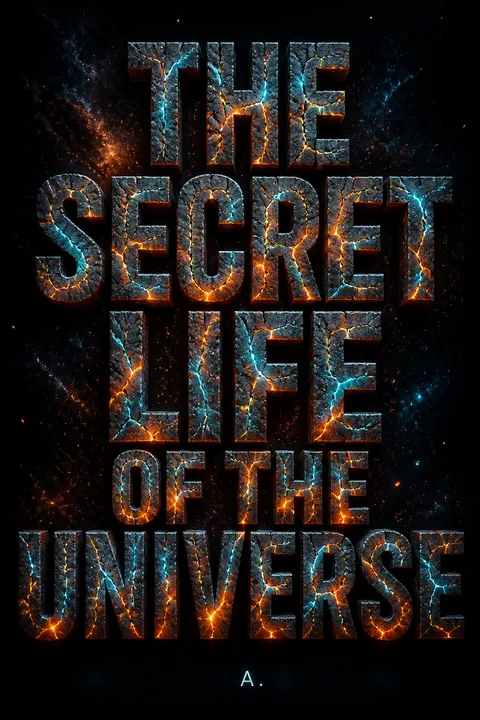
The Secret Life of the Universe by Nathalie A. Cabrol receives generally positive reviews (4.01/5), praised for its accessible exploration of astrobiology and the search for extraterrestrial life. Readers appreciate Cabrol's comprehensive tour through potentially habitable worlds in our solar system and beyond, discussion of life's definition and origins, and contagious passion for the subject. Criticisms include repetitive content, weak concluding sections, occasional dry presentation, and insufficient depth for both general readers and scientists. Many valued the book's accessible writing style and philosophical reflections on humanity's place in the universe.
People Also Read


Download PDF
Download EPUB
.epub digital book format is ideal for reading ebooks on phones, tablets, and e-readers.








































