
Key Takeaways
1. Function Words: The Invisible Architects of Our Inner Lives
Pronouns, articles, prepositions, and a handful of other small, stealthy words reveal parts of your personality, thinking style, emotional state, and connections with others.
Unseen power. The words we often overlook—pronouns (I, you, we), articles (a, an, the), prepositions (to, for, over), and other "function words"—are far more revealing than the content words (nouns, verbs, adjectives) we consciously choose. These tiny, forgettable words make up nearly 60% of our daily language, yet less than 0.1% of our vocabulary, operating beneath our conscious awareness. They are the subtle fingerprints of our psychological states, offering profound insights into who we are and how we interact with the world.
Hidden clues. These stealth words act as windows into our inner workings. For instance, leaders use "I" less than followers, and truth-tellers use it more than liars. People who frequently use articles like "a," "an," and "the" tend to perform better academically. Such patterns, initially discovered through accidental research, highlight how these seemingly insignificant linguistic choices broadcast our personality, emotional state, and social connections.
LIWC's revelation. The Linguistic Inquiry and Word Count (LIWC) computer program, developed to systematically count these words, revolutionized the study of language. It revealed that healthy writing, particularly when processing trauma, involves a balance of positive and moderate negative emotion words, increasing cognitive words to construct a coherent story, and a flexible shifting in pronoun use. This suggests that words reflect, rather than cause, our underlying psychological states, offering a powerful tool for understanding the human mind.
2. Beyond Content: Language Style Reveals More Than You Think
A central theme of this book is that the content of speech can be distinguished from the style of speech.
Style over substance. While content words label objects and actions, conveying explicit meaning, it's the "style" or "function" words that truly reveal a person. These words—pronouns, articles, prepositions, conjunctions, auxiliary verbs, negations, quantifiers, and common adverbs—connect, shape, and organize content, but hold little meaning on their own. They are the "junk words" that our brains typically gloss over, yet they are profoundly social and psychologically significant.
Invisible mechanics. Function words possess unique characteristics that make them powerful psychological indicators. They are used at extremely high rates, are short and hard to detect, and are processed in a distinct part of the brain (Broca's area), which is also linked to social skills. Unlike content words, which can be learned easily, mastering the nuanced use of function words in a new language is notoriously difficult, often betraying a non-native speaker.
Social glue. These stealth words are inherently social, requiring shared context and reflecting the intricate relationship between speaker and listener. For example, the difference between "the ring" and "a ring" signals shared or unshared knowledge. Our brains instantaneously decide which function words to use, constantly tracking references to people and objects. This unconscious mastery underscores their role as fundamental markers of our social intelligence and how we navigate our interpersonal worlds.
3. Demographics in Dialogue: How Sex, Age, and Status Shape Our Words
Women use first-person singular pronouns, or I-words, more than men.
Gendered language. Men and women exhibit distinct, albeit subtle, patterns in their use of function words, often defying common stereotypes. Women tend to use more first-person singular pronouns ("I," "me," "my"), cognitive words (e.g., "think," "believe"), and social words, reflecting a greater focus on self-awareness, introspection, and interpersonal relationships. Conversely, men use more articles ("a," "an," "the") and nouns, indicating a greater focus on concrete objects, categorization, and things.
Life's linguistic journey. Our language evolves significantly with age, mirroring shifts in our life goals and perspectives.
- Younger individuals (adolescents): High use of personal pronouns, short words, and auxiliary verbs, reflecting a more immediate, self-focused, and dynamic worldview.
- Older individuals: Tend to use bigger words, more prepositions, and articles, indicating a more detached, formal, and categorical way of thinking. They also express more positive emotions and fewer negative ones, suggesting improved emotional regulation.
Class and power. Social class also leaves a linguistic footprint. Higher social classes tend to use more "noun cluster" words—bigger words, articles, and prepositions—reflecting a more formal, categorical, and task-oriented mindset. Lower social classes, in contrast, use more "pronoun-verb cluster" words—personal pronouns, auxiliary verbs, and cognitive words often linked to hedges—suggesting a more personal, dynamic, and socially oriented approach. These patterns collectively highlight how our demographic identities are deeply embedded in our unconscious word choices.
4. Your Linguistic Personality: Formal, Analytic, and Narrative Thinking Styles
By statistically clumping people’s function words into meaningful categories, we are seeing how they think, how they organize their worlds, and how they relate to other people.
Thinking's blueprint. Our choice of function words reveals consistent "thinking styles" that form a linguistic blueprint of our personality. Through analyses of stream-of-consciousness writing, three primary styles emerge, each with distinct psychological implications:
- Formal Thinking: Characterized by big words, high rates of articles, nouns, and prepositions, but few "I-words" or present-tense verbs. This style often appears stiff, intellectual, and distant, correlating with concerns about status, mental health, and less self-reflection.
- Analytic Thinking: Marked by exclusive words (e.g., "but," "except"), negations, causal words, insight words, and quantifiers. This style reflects a drive to understand the world by making distinctions, correlating with higher academic performance, honesty, and openness to new experiences.
- Narrative Thinking: Involves frequent use of personal pronouns (especially third-person), past-tense verbs, and conjunctions. This style indicates a natural storyteller, correlating with better social skills, more friends, and an outgoing personality.
Consistent patterns. These thinking styles are surprisingly consistent across different writing tasks and over time, suggesting they are fundamental aspects of an individual's identity. For example, a student's stream-of-consciousness writing style often mirrors their academic essay style. This consistency underscores how deeply ingrained these linguistic patterns are, acting as enduring markers of who we are.
Beyond the lab. While initially identified in controlled settings, these linguistic fingerprints extend to everyday communication like online dating profiles. By analyzing function words, we can infer aspects of a person's personality, such as their level of formality, analytical inclination, or storytelling propensity. This demonstrates how our unconscious word choices provide a rich, objective lens into the very essence of our individual psychological makeup.
5. Emotion's Echo: How Feelings Transform Our Language
Emotions change the ways people see and think about the world.
Feelings in function words. Our emotions profoundly alter our thinking patterns, and these shifts are subtly reflected in our use of function words. Different emotions trigger distinct linguistic profiles:
- Happiness: Associated with higher "we-word" usage and more specific language (concrete nouns, time/place references), reflecting an open, broad perspective.
- Sadness: Linked to increased "I-word" usage (inward focus) and more past/future tense verbs, indicating rumination and self-preoccupation.
- Anger: Characterized by higher "you" and "they" pronouns (outward focus on others) and present-tense verbs, reflecting immediate engagement with the source of frustration.
Depression's "I". Depression, a state of pathological self-focus, is strongly correlated with a high rate of "I-words," often more so than negative emotion words. Studies of suicidal poets, for instance, reveal significantly higher "I-word" usage compared to non-suicidal poets, suggesting an intense, almost possessive, embrace of their inner turmoil. This highlights how pronouns can serve as powerful, unconscious "emotion detectors."
Trauma's linguistic arc. Large-scale traumas, like the 9/11 attacks, reveal a predictable linguistic response: an immediate drop in "I-words" and a surge in "we-words," signifying a shift from self-focus to collective identity. This is often followed by a brief spike in negative emotions, a quick return to baseline, and then a long-term increase in positive emotions. Such events also initially increase cognitive words (trying to make sense), followed by a drop, suggesting a period of less analytic, more passive thinking. This pattern suggests that shared traumas foster social cohesion and can, paradoxically, lead to increased happiness and reduced self-focus.
6. The Tell-Tale Tongue: Unmasking Deception Through Word Patterns
The line between self-deception and all-out deception is not entirely clear.
Self-deception's signs. Self-deception, whether denying emotional impact or exhibiting overconfidence, manifests in distinct linguistic patterns. Individuals engaging in self-deception often use impersonal language, lack emotion words, and employ concrete, stiff, or distant phrasing, including a high rate of articles and discrepancy verbs like "would." For example, someone claiming "There is absolutely no doubt that..." tends to use fewer "I-words," more positive emotion, and simpler, less specific sentences, often compensating for truth with optimism.
Lying's linguistic fingerprint. When actively deceiving others, specific "tells" emerge in language, often counter-intuitive to popular belief. Studies comparing real versus fabricated stories, false attitudes, and high-stakes deception (like perjury or pre-war rhetoric) consistently show:
- Honest communication: More "I-words" (reflecting self-attention and ownership), greater cognitive complexity (more conjunctions, negations, insight words), and more detailed information (references to time, space, motion, numbers).
- Deceptive communication: Fewer "I-words," less cognitive complexity, less detail, more social words, more positive emotion, and higher use of verbs (especially auxiliary and discrepancy verbs like "could" or "must have"), which create distance and imply actions without direct assertion.
Beyond the obvious. Liars often employ subtle linguistic maneuvers to mislead without technically lying. These include passive constructions ("Mistakes were made"), avoiding direct answers to questions, and using "performatives" ("I promise you that...") which assert the act of speaking rather than the truth of the statement itself. These unconscious shifts in function words reveal a subtle change in the speaker-listener relationship, making them powerful, albeit often unnoticed, indicators of deception.
7. Power's Pronouns: Decoding Status and Leadership in Speech
The person who uses fewer I-words is the person who is higher in the social hierarchy.
Pronouns of power. In any social hierarchy, function words, particularly pronouns, reliably signal relative status. High-status individuals consistently use fewer first-person singular pronouns ("I," "me," "my") and more first-person plural ("we," "us," "our") and second-person ("you," "your") pronouns. This pattern reflects a shift in attention: lower-status individuals are more self-focused, while higher-status individuals focus on the audience or the collective.
The tricky "we". The word "we" is particularly nuanced, encompassing several forms:
- "You-and-I we": A warm, inclusive form.
- "My-friends-and-not-you we": Exclusive, used when referring to a group the listener isn't part of.
- "We-as-you we": A polite command or request (e.g., "Have we decided what we are going to order?").
- "We-as-I we" (royal we): Used to diffuse responsibility or imply broader support.
- "Every-like-minded-person-on-earth we": Vague, often used by politicians.
Higher-status individuals tend to employ the more distancing forms of "we," reinforcing their position.
Leadership's linguistic footprint. Assuming a leadership role directly impacts language, with individuals adopting fewer "I-words" and more "you" and "we-words." Historical analyses of U.S. presidents reveal distinct social-emotional styles: George W. Bush, for example, was highly social-emotional, while Barack Obama exhibits the lowest "I-word" usage among modern presidents, suggesting profound self-confidence and emotional distance. Drops in "I-word" usage by leaders have also been observed prior to major aggressive actions, such as declarations of war, indicating a shift to task-focused, less self-reflective thinking.
8. The Synchronized Dance: Language Style Matching in Relationships
The more the two people are engaged with one another, the more closely their function words match.
Verbal mirroring. Just as people unconsciously mimic each other's nonverbal cues, they also synchronize their use of function words in conversation—a phenomenon called Language Style Matching (LSM). This mirroring reflects the degree of engagement and attention between individuals, occurring rapidly (within seconds) and largely outside conscious awareness. High LSM indicates that two people are "on the same psychological page," sharing similar emotional tones, formality, and cognitive complexity.
Brain's role. This unconscious linguistic synchrony is linked to the brain's mirror neuron system, particularly in Broca's area, which is also involved in processing function words and empathy. This suggests a deep neurological basis for our ability to mimic and connect socially, explaining why we naturally adapt our language style to our conversational partners. The more committed or attentive we are to an interaction, the higher our LSM tends to be.
Predicting relationship success. LSM serves as a powerful "love detector," predicting relationship formation and stability.
- Speed-dating: Couples with higher LSM in brief interactions are almost twice as likely to desire future contact.
- Dating couples: High LSM in instant messages correlates with greater relationship stability over time, indicating mutual interest and emotional connection.
- Dysfunctional interactions: Low LSM, even when self-reported satisfaction is high, often signals detachment or avoidance, as seen in couples where one partner is distracted or disengaged.
LSM can even illuminate historical relationships, revealing periods of closeness or conflict between figures like Elizabeth Barrett and Robert Browning, Sylvia Plath and Ted Hughes, or Sigmund Freud and Carl Jung.
9. Group Identity: From "Me" to "Us" in Communities and Organizations
When people tell complete strangers about “our marriage,” “our business,” or “our community,” they are making a public statement about who they are and with whom they identify.
The "we" of belonging. The shift from "I" to "we" is a powerful marker of group identity, reflecting how individuals integrate into a collective. In "we-companies," employees embrace their workplace as part of their identity, leading to higher loyalty and productivity. Conversely, "they-companies" signal detachment and dissatisfaction. This "I-drop/we-jump" effect is pervasive:
- Relationships: Couples using "we-words" to an interviewer often have healthier marriages.
- Teams: Airline crews with higher "we-word" usage make fewer errors.
- Group formation: As strangers interact, "I-words" decrease and "we-words" increase, signifying growing group cohesion.
- Aging: Older individuals use more "we-words" and fewer "I-words," reflecting a lifetime of intertwined identities.
Events forge identity. Group identity intensifies dramatically during shared experiences, especially threats or successes. Sports fans say "we won" but "they lost." National traumas, like 9/11, cause an immediate surge in "we-words" and a drop in "I-words," fostering national unity and even a temporary increase in positive emotions. This adaptive response, seen across various disasters and cultural events, highlights the evolutionary drive for collective protection and belonging.
Linguistic cohesion. Beyond "we-words," Language Style Matching (LSM) reveals how well a group "clicks."
- Working groups: Higher LSM correlates with greater cohesiveness and better performance on complex tasks.
- Online communities: Wikipedia articles edited by teams with higher LSM are rated as higher quality.
- Geographical communities: Cities where residents exhibit similar language styles in online ads tend to have more equal income distributions, suggesting stronger social ties.
These findings demonstrate that language patterns, from individual pronouns to collective style matching, offer a unique lens into the dynamics, identity, and even socioeconomic fabric of groups, from intimate relationships to entire communities.
10. Word Sleuthing: Unlocking Authorship and Predicting Behavior
Function words can help us know our worlds just a little better.
Author's unique signature. Identifying authors, whether for forensic purposes or literary analysis, relies on subtle linguistic "tells" beyond content.
- Function words: The rates of pronouns, articles, and prepositions form a unique fingerprint, reliably distinguishing authors across different texts and timeframes.
- Punctuation: Individualized punctuation habits (e.g., consistent use of asterisks, specific comma placement) are powerful identifiers, often as effective as function words.
- Obscure words: Authors often have unconscious "tell words"—uncommon vocabulary they use with surprising frequency (e.g., "intriguing" for one author, "consequently" for another).
Combining these methods significantly improves accuracy in author identification, even for historical documents like the Federalist Papers, where new analyses challenge long-held assumptions about authorship.
Collaborative synergy. When authors collaborate closely, their combined work often produces a "synergistic" linguistic style that is distinctly different from either individual's solo writing. For instance, Lennon and McCartney's joint songs, or Hamilton and Madison's co-authored Federalist Papers, exhibit unique patterns of function words and other linguistic features that are more extreme than the average of their individual styles. This suggests that collaboration creates a new, emergent linguistic entity.
Predicting futures. Language analysis extends beyond identifying past authors to predicting future behaviors.
- Political leaders: Analyzing presidential speeches and press conferences reveals social-emotional styles and can even presage major decisions. Drops in "I-words" by leaders, for example, have correlated with decisions to go to war, indicating a shift to task-focused thinking.
- College success: Students whose admissions essays exhibit "categorical thinking" (high articles/nouns, big words, low verbs/pronouns) tend to achieve higher college grades, as this style aligns with academic reward systems.
- Life after prison: Women in therapeutic communities who use a "social-emotional style" (personal pronouns, emotion words) and high positive emotion in their release essays are more likely to succeed in maintaining jobs and avoiding re-arrest.
These applications demonstrate that function words are not just reflections of the present but powerful clues to understanding the past and anticipating the future, offering unprecedented insights into the human psyche.
Review Summary
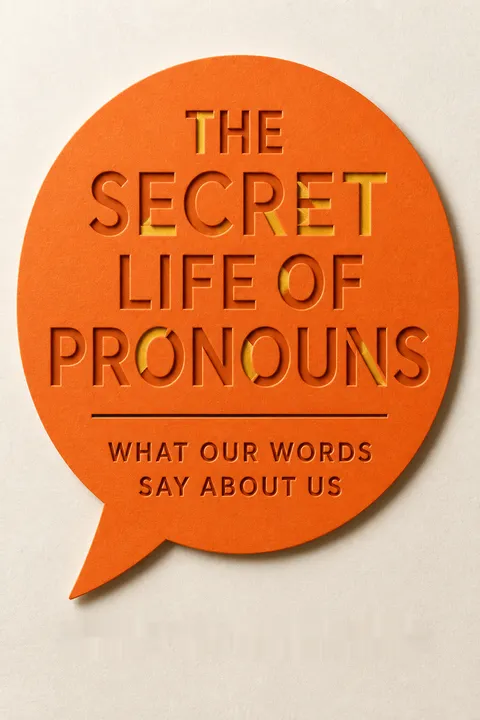
The Secret Life of Pronouns by James W. Pennebaker examines how function words—pronouns, articles, and prepositions—reveal personality, emotional state, and social status. Reviews are deeply divided. Critics dismiss it as superficial "pop-psychology," criticizing oversimplified conclusions, cultural insensitivity, and tedious methodology. They note lack of rigor and questionable validity. Supporters praise its accessible approach to computational linguistics, finding insights about deception, relationships, and language patterns fascinating. Many appreciate learning how "I" usage correlates with depression and honesty, while leaders use fewer first-person pronouns. Several readers found it dry but valuable for understanding human psychology through language analysis.
People Also Read




Download PDF
Download EPUB
.epub digital book format is ideal for reading ebooks on phones, tablets, and e-readers.








































