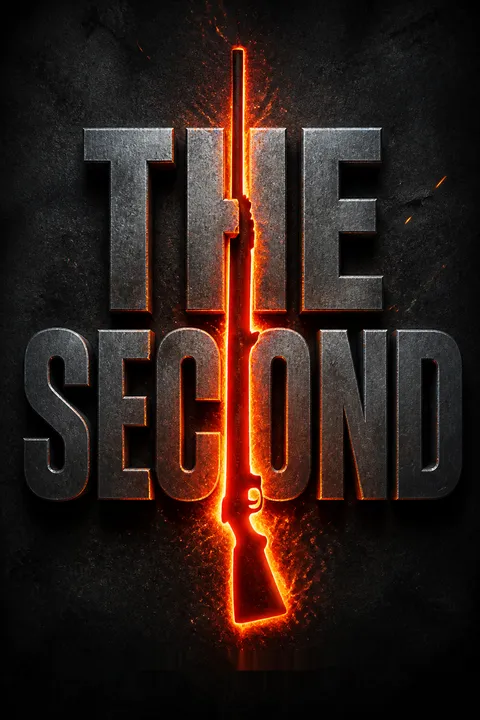

Key Takeaways
1. The Second Amendment's Foundation: A Racial Bargain
The Second Amendment was, thus, not some hallowed ground but rather a bribe, paid again with Black bodies.
A foundational compromise. The Second Amendment, often revered as a cornerstone of American liberty, emerged from a contentious debate during the Constitutional Convention, deeply influenced by the institution of slavery. Southern states, particularly South Carolina and Georgia, threatened to abandon the nascent United States if their slaveholding interests were not protected. This included ensuring their ability to control enslaved populations.
Patrick Henry's fears. James Madison, the architect of the Constitution and Bill of Rights, faced intense pressure from Anti-Federalists like Patrick Henry, who worried that a strong federal government could disarm state militias and, by extension, undermine slave control. Henry explicitly warned that a Northern-dominated Congress might arm Black men, leading to emancipation and threatening Southern property.
Slavery's price. To secure ratification, Madison made concessions, including the three-fifths clause, the continuation of the Atlantic slave trade for twenty years, and the fugitive slave clause. The Second Amendment, with its ambiguous language about a "well regulated Militia" and "the right of the people to keep and bear Arms," served as another "bribe" to the South, guaranteeing states the means to suppress slave insurrections and maintain racial hierarchy.
2. Militias: From National Defense to Slave Control
What the militia could do rather well, however, as George Mason noted, was keep slave owners safe.
Militias' true purpose. While often romanticized as a bulwark against tyranny or foreign invasion, colonial and early American militias proved largely ineffective in these roles. During the Revolutionary War, they were often unreliable, ill-equipped, and prone to desertion when facing professional armies. Shays' Rebellion further demonstrated their inability to uphold law and order against domestic unrest.
Slave patrol function. The true strength and consistent utility of militias, particularly in the South, lay in their role as slave patrols. These forces were instrumental in:
- Hunting down and capturing runaway slaves.
- Quashing slave rebellions, such as the massive Stono Rebellion in 1739.
- Regularly searching Black homes for weapons and ammunition.
Constitutional reinforcement. The militia clause in the Constitution, which empowered Congress to "call forth the aid of the militia" to "suppress insurrections," was understood by Madison and Southern delegates as a "supplementary security" for slaveholding states. This ensured federal assistance in controlling enslaved populations, solidifying the militia's primary function as a tool of racial subjugation.
3. The Haitian Revolution's Shadow: Fueling White Fear
American blacks inspired by the Haitians were to be feared above all else.
A terrifying precedent. The Haitian Revolution (1791-1804), where enslaved people successfully overthrew French colonial rule and established an independent Black republic, sent shockwaves of terror throughout the slaveholding United States. This unprecedented victory demonstrated that Black people could not only revolt but also defeat powerful European armies, shattering the myth of Black docility.
Contagion of liberty. American leaders, including George Washington and Thomas Jefferson, viewed the Haitian Revolution as a "combustion" or "malady of insurrection" that could spread to their own enslaved populations. Refugees from Saint-Domingue, both white planters and their enslaved, brought "tales of black rebellion and atrocities" to American shores, intensifying white fears of a similar uprising.
Legislative response. This pervasive fear directly influenced U.S. policy. The Naturalization Act of 1790 restricted citizenship to "white immigrants," denying rights to free Blacks. The Uniform Militia Act of 1792 mandated that only "white, able-bodied male[s]" could join state militias and purchase guns, explicitly disarming Black people and reinforcing the idea of a "white man's republic defended by white arms."
4. Disarming Free Blacks: A "Publick Danger"
That Blacks could actually be “free,” therefore, sent a strong, unwanted signal to those entrapped in human bondage.
Threat to the system. The existence of free Blacks, even in small numbers, was perceived as a "publick danger" by white society, North and South. Their freedom challenged the foundational belief that "God intended the African for the status of slavery" and offered a dangerous beacon of hope to those still in bondage. This led to a relentless campaign to curtail their rights and disarm them.
Legal limbo. Free Blacks were relegated to a "rightless, race-contingent netherworld," often denied the right to vote, testify against whites, or sit on juries. Laws were passed to restrict their movement, force them into "absolute slavery" through trumped-up charges, and ban them from owning weapons without special permits. Virginia, for example, required free Black men to have a license to carry firearms by 1806.
Louisiana's Black militia. The case of Louisiana's free Black militia highlights this paradox. Despite their long, proud military tradition and instrumental role in crushing the 1811 slave rebellion and defending New Orleans in the War of 1812, white fears ultimately led to their disarmament and official disbandment. Even when defending a slaveocracy, armed Black men terrified whites, proving that "citizenship was further and further out of reach."
5. Reconstruction's Betrayal: The Right to Kill Negroes
The common thread among them, Grant solemnly acknowledged, was not civilization, not Christianity, but “the right to Kill negroes … without fear of punishment, and without loss of caste or reputation.”
A "slow-motion genocide." Following the Civil War, President Andrew Johnson's policies, including pardoning Confederate leaders and allowing them to re-establish white supremacist governments, led to widespread violence against newly freed Black people. Carl Schurz's report described "murder stalks... and revels in undisputed carnage" in the South, a "slow-motion genocide" that Johnson largely ignored.
Black Codes and disarmament. These new Southern governments enacted Black Codes, designed to re-establish control over Black labor and lives. These laws:
- Required unbreakable annual labor contracts.
- Restricted Blacks to agricultural or domestic work.
- Banned them from testifying against whites in court.
- Crucially, prohibited them from owning weapons, often with severe penalties like public whippings.
The Cruikshank decision. Black Americans asserted their Second Amendment rights, but the Supreme Court's United States v. Cruikshank (1876) decision effectively gutted federal protection against private violence. After the Colfax Massacre, where white terrorists slaughtered Black militiamen defending an election, the Court ruled that the Enforcement Act only applied to state action, not private groups like the Klan. This sent a "powerful message to white supremacists that they could slay blacks without any penalty."
6. The Atlanta Riot of 1906: Armed Self-Defense, Brutal Retaliation
For defending themselves, African Americans were lynched, beaten, tortured, shot, and jailed.
Racialized fear-mongering. In the fall of 1906, Atlanta newspapers, politicians, and law enforcement fueled white racial animosity with sensationalized, often false, stories of Black men sexually assaulting white women. This created a climate of intense fear and rage, culminating in calls to "kill all the Negroes so our women will be safe."
Mob violence and police inaction. On September 22, 1906, a white mob unleashed a "nigger-hunt" across Atlanta, looting Black businesses and attacking Black individuals indiscriminately. Police largely stood by, even telling African Americans, "We are not able to protect you." When Black residents in the "Darktown" community armed themselves and successfully repelled the mob, it only intensified white fury.
State-sponsored disarmament. The mob then targeted Brownsville, a Black middle-class neighborhood. When armed Black residents mistakenly fired on plainclothes police officers, killing one, the state retaliated with overwhelming force. The militia, equipped with machine guns, invaded Brownsville, ransacked homes, confiscated weapons, and arrested hundreds of Black people. This demonstrated that whether armed or unarmed, Black self-defense was met with lethal state violence.
7. Red Summer and Elaine: Machine Guns Against Black Freedom
Throughout all the carnage, some African Americans were able to just surrender.
Post-WWI racial backlash. Red Summer in 1919 marked a nationwide wave of racial violence, lynchings, and pogroms, largely fueled by white resentment over Black soldiers returning from World War I with an "inflated sense of their status." White supremacists were determined to force Black Americans back into a subordinate "place of inferiority."
Elaine's labor dispute. In Elaine, Arkansas, Black sharecroppers, exploited by white landowners, organized a labor union to demand fair wages for their cotton. When an armed surveillance party attacked a union meeting in a church, resulting in the death of a white man, the incident was spun as a Black "insurrection" and a "Race War" to exterminate whites.
Massacre and disarmament. Posses and U.S. Army troops, including a machine-gun battalion, descended on Elaine, hunting and killing hundreds of Black Americans. The army "laid down a field of fire" across the canebrake, machine-gunning "everything that showed up" and "them down like rabbits." Survivors were tortured into false confessions, and twelve were condemned to death by all-white juries, while no whites were indicted. Black people were disarmed, banned from purchasing weapons, and forced back into exploitative labor.
8. "Policing the Police": The Black Panthers and the Mulford Act
The Second Amendment of the Constitution of the United States gives us a right to bear arms. We therefore believe that all Black people should arm themselves for self defense.
Challenging police brutality. In the mid-1960s, the Black Panther Party for Self-Defense emerged in Oakland, California, explicitly to counter systemic police brutality against the Black community. Co-founders Huey Newton and Bobby Seale, well-versed in California's open-carry laws and the Second Amendment, advocated for armed self-defense and famously "policed the police" by openly carrying firearms while observing officers.
The Mulford Act. The Panthers' visible defiance and legal use of firearms alarmed law enforcement and conservative politicians. State representative Don Mulford, at the request of the Oakland Police Department, introduced legislation (AB 1591) to ban the "carrying of loaded firearms in public." This bill was specifically designed to disarm the Black Panthers, despite Mulford's public denials of racial motivation.
NRA's complicity. The National Rifle Association, typically a staunch defender of gun rights, actively supported the Mulford Act. Their Western representative helped draft the bill, asserting that it would not affect "law-abiding citizen[s]" but implicitly excluding the Panthers. When armed Panthers protested at the state capitol, the media and politicians condemned it as an "invasion," further solidifying the narrative that armed Black people were a threat, regardless of legality.
9. "Law and Order": Racialized Gun Control and the NRA
One advocate for the Gun Control Act, thus, incisively noted that the new federal law “was passed not to control guns but to control blacks.”
A world imperiled. The assassinations of John F. Kennedy, Martin Luther King Jr., and Robert Kennedy, coupled with widespread urban uprisings in the 1960s, created a national sense of chaos and fear. This environment fueled calls for "law and order" policies, often with racialized undertones, to address perceived "lawlessness and disorder."
The Gun Control Act of 1968. While initially stalled, the assassinations and riots ultimately pushed federal gun control legislation forward. The NRA, however, successfully lobbied to strip key provisions like a federal gun registry and licensing requirements. The final act restricted mail-order sales, banned "dangerous" individuals (felons, fugitives, etc.) from purchasing guns, and targeted "Saturday night specials"—cheap handguns associated with urban crime.
Racial subtext. The "law and order" rhetoric, particularly the "Southern Strategy," used dog-whistle language to link crime and disorder to Black communities. Richard Nixon's campaign ads, for example, showed burning cities and chaos, implicitly blaming "Negro–Puerto Rican groups." This political climate ensured that "having a gun was a white prerogative," and the Gun Control Act, despite its neutral language, was widely understood as a means to "control blacks."
10. Stand Your Ground: A White Prerogative
The judge was clear: Florida’s expanded self-defense law would not apply because Alexander “didn’t appear afraid.”
Lethal self-defense. "Stand Your Ground" laws, first enacted in Florida in 2005 with heavy NRA influence, removed the duty to retreat before using lethal force in self-defense. This "kill-or-be-killed" outlook, however, has been applied with stark racial disparity.
Marissa Alexander's case. Marissa Alexander, a Black woman, fired a warning shot at her abusive husband, Rico Gray, who had a history of violence against her. Despite Florida's "Stand Your Ground" law and a previous ruling that a woman attacked in her home has no duty to flee, Alexander was sentenced to 20 years in prison for aggravated assault. Prosecutors argued she could have "fled the scene" and that her warning shot was not a true act of self-defense.
Trayvon Martin's death. Two years later, George Zimmerman, a neighborhood watch captain, stalked and killed unarmed Black teenager Trayvon Martin, claiming self-defense. Despite Zimmerman ignoring 911 instructions not to follow Martin, and Martin being unarmed, the police initially declined to arrest Zimmerman, citing "Stand Your Ground." The subsequent trial, influenced by the law and a media campaign to "thugify" Martin, resulted in Zimmerman's acquittal, highlighting how the law protected a white man who initiated a confrontation but failed to protect a Black teenager.
11. Open Carry and "Blackness as the Weapon": Modern Lethality
It’s impossible to be unarmed when your Blackness is the weapon that they fear.
Perceived universal threat. Research indicates that Black people are often perceived as a universal threat, regardless of their actions or actual armament. Studies show that police and others, when cued with an image of a Black person, are more likely to quickly identify blurred images of weapons, even when none exist. This inherent bias means that "White people see an African American, and they’re immediately looking for something illegal."
John Crawford III. In 2014, John Crawford III, a Black man, was shot and killed by police in a Walmart in Ohio, an open-carry state, while holding a BB gun he picked up from a shelf. A 911 caller falsely reported that Crawford was "waving a rifle" and pointing it at people. Despite surveillance video showing Crawford doing nothing threatening, police officers, acting on heightened fear, shot him within seconds of arrival.
Tamir Rice. Months later, 12-year-old Tamir Rice was killed by Cleveland police while playing with a toy gun in a park. The 911 caller noted the gun was "probably fake" and the person "probably a juvenile," but this information was not relayed to the officers. Within two seconds of arriving, an officer shot Rice, claiming he feared for his life. The video contradicted the officers' account, but prosecutors deemed the killing justifiable, illustrating how "Black boys are seen as older and less innocent."
12. The Enduring Anti-Blackness of the Second Amendment
The Second is lethal; steeped in anti-Blackness, it is the loaded weapon laying around just waiting for the hand of some authority to put it to use.
A consistent pattern. From colonial slave codes to modern police killings, the application of the Second Amendment has consistently denied rights to Black Americans while upholding them for whites. Whether Black people were enslaved, free, soldiers, or civilians, their attempts to exercise gun rights or self-defense have been met with violence, legal subjugation, or death.
The NRA's selective advocacy. The NRA's mantra of "the only way to stop a bad guy with a gun is a good guy with a gun" crumbles when applied to Black individuals. Jemel Roberson, a Black security guard, and Emantic Bradford Jr., a Black army veteran, were both shot and killed by police while acting as "good guys with guns" to stop active shooters. Their Blackness, not their actions, was perceived as the threat.
A loaded weapon. The Second Amendment, rooted in the fear and control of Black people, remains a tool of racial disparity. Debates about individual versus collective rights or self-defense are secondary to its inherent anti-Blackness. As Justice Robert H. Jackson observed, racism "lies about like a loaded weapon ready for the hand of any authority that can bring forward a plausible claim of an urgent need," and the Second Amendment has historically served as that weapon against Black Americans.
Review Summary
The Second examines the racist origins and application of the Second Amendment, arguing it was designed to protect slavery and maintain white supremacy rather than ensure universal gun rights. Reviews praise Anderson's well-researched historical analysis, from colonial slave patrols through Jim Crow to modern police shootings of Black Americans. Critics note the book's brevity (165 pages of text) and desire for deeper exploration or solutions. Some conservative reviewers dispute her thesis about the Amendment's origins, while most readers find her evidence of ongoing racial disparities in gun rights—shown through cases like Philando Castile versus George Zimmerman—compelling and devastating.
People Also Read
About the Author
Download PDF
Download EPUB
.epub digital book format is ideal for reading ebooks on phones, tablets, and e-readers.








































