
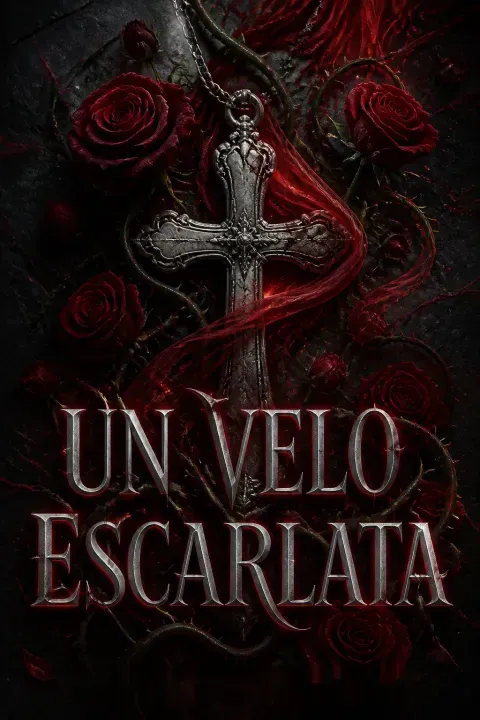


Plot Summary
Prologue
As children, Célie1 and her sister Filippa5 beg their nursemaid Evangeline for a story. She tells them of Les Éternels, creatures born in the ground, cold as bone, without heart or soul. They stalk the streets by moonlight, preying on the weak and seducing the immoral.
Evangeline recites protective rules: always wear a silver cross, always walk in pairs, strike a match to burn them. When the girls promise to protect each other from witches, Evangeline's expression turns strange. She whispers that she never said anything about witches, then vanishes into the dark, leaving the sisters huddled together, unaware of what hunts in the shadows.
The prologue functions as a psychological primer, planting the vampire mythos through the intimacy of a bedtime story. Evangeline's nursery rhyme is a protective spell disguised as folklore, embedding survival rules into children's minds. The correction about witches versus something else signals the book's central horror: the monster isn't the known enemy but the one outside the frame. The sisters' mutual vow creates the emotional stakes that will haunt Célie for the entire narrative. Her guilt over failing to protect Filippa becomes the engine driving every subsequent risk she takes.
Cages of Gold Paint
Six months into her service as the first woman in the Chasseurs, Célie Tremblay1 crouches in a muddy ditch, having spent hours painting wooden cages gold and filling them with elderberry wine to lure goblins from Farmer Marc's barley. Her brethren laugh at her methods. Frederic,4 smirking, calls the cages pretty little dollhouses.
When she finally catches one lutin and discovers it can communicate telepathically, giving its name as Tears Like Stars,16 Jean Luc3 arrives to reveal he secretly released the creature near her so she wouldn't fail. He had already sent the other huntsmen ahead after they caught the rest by hand. Humiliation burns through her: even her successes are managed, curated, handed to her like a child's participation trophy.
This opening crystallizes Célie's core conflict: she possesses genuine creativity and empathy but exists in a system that values brute force over ingenuity. The painted cages represent her approach to problem-solving through beauty and persuasion rather than violence. Jean Luc's well-intentioned intervention is actually more damaging than Frederic's open contempt because it confirms that even those who love her don't trust her competence. The lutin's name, Tears Like Stars, foreshadows Célie's own connection to death and the supernatural, marking her as someone who can communicate across boundaries others cannot perceive.
The Body in the Cemetery
After skipping evening Mass and receiving a visit from her friends Lou,10 Coco,11 Reid,12 and Beau,13 Célie1 visits the cemetery to lay roses on the graves of the fallen. Her horse bolts when the flowers touch the earth and wither to black. She finds Babette,9 a Dame Rouge witch she knew from the Battle of Cesarine, posed across a grave with two puncture wounds at her throat and no blood spilled.
A silver cross lies in her clasped hands. When Célie1 flees to alert the Chasseurs, she collides with a man of impossible pallor, silver hair, and flat black eyes.2 He is preternaturally cold, unnaturally still. She accuses him of murder. Jean Luc3 arrives, but the stranger2 has already vanished, leaving only a withered crimson rose behind.
This scene introduces the gothic horror aesthetic that defines the novel. Babette's corpse, drained of blood and posed like a macabre fairy-tale princess, inverts the romantic death imagery of Victorian literature into something genuinely sinister. The withering roses link the killer's presence to a broader ecological sickness spreading through the land, suggesting the murders are symptoms of a deeper corruption. Michal's introduction through physical wrongness (too cold, too pale, too still) establishes him as something other while withholding the word 'vampire,' letting the reader's dread build alongside Célie's.
The Council's Secret
Jean Luc3 orders Célie1 to wait in her room while the Chasseurs process the crime scene. She disobeys and follows his voice to the council chamber, where she overhears Lou,10 Coco,11 Reid,12 Beau,13 and Frederic4 discussing five murder victims of different magical species, all drained of blood. Reid12 confirms they are hunting a serial killer.
When Lou10 asks why Célie1 isn't present, Jean Luc3 calls her delicate, citing her nightmares and trauma. Frederic4 adds that she has been through a lot. Célie1 bursts through the door, seizes the victim sketches, and confronts them all before fleeing. Jean Luc3 finds her in the library and delivers the cruelest blow: she didn't truly kill Morgane le Blanc. Lou10 did. Célie1 removes her engagement ring and walks out.
This is the novel's first major betrayal and the catalyst for Célie's independence arc. The people she trusts most have constructed a protective cage around her, mistaking trauma for fragility. Jean Luc's revelation about Morgane's death is devastating precisely because it's partially true. Célie's contribution was real but collaborative. His reframing of it as luck rather than capability reveals that even her proudest moment is diminished in his eyes. The engagement ring's removal isn't just about their relationship. It's about Célie finally rejecting the identity of someone who needs protection.
Knocked into Darkness
After reconciling with Lou10 at Brindelle Park, Célie1 lingers alone on the bridge near her family's townhouse. She watches her mother step outside, calling her name, but doesn't respond. A shadow strikes her from behind. She wakes in absolute darkness, a woman named Odessa6 holding her shoulders, aboard a ship already at sea. The pale man from the cemetery, Michal,2 interrogates her.
They mistook her for Cosette Monvoisin, the scarred Princesse Rouge,11 because she wears Coco's11 crimson cloak. When Célie1 tries to escape, she finds the crew are hollow-eyed puppets, their throats bearing twin puncture wounds. Michal2 demonstrates his power by forcing the sailors to the railing, threatening to drown them all if she runs again. He reveals his fangs.
The abduction flips the narrative from investigative mystery to survival horror. Célie's decision to not call out to her mother represents a crucial psychological shift. She is severing ties with her old life, even before the physical removal occurs. The compelled sailors illustrate the vampire hierarchy through visceral body horror. These men are alive but emptied, their wills erased, a fate worse than death that haunts the margins of the story. Michal's method of control through collective punishment rather than direct threat to Célie reveals his strategic mind and his understanding that her empathy is her most exploitable vulnerability.
Isle of Requiem
The ship docks at a secret island that shouldn't exist on any map. Werewolves, melusines, witches, and vampires crowd the harbor streets. Odessa6 escorts Célie1 through the marketplace, where bottles labeled with species names sell blood alongside caged toads and bejeweled beetles.
A hostile vampire named Christo blocks their path, noting that cats follow Célie.1 When he threatens Michal's2 rule, Odessa6 casually rips out his tongue. Inside the castle, Célie1 is locked in a vast, dark room where she hears a ghostly promenade of translucent spirits waltzing past her door.
One ghost woman peers through the keyhole, whispering, There you are. Célie1 passes out. She wakes to Dimitri, Odessa's charming twin,7 who brings her breakfast and calls her starshine.
Requiem functions as a dark mirror of the fairy-tale kingdom. It's a society built on predation, where different supernatural species coexist under vampire rule. The blood bottles in the marketplace normalize consumption of sapient beings as commerce, forcing Célie (and the reader) to confront the ethical implications of vampire existence. The cats following Célie mark her as death-touched before anyone explains what a Bride is. Odessa's casual violence with Christo's tongue demonstrates that vampire justice is swift, brutal, and performative. It's a warning dressed as etiquette.
The Bride of Death
Michal2 interrogates Célie1 about the ghostly promenade. He believes she thinned the veil between realms when she arrived, and he takes her to L'Ange de la Mort theater to force another manifestation. In the dark auditorium, spectral actors materialize, calling Célie1 mariée (bride) and warning that a figure shrouded in grief is searching for her.
A voice like Morgane le Blanc's whispers from the darkness. Célie1 collapses. Later, she learns to reach through the veil deliberately and meets Mila, Michal's dead sister.8 Mila explains Célie1 is a Bride of Death: touched by the entity itself when she nearly died in her sister's5 casket. Instead of taking her, Death released her, leaving her able to walk between worlds.
The Bride of Death concept transforms Célie from victim to liminal being. Her trauma isn't just psychological damage. It's a metaphysical transformation that grants her unique power. The ghosts calling her bride reframes her identity: she isn't Jean Luc's fiancée or the Chasseurs' mascot. She belongs to something older and more powerful. The threatening figure shrouded in grief introduces the Necromancer as a force that even the dead fear, raising the stakes beyond vampire politics into cosmic horror. Mila's explanation retroactively makes sense of Célie's ability to communicate with the lutin and sense the supernatural.
The Silver Stake
Dimitri7 and Odessa6 take Célie1 to Monsieur Marc's15 boutique for a new wardrobe on her birthday. There she meets D'Artagnan,14 a talking cat who was once a vampire (Monsieur Marc15 poisoned his brother for seducing his consort, and a witch trapped D'Artagnan's14 soul in a feline body). When Célie1 requests silver fabric, the room goes silent.
Monsieur Marc15 deflects, claiming silver is a finite resource on Requiem. Célie1 realizes the truth: vampires are vulnerable to silver. While the others are distracted, she finds a silver stake hidden beneath Monsieur Marc's15 desk and slips it into her corset. Later, with D'Artagnan's14 grudging help, she slips into the city to reach the aviary.
The dress shop scene crystallizes the novel's thematic interest in surfaces and secrets. In a world where vampires appear beautiful and cultured, the absence of mirrors and silver reveals their fragility beneath the performance. Monsieur Marc's warmth toward Célie (he calls her papillon, butterfly) contrasts with his willingness to poison his own brother, demonstrating that vampire relationships operate on a different moral axis. The silver stake, hidden in plain sight, represents the weaponization of knowledge. Finding it requires not just physical searching but understanding what a society chooses to conceal about itself.
Blood and Wanting
At the aviary, after sending a warning letter via a three-eyed crow, Célie1 discovers a mutilated corpse and is cornered by four hungry vampires. Michal2 arrives and tears the heart from one attacker's chest, then dispatches the others with brutal efficiency.
At Célie's1 plea, he spares the only one who showed reluctance. Célie1 is badly injured: broken bones, lacerations, probable concussion. Michal2 slices his wrist and presses it to her mouth. His ancient blood heals her instantly but also intoxicates her with its aphrodisiac effect.
She climbs his body, desperate to kiss him, but he forces her back. When she later attacks him with the silver stake, it burns his chest and face. His sister Mila8 appears, visible to him for the first time through Célie's1 touch.
This turning point is the emotional hinge of the enemies-to-lovers arc. The blood-drinking scene inverts the predator-prey dynamic: Michal feeds Célie instead of the reverse. Her loss of control under the blood's influence terrifies her precisely because it reveals genuine desire beneath her hatred. His refusal to take advantage (despite clearly wanting to) establishes a paradox: the monster demonstrates more restraint than the human men in her life. The silver stake attack proves she's capable of violence, while the simultaneous reunion with Mila proves she can facilitate healing between the living and dead.
Filippa's Cross
Michal2 and Célie1 form an alliance to find Mila's8 killer. He returns the silver cross, revealing the initials on the back are BT written over the original FT. Mila8 explains she traveled to Cesarine with Dimitri7 seeking a cure for his bloodlust from La Dame des Sorcières,10 but someone else intercepted their letter.
A hooded man and Babette9 attacked them, drained Mila's8 blood with silver, and left her corpse in the alley. Michal2 admits he's been hunting Coco11 because he believed blood witches were responsible. Célie1 convinces him Coco11 is innocent. They agree to investigate together. Michal2 promises he won't kill Coco,11 and they set sail for Belterra hidden in caskets aboard a Requiem trading vessel.
The cross's true ownership forces a painful recontextualization: Filippa wasn't just a victim but someone entangled in the supernatural world before her death. The initials reveal a hidden life Célie never knew her sister had. Mila's death-by-silver establishes that vampires can be killed and that the murderer understands their specific vulnerabilities. The revelation that Dimitri's attempt to cure his bloodlust inadvertently got Mila killed adds tragic irony. He was trying to become less dangerous, and that quest destroyed the person trying to help him.
The Brothel's Apple
In Amandine, Michal2 leads Célie1 to Les Abysses, an underground establishment where courtesans wear crimson and patrons of every supernatural species engage in open revelry. A pythoness named Eponine guards the entrance, offering an apple from the Tree of Knowledge. Célie1 bites it and learns a truth: the silver cross originally belonged to Filippa Tremblay.5
Eponine warns that someone seeks Célie,1 and if she succeeds in her quest, the killer will too. To avoid other patrons who mistake her for a courtesan, Célie1 sits in Michal's2 lap, and their physical proximity ignites palpable sexual tension. He admits he has imagined how she tastes, and she bites his thumb before he warns her never to consume vampire blood again.
Les Abysses literalizes the novel's Edenic imagery. The choice between Paradise and the Abyss mirrors Célie's choice between her safe former life and the dangerous knowledge she now pursues. The sexual tension between Célie and Michal, performed as pretense but increasingly genuine, represents her gradual acceptance of desire outside the boundaries of her former identity. Eponine's prophecy introduces fatalism into the quest: pursuing the truth may lead directly to her death. The apple's bite is irrevocable, just as Célie's path forward cannot be reversed.
Babette's Grimoire
With the ghost Guinevere's help, Célie1 and Michal2 find Babette's9 chambers behind a Hellfire fireplace. The rooms are warm, recently inhabited, with steaming tea and a crackling fire. On the table lies La Voisin's grimoire, stolen from Chasseur Tower, open to A Spell to Resurrekt the Dead. The page lists blood requirements from every murdered species, all crossed out, with Célie Tremblay1 circled at the bottom next to Blood of Death.
Babette9 steps from the inner room, alive and holding a silver knife. She admits faking her death and working for someone called the Necromancer.4 She flings silver-laced tea at Michal,2 burning his face, and stabs him repeatedly with the silver blade before Dimitri7 and Odessa6 burst through the ceiling door.
The grimoire transforms the murders from random violence into systematic ritual. Each victim was an experiment, a failed ingredient in a recipe for resurrection. The circle around Célie's name, combined with Blood of Death, confirms she is the final, essential component. Babette's calm demeanor while explaining her actions reveals how grief can rationalize atrocity. She doesn't see herself as evil but as someone willing to pay any price to bring back her sister. Michal's injuries from the silver tea, sustained while shielding Célie, mark the shift from reluctant alliance to genuine sacrifice.
Scarlet in the Attic
In an attic hideaway, Michal2 lies dying from silver poisoning. Odessa6 wants to feed him the humans sleeping downstairs, but Célie1 refuses to let innocents die. She cuts her wrist and presses it to his mouth. He latches on, his wounds healing as he drinks.
The blood's aphrodisiac effect overwhelms her, and he bites her throat in a scene that blurs the line between feeding and intimacy. When he regains control, he's furious at her recklessness. They argue viciously. He accuses her of seeking martyrdom. She accuses him of cruelty.
After he leaves, Célie1 examines the silver cross more closely and discovers a hidden compartment containing Filippa's5 love note: My darling Filippa,5 It looks like Frost tonight. Meet me under our tree at midnight, and the three of us will be together forever.
The attic scene is the novel's most explicit negotiation of consent, power, and desire. Célie offers her blood as an alternative to killing innocents, but the act blurs boundaries she can't control once it begins. Michal's fury afterward masks terror at how close he came to losing control entirely. His accusation that she seeks death to prove her worth cuts to the psychological core of her character. The note from Filippa's lover introduces the story's deepest wound: her sister had a secret life, a secret love, and perhaps a secret child (the three of us), all unknown to Célie.
Go and Don't Return
The casket tips during loading, spilling Célie1 and Michal2 at Jean Luc's3 feet. He stares at her crimson dress, the bite marks on her throat and wrist, and his expression empties. When she explains she healed Michal2 with her blood, Jean Luc3 asks if it was sexual. Her hesitation is answer enough. He calls her a whore in front of the entire harbor.
Michal2 defends her, revealing her undercover work in Amandine and the location of Babette9 and the grimoire. Célie1 tells Jean Luc3 she doesn't need his protection, she never did. She needed his trust. He tells her to go and not come back. She removes his engagement ring from her pocket and walks away.
The docks confrontation is the death of Célie's old life performed as public theater. Jean Luc's whore epithet reveals that his love was conditional on her remaining the innocent, helpless woman he proposed to. Her growth into someone capable of making hard choices, of using her body and blood and sexuality as tools, is fundamentally incompatible with his image of her. When she tells him she needed to be trusted rather than protected, she articulates the core feminist argument of the entire novel. His dismissal of her is devastating but also liberating.
Keepsakes of the Dead
Back on Requiem, Célie1 searches Dimitri's7 room and finds hundreds of trinkets: dolls, shoes, jewelry, locks of hair. Each belonged to someone he killed during bloodlust episodes. Dimitri7 returns and confesses: he has murdered countless innocents when the frenzy overtook him. He wrote to Lou10 seeking a cure, but the Necromancer4 intercepted the letter and ambushed him and Mila8 instead.
He watched Babette9 and the Necromancer4 drain Mila's8 blood with silver, then fled, leaving her body in the garbage. The Necromancer4 offered him the grimoire as bait: the spell for Lust of the Blood could cure him. Dimitri's7 desperate need for the book explains his suspicious behavior in Les Abysses.
Dimitri's collection functions as a memorial and a confession. Each object represents a person whose life he ended but whose existence he refuses to forget. His bloodlust is a disease, not a choice, but the novel doesn't absolve him. It asks whether someone can deserve redemption while still being dangerous to everyone around them. His abandonment of Mila's body is morally damning, yet his honesty about it is paradoxically redemptive. The room full of keepsakes externalizes what every vampire carries internally: an accumulation of deaths that can never be undone.
The Butterfly and the Angel
Michal2 gives Célie1 a gown of spun silver and diamonds, designed by Monsieur Marc15 as a butterfly with detachable wings. They dance at the masquerade, his bare chest burning where the silver touches him, and he asks her what she fears. He confesses his fear is philophobia (fear of love). He gives her a silver ribbon and asks her to stay on Requiem.
At midnight, Lou10 arrives wielding miniature suns that sear vampire flesh. Célie1 convinces her to stand down, and Michal2 proves his trustworthiness by drinking Coco's11 blood without harm. But rebel vampires led by Priscille attack on the balcony, attempting to overthrow Michal.2 He executes them savagely before the assembled court, tearing out throats and letting the crowd dismember the survivors.
The masquerade crystallizes the novel's central tensions: beauty and violence, trust and power, belonging and alienation. The silver gown, painful for Michal to touch, becomes a metaphor for their relationship. Love requires him to embrace what hurts him. The dance, conducted despite literal burns, represents mutual willing sacrifice. But the execution scene shatters any illusion that Requiem can be reformed from within. Michal's brutality, while protecting Célie, demonstrates that his world operates on laws incompatible with her humanity. His question about staying is answered before she speaks: she cannot live in a kingdom built on such violence.
Frostine's Coffin
That night, Célie's1 spirit separates from her body during sleep. She glides through the castle to Michal's2 underground grotto, where a beckoning light draws her to the stone islet. Two glass coffins wait there: one holds Filippa's5 stitched-together corpse, her hands clasped over her belly.
The other stands empty. Mila's8 ghost intercepts her, shouting that this isn't her sister,5 it's a trap. Célie1 wakes in a panic and insists on investigating immediately. She and Michal2 row to the islet, where invisible coffins become visible when touched.
Filippa5 lies within, her face partially reconstructed with someone else's skin. Before they can act, Babette9 seizes Célie1 from behind and the Necromancer4 steps from the shadows, wearing a Chasseur's blue coat.
The astral projection represents Célie's growing power over death, but also her vulnerability to manipulation. The vision is both true and a lure. The two coffins suggest the Necromancer intends Célie to join Filippa in death, a dark mirror of the sisters' childhood promise to never let anything happen to each other. Filippa's stitched face literalizes Frederic's project: he is reassembling his fantasy of his dead lover from whatever parts he can find, including, eventually, Célie's own eye. The pregnancy reveal, communicated through the placement of Filippa's hands, reframes her death as not just murder but the killing of an entire family.
The Necromancer Unmasked
Frederic4 plunges a silver Balisarda through Michal's2 chest, grazing his heart and sending him into the sea. He injects Célie1 with hemlock, paralyzing her, and explains everything. He loved Filippa.5 She was pregnant with his child, a daughter they planned to name Frostine.
He blames Célie1 and her father for Filippa's5 death: if Célie1 hadn't fallen for a Chasseur, if their father hadn't trafficked in witches' wares, Morgane would never have targeted their family.
Frederic4 became a blood witch to master resurrection, testing his spells on the other victims before discovering Célie's1 Bride of Death blood was the final ingredient. He dresses her in a scarlet wedding gown, places her in the second glass coffin, and slits her throat to drain every drop of her blood into a bowl.
Frederic's revelation recontextualizes every cruelty he inflicted on Célie in Chasseur Tower. His bullying wasn't random misogyny. It was punishment. He resented her for surviving when Filippa died, for occupying a place she didn't deserve. His necromancy is rooted in a grief so consuming it has become indistinguishable from obsession. The name Frostine, drawn from Filippa's childhood fairy tales, shows how fantasy and reality blurred for both sisters. Frederic sees himself as the summer prince who would melt the ice queen's palace, but his love has curdled into the conviction that he can reverse death itself through sufficient violence.
The Golden Light
Célie's1 friends arrive, alerted by Lou's10 crow Talon. A chaotic battle erupts on the islet. Dimitri's7 bloodlust triggers from Célie's1 spilled blood, and he attacks his own sister Odessa,6 snapping her neck.
Frederic4 feeds Célie's1 blood to Filippa's5 corpse and vanishes with her body as the sea floods the cavern. Célie's1 spirit separates from her body. Mila8 explains she must choose: pass into death's golden light or remain as a ghost. Célie1 refuses to leave. She watches Michal2 drag himself from the water, his heart failing, and crawl to her body.
With his last strength, he presses his blood-covered fingers to her lips. The golden light vanishes. She wakes in the boat to snow falling, her heart silent, her reflection showing stitches and one changed eye. She smiles.
The ending is both resurrection and transformation, echoing the very necromancy Frederic attempted but inverting its meaning. He sought to restore Filippa through theft. Michal saves Célie through gift, giving his blood without taking hers. Her new form is imperfect: stitched, altered, no longer fully human. But she chooses it. The epilogue's last line. Perhaps we can rule it together. reframes the vampire kingdom not as a place of horror but as a domain she might claim alongside Michal. She has become the queen of the darkness she once feared, no longer a Bride of Death but Death's partner.
Epilogue
In the snow-dusted boat, Célie1 examines her reflection in a gilt mirror. Her skin is pale, her throat stitched closed, one eye now a slightly different shade of green. Her heart doesn't beat. She feels no cold, no warmth, no rush of Michal's2 touch. When he asks how she feels, she answers simply: hungry.
She remembers her childhood fairy tales, the ones she hid under her bed, about heroines who conquered evil and dragged their princes back from Hell. Other stories, her favorites, ended differently: the heroine ruled Hell with her prince, hand in hand. She smiles at the snow, at the quiet waves, at the possibility stretching before her.
The epilogue reframes the entire narrative as a villain origin story told from the inside. Célie's childhood fairy tales, which she hid from Filippa, reveal that she always imagined a different ending for herself. She was never the innocent princess waiting for rescue. She was writing herself as the dark queen, the one who chose the monster and the underworld. The smile at the end is unsettling because it's earned: she has passed through death, lost her humanity, and found not horror but liberation. The fairy tale that began with Evangeline's nursery rhyme warning against Les Éternels concludes with the listener becoming one of them, not as victim but as sovereign.
Analysis
The Scarlet Veil is fundamentally a novel about the violence of protection and the liberation of being seen as dangerous. Célie Tremblay1 begins the story trapped not by walls or chains but by the well-intentioned care of people who love her. Jean Luc,3 her friends, even her dead sister Filippa5 all construct versions of her that require her to be soft, fragile, in need of rescue. The novel systematically dismantles each of these constructions through encounters with genuine predators who, paradoxically, see her more clearly than her protectors ever did. Michal,2 a thousand-year-old vampire king, is the first person to call her clever, capable, and lethal. His world is built on violence, yet within it, Célie1 finds permission to be violent herself.
The book's gothic romance structure inverts the traditional formula. Instead of the monster corrupting the innocent, the innocent reveals herself as already monstrous, already death-touched, already more at home among the undead than among her fellow humans. The vampire bite, typically coded as violation, becomes here an act of salvation: Michal2 turns Célie1 not to possess her but to prevent the Necromancer4 from possessing her death.
The central mystery, the identity of the Necromancer,4 is also an investigation into grief and its capacity to curdle into evil. Frederic4 loved Filippa5 genuinely, and that love, when denied a healthy outlet, became the justification for serial murder. His tenderness toward Filippa's5 corpse, the baby name Frostine, the dream of a family, all coexist with his willingness to slit Célie's1 throat. The novel refuses to separate these impulses, arguing that the most terrifying villains are the ones who believe themselves heroes of their own stories. Frederic4 and Michal2 are mirror images: both lose sisters to violence, both seek restitution, but one chooses resurrection through theft while the other chooses transformation through sacrifice.
Requiem itself is a portrait of a society built on predation that has developed its own ethics, aesthetics, and hierarchies. It's not simply evil but complex, with dressmakers and garden parties alongside public executions. Célie's1 inability to fully condemn or fully embrace this world reflects the novel's moral sophistication. She doesn't become evil by becoming a vampire. She becomes something the novel has been teaching her to be all along: a creature who can hold contradictions, who can love a monster while remaining capable of moral judgment, who can choose darkness without being consumed by it.
Review Summary
The Scarlet Veil received mostly positive reviews, with readers praising its atmospheric storytelling, complex characters, and slow-burn romance. Many appreciated the vampire-centric plot and gothic elements. Some found the protagonist, Célie, relatable and enjoyed her character development. Critics noted a slow start and occasional predictability. Several reviewers recommended reading the Serpent & Dove trilogy first for better context. The book's cliffhanger ending left many readers eager for the sequel, despite mixed opinions on certain plot points and character decisions.
People Also Read

Characters
Célie Tremblay
Bride of Death, former ChasseurNineteen years old, the only female Chasseur in Belterra and the first woman to join the order. Célie carries deep trauma from being locked in a casket with her murdered sister Filippa's5 corpse for two weeks by the witch Morgane le Blanc. She fears the dark, keeps candles burning constantly, and suffers vivid nightmares. Beneath her genteel upbringing and gentle manner, she possesses fierce determination and an intuitive mind that her Chasseur brethren consistently underestimate. Her arc moves from seeking external validation through service to discovering her own supernatural identity as a Bride of Death, someone touched by the entity of Death and released, able to cross between the realms of the living and the dead. She evolves from a woman who defines herself through relationships with men into someone who claims her own power, ultimately choosing immortality with Michal2 over returning to her human life.
Michal Vasiliev
Vampire King of RequiemOver a thousand years old, with silver hair, flat black eyes, and preternatural beauty. Michal rules a hidden island of supernatural creatures with cold authority and brutal efficiency. He turned his dying sister Mila8 into a vampire centuries ago and has never sired another, haunted by her resentment. His grief over Mila's8 recent murder drives him to abduct Célie1, initially mistaking her for Coco11. Beneath his imperious cruelty, he possesses unexpected tenderness and a capacity for sacrifice, demonstrated when he shields Célie1 from silver-laced tea and gives his blood freely to save her life. He fears love (philophobia) and controls everything around him to avoid vulnerability, yet finds himself increasingly drawn to Célie's1 courage and empathy. His arc involves learning to trust and to risk his heart despite immortality.
Jean Luc Toussaint
Captain of the Chasseurs, fiancéCélie's1 devoted but overprotective fiancé and the youngest captain in Chasseur history. Bronze-skinned, dark-haired, and disciplined, he loves Célie1 genuinely but cannot see her as capable. He keeps secrets to protect her, assigns her to safe duties, and publicly defends her while privately doubting her. His fatal flaw is mistaking protection for love. When he discovers Célie1 has been drinking vampire blood and wearing a courtesan's crimson gown, he calls her a whore in front of the entire harbor, revealing that his love was conditional on her remaining the innocent woman he proposed to. His arc is tragic: he loses Célie1 not because he didn't love her enough but because his love was a cage she had to break.
Frederic / The Necromancer
Filippa's lover, hidden villainA Chasseur who tormented Célie1 throughout her service, Frederic is revealed as the Necromancer and Filippa Tremblay's5 secret lover. His bullying of Célie1 was punishment: he blamed her and her father for the circumstances that led to Morgane murdering Filippa5 and their unborn child, whom they planned to name Frostine. He became a blood witch specifically to master the resurrection spell in La Voisin's grimoire, systematically testing blood from different magical species before discovering that Célie's1 Bride of Death blood was the final ingredient. His grief has curdled into obsession, and he sees himself as a romantic hero who will restore his lost family by sacrificing Célie1. His hatred wears the mask of brotherly affection, making him a chilling portrait of how love can become indistinguishable from violence.
Filippa Tremblay
Célie's dead sister, Frederic's loverCélie's1 older sister by six years. She was practical, protective, and increasingly secretive in the years before her death. She taught Célie1 to pick locks and promised to never let anything hurt her, but she also pulled away as she grew older, sneaking out at night for rendezvous she never explained. She fell in love with Frederic4, a blood witch and Chasseur, and became pregnant with his child (Frostine). She called Célie1 naive and said she would never know a world without sunlight, suggesting Filippa herself had already learned to navigate darkness. Morgane le Blanc murdered her before she could elope with Frederic4, leaving behind a silver locket containing his love note.
Odessa Petrov
Vampire duchess, Dimitri's twinMichal's2 cousin, turned into a vampire by Mila8 centuries ago. Cool, elegant, and casually lethal, she tears out a vampire's tongue without flinching but also studies medicine, dresses as the Madonna for All Hallows' Eve, and carries anchovies in her pocket for D'Artagnan14 the cat. Her relationship with her twin Dimitri7 is strained by his bloodlust, which she has tried and failed to cure. She embodies the contradiction of vampire existence: capable of horrific violence and genuine affection simultaneously.
Dimitri Petrov
Vampire duke with bloodlustOdessa's6 charming twin brother who calls Célie1 starshine and brings her breakfast. Beneath his flirtatious warmth, he suffers from bloodlust, a vampiric affliction that causes him to lose consciousness during feeding and kill uncontrollably. His room is filled with keepsakes from hundreds of victims. His attempt to seek a cure from Lou le Blanc10 inadvertently led to Mila's8 death. He's both sympathetic and dangerous, capable of snapping his own sister's neck when the bloodlust takes hold. His confession about his condition is a moment of raw vulnerability that complicates Célie's1 moral judgment of him.
Mila Vasiliev
Michal's dead sister, ghostMichal's2 younger sister, turned into a vampire by him when she was dying of illness. She never forgave him for making that choice without her consent. She turned Odessa6 and Dimitri7 into vampires herself, proving she wasn't opposed to vampirism, only to Michal's2 control. The Necromancer4 killed her when she accompanied Dimitri7 to Cesarine seeking a cure for his bloodlust. As a ghost, she initially refuses to speak to Michal2, still punishing him centuries later. She serves as Célie's1 guide to the spirit realm and represents the cost of immortality and the weight of unresolved family conflict.
Babette Trousset
Blood witch, false victimA Dame Rouge who fought alongside Coco11 in the Battle of Cesarine. She faked her own death using an enchanted sleep spell to divert suspicion from the Necromancer's4 experiments. Her little sister Sylvie died of blood sickness, and she agreed to help the Necromancer4 in exchange for Sylvie's resurrection. She genuinely regrets hurting Célie1 but believes the ends justify the means. Her relationship with Coco11 was once romantic, adding emotional stakes to her betrayal. She remains loyal to the Necromancer4 until the end, when she vanishes with him.
Louise le Blanc
La Dame des Sorcières, friendThe most powerful witch in Belterra and Célie's1 close friend. She defeated her mother Morgane le Blanc in battle with Célie's1 help, but Célie's1 contribution has been minimized by others. Lou initially kept the serial killer investigation secret from Célie1 but later apologized and became her staunchest ally. She arrives at the Requiem masquerade wielding miniature suns as weapons, prepared to destroy vampires to save her friend. Her unconditional support, combined with her willingness to admit fault, makes her the model of friendship Célie1 needed all along.
Cosette 'Coco' Monvoisin
La Princesse Rouge, friendLeader of the Dames Rouges and former lover of Babette9. Sharp-tongued, fiercely loyal, and covered in ritual scars. Michal2 initially targeted her as the prime suspect in Mila's8 murder. Her blood, when Michal2 drinks it at the masquerade, proves his trustworthiness because a Dame Rouge's blood is poisonous to their enemies. Her relationship with Beau13 adds warmth to the ensemble cast, and her forgiveness of Célie1 for the secrets around Les Abysses demonstrates her emotional maturity.
Reid Diggory
Former Chasseur, Célie's first loveCélie's1 childhood sweetheart who eventually married Lou10. He was once the youngest Chasseur captain and is now a powerful magic user. He treated Célie1 with kindness even after their romantic relationship ended, and his quiet support at the docks and during the masquerade helps ground her. He carries guilt for the council's exclusion of Célie1 and apologizes directly. His steadiness provides contrast to Jean Luc's3 volatility and Michal's2 intensity.
Beauregard 'Beau' Lyon
King of Belterra, Coco's partnerThe charming, self-deprecating king who plans to propose to Coco11 on All Hallows' Eve. He resents being dressed as a court jester for the masquerade but endures it for Célie's1 plan. His near-death when Dimitri7 bites him during the climactic battle raises the stakes for everyone.
D'Artagnan Yvoire
Vampire trapped in a cat's bodyMonsieur Marc's15 brother, poisoned by him for seducing his consort, then cursed by a witch into feline form. He can speak, see ghosts, and holds centuries of grudges. He helps Célie1 steal a silver stake and navigate Requiem, motivated partly by spite toward his brother and partly by genuine interest in her survival.
Monsieur Marc
Vampire dressmakerAn ancient, wispy-haired vampire who runs the finest dress shop on Requiem. He calls Célie1 papillon (butterfly) and creates her silver masquerade gown. He poisoned his brother D'Artagnan14 centuries ago. His warmth toward Célie1 suggests vampires can form genuine attachments to humans.
Tears Like Stars
Lutin, first connection to deathA goblin Célie1 captured using her painted cage. He communicates telepathically and gives his name freely, something no other lutin has done. Later, the Necromancer4 kills and partially resurrects him using a drop of Célie's1 blood, turning him into an undead puppet to lure her. His fate demonstrates the horror of incomplete resurrection.
Plot Devices
The Silver Cross Locket
Hidden compartment reveals Filippa's secretA silver cross necklace found in Babette's9 hands at the cemetery. Célie1 keeps it instinctively, feeling it's important. The initials were originally FT (Filippa Tremblay5) but were crudely altered to BT (Babette Trousset9). A hidden clasp reveals a secret compartment containing Filippa's5 love note from Frederic4, proving her sister had a secret life and a secret lover. The cross serves as physical evidence linking Filippa5 to the Necromancer4, and Célie's1 inexplicable attachment to it demonstrates her Bride of Death intuition operating below conscious awareness.
La Voisin's Grimoire
Spellbook for resurrecting the deadAn ancient, skin-bound spellbook belonging to Coco's11 deceased aunt. Stolen from Chasseur Tower, it contains A Spell to Resurrekt the Dead requiring the blood of a Bride of Death. The page lists each magical species whose blood was tested (lutin, melusine, Dame Blanche, dragon, Dame Rouge, loup garou, Éternel), all crossed out as failures. Célie's1 name is circled at the bottom. The grimoire also contains a spell for Lust of the Blood that Dimitri7 believes can cure his bloodlust. Its theft from Chasseur Tower directly implicates someone with access to the cathedral, foreshadowing Frederic's4 identity.
The Bride of Death Nature
Célie's supernatural ability to cross the veilWhen Célie1 nearly died trapped in her sister's5 casket, the entity Death touched her but released her rather than taking her. This transformed her into a Bride of Death, allowing her to perceive and communicate with ghosts, step through the veil between realms, and serve as a conduit for others (like Michal2) to see the dead. Her emotions, particularly fear and longing, trigger the veil to thin around her. Her blood is the essential ingredient in the resurrection spell because it contains Death's essence. The ability evolves throughout the novel, from accidental manifestations to deliberate control, culminating in her astral projection and final transformation into a vampire.
Silver Vulnerability
The weapon that can kill vampiresSilver burns vampire flesh on contact and prevents wounds from healing. A silver stake through the heart or decapitation kills a vampire permanently, reducing them to their true desiccated age. The absence of silver and mirrors on Requiem signals this weakness to the observant. The silver cross necklace, Babette's9 silver knife, the silver-laced tea that nearly kills Michal2, and the silver stake Célie1 steals all demonstrate the substance's lethal properties. Frederic's4 silver Balisarda, disguised as a Chasseur weapon, nearly kills Michal2 because it grazes his heart. This vulnerability makes vampires both terrifying predators and fragile immortals.
Vampire Blood as Aphrodisiac
Creates intimacy and complication between Célie and MichalVampire blood heals human injuries instantly but also acts as a powerful aphrodisiac, lowering inhibitions and creating intense physical desire in the drinker. The effect is stronger with older vampires. Both times Célie1 drinks Michal's2 blood (in the aviary to heal her injuries, and in the attic to heal his), she loses control and tries to kiss him, blurring the line between medical necessity and sexual encounter. This device creates ongoing tension: the blood is genuinely healing and potentially lethal if over-consumed, and the desire it produces may be artificial or may simply reveal feelings Célie1 already harbors. Michal2 warns her never to drink vampire blood again because it could trigger her transformation into a vampire if she dies with it in her system.
FAQ
Q&A with the Author
Q: What inspired you to write "The Veil Between"?
A: The inspiration for "The Veil Between" came from a fascination with the thin line between life and death, and how grief can blur that line. I wanted to explore a world where ghosts were real, but their presence was as much a burden as a blessing. Célie's ability to see and interact with the dead became a metaphor for the way we carry our lost loved ones with us.
The setting of Requiem, with its vampire monarchy and complex politics, grew out of a desire to examine power dynamics and the cost of immortality. I've always been drawn to stories that blend the supernatural with deep emotional truths, and the vampire mythos provided a rich backdrop for exploring themes of love, loss, and the struggle for identity.
Q: Can you tell us more about Célie's character development throughout the novel?
A: Célie's journey is really the heart of the story. She starts as someone defined by her traumas and the expectations of others. The loss of her sister Filippa has left her feeling both guilty and incomplete. Her engagement to Jean Luc is more about fulfilling a role than following her heart. Even her ability to see ghosts is initially more of a curse than a gift.
Throughout the novel, Célie has to learn to trust her own judgment and to see her sensitivity as a strength rather than a weakness. Her relationships with Michal, with her friends, and even with the ghosts she encounters all challenge her to step out of the shadows of her past and claim her own agency.
One of the key moments in her development is when she realizes that protecting herself doesn't mean shutting others out, but rather choosing carefully who to let in. Her final confrontation with the necromancer is as much about asserting her right to choose her own path as it is about saving the world.
Q: The relationship between Célie and Michal is complex. How did you approach writing their dynamic?
A: The relationship between Célie and Michal was one of the most challenging and rewarding aspects of writing the novel. I wanted to explore the tension between attraction and fear, between the desire for connection and the need for self-preservation.
Michal initially represents everything Célie has been taught to fear – he's powerful, dangerous, and literally inhuman. But as she gets to know him, she realizes that his monstrosity is more about perception than reality. He's struggling with his own traumas and the weight of his responsibilities.
Their relationship evolves from captor and captive to reluctant allies to something deeper. It's a dance of vulnerability, with each of them slowly letting down their guards. I tried to balance the romantic elements with the very real power imbalance between them, and to show how true intimacy requires equality and mutual respect.
Q: The theme of grief plays a major role in the story. Can you elaborate on how you explored this through different characters?
A: Grief is indeed a central theme of the novel, and I wanted to show how it affects different characters in diverse ways. Célie's grief for Filippa is a constant presence, influencing her decisions and her view of herself. It's a quiet grief, one that has become part of her identity.
Frederic, as the necromancer, represents grief twisted into obsession. His refusal to accept Filippa's death drives him to commit horrible acts, all in the name of love. He's a cautionary tale about the dangers of not processing loss in a healthy way.
Michal's grief for his sister Mila is centuries old but still fresh, showing how immortality can be a curse when it means carrying loss forever. Babette's grief for her sister makes her vulnerable to manipulation, highlighting how sorrow can cloud judgment.
Even characters like Odessa and Dimitri are shaped by grief – the loss of their humanity, the weight of immortality. Through all these characters, I wanted to explore the many faces of grief and the different paths we can take through it.
Q: The masquerade scene is a pivotal moment in the book. What was your intention with this scene?
A: The masquerade scene was designed to be a turning point in the novel, both in terms of plot and character development. On a symbolic level, the masks represent the facades we all wear and the secrets we keep. It's a chance for characters to be someone else for a night, which paradoxically allows them to be more true to themselves.
For Célie, the masquerade is a moment of transformation. Hidden behind a mask, she finds the courage to act on her feelings for Michal and to step out of the role she's been assigned. It's also where she begins to uncover the truth about the necromancer's plot.
The scene is also crucial for Michal, as it's where he allows himself to be vulnerable with Célie. The anonymity of the masks gives him the freedom to express feelings he's been suppressing.
Structurally, the masquerade serves as a midpoint climax, bringing together various plot threads and setting the stage for the final confrontation. It's a moment of beauty and danger, where alliances shift and secrets come to light.
Q: The silver cross plays a significant role in the story. Can you discuss its symbolism and importance to the plot?
A: The silver cross is a multifaceted symbol in the novel. On one level, it's a physical link between Célie and Filippa, representing their bond as sisters. The hidden compartment with Filippa's letter is symbolic of the secrets we keep from those we love, often with the intention of protecting them.
In terms of plot, the cross is a key to unlocking the mystery of Filippa's death and the necromancer's identity. Its journey from Filippa to Babette to Célie mirrors the way information is passed in the novel, often indirectly and with unintended consequences.
The cross also represents faith – not necessarily religious faith, but faith in love, in family, in the possibility of redemption. Its dual nature as both a symbol of protection and a key to dangerous knowledge reflects the novel's themes of duality and the fine line between salvation and damnation.
Q: How did you approach writing the supernatural elements of the story, particularly the ghosts and the veil between worlds?
A: In writing the supernatural elements, I wanted to strike a balance between the fantastical and the emotionally grounded. The ghosts and the veil are very real in the world of the novel, but they're also metaphors for the way we carry our past with us and the barriers we put up between ourselves and others.
I established rules for how the supernatural works – for example, Célie's ability to see ghosts is tied to her emotional state, and crossing the veil has a physical cost. These rules helped to create tension and stakes for the characters' interactions with the supernatural.
The ghosts themselves are not just plot devices, but characters with their own arcs and desires. Mila, for instance, has to learn to let go of her attachment to the living world, mirroring the journey that the living characters must take in letting go of the dead.
The veil between worlds is described in sensory terms – as a shimmer in the air, a change in temperature, a feeling of weightlessness. I wanted readers to feel like they could almost touch it, making the supernatural elements feel as real and immediate as the physical world.
Q: The novel touches on themes of power and control. How do these themes play out across different relationships in the book?
A: Power and control are central themes that play out in various ways throughout the novel. In the political realm, we see it in the tension between the vampire monarchy and the human government, each vying for control over Requiem.
On a personal level, Célie's relationships are all influenced by power dynamics. Her engagement to Jean Luc is initially one where she lacks agency, expected to play the role of the perfect, protected fiancée. Her captivity in Michal's court forces her to find her own power, even in a situation where she seems powerless.
Michal's character arc is very much about learning that true power doesn't come from control, but from trust and vulnerability. His relationship with Célie challenges his notion of what it means to be a strong leader.
The necromancer's plot is the ultimate attempt at control – trying to master death itself. This represents the darkest extension of the desire for power, showing how it can corrupt even love.
Even Célie's ability to see ghosts is a form of power that she must learn to control and use responsibly. Throughout the novel, characters must grapple with the responsibilities that come with power and the consequences of its misuse.
Q: Can you tell us about the research you did for the historical and cultural aspects of the novel?
A: Research was a crucial part of bringing the world of "The Veil Between" to life. While Requiem is a fictional city, I wanted it to feel grounded in real history and culture. I drew inspiration from 19th century European cities, particularly those with a rich history of folklore and supernatural beliefs.
I delved into historical accounts of spiritualism and séances, which were popular in the Victorian era. This informed how I wrote about Célie's interactions with ghosts and the public perception of such abilities.
For the vampire lore, I researched various cultural myths about vampires, not just the well-known Western versions. This helped me create a unique vampire society with its own customs and hierarchies.
I also studied 19th century fashion, architecture, and social customs to make the everyday details of the world feel authentic. The political structure of Requiem is loosely based on various European monarchies of the time, adapted to fit a supernatural context.
The Chasseurs, including characters like Jean Luc, were inspired by historical monster-hunting societies and religious orders. I researched their weaponry, training methods, and belief systems to create a believable organization.
All of this research was then filtered through the lens of fantasy, allowing me to create a world that feels both familiar and otherworldly.
Download PDF
Download EPUB
.epub digital book format is ideal for reading ebooks on phones, tablets, and e-readers.








































