
Plot Summary
Initiation into Visceral Realism
Juan García Madero, a seventeen-year-old law student and orphan, is drawn into the world of the visceral realists, a ragtag group of young poets in 1970s Mexico City. He is initiated not through ceremony but through camaraderie, debate, and the intoxicating promise of literary rebellion. The group, led by the enigmatic Ulises Lima and Arturo Belano, is defined by its opposition to the literary establishment and its obsession with forgotten avant-garde figures. Juan's diary entries capture his confusion, excitement, and longing for belonging, as he is swept up in the group's feverish discussions, sexual awakenings, and the intoxicating nightlife of the city. The visceral realists' world is one of poetry, poverty, and perpetual motion, where every moment is charged with the possibility of transformation and loss.
Poets, Lovers, and Outcasts
Juan's immersion in the visceral realists' circle brings him into contact with a constellation of young poets, lovers, and outsiders. The Font sisters, María and Angélica, become central figures—María as a muse and lover, Angélica as a symbol of innocence and longing. The group's gatherings are marked by passionate debates, sexual experimentation, and the constant threat of violence or heartbreak. Juan's relationships with women—waitresses, fellow poets, and the enigmatic Rosario—mirror his search for identity and meaning. The boundaries between love, art, and self-destruction blur, as the visceral realists drift between euphoria and despair, always haunted by the specter of failure and the allure of the unknown.
The Font Sisters' Sanctuary
The Font family home becomes a sanctuary for the visceral realists, a place where poetry, art, and youthful longing converge. Within its walls, Juan experiences his first true love affair with María, while Angélica's coming-of-age is shadowed by her father's madness and the family's decline. The house is a microcosm of Mexico City's contradictions—bourgeois comfort and bohemian chaos, familial warmth and emotional volatility. Here, the group's ideals are tested against the realities of class, gender, and the limits of artistic freedom. The sanctuary is both a haven and a trap, a place where dreams are nurtured and inevitably shattered.
Mexico City's Literary Underground
The visceral realists navigate the labyrinthine world of Mexico City's literary underground, clashing with established poets, launching ephemeral magazines, and stealing books to fuel their intellectual hunger. Their movement is defined as much by what it opposes—Octavio Paz, the peasant poets, the literary establishment—as by what it seeks: authenticity, revolution, and the rediscovery of lost voices. The group's internal dynamics are fraught with rivalry, betrayal, and the ever-present threat of expulsion. As Juan and his friends drift from café to bar to bookstore, the city itself becomes a character—vast, indifferent, and full of hidden dangers and fleeting possibilities.
The Search for Cesárea Begins
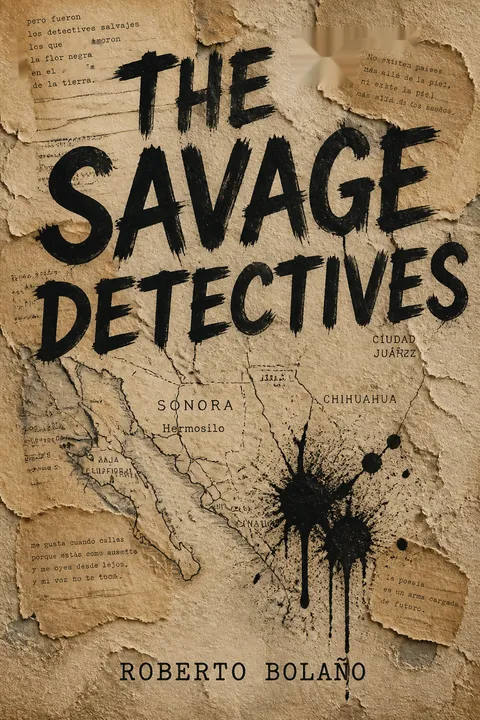
The visceral realists' obsession with Cesárea Tinajero, a forgotten avant-garde poet rumored to have vanished in the Sonora desert, becomes the catalyst for their greatest adventure. The search for Cesárea is both literal and symbolic—a quest for origins, authenticity, and the meaning of poetry itself. As Juan, Belano, Lima, and Lupe (a prostitute fleeing her violent pimp) set out on a road trip north, the boundaries between art and life, myth and reality, begin to dissolve. The journey is marked by encounters with eccentric locals, dead ends, and the ever-present threat of violence, as the group's ideals are tested against the harshness of the desert and the limits of their own courage.
Road Trip to the North
The road trip through northern Mexico is a hallucinatory odyssey, full of shifting landscapes, linguistic games, and existential dread. The group's search for Cesárea leads them through forgotten towns, bullrings, and cemeteries, as they piece together the fragments of her life and work. Along the way, they are pursued by Lupe's pimp and his corrupt police accomplice, their journey becoming a flight from both external threats and internal demons. The desert is both a physical and psychological landscape—a place of revelation, disintegration, and the possibility of rebirth. As the group draws closer to their goal, the bonds between them are tested to the breaking point.
Ghosts in the Sonora Desert
In the Sonora desert, the search for Cesárea becomes a confrontation with the ghosts of the past—personal, historical, and literary. The group's encounters with bullfighters, teachers, and indigenous elders reveal the layers of loss and violence that haunt the Mexican landscape. Cesárea herself emerges as a figure of mystery and resilience, her life a testament to the costs of artistic integrity and the impossibility of escape. The desert strips the group of their illusions, forcing them to confront the limits of their ideals and the inevitability of death. The journey becomes a rite of passage, a descent into the underworld from which not all will return.
The Bullfighter's Shadow
The discovery of the bullfighter Avellaneda's grave and the traces of Cesárea's life in remote towns bring the group face to face with the realities of mortality and obscurity. The stories of bullfighters, teachers, and forgotten poets mirror the visceral realists' own fears of failure and erasure. The search for Cesárea becomes a meditation on the price of art—the sacrifices demanded, the betrayals endured, and the loneliness that accompanies true creation. The group's unity begins to unravel, as each member is forced to reckon with their own desires, regrets, and the knowledge that not all quests end in triumph.
The Labyrinth of Loss
The group's journey reaches its violent climax when they are confronted by Lupe's pimp and his police accomplice. In a chaotic and bloody confrontation, Cesárea is killed, along with the pursuers. The survivors are left to bury the dead in the desert, their quest transformed into a threnody for lost friends, lost ideals, and the irretrievable past. The aftermath is marked by guilt, trauma, and the dissolution of the group. The desert, once a place of possibility, becomes a graveyard of dreams. The survivors scatter, each carrying the scars of what they have seen and done.
The Pursuit and the Escape
In the wake of violence, the group is forced to separate. Belano and Lima disappear into the desert, fugitives from the law and from themselves. Juan and Lupe, the last visceral realists, linger in the ruins of Villaviciosa, haunted by memories and the knowledge that their movement has come to an end. The escape from the desert is both a physical and existential ordeal, as the survivors grapple with the meaning of what they have witnessed and the impossibility of return. The world they once inhabited—of poetry, rebellion, and youthful hope—has vanished, leaving only the traces of what might have been.
The End of the Line
The survivors of the Sonora journey are scattered across Mexico and the world, each seeking redemption, oblivion, or a new beginning. Belano and Lima become wanderers, exiles in Europe, Africa, and the Middle East, their lives marked by poverty, illness, and the relentless pursuit of meaning. The visceral realists' movement dissolves into legend, its members forgotten or mythologized, their stories fragmented and unreliable. The search for Cesárea becomes a metaphor for the search for self, for home, for a place in history. The end of the line is not death, but dispersal—a scattering of seeds on the wind.
Exile and Dispersal
The narrative fractures into a chorus of voices—friends, lovers, enemies, and strangers—each offering their own version of events, their own memories of the visceral realists. The movement's survivors drift through Europe, Israel, Africa, and the Americas, haunted by the past and unable to find peace. Their lives are marked by failed relationships, addiction, madness, and the constant threat of violence. The world they inhabit is one of perpetual exile, where every attempt at connection is shadowed by loss. The search for meaning becomes a search for survival, as the poets are transformed into detectives of their own vanished lives.
The World's Savage Detectives
The story expands to encompass the fates of the visceral realists across continents and decades. Belano and Lima become legendary figures, their exploits recounted in bars, cafés, and psychiatric hospitals from Mexico City to Paris, Barcelona, Tel Aviv, and Africa. The narrative is a collage of testimonies, rumors, and confessions, each voice adding a new layer to the myth of the savage detectives. The world is revealed as a labyrinth of longing, where every search is doomed to incompletion and every answer only leads to new questions. The poets' quest becomes universal—a search for love, truth, and a place to call home.
The Aftermath of Dreams
As the years pass, the former visceral realists reckon with the consequences of their youthful rebellion. Some find success, others descend into madness or obscurity. The movement's ideals are co-opted, forgotten, or betrayed, as the realities of adulthood, politics, and mortality intrude. The survivors are haunted by memories of lost friends, failed loves, and the violence that ended their quest. The world moves on, indifferent to their suffering, and the poets are left to confront the emptiness at the heart of their dreams. The aftermath is a landscape of ruins, where only the faintest echoes of hope remain.
The Return of the Lost
Occasional reunions and chance encounters among the former visceral realists reveal the persistence of the past and the impossibility of closure. Old wounds are reopened, old loves rekindled or definitively lost. The movement's legacy is debated, mourned, and sometimes mocked, as the survivors struggle to make sense of what they once believed and what they have become. The return of the lost is always temporary, always tinged with regret. The world has changed, and the poets are left to wander its margins, searching for meaning in the fragments of their own history.
The Last Poets Standing
A handful of former visceral realists continue to write, teach, or simply survive, their lives marked by compromise and endurance. The movement's ideals are diluted, its history rewritten by scholars and opportunists. The last poets standing are witnesses to the end of an era, their memories both a burden and a source of solace. The world they inhabit is one of diminished expectations, where the struggle is not for glory but for dignity and self-respect. The movement's end is not a tragedy, but a slow fading—a return to the ordinary after the storm of youth.
The Gaps in Memory
The story of the visceral realists is reconstructed through a patchwork of testimonies, each marked by gaps, distortions, and contradictions. Friends, lovers, enemies, and scholars offer their own versions of events, each shaped by personal bias and the passage of time. The truth of what happened—of who Cesárea was, of what the movement meant—is always just out of reach, obscured by the limitations of memory and the inevitability of forgetting. The gaps in memory become the space where myth is born, where the search for meaning continues in the absence of certainty.
The Duel and the Departure
The narrative's final confrontations—literal and metaphorical—mark the end of the visceral realists' journey. Old rivalries are settled, old debts paid, and the last ties to the past are severed. The duel, both real and symbolic, is a ritual of departure, a way of acknowledging the end of an era and the necessity of moving on. The survivors accept the inevitability of loss, the impossibility of return, and the need to find meaning in the present. The departure is not a defeat, but a release—a letting go of the burdens of memory and the illusions of youth.
The End of the Movement
The visceral realists' movement is consigned to history, its members forgotten or mythologized, its ideals co-opted or erased. Scholars and critics debate its significance, while the last survivors fade into obscurity. Yet the search that defined the movement—the search for authenticity, for lost voices, for meaning in a world of chaos—persists. The end of the movement is not the end of the search, but its transformation into something quieter, more personal, and perhaps more enduring. The savage detectives become solitary seekers, their quest no longer for glory, but for understanding.
The Infinite Search
The story closes with the image of the search—endless, unfinished, and necessary. The savage detectives are revealed as everyman figures, condemned to wander the world in pursuit of answers that will always elude them. The search is both destiny and curse, a source of suffering and a reason to go on living. The world is a labyrinth, and the only way out is through the act of searching itself. The final lesson is one of humility, endurance, and the acceptance of mystery.
The Final Witnesses
The last voices in the narrative are those of the witnesses—friends, lovers, scholars, and strangers—each offering their own fragment of the story. The visceral realists' movement survives not in books or monuments, but in the memories and myths of those who remember. The story is passed on, changed, and renewed with each telling, its meaning always provisional, always open to interpretation. The final witnesses are both detectives and poets, searching for truth in the ruins of the past and finding, in the act of testimony, a reason to hope.
Analysis
A modern epic of lost youth, artistic longing, and the endless search for meaningThe Savage Detectives is a polyphonic, labyrinthine novel that reimagines the coming-of-age story as a mythic quest for authenticity, love, and artistic purpose. Through its chorus of voices and fragmented narrative, the book explores the hunger for belonging and the costs of rebellion, the allure of poetry and the inevitability of loss. Bolaño's characters are both detectives and poets, exiles and dreamers, whose search for the lost poet Cesárea Tinajero becomes a metaphor for the search for self, for home, and for meaning in a world marked by violence, indifference, and the erasure of memory. The novel is both a homage to and a critique of literary movements, a meditation on the impossibility of closure, and a celebration of the endurance of hope in the face of failure. Its lesson is that the search itself—endless, unfinished, and necessary—is what gives life its meaning, even as it condemns us to wander forever in the labyrinth of longing and loss.
Review Summary
Reviews of The Savage Detectives are overwhelmingly positive, with most readers rating it 4–5 stars. Admirers praise its innovative structure—blending diary entries with multi-voice oral testimonies—and its vivid portrayal of youth, poetry, and Latin American life. Many describe it as a life-changing, emotionally resonant experience. Critics, however, find it plotless, self-indulgent, and exhausting, arguing little happens across its 650 pages. The novel's sprawling cast, shifting timelines, and literary references divide readers, though even skeptics acknowledge its ambition and cultural significance.
People Also Read

Characters
Juan García Madero
Juan is the novel's central consciousness, a seventeen-year-old orphan and law student who longs for meaning, love, and artistic belonging. His diary entries are marked by a blend of innocence, curiosity, and vulnerability, as he is swept up in the visceral realists' world. Juan's relationships—with the Font sisters, with Rosario and Lupe, with Belano and Lima—mirror his search for identity and connection. He is both participant and observer, detective and poet, whose journey from Mexico City to the Sonora desert is a rite of passage into adulthood and disillusionment. Juan's psychological arc is one of longing, loss, and the gradual acceptance of ambiguity and failure.
Arturo Belano
Belano, a Chilean exile and the movement's co-founder, is a figure of charisma, melancholy, and restless energy. He is both a leader and an outsider, driven by a hunger for authenticity and a deep sense of loss. Belano's relationships—with Lima, with Juan, with a series of lovers and friends—are marked by intensity and impermanence. His psychological complexity is rooted in trauma, exile, and the impossibility of home. Over the years, Belano becomes a wandering detective, searching for meaning in poetry, love, and the ruins of history. His arc is one of perpetual motion, haunted by the ghosts of the past and the knowledge that the search will never end.
Ulises Lima
Lima, the Mexican co-founder of visceral realism, is a figure of mystery, loyalty, and quiet desperation. He is both a catalyst and a cipher, whose devotion to poetry and friendship is matched by his inability to find peace. Lima's relationships—with Belano, with Juan, with the movement's many outcasts—are marked by generosity and self-sacrifice. His psychological struggles are rooted in loss, addiction, and the burden of leadership. Over time, Lima becomes a fugitive from the law, from his own ideals, and from the world itself. His arc is one of endurance, survival, and the gradual fading of hope.
María Font
María is the elder Font sister, a poet, dancer, and object of desire for many in the group. She is both muse and agent, whose relationships with Juan, Belano, and others are marked by passion, ambivalence, and a fierce independence. María's psychological complexity is shaped by family dysfunction, artistic ambition, and the realities of gender and class. Over time, she becomes a survivor—of love, of loss, of the movement's collapse—her arc one of adaptation, endurance, and the quiet persistence of creativity.
Angélica Font
Angélica, the younger Font sister, is a symbol of innocence, longing, and the costs of coming of age in a world of chaos. Her relationships—with her family, with Pancho Rodríguez, with the visceral realists—are marked by vulnerability and the desire for connection. Angélica's psychological arc is one of awakening and loss, as she is drawn into the group's dramas and ultimately left behind by its dissolution. She is both a witness to and a casualty of the movement's failures.
Lupe
Lupe is a young prostitute fleeing her violent pimp, whose journey with the visceral realists becomes a test of courage, loyalty, and the will to survive. Her relationships—with Juan, with Belano and Lima, with the world of men—are marked by both vulnerability and defiance. Lupe's psychological complexity is rooted in trauma, poverty, and the struggle for autonomy. She is both a victim and a survivor, whose presence forces the group to confront the realities of violence and the limits of their ideals.
Quim Font
Quim is the father of María and Angélica, an architect whose descent into madness mirrors the collapse of the Font family and the movement itself. His relationships—with his daughters, with the visceral realists, with his own dreams—are marked by delusion, nostalgia, and the inability to adapt. Quim's psychological arc is one of decline, as he becomes both a comic and tragic figure, a symbol of the costs of artistic ambition and the impossibility of escape.
Cesárea Tinajero
Cesárea is the elusive object of the visceral realists' quest—a forgotten avant-garde poet whose life and work are shrouded in mystery. She is both a real person and a myth, a symbol of artistic integrity, resilience, and the costs of obscurity. Cesárea's relationships—with Avellaneda, with the people of Sonora, with the world of poetry—are marked by loss, exile, and the refusal to compromise. Her psychological complexity is revealed in fragments, as the group pieces together her story. She is both the mother of the movement and its final witness, her fate a mirror of the poets' own.
Luscious Skin
Luscious Skin is a poet, hustler, and lover whose life is marked by marginalization, desire, and the search for acceptance. His relationships—with María, with the Rodríguez brothers, with the movement's many outcasts—are marked by longing and betrayal. Luscious Skin's psychological struggles are rooted in poverty, sexuality, and the hunger for recognition. His arc is one of tragedy, as he is ultimately destroyed by the violence and indifference of the world he inhabits.
Pancho Rodríguez
Pancho is a passionate, working-class poet whose devotion to Angélica and the movement is matched by his inability to find fulfillment. His relationships—with his family, with the visceral realists, with the world of labor and revolution—are marked by longing and frustration. Pancho's psychological arc is one of hope and disappointment, as he is ultimately left behind by the movement's collapse and the realities of adulthood.
Plot Devices
Polyphonic Testimony and Fragmented Narrative
The novel's structure is defined by its polyphonic, fragmented narrative—a collage of diary entries, testimonies, interviews, and confessions from dozens of characters across decades and continents. This device allows for multiple perspectives, contradictions, and gaps, mirroring the impossibility of definitive truth and the unreliability of memory. The story is not told in a linear fashion, but as a detective's case file, with each voice adding a new layer to the myth of the visceral realists. The use of testimony blurs the boundaries between fiction and history, art and life, and foregrounds the act of searching as both method and theme.
The Quest Motif and the Detective Story
At its core, the novel is structured as a quest—a detective story in which the object of the search (Cesárea Tinajero) is both literal and symbolic. The search for Cesárea becomes a search for authenticity, for lost voices, for the meaning of poetry and life itself. The detective story structure is subverted by the proliferation of clues, red herrings, and dead ends, emphasizing the impossibility of closure and the necessity of the search itself. The quest motif is echoed in the characters' personal journeys—of love, exile, and self-discovery.
Intertextuality, Literary Allusion, and Metafiction
The novel is saturated with references to poetry, literature, and history—Mexican, Latin American, and global. The visceral realists' debates, rivalries, and obsessions are shaped by their readings and misreadings, their attempts to situate themselves within (and against) tradition. The text is self-reflexive, constantly questioning the value and purpose of art, the nature of literary movements, and the relationship between fiction and reality. The use of literary allusion and metafictional commentary foregrounds the novel's status as both a homage to and a critique of the detective story, the Künstlerroman, and the epic of lost youth.
Foreshadowing, Circularity, and the Collapse of Time
The novel's structure is marked by foreshadowing, repetition, and the collapse of linear time. Events are anticipated, echoed, and reinterpreted through the shifting perspectives of the characters. The search for Cesárea is mirrored by the characters' own searches for meaning, love, and home. The narrative's circularity—its return to the beginning, its refusal of closure—emphasizes the endlessness of the search and the impossibility of resolution. The past is never past; the ghosts of lost friends, failed movements, and forgotten poems haunt every page.
Violence, Exile, and the Limits of Rebellion
The novel's plot is driven by the threat and reality of violence—personal, political, and existential. The visceral realists' rebellion against the literary establishment is mirrored by their flight from the law, from their own pasts, and from the world itself. Exile, dispersal, and the impossibility of return are central motifs, as the characters are forced to confront the limits of their ideals and the costs of their choices. The movement's end is not a moment of triumph, but of dispersal, erasure, and the acceptance of ambiguity and failure.
Download PDF
Download EPUB
.epub digital book format is ideal for reading ebooks on phones, tablets, and e-readers.








































