
Plot Summary
Berlin Dinner, Old Stories
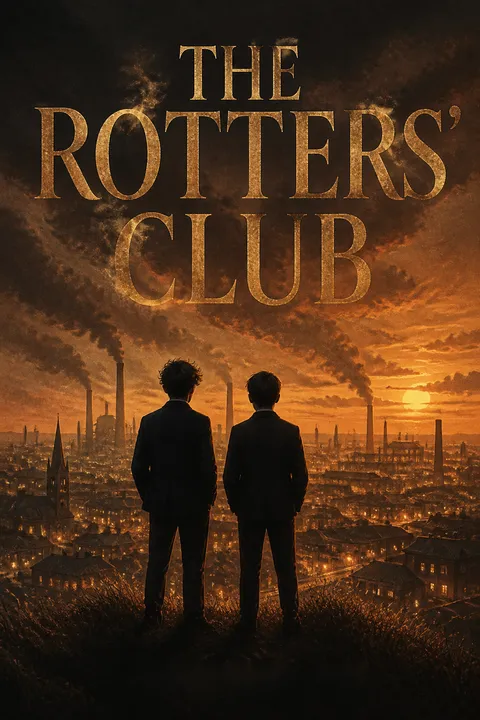
In 2003, at a revolving restaurant towering over Berlin, Sophie and Patrick—children of Lois and Benjamin's old school friends—cross paths as their parents reconnect after decades. They realize their connection is in the deep history of their families; they have little in common except the tangled tales of their parents' youth. As they seek to fill in the gaps of that half-forgotten England, Sophie and Patrick embark on a journey into the 1970s, challenging each other to reimagine what it meant to live in those days before memory—and before they themselves existed.
Searching For Connection
In 1973 Birmingham, Lois Trotter, a teenager hungry for life beyond her quiet, repressed family, scans the personal ads in Sounds magazine—hoping to encounter romance and adventure. Benjamin, her introspective brother, is fixated on music and adrift amidst the silence at home. These siblings grope toward connection—she through fantasy of distant places and men; he in creative pursuits, always shadowed by embarrassment. The family's everyday tensions pulse beneath: parents drift through brown-tinted routines; Lois treasures every tiny spark of hope brought by the prospect of a "Hairy Guy."
Fathers in a Brown World
At a local pub, working men—Lois's dad Colin, union man Bill Anderton, and their less principled peer Roy Slater—struggle to relate as both colleagues and fathers, their sons sharing a privileged school education so unlike their own. "Brown times" color everything. Tension simmers, fueled by union disputes, racial fears, and the slow shudder of economic decline. The adults muddle through misunderstanding and missed opportunities, trying to make meaning amid changing social landscapes, as their kids collide in adolescent worlds of school, secrets, and longing.
Schoolyard Cruelties
Within King William's, boys navigate a rigid, competitive, often brutal world. Nicknames ("Bent Rotter," "Lowest Rotter"), racial slurs (at the sole Black pupil, "Rastus"), and the calculus of fitting in leave Benjamin, his friends Chase and Anderton, and especially Harding (school prankster and chaos agent) both hilarious and damaging. Small victories—drama sketches, musical discoveries—alternate with humiliations. Meanwhile, girls like Lois and Claire exist mostly as distant mysteries, fueling boyhood fantasies and divisions that will haunt for years.
Misfits and Madcap Dreams
Chafing under authority, Benjamin, Chase, and their circle seek outlets: school newspaper articles, doomed attempts at forming a band, midnight record-listening, half-understood social activism, and mutual envy of wild, magnetic school outliers like Harding and Cicely. Their siblings—brilliant, biting Paul; enigmatic Lois—wander parallel tracks. Through encounters at bus stops and music rehearsals, a generation's mixture of insecurity, hope, and yearning churns, chasing after connection, love, or just a new song to believe in.
Love, Loss, and Pub Bombs
Lois's romance with Malcolm ("the Hairy Guy") blooms, kindling genuine happiness. But fate's cruelty arrives: a pub bombing kills Malcolm and maims Lois, shattering her world and leaving her a haunted shell. Trauma spreads through the school and family: anger, guilt, and breakdowns abound. As the city reels from terror, even the most intimate moments—sexual awakenings, sibling tenderness—are tinted by grief, scars, and the struggle to make sense of brutal randomness.
Bands, Boyhood, Betrayals
Inspired by rock and prog, Benjamin and Philip try to start a band, Minas Tirith, then Gandalf's Pikestaff—but find only discord, artistic differences, and the rising tide of punk quickly rendering them obsolete. School tensions flare at plays, debates, and in a climactic riot of misrule, as classmate Culpepper and Black athlete Steve Richards become locked in destructive competition. The friends cope with jealousy, shifting alliances, and the poisonous ease with which divisions—musical, social, racial—rupture their world.
Disaster and Miracle
Benjamin faces schoolboy doom—arriving at swimming without trunks, risking epic humiliation. Abandoned by friends, desperate, he prays for escape—and miraculously finds a pair of trunks in a lonely locker. His religious awakening is both comic and sincere, a touchstone for the faith and doubt that will follow. Around him swirl Labor strikes, class strife in the factory, and the aftershocks of family secrets—while his friendships increasingly strain under the weight of unspoken traumas.
The Rotters' Club Grows
As Benjamin, Philip, Claire, Doug, and companions age, their lives diverge. Affairs sputter and combust; social activism gives way to disillusionment as strikes fail and factory closures threaten their parents' world. Teenage sexuality and longing play out in letters, missed signals, tears at bus stops, and crushingly awkward parties. Through it all, the persistent coexistence of innocence and cruelty—of great jokes and deep wounds—defines the last gasp of adolescence.
Lust, Letters, Loyalties
Marital infidelities, unrequited love, and dangerous secrets swirl: Barbara Chase is seduced by the erudite, predatory art teacher Plumb; Claire delves into her vanished sister Miriam's fate, seeking answers from Doug's stoic father Bill Anderton. Romantic mishaps, muddled confessions, and shifting loyalties trouble every relationship, rendering even triumph (Benjamin's longed-for kiss with Cicely) strangely uncertain. The adults' failings—affairs, silences, loss—echo in the children's flailing quests for intimacy and truth.
Strikes and Social Upheaval
The 1970s climax in industrial disaster at the Longbridge plant and at the Grunwick strike, where the limits of union power and solidarity are exposed with violent clarity. Bill, battered, loses his faith in change. Sam Chase, once tongue-tied, tries grandiloquence in the battle for his marriage. Social and economic forces gather, heralding a meaner, more individualistic future, just as Margaret Thatcher's rise signals a coming storm for these families' world.
Friendship Drifts, Families Crack
Friend groups splinter in the face of final exams, family crises, and the hard truths of growing up. Some relationships, like Doug and Claire, dissolve gently; others, like Steve and Culpepper's rivalry, end with violence or bitter mutual suspicion. Secrets and lost causes—school societies, faded band projects, absconded sisters—leave unresolved wounds. As summer wanes, the past seems to lose none of its power to wound, even as possibility flickers on the horizon.
Examining Secrets, Chasing Truth
Claire continues her quest to understand Miriam's disappearance, interviewing Bill—who can only admit to loving and losing too much. Benjamin, freed from school, throws himself into love with Jennifer while still longing for Cicely, never certain what happiness really means. All around, the sadness of loose ends—striking workers, forsaken friends, lost sisters—hovers, as adulthood beckons with as many unknowns and heartbreaks as hopes.
Aftermaths and Awakenings
Benjamin and Cicely find each other at last, held together by their long journey and their mutual willingness to reveal, and forgive, their true selves. Even as doubts persist—about faith, the future, or whether happiness can last—an earned note of hope prevails: their love is grounded in honesty, not fantasy. They discover their relationship is not a solution to life's cruel randomness, but a site for shared vulnerability and joy. They face time's passage not with bright promises, but with a readiness for whatever comes.
Summer's Farewell, Promises Kept
Benjamin's family, battered and restored, endure a final, rainy family holiday, as Lois carefully watches over her brother and reflects on their resilience. Benjamin, desperate to be with Cicely, walks through a storm to Wales and finds her, completing a circuit of love, forgiveness, and meaning. The two unite at last, folding all their awkward past into a sense of new belonging—a closure that is, by its nature, only ever provisional.
New Beginnings, Old Ghosts
The friends receive their exam results—some triumphant, some tragic. Benjamin lets go of Jennifer, finally free to love Cicely openly. Yet the shadows of the past—poverty, exclusion, lost chances—linger, seen in Steve's disappointments and the ongoing tensions in Birmingham. The city itself takes on almost mythic proportions, a backdrop to dreams both realized and destroyed.
Love Conquers Doubt
As Benjamin and Cicely cement their bond—sexual and emotional—he wrestles with guilt, class privilege, and the ways his actions, even innocently, impact those around him. Ghosts of the dead linger in city squares and in memory, as social unrest rages. Yet through laughter, storytelling, and a willingness to share even the most painful parts of their histories, they build something real, not in spite of heartbreak and loss, but because of them.
Paradise Place
The narrative returns one last time to Berlin in 2003, where Sophie and Patrick—descendants of the book's intertwined families—reflect on the stories they inherited, their parents' and uncles' scars and triumphs, and the shimmer of meaning that persists through generations. They recognize that stories never really end; every happiness is fleeting, every tragedy incomplete. What remains is the sharing: "To have known happiness like that, and to have held on to it, even for a moment."
Analysis
Jonathan Coe's The Rotters' Club is a masterful, elegiac examination of adolescence, memory, and the slow, irreversible vanishing of one Britain and the birth of another. Through its patchwork narrative and ensemble cast, the novel explores the joys and cruelties of growing up—how the intimate pains of schoolyard drama, first love, artistic longing, and loss are inseparable from the era's social convulsions. Moments of slapstick, satire, and tenderness co-exist with political rage, family breakdown, and shattering trauma (the pub bombing, the vanished sister). Coe is acutely aware of the unreliability of memory and the impossibility of closure; the ending—set decades later, with the children of the main characters—insists that stories do not end, but ripple onwards in the lives of others. The real subject is the power, and limitation, of storytelling itself: the best we can do is bear witness, share laughter, and acknowledge the mess. For contemporary readers, the novel is both a joyful immersion in the specificity of the '70s and a warning about the costs of forgetting solidarity, community, and collective hope. Its greatest wisdom is that happiness, if it exists at all, is found in fleeting moments of connection—precious simply because they are brief.
Review Summary
Reviews of The Rotters' Club are largely positive, averaging 3.96/5. Many praise Coe's vivid portrayal of 1970s Birmingham, blending coming-of-age themes with political commentary on strikes, the IRA, and Thatcher's rise. Readers admire the richly drawn characters, diverse narrative styles, and sharp British humour. The novel's emotional depth and musical references earn particular appreciation. Common criticisms include pacing issues, an overly long final stream-of-consciousness sentence spanning 13,000+ words, and occasionally feeling artificially constructed. International readers, particularly Greek, Italian, and Persian reviewers, still found it highly engaging.
People Also Read
Characters
Benjamin Trotter
Benjamin is the introspective heart of the book—a creative, shy, slightly odd boy desperately seeking meaning through music, writing, and unrequited love (notably for the dazzling Cicely). His coming-of-age is defined by feelings of alienation: in family, at school, and even among friends. Benjamin's inner world is ruled by both high romantic ideals and deep self-doubt. Over the years, he matures from diffident schoolboy to young man tentatively grasping happiness and faith. He is psychologically shaped by the example of his withdrawn parents, the trauma of his sister's breakdown, and the dashed hopes of first love, yet ultimately finds redemption in his openness to beauty and vulnerability.
Lois Trotter
Benjamin's older sister Lois is at first a typical yearning teenager, eager for adventure and love. Her blossoming happiness in her relationship with Malcolm is tragically destroyed by the pub bombing, which leaves her physically and emotionally scarred. Lois's journey is through pain—her breakdown, her silence, her slow recovery—making her one of the novel's most moving figures. She represents both the almost arbitrary cruelties of the world and, in her eventual partial healing, the possibility of survival, day by day. Her bond with Benjamin deepens in shared suffering.
Philip Chase
Philip, Benjamin's steadfast friend, provides comic relief and insight—his own band ambitions always throwaway compared to Ben's seriousness. His parents' shaky marriage and his honest fascination with sex, girls, and school status make him a relatable everyman. He's both the author's stand-in for the anxious, striving, ordinary teenager and the chronicler of others' oddities and humiliations. While never a genius or a disaster, Philip's journey toward adulthood is one of growing empathy and courage to confront the complications of family and friendship.
Doug Anderton
Doug is the group's catalyst—sardonic, sharp, ambitious, and increasingly radicalized by the labor struggles at his father's factory. He's both insider and outsider: posher and more political than his friends, always pushing boundaries, forever seeking bigger experiences (and women) beyond Birmingham. His reckless energy and ambition lead him toward both journalism and activism, while he struggles with the legacy and vulnerability of his own father. Oozing restless intelligence, Doug is both witness and disruptive force, testing the limits of friendship and loyalty and marking the drift to a tougher, Thatcherite era.
Claire Newman
Claire's story exemplifies the pain of absence and the search for closure. Haunted by her sister Miriam's mysterious disappearance and her claustrophobic, emotionally tyrannical home life, she seeks connection with the circle of friends mainly as an outsider. Her relationships—with Doug, with Benjamin—are colored by suspicion, anger, and deep yearning for answers about love, sex, and family. Her investigative drive links the novel's emotional and social mysteries, fusing the personal with the political. Claire's psychological arc is one of moving from victimhood toward agency, even as loss remains unresolved.
Harding (Sean)
The class jester and chaos agent, Harding (or "Sean") mixes prankster genius with a darker edge—his jokes are brilliant, cruel, sometimes self-defeating. He's both a social glue and a destabilizer, pushing the group's boundaries, exposing hypocrisies (and prejudices) others would rather ignore. Yet beneath the bravado is immense vulnerability: a family torn by divorce, loneliness, and a self-destructive streak he can barely contain. Harding's unpredictable humor masks psychic wounds and a sense of never quite belonging, serving as a powerful symbol of adolescence's dangers and mischief.
Steve Richards
The school's singular Black pupil, Steve is both high-achieving athlete and perpetual outsider, subjected to racist taunts even as he outshines peers like Culpepper. His stoic dignity is continually undercut by the bigotry and envy of his classmates, leading eventually to the heartbreak of sabotage and failure. Steve represents the costs and loneliness of tokenism; his narrative explores how the appearance of inclusion masks ongoing injustice. Psychologically, his hopefulness and vulnerability are as vital as his physical prowess, and his fate is a lament for wasted potential.
Cicely Boyd
The book's iconic "girl"—beautiful, mysterious, talented but wracked with self-doubt. Cicely magnetizes boys, particularly Benjamin, endlessly inspiring; yet she constantly attempts self-invention, cycling through ambitions (acting, writing) and lovers. Her journey is one of seeking authenticity—breaking family expectations, dealing with emotional fragility, embracing and resisting love. Her and Benjamin's romance is as much about mutual healing as fulfillment; together, they mirror the book's own struggle to reconcile dreams with imperfection, and to find clarity amid self-critique.
Bill Anderton
Doug's father, Bill is an emblem of the UK labor movement's hopeful heart and coming defeat. He is brave, ethical, and dedicated—fighting a losing war of ideals against unthinking management and increasingly ruthless economic change. His personal failings—multiple affairs, resulting in heartbreak and chaos—mirror the disappointments of his public action. Emotionally, he is battered by guilt, loss of power, and the vanishing dream of community and solidarity, and his narrative captures the book's elegy for a more hopeful time.
Paul Trotter
Benjamin and Lois's younger brother, Paul is a brilliant provocateur—mocking, argumentative, often scathing about group loyalties and idealism. His hyperintelligence and emotional detachment position him as social commentator, if not quite friend; he eventually drifts toward reactionary elitism, carving his own (often antagonistic) path as the world shifts rightward. Paul's arc exemplifies generational tension and the loss of collective hope.
Plot Devices
Shifting Narrators and Tense
Coe employs multiple points of view—third person, first person, letters, diary entries, published "articles," and sometimes future generations—to create a polyphonic, unreliable, and communal narrative. This structure blurs individual stories into a joint tapestry, refusing an easy "hero," and inviting readers into both the minute details and the unresolved gaps of memory.
Social and Political Backdrop as Character
The world of 1970s—strikes, racism, labor collapse, terrorism, rise of Thatcher—pervades every scene. Rather than inert background, these events enter personal dramas: schoolrooms and bedrooms are inflected by the Longbridge plant's woes, the union hall struggles, the pub bombing, and the slow necrosis of community. The collapse of collective dreams and the corrosive rise of individualism mirror the children's journeys into adulthood.
Foreshadowing and Cyclical Structure
The Berlin framing device, and final chapters, reveal that the "ending" is arbitrary: new generations are both haunted and buoyed by the stories their parents couldn't finish. The band's failure, Lois's trauma, Miriam's disappearance, school rivalries—none are simply resolved, but reappear in the lives of the next cohort. Lives prove unavoidably entangled and unfinished.
Music as Emotional Motif
Benjamin's obsessions with prog and experimental music, the doomed band project, and the shifting sounds of the '70s are not mere trivia; they provide language for emotions, friendship, and heartbreak. Songs are memory triggers, mood-setters, and, in cases like "The Rotters' Club," crystallizations of the fleeting possibility of communal happiness.
Letters, Diaries, and Found Texts
Intimate confessions—Lois's diary, Claire's sister's note, letters between friends—act as both windows into interiority and reminders that understanding is always incomplete. Unreturned affection, suppressed trauma, secrets, and the futility of truly clear communication become central themes, reinforcing the novel's skepticism about narrative "truth."
Rotters' Club Series

Download PDF
Download EPUB
.epub digital book format is ideal for reading ebooks on phones, tablets, and e-readers.








































