
Key Takeaways
1. Rome's Foundational Openness: A Melting Pot of Ambition
Romans were unique among ancient and medieval societies in their willingness to grant large numbers of foreign-born people full membership in their political, religious, and economic life.
Diverse origins. Unlike many ancient societies that prided themselves on ethnic homogeneity, Rome's very foundation myths celebrated its diverse, polyglot origins. Legends of Romulus populating the city with "rabble"—bandits, escaped slaves, and strangers—and the subsequent integration of Sabines through forced marriage, underscored a core belief: Rome grew stronger by incorporating outsiders. This willingness to embrace newcomers, even slaves who gained citizenship upon freedom, set Rome apart.
Meritocratic ethos. From its earliest days, Rome offered opportunities for advancement based on merit, not just birth. The story of Tarquinius Priscus, a Greek exile who became king, and Servius Tullius, supposedly born a slave but rising to power through military skill, exemplify this. Rome's ability to attract and integrate talented individuals, regardless of their background, infused the nascent state with vitality that more closed societies could not match.
Continuous expansion. This foundational openness wasn't just a myth; it was a sustained policy. Romans "gladly received all strangers and made them citizens," constantly expanding the ranks of its citizenry. This practice allowed Rome to grow its manpower and talent pool, laying the groundwork for its eventual dominance, as new Romans continually infused their adopted polity with fresh perspectives and capabilities.
2. Revolutionary Adaptation: Forging Strength from External Ideas
The Roman state survived for so long, in so many different conditions, because of the willingness of Romans to adapt to the world around them by incorporating new ideas and new approaches to every aspect of their personal and political lives.
Embracing innovation. Rome's early history is a testament to its pragmatic adoption of foreign innovations. Observing the effectiveness of the Greek phalanx, Romans quickly adapted this military formation, revolutionizing their fighting style and, consequently, their society. This willingness to learn from others, even enemies, made the Roman military formidable.
Societal transformation. The phalanx, a formation reliant on middle-class hoplites, spurred political change. Just as Greek cities saw tyrants rise to empower these soldiers, Rome experienced its own "hoplite revolution" under kings like Tarquinius Priscus and Servius Tullius. These rulers reformed tribal structures, conducted censuses, and created new assemblies, shifting power dynamics and laying the groundwork for a more inclusive, albeit stratified, political system.
Systemic evolution. Servius Tullius's reforms, including the creation of the Comitia Centuriata (an assembly where voting power was tied to wealth and military service), illustrate Rome's capacity for systemic evolution. This wasn't just about adopting a new military tactic; it was about fundamentally reshaping the state to leverage the strengths of its diverse populace, ensuring that those who contributed most to its defense also had a greater say in its direction.
3. The Republic's Birth: A Struggle for Inclusive Governance
The new Republic lacked this balance, and there was now no king to mediate between patrician and plebeian demands.
Aristocratic reaction. The overthrow of the monarchy in 509 BC, ostensibly to end tyranny, initially led to a patrician-dominated Republic. This new system sidelined wealthy plebeians who had gained influence under the later kings, creating a reactionary government where hereditary status trumped merit and wealth. This imbalance sowed seeds of discontent, as plebeians, despite their military contributions, found themselves as second-class citizens.
Debt and discontent. Economic hardship, exacerbated by constant warfare and debt bondage, fueled plebeian resentment. When patrician leaders failed to address these grievances, plebeian soldiers resorted to peaceful secession, refusing to fight until their demands were met. This non-violent protest, a hallmark of early Roman political conflict, forced the patricians to acknowledge the plebeians' essential role in the state.
Constitutional recalibration. The "secession of the plebs" in 494 BC led to the creation of the tribune of the plebs and the Concilium Plebis (Plebeian Assembly). These institutions gave plebeians a meaningful voice, recalibrating the Republic from a patrician oligarchy to a more collaborative enterprise. This established a crucial precedent: political conflicts could be resolved through negotiation and constitutional reform, not just violence.
4. Strategic Integration: Building Power Through Diverse Alliances
Rome had stumbled upon a partial solution to both problems by creating what the historian Tim Cornell has called a “Roman commonwealth.”
Beyond conquest. Rome's expansion in Italy, particularly after the Gallic sack of 386 BC, was not merely about military conquest. It involved a sophisticated strategy of integrating defeated adversaries into a "Roman commonwealth." This system offered various statuses: independent allies, citizens without voting rights (civitas sine suffragio), or full Roman citizens. This nuanced approach maximized military resources while minimizing the need for direct administrative oversight.
Manpower advantage. This flexible integration model allowed Rome to build the largest and most formidable military machine in the Mediterranean. Each successful engagement increased Rome's territory, enlarged its citizen body, and added to the number of allied recruits it could compel to provide. This continuous growth in manpower was a decisive factor in the Second and Third Samnite Wars, enabling Rome to fight on multiple fronts and eventually dominate the peninsula.
Unified ruling class. Domestic reforms, like the Licinio-Sextian laws of 367 BC, paralleled external expansion by opening the consulship and other high offices to wealthy plebeians. This created a unified patrician-plebeian nobility, ensuring that the most capable and ambitious individuals, regardless of birth, could rise to leadership. This internal cohesion, combined with external integration, made Rome uniquely resilient.
5. Global Ambition: Naval Power and Imperial Expansion
The conflict that Romans called the First Punic War fundamentally changed both combatants.
Unprecedented warfare. The First Punic War (264-241 BC) forced Rome to confront a naval power, Carthage, unlike any it had faced before. Despite having no navy, Rome's ingenuity shone through: it reverse-engineered a captured Carthaginian quinquereme and invented the corvus, a boarding device that transformed sea battles into land engagements, leveraging Roman infantry strength. This adaptability allowed Rome to challenge and eventually defeat Carthage at sea.
Imperial governance. Victory brought Rome its first overseas territories—Sicily, Sardinia, and Corsica. Lacking a model for governing non-contiguous lands, Rome established provinces, treating their inhabitants as subjects rather than integrating them as citizens or allies. This marked a pivotal shift, transforming Rome from a regional power into an imperial one, with provincial governors exercising dominion over populations who had no say in their rule.
Economic revolution. The influx of wealth from war indemnities and provincial taxation, coupled with the development of a sophisticated financial sector, spurred an economic revolution. Public contracts for tax collection and resource extraction became highly profitable, leading to rapid wealth accumulation among a new class of Roman elites. This economic dynamism, however, also exacerbated social inequalities, setting the stage for future internal conflicts.
6. Internal Strife: The Republic's Self-Inflicted Wounds
If this habit of lawlessness begins to spread, it changes our rule from one of justice to one of force.
Erosion of consensus. The Republic, designed for consensus, struggled with the growing economic inequality and political opportunism of the 2nd and 1st centuries BC. The Gracchi brothers, Tiberius and Gaius, championed land reforms and citizenship for allies, but their methods—disregarding vetoes, seeking re-election, and using popular assemblies to bypass the Senate—introduced a dangerous precedent of political violence and disregard for established norms.
The rise of strongmen. The assassinations of the Gracchi, followed by the careers of Marius and Sulla, demonstrated that the Republic's institutions could no longer reliably protect its citizens or mediate disputes. Sulla's dictatorship, marked by proscriptions and the use of an army against Rome, fundamentally altered the stakes of political competition. He showed that unchecked power, even if temporary, could be seized through brutality, leaving a legacy of fear and distrust.
The final collapse. The generation that followed Sulla, including Pompey, Crassus, Cicero, Cato, and Caesar, all sought to restore the Republic, yet their personal ambitions and distrust of each other ultimately led to its demise. Caesar's civil war against Pompey, triggered by a breakdown of legal and political conventions, culminated in his dictatorship and assassination. The conspirators, believing they saved the Republic, instead unleashed anarchy, proving that the system was too broken to be restored by individual acts, however well-intentioned.
7. Augustus's Autocracy: A New Form of Enduring Stability
Augustus admitted he “exceeded all in influence,” but he still maintained the pretense that he was just a capable aristocrat who served Rome in the way the state asked and gave benevolently from his private resources to causes he felt made Rome better.
Masterful transition. Following Caesar's assassination and the subsequent civil wars, Octavian (Augustus) skillfully navigated the treacherous political landscape. He eliminated rivals, consolidated power, and, crucially, presented his rule not as a monarchy but as a "restoration of the Republic." This involved retaining republican institutions and offices, but subtly shifting their power to himself, creating a system where he was indispensable without overtly being a king.
The illusion of liberty. Augustus's genius lay in creating an autocracy that preserved the forms of the Republic while centralizing real power. He held multiple offices concurrently, controlled the armies, appointed provincial governors, and funded public works from his vast personal fortune. Yet, he allowed senators to believe they still held influence, offering them symbolic roles and opportunities for prestige. This delicate balance provided stability after decades of civil strife, appealing to Romans who craved peace over absolute freedom.
Succession challenges. Augustus's long reign (45 years) established a new normal, but also introduced a critical vulnerability: imperial succession. His reliance on adoption and strategic marriages to designate heirs, often complicated by untimely deaths, highlighted the deeply personal nature of imperial power. This challenge, of ensuring a capable and accepted successor, would plague the empire for centuries, as the stability of the state became inextricably linked to the life and choices of one man.
8. Imperial Evolution: Adapting to New Challenges and Dynasties
The Roman state survived for so long, in so many different conditions, because of the willingness of Romans to adapt to the world around them by incorporating new ideas and new approaches to every aspect of their personal and political lives.
Managing succession. The Julio-Claudian dynasty (Tiberius, Caligula, Claudius, Nero) grappled with the complexities of imperial succession and the personal eccentricities of rulers. Tiberius's attempts to restore senatorial initiative failed due to senatorial subservience, while Caligula's erratic behavior and Claudius's unexpected rise highlighted the fragility of a system dependent on one individual. These reigns demonstrated the need for both capable leadership and mechanisms to manage incompetent or tyrannical emperors.
Provincial integration. Claudius and later emperors like Domitian actively integrated provincial elites into the Roman Senate, recognizing their wealth and talent. Claudius's speech advocating for Gallic senators underscored Rome's long history of incorporating outsiders, diluting the influence of older, less wealthy Italian aristocracies. This policy broadened the empire's ruling class, fostering loyalty and drawing on a wider pool of administrative talent.
Responding to crises. The Flavians (Vespasian, Titus, Domitian) and the "Adoptive Emperors" (Nerva, Trajan, Hadrian, Antoninus Pius, Marcus Aurelius) further refined imperial governance. Vespasian rebuilt Rome after Nero's fire and civil war, emphasizing stability and public works. Trajan expanded the empire and invested in infrastructure, while Hadrian focused on internal consolidation and cultural integration, particularly with the Greek world. Marcus Aurelius, a philosopher-king, navigated the devastating Antonine Plague with Stoic resolve, demonstrating the empire's capacity to adapt to unprecedented challenges.
9. Systemic Resilience: Surviving the Third-Century Crisis
The Roman state had developed increasingly sophisticated, mutually reinforcing political, financial, and military systems over a period of many centuries.
Decades of turmoil. The mid-3rd century AD plunged Rome into a profound crisis: barbarian invasions, civil wars, economic collapse, and devastating plagues. Emperors rose and fell rapidly, often at the hands of their own armies. This period exposed the fragility of a centralized empire when its core institutions—the Senate, the army, and the financial system—were unable to maintain stability.
Diocletian's radical reforms. Diocletian (284-305) responded with a sweeping overhaul, creating the Tetrarchy (rule by four emperors) to ensure stable succession and effective frontier defense. He decentralized imperial administration to provincial cities closer to the borders, restructured provinces into smaller, more manageable units, and built a massive, professional bureaucracy. These reforms aimed to make the empire more responsive and resilient, even if it meant abandoning the symbolic centrality of Rome.
Economic and military overhaul. Diocletian also reformed the monetary system, introducing stable gold and silver coinage, and implemented a new tax system based on regular property reassessments. He professionalized the army, ensuring better training and compensation, and diversified the praetorian guard to reflect the empire's broader ethnic makeup. These systemic changes, though unpopular with some traditionalists, laid the groundwork for the empire's recovery, demonstrating Rome's enduring capacity for self-reinvention in the face of existential threats.
10. Christian Transformation: A New Spiritual Foundation
Constantine’s invention of the Christian Roman Empire.
A new divine mandate. Constantine's conversion to Christianity and his victory at the Milvian Bridge in 312 marked a profound shift. He attributed his success to the Christian God, leading to policies that favored the church, restored confiscated property, and granted privileges to clergy. This began the transformation of the Roman state from a polytheistic entity to a Christian one, aligning imperial power with a rapidly growing religious movement.
Ecclesiastical authority. Constantine's intervention in church affairs, particularly his summoning of the Council of Nicaea in 325, established a new imperial role: enforcing Christian orthodoxy. This decision, though initially aimed at unity, inadvertently fueled theological disputes and sectarian violence, as emperors became arbiters of doctrine. His successors, like Constantius II, continued to shape church theology, even sponsoring the Arian Christianity adopted by the Goths.
De-paganization and new capitals. Constantine's policies also initiated a gradual de-paganization of the empire, though without widespread violence. He built monumental churches, including those in the Holy Land, and established Constantinople as a new, Christian capital. This dual capital system, fully realized under Constantius II, acknowledged the empire's vastness and its new spiritual identity, further cementing the idea of a Roman state that could adapt its core identity.
11. East and West Diverge: Resilience in the Face of Fragmentation
The Western Empire of the Roman people, which the first emperor Octavian Augustus had begun to rule in the 709th year from the foundation of the city, perished with this Augustulus.
Western collapse. The 5th century witnessed the dramatic fragmentation of the Western Roman Empire. Barbarian invasions, civil wars, and the rise of local warlords eroded central authority. While maps often depict a swift "fall," the reality was a slow, messy process of de-Romanization, where local elites either resisted or collaborated with new barbarian rulers. Cities lost infrastructure, and the Roman social order splintered, leading to the emergence of new, non-Roman kingdoms.
Eastern resilience. In stark contrast, the Eastern Roman Empire thrived. Benefiting from richer territories, stronger defenses (especially Constantinople's impregnable walls), and greater political stability, it weathered the storms that engulfed the west. The eastern court, centered in Constantinople, maintained a robust administration and a powerful military, demonstrating that the Roman state could endure, even if its western half could not.
Cultural and religious shifts. The east also saw a deepening of its Christian identity, with bishops playing increasingly prominent roles in civic life. While theological disputes, like the Chalcedonian controversy, caused internal strife, the empire's ability to manage these conflicts, often through imperial intervention, ensured the long-term unity of the Eastern Church. This period solidified the Eastern Roman Empire as a distinct, enduring entity, even as it mourned the loss of its western counterpart.
12. The Enduring Roman Spirit: Adapting to a Changing World
No Roman in the eighth century BC would have understood much of anything about Roman life in the thirteenth century AD (or, in many cases, even a single word that was said by a Roman at that time). And yet Romans in the thirteenth century would agree with their distant political ancestors that they shared a common history as citizens of the same Roman state.
Justinian's ambition. Justinian (527-565) embodied Rome's enduring ambition, attempting to restore the lost western territories and reform the entire legal system. His conquests, though costly and devastating to Italy, temporarily reunited vast swathes of the old empire. His legal codification, the Justinianic Code, became the foundation of future legal systems, showcasing Rome's capacity for monumental self-reinvention.
Challenges and transformations. Post-Justinian, the empire faced new existential threats: the Lombard invasion of Italy, Avar and Slavic incursions in the Balkans, and the devastating Persian Wars. These crises, culminating in the Arab conquests of Syria, Palestine, and Egypt, forced Rome to shrink dramatically. Yet, it adapted by reorganizing its military into regional "themes," fostering a new class of loyal, land-tied soldiers, and embracing Iconoclasm as a religious response to perceived divine displeasure.
The final act. The medieval Roman state, centered in Constantinople, continued to adapt, integrating new elites from diverse backgrounds and rebuilding its administrative and economic systems. Emperors like Basil II (976-1025) led a resurgence, expanding borders and consolidating power. However, internal corruption, dynastic instability, and growing external pressures from Normans and Seljuk Turks, coupled with the Great Schism, weakened the empire. The Fourth Crusade's capture of Constantinople in 1204, driven by Western ambition and Roman internal decay, severed the direct institutional link to the 2,000-year-old Roman state. Yet, even then, Roman resistance movements emerged, proving that the spirit of Rome, its adaptability and resilience, lived on in new forms.
Review Summary
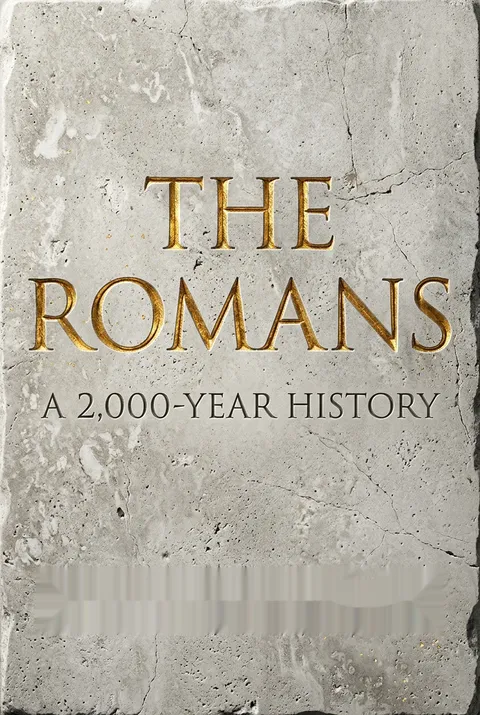
The Romans: A 2,000-Year History by Edward J. Watts receives mixed praise. Readers appreciate its ambitious scope covering Rome's founding through Constantinople's 1204 fall, with accessible prose and balanced treatment of both Roman and Byzantine periods. Many find it an excellent primer drawing on extensive sources. However, critics note insufficient depth and analysis, describing it as chronological mini-biographies rather than exploring institutional resilience or answering fundamental "why" questions. The 700-page compression leaves readers wanting more context, though it successfully introduces intriguing figures and periods for further study. Overall, it's praised as an engaging gateway to Roman history.
People Also Read




Download PDF
Download EPUB
.epub digital book format is ideal for reading ebooks on phones, tablets, and e-readers.








































