
Key Takeaways
1. The True Marathon: Pheidippides's Epic Ultramarathon
Few people realize that the footsteps of an ancient Athenian hemerodromos (day-long runner) essentially preserved the fate of modern culture and forever influenced the values and way of life we know today.
A historical correction. The popular narrative of Pheidippides running 26.2 miles from Marathon to Athens to announce victory, then dying, is a simplified and incomplete version of history. The actual feat was far more monumental, involving multiple long-distance runs that collectively spanned hundreds of miles and played a pivotal role in the survival of nascent democracy. The word "marathon" itself literally translates to "a place full of fennel," referring to the battlefield, not a specific distance.
The critical mission. Before the Battle of Marathon, Pheidippides, a trained hemerodromos, was dispatched from Athens to Sparta to seek military aid. This journey covered approximately 140 miles across rugged, mountainous terrain, which he completed in less than two days. This incredible feat, often overlooked, was an ultramarathon of immense proportions, undertaken without modern gear, nutrition, or support.
Beyond the battlefield. After delivering his plea to the Spartans (who were delayed by religious law), Pheidippides returned to Athens, then immediately ran another 25 miles to Marathon to inform the Athenian generals of the Spartan delay. This crucial intelligence allowed the Greeks to adapt their strategy, leading to their improbable victory against the vastly superior Persian forces. His final, famous run from Marathon to Athens was merely the last leg of an epic, world-altering series of runs.
2. Ancestral Roots and the Call to Run
Perhaps we really were born to run, as some have suggested, and certain people feel the pull of this primordial instinct more strongly than others.
A genetic predisposition. The author, Dean Karnazes, traces his paternal lineage to goat herders in the hills of Silimna, Greece, and his maternal roots to the long-lived island of Ikaria. These ancestral connections manifest in his own physical traits, such as unusually developed calves, and a deep-seated "adventurous wanderlust" and "strange penchant for endurance and self-discipline" from a young age.
Early signs of endurance. From sitting attentively through lengthy Greek Orthodox liturgies to winning a four-lap schoolyard race by simply "chugging along" while others quit, Dean displayed an innate capacity for sustained effort. These childhood experiences hinted at a deeper connection to endurance, a feeling that running held an unexpected power to move people and was a source of true freedom.
Inspired by legend. A conversation with his father about Pheidippides's heroic, albeit fatal, run ignited a lifelong purpose in young Dean. The idea of a man collapsing from exhaustion only after fulfilling his duty resonated deeply, instilling in him the desire to "be as Pheidippides" and run a marathon, a mission he first accomplished at age 14 by running 105 laps around a high school track.
3. Beyond the Corporate Treadmill: Finding Life's Purpose
The secret of happiness is freedom, and the secret of freedom is courage.
Disillusionment with success. After achieving conventional "American dream" success—graduating valedictorian, securing a corporate job, and becoming a millionaire by his late twenties—Dean found himself perpetually restless and empty. Despite outward appearances, his life felt misaligned with his personal values, leading to a profound sense of internal strife and questioning of his definition of success.
A transformative moment. On his 30th birthday, in a moment of drunken impulsivity, Dean stripped down to his underwear and ran 30 miles through the night. This spontaneous act, his first run since high school, became a pivotal turning point, altering his life's course and revealing a path to genuine fulfillment. He realized that running, not corporate life, was his true calling.
Embracing the "ultra." This 30-mile run surpassed the marathon distance, leading him to discover the world of ultramarathoning—distances "beyond a marathon." This new challenge, initially perceived as impossible, shattered his preconceived limits of human capability. He transitioned from a corporate job to a life dedicated to extreme endurance, finding liberation and a cleansing of his soul in pushing his physical and mental boundaries.
4. The Hemerodromoi: Ancient Messengers of Destiny
The Greeks realized that if they could build a more efficient infrastructure for communicating between city-states, they would be able to develop and thrive in comparison to other societies where less proficient means of information transfer were in place.
Critical communication infrastructure. In ancient Greece, hemerodromoi, or "day-long runners," were vital for communication between city-states. These esteemed foot heralds were the equivalent of a "faster Internet," enabling societies to disseminate and gather critical information swiftly, which was essential for protection, growth, and development.
Elite athletes and trusted diplomats. Hemerodromoi were chosen for their extraordinary physical abilities, impeccable lineage, and unwavering trustworthiness. They were not just athletes but also wise diplomats and gifted orators, often carrying top-secret government information. Their role demanded inexhaustible endurance, great sacrifice, and an incorruptible character, making them inviolate national ambassadors protected by the god Hermes.
Survival skills and natural wisdom. Unlike modern runners with advanced gear and support, hemerodromoi ran in sandals or barefoot, relying on basic tunics. They sustained themselves by foraging for wild fruits, olives, and ancient superfoods like hippophae (sea buckthorn), which provided sustained energy. Their survival depended on an acute understanding of:
- Topography and specialized routes
- Weather patterns and seasonal shifts
- Navigational guideposts (moon, stars)
- Their own internal state (vigor vs. fatigue)
5. Spartathlon: A Modern Test of Ancient Resolve
The Spartathlon now attracts a global field of the most elite ultramarathoners from around the world. Still, in some years, less than a third of the entrants are able to complete it.
Re-enacting history. After realizing a precise re-creation of Pheidippides's original route was impossible due to 2,500 years of change, Dean committed to running the Spartathlon. This 153-mile footrace from Athens to Sparta, co-founded by British RAF Wing Commander John Foden, is the closest modern approximation of Pheidippides's epic journey, demanding extreme physical and mental fortitude.
Unforgiving challenge. The Spartathlon is renowned for its brutal difficulty, imposing strict cutoff times at numerous checkpoints along the course. Runners must cover the first 50 miles in under 9.5 hours, a pace faster than many 50-mile races allow for completion. This relentless pressure leaves little room for error, taxing an athlete's psyche from the very first step and making failure a very real possibility.
Ancient diet, modern struggle. To honor Pheidippides, Dean trained and attempted to run the Spartathlon consuming only ancient Greek foods: figs, olives, pasteli (sesame-honey paste), and cured meats, along with plain water. This commitment to authenticity added another layer of challenge, as his body struggled with nausea and the unfamiliar fuel during the race, highlighting the immense difficulties faced by ancient hemerodromoi.
6. The Greek Paradox: Beauty, Struggle, and Spirit
In this swirling ambiguity, this impossibly illogical riddle of contradiction, that everything suddenly made perfect sense.
A land of contrasts. Greece presents a bewildering paradox: ancient splendor coexisting with modern decay, profound wisdom alongside economic hardship, and a vibrant spirit amidst despair. The author observes this in Athens's graffiti-filled alleyways near the Acropolis, or in the exquisitely designed but underutilized modern highways cutting through ancient, untouched landscapes.
Resilience and joy. Despite economic struggles, the Greek people maintain a deep-seated joy for life, evident in spontaneous street dancing, communal meals, and unwavering hospitality. The author experiences this firsthand in small villages where people, though poor, seem richer in spirit than many millionaires he knows, always ready to celebrate and find goodness in the moment.
A spiritual homecoming. For Dean, Greece is more than a country; it's a spiritual home. His first glimpse of the Acropolis evokes a profound sense of destiny, a feeling of having "come home." This connection to his ancestral land, its history, and its people, despite its contradictions, provides a powerful sense of belonging and purpose, transforming his understanding of himself.
7. Mastering Mind and Body: The Ultramarathoner's Ethos
There comes a time when the human body is fully tapped out, depleted, and spent. Even the mightiest cannot go on forever; this is where mental fortitude comes into play.
The mental battle. Ultramarathoning is as much a mental challenge as a physical one. Beyond the initial 50 miles, the race is run with the mind, requiring immense mental fortitude to push past physical depletion. Dean describes this as a "raw confrontation with self," where feelings of self-doubt and doom are battled by waves of elation.
Overcoming pain. Dean developed a unique method for dealing with pain: instead of suppressing it, he delves into it headlong, focusing on its origins until it dissipates. He views pain not as a negative, but as a sensation that makes him feel alive, embracing it as a path to deeper self-awareness and spiritual cleansing.
Transcendence and self-dismantling. In the later stages of an ultramarathon, the body moves beyond fatigue into a meditative transcendence. Dean experiences out-of-body sensations and periods of "sleep running," where his mind detaches, and he operates on autopilot. This "glorious dismantling of self" allows him to connect with a deeper, more primitive state of being, finding truth and purpose in suffering.
8. The Unsung Hero: Pheidippides's World-Saving Feat
Pheidippides’s historic run, quite literally, saved the world.
Pivotal military intelligence. Pheidippides's return journey from Sparta to Athens, carrying news of the Spartan delay, was a critical piece of military intelligence. Without this information, the Athenians would have retreated from Marathon, believing Spartan reinforcements were imminent, leaving Athens vulnerable to a two-pronged Persian attack.
Averted catastrophe. The Spartan delay meant the Athenians could not rely on their allies. This forced General Miltiades to devise an innovative, aggressive strategy: a surprise charge at the Persian forces at Marathon. Pheidippides's message prevented the Athenians from making a fatal strategic error, directly leading to the Battle of Marathon.
Preserving Western Civilization. The Battle of Marathon is considered one of the most significant events in human history. Had the Persians won, the nascent Greek democracy, philosophy, art, and science—the foundations of Western civilization—might have been lost forever. Pheidippides's superhuman endurance and timely delivery of information directly enabled this victory, making his multi-stage ultramarathon conquest a world-saving act.
9. The Enduring Legacy: Why We Run
Not life, but good life, is to be chiefly valued.
Beyond the finish line. The Spartathlon's unique finish, touching the feet of King Leonidas's statue and receiving an olive branch coronet, symbolizes a connection to ancient ideals of honor and sacrifice. It's a reminder that the race is not just about physical achievement but about embodying the spirit of those who fought for freedom and virtue.
The magic of mortality. The ancient Greeks, unlike the immortal gods, valued life precisely because of its finite nature. This understanding that "nothing lasts forever" and that "all things have their place and time but must inevitably come to an end" imbues life with magic and meaning. It encourages living fully, embracing both glory and tragedy, and finding contentment not in comfort, but in confronting great discomfort.
A timeless quest. Running, especially ultramarathoning, becomes a portal to self-discovery, a way to engage intimately with the world while escaping its mundane trivialities. It's a journey to "lose yourself, and... find yourself," echoing the ancient Greek quest for arête (excellence and virtue). The author's journey to find Pheidippides ultimately led him to a deeper understanding of his own identity and the enduring human spirit.
Review Summary
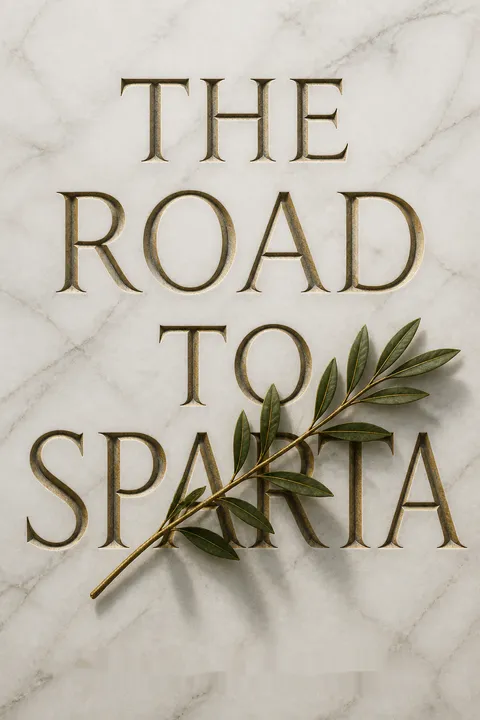
The Road to Sparta by Dean Karnazes receives mixed reviews (3.86/5). Readers appreciate the blend of running and Greek history, particularly the story of Pheidippides' legendary run from Athens to Sparta. However, many criticize Karnazes' writing style as overly embellished with "purple prose" and excessive use of a thesaurus. Common complaints include humble-bragging about his accomplishments, repetitive content, and self-promotion. Runners generally find it more inspiring than non-runners. Some praise the historical insights and motivational ending, while others feel it prioritizes romanticism over historical accuracy and focuses too much on the author's popularity.
People Also Read









About the Author
Other books by Dean Karnazes

Download PDF
Download EPUB
.epub digital book format is ideal for reading ebooks on phones, tablets, and e-readers.








































