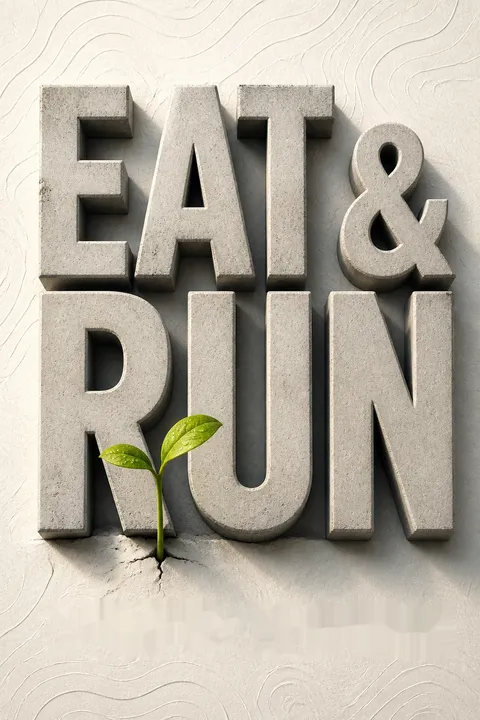

Key Takeaways
1. Endurance is Forged in Early Life's Hardships.
By the time I started running, I knew how to suffer.
Childhood discipline. Scott Jurek's early life in rural Minnesota was characterized by relentless chores and a strict, often grumpy, father who instilled a powerful work ethic. From stacking firewood to picking rocks from the garden, he learned that "Sometimes you just do things!" without questioning why, a lesson that would become foundational to his endurance. His mother, despite battling multiple sclerosis, also taught him resilience and the importance of contributing to the family.
Early responsibilities. As his mother's health deteriorated, Scott took on increasing household duties, including cooking, cleaning, and caring for his younger siblings. This forced him into a role of responsibility and self-reliance at a young age, fostering a deep sense of duty and the ability to push through discomfort. These experiences, though challenging, inadvertently prepared him for the extreme demands of ultramarathon running.
Running as escape. Initially, running was an escape from the pressures of home and the teasing he endured as a "Pee-Wee" at school. He discovered a natural talent for gaining strength as others faded, a unique endurance that compensated for his lack of natural speed. This early realization that he could "make up ground" when others slowed down hinted at the extraordinary ultrarunner he would become.
2. A Plant-Based Diet Fuels Peak Performance and Recovery.
The healthier I had eaten, the faster and stronger I had become.
Dietary evolution. Scott's journey to a plant-based diet was gradual, influenced by friends like "Hippie Dan" and his wife Leah, and his own observations. Initially a typical Midwestern meat-eater, he began experimenting with vegetarian foods, noticing improved energy and recovery. A pivotal moment came with a delicious vegetarian chili, convincing him that plant-based food could be both satisfying and performance-enhancing.
Performance benefits. Transitioning to a vegan diet dramatically enhanced his athletic performance and overall health. He experienced:
- Faster recovery times between intense workouts and races.
- Reduced soreness and inflammation.
- A leaner, more chiseled physique with increased muscle definition.
- Improved health markers like lower blood pressure and triglycerides, and higher "good" cholesterol.
- Enhanced concentration and sustained energy throughout the day.
Food as medicine. Scott came to view food as his primary medicine, rejecting processed foods and refined carbohydrates in favor of whole, natural ingredients. He learned that a varied plant-based diet provided ample protein, essential vitamins, and minerals, while avoiding the hormones, chemicals, and carcinogens often found in animal products. This conscious eating became a cornerstone of his ability to push his body to extreme limits.
3. The Mind, Not Just the Body, Defines Limits.
As powerful as our legs are, as magnificent as our lungs and arms and muscles are, nothing matters more than the mind.
Mental mastery. From a young age, Scott learned to control his body with his mind, notably lowering his high blood pressure through visualization. This early insight into the mind's power became central to his ultrarunning philosophy. He understood that while physical conditioning was crucial, the ultimate barrier in extreme endurance events was mental, not physical.
The central governor. Scott's experiences align with the "central governor theory," which posits that the brain, not just peripheral fatigue, regulates how much effort the body can exert. The brain creates sensations of pain and fatigue to prevent injury, but by understanding this mechanism, runners can learn to push beyond these perceived limits. This mental reprogramming allows access to deeper reserves of strength.
Willpower over weakness. In the crucible of an ultramarathon, the mind's ability to override physical distress is paramount. Scott recounts moments of extreme nausea, dehydration, and injury where sheer will propelled him forward. He learned to compartmentalize negative thoughts and focus on immediate tasks, transforming seemingly insurmountable challenges into manageable steps, proving that the decision to quit often originates in the mind, not the body.
4. Embrace Pain as a Pathway to Deeper Strength.
Beyond the very extreme of fatigue and distress, we may find amounts of ease and power we never dreamed ourselves to own; sources of strength never taxed at all because we never push through the obstruction.
Redefining pain. Scott's high school ski coach, Glen Sorenson, famously declared, "Pain only hurts." This mantra, combined with his childhood experiences of enduring discomfort, taught Scott to view pain not as a barrier, but as a signal to dig deeper. He learned that pushing through the initial agony often revealed hidden reservoirs of strength and resilience.
The ultrarunner's crucible. Ultramarathons, with their long stretches of agony, hallucinations, and physical breakdown, became Scott's chosen arena for self-discovery. He embraced the suffering, understanding that these extreme conditions were necessary to "pry myself open" and access a profound state of clarity and peace. Vomiting, black toenails, and dehydration were simply "rites of passage."
Growth through struggle. Injuries and setbacks, though painful, became his "best teachers." Whether running on a torn ankle or a broken toe, he learned to accept the pain, take stock of the situation, and focus on what he could do. This process of confronting and moving through adversity, rather than avoiding it, consistently led to personal growth and a deeper understanding of his own capabilities.
5. Training Blends Instinct with Scientific Precision.
By combining instinct and technique, I searched for that small zone where I could push myself as hard as possible without injury and the unraveling of the body’s systems.
Structured approach. Initially, Scott's training was intuitive, driven by Dusty's "monster distances" philosophy. However, he soon sought out the wisdom of historical figures like Arthur F. H. Newton (father of Long Slow Distance) and Percy Cerutty (advocate of whole foods and intuitive training). He integrated structured elements like:
- Interval training for speed and mental focus.
- Uphill "spinning" (short strides, high turnover) and downhill lengthening for efficiency.
- Core strengthening and yoga for stability and flexibility.
Technique and technology. Scott meticulously studied running technique, from foot strike to arm swing, aiming for maximum efficiency. He also embraced modern tools, using heart rate monitors and VO2 max testing to quantify his progress and fine-tune his efforts. This blend of ancient wisdom and modern science allowed him to optimize his body's performance, finding the "sweet spot" between pushing hard and avoiding injury.
Mindful movement. Beyond physical mechanics, Scott focused on mindful breathing techniques, learning to "belly breathe" and use nasal breathing to lower his heart rate and enhance concentration. This holistic approach, integrating physical, mental, and even spiritual elements, transformed running from mere exercise into a deeply integrated practice that honed both his body and his mind.
6. Community and Connection Sustain the Solitary Journey.
Ultrarunners train so hard and long and compete so ferociously that the friendships that develop are unusually sticky and tenacious.
The ultrarunning family. Despite the solitary nature of ultramarathons, Scott found profound connection and camaraderie within the sport. His closest friendships, particularly with Dusty Olson, Ian Torrence, and Rick Miller, were forged in the shared crucible of extreme endurance. These relationships provided essential support, motivation, and a sense of belonging.
Pacer's vital role. Pacers, like Dusty and Ian, became more than just guides; they were "second brains," offering encouragement, managing nutrition, and pushing Scott when his own will faltered. Their unwavering belief and sometimes harsh cajoling were critical to his victories, highlighting the paradox that even in a fiercely individual sport, success often depends on a dedicated team.
Shared struggle and joy. Camping at finish lines, cheering on fellow runners, and sharing stories of hardship and triumph fostered a deep sense of community. Scott realized that every finisher, regardless of placement, had overcome immense personal battles. This collective experience of pushing limits and finding joy in shared suffering created bonds stronger than any other in his life.
7. Adversity Reveals True Character and Purpose.
It’s not the losing that defines us. It’s how we lose. It’s what we do afterward.
Personal trials. Scott faced significant personal adversity, including his parents' divorce, his mother's prolonged illness and eventual death, and his own divorce. These events left him feeling "hollowed out" and questioning his purpose, even leading to a period of burnout where running lost its appeal. He contemplated abandoning competitive running for a simpler life off the grid.
Physical setbacks. Injuries were an inevitable part of his career, from torn ankle ligaments and a broken toe to plantar fasciitis. These physical limitations forced him to adapt his training, seek alternative remedies, and confront his vulnerability. He learned that true strength wasn't about avoiding injury, but about how he responded to it—by adapting, healing, and finding new ways to move forward.
Redemption and resilience. Each setback, whether personal or physical, became an opportunity for growth and re-evaluation. His decision to swim in the American River during a Western States race, rather than push through injury, marked a shift in perspective. He learned that true character is revealed not in victory, but in how one navigates loss, disappointment, and the inevitable "cracks" that allow the light to get in, ultimately leading to renewed purpose.
8. Simplicity and Efficiency Unlock Human Potential.
The more you know, the less you need.
Tarahumara wisdom. Scott's encounters with the Tarahumara Indians in Mexico's Copper Canyon profoundly influenced his philosophy. He observed their "super efficient" running form, their plant-based diet, and their seamless integration of running and eating into daily life for survival. They embodied a natural, un-self-conscious approach to movement and sustenance that resonated deeply with his own evolving beliefs.
Minimalist living. Inspired by figures like Hippie Dan and the Tarahumara, Scott embraced a more minimalist lifestyle. He learned to appreciate the bounty of local, seasonal foods, grow his own produce, and reduce waste. This focus on essential needs and a deep connection to the land mirrored the practices of his own grandparents, who lived off what they grew and hunted.
Unlearning modern habits. Scott realized that modern life, with its sedentary habits, processed foods, and over-reliance on technology, had created imbalances in human health and movement. He sought to "unlearn bad habits" and correct these imbalances, advocating for:
- Barefoot or minimal shoe running to improve natural form.
- Varied, core-driven movements to counteract repetitive work.
- A diet of whole, unprocessed foods to fuel the body naturally.
This pursuit of simplicity and efficiency became a pathway to greater health and freedom.
9. Beyond Winning: Seek Transcendence and Presence.
What matters is how we move toward that goal. What’s crucial is the step we’re taking now, the step you’re taking now.
Evolving purpose. While early victories fueled his ego, Scott's understanding of ultrarunning's purpose evolved. He realized that chasing concrete goals, though motivating, was not the ultimate point. The true reward lay in the process itself—the journey, the effort, and the profound states of mind achieved during extreme exertion.
The "zone" of satori. Ultramarathons became a path to transcendence, a "zone" where worries melted away, and the present moment came into sharp focus. This state of "satori"—a Zen-like clarity—was often found at the edge of physical and mental breakdown, a place where the body's warning lights flashed red, and something deeper opened up within him.
Mindfulness in motion. Running became a form of meditation, a practice of "doing without doing" (wu wei). He learned to immerse himself in the present, focusing on each step, each breath, and the immediate surroundings. This mindful approach allowed him to connect with nature, experience profound peace, and discover a sense of selflessness that transcended the competitive drive.
10. Continuous Adaptation is Key to Lifelong Growth.
Ultrarunners need to bring all the knowledge we can bear to our training, but we can’t afford to be rigid.
Embrace flexibility. Scott's career was marked by constant learning and adaptation. He continuously refined his diet, experimented with new training methods, and adjusted his mental strategies based on experience, scientific research, and intuition. He understood that rigidity in approach could lead to burnout or injury, especially in a sport as unpredictable as ultrarunning.
Lessons from setbacks. Every race, every injury, and every personal challenge provided valuable lessons that informed his evolution as an athlete and a person. He learned to:
- Listen to his body and take rest days when needed.
- Adjust training plans to accommodate injuries or life events.
- Re-evaluate goals and motivations.
- Seek new challenges to keep the spirit of exploration alive.
The ongoing journey. The path of self-discovery, like an ultramarathon, has no true finish line. Scott's journey, from a shy kid to a world-renowned ultrarunner, demonstrates that growth is a continuous process of pushing boundaries, learning from experience, and adapting to life's inevitable changes. He continues to run, eat, and live with mindfulness, always seeking to understand his limits and, paradoxically, to go beyond them.
Review Summary
Eat & Run by Scott Jurek receives mixed reviews averaging 4.03/5 stars. Supporters praise his inspiring ultramarathon achievements and plant-based diet advocacy, calling the book motivating with useful recipes. Critics find the writing self-absorbed, repetitive, and lacking narrative depth, with excessive focus on victories and inadequate exploration of relationships and failures. Several reviewers note the book feels incomplete, omitting races he didn't finish. The expensive vegan recipes receive attention. Many appreciate Jurek's athleticism while questioning his storytelling ability, suggesting a ghostwriter for future works. Overall, runners and vegans found more value than general readers.
People Also Read





Download PDF
Download EPUB
.epub digital book format is ideal for reading ebooks on phones, tablets, and e-readers.








































