
Plot Summary
Recruitment of the Impossible
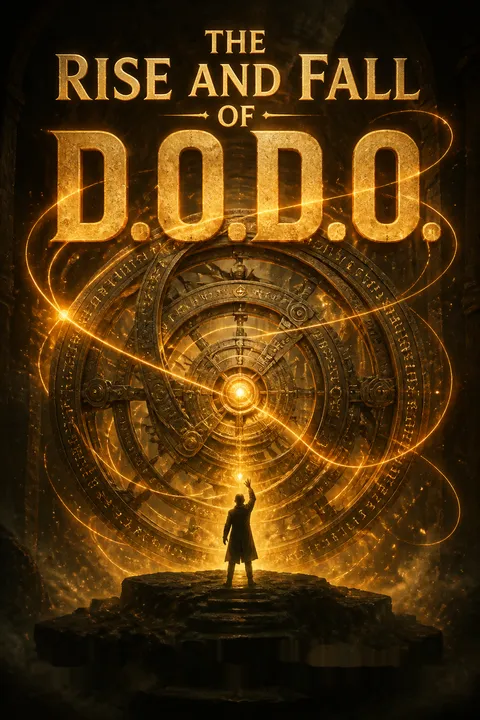
Melisande Stokes, a struggling linguist, is recruited by the enigmatic Tristan Lyons into a secret government project. Their mission: to investigate the historical disappearance of magic. As Mel is drawn into the world of DODO (Department of Diachronic Operations), she discovers that magic was once real, but faded from the world in the 19th century. The project's first challenge is to prove magic's existence and find a way to bring it back. Mel's skepticism is tested as she translates ancient documents, each hinting at a world where witches shaped history. The emotional charge between Mel and Tristan grows, setting the stage for a partnership that will challenge the boundaries of science, history, and trust.
Magic's Last Flicker
Mel and Tristan's research reveals that magic's decline coincided with the rise of technology, especially photography. The pivotal moment: a photograph of a solar eclipse in 1851, which, through quantum mechanics, "collapsed the wave function" of reality and snuffed out magic. The team theorizes that magic and technology are fundamentally incompatible, and that the act of recording reality destroys the ambiguity magic needs to function. This revelation is both thrilling and tragic, as Mel realizes the world she lives in is a post-magic wasteland. The emotional weight of this loss is palpable, and the team's resolve to restore magic hardens.
The Quantum Cat's Box
Enter Dr. Frank Oda, whose failed "Ontic Decoherence Cavity" (ODEC) experiment is the missing link. Oda's device, inspired by Schrödinger's cat, is designed to create a space where quantum uncertainty—and thus magic—can exist. With Oda's help, DODO builds a human-sized ODEC, hoping to create a bubble where magic can return. The team's excitement is tempered by the risks: the ODEC is dangerous, and the first human trials leave participants disoriented and "decoherent." Yet, the possibility of restoring magic is now within reach, and the team's camaraderie deepens as they face the unknown together.
ODEC: Portal to the Past
The breakthrough comes when the team recruits Erszebet Karpathy, a centuries-old Hungarian witch, from a nursing home. Inside the ODEC, Erszebet's powers are restored, and she performs real magic—transformations, transmutations, and, most importantly, Sending people through time. DODO's mission shifts: they can now send operatives (DOers) into the past to influence history. But magic is fickle, and the ODEC's limitations—its size, its need for living brain tissue, its vulnerability to technology—mean that every operation is fraught with danger. The emotional stakes rise as Mel, Tristan, and Erszebet become both pioneers and guinea pigs in a new era of magic.
Witches, Warriors, and Bureaucrats
As DODO grows, so does its bureaucracy. New recruits—fighters, lovers, spies, and sages—are trained to operate in historical eras. The team must also recruit more witches (KCWs) in the past to create a network of safe houses and magical nodes. The project's success attracts the attention of generals, politicians, and rival powers, each with their own agendas. The emotional toll of secrecy, the pressure to deliver results, and the ethical dilemmas of rewriting history weigh heavily on Mel and Tristan. Their partnership is tested by ambition, jealousy, and the ever-present threat of failure.
The Witch's Bargain
Erszebet's story reveals the loneliness and pain of being a witch in a world that no longer believes in magic. To survive into the present, she cast a spell to slow her aging, at Mel's urging. The emotional cost of this choice—outliving everyone she loves, enduring centuries of isolation—haunts her. Meanwhile, DODO's witches are both assets and prisoners, their powers exploited for the project's goals. The tension between agency and servitude, between gratitude and resentment, simmers beneath the surface, threatening to unravel the fragile alliance between witches and scientists.
Building the Witch Network
DODO's operatives are sent to recruit witches in key historical eras—colonial America, Elizabethan England, medieval Constantinople, and more. Each mission is a blend of espionage, diplomacy, and magical negotiation. The network grows, but so do the risks: rival powers are building their own networks, and the possibility of "Diachronic Shear"—catastrophic reality collapse—looms over every operation. The emotional highs of success are matched by the lows of betrayal, loss, and the ever-present fear of unintended consequences.
The Rise of DODO
With the Chronotron—a quantum supercomputer that maps the multiverse—DODO becomes a force capable of shaping history on a grand scale. The team orchestrates complex operations to shift geopolitical balances, prevent wars, and enrich the agency. But power breeds hubris, and the line between safeguarding the future and playing god becomes blurred. Mel and Tristan, once idealistic, now grapple with the moral ambiguity of their work. The emotional cost of leadership, the strain of secrecy, and the erosion of trust threaten to tear the team apart.
The Chronotron Unleashed
The Chronotron's ability to predict and manipulate Strands (alternate timelines) gives DODO unprecedented power—but also reveals the limits of control. Every change ripples unpredictably, and the risk of Diachronic Shear grows. The team's victories are shadowed by the knowledge that they are tampering with forces beyond comprehension. The emotional arc shifts from triumph to anxiety, as the team realizes that their greatest tool may also be their undoing.
The Psy-Ops Temptation
DODO's focus shifts from time travel to psychological operations—using witches' powers to influence, manipulate, and control. Portable ODECs (ATTOs) make magic mobile, and witches like Gráinne and Erszebet become the linchpins of new forms of warfare. The ethical boundaries blur further, as magic is used for mind control, coercion, and subversion. Mel and Tristan are increasingly uneasy, sensing that the project's original purpose has been corrupted. The emotional tension between power and conscience comes to a head.
Gráinne's Gambit
Gráinne, a powerful Irish witch, manipulates DODO's leadership and launches a plan to undo the technological progress that killed magic. She seduces Blevins, the agency's director, and uses her influence to sideline Mel and Tristan. Gráinne's goal: to roll back history, strand by strand, and create a world where magic reigns and science never rises. The emotional stakes are existential—if she succeeds, the world as we know it will cease to exist.
The Fall of the Present
Mel is marooned in 1851 London, just before the final eclipse that ends magic. Tristan is nearly sent to oblivion, saved only by Erszebet's last-minute change of heart. DODO fractures, with Gráinne in control and the original team scattered or in hiding. The emotional arc is one of loss, desperation, and the struggle to hold onto hope in the face of overwhelming odds.
Marooned in Time
Mel, trapped in a world where magic is dying, must find a way to survive and signal for help. Her only hope lies in the network of witches she helped build—and in the loyalty of friends who refuse to abandon her. The emotional journey is one of isolation, resilience, and the enduring power of friendship.
The Viking's Walmart Raid
Magnus, a Viking brought forward in time, leads a berserker raid on a Walmart using the ATTO. His goal: to carve treasure maps into his warriors' backs and return to the past to plunder the Americas. The raid triggers a cascade of unintended consequences, as the boundaries between past and present blur. The emotional tone is one of dark comedy, horror, and the absurdity of history gone off the rails.
The Fugger's Endgame
The Fugger Bank, ancient masters of information and finance, reveal their own agenda: to manage the flow of money, power, and magic across Strands. They intervene to prevent total chaos, supplying the materials needed for a rogue ODEC and offering cryptic guidance. The emotional arc is one of uneasy alliance, as the team realizes that even in a world of magic, money talks.
The Battle for History
With Gráinne poised to undo the scientific revolution, Mel, Tristan, and their allies must use every tool—magic, science, and cunning—to stop her. The final confrontation is a battle not just for power, but for the soul of humanity: will the world be ruled by magic, or by reason? The emotional climax is one of sacrifice, courage, and the reaffirmation of trust and love.
The Witch's Choice
Erszebet, faced with the choice to preserve herself and save magic, must weigh the cost of centuries of loneliness against the hope of a better future. Her decision, shaped by Mel's compassion and the lessons of history, becomes the fulcrum on which the fate of magic—and the world—turns. The emotional resolution is bittersweet, as the team finds meaning in struggle and the possibility of new beginnings.
A New Strand Begins
With the immediate crisis averted, the survivors regroup in a new, clandestine network. The world is changed, but not destroyed. The struggle between magic and science continues, now in the shadows. Mel and Tristan, finally united, look to the future with hope and determination. The emotional arc closes on resilience, renewal, and the enduring power of human connection.
Analysis
A cautionary tale of power, ambition, and the fragility of realityThe Rise and Fall of D.O.D.O. is a dazzling, satirical, and deeply human exploration of what happens when science, magic, and bureaucracy collide. At its core, the novel is about the dangers of unchecked ambition—whether in the pursuit of knowledge, power, or even justice. The story warns that every attempt to control the world, to "fix" history, carries the risk of unintended consequences, and that the line between hero and villain is often drawn by perspective, not principle. The novel's polyphonic structure, blending humor, heartbreak, and high-concept science, invites readers to question the nature of reality, the ethics of intervention, and the meaning of progress. In the end, the lesson is one of humility: that the world is more complex, more unpredictable, and more interconnected than any one person—or agency—can comprehend. The true magic lies not in bending reality to our will, but in the courage to face uncertainty, the wisdom to accept limits, and the grace to trust in one another.
Review Summary
Reviews for The Rise and Fall of D.O.D.O. are mixed, averaging 3.86/5. Many praise its inventive premise blending time travel, quantum physics, and witchcraft, along with genuine humor and creative storytelling formats including diary entries, memos, and an epic Viking poem. However, common criticisms include excessive length, a slow middle section bogged down by bureaucratic satire, underdeveloped characters, and an abrupt ending. Most agree the concept is brilliant, but execution is uneven, with the novel losing momentum after a strong start.
People Also Read
Characters
Melisande Stokes
Mel is the heart and conscience of DODO. Initially a struggling academic, she is drawn into the world of magic and time travel by Tristan. Her gift for languages and empathy makes her indispensable, both as a translator and as a bridge between worlds. Mel's journey is one of transformation—from skeptic to believer, from follower to leader. Her deep sense of responsibility and compassion often put her at odds with the project's more ruthless elements. Her relationship with Tristan is a slow-burning arc of trust, longing, and mutual respect, culminating in a partnership that is both romantic and heroic. Mel's exile in 1851 tests her resilience and faith, but her hope and ingenuity never waver.
Tristan Lyons
Tristan is the driving force behind DODO's creation. A West Point graduate with a physicist's mind and a soldier's discipline, he is both idealistic and pragmatic. Tristan's belief in the possibility of restoring magic is matched by his willingness to take risks and break rules. His partnership with Mel is the emotional core of the story, marked by unspoken affection, shared danger, and the burden of leadership. Tristan's journey is one of humility—learning to trust others, to question authority, and to accept his own limitations. His near-destruction at Gráinne's hands and his eventual reunion with Mel mark his growth from lone wolf to true collaborator.
Erszebet Karpathy
Erszebet is both asset and victim—a powerful witch who survives into the present by slowing her aging, at great personal cost. Her sharp wit, pride, and vulnerability make her a complex figure. She is both fiercely independent and deeply lonely, resenting her exploitation by DODO but ultimately choosing to help Mel and Tristan. Erszebet's arc is one of self-acceptance and redemption, as she moves from bitterness to agency, and from isolation to solidarity with her fellow witches. Her decision to defy Gráinne and save Tristan is a turning point, revealing her capacity for loyalty and courage.
Gráinne
Gráinne is the most dangerous witch in the story—a charismatic, cunning, and seductive force who seeks to undo the technological world and restore magic's primacy. Her motivations are both personal and ideological: a longing for a world where witches are free, and a willingness to sacrifice anything to achieve it. Gráinne's manipulation of Blevins and her betrayal of Mel and Tristan are acts of both vengeance and vision. Yet, she is not a simple villain; her pain, ambition, and brilliance make her a tragic figure, doomed by her own uncompromising will.
Frank Oda
Oda is the scientific genius behind the ODEC and the Chronotron. His blend of humility, curiosity, and stubbornness anchors the team. Oda's partnership with his wife Rebecca is a model of mutual respect and support. His retirement is bittersweet, as he watches his creations become tools of both wonder and danger. Oda's legacy is the possibility of reconciliation between magic and science—a hope that endures even as the world teeters on the brink.
Rebecca East-Oda
Rebecca is both a contemporary witch and the emotional center of the Oda household. Her pragmatism, warmth, and quiet strength make her a stabilizing force. Rebecca's late awakening to her own magical powers is a metaphor for the hidden potential in all of us. Her role as den mother to the witches, and her willingness to risk everything for her friends, mark her as a true hero.
Mortimer Shore
Mortimer is the IT wizard and martial arts enthusiast who keeps DODO's systems running. His humor, loyalty, and technical brilliance make him indispensable. Mortimer's creation of the GRIMNIR network is a lifeline for the resistance, and his ability to adapt and improvise is a model for survival in a world of shifting realities.
Roger Blevins
Blevins is the embodiment of institutional ambition—brilliant, manipulative, and ultimately undone by his own hubris. His seduction by Gráinne and his betrayal of Mel and Tristan are acts of both weakness and desperation. Blevins's arc is a cautionary tale about the dangers of power without principle, and the ease with which good intentions can be corrupted.
Magnus
Magnus is the chaos agent—a time-displaced Viking who seizes the opportunity to raid the modern world. His Walmart siege is both comic and terrifying, a reminder of the unpredictability of history. Magnus's alliance with Gráinne and his eventual defection to the Fuggers make him a symbol of the dangers of unchecked ambition and the limits of control.
The Fuggers
The Fugger family is the invisible hand behind the flow of money, power, and magic across Strands. Their motives are pragmatic, not ideological—they seek stability, profit, and the management of risk. The Fuggers' interventions are both helpful and menacing, a reminder that in a world of magic and science, money still rules.
Plot Devices
Multiverse and Quantum Uncertainty
The novel's central conceit is that magic operates in the quantum uncertainty between possible realities, and that technology—especially photography—collapses those possibilities, killing magic. The ODEC is a device that restores quantum ambiguity, allowing magic to function. The Chronotron is a quantum supercomputer that maps the multiverse, enabling DODO to plan operations across Strands. This structure allows for both the thrill of time travel and the existential dread of unintended consequences. Foreshadowing is used throughout, as early hints about the dangers of Shear and the incompatibility of magic and technology pay off in catastrophic events.
Epistolary and Polyphonic Narrative
The story is told through diaries, memos, emails, transcripts, and letters, creating a sense of immediacy and multiplicity. This device allows for deep psychological insight into characters, the layering of unreliable narrators, and the gradual revelation of secrets. The shifting narrative structure mirrors the instability of the multiverse, and the fragmentation of truth in a world where history is always being rewritten.
Bureaucratic Satire and Organizational Creep
DODO's evolution from a scrappy startup to a bloated bureaucracy is both comic and tragic. The proliferation of acronyms, policies, and performance plans satirizes the way institutions lose sight of their original purpose. The tension between innovation and control, between individual agency and systemic inertia, is a recurring theme. The bureaucracy becomes both a shield and a prison, enabling both heroism and betrayal.
Witches as Both Tools and Agents
Witches are both the source of DODO's power and its most vulnerable assets. Their agency is constantly negotiated—sometimes they are collaborators, sometimes prisoners, sometimes revolutionaries. The tension between gratitude and resentment, between loyalty and rebellion, drives much of the plot. The witches' ability to "Wend" between Strands is both a superpower and a curse, and their choices shape the fate of the world.
Diachronic Shear and the Limits of Control
The threat of Diachronic Shear—a catastrophic rupture in reality—serves as both a plot device and a metaphor for the limits of human ambition. Every attempt to control history risks unintended consequences, and the line between heroism and hubris is razor-thin. The story's structure, with its recursive missions and feedback loops, reinforces the theme that the past is never truly past, and that every action echoes across the multiverse.
D.O.D.O. Series Series
About the Author
Other books by Neal Stephenson
Download PDF
Download EPUB
.epub digital book format is ideal for reading ebooks on phones, tablets, and e-readers.








































