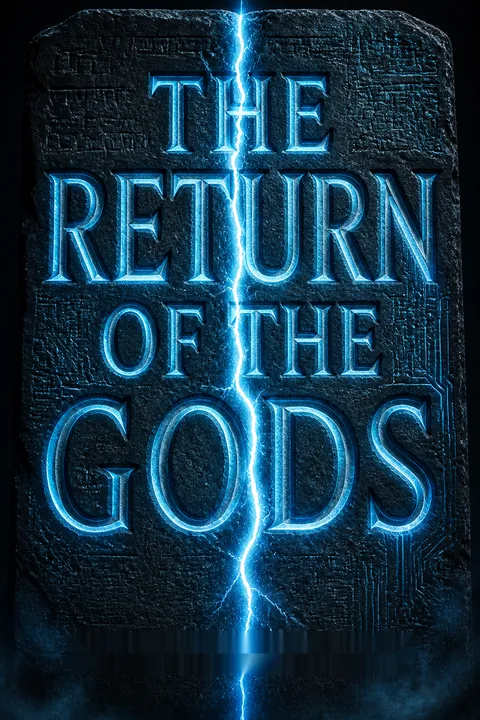

Key Takeaways
1. Ancient Entities, the "Gods," Have Returned to Our World
IS IT POSSIBLE that behind what is happening to America and the world lies a mystery hidden in the ancient inscriptions of the Middle East?
Unseen forces. The author posits that ancient entities, referred to as "gods," are not mere fiction but possess an independent reality and have returned to our world. These unseen movers and catalysts are believed to be influencing current events, cultural movements, and societal transformations without our conscious realization. They are the hidden drivers behind what we see on our screens, in our shopping centers, and in our classrooms.
Beyond the natural. The book suggests that these entities, identified as shedim (Hebrew for devastators) or daimonia (Greek for malevolent spirits), are malevolent spiritual forces. They are the true power behind the pagan deities of old, transcending cultural barriers to manifest universally wherever people turn away from the one true God. This spiritual dimension is crucial to understanding the radical shifts occurring in modern society.
A warning. The mystery revealed is intense and explosive, touching upon the "sacred cows" of our culture. It challenges conventional understanding of modern issues by illuminating them through the lens of ancient spiritual warfare. The author warns that these revelations will address controversial topics, but their purpose is to unveil the unseen forces at play, allowing readers to discern the true nature of the transformations around them.
2. The "House of Spirits" Parable Foretells Civilization's Repossession
Should a culture, a society, a nation, or a civilization be cleansed, exorcised of the gods and spirits—but then remain or become empty—it will be repossessed by the gods and spirits that once possessed it, and more.
Ancient warning. Jesus' parable of the "unclean spirit" returning to an "empty, swept, and put in order" house, bringing seven other spirits more wicked than itself, is presented as a prophetic warning for civilizations. This parable, initially applied to first-century Judea, is extended to Western civilization, which was "cleansed" of pagan gods by Christianity.
The danger of emptiness. The core message is that a civilization delivered from paganism, if it subsequently turns away from God and becomes spiritually "empty," is vulnerable to repossession. The spirits, finding no rest in "dry places," will return to their former "house." This time, the repossession will be far worse, leading to a state "many times more possessed and evil than before."
Post-Christian darkness. The book argues that a post-Christian civilization will inevitably descend into a darker state than a pre-Christian one. Examples like Nazi Germany and the Soviet Union, which renounced Christian values, are cited as evidence of the profound evils unleashed when nations turn away from God. This sets the stage for understanding the current transformations in America and the West.
3. A "Dark Trinity" of Ancient Gods Drives Modern Apostasy
The gods, or spirits, that have returned to America and Western civilization are the same gods and spirits that seduced ancient Israel in the days of its apostasy.
Ancient template. The author asserts that America, founded on a Judeo-Christian pattern similar to ancient Israel, is now experiencing a parallel apostasy. The specific gods returning are those that seduced Israel in its fall from God, forming a "dark trinity" that embodies this spiritual departure.
The three prominent deities. While many spirits exist, three ancient gods are identified as most prominent in the current paganization of America and the West:
- Baal: The Possessor, god of fertility, prosperity, and apostasy.
- Ishtar (Ashtoreth): The Enchantress, goddess of sexuality, war, and transgression.
- Molech: The Destroyer, god of child sacrifice.
Re-paganization. The return of these gods triggers a profound metamorphosis, transforming Christian-based cultures into pagan ones. Christian values, ethics, and worldviews are systematically replaced by their pagan counterparts, leading to the "re-paganization of Western civilization." This process begins subtly but aims for domination.
4. Baal, the Possessor, Leads Nations to Forget God and Deify Materialism
Their fathers have forgotten my name for Baal.
The god of apostasy. Baal, the chief Canaanite god of fertility, rain, and storms, is identified as the "quintessential other god" who leads nations away from God. His mission is to cause a nation consecrated to God to forget Him, becoming estranged from its foundational deity. In America, this began with a subtle shift, an "ancient amnesia," leading the nation to forget its spiritual heritage.
Banishing God. Baal's strategy involves separating a nation from God's Word and ways. In America, this manifested in the 1960s with the removal of prayer and the Bible from public schools, weakening the transmission of faith to future generations. This "Baalization" permeated every sphere, from media to politics, making public expressions of faith increasingly unwelcome.
The molten beast. Baal's ancient symbol was the bull, representing prosperity. Strikingly, the "Charging Bull" statue appeared on Wall Street in 1989, becoming a symbol of aggressive financial optimism. This is paralleled with Israel's apostasy at Mount Sinai, where they worshipped a golden calf (young bull). The molten bull on Wall Street, a "molten image" of bronze, is presented as a modern "golden calf," signifying America's departure from God and its worship of prosperity.
5. Ishtar, the Enchantress, Unleashes a Sexual Revolution and Undermines Marriage
The sexual revolution that took place in America and Western civilization in the late twentieth century was the reversing of the sexual revolution that took place in ancient times.
The goddess of sexuality. Ishtar (Ashtoreth), the "Queen of Heaven" and goddess of sexuality, war, and transgression, is the second principality. Her return to America, following Baal's groundwork, ushered in the "sexual revolution" of the 1960s. This revolution is seen as a reversal of the ancient Christian revolution that expelled pagan sexual ethics.
Deification of sex. As America turned from God, sex became deified, pursued as an end in itself, divorced from marriage or commitment. Ishtar's nature, characterized by promiscuity and unbridled desire, led to the progressive undermining of marriage. Divorce rates skyrocketed, and living together outside marriage became normalized, reflecting the goddess's disregard for covenant.
Transgression and sanctification. Ishtar's nature is to break taboos and transgress boundaries. Her return brought a spirit of transgression, where what was once forbidden became celebrated. Sexual immorality was not only accepted but "sanctified," treated as sacred, with opposition to it deemed "blasphemy." This marked a profound inversion of values, transforming a Christian civilization into a pagan one.
6. Molech, the Destroyer, Revives Child Sacrifice in the Modern Age
And they built the high places of Baal which are in the Valley of the Son of Hinnom, to cause their sons and their daughters to pass through the fire to Molech.
The abomination god. Molech, the god of child sacrifice, is the darkest of the dark trinity. His worship involved parents offering their children "through the fire," an act the Bible calls the most grievous "abomination." His spirit represents bloodlust and cold, inhuman destruction.
Devaluation of life. In ancient pagan cultures, human and child sacrifice was common, reflecting a general devaluation of life. Infants were discarded, and even revered philosophers endorsed infanticide. The Christian faith, emphasizing life's sacredness from conception, ended these practices. Molech's return, therefore, signals a revival of this ancient horror.
America's Valley of Hinnom. The legalization of abortion in America, culminating in Roe v. Wade in 1973, is presented as Molech's return. The book argues that Baal's groundwork (forgetting God) and Ishtar's influence (unrestrained sexuality, weakening maternal bonds) paved the way. America's abortion toll, exceeding sixty million, is likened to a modern "Valley of Hinnom," a place of unfathomable blood and bones, invoking a warning of judgment.
7. Ishtar's Metamorphosis: The Blurring and Transformation of Gender
She had the ability to turn male into female and female into male, to blur and bend and merge and invert the two.
The Transformer's blueprint. Ishtar, the sorceress, possessed the power to "turn a man into a woman and a woman into a man." Her return initiates a deeper transformation beyond the sexual revolution, altering human desire, identity, and nature itself. This involves blurring gender lines, nullifying distinctions, and feminizing males while masculinizing females.
Androgyny and the priesthood. Ishtar's ancient cult featured male priests (assinnu, kurgarru, gala) who publicly adopted female appearances and attributes, engaging in cross-dressing and homosexual acts. These "man-women" were the transsexuals of the ancient world. Their return to mainstream culture, as drag queens and transgender individuals, signifies the goddess's renewed power to transform gender.
The abolition of man. The phenomenon of transgenderism, particularly among the young, is seen as a direct manifestation of Ishtar's power. Children are encouraged to question their biological sex and undergo irreversible transitions. This "self-creation" through altering one's being is ultimately an act of self-destruction, leading to the "abolition of man" by eradicating intrinsic purpose and value from human life.
8. Stonewall: The Goddess's Explosive Return and the Opening of Ancient Gates
In the evening, she came forth with authority and stood in the street before a wondrous gate. She made an offering of firstfruits.
The wondrous gate. The Stonewall Inn uprising in June 1969 is presented as the pivotal event embodying Ishtar's return. New York City, as America's "wondrous gate," became the site where the goddess, drawn to gates in her mythology, made her "offering of firstfruits"—the beginning of a movement to transform world culture.
Eshdam and Harimtu. Stonewall, a tavern (ancient eshdam), was a natural dwelling for Ishtar, patroness of alehouses and prostitutes (harimtu). The uprising was ignited by a "harlot" (male prostitute) and led by male prostitutes, mirroring Ishtar's ancient cult where her assinnu priests (feminized males) and prostitutes were central. The bar's brick facade, a "stone wall," also echoes Gilgamesh's condemnation of Ishtar as a "stone that buckles out the stone wall."
Avatars and the storm. The uprising was sparked by a fierce, masculine-featured woman named Stormé, identified as Ishtar's avatar. Her arrest triggered the mob's rage, echoing Ishtar's mythological fury when denied. The goddess, also known as "Loud Thundering Storm," unleashed a "storm" of violence, with the crowd attempting to set the bar on fire, just as Ishtar was the "lady of fire" who set "great gateways afire."
9. Pride Month: The Resurrected Pagan Festival of the Goddess
…they call this month of June by the same name, and keep an annual festival in his honor.
Ancient processions revived. Ishtar was the ancient goddess of parades and processions. The Stonewall uprising led to the creation of annual "Pride Parades" in June, commemorating the event. These parades, initially protests, evolved into carnival-like, religious festivals, mirroring Ishtar's ancient cultic processions in Mesopotamia.
Gender-bending spectacles. Ishtar's ancient parades featured men dressed as women and women as men, blurring gender lines. Modern Pride Parades similarly showcase cross-gendered individuals, transvestites, and drag queens. The ancient kezertu, "dancing girls who wore their hair in curls," are paralleled by modern participants singing "We are the Stonewall girls... We wear our hair in curls."
Junium's repossession. The month of June, historically known as "Junium mensem" and linked to the summer solstice and the ancient Tammuz festival (Ishtar's lover), was a time of pagan observances. Early church fathers like Saint Jerome noted these "licentious rites." The return of Pride Month in June signifies the goddess's repossession of this sacred time, transforming it from a month of weddings to a "festival of inversion" celebrating separation and alternate sexualities.
10. The Rainbow: The Ancient Sign of the Goddess's Dominion
She stretched herself like a rainbow across the sky and reached thereby as far as the earth.
Ishtar's colors. The rainbow flag, adopted as the official symbol of gay pride, is presented as a manifestation of an ancient mystery linked to Ishtar. Each of the original eight colors of the flag corresponds to an attribute of the goddess:
- Pink: Sex (Ishtar, goddess of sex)
- Red: Life (Ishtar, source of fertility)
- Orange: Healing (Ishtar, takes sickness away)
- Yellow: Sunlight (Ishtar, twin sister of the sun god)
- Green: Nature (Ishtar, embodiment of vital forces)
- Turquoise: Magic (Ishtar, goddess of spells)
- Indigo: Serenity (Ishtar, brings serenity)
- Violet: Spirit (Ishtar, a spirit; violet-crowned Aphrodite)
Rainbow Ishtar. Ishtar was known as "Rainbow Ishtar" and credited as the creator of the rainbow in ancient mythology, lifting her "necklace with the jewels of heaven" after a deluge. Her eyes were described as "multicolored and iridescent" (rainbow-like). Most strikingly, in one myth, she "stretched herself like a rainbow across the sky" to exact vengeance.
Banner of war. The rainbow, a sign of God's mercy in Scripture, is transformed by the goddess into a "banner of war" against God's ways. Its ubiquitous presence on corporate logos, government buildings, and even American embassies signifies the goddess's growing power and ownership. It marks a "transitioned America," where the sign of the goddess is replacing traditional symbols of faith.
11. The Gods Seek Vengeance and Totalitarian Dominion Over Society
She cuts to pieces him who shows no respect.
Two-thousand-year vendetta. The returning gods seek vengeance against Christianity, which cast them out. They aim to usher in a post-Christian age, driving God and His followers to the margins, just as they were once exiled. This involves silencing the Word of God and enacting laws that encroach upon Christian worship and ministries.
Consolidating power. The initial "openness and tolerance" used by the gods to gain entry are now replaced by "enlightened intolerance." This manifests as political correctness, wokeness, and cancel culture, where dissent from the new morality is met with punishment. Baal, Ishtar, and Molech, now empowered by mass media and technology, seek total domination, forcing "every knee to bow."
The new totalitarianism. Cultures once valuing freedom now suppress speech and thought, compelling ideological conformity. Christians are persecuted for upholding biblical values, facing job loss, boycotts, and prosecution for "crimes" like quoting the Bible. This "new totalitarianism" is a sign that the gods have achieved dominion, transforming Christian civilization into a pagan one, and devouring even those who initially aided their rise.
12. The "Other God" (Jesus) Remains the Only Antidote and Hope
Who is like You, O LORD, among the gods?
The ultimate answer. The book concludes that the only answer to the returning gods and the ensuing judgment is God Himself. The power of the gods is dependent on the absence of God; when God is removed, evil fills the void. The "Elohim mystery" suggests a choice between the one true God (Elohim) and the many false gods (elohim).
Jesus, the unique antidote. Jesus (Yeshua), "The Lord is salvation," is presented as the unique antidote. Unlike mythological gods, He is a historical figure who offered Himself as the ultimate sacrifice, breaking the chains of the gods and setting captives free. His message of radical love, forgiveness, and redemption stands in stark contrast to the destruction wrought by the gods.
Hope and transformation. The book emphasizes that Jesus bore humanity's judgment, offering forgiveness for every sin and reconciliation with God through His death and resurrection. This salvation offers freedom from darkness, sin, and hell, leading to eternal life and a new beginning. In a world repossessed by spirits, the power of God, through Jesus, is the only way to stand against the gods, overcome hatred, break bondage, and shine light into the deepening darkness.
Review Summary
Reviews of The Return of the Gods are deeply divided. Supporters praise Cahn's research, compelling parallels between ancient pagan gods and modern cultural shifts, and his ability to explain America's moral decline through a spiritual lens. Critics argue the book relies on speculative, poorly-sourced scholarship, drawing heavily from ancient mythology rather than Scripture. Many across both camps note the writing is repetitive and sensationalist. Several critics also take issue with the book's perceived political conservatism, characterizing it as dismissive of women's and LGBTQ+ rights.
People Also Read

About the Author
Download PDF
Download EPUB
.epub digital book format is ideal for reading ebooks on phones, tablets, and e-readers.








































