
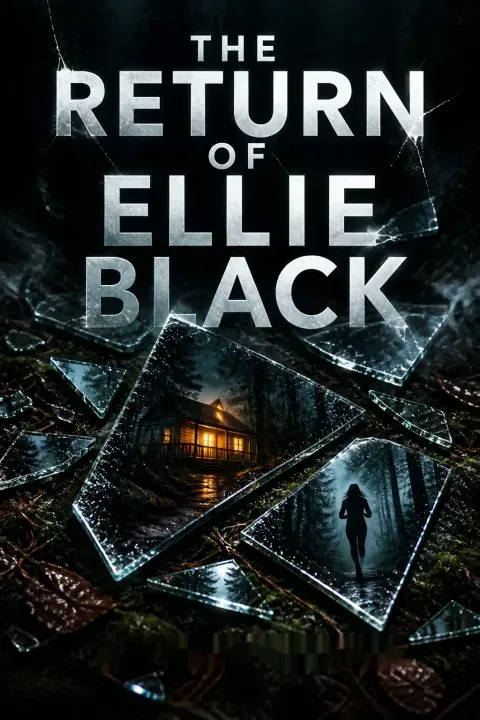


Plot Summary
Prologue
A girl runs through dense Washington forest, her veins electric with adrenaline. Dirt crusts her fingernails, blood stains her sweatshirt, and vomit lingers on her breath. She counts her steps to stay present, chasing her own shadow through the pines.
When a father and son hiking the trail appear, she slows and confronts their horrified stares at her filthy, skeletal frame. The father asks if she is alright. She struggles to retrieve her name from the deep place where she buried it for safekeeping.
Finally, she forces out four syllables she has not spoken in what feels like forever. Elizabeth. Her full name: Elizabeth Black.2 She tells them she thinks she is missing. The sun rises behind gray clouds as she realizes she is going home, but she is not the same girl who vanished.
The prologue establishes a central tension: physical return does not equal restoration. Ellie's counting compulsion and fragmented identity (her name stuck somewhere inside her) immediately signal profound trauma. The image of her chasing her own shadow suggests she is pursuing a self that no longer exists. Her final assertion, 'I think I'm missing,' carries double meaning: she is literally a missing person found, but she has also lost her sense of self. This prologue frames the entire novel as an exploration of what remains after the unimaginable.
The Midnight Phone Call
Detective Chelsey Calhoun1 wakes at midnight to her boss's call. Sergeant Abbott9 reports that hikers found Elizabeth Black2 in Capitol State Forest, two hours from Coldwell Beach. Chelsey1's husband Noah6 mutters about the interruption. Ellie2 has been missing for two years, two weeks, and one day.
Chelsey1 keeps a calendar with the anniversary marked. She dresses quickly, retrieves her gun from the safe, and heads to Legacy Memorial Hospital in Olympia. At the hospital, she meets Denise, a victim advocate, and finally sees Ellie2 through the door: hollow-eyed, skeletal, hair a nest of tangles, unmistakably alive.
Ellie2 consents to a sexual assault exam but asks only for her parents. When Kat4 and Jimmy Black5 arrive, their reunion is a raw collision of relief and horror at what their daughter has become. Ellie2 recoils from touch, cannot tolerate bright lights, and speaks in fragments.
This opening establishes Chelsey's obsessive investment in the case: the calendar, the immediate response, the gun retrieval, all signal that this is not just a job. Her marriage tension with Noah introduces the personal cost of her dedication. Ellie's condition upon return (light sensitivity, touch aversion, fragmented speech) communicates the depth of her trauma without requiring explicit description of what occurred. The gap between the family's joy and the reality of Ellie's broken state sets up the novel's central question: what does 'found' actually mean?
The Failed First Investigation
Two years ago, seventeen-year-old Ellie2 vanished from a motel party in Astoria. Chelsey1 arrived at the Blacks' house the next morning. Kat Black4 was hollow with shock; Jimmy Black5 had punched a hole in a kitchen cabinet in frustration.
Chelsey1 methodically interviewed everyone: India, the friend who provided transportation; Danny Partridge,7 Ellie2's boyfriend who lied about being home that night; and classmates who dismissed Ellie2 as fake and reckless. Danny7 eventually broke down, admitting he drove to the motel but left without going inside after a fight with Ellie.2
Now, in the present, Chelsey1 conducts Ellie2's first interview at the Blacks' home. Ellie2 describes being grabbed from the parking lot, drugged, and waking in cold darkness. A man in a red bandana brought bread and water but she never saw his face. Then she abruptly refuses to continue, saying she never wants to talk about it again.
The investigation flashback reveals systemic failures that enable girls to disappear: classmates' casual cruelty, a friend's indifference, a boyfriend's momentary abandonment. Each person's small failure compounds into catastrophe. Ellie's immediate shutdown after minimal disclosure demonstrates how trauma silences victims, making prosecution nearly impossible through conventional means. Chelsey's flashback to her sister Lydia during these scenes foreshadows the deeper connection between these cases and establishes the emotional stakes that drive her beyond professional obligation.
The Buried School Bus
After being grabbed in the parking lot and injected with something, Ellie2 woke in pitch-blackness with packed earth pressing against the windows. She was inside a buried school bus, its emergency hatch padlocked from above. She screamed until her voice became a whistle. Days passed.
A man in a red bandana opened the hatch, asked her name, and threw down bread and water. This became a ritual: the same question, the same meager provisions. When she refused to answer one day, he withheld food for five days. She ate worms, sucked moisture from dirt, scratched tally marks into the vinyl seats alongside etchings left by previous captives.
Eventually she forgot her own name, her family, the boy she loved.7 On the edge of death, she crawled to the hatch and whispered that she could not remember. He reached down and pulled her into blinding daylight, dogs circling at his heels.
The bus sequence is a masterclass in psychological deconstruction. The captor's method (asking 'What is your name?' as the only question, withholding food as punishment for silence) is designed to strip identity completely. Ellie forgetting her own name represents the death of the self that existed before. Her joy at being pulled from the bus is devastating dramatic irony; readers understand this is not rescue but transfer to a more elaborate cage. The scratch marks from previous victims on the seats establish that this cycle has repeated many times before Ellie arrived.
A Dead Girl's Sweatshirt
Reviewing evidence photographs, Chelsey1 notices the University of Washington Volleyball sweatshirt Ellie2 was wearing when found. The number 55 and a custom tag lead her to One of a Kind Custom College Apparel. A customer service representative traces the order to Althea Barlowe,16 who bought it as a Christmas gift for her granddaughter Gabby.12
Chelsey1's search reveals Gabby Barlowe12 disappeared five years ago at age sixteen and her body was found strangled on Spencer Island eighteen months later. When Chelsey1 visits Althea,16 the old woman identifies the sweatshirt immediately by an oil stain on the sleeve.
Althea16 weeps but refuses to know what happened to Gabby,12 insisting she has buried her granddaughter. Chelsey1 also learns from Detective Brielle Ross that Gabby12 had dog bites on her bones, Queen Anne's lace in her bloodstream, and was last seen near a blue station wagon.
The sweatshirt functions as a relic connecting two victims across time. Althea's refusal to know the details of Gabby's death speaks to an unbearable truth: some knowledge cannot be integrated into a livable life. The forensic details (dog bites, the plant, the station wagon) become a pattern that Chelsey will eventually use to map the killer's hunting ground. This section also introduces the theme of families choosing what to remember, paralleling Chelsey's own unresolved grief over Lydia.
Paradise Is a Prison
The man in the red bandana, called Michael,10 led Ellie2 to a decaying compound of concrete buildings hidden deep in the forest: a World War II bunker, a silo, dog kennels, and rooms with barred windows. There she met David,11 the charismatic leader, and his wife Serendipity.
Two other girls were already there: Hope12 and Charity,13 renamed like Ellie2 was now called Destiny. Hope12 wore a University of Washington sweatshirt. David11 raped Ellie2 that first night while playing 'You Are My Sunshine' on loop. The rules were absolute: no cutting hair, keep nails filed, never speak of former lives.
David11 rotated his visits among the girls every four nights. Hope12 gave Ellie2 Queen Anne's lace seeds to prevent pregnancy. Over time, the three girls became sisters, whispering their real names one night by the fire: Gabby,12 Hannah,13 Elizabeth.2 They secretly planted more seeds by the creek.
The compound operates as a grotesque parody of family and religion. David's renaming of the girls is a godlike act of creation, erasing their pasts to make them his. The domestic rituals (hair and nail maintenance, meals together) are perversions of care designed to make the girls complicit in their own captivity. The sisterhood that forms between them is both survival strategy and fatal vulnerability; connection gives them strength to resist but also gives David more leverage. The Queen Anne's lace foregrounds the bodily autonomy the girls are fighting to maintain.
The Kitchen Sink Rejection
Chelsey1 arrives at the Blacks' house and confronts Ellie2 directly about Gabby Barlowe.12 She shows Ellie2 the sweatshirt and asks if the name means anything. Ellie2's reaction is visceral: she flees to the kitchen and vomits into the sink while her mother Kat4 rubs her back.
Between heaves, Ellie2 formally declines to participate in the investigation. Kat4 orders Chelsey1 to leave. Ellie2 states she never wants to speak to Chelsey1 again. Outside, Chelsey1 lingers in her car and sees Ellie2 watching her through the window.
The rejection stings deeply, but Chelsey1 is now more certain than ever that Ellie2 knows something crucial. She cannot let the case go, even without the victim's cooperation. She begins pursuing Gabby12's case independently, recognizing a pattern she believes connects multiple missing girls across Washington state.
Ellie's physical reaction (violent illness) confirms the psychological connection between her and Gabby more definitively than any verbal admission could. Her refusal to cooperate appears to be obstruction but is actually self-preservation: she is being monitored through the postcards, and speaking would mean Willa's death. Chelsey's determination to continue despite Ellie's withdrawal shows both her moral conviction and her inability to respect boundaries, a trait that will later be challenged as the investigation deepens.
The Blood Is Willa's
The lab results arrive: the blood on Gabby12's sweatshirt is not Gabby's. It partially matches Timothy Salt, a convicted rapist serving twenty years in Pennsylvania. Since Salt has been incarcerated too long to be the abductor, Chelsey1 investigates his son Lewis Salt, who drives a blue station wagon and owns rural property with a cellar.
A joint task force raids the farm. Lewis Salt is arrested, and a red bandana is found, but dogs locate no evidence of the girls on his property. During interrogation, Salt reveals he has a missing daughter: Willa Adams,14 taken while riding her bike at age seven.
She would be nine now. The DNA is Willa's. Chelsey1 realizes that whoever took Ellie2 and Gabby12 also took a child much younger than the others. Willa14 is still out there, and Ellie2 likely knows where.
This revelation shifts the investigation's urgency from justice for the dead to rescue of the living. Willa's age (seven) disrupts the established pattern of teenage victims, suggesting the abductor's motivations evolved beyond the original profile. Lewis Salt as red herring demonstrates how preconceptions (criminal father, guilty son) can mislead investigations. The DNA as familial match is a clever forensic detail that expands the victim pool while also indicting the justice system: Willa's DNA sat unprocessed for a year and a half.
Gabby's Final Scream
David11 found the Queen Anne's lace growing by the creek. He made the girls throw their remaining seeds and friendship bracelets into the fire. That night in Ellie2's room, he pressed her to confess whose idea the seeds were, claiming he already knew. He told her that Gabby12 and Hannah13 had blamed her.
Under the psychological pressure, Ellie2 cracked and accidentally spoke Gabby12's real name, the one she had sworn never to utter aloud. David11's expression shifted with dark triumph. Later, Ellie2 heard Gabby12's screams through the walls as David11 and Michael10 dragged her away.
The next morning, Gabby12 was gone. Serendipity brought Ellie2 Gabby12's clothes: the University of Washington sweatshirt, jeans, and running shoes. Ellie2 took them, wearing the sweatshirt that still carried the scent of her dead friend. The bloodstains on it would come later, from Willa.14
This is the novel's tragic fulcrum. Ellie's slip of Gabby's real name is the small, irreversible error that costs a life, echoing the butterfly-effect nature of trauma: tiny moments with catastrophic consequences. David's method (isolating each girl, manufacturing betrayal) reveals his understanding that the girls' solidarity was their greatest threat to his control. The passing of clothing from one victim to another becomes a material chain of suffering, each garment carrying the residue of multiple bodies. The friendship bracelets burning in the fire symbolize the destruction of their only autonomous bond.
Four Girls with X Eyes
In her second therapy session, Dr. Cerise Fischer8 gives Ellie2 charcoal and pastels and asks her to draw what friendship looks like. Ellie2 produces two images. The first shows a line of birch trees, a bloody sunset, and a black void beneath, resembling a grave.
The second drawing depicts four girls: three taller figures with loops around their wrists and one smaller girl without the binding. All four have X's for eyes and frightened oval mouths. Ellie2 tells Dr. Fischer8 they are her sisters, better than friends. When Dr. Fischer8 asks if the drawings represent real people, Ellie2 begins having a panic attack.
Later, pressured by Chelsey1 about the sweatshirt and the urgent need to find Willa,14 Dr. Fischer8 shares the drawings. Chelsey1 counts: Ellie,2 Gabby,12 Hannah,13 and a smaller girl who must be Willa.14 The loops suggest bondage. The X eyes suggest death or a death-like state.
Art therapy bypasses verbal defenses, allowing Ellie to express what she cannot say: she was held with multiple girls, some of whom died. The drawings function as confession and memorial simultaneously. The X eyes create productive ambiguity between physical death and the psychological death of captivity. Dr. Fischer's decision to share the drawings with Chelsey, while ethically fraught, is motivated by the urgent possibility of saving Willa, illustrating the painful trade-offs between therapeutic confidentiality and the imperative to rescue a child still in danger.
The Trick at the Station
Chelsey1 tells Kat4 that Ellie2 needs to come to the station for routine paperwork to close the case. Once alone in the conference room, Chelsey1 admits the deception and lays out photographs of thirteen missing girls on the table. She shares her own story of losing Lydia,3 explaining she understands what it means to do anything for a sister.
Ellie2 begins to cry. Chelsey1 shows her Gabby12's photo, then Hannah13 's, then Willa14 's. Ellie2 confirms she knew Gabby12 and Hannah.13 Hannah13 is dead. Willa14 is alive, and Ellie2 says she kept her safe.
When Chelsey1 spreads out a map and asks Ellie2 to point to the location, Ellie2 retreats, asking for a break and promising to reveal everything tomorrow at her house. Chelsey1 extracts the promise and lets her go, believing she is inches from solving the case. She does not understand that Ellie2 is being forced to act by someone still controlling her.
Chelsey's manipulation of Ellie, while producing results, mirrors the very control tactics used by the abductor. Her willingness to deceive a trauma victim for the greater good raises uncomfortable questions about investigative ethics. Ellie's partial honesty (admitting to knowing the girls but not revealing the coercion) demonstrates how thoroughly David's threats have constrained her speech. The promise to reveal everything 'tomorrow' is tragically not about confession but about Ellie's final desperate act.
The Governor's Mansion Bombing
The next morning, Chelsey1 arrives at the Blacks' to find Ellie2 gone. Kat4's car is missing. A search of Ellie2's room and the crawlspace where she has been sleeping reveals birch tree postcards numbered 3, 2, and 1, plus an empty gunpowder package and a plastic pipe: the components of a pipe bomb.
Chelsey1 realizes Ellie2 was receiving a countdown from someone monitoring her every move. Before Chelsey1 can issue an alert, breaking news erupts on television: a female suicide bomber attempted to attack Governor Regina Pike's mansion in Olympia.
Security footage shows a woman in an oversized jacket, identified by a docent as Elizabeth Black.2 The bomb was intercepted when the governor's motorcade was delayed by a flat tire. Homeland Security takes over the case. Chelsey1 is ordered off the investigation and told Ellie2 is armed and dangerous.
The bombing attempt reframes Ellie from victim to perpetrator in the public eye, but Chelsey's insight (that Ellie was coerced) proves correct. The birch tree postcards function as both threat and calendar, revealing that Ellie was never truly free even after returning home. The governor's flat tire as stroke of luck underscores the role of random chance in both tragedy and survival. Chelsey's defiance of direct orders demonstrates how personal conviction can override institutional loyalty, setting up her rogue mission to find Ellie before federal agents do.
Unraveling the Abbott Brothers
Danny7 calls Chelsey:1 he activated Find My Friends on Ellie2's phone when he drove her to the trail. She is heading north toward Olympic National Forest. As they drive, Danny7 reveals Ellie2 told him her captors called her Destiny. The name triggers Chelsey1's memory: Governor Regina Pike was born Destiny Abbott, ex-wife of Sergeant Abbott.9
Chelsey1 runs DMV records and finds Doug Abbott10 owns a 1995 blue Ford station wagon. A Sunshine LLC registered to West Abbott11 operates a kennel on an old WWII bunker deep in the national forest.
The pieces lock together: 'You Are My Sunshine' was David11's song, Sunshine LLC is the property, the blue station wagon connects multiple abductions. Doug10 and West Abbott,11 sons of Chelsey1's own boss,9 have been kidnapping and killing girls for years. Their motive: punishing their mother, the governor, for abandoning the family.
The revelation that the perpetrators are embedded within law enforcement (Doug as a detective, their father as sergeant) transforms the novel from a search for an external monster into an indictment of institutional complicity. The 'Destiny' clue is elegantly planted early and paid off here. West's grievance (maternal abandonment) is the novel's darkest theme: how men's inability to process emotional pain metastasizes into violence against women who serve as proxies for the original wound. The Sunshine LLC detail is a chilling example of how abusers hide in plain sight.
Gunfire at the Compound
Chelsey1 leaves Danny7 with the radio and stalks into the compound alone, rifle ready. She finds Ellie,2 Hannah,13 and little Willa14 huddled on the ground while Doug10 and West Abbott11 tower over them. Doug10 holds a police-issued pistol, his face covered by the red bandana.
West11 orders Doug10 to kill Chelsey,1 but Doug10 hesitates, whining that West11 promised no one would find out. Chelsey1 shoots Doug10 dead when he raises his gun. West11 charges, knocking the rifle away and closing his hands around Chelsey1's throat. As her vision darkens, Ellie2 whistles: a dog named Star lunges from the trees and tears into West11's arm.
Chelsey1 subdues West11 with zip ties. She then chases a fleeing woman into the woods, shooting her in the leg. When the woman turns, Chelsey1 freezes. It is Lydia,3 her sister, aged fifteen years but unmistakably alive. Not a victim but Serendipity.
The compound confrontation is the novel's operatic climax, compressing years of horror into a single violent encounter. Doug's death is not triumphant but pathetic; he was a follower destroyed by his brother's will. The dog Star's intervention, answering Ellie's whistle rather than West's, symbolizes the transfer of power from captor to captive. Lydia's reveal as living captor rather than dead victim is the narrative's cruelest twist, forcing Chelsey (and the reader) to reckon with the unbearable possibility that victims can become perpetrators when captive long enough.
The Sister's Prison Visit
Three days later, Chelsey1 visits Lydia3 at the Washington Corrections Center for Women. Across a cafeteria table, Lydia3 chatters with unsettling normalcy about prison food and her leg wound. She reveals she married West11 in a ceremony in the woods. She explains the truth of 2007: she went out with Oscar Swann to make West11 jealous.
West killed Oscar, then staged the scene with his father's help. Sergeant Abbott9 covered it up, telling West11 it was the last time he would do so. Lydia3 defends West,11 saying the beatings were her fault, that he only wanted a family after his mother abandoned him.
She could not have a baby, so West11 took other girls. She asks Chelsey1 for a nail file because West11 likes their nails smooth. Chelsey1 flees the prison, pulls over on the highway, and sobs, realizing her sister is both victim and accomplice, frozen at fifteen, incapable of seeing her own captivity.
Lydia's brainwashing is the novel's most disturbing element, showing how prolonged abuse can reshape a person's entire reality. Her casual recitation of horrors (Oscar's murder, the staged suicide, the cover-up) reveals how violence became normalized over fifteen years. The nail file request is a devastating detail: even imprisoned, Lydia is still performing for West's approval. Chelsey's grief at this revelation is not just for the sister she lost but for the impossibility of rescue when the victim cannot recognize her chains. Sergeant Abbott's role expands the conspiracy from two sons to an entire family system.
Freeing the Ghosts
In her final therapy session before discharge from the psychiatric hospital, Dr. Fischer8 guides Ellie2 through a visualization. Ellie2 closes her eyes and returns to the compound in her mind.
She takes Gabby,12 Hannah,13 and Willa14 by the hand and walks them out of the forest, past the burned patch where the Queen Anne's lace grew, over the rusted bus, into an open summer meadow. They shout their real names into the sky. Then she builds rooms for each of them in her childhood home, with windows that open and sheets that smell of lavender.
She whispers promises: no more bitter seeds, no more hands without permission, no more counting breaths to ensure survival. Dr. Fischer8 tells her it was not her fault. Ellie2 says she is trying to believe it. She delivers her written confession to Chelsey1 and goes home with her parents.
The visualization exercise is not escapism but integration: Ellie learns that she can carry her dead without being crushed by them. Building rooms for the girls in her mental architecture transforms them from haunting ghosts into honored guests whose memory can coexist with her own recovery. The distinction between 'not my fault' and 'trying to believe it' is honest about the gap between intellectual understanding and emotional healing. Ellie touching her bare wrist where Gabby's bracelet once was acknowledges that loss is permanent but need not be paralyzing. She chooses to be a bird and sing.
Epilogue
Three months after the compound, Chelsey1 finally packs up her father's house in Paradise Glen. Noah6 helps, their marriage tentatively repaired. She has quit Coldwell PD and they are moving to Olympia. In Lydia3's room, Chelsey1 carefully boxes the Beatrix Potter bunnies, the Into the Wild poster, the toy VW Beetle.
She stands on a chair and unpins the FREEDOM sign Lydia3 made as a teenager, deciding to keep it rather than discard it. In her father's office, she reflects on the similarities between Chief Calhoun and Sergeant Abbott:9 both men who destroyed their families because they could not face their own flaws.
On the stoop, she watches the lighthouse where she and Lydia3 once played hide-and-seek, hearing her childhood voice call out 'Olly olly oxen free.' She locks the door and leaves, carrying the FREEDOM sign with her. The past is unchangeable but the future is uncertain, and Chelsey1 is ready.
The epilogue completes Chelsey's arc from a woman defined by the past to one tentatively facing forward. The FREEDOM sign, made by a teenage Lydia who craved escape from their father's oppressive household, takes on layered meaning: it was Lydia's dream, then a symbol of her captivity, and now Chelsey's talisman as she walks away from the house. 'Olly olly oxen free' (the call that ends hide-and-seek, signaling it is safe to come out) is the novel's final metaphor: Chelsey is finally emerging from decades of hiding within her grief and her father's shadow, able to acknowledge that her father was part of the same patriarchal system that produced the Abbott brothers.
Analysis
The Return of Ellie Black operates as both a propulsive thriller and a sustained meditation on what it means to survive. At its core, the novel asks whether return is ever truly possible after profound trauma. Ellie2 comes home physically but finds she cannot inhabit her old life: she sleeps in crawlspaces, cannot bear touch, and is still being controlled by the man who took her. The novel suggests that rescue is not a single event but a prolonged, painful process of reinhabiting the self.
The book is unflinching in its examination of institutional failures. The police system that Chelsey1 serves is revealed to be staffed by men who dismiss missing girls based on class and race, who leave DNA kits unprocessed for years, and who, in the case of Doug Abbott,10 are themselves the predators. Sergeant Abbott9's cover-up of his sons' crimes exposes how patriarchal loyalty trumps justice. Chelsey1's own father, lionized in memory, is gradually revealed as another man whose rigidity damaged the women in his family.
The novel's most radical choice is its treatment of Ellie2's culpability. She is not presented as an innocent victim but as someone who made terrible choices under duress: she betrayed Gabby12's name, she built a bomb, she attempted to kill the governor. The narrative refuses to separate victims into worthy and unworthy categories. Ellie2's moral complexity is the point: survival under coercive control often requires actions that look like complicity.
The compound functions as a dark mirror of the patriarchal family, with David11 as a god-father who demands absolute devotion, renames his 'daughters,' and punishes disobedience with death. West Abbott11's grievance (his mother abandoned him) is exposed as the engine of his violence, a wound he believes entitles him to own and destroy women. The novel argues that violent misogyny is not aberrant but structural, passed from father to son like an inheritance.
Ultimately, the book offers a qualified hope. Ellie2 learns that she can carry her dead friends without being destroyed by them. Chelsey1 walks away from her father's house, literally and metaphorically, choosing uncertainty over the frozen grief that has defined her. Neither woman is healed, but both are still alive, still capable of choosing something other than the past. That, the novel suggests, is what survival looks like: not restoration, but the ongoing work of building something new on broken ground.
Review Summary
The Return of Ellie Black is a gripping thriller that captivated most readers with its intense plot and complex characters. Many praised the author's ability to create a suspenseful atmosphere and deliver unexpected twists. The book explores themes of survival, trauma, and the impact of abduction on victims and their families. While some found the ending controversial or unrealistic, the majority appreciated the emotional depth and character development. A few critics felt the writing style was occasionally simplistic, but overall, the novel was widely regarded as a compelling page-turner.
Characters
Chelsey Calhoun
Obsessive detective haunted by lossA detective in Coldwell Beach, Washington, Chelsey was adopted from Japan into a white family and has spent her life navigating otherness. Her older sister Lydia3 was murdered fifteen years ago, a trauma that shaped her entire existence. Her father, the former police chief, trained her in hunting and survival rather than letting her grieve, channeling her pain into a career in law enforcement. She is married to Noah6 but struggles to be emotionally present, pouring herself into cases involving missing and abused women as a form of atonement. She is sharp, impatient, and willing to bend rules when she believes the cause is just. Her arc involves confronting the truth about her family, her marriage, and the limits of her own moral certainty.
Elizabeth 'Ellie' Black
Survivor caught between two worldsA headstrong, sometimes reckless teenager from a working-class Coldwell family, Ellie was seventeen when she was abducted from a motel parking lot while trying to earn money for a new phone. In captivity, she was renamed Destiny by her abductor. She endured starvation in a buried school bus, then years of sexual abuse on a remote compound alongside other captive girls. Her fierce protective instinct, especially toward a young girl named Willa14, became both her greatest strength and the leverage used against her. Upon returning home, she struggles with identity, physical touch, and the knowledge that her return was not an escape but a coerced mission. Her psychological journey is one of reclaiming agency and learning to believe her trauma was not her fault.
Lydia Calhoun
The sister who never came homeChelsey1's beloved older sister, presumed dead for fifteen years after her boyfriend Oscar Swann allegedly murdered her and killed himself. Lydia was rebellious, romantic, and desperate to escape their father's oppressive household. She disappeared at fifteen after sneaking out to a party. Her death became the defining wound of Chelsey1's life, the reason she became a detective. Lydia's true fate is far more complicated than anyone knew: she did not die that night but was taken by someone else, and her survival required a transformation that would eventually put her on the opposite side of the law from the sister who never stopped searching for her.
Kat Black
Grief-stricken mother seeking atonementEllie2's mother, a hairstylist who carries crushing guilt over the night her daughter disappeared. She knew Ellie2 was lying about staying at a friend's house but was too tired of fighting to intervene. In the two years Ellie2 was missing, Kat's marriage to Jimmy5 frayed under the weight of mutual blame. She quit her job, started smoking again, and took sleeping pills. When Ellie2 returns, Kat is desperate to fix everything but finds her daughter is a stranger who sleeps in crawlspaces and cannot bear to be touched. Her journey involves learning that love cannot undo trauma, only accompany it.
Jimmy Black
Stoic fisherman carrying silent guiltEllie2's father, a commercial fisherman who communicates through action rather than words. He punched a hole in a cabinet the day before Ellie2 disappeared, angry at her behavior, and has never forgiven himself. During the two years Ellie2 was missing, he secretly visited Chelsey1's office to review the evidence, a ritual he hid from Kat4 to spare her. His relationship with Ellie2 was built on their shared love of the ocean and his boat, the Turmoil. After Ellie2's return, he decides to sell the boat and his fishing license, choosing family over legacy for the first time in his life.
Noah
Husband who wants a normal lifeChelsey1's husband of six months, a high school teacher and basketball coach. He met Chelsey1 at a bar, pursued her persistently, and won over her dying father with unexpected humor. Noah wants simple things: a house, a dog, a wife who comes home at night. He is increasingly frustrated by Chelsey1's obsession with her cases and her inability to pack up her father's house. He represents the ordinary life Chelsey1 cannot fully embrace. When he finally gives her an ultimatum (the case or him), she chooses the case, forcing a reckoning in their marriage that will require both of them to change.
Danny Partridge
Ellie's loyal boyfriend seeking redemptionEllie2's boyfriend at the time of her disappearance. He is Chinook, from a family that runs a local restaurant. He drove to the motel the night Ellie2 vanished but left without going inside after a fight, a decision that has haunted him for two years. Chelsey1 aggressively interrogated him as a suspect, permanently damaging his trust in law enforcement. When Ellie2 returns, he is patient with her new rules and slowly rebuilds their connection. His decision to track Ellie2's phone and help Chelsey1 find her is his way of finally showing up for the girl he abandoned once before.
Dr. Cerise Fischer
Trauma therapist and ethical bridgeEllie2's psychologist, operating from a converted Victorian mansion in Coldwell. She uses talk therapy and art therapy to help Ellie2 process her captivity. She maintains strict confidentiality but is put in an impossible position when Chelsey1 reveals that a child (Willa14) may still be in danger. Her decision to share Ellie2's drawings with Chelsey1 is ethically fraught but motivated by the urgency of rescue. She guides Ellie2 through the visualization exercise that becomes central to her healing, teaching her to free her dead friends in her mind when she could not free them in life.
Sergeant Patrick Abbott
Compromised boss with buried secretsChelsey1's supervisor at Coldwell PD and ex-husband of Governor Regina Pike. A recovering alcoholic who once arrived at the Calhoun doorstep with a casserole after Lydia3's death. He is alternately supportive and dismissive of Chelsey1, denying her resources when she needs them most. His bitterness about his ex-wife's success masks a darker history: he covered up a murder fifteen years ago to protect his sons, setting in motion a chain of violence that would claim many more victims. His resignation and tearful phone calls after the truth emerges reveal a man who enabled monstrous acts through denial and self-pity.
Doug Abbott
Follower disguised as a detectiveSergeant Abbott9's son and Chelsey1's fellow detective. He bullied Chelsey1 as a child, asking if she arrived in a bento box at a precinct picnic. He makes social media videos and craves approval. As an adult, he joined the police force and used his position to track the missing persons cases of the girls his brother11 abducted, ensuring the investigations went nowhere. He wore the red bandana and called himself Michael. His role was always secondary: driving the station wagon, feeding the girls on the bus, following his older brother11's commands. He was a weak man who chose complicity over conscience.
West Abbott
Charismatic predator with a god complexDoug10's older brother, the mastermind called David by his captives. He was shaped by his mother's abandonment and his father9's emotional neglect, transforming his pain into a misogynistic ideology that cast women as objects to be controlled and punished. He built a compound on an old WWII bunker where he kept multiple girls, renaming them and forcing them into a perverse family structure. He is charming, intelligent, and utterly without conscience, testing his victims' loyalty through cruel psychological games. His obsession with his mother, the governor, drove him to attempt her assassination using Ellie2 as his instrument.
Gabby Barlowe
Dead girl whose clothes give testimonyCalled Hope on the compound, Gabby was sixteen when she disappeared five years before Ellie2's abduction. She dreamed of playing volleyball at the University of Washington. Her grandmother Althea16 raised her and her siblings. In captivity, she was the one who found the Queen Anne's lace seeds and made friendship bracelets for the other girls. She was strangled by West11 after Ellie2 accidentally revealed her real name during David11's loyalty test. Her body was dumped on Spencer Island and discovered by a horse. Her sweatshirt, passed to Ellie2 and worn during her escape, became the key forensic link that unraveled the entire case.
Hannah Johnson
Foster kid who survived against oddsCalled Charity on the compound, Hannah was a foster child who was easily overlooked by the system. She was tall and athletic but dreamed of dancing. In captivity, she was emotionally distant, haunted by the deaths of girls who came before. She once found the armory unlocked and tried to take a gun to kill David11, but the weapon was empty, part of a loyalty test designed by West11 to ensnare Ellie2. She was beaten severely for this attempt. When Chelsey1 found her at the compound, she was barely alive, dragging an injured leg but still determined to escape.
Willa Adams
The child who became Ellie's reason to surviveCalled Grace on the compound, Willa was abducted at age seven while riding her bike. She has a red birthmark on her cheek and a gap where a tooth fell out. She was taken because West11 wanted a younger girl he could mold from childhood. Ellie2 became her protector and surrogate mother, teaching her constellations, warming her feet, and pulling her infected tooth. It was the threat against Willa's life that forced Ellie2 to agree to bomb the governor's mansion. She is nine years old when rescued, still young enough that recovery is possible but already deeply scarred.
Sam Black
Ellie's older sister and new motherTen years older than Ellie2, Sam is married to Valerie and has a baby daughter named Mia. She was like a second mother to Ellie2 growing up. After Ellie2 disappeared, Sam moved back to Coldwell and became controlling, creating rigid schedules for her baby as a way to manage anxiety. Her relationship with Ellie2 is complicated by old resentments and new grief, but she desperately wants to reconnect.
Althea Barlowe
Grandmother who chose memory over knowledgeGabby12's grandmother and guardian, who raised Gabby12 and her two younger siblings after their mother proved unfit. She waited nearly thirty-six hours before reporting Gabby12 missing, a delay that haunted her. When Chelsey1 presents Gabby12's sweatshirt, Althea identifies it by an oil stain and weeps, but she refuses to learn what was done to her granddaughter, preferring to remember her as she was.
Detective Montoya
Competent ally in a neighboring jurisdictionA detective from Olympia PD who assists Chelsey1 with the Lewis Salt raid and interrogation. He is a Creedence Clearwater Revival fan, gets manicures, and has an impressive career including counterterrorism work. He respects Chelsey1's instincts and provides crucial support when she needs inter-agency cooperation, later feeding her information after Homeland Security takes over.
Plot Devices
The University of Washington Sweatshirt
Forensic thread linking multiple victimsA gray sweatshirt custom-ordered by Althea Barlowe16 for her granddaughter Gabby12, bearing the number 55 and a volleyball insignia. Gabby12 wore it the day she disappeared. After Gabby12's death, Serendipity3 gave the sweatshirt to Ellie2 on the compound. When Ellie2 was found in the forest, she was still wearing it. The bloodstain on the front was not Gabby12's but Willa14's, creating a DNA link that led Chelsey1 to a third victim. The One of a Kind Custom College Apparel tag allowed Chelsey1 to trace the sweatshirt back to its original owner, connecting two missing persons cases that had been treated as unrelated. The garment physically linked the chain of victims: Gabby12, then Ellie2, then Willa14.
The Birch Tree Postcards
Countdown revealing ongoing controlThree postcards depicting a line of birch trees, each marked with a number on the back: 3, 2, and 1. They were left on the Blacks' property and in Jimmy5's truck by Michael (Doug Abbott)10 at West11's direction. They served as a countdown to the bombing Ellie2 was forced to carry out, while also signaling that West11 was watching her and could reach Willa14 at any moment. The postcards explained Ellie2's evasive and fearful behavior after returning home: she was not just traumatized but actively being threatened. Finding the postcards alongside bomb components in Ellie2's crawlspace was the moment Chelsey1 realized Ellie2 was not a voluntary perpetrator but a coerced one.
Queen Anne's Lace Seeds
Contraceptive and symbol of sisterhoodA wild plant whose seeds function as a natural contraceptive when chewed. Hope (Gabby)12 gave the seeds to Ellie2 upon her arrival at the compound, explaining David11 cleared the area of the plant but she had saved some. The three girls secretly planted more seeds by the creek, an act of rebellion and mutual care. When David11 discovered the garden, he burned it and used it to fracture their bond, pressuring Ellie2 until she accidentally betrayed Gabby12's real name. The plant was later found in Gabby12's autopsy, becoming forensic evidence that connected the cases. The seeds represented the girls' determination to maintain control over their own bodies in a place where nothing else belonged to them.
The Buried School Bus
Initial prison designed to break identityA school bus buried underground in the forest, accessible only through a padlocked emergency hatch. This was where new captives were kept for weeks or months, starved and isolated in total darkness, until they forgot their own names and were ready to be 'rescued' by David11 into the compound. The bus's vinyl seats bore scratch marks from previous victims who had etched stick figures and names before them. Ellie2 was kept there until she could no longer remember who she was. The bus represented the first stage of West11's method: total sensory deprivation followed by a staged rescue that created dependency and gratitude in his victims.
The Name 'Destiny'
Identity marker connecting captor to governorThe name David11 gave Ellie2 on the compound, replacing her true identity. When Danny7 revealed to Chelsey1 that Ellie2's captors called her Destiny, it triggered a memory: Governor Regina Pike was born Destiny Abbott, the ex-wife of Sergeant Abbott9. This connection revealed that the crimes were personal, not random: West Abbott11 was punishing his mother by renaming his victims after her, then destroying them. The name was also used in a broader pattern: West11 gave all his captives virtue names (Hope12, Charity13, Grace14, Destiny), creating a grotesque parody of family. The 'Destiny' clue was the key that unlocked the Abbott brothers' identity as the perpetrators.
FAQ
Synopsis & Basic Details
What is The Return of Ellie Black about?
- A girl's escape and return: The story centers on Elizabeth "Ellie" Black, who reappears after being missing for two years, and her struggle to reclaim her identity and cope with the trauma of her captivity.
- A detective's pursuit of truth: Detective Chelsey Calhoun is determined to uncover the truth behind Ellie's disappearance, leading her to investigate a complex web of abductions and abuse.
- A family's struggle to heal: Ellie's return forces her family to confront their past, navigate strained relationships, and find a path toward healing and reconciliation.
Why should I read The Return of Ellie Black?
- Compelling mystery: The novel offers a gripping mystery with unexpected twists, keeping readers engaged as they try to piece together the truth behind Ellie's disappearance.
- Exploration of trauma: The book delves into the psychological impact of trauma, offering a nuanced portrayal of Ellie's struggle to cope with her experiences and reclaim her life.
- Themes of resilience and hope: Despite the darkness, the story highlights the power of human resilience and the possibility of finding hope and healing even after enduring horrific circumstances.
What is the background of The Return of Ellie Black?
- Small-town setting: The story is set in the fictional town of Coldwell Beach, Washington, a small, isolated community with a history of economic decline and a close-knit population.
- Pacific Northwest landscape: The rugged, forested landscape of the Pacific Northwest plays a significant role, serving as both a backdrop for the story and a symbol of the isolation and danger that Ellie faces.
- Social commentary: The novel touches on themes of social inequality, highlighting how the system often fails to protect vulnerable individuals, particularly women and girls from marginalized communities.
What are the most memorable quotes in The Return of Ellie Black?
- "Don't remember. Never forget.": This quote encapsulates Ellie's internal struggle with her past, highlighting the tension between the need to suppress traumatic memories and the importance of acknowledging them.
- "The best prisons are the ones created in our own minds.": This quote speaks to the psychological impact of trauma and the way it can confine individuals even after they have physically escaped their captors.
- "I didn't need shackles or chains to keep me bound. All I needed was four walls of pristine forest. And fear.": This quote emphasizes the power of psychological manipulation and the way fear can be used to control and imprison individuals.
What writing style, narrative choices, and literary techniques does Emiko Jean use?
- Alternating perspectives: The narrative shifts between Ellie's first-person perspective and Chelsey's third-person perspective, providing a multifaceted view of the story and allowing readers to understand the characters' motivations and experiences.
- Non-linear timeline: The story incorporates flashbacks and fragmented memories, creating a sense of disorientation and mirroring Ellie's own struggle to piece together her past.
- Foreshadowing and symbolism: Jean uses subtle foreshadowing and recurring symbols, such as the red bandana and the birch trees, to create a sense of unease and hint at future events.
Hidden Details & Subtle Connections
What are some minor details that add significant meaning?
- The Firefly sticker: The Firefly sticker on Chelsey's car, a gift from Noah, symbolizes her connection to him and her ability to find solace in shared interests, contrasting with the darkness of her work.
- The red bandana: The red bandana worn by Ellie's captor becomes a recurring symbol of his control and violence, and its presence in various scenes foreshadows his identity and actions.
- The seven-day pill organizer: The empty pill organizer in Chelsey's father's house highlights his dependence on medication and the emotional toll of his illness, adding depth to her grief and her desire to find justice.
What are some subtle foreshadowing and callbacks?
- The broken cabinet: The broken cabinet in the Blacks' kitchen, initially dismissed as a sign of Jimmy's anger, foreshadows the violence and instability that Ellie experienced during her captivity.
- The "You Are My Sunshine" song: The recurring use of the song "You Are My Sunshine" creates a sense of unease, as it is associated with both Ellie's captor and a moment of vulnerability, highlighting the twisted nature of his control.
- The mention of a station wagon: The mention of a station wagon following Gabrielle Barlowe foreshadows the connection between her case and Ellie's, as well as the involvement of the Abbott brothers.
What are some unexpected character connections?
- Lydia and Oscar's relationship: The revelation that Lydia and Oscar were in a relationship, and that Oscar was not solely responsible for her death, adds a layer of complexity to Chelsey's past and her motivations.
- Sergeant Abbott's connection to the governor: The fact that Sergeant Abbott was once married to the governor adds a layer of political intrigue and personal conflict to the story, highlighting the interconnectedness of the characters' lives.
- The Abbott brothers' shared history: The revelation that Doug and West Abbott are brothers, and that they were both involved in the abductions, adds a layer of complexity to their motivations and actions.
Who are the most significant supporting characters?
- Noah: As Chelsey's husband, Noah provides emotional support and a grounding presence, but his concerns about her work highlight the toll it takes on their relationship.
- Kat and Jimmy Black: As Ellie's parents, Kat and Jimmy represent the complexities of family relationships and the challenges of healing from trauma, and their individual struggles add depth to the story.
- Dr. Cerise Fischer: As Ellie's therapist, Dr. Fischer provides a crucial perspective on the psychological impact of trauma and offers a path toward healing, and her insights help Chelsey understand Ellie's behavior.
Psychological, Emotional, & Relational Analysis
What are some unspoken motivations of the characters?
- Chelsey's need for control: Chelsey's relentless pursuit of justice is driven by a need to control the chaos and uncertainty in her life, stemming from her sister's death and her father's influence.
- Ellie's desire for connection: Despite her trauma, Ellie yearns for connection and understanding, as seen in her interactions with Danny and her desire to protect Willa.
- David's need for power: David's actions are driven by a deep-seated need for power and control, stemming from his own feelings of inadequacy and abandonment.
What psychological complexities do the characters exhibit?
- Ellie's disassociation: Ellie's disassociation is a coping mechanism for dealing with her trauma, causing her to feel detached from herself and her surroundings, and it highlights the psychological impact of her captivity.
- Chelsey's survivor's guilt: Chelsey's survivor's guilt drives her to take on cases involving violence against women, as she seeks to atone for her inability to save her sister.
- David's narcissism: David's narcissism is evident in his manipulative behavior and his belief in his own superiority, and it highlights the dangerous nature of his personality.
What are the major emotional turning points?
- Ellie's return home: Ellie's return home is a major emotional turning point, as she must confront her past and navigate the complexities of her family relationships.
- Chelsey's discovery of the connection between Ellie and Gabrielle: Chelsey's discovery of the connection between Ellie and Gabrielle intensifies her determination to solve the case, as she recognizes the pattern of violence and abuse.
- Ellie's decision to return to the compound: Ellie's decision to return to the compound to save Willa is a major emotional turning point, as she chooses to confront her fears and risk her life for another.
How do relationship dynamics evolve?
- Chelsey and Noah's relationship: Chelsey and Noah's relationship evolves as they navigate the challenges of her work and their differing priorities, and their connection is tested by the demands of her job.
- Ellie and her parents' relationship: Ellie's relationship with her parents evolves as they confront their past and try to rebuild their family, and their interactions highlight the complexities of healing from trauma.
- Ellie and Danny's relationship: Ellie and Danny's relationship is tested by the trauma of her captivity, and they must navigate the complexities of their past and present to find a path forward.
Interpretation & Debate
Which parts of the story remain ambiguous or open-ended?
- The full extent of David's motivations: While the story reveals David's manipulative nature, his deeper motivations and the origins of his twisted worldview remain somewhat ambiguous, leaving readers to ponder the nature of evil.
- The fate of Serendipity: The fate of Serendipity, David's accomplice, is left open-ended, raising questions about her complicity and her potential for redemption.
- The long-term impact of trauma: The long-term impact of trauma on Ellie and the other girls is left somewhat open-ended, leaving readers to consider the ongoing challenges of healing and recovery.
What are some debatable, controversial scenes or moments in The Return of Ellie Black?
- Chelsey's methods of interrogation: Chelsey's methods of interrogation, particularly her use of emotional manipulation, raise questions about the ethics of law enforcement and the lengths to which detectives will go to solve a case.
- Ellie's decision to return to the compound: Ellie's decision to return to the compound to save Willa is a controversial moment, as it puts her in grave danger and raises questions about the nature of sacrifice and self-preservation.
- The ending: The ending, with Lydia revealed as a captor, is a controversial twist that challenges readers' expectations and raises questions about the nature of good and evil.
The Return of Ellie Black Ending Explained: How It Ends & What It Means
- Lydia's reveal as a captor: The revelation that Lydia, Chelsey's sister, is alive and complicit in the abductions is a shocking twist that challenges the reader's understanding of the story and the characters.
- Ellie's journey to freedom: Despite the darkness, Ellie's journey ends with a sense of hope, as she is reunited with her family and begins the long process of healing, and her story becomes one of resilience and the possibility of reclaiming one's life.
- The cyclical nature of violence: The ending highlights the cyclical nature of violence and the way trauma can be passed down through generations, and it underscores the need for systemic change and a commitment to breaking the cycle of abuse.
Download PDF
Download EPUB
.epub digital book format is ideal for reading ebooks on phones, tablets, and e-readers.








































