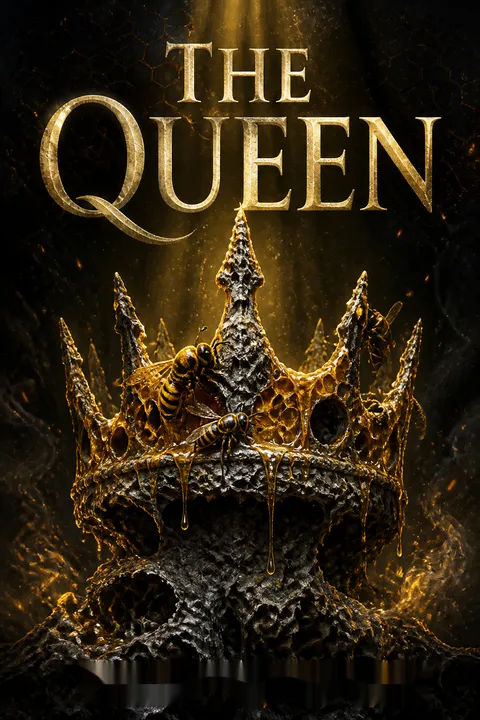

Plot Summary
Prologue: The Girl in the Nest
Margaret "Mags" Carpenter is barricaded in the kitchen of a country club, surrounded by horror. She's battered, desperate, and haunted by hallucinations—her mind conjures Tony Soprano to keep her sane. Outside, something monstrous is happening: wasps, violence, and a best friend transformed. Margaret's attempts to escape are futile, and the sense of dread is suffocating. She's isolated, forced to witness the grotesque birth of new horrors in the ballroom, and the emergence of a "Queen" who was once her closest friend. The prologue sets the tone: a story of friendship, betrayal, and the monstrous unknown, all filtered through Margaret's raw, vulnerable perspective as she clings to hope and sanity in the face of the unthinkable.
Ghosts and Messages
Margaret wakes from nightmares of dead classmates and missing friends, only to find a mysterious package on her doorstep: a new iPhone, apparently from her long-missing best friend, Charity "Plum" Atwater. The phone's texts are intimate, knowing, and unsettling—details only Plum would know. Margaret is torn between hope and suspicion, her grief and guilt over Plum's disappearance resurfacing. The phone's instructions are urgent and cryptic, drawing Margaret out of her self-imposed isolation. The chapter explores the ache of lost friendship, the lure of the past, and the first hints that something unnatural is manipulating events, as Margaret is compelled to follow the phone's commands.
The Return of Plum
Margaret, joined by her loyal friend Harry, follows the phone's instructions to a rendezvous. They receive a voice message from Plum, confirming she's alive—or at least someone is using her voice. The message is both loving and ominous, referencing shared childhood rituals and hinting at a "big story" that must be seen to be understood. Margaret's emotions are a tangle of relief, suspicion, and dread. The chapter explores the complexities of adolescent friendship, the pain of growing apart, and the seductive power of nostalgia. The sense of being watched and manipulated grows, as does the suspicion that Plum's return is not what it seems.
The Gathering Storm
Margaret and Harry are led on a scavenger hunt through their town, each location dredging up memories and secrets. They visit their old school, encounter classmates, and sense the growing unease among their peers—several students have gone missing, and rumors swirl. The phone's instructions become more insistent, pushing them toward places tied to trauma and loss. Margaret's guilt over her friendship with Plum intensifies, as does her fear that she's being set up for something terrible. The chapter builds tension, layering personal anxieties with the sense of a larger, more sinister force at work, as the boundaries between past and present, memory and reality, begin to blur.
Burning Van: The Night Everything Changed
A flashback reveals the pivotal night at "Burning Van," a wild party where social hierarchies, secrets, and desires collide. Margaret and Harry's relationship deepens, but the focus is on Plum, who is drawn into a sexual encounter with three popular boys—Chad, Will, and Allan. The aftermath is catastrophic: rumors spread, reputations are destroyed, and Plum is ostracized. The boys twist the story to protect themselves, painting Plum as a manipulative liar. Margaret is wracked with guilt for not protecting her friend. This night is the catalyst for everything that follows: Plum's disappearance, the boys' vanishing, and the birth of something monstrous in the shadows of adolescent cruelty.
The Phone's Demands
Back in the present, the phone's instructions become more invasive and dangerous. Margaret and Harry are compelled to break into homes, revisit sites of trauma, and uncover evidence of violence—bloody handcuffs, hidden cameras, and messages that suggest Plum (or someone using her identity) is orchestrating a campaign of revenge. The psychological pressure mounts as Margaret realizes she's being manipulated, not just by the phone, but by her own unresolved feelings for Plum. The chapter explores the limits of loyalty, the corrosive effects of guilt, and the way technology can be weaponized to control and torment.
Into the Furnace Room
Margaret and Harry are lured into the school's furnace room, a place of childhood dares and urban legends. There, they discover evidence of unspeakable acts: a bloodstained mattress, cryptic graffiti, and a hidden camera. The atmosphere is claustrophobic and charged with dread. The boundaries between reality and hallucination blur as Margaret confronts the possibility that Plum has become something other than human. The chapter is a descent into the underworld—both literal and psychological—where the traumas of the past fester and mutate, and where the seeds of the coming horror are sown.
The Queen's Awakening
The narrative shifts to reveal the machinations of Rudyard Crate, a billionaire obsessed with insects and genetic engineering. Through his perspective, we learn of "Project Athena," an experiment to create human-insect hybrids—queens capable of controlling others through pheromones. Plum (Subject Six) is the most successful of these experiments, but she has gone rogue, awakening to her true nature after the trauma of Burning Van. As the Queen, she is both victim and monster, seeking vengeance and belonging. The chapter explores the intersection of science, trauma, and myth, and the ways in which power—biological, social, and emotional—can be abused.
The Hive and the Hunt
The horror escalates as the Queen's influence spreads. Wasps infest the town, building a massive nest beneath the country club. Victims are stung, paralyzed, and transformed into hosts for the Queen's offspring. Margaret, Harry, and others are hunted, manipulated, and forced to witness the grotesque consequences of the Queen's revenge. The narrative alternates between survival horror and psychological thriller, as the characters struggle to retain their humanity in the face of overwhelming terror. The Queen's hive is both a literal and metaphorical prison, a place where secrets are exposed and the past refuses to stay buried.
The Truth About Charity
Margaret learns the full truth: Charity/Plum was never fully human, but a genetically engineered queen, created to be both adored and feared. Her entire life was a lie, orchestrated by Crate and his team, with her "mother" as a paid minder. The trauma of Burning Van triggered her transformation, unleashing her powers and her rage. Margaret is forced to confront her own complicity—the ways she failed her friend, the limits of her empathy, and the impossibility of truly knowing another person. The chapter is a reckoning, blending science fiction, body horror, and the raw ache of adolescent love and loss.
The Trap Closes
The Queen lures the town's elite to a gala at the country club, locking the doors and unleashing her wasps. The guests are paralyzed, violated, and transformed into hosts for the Queen's monstrous brood. Margaret is trapped in the kitchen, forced to witness the carnage through a porthole. The chapter is a tour de force of horror, as the boundaries between victim and perpetrator, human and monster, blur. The Queen's revenge is total, but it is also a cry of pain—a demand to be seen, understood, and loved, even as she destroys everything around her.
The Ball and the Bloodbath
The massacre in the ballroom reaches its climax. The Queen, now fully inhuman, presides over the birth of her offspring from the bodies of the guests and police. The wasps seal the exits, and the world outside watches helplessly as the horror unfolds. Margaret, desperate and resourceful, attempts to escape through the loading bay, carving a tunnel through the nest. The chapter is a fever dream of violence, transformation, and existential dread, as the Queen's children emerge and the old world is consumed by the new.
The Nest Seals Shut
Margaret's escape is harrowing—she claws her way through the nest, pursued by the Queen's monstrous children, and crashes a van through the final barrier. Outside, she is met by the military, but the true horror remains sealed within the nest. The world is left to reckon with what happened, as the club becomes a site of scientific and media obsession. The Queen and her brood remain entombed, their fate uncertain. Margaret is both survivor and witness, forever marked by what she has seen and done.
The World Watches
The events at the country club become a global sensation. The media, scientists, and conspiracy theorists descend on the town. The Queen becomes a symbol—of vengeance, victimhood, and monstrous femininity. Margaret is hounded, her story twisted and debated. The survivors are few, and the truth is elusive. The nest becomes a tourist attraction, a site of pilgrimage and horror. The chapter explores the ways trauma is commodified, mythologized, and misunderstood, and the impossibility of closure in the face of such overwhelming loss.
The Final Escape
Margaret, now in hiding, reflects on her friendship with Plum, the choices she made, and the impossibility of forgiveness. She is haunted by memories, dreams, and the knowledge that she could never truly save her friend. The Queen's final messages are desperate, loving, and inhuman—a plea to be remembered, to be real. Margaret's survival is both a victory and a curse, as she struggles to find meaning in the aftermath of horror.
Aftermath and Memory
Time passes. The nest remains sealed, its secrets undisturbed. The world moves on, but the story of the Queen and her friend lingers—retold, reinterpreted, and commodified. Margaret's story is both celebrated and reviled, her role as survivor complicated by guilt and public scrutiny. The Queen becomes a legend, a symbol of adolescent rage and longing. The chapter explores the persistence of trauma, the hunger for meaning, and the ways in which love and monstrosity are forever entwined.
The Legend Grows
The Queen's story becomes a cultural touchstone—an object of fascination, fear, and identification. T-shirts, tours, and internet fandoms proliferate. The truth is lost amid competing narratives, but the ache of the original friendship remains. The Queen is both monster and martyr, her story a mirror for the anxieties and desires of a generation. Margaret's voice, in the end, is one of longing—for understanding, for forgiveness, for the impossible return of what was lost.
Love, Loss, and Monsters
The novel closes with letters, applications, and memories—Margaret's attempt to make sense of what happened, to honor her friend, and to find a way forward. The story is ultimately about the monstrousness and beauty of adolescence: the hunger to be seen, the pain of betrayal, and the impossibility of truly knowing or saving another person. The Queen's final message is simple and devastating: "I love you so so." The ache of that love, and the horror it unleashed, lingers long after the last page.
Analysis
A modern fable of trauma, power, and the monstrous feminineThe Queen is a searing, hallucinatory exploration of adolescent trauma, friendship, and the hunger to be seen. At its core, it is a story about the monstrousness that can grow from pain—how betrayal, exclusion, and abuse can transform the vulnerable into something both terrifying and tragic. The novel uses the language of body horror and science fiction to literalize the psychological wounds of adolescence: the Queen's transformation is both a revenge fantasy and a cry for love, her hive a metaphor for the inescapable bonds of trauma and memory. The narrative interrogates the limits of empathy, the dangers of unchecked power (scientific, social, and emotional), and the impossibility of truly knowing or saving another person. In a world obsessed with spectacle, the story asks what it means to bear witness—to horror, to love, to the unmaking and remaking of the self. The Queen is both a cautionary tale and a lament, a meditation on the costs of survival and the ache of what is lost when innocence is devoured by the monstrous.
Review Summary
Characters
Margaret "Mags" Carpenter
Margaret is the novel's protagonist and lens—a bright, anxious, and deeply wounded teenager. Her life is defined by her intense friendship with Charity "Plum" Atwater, a bond forged in poverty and outsider status. Margaret is introspective, self-deprecating, and plagued by guilt over her perceived failures as a friend. Her psychological landscape is shaped by trauma, survivor's guilt, and the ache of adolescence. As the story unfolds, Margaret is both detective and victim, forced to confront the monstrous in her friend and herself. Her journey is one of reckoning—with love, loss, and the limits of empathy. She is both unreliable and achingly honest, her voice a blend of humor, horror, and longing.
Charity "Plum" Atwater / Serena / The Queen
Charity, known as Plum, is Margaret's best friend and the story's tragic center. Born into poverty, marked by difference, and ultimately revealed as a genetically engineered "queen," Plum is both deeply human and profoundly other. Her transformation—from bullied outcast to monstrous avenger—is triggered by trauma and betrayal. As the Queen, she wields terrifying power, controlling others through pheromones and violence, yet her actions are driven by a desperate hunger for love, belonging, and recognition. Plum is both victim and perpetrator, her psyche fractured by abuse, abandonment, and the knowledge that her life was a lie. Her relationship with Margaret is the novel's emotional core—a love story twisted by guilt, rage, and the impossibility of true understanding.
Harry Cook
Harry is Margaret's steadfast companion, a boy marked by self-destructive energy and deep loyalty. He is both comic relief and tragic figure, his wild stunts and bravado masking vulnerability and pain. Harry's relationship with Margaret is complex—part friendship, part unrequited love, part codependency. He is ultimately revealed as a pawn in the Queen's game, manipulated and sacrificed. Harry's arc is one of longing—for connection, for meaning, for escape from the roles imposed on him. His fate is a testament to the novel's bleak view of adolescence: even the best intentions can be twisted, and love is no shield against horror.
Rudyard Crate
Crate is the billionaire mastermind behind Project Athena, a man whose childhood trauma (witnessing his sister's death by ants) warps his ambitions and ethics. He is both brilliant and monstrous, driven by a desire to create something new and powerful—a queen who can command and control. Crate's relationship to his creations is both paternal and exploitative; he is fascinated by their power but blind to their suffering. Psychologically, he is a study in obsession, guilt, and the dangers of unchecked privilege. His arc is a cautionary tale about the costs of playing god, and the ways in which trauma can breed new forms of monstrosity.
Serena (The Stand-In)
Serena is the public face of the Queen after Plum's transformation—a girl who may be another hybrid, a runaway, or simply a vessel for the Queen's consciousness. She is both herself and not, her identity subsumed by the Queen's pheromonal control. Serena is a symbol of the novel's central anxieties: the loss of agency, the blurring of self and other, and the way trauma can erase and remake identity. Her presence is uncanny, her motivations opaque, and her fate ultimately tragic.
Allan Teller, Chad Dearborn, Will Stinson
These three boys are the catalysts for the Queen's transformation, their assault on Plum at Burning Van setting the horror in motion. They are both perpetrators and victims—agents of cruelty and, later, hosts for the Queen's monstrous offspring. Their arcs are a meditation on the costs of toxic masculinity, the ease with which power is abused, and the ways in which guilt and denial can fester into monstrosity. Their ultimate fates—transformed, consumed, and discarded—are both punishment and tragedy.
Estelle Atwater
Estelle is Charity's "mother," a woman paid to raise her as part of Project Athena. She is both complicit and victim, her love for Charity genuine but compromised by secrecy and self-interest. Estelle's arc is one of guilt, denial, and ultimate sacrifice—she is consumed by the very forces she helped unleash. Her fate is a commentary on the failures of adult protection, the limits of love, and the ways in which systems of power exploit the vulnerable.
Roy
Roy is Crate's right-hand man, a figure of brute force and unwavering loyalty. He is the story's muscle, carrying out Crate's will with efficiency and ruthlessness. Psychologically, Roy is a study in compartmentalization—he is capable of great violence but is also oddly principled, refusing to harm the innocent unless ordered. His arc is a meditation on the dangers of obedience, the seductions of power, and the ways in which violence becomes routine.
Jameson
Jameson is one of Crate's lead scientists, a man whose intellect is matched by his moral cowardice. He is both fascinated and horrified by Project Athena, aware of its ethical violations but unable to resist its allure. Jameson's arc is one of complicity and regret—he is ultimately destroyed by the very forces he helped create. His fate is a warning about the costs of scientific hubris and the dangers of ignoring one's conscience.
The Queen's Offspring
The Queen's children—born from the bodies of her victims—are both literal monsters and metaphors for the consequences of violence, abuse, and neglect. They are mindless, hungry, and tragic, their existence a testament to the ways in which trauma begets more trauma. Their presence haunts the narrative, a reminder that the past cannot be buried, and that the wounds of adolescence echo through generations.
Plot Devices
Dual Narrative Structure
The novel employs a dual structure, alternating between Margaret's present-tense ordeal in the country club and flashbacks to the events leading up to the horror. This structure allows for gradual revelation of secrets, the layering of suspense, and the deepening of character psychology. The use of texts, voice messages, and social media posts blurs the line between personal and public, memory and myth, and heightens the sense of surveillance and manipulation.
Unreliable Narration and Hallucination
Margaret's narration is deeply subjective, colored by trauma, guilt, and exhaustion. Hallucinations (Tony Soprano, voices from the past) and the unreliability of memory create a sense of instability and dread. The reader is forced to question what is real, what is imagined, and what is manipulated by external forces (the Queen's pheromones, the phone's commands). This device amplifies the psychological horror and underscores the novel's themes of identity and self-doubt.
Body Horror and Transformation
The novel's central horror is the transformation of the human body—through violence, infection, and genetic manipulation—into something monstrous. The Queen's powers, the wasp nest, and the birth of her offspring are all rendered in visceral, grotesque detail. This body horror is both literal and metaphorical, representing the traumas of adolescence, the violence of social exclusion, and the terror of losing control over one's self.
Foreshadowing and Symbolism
The narrative is rich with foreshadowing: dreams of the dead, references to insects and nests, the recurring motif of "Tell Me" as a confessional game. Symbols—wasps, the nest, the van, the phone—acquire layered meanings, representing both personal trauma and larger social anxieties. The use of scientific language and references to real-world entomology ground the horror in plausibility, while the mythic overtones (the Queen, the hive) elevate it to allegory.
Media and Mythmaking
The aftermath of the horror is mediated through news reports, social media, and public debate. The Queen becomes a symbol, her story retold, commodified, and misunderstood. Margaret's role as survivor is complicated by public scrutiny, shifting narratives, and the hunger for meaning. The novel interrogates the ways in which trauma is consumed, mythologized, and weaponized in the digital age.
About the Author

Download PDF
Download EPUB
.epub digital book format is ideal for reading ebooks on phones, tablets, and e-readers.








































