
Key Takeaways
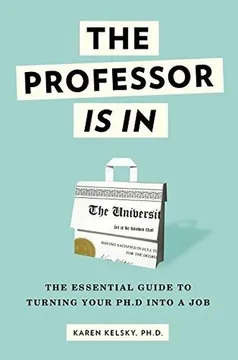
1. The academic career path is in a state of systemic collapse and adjunctification
The lives of many adjunct professors are ones of Dickensian misery.
The systemic collapse. The traditional academic career path is a relic of the past, decimated by decades of state funding cuts, skyrocketing tuition, and administrative bloat. Universities have systematically replaced permanent tenure-track lines with temporary, underpaid adjunct faculty who now make up 75 percent of the teaching force. This structural shift has hollowed out the quality of higher education while leaving new Ph.D.'s with few prospects for secure employment.
The adjunct trap. Adjuncts are treated like migrant workers, earning poverty-level wages without health insurance or office space, and driving between multiple campuses to survive. This "freeway flyer" lifestyle leaves no time for the research and publishing required to secure a permanent position. Many highly educated scholars find themselves trapped in this cycle of exploitation, accumulating massive debt while chasing disappearing jobs.
Subprime educational lending. Graduate programs function like subprime lenders, recruiting idealistic students into debt-heavy programs with false hopes of employment.
- States spent 28% less per student on higher education in 2013 than in 2008.
- 75% of university instructional staff are now contingent adjuncts.
- Average graduate student debt has climbed to $57,600, with many owing over $100,000.
2. You must transition from a subordinate graduate student to an authoritative peer
The better a grad student you are the worse job candidate you make, because a properly socialized graduate student is one who has internalized a subject position of subordination to the will of the faculty.
Rejecting the peon mentality. To succeed on the job market, you must immediately stop acting like a subordinate graduate student and start presenting yourself as a faculty colleague. Search committees are not looking for an apprentice to mentor; they are looking for an autonomous, self-directed peer who can immediately contribute to the department. This identity shift is the most difficult but necessary hurdle for academic job seekers.
Banish graduate habits. Graduate students sabotage themselves by writing and speaking with a cringing, defensive, or overly humble tone. They make excuses for what they haven't done, wait for permission to act, and drone on endlessly about their dissertations instead of focusing on their broader professional productivity. This submissive posture signals immaturity and instantly disqualifies candidates in the eyes of the committee.
Projecting professional authority. Transitioning to a peer means adopting confident body language, making direct eye contact, and delivering firm handshakes.
- Stop making excuses for uncompleted work or lack of experience.
- Speak in a firm, level tone and avoid self-deprecating humor.
- Take up physical space in your chair and avoid submissive postures.
3. Build a competitive professional record early using a strategic five-year plan
The point of graduate school, for the actual graduate students themselves, is preparation for a career.
Strategic career preparation. Graduate school is not an intellectual playground; it is a highly competitive training ground where you must actively build a marketable record from day one. You must look up from your immediate coursework and dissertation to focus on the objective metrics that search committees actually value. Your success depends on tangible outcomes: publications, grants, and national conference presentations.
The five-year plan. Successful candidates use a rigorous, month-by-month five-year plan to map out their writing, funding, conference, and publishing deadlines. This proactive approach ensures they never miss critical opportunities and helps them accumulate the necessary lines on their CV before entering the market. It transforms the job search from a passive hope into an active, managed campaign.
The power of one. Having even a single peer-reviewed publication or national grant exponentially increases your credibility compared to candidates with none.
- Prioritize peer-reviewed journal articles over book reviews or edited chapters.
- Secure solo-teaching experience as an instructor of record, not just a TA.
- Apply for external grants early to establish a track record of funding.
4. Establish a clear, consistent, and memorable candidate campaign platform
You need to stand for things, and those commitments need to be consistent across the board, and instantly recognizable as yours.
The candidate platform. Think of yourself as a political candidate running a campaign, where you must present a neat, legible, and memorable package of skills. Your research, teaching, and future plans must align into a cohesive, easily understood identity that immediately signals who you are and what you do. This clarity of vision makes you stand out in a sea of generic, disorganized applicants.
Creating your planks. Your platform should consist of specific "planks" that define your area focus, theoretical commitments, pedagogical methods, and future research trajectory. This consistent messaging must carry through your cover letter, CV, research statement, and interview responses without deviation. It allows the search committee to easily categorize you and imagine how you fit into their department.
Showing, not telling. Rather than making abstract claims about your brilliance, let your concrete achievements and specific course proposals demonstrate your platform's value.
- Define a clear geographical and topical focus for your research.
- Articulate how your work intervenes in major disciplinary debates.
- Align your teaching proposals with your core research expertise.
5. Understand that exhausted search committees are looking for reasons to reject you
What she wants, what she wants more than anything in the world at that moment, is to be able to reject 324 of those applications so that she can get to the long short list she needs for the next day’s meeting, shut down the computer, and go to bed.
The exhausted reviewer. Search committee members are overworked, stressed, and facing hundreds of applications for a single open position. They do not read your files with excited curiosity; they skim them in a state of exhaustion, looking for any excuse to reject you and shrink the pile. Your job is to make it impossible for them to throw your application away.
The rejection round. In the initial review, your cover letter and CV will get no more than a minute or two of attention. Any formatting error, excessive length, or rambling, emotional prose will result in your file being instantly dispatched to the reject pile. The committee values brevity, clarity, and immediate legibility above all else during this stage.
Flawless, factual presentation. To survive this brutal weeding-out process, your application materials must be absolutely flawless, concise, and strictly factual.
- Keep your cover letter to exactly two pages with professional formatting.
- Ensure your CV is clean, using a clear, reverse-chronological layout.
- Avoid dense blocks of text and use white space to make documents readable.
6. Master the academic cover letter by prioritizing objective facts over emotions
The most important principle of all job document writing is this: facts, not emotions.
The academic skepticism principle. Academics are trained skeptics who require evidence to accept any claim, yet candidates routinely fill their letters with unprovable emotional assertions. Phrases like "I am passionate about teaching" or "I care deeply about students" are empty noise that signals a lack of professional substance. Your cover letter must be a rigorous, evidence-based argument for your candidacy.
Show, don't tell. Replace emotional claims with concrete, verifiable facts that prove your effectiveness and productivity. If you are an excellent teacher, describe your innovative assignments and student outcomes; if you are a productive scholar, list your publications and grant awards. This approach respects the committee's intelligence and aligns with their evaluative standards.
A rigorous, standard structure. Your cover letter must follow a strict, professional template that moves logically from your research to your publications, future projects, and teaching.
- Limit the letter to exactly two pages on institutional letterhead.
- State your dissertation defense date clearly in the very first paragraph.
- Dedicate specific paragraphs to your current project, publications, and next project.
7. Publish peer-reviewed journal articles and avoid low-status edited collections
Avoid like the plague offers of publication in edited collections, which is where good publications go to die.
The publishing hierarchy. Not all publications are created equal, and candidates must understand the strict status hierarchy that governs academic hiring. Peer-reviewed journal articles in top-tier journals are the gold standard of academic productivity, while other venues carry far less weight. Your publication record is the single most important factor in securing a research-focused position.
The edited collection trap. Graduate students often squander their best material on book reviews, conference proceedings, or chapters in edited collections. These publications take years to see the light of day, are rarely read, and do not count toward tenure or help you on the job market. They represent a massive opportunity cost that diverts your energy from high-impact writing.
Strategic publishing. Focus your limited writing time on producing high-impact, solo-authored articles in the leading journals of your discipline.
- Prioritize peer-reviewed journal articles over all other publication types.
- Avoid coauthoring in the humanities and soft social sciences before tenure.
- Have a clear plan for turning your dissertation into a book or series of articles.
8. Write a professional, evidence-based teaching statement instead of a weepy narrative
The teaching statement is not meant to suddenly depart from your scholarly persona to tell a random new story about how nice you are and how much you care about students.
Banish the weepy narrative. The typical teaching statement is a disaster of saccharine sentiments, obvious platitudes, and hyper-emotionalism. Writing about how much you "love" students or "strive to create a supportive environment" makes you look like a perennial adjunct rather than a tenure-track colleague. It signals that you lack a rigorous, professional approach to pedagogy.
A professional teaching persona. Your teaching statement must be a rigorous, one-page document that presents a professional teaching persona consistent with your identity as a researcher. It should articulate a broad pedagogical philosophy rooted in your discipline, and illustrate it with concrete classroom strategies. It must prove that you are as intellectually rigorous in the classroom as you are in your scholarship.
Concrete classroom evidence. Use specific examples of innovative assignments, course designs, and student outcomes to prove your effectiveness as an instructor.
- Keep the teaching statement to exactly one page.
- Describe specific, advanced courses you are prepared to teach.
- Provide quantitative evaluation data rather than cherry-picked student quotes.
9. Ace the academic interview by projecting calm, professorial authority
The casual, approachable style that the undergraduates in your TA classroom love is harming you on the job market.
The professorial affect. To succeed in interviews, you must project an aura of calm, deliberate authority and self-importance. Avoid the breathless, rapid-fire delivery common among anxious graduate students, and instead embrace the slow, measured cadence of an established scholar. You must look and sound like someone who already belongs at the faculty table.
Banish vocal insecurity. Watch out for vocal habits like uptalk—ending declarative sentences with a rising question mark intonation—and filler words like "um" and "like." These habits instantly undermine your credibility and make you sound like an insecure undergraduate. Practice speaking in firm, declarative sentences with a strong falling tone at the end.
Answering the unspoken question. Understand that interviewers are always evaluating your tenurability, even at the initial hiring stage.
- Prepare concise, three-minute summaries of your dissertation and next project.
- Articulate a clear, five-year publishing trajectory through tenure.
- Practice your responses in front of a mirror and record your mock interviews.
10. Know when to quit the academic cult and declare your independence
Dependency on external validation is the enemy of contentment and joy.
Breaking free from the cult. Academia functions like a cult, socializing its members to believe that any career outside the university represents total failure. This toxic belief system traps thousands of highly educated people in a cycle of poverty-level adjunct work and debilitating shame. Declaring independence means realizing that your worth is not defined by an exploitative system.
Translating your skills. It is okay to quit, and to realize that your intelligence, dedication, and skills have immense value in the nonacademic world. To make the transition, you must disaggregate your singular academic identity from the multitude of transferable skills you have mastered. You are not just an "anthropologist" or "historian"; you are a project manager, data analyst, and writer.
Declaring your worth. Your value as a human and a professional does not depend on the validation of a corrupt, exploitative academic system.
- Recognize that your skills in research, analysis, and writing are highly marketable.
- Build a professional résumé that translates academic achievements into business terms.
- Embrace the path of the entrepreneur and create your own opportunities.
People Also Read