
Plot Summary
Return to Darkwood
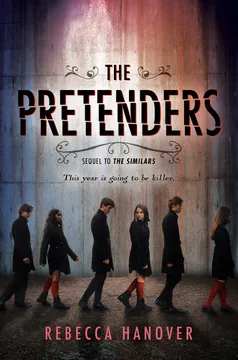
Emma Chance returns to Darkwood Academy for her senior year, haunted by the events of the previous year and the absence of Levi, the boy she loves, who is being held captive by Gravelle, the creator of the Similars—clones of elite students. Emma's best friend Ollie has miraculously returned after being presumed dead, but their relationship is strained by secrets and trauma. Emma's father is distant, and Emma herself is plagued by doubts about her own identity after Gravelle's cryptic letter suggesting she may not be who she thinks she is. As Emma tries to reconnect with her friends and navigate her complicated feelings for both Ollie and Levi, she is thrust back into the tense, divided world of Darkwood, where clones are both feared and resented.
Protest and Prejudice
On arrival, Emma and Ollie are confronted by a student protest against clones, led by Harlowe Shaw and supported by Madison Huxley, whose mother is running for president on an anti-clone platform. The protest is a stark reminder of the growing hostility toward the Similars and anyone associated with them. Emma is furious but powerless, and the administration's weak response only deepens her sense of isolation. The Similars—Maude, Theodora, Jago, Ansel, and Pippa—are also back, but Levi remains missing. The group is fractured, and Emma feels caught between worlds: not fully accepted by the originals, yet not entirely one of the Similars. The climate at Darkwood is tense, with new laws stripping clones of rights and citizenship, and Emma's own sense of belonging is more precarious than ever.
The Nine's New Order
The prestigious Ten, Darkwood's elite student group, is now the Nine, with Levi absent. Maude is named leader and immediately suspends all hazing rituals, hoping to set a new, more inclusive tone. However, the junior class includes Harlowe, who is openly hostile to clones. The Similars are wary, knowing their place at Darkwood is tenuous and dependent on the whims of adults and the law. Emma is haunted by a threatening message from Gravelle, who warns her not to contact Levi and sends a photo of Levi beaten and bruised. The Similars' legal status is fragile, and their guardian's power over them is absolute. Emma's own identity crisis deepens as she wonders if she, too, is a clone, and what that means for her relationships and her future.
Hazing and Hostility
Harlowe orchestrates a cruel hazing, drugging and kidnapping the Similars and Ollie, and luring Emma into a dangerous confrontation. Emma's desperate rescue attempt leads her to discover she has unusual mental abilities—she can hear others' thoughts, a trait none of the other Similars possess. The Similars reveal their superhuman strength by breaking out of their restraints, but their abilities are exposed to hostile students, fueling further prejudice. Emma's rapid healing after a dangerous leap from a moving car confirms her suspicions: she is not an ordinary human. The emotional fallout from the hazing, especially Ollie's discovery of Emma's feelings for Levi, fractures the group further and leaves Emma more isolated than ever.
Masquerade Revelations
The masquerade ball becomes a crucible for hidden truths. Emma's telepathic abilities intensify, allowing her to hear Ollie's unspoken love for her, which she cannot reciprocate. The dance is interrupted by a drunken speech from Archer, one of the originals, and Emma's mental powers reveal that Headmaster Ransom is experimenting with Similars' plasma, hoping to gain their abilities. Emma confronts Ransom, who admits to exploiting the Similars with Gravelle's approval. The night ends with Ransom's collapse, likely due to the stealth virus embedded in the Similars' DNA. Emma's sense of reality is further shaken as she realizes the extent of the adults' manipulation and the dangers facing her friends.
Secrets and Similarities
As anti-clone sentiment escalates, Emma's telepathy becomes both a gift and a curse. She confides in Maude about her suspicions that she is a Similar, and her rapid healing and mental abilities seem to confirm it. The Similars are targeted by hate speech and threats, and Emma's essay defending clones goes viral, making her a lightning rod for both support and hostility. The emotional toll of secrecy, especially with Ollie, becomes unbearable, and Emma finally admits her true nature to her friends and the school. The revelation is both liberating and dangerous, as it exposes her to new threats but also forges a deeper bond with the Similars.
The Duplicates Arrive
A new wave of chaos hits Darkwood when Duplicates—advanced, fast-grown clones of Tessa, Archer, and Jake—arrive and begin impersonating their originals. The real Jake is locked away, and the Duplicates' reckless behavior nearly leads to disaster. Emma and her friends discover that the Duplicates were created by Seymour, Gravelle's brother, using new technology that downloads memories and personalities into blank-slate clones. The Duplicates are ultimately removed, but the incident reveals the terrifying potential for identity theft on a massive scale. The boundaries between original, Similar, and Duplicate blur, and Emma's fear for her own identity intensifies.
Unmasking the Imposters
Emma's telepathy reveals that Ollie has been replaced by a Duplicate, programmed to report back to Pollux Island at a specific time each day. The real Ollie has been kidnapped, and the Duplicate is nearly indistinguishable from the original, raising the stakes for everyone. Emma and the Similars realize that Gravelle's plan is far more ambitious than they thought: he is systematically replacing not just students, but their parents and other influential adults, with Duplicates. The group races to expose the imposters and protect their loved ones, but the scale of the conspiracy is overwhelming, and trust becomes a rare commodity.
The Legacy Project
Levi returns to Darkwood with a dire warning: Gravelle has assigned the Similars a new "Legacy Project"—to infiltrate and undermine their DNA families. Refusal means death, as Gravelle has embedded a stealth virus in their DNA that he can activate remotely. The Similars are trapped, forced to choose between betraying their families or risking their lives. The virus is real, as demonstrated by Ransom's collapse, and Gravelle's control is nearly absolute. The group's only hope lies in uncovering Gravelle's true plan and finding a way to disable the virus before it's too late.
Stealth Virus Threat
The Similars debate how to resist Gravelle's control, knowing that defiance could be fatal. Theodora openly challenges Gravelle and is struck down by the virus, her death a warning to the others. The group is devastated, but Maude discovers a way to potentially deactivate the virus—if they can access Gravelle's server. Meanwhile, Emma's telepathy becomes a crucial tool, allowing her to gather information and influence others, but also making her a target. The threat of the virus hangs over everyone, and the group prepares for a final confrontation with Gravelle and Seymour, who have their own, even more chilling, agenda.
The Rally and Replacements
At a high-profile political rally in New York, the group tries to prevent Bianca Huxley and Jaeger from being replaced by Duplicates. Their efforts fail, and they are captured and taken to Pollux Island, where Gravelle and Seymour reveal their ultimate plan: to replace all influential figures with Duplicates, erasing the originals once their memories have been fully downloaded. The group is imprisoned, and the originals are held in a cage, starved and subjected to mind control. The scale of the conspiracy is revealed, and the group realizes that the only way to save their loved ones is to destroy the entire operation at its source.
Pollux Island Showdown
On Pollux Island, the group fights their way through guards and Duplicates to rescue the originals. Emma discovers that she herself is a Duplicate, created to replace the real Emma (Eden), who has been held captive all year. Levi, too, is revealed to be a Duplicate. The realization is shattering, but Emma and Levi resolve to sacrifice themselves to save the others. Maude devises a plan to reset all the Duplicates, erasing their memories and freeing the originals, but the process will also destroy Pollux and Castor Islands and kill the Duplicates in the process. Emma and Levi choose to stay behind and trigger the reset, knowing it is the only way to restore order and give everyone else a chance at a real life.
The Reset Sacrifice
As the islands burn and the reset erases all Duplicates' memories, Emma and Levi—both Duplicates—share a final, bittersweet moment together. Emma uses her telepathy to control Seymour and force him to trigger the reset, ensuring that the Duplicates at home are wiped clean and the originals can reclaim their lives. The process is both physical and existentially devastating, as Emma and Levi lose their identities and die in the flames, their sacrifice ensuring the survival and freedom of their friends and families. Their love, forged in impossible circumstances, becomes a memory that only the originals will carry forward.
Aftermath and Homecoming
The originals and DNA parents return home, traumatized but free. The Duplicates, now blank slates, are cared for and given a chance at new lives, while the Similars and their friends mourn the losses and try to rebuild. Emma (the original) and Levi (the original) are reunited, their love deepened by all they have endured. Ollie and Emma reaffirm their unbreakable friendship, and the group honors Theodora's memory in a lakeside memorial. As graduation approaches, the future is uncertain but filled with possibility. The story ends with Emma, Levi, and their friends looking forward, determined to define their own identities and destinies, no longer controlled by the past.
Analysis
A meditation on identity, agency, and the ethics of creationThe Pretenders is a gripping, emotionally charged exploration of what it means to be human in a world where identity can be manufactured, stolen, or erased. Through its intricate plot and psychologically rich characters, the novel interrogates the boundaries between self and other, original and copy, love and loyalty. The use of Duplicates as both threat and victim allows the story to probe the ethics of scientific progress and the dangers of dehumanization. Emma's journey—from uncertainty and self-doubt to self-sacrifice and acceptance—mirrors the broader struggle for agency and belonging faced by all the characters. The novel's willingness to confront loss, grief, and the impossibility of returning to a prelapsarian innocence gives it a rare emotional depth. Ultimately, The Pretenders argues that identity is not a matter of biology or memory alone, but of choice, connection, and the courage to define oneself in the face of overwhelming odds. The story's resolution, with its emphasis on healing, chosen family, and the possibility of new beginnings, offers a hopeful vision for a fractured world.
Review Summary
People Also Read

Characters
Emma Chance / Eden Gravelle
Emma is the protagonist, a fiercely loyal and intelligent girl caught between the world of the originals and the Similars. Her journey is one of profound identity crisis: she learns she may be a clone (Eden), then discovers she is actually a Duplicate, created to replace the real Emma who was held captive. Emma's psychological arc is defined by her longing for belonging, her struggle with self-worth, and her capacity for empathy—even toward those who hate her. Her telepathic abilities set her apart, making her both powerful and vulnerable. Emma's relationships with Ollie and Levi are central to her development, forcing her to confront the complexities of love, loyalty, and sacrifice. Ultimately, Emma's willingness to give up everything for her friends and family defines her as a true hero, even as she grapples with what it means to be "real."
Levi Gravelle
Levi is the enigmatic, brooding Similar (and later revealed Duplicate) who becomes Emma's great love. Raised by Gravelle in isolation, Levi is marked by trauma, guilt, and a deep sense of otherness. His relationship with Emma is intense and transformative, offering him a glimpse of hope and normalcy. Levi's loyalty to his friends and his willingness to sacrifice himself for the greater good are defining traits. The revelation that he, too, is a Duplicate adds layers of tragedy and complexity to his character, as he must reconcile his love for Emma with the knowledge that their entire relationship was orchestrated by others. Levi's arc is one of learning to accept love and agency, even in the face of manipulation and loss.
Oliver "Ollie" Ward
Ollie is Emma's childhood best friend, whose presumed death and miraculous return shape much of the emotional landscape of the story. Ollie is warm, witty, and deeply loyal, but he is also haunted by trauma and the knowledge that Gravelle is his biological father. His struggle with identity, guilt, and the burden of being both original and pawn is central to his arc. Ollie's love for Emma is steadfast, but he ultimately accepts her love for Levi, reaffirming their unbreakable friendship. His abduction and replacement by a Duplicate force him to confront his own expendability and the meaning of selfhood. Ollie's resilience and capacity for forgiveness make him the emotional heart of the group.
Maude Gravelle
Maude is the de facto leader of the Similars, known for her intelligence, resourcefulness, and unyielding sense of justice. She is pragmatic and often the voice of reason, but her loyalty to her friends is absolute. Maude's arc is one of learning to balance strength with vulnerability, especially as she faces the loss of Theodora and the moral ambiguities of fighting for survival. Her hacking skills and quick thinking are instrumental in the group's resistance against Gravelle and Seymour. Maude's willingness to make hard choices, including sacrificing herself if necessary, marks her as a true leader.
Theodora Leroy
Theodora is one of the Similars most deeply affected by the quest for identity and belonging. Her decision to expose her DNA father's crimes sets off a chain of events that lead to her own death at the hands of the stealth virus. Theodora's arc is defined by her courage to stand up for what is right, even at great personal cost. Her death is a turning point for the group, galvanizing them to resist Gravelle's control and underscoring the story's themes of sacrifice and the price of truth.
Augustus Gravelle
Gravelle is the creator of the Similars and the architect of much of the story's conflict. Driven by a desire for revenge against those who wronged him, Gravelle is both brilliant and monstrous, capable of genuine affection for his creations but ultimately viewing them as tools for his own ends. His psychological complexity lies in his simultaneous need for control and his inability to truly connect with others. Gravelle's willingness to kill, replace, or discard anyone—including his own "children"—makes him a chilling antagonist. His death is both a victory and a cautionary tale about the dangers of unchecked ambition and wounded pride.
Albert Seymour
Seymour, Gravelle's half-brother, is the secret force behind the Duplicates and the technological advances that make mass replacement possible. He presents himself as a reluctant participant, but is ultimately revealed as a true believer in the "upgrade" of humanity through cloning. Seymour's lack of empathy and his willingness to sacrifice individuals for the sake of progress make him a chilling figure. His psychological profile is that of a utilitarian rationalist, blind to the human cost of his vision. Seymour's manipulation of both Gravelle and the Similars exposes the dangers of scientific hubris.
Harlowe Shaw
Harlowe is the face of anti-clone prejudice at Darkwood, leading protests and orchestrating hazing rituals. Her actions are driven by fear, insecurity, and a desire for power, but she is also a product of her environment and the larger societal backlash against clones. Harlowe's arc is one of escalation and eventual downfall, as her schemes are exposed and she is stripped of her influence. She serves as a mirror for the dangers of dehumanization and the ease with which fear can be weaponized.
Prudence "Pru" Stanwick
Pru is Emma's closest friend among the originals, offering support and solidarity even as she grapples with her own grief and family complications. Pru's loyalty and empathy make her a stabilizing force in the group, and her willingness to risk everything for her friends underscores the story's themes of chosen family and resilience. Pru's arc is one of healing and growth, as she learns to balance her own needs with those of the people she loves.
Jane Ward
Jane is Ollie's mother and a surrogate parent to Emma, embodying compassion, strength, and integrity. Her abduction and replacement by a Duplicate highlight the vulnerability of even the most powerful and well-intentioned adults in the face of Gravelle and Seymour's schemes. Jane's return and her efforts to protect the Similars and originals alike reinforce the story's message that true family is defined by love and action, not just biology.
Plot Devices
Identity and Replacement
The central plot device is the creation and replacement of individuals with Duplicates—clones who possess the memories and personalities of their originals. This device allows the story to interrogate what makes someone "real," the meaning of memory and experience, and the terror of being erased or supplanted. The gradual revelation that Emma and Levi are themselves Duplicates is a masterstroke of narrative structure, forcing both characters and readers to question the nature of identity and the ethics of cloning.
Telepathy and Mind Control
Emma's unique mental abilities—her telepathy and eventual power to control others—serve as both a metaphor for the alienation of being "other" and a literal tool in the fight against Gravelle and Seymour. This device heightens the stakes, as Emma's powers make her both a target and a potential savior. The narrative uses her abilities to explore themes of consent, privacy, and the limits of empathy.
Stealth Virus and Biological Control
The stealth virus embedded in the Similars' DNA is a classic ticking time bomb, giving Gravelle absolute power over his creations and forcing them into impossible choices. The virus is both a plot engine and a symbol of the ways in which power can be exercised through biology and technology. Its activation and the death of Theodora are pivotal moments that drive the story toward its climax.
Narrative Structure and Foreshadowing
The novel employs a tightly woven structure, with early hints about Emma's true nature, the existence of Duplicates, and the scale of Gravelle's plan. The use of emails, dreams, and telepathic episodes foreshadows later twists, while the gradual unmasking of imposters keeps the reader in a state of suspense. The narrative's willingness to upend the protagonist's sense of self is both daring and emotionally resonant.
Sacrifice and Reset
The climax hinges on the willingness of Emma and Levi (the Duplicates) to sacrifice themselves to save the originals and restore order. The "reset" is both a literal and metaphorical erasure, raising questions about the value of individual experience and the ethics of self-sacrifice. The destruction of Pollux and Castor Islands is both a cathartic release and a sobering reminder of the costs of unchecked ambition.








































