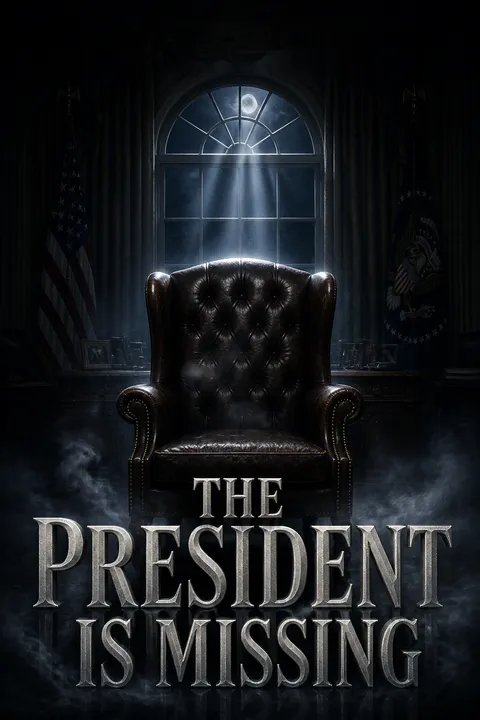

Plot Summary
The Sharks Circle
President Jonathan Duncan faces a hostile congressional committee, accused of protecting terrorists and undermining national security. The hearing is a political spectacle, with Speaker Rhodes and his allies determined to destroy Duncan's presidency. The president's refusal to answer questions about a secret phone call with a notorious cyberterrorist, Suliman Cindoruk, only fuels suspicion. Duncan's aides urge him not to testify, fearing political suicide, but he insists on facing his accusers. The tension is palpable, and the stakes are nothing less than the survival of his administration—and, as we soon learn, the safety of the nation itself.
A President Under Siege
As the hearing continues, Duncan is battered by accusations and forced to withhold the truth for reasons of national security. He is haunted by the death of a CIA operative in Algeria, blamed for saving a terrorist's life. The president's closest advisers, including Chief of Staff Carolyn Brock and political adviser Jenny Brickman, are divided on strategy. Duncan's silence frustrates his allies and emboldens his enemies. Beneath the political theater, he carries the weight of a secret threat—a cyberattack that could cripple the country. The loneliness of leadership and the impossibility of full disclosure become painfully clear.
The Assassin Arrives
A mysterious, world-class assassin known as Bach lands in Washington, D.C., hiding in plain sight. She is a master of disguise, able to blend into any environment, and is preparing for her most challenging assignment yet. Her arrival signals that the threat facing the president is not just political but existential. Bach's meticulous preparations, her cold detachment, and her lethal skill set the stage for a deadly convergence with the president's crisis. Her presence is a chilling reminder that unseen enemies are closing in from all sides.
The Weight of Office
Duncan's day begins before dawn, weighed down by insomnia, grief for his late wife, and a chronic blood disorder that threatens his health. The media swirls with rumors of impeachment and political infighting. His chief of staff, Carolyn, and political adviser, Jenny, strategize about legislative maneuvers and the threat of a primary challenge. The president's vulnerability is both physical and political, and his inner circle is strained by the secrets he must keep. The sense of impending disaster is inescapable, and Duncan's resolve is tested at every turn.
Hidden Illness, Hidden Threats
The president's blood disorder worsens, and his doctor warns him of the risks. Yet Duncan cannot afford to step back—not with a catastrophic cyberattack looming. He reviews contingency plans for martial law and the suspension of civil liberties, should the worst occur. The threat is so grave that even the possibility of losing the country is on the table. Meanwhile, Speaker Rhodes refuses to delay the hearings, prioritizing political gain over national security. Duncan's isolation deepens, and the sense of time running out becomes acute.
The Enemy's Toast
In Berlin, Suliman Cindoruk, the world's most dangerous cyberterrorist, celebrates with his team. They are young, brilliant, and on the verge of unleashing a cyberweapon that could devastate the United States. Cindoruk's confidence is matched only by his paranoia—his penthouse is rigged with explosives, and his every move is calculated. The attack is imminent, and the stakes are global. The contrast between the team's revelry and the destruction they plan is stark, underscoring the moral void at the heart of the threat.
Martial Law Contemplated
The president reviews draft orders for martial law, the suspension of habeas corpus, and price controls. He meets with Speaker Rhodes, trying to buy time and explain the gravity of the threat without revealing classified details. Rhodes is unmoved, focused on political advantage. Duncan's frustration boils over, and he is forced to rely on trust that no longer exists in Washington. The breakdown of political norms and the erosion of trust are as dangerous as the external threat. The president's desperation is palpable, and the sense of impending catastrophe grows.
Trust and Betrayal
Duncan's closest advisers, including childhood friend and White House counsel Danny Akers, try to support him, but even they are kept in the dark about the full extent of the threat. The president's decision to go "off leash"—to operate without Secret Service protection—alarms his team. The loneliness of command is acute, and the possibility of betrayal within his own ranks becomes real. The narrative explores the psychological cost of leadership under siege and the corrosive effects of mistrust at the highest levels of government.
Hiding in Plain Sight
Bach, the assassin, moves through Washington, blending into crowds and preparing her weapon. Duncan, disguised and without his security detail, navigates the city to meet a mysterious contact. Both are hiding in plain sight, their paths destined to intersect. The tension between visibility and invisibility, between public persona and private action, is central. The president's willingness to risk everything by going off the grid is mirrored by the assassin's relentless pursuit of her target. The city becomes a chessboard, with deadly stakes.
The World on Edge
As Duncan juggles the imminent cyber threat, he is also confronted with international crises—unrest in Honduras, an assassination attempt in Saudi Arabia, and terrorist leaders meeting in Yemen. The interconnectedness of global events and the vulnerability of modern societies are highlighted. The president must make impossible decisions, including authorizing a drone strike that will kill terrorist leaders but also innocent children. The moral cost of leadership is laid bare, and the narrative explores the limits of power and the burden of conscience.
The Impossible Decision
Duncan is forced to authorize a strike that will kill terrorist leaders and their children. The decision is agonizing, and the narrative delves into the psychological torment of choosing between lesser evils. The strike is a metaphor for the broader dilemmas facing the president—every option is fraught with peril, and the consequences are irreversible. The narrative humanizes the cost of war and the impossibility of clean hands in dirty business. The president's prayer for forgiveness and hope for a better future is a rare moment of vulnerability.
The Mysterious Visitor
A young woman, waifish and defiant, arrives at the White House with a message for the president. She holds the key to stopping the cyberattack but insists on strict conditions—a one-on-one meeting, no surveillance, and the promise of safe passage. The encounter is tense, a psychological duel in which trust is both weapon and shield. The woman's knowledge of a recent helicopter explosion in Dubai proves her credibility. She leaves behind an envelope with instructions for the next step, and the president realizes he is being tested as much as he is testing her.
The Envelope's Secret
The envelope contains instructions for a clandestine meeting. Duncan prepares to go off the grid, leaving behind his security detail and aides. The narrative explores the rituals of power—the secret tunnels, the coded messages, the layers of protection and vulnerability. The president's farewell to his daughter, Lilly, is poignant, underscoring the personal stakes of the crisis. The sense of finality is strong—Duncan knows he may not return. The stage is set for a high-stakes confrontation with the unknown.
Off the Grid
Duncan, disguised with a red beard and glasses, meets with his daughter in a crowded bar, saying goodbye and urging her to stay safe. The emotional core of the story is laid bare—the president is not just a leader but a father, a widower, a man haunted by loss and driven by love. The narrative balances the personal and the political, showing how the fate of a nation is intertwined with the fate of a single family. The president's vulnerability is both his greatest weakness and his greatest strength.
Disguises and Goodbyes
Duncan, now fully disguised, meets with a contact in a baseball stadium. The tension is electric—he is exposed, vulnerable, and unsure whom to trust. Meanwhile, Bach, the assassin, takes up her position, ready to strike. The convergence of plotlines is masterful, with the president and the assassin moving toward a deadly intersection. The narrative explores the psychology of disguise, the thrill of anonymity, and the terror of exposure. The sense of impending violence is inescapable.
A Father's Farewell
The meeting at the stadium turns into an ambush. Duncan's contact, Augie, is a young hacker with ties to the Sons of Jihad but now on the run from them. As they attempt to leave, a sniper (Bach) opens fire, killing Augie's partner, Nina. Duncan and Augie barely escape with their lives, thanks to the intervention of the Secret Service. The chaos and violence of the scene underscore the stakes—no one is safe, and the enemy is both everywhere and nowhere. The president's resolve is hardened by loss and fear.
The Ballpark Rendezvous
In the aftermath of the ambush, Augie confesses to Duncan that he and Nina created the virus, Dark Ages, but now want to stop it. The virus is a wiper, capable of erasing all data and crippling the nation. Augie's knowledge is incomplete—Nina held the key to disarming the virus, but she is dead. The narrative explores the ethics of hacking, the unintended consequences of genius, and the possibility of redemption. The president must decide whether to trust Augie and how to proceed with incomplete information.
The Assassin's Crosshairs
As the virus threat escalates, Duncan convenes a secret summit with leaders from Israel, Germany, and Russia. The international dimensions of the crisis come into focus—alliances are tested, and old rivalries resurface. Meanwhile, evidence mounts that there is a traitor within the president's inner circle, someone who leaked the code word "Dark Ages" to the enemy. The search for the traitor becomes a race against time, with the fate of the nation hanging in the balance. The narrative explores the fragility of trust and the corrosive effects of suspicion.
The Ambush Unleashed
As the president's team races to stop the virus, mercenaries attack the safe house. Bach infiltrates the compound, ready to kill. The president and his team are forced into a desperate defense, relying on Marines and attack helicopters to repel the assault. The chaos of battle is juxtaposed with the calm determination of the tech team, who are running out of time to find the password that will disable the virus. The narrative reaches a fever pitch, with every second counting.
The Hacker's Confession
In a final, frantic effort, the team discovers a hidden circuit breaker in the virus—Nina's last act of redemption. The virus is suspended, and a password is required to disable it. The team races against a ticking clock, trying every possible keyword. The revelation comes that the true traitor is not the obvious suspect but the president's most trusted aide, Carolyn Brock. Her ambition and resentment led her to orchestrate the betrayal, framing the vice president and nearly destroying the country. The narrative explores the psychology of betrayal and the cost of misplaced trust.
The Virus Unleashed
With seconds to spare, the team guesses the correct password—Sukhumi, Nina's hometown—and disables the virus. The country is saved from catastrophe, but the cost is high. The traitor is exposed, the assassin captured, and the president is left to pick up the pieces. The narrative explores the aftermath of crisis—the relief, the reckoning, and the search for meaning. The president's speech to the nation is a call for unity, humility, and a renewed commitment to democracy.
The Global Gathering
In the aftermath, the president confronts the Russian ambassador, expels the embassy, and imposes sanctions. The international dimensions of the crisis are laid bare—Saudi royals, Russian cutouts, and mercenaries all played a role. The narrative explores the complexity of modern geopolitics, the dangers of cyberwarfare, and the necessity of global cooperation. The president's leadership is vindicated, but the challenges ahead are immense.
The Traitor Among Us
The president confronts Carolyn, who confesses to her role in the plot. Her ambition, resentment, and sense of injustice led her to betray everything she once believed in. The narrative explores the personal cost of betrayal—the loss of friendship, trust, and purpose. The president's decision to prosecute her, rather than cover up the crime, is a statement of principle. The story ends with a sense of hard-won wisdom and the recognition that even the best can fall.
The Final Password
The president addresses Congress and the nation, recounting the crisis and calling for a new era of trust, cooperation, and humility. The narrative ends with hope—a recognition that America has been given a second chance, and that the work of democracy is never finished. The personal and the political are reconciled, and the story closes with a sense of possibility and renewal.
Aftermath and Reckoning
In the epilogue, the president reflects on the lessons learned, the people lost, and the work ahead. Approval ratings soar, but the real victory is the survival of the nation and the reaffirmation of democratic values. The traitor is prosecuted, the assassin's child is given a chance at a new life, and the president's family begins to heal. The story ends with a reminder that the republic is fragile, and that its preservation is the responsibility of all.
Analysis
The President Is Missing is a high-octane political thriller that fuses the insider knowledge of a former president with the narrative drive of a master storyteller. At its core, the novel is a meditation on trust—its necessity, its fragility, and its betrayal. The story exposes the vulnerabilities of modern democracies, not just to external enemies but to internal divisions, technological dependence, and the corrosive effects of ambition and mistrust. The cyberattack is both a literal threat and a metaphor for the ways in which societies can be undone from within. The novel's emotional arc is driven by the personal losses and moral dilemmas faced by its characters, particularly President Duncan, whose journey from isolation to hard-won wisdom is both harrowing and redemptive. The lessons are clear: democracy is fragile, leadership is lonely, and the preservation of the republic requires humility, vigilance, and a willingness to trust—and forgive. The book's ultimate message is one of hope: even in the darkest hour, redemption is possible, and the work of democracy is never finished.
Review Summary
The President Is Missing received mixed reviews. Many praised its fast-paced, thrilling plot and insider details of White House operations, crediting Clinton's influence. Some found it entertaining despite unrealistic elements. Critics noted formulaic writing, gender stereotypes, and preachy political messaging. Readers appreciated the short chapters and compelling action scenes. Several reviewers felt the collaboration between Patterson and Clinton was successful, though opinions varied on the balance between their contributions. Overall, it was seen as an engaging political thriller, if not groundbreaking literature.
People Also Read





Characters
Jonathan Duncan
President Jonathan Duncan is a war hero, widower, and father, carrying the scars of personal loss and the burdens of office. His deep sense of duty is matched by a willingness to make impossible decisions, even at great personal cost. Duncan's relationships—with his daughter Lilly, his late wife Rachel, and his closest advisers—reveal a man who is both vulnerable and resilient. His psychological complexity is rooted in trauma, guilt, and a relentless drive to protect his country. Over the course of the story, Duncan evolves from a beleaguered, isolated leader to a figure of moral clarity and renewed hope, learning the limits of trust and the necessity of humility.
Carolyn Brock
As Duncan's chief of staff, Carolyn is the architect of his administration's successes and the gatekeeper of his secrets. Her intelligence, discipline, and political acumen make her indispensable, but her ambition and sense of injustice—stemming from a career derailed by a single mistake—fester into resentment. Carolyn's psychological unraveling is gradual and devastating; her betrayal is both shocking and, in hindsight, tragically inevitable. Her relationship with Duncan is complex—a mix of loyalty, envy, and unspoken longing for recognition. In the end, her fall is a cautionary tale about the corrosive effects of ambition and the fragility of trust.
Augie (Augustas Koslenko)
Augie is a young, brilliant hacker from Eastern Europe, once aligned with the Sons of Jihad but ultimately seeking to undo the damage he helped create. His relationship with Nina is both romantic and collaborative, and her death leaves him adrift and guilt-ridden. Augie's psychological journey is one of atonement—he risks everything to help Duncan stop the virus, motivated by love, regret, and a desire for a new life. His outsider status and skepticism of authority make him both a liability and an asset, and his evolution from accomplice to hero is central to the story's emotional arc.
Nina Shinkuba
Nina is the code writer behind the Dark Ages virus, a woman marked by trauma, loss, and a longing for home. Her partnership with Augie is both professional and deeply personal. Nina's decision to betray Suliman and help the Americans is driven by conscience and the hope for redemption. Her psychological complexity is rooted in survivor's guilt, a yearning for belonging, and the scars of war. Her final act—installing a password override in the virus—saves millions, but her death is a reminder of the cost of courage and the unpredictability of fate.
Bach (Catharina Dorothea Ninkovic)
Bach is a world-class assassin, shaped by the horrors of the Bosnian war and a lifetime of violence. Her mastery of disguise and detachment from emotion make her a formidable adversary. Yet beneath the surface, she is driven by a desire to escape her past and secure a future for her unborn child. Bach's psychological profile is a study in compartmentalization, trauma, and the search for meaning. Her capture and negotiation for her child's future reveal a glimmer of humanity amid the darkness.
Suliman Cindoruk
Suliman is the architect of the cyberattack, a Turkish-born nationalist with no religious motivation—his jihad is against Western influence, not for faith. His brilliance is matched by his amorality; he is driven by money, power, and the thrill of destruction. Suliman's psychological makeup is that of a narcissist and manipulator, able to inspire loyalty and fear in equal measure. His downfall is precipitated by betrayal from within and the limits of his own hubris.
Katherine Brandt
The vice president, Brandt is a former rival of Duncan's, chosen for political reasons but never fully trusted. Her ambition is tempered by a pragmatic understanding of power, and she is tested by the opportunity to betray the president for personal gain. Brandt's psychological journey is one of self-discovery—she learns the limits of ambition and the value of loyalty. Her willingness to resign, and her ultimate exoneration, reflect a complex interplay of ego, principle, and political calculation.
Jenny Brickman
As Duncan's deputy chief of staff and political adviser, Jenny is a force of nature—sharp-tongued, fiercely loyal, and unafraid to speak truth to power. Her psychological profile is that of a warrior—she relishes the fight and is driven by a desire to protect her boss at all costs. Jenny's relationship with Duncan is one of mutual respect and occasional exasperation. She represents the best and worst of political combat—brilliant, ruthless, and ultimately committed to the greater good.
Alex Trimble
The head of Duncan's Secret Service detail, Alex is the silent guardian, willing to risk everything for the president's safety. His psychological makeup is rooted in discipline, loyalty, and a deep sense of responsibility. Alex's relationship with Duncan is professional but marked by mutual respect and unspoken understanding. He is the anchor in moments of chaos, the embodiment of the sacrifices made by those who serve in the shadows.
Danny Akers
Danny is Duncan's childhood friend, White House counsel, and confidant. His psychological role is that of the conscience—he grounds the president, offers perspective, and provides emotional support. Danny's loyalty is unwavering, and his willingness to challenge Duncan is a testament to the strength of their bond. He represents the enduring power of friendship and the importance of having someone who will tell you the truth, no matter the cost.
Plot Devices
Cyberterrorism as Existential Threat
The central plot device is the Dark Ages virus—a wiper capable of erasing all data and crippling the nation's infrastructure. The virus is both a literal and metaphorical threat, exposing the fragility of modern society and the dangers of overreliance on technology. The narrative structure uses the ticking clock of the virus's activation to drive suspense, while the complexity of the code mirrors the complexity of human motivation and betrayal.
The Traitor Within
The story employs classic whodunit elements, with suspicion cast on the president's inner circle. Foreshadowing is used through subtle clues—Carolyn's ambition, the leak of the code word, the framing of the vice president. The revelation that the traitor is the most trusted aide is both shocking and thematically resonant, underscoring the dangers of misplaced trust and the corrosive effects of ambition.
Parallel Pursuits
The narrative structure alternates between Duncan's perspective and that of Bach, the assassin. Their parallel journeys—one seeking to save the nation, the other to destroy—create a sense of inevitability and tension. The use of disguise, deception, and hidden identities is mirrored in both plotlines, reinforcing the theme of appearances versus reality.
Moral Dilemmas and Impossible Choices
The president is repeatedly forced to make impossible decisions—sacrificing innocents for the greater good, risking his own life, and choosing whom to trust. These dilemmas are foreshadowed by early scenes of political theater and personal loss, and they culminate in the final race against time. The narrative structure uses these moments to explore the psychological cost of power and the limits of human agency.
Redemption and Sacrifice
Augie and Nina's journey from accomplices to saviors is a key plot device, offering a counterpoint to the narrative of betrayal. Their willingness to risk everything for redemption is mirrored by the president's own sacrifices. The use of a password—Sukhumi, Nina's hometown—as the key to salvation is both literal and symbolic, tying personal longing to global stakes.
The Ticking Clock
The narrative is structured around a series of countdowns—the activation of the virus, the search for the password, the approach of the assassin. Each chapter ratchets up the tension, using time as both a motivator and a source of dread. The final race to disable the virus is a masterclass in suspense, with every second counting.

Download PDF
Download EPUB
.epub digital book format is ideal for reading ebooks on phones, tablets, and e-readers.








































