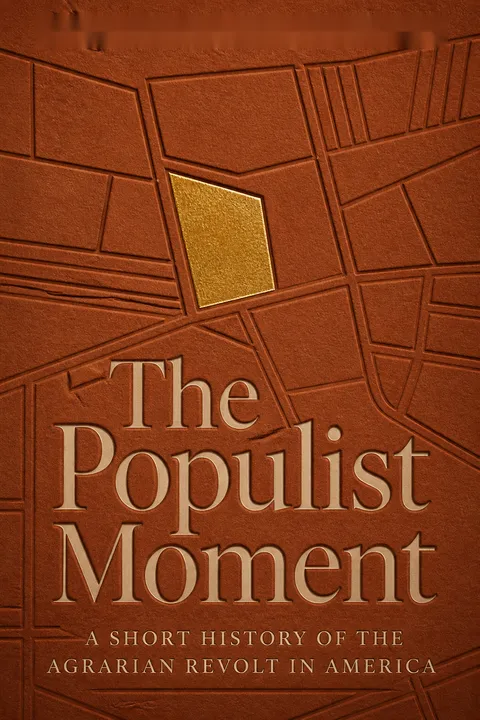

Key Takeaways
1. Post-Civil War America: Economic Hardship and Political Stagnation
The nation’s agriculturalists had worried and grumbled about “the new rules of commerce” ever since the prosperity that accompanied the Civil War had turned into widespread distress soon after the war ended.
Widespread distress. Following the Civil War, American farmers faced severe economic hardship. The wartime prosperity quickly faded, replaced by falling commodity prices, rising interest rates, and increasing farm foreclosures, pushing millions into landless tenantry, especially in the South under the exploitative crop lien system. This economic downturn was exacerbated by a contracted money supply, which benefited creditors at the expense of debtors.
Political paralysis. The nation's political system offered little relief. Both the Republican and Democratic parties were largely controlled by business and financial interests, and their constituencies were organized along deep-seated sectional, racial, and religious loyalties stemming from the Civil War. This "issueless politics" meant that economic grievances of farmers and workers were largely ignored, as politicians prioritized war-related emotions over substantive policy debates.
Greenback critique. A small but persistent group of monetary reformers, known as Greenbackers, argued for an expanding, government-issued fiat currency to stabilize prices and provide credit. Their ideas, rooted in Edward Kellogg's theories, directly challenged the gold standard favored by bankers. However, their political efforts in the 1870s and 1880s (e.g., Greenback Party) were largely unsuccessful, unable to overcome the entrenched sectional loyalties that dominated American electoral politics.
2. The Farmers Alliance: A New Democratic Movement Born from Cooperation
The overriding purpose, he later said, was to organize to “more speedily educate ourselves” in preparation for the day “when all the balance of labor’s products become concentrated into the hands of a few, there to constitute a power that would enslave posterity.”
Organizing for self-help. Faced with systemic exploitation, farmers in Lampasas County, Texas, formed the "Knights of Reliance" in 1877, later renamed the Farmers Alliance. Their initial goal was economic self-help through cooperation, aiming to counter the monopolistic practices of merchants, railroads, and bankers. Early attempts at political insurgency failed due to members' loyalty to traditional parties.
Cooperative experiments. The Alliance learned through trial and error, developing innovative cooperative strategies to bypass middlemen and secure better prices for their products and supplies. These included:
- "Trade store" systems where members exclusively traded with Alliance-approved merchants.
- "Bulking" cotton for mass sales to command better prices.
- Forming cooperative buying committees for fertilizers and farm implements.
- Establishing Alliance-owned cotton yards and warehouses.
Challenging the system. The success of these cooperative efforts, though often met with fierce opposition from the commercial world, instilled a new sense of collective power. The Alliance's growth, particularly in Texas, demonstrated that farmers could unite to challenge the economic premises that were working against them, laying the groundwork for a broader movement.
3. The Movement Culture: Cultivating Self-Respect and Collective Action
This consisted of a new way of looking at society, a way of thinking that represented a shaking off of inherited forms of deference.
Shaking off deference. The Alliance fostered a unique "movement culture" that empowered farmers to shed inherited deference and develop a new political sensibility. Through shared experiences in cooperatives and frequent meetings, individuals gained self-respect, and the collective developed self-confidence, challenging the ridicule and humiliation they had long endured as "hayseeds."
Democratic education. This culture was nurtured through:
- Mass gatherings: Encampments, rallies, and wagon trains (sometimes miles long) that visually demonstrated collective strength.
- Lecturing system: Thousands of lecturers traveled, explaining economic exploitation and the Alliance's solutions.
- Internal communication: Alliance newspapers and circulars disseminated information and fostered a shared understanding of their plight and purpose.
New political language. The movement pioneered a new political language, openly discussing the "money trust," the gold standard, and the need for systemic change. This environment allowed farmers to question established authority and envision a "new day" where they could control their own lives, culminating in the radical "Cleburne Demands" of 1886, which explicitly called for greenback monetary policies and labor rights.
4. The Sub-Treasury Plan: A Radical Vision for Economic Democracy
Macune’s plan was not a completely flawless solution to the rigidity of a metallic currency, but it not only was workable with simple modifications, it was clearly superior to the rigid doctrines of either goldbugs or silverites.
Addressing credit failure. The collapse of the Texas Exchange in 1889, due to bankers' refusal to honor Alliance collateral, highlighted the cooperatives' fundamental vulnerability: lack of access to low-cost credit. This forced Alliance leader Charles Macune to devise a revolutionary solution: the Sub-Treasury Plan, which became the intellectual cornerstone of Populism.
Government-backed credit. The plan proposed that the federal government establish warehouses ("sub-treasuries") in agricultural counties. Farmers could store their crops there and receive low-interest (2% per annum) loans of up to 80% of the crop's market value, paid in government-issued "sub-treasury certificates" (greenbacks). This would:
- Eliminate middlemen: Bypass furnishing merchants and commercial banks.
- Stabilize prices: Allow farmers to hold crops until prices rose.
- Expand currency: Create a flexible national currency tied to agricultural production.
Redistributing wealth. Beyond immediate relief for farmers, the Sub-Treasury Plan aimed for a fundamental redistribution of income from creditors to debtors, challenging the hierarchical power of private bankers and the gold standard. It was a bold, democratic proposal that sought to put the nation's monetary authority to work for the "producing classes," including urban workers, by creating a truly flexible and accessible credit system.
5. National Expansion: Bridging Sectionalism, Race, and Labor Divides
“We are trampling sectionalism under our feet,” L. L. Polk told Michigan Alliancemen.
Spreading the message. From 1887 to 1891, the Alliance launched a massive organizing drive, expanding from Texas across the South, West, and into Northern states. Lecturers, armed with the cooperative vision and the anti-monopoly rhetoric, recruited millions of farmers, often overcoming deep-seated sectional loyalties that had previously divided the nation's agriculturalists.
Challenges and alliances. The movement faced significant cultural barriers:
- Northern farmers: Had to overcome Republican "bloody shirt" patriotism.
- Urban workers: The Knights of Labor, a potential ally, was in decline, and other labor organizations lacked the Alliance's "movement culture."
- Black farmers: The Colored Farmers National Alliance and Cooperative Union emerged, led by R.M. Humphrey, but faced immense white supremacist opposition and political maneuvering from both white conservatives and black Republicans.
Interracial cooperation. Despite the pervasive racism, the Colored Alliance grew to over a million members, demonstrating a remarkable, albeit often covert, effort at interracial cooperation. Black and white farmers shared common economic grievances under the crop lien system, and the Alliance's message of economic justice resonated across racial lines, even as it challenged the very fabric of Southern society.
6. The People's Party: A Multi-Sectional Challenge to Corporate Power
The time has arrived for the great West, the great South, and the great Northwest, to link their hands and hearts together and march to the ballot box and take possession of the government, restore it to the principles of our fathers, and run it in the interest of the people.
Politicization of the movement. The failure of cooperatives and the rejection of the Sub-Treasury Plan by both major parties convinced Alliance leaders that independent political action was essential. This led to the formation of the People's Party in 1892, culminating in the Omaha Platform, which incorporated the Alliance's radical demands for land, finance, and transportation reform.
Omaha Platform's core demands:
- Abolition of national banks and substitution of legal tender treasury notes (greenbackism).
- Government ownership of railroads and telegraphs.
- Prohibition of alien land ownership and reclamation of forfeited railroad lands.
- The Sub-Treasury Plan for agricultural credit.
- Free and unlimited coinage of silver (a later addition, but present in the final platform).
Cultural struggle. The People's Party represented the first multi-sectional democratic mass movement since the American Revolution, directly challenging the corporate state and its "creed of progress." It sought to overcome deeply ingrained sectional, racial, and religious loyalties by uniting "the industrial millions" under a common economic platform, using its "movement culture" to foster political autonomy and self-determination among its members.
7. The Shadow Movement: Free Silver's Co-option of Populist Ideals
Free silver did not alter the existing banking system, nor did it end the destructive privilege national bankers enjoyed through their power to issue their own bank notes on which they gathered interest.
A simpler solution. As Populism gained traction, a "shadow movement" emerged, centered on the simpler, less radical demand for the "free and unlimited coinage of silver." This issue, championed by figures like William Jennings Bryan and financed by silver mine owners, offered a seemingly easy path to currency expansion without challenging the fundamental structure of the private banking system or the gold standard.
Fusionist strategy. Populist politicians, eager for electoral victory, increasingly advocated "fusion" with the Democratic Party on a silver platform. This strategy, particularly strong in the West (e.g., Nebraska's William V. Allen), aimed to unite all "anti-gold" forces. However, it meant jettisoning most of the Omaha Platform's radical demands, which mid-road Populists saw as a betrayal of the movement's core principles.
Undermining greenbackism. Mid-roaders argued that free silver was a "palliative" that would destroy the People's Party's identity and undermine the greenback cause. It offered no solutions for land loans, commodity credit, or the broader issues of corporate concentration and political corruption. The internal struggle between fusionists and mid-roaders became a battle for the very soul and definition of American reform.
8. The Battle of Standards: Corporate Power's Triumph and Democracy's Retreat
The cultural consolidation fashioned in the Gilded Age would undergo its first sustained re-evaluation, as the “financial question” once again intruded into the nation’s politics and the issues of Populism again penetrated the American consciousness.
Corporate campaign. The 1896 presidential election, dubbed the "Battle of the Standards" (gold vs. silver), saw the triumph of aggressive corporate politics. Mark Hanna, McKinley's campaign manager, orchestrated an unprecedented, well-financed Republican campaign, using mass advertising, coordinated media efforts, and appeals to "patriotism" and "prosperity" to defend the gold standard and demonize Bryan's "anarchistic" silver platform.
Populist co-option. The Democratic Party, desperate to survive, nominated William Jennings Bryan on a free silver platform. Despite mid-road Populists' fierce resistance, the People's Party ultimately nominated Bryan, effectively sacrificing its independent identity and most of its radical platform. This act of "fusion" destroyed the morale of the Populist movement, particularly in the South where Democrats had used fraud and violence against them.
Narrowed political discourse. McKinley's victory solidified the corporate state's cultural hegemony. The "financial question" was effectively banished from mainstream political debate, and the idea of structural economic reform became culturally inadmissible. The era ushered in a "progressive society" that, while promoting some reforms, fundamentally narrowed the boundaries of democratic politics, ensuring corporate influence over government and media.
9. Populism's Enduring Legacy: A Lost Vision of Democratic Autonomy
The Populist essence was less abstract: it was an assertion of how people can act in the name of the idea of freedom.
A democratic promise. Populism was more than a political party or platform; it was a "cultural assertion as a people's movement of mass democratic aspiration." It fostered individual self-respect and collective self-confidence, enabling millions to challenge hierarchical power and envision a society grounded in generous social relations. This "movement culture" was built through shared experiences in cooperatives, lectures, and mass gatherings, allowing people to "see themselves" experimenting in democratic forms.
Unfulfilled potential. Despite its profound impact on American consciousness, Populism ultimately failed. Its cooperatives were crushed by financial opposition, its political party co-opted by the free silver movement, and its vision of a farmer-labor coalition remained largely unrealized due to persistent sectionalism, racism, and the nascent labor movement's inability to achieve mass political consciousness. The movement's defeat led to increased farm tenantry, corporate consolidation, and a narrowed political landscape.
A timeless lesson. Populism's legacy lies in its demonstration of how ordinary people can generate their own democratic culture to challenge entrenched hierarchical power. It revealed the immense difficulty of achieving structural reform against a dominant corporate culture that actively shapes public discourse and political possibilities. The Populists' "capacity to have significant democratic aspirations" remains a powerful, yet largely unheeded, lesson for modern societies grappling with centralized power and political resignation.
People Also Read



Download PDF
Download EPUB
.epub digital book format is ideal for reading ebooks on phones, tablets, and e-readers.








































