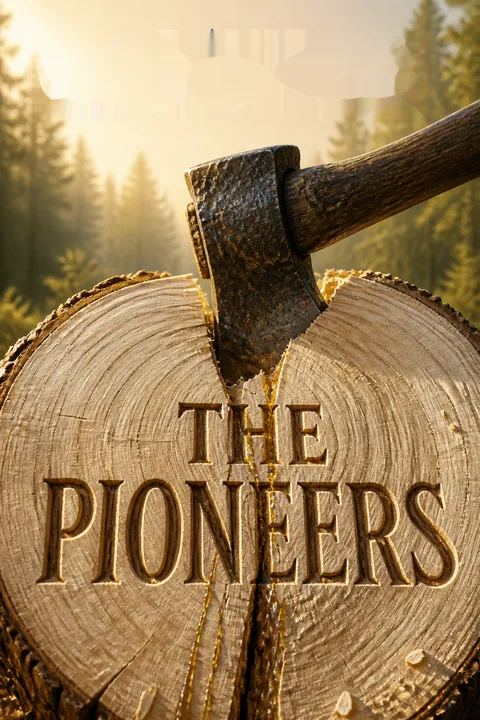

Key Takeaways
1. A Vision for a New American Empire
Never before, as he knew, had any of his countrymen set off to accomplish anything like what he had agreed to undertake—a mission that, should he succeed, could change the course of history in innumerable ways and to the long-lasting benefit of countless Americans.
A polymath's mission. Manasseh Cutler, a forty-five-year-old pastor from Ipswich Hamlet, Massachusetts, embarked on an unprecedented mission in 1787 to secure land in the vast Northwest Territory. Despite lacking prior experience in such ventures, his extensive intellectual curiosity and diverse expertise—holding doctorates in divinity, law, and medicine, alongside a deep knowledge of botany and astronomy—made him uniquely suited for the task. He carried letters of introduction from prominent figures, including the governor of Massachusetts and the president of Harvard College, underscoring the importance of his undertaking.
Shaping the Northwest Ordinance. Cutler's primary objective was to negotiate with the Continental Congress for the purchase of land for the Ohio Company of Associates and to influence the drafting of the Northwest Ordinance. This crucial legislation would define how new states were formed and, critically, their conditions for entering the Union. Cutler, representing the New England system, championed:
- Absolute freedom of religion
- Strong emphasis on education
- The total exclusion of slavery
A monumental achievement. Against considerable odds, Cutler successfully lobbied Congress, securing a massive land grant and ensuring the inclusion of these foundational principles in the Northwest Ordinance of 1787. This act, passed even before the U.S. Constitution, was hailed as one of the most far-reaching in American history, doubling the size of the United States and setting a precedent for future states. His efforts laid the groundwork for a "new New England" in the wilderness, embodying ideals of justice and an admirable society.
2. The Arduous Journey to the Ohio Country
The whole flotilla drifted away with the current northward some twenty miles to the point, at McKeesport, where the Youghiogheny merged with the larger, muddy yellow Monongahela.
Leading the pioneers. General Rufus Putnam, a Revolutionary War hero and surveyor, was the driving force behind the Ohio Company and led the first expedition of forty-eight pioneers. His early life, marked by hardship and a thirst for knowledge despite limited schooling, forged a resilient and pragmatic leader. Putnam's experience as a military engineer during the war, including his innovative fortifications at Dorchester Heights, prepared him for the immense challenges of frontier settlement.
A perilous overland trek. The journey began in December 1787, with pioneers traveling on foot, pulling sleds through deep snow and bitter cold across the Allegheny Mountains. This 700-mile overland trek was "excessive bad," with men and horses often fatigued. Key figures like Ebenezer Sproat, a towering surveyor known as "Old Hetuck" by the Indians, and Captain Jonathan Devol, a skilled ship carpenter, proved indispensable. Their resilience was tested by:
- Eight-inch deep snow and freezing temperatures
- Blocked roads and difficult terrain
- The need to build sleds and break tracks
Arrival at the "Beautiful River." After nearly a month, they reached Sumerill's Ferry, where they built a fleet of boats, including the "Mayflower," a forty-five-foot galley. On April 7, 1788, after a 140-mile journey down the rain-swollen Ohio River, they arrived at the confluence of the Muskingum. Despite the arduous journey, there was no loss of life, and spirits remained high. They were greeted by Captain Pipe and seventy native people, who initially appeared friendly, though Putnam remained cautious.
3. Building a Society Amidst Wilderness and Conflict
The axe, in stalwart hands, with steadfast stroke, The savage echoes of the forest woke, And, one by one, breaking the world-old spell, The hardy trees, long crashing, with thunder fell.
Establishing Marietta. Upon arrival, the pioneers immediately began the monumental task of clearing land and building shelter. Rufus Putnam meticulously planned the settlement, laying out a "new city" with residential lots, straight streets, and public squares, aiming to create a "new New England" in the wilderness. Six thousand acres were set aside for the town, which was later named Marietta in honor of Queen Marie Antoinette of France.
Challenges of frontier life. The settlers faced immense difficulties, including:
- Forest clearing: Chopping down giant trees, girdling, and burning log heaps was heavy, dirty, and time-consuming work.
- Wildlife: Forests teemed with wolves, bears, panthers, and venomous snakes.
- Indian threats: Despite initial friendly greetings, the "Indian menace" was a constant concern, leading to the rapid construction of Campus Martius, a formidable stockade designed by Putnam to house 864 people.
The "Starving Year" and resilience. The winter of 1789-1790, known as the "Starving Year," brought extreme suffering due to crop failures, Indian hunting, and poor planning. What saved the settlement was remarkable generosity, with those who had more sharing with those who had less. Joseph Barker, a skilled carpenter and future architect, exemplified this resilience, transforming from a struggling settler to a successful shoemaker and later a master builder. Women, too, displayed "spirit and fortitude," enduring endless work and hardships with little complaint.
4. The Shadow of St. Clair's Defeat
The sad and dreadful havoc of our army at the westward cast a gloom over us all.
Escalating Indian conflict. The initial cautious peace with native tribes quickly deteriorated, exacerbated by the disastrous Harmar expedition in 1790, which saw a makeshift army soundly defeated by Miami and Shawnee forces. This defeat, coupled with the withdrawal of many Delawares and Wyandots from Marietta, signaled impending trouble. Rufus Putnam, deeply concerned, wrote frantic letters to President Washington and Secretary of War Henry Knox, imploring for government protection for the vulnerable settlements.
The Big Bottom Massacre. On January 2, 1791, a Delaware and Wyandot raiding party attacked a small, ill-prepared settlement at Big Bottom, thirty miles upstream from Marietta. The settlers, mostly single men, made critical mistakes:
- Failing to chink their blockhouse in freezing weather.
- Posting no sentries after dark.
- Leaving rifles scattered and lacking a defense system.
The attack was swift and brutal, resulting in fourteen deaths, including women and children, and the burning of the blockhouse. This massacre spread terror throughout the Ohio Country, forcing Marietta residents to take refuge in the fortified Campus Martius.
St. Clair's catastrophic campaign. In response, Governor Arthur St. Clair, despite being ill, overweight, and lacking experience with Indian warfare, was appointed to lead a new army of 2,000 men. The army, largely composed of "offscourings of large towns and cities," was poorly supplied and disciplined. On November 4, 1791, St. Clair's forces were ambushed by a larger, highly experienced native confederacy led by Little Turtle and Blue Jacket. The battle, known as St. Clair's Defeat, was a total disaster:
- Over 1,000 American casualties (dead and wounded) out of 1,400.
- Only 21 Indian deaths.
- The worst defeat of an American army by natives in history.
5. Continuing the Fight for Foundational Ideals
To Ephraim Cutler, more than to any other man, posterity is indebted for shutting and barring the doors against the introduction into Ohio of the monstrous system of African slavery.
Ephraim Cutler's arrival and early life. Ephraim Cutler, Manasseh's oldest son, arrived in Ohio in 1795 after an arduous journey that claimed the lives of two of his children and left his wife, Leah, gravely ill. Despite these personal tragedies and his own illness, Ephraim found the Ohio Country appealing and settled in Waterford. He quickly became a respected member of the community, receiving commissions as captain of the militia, justice of the peace, and judge of the Court of Common Pleas, demonstrating his commitment to public service.
Championing anti-slavery. In 1802, as a delegate to Ohio's state constitutional convention in Chillicothe, Ephraim faced a critical challenge: a proposal to permit slavery in the new state, albeit with age restrictions. Despite being severely ill and confined to bed, Ephraim rallied, making a forceful case against the "Jeffersonian version" of the article. His impassioned efforts led to the proposal being defeated by a single vote, ensuring Ohio would remain a free state. This act solidified his legacy as a staunch defender of the anti-slavery clause in the Northwest Ordinance.
Advocating for public education. Like his father, Ephraim was a fervent advocate for education. He played a leading role in establishing Ohio University in Athens and later, as a state senator, tirelessly campaigned for a statewide public school system. Despite facing "thick-headed mortals" and "knaves" in the legislature, he persevered, eventually securing the passage of a school bill and a new system of taxation to support it. His dedication to learning was evident in his support for the "Coonskin Library" in Ames and his belief that "if ignorance could be banished from our land, a real millennium would commence."
6. The Allure and Peril of Western Speculation
Your talents and acquirements seemed to have destined you for something more than vegetable life . . . it would seem there has been, without explanation, a sort of consent between our minds.
The Blennerhassetts' "Earthly Paradise." Harman and Margaret Blennerhassett, a wealthy, eccentric Irish aristocratic couple, arrived in Marietta in 1797. They purchased an island on the Ohio River, transforming it into a lavish estate with a Palladian-designed mansion and extensive English gardens, built by Joseph Barker. Their opulent lifestyle and intellectual pursuits, including Margaret's fluent French and dramatic Shakespeare readings, made them a conspicuous and often ridiculed presence in the frontier community.
Aaron Burr's mysterious designs. In 1805, former Vice President Aaron Burr, recently disgraced after killing Alexander Hamilton in a duel, visited Blennerhassett Island. Burr, a charismatic and enigmatic figure, charmed Harman Blennerhassett, hinting at grand, secret schemes involving a takeover of Mexico or a separation of the western states from the Union. Blennerhassett, easily swayed and eager for a more active life, became deeply entangled in Burr's plans, financing the construction of fifteen large flatboats and provisions for an expedition.
The unraveling of the conspiracy. Rumors of Burr's "nefarious measure" spread, reaching President Jefferson, who had long suspected Burr's intrigues. In 1806, General James Wilkinson, Burr's co-conspirator, betrayed him to Jefferson, leading to a national alarm. Ohio Governor Edward Tiffin mobilized the militia, seizing Burr's boats and issuing an arrest warrant for Blennerhassett. Blennerhassett fled, and his island home was ransacked by the Virginia militia. Burr was eventually arrested and tried for treason, but acquitted due to lack of overt evidence, a landmark decision.
7. Enduring Adversities and the Rise of New Eras
Town property, as well as farms, sunk in value; a stop was put to improvements in building and Marietta, the oldest town in the state, retrograded as fast as it had ever advanced.
Epidemics and economic downturns. The early 19th century brought new challenges to the Ohio Valley. A deadly fever epidemic in 1807, resembling yellow fever, claimed fifty to sixty lives in Marietta, including prominent citizens. Dr. Samuel Hildreth, a young physician, gained renown for his tireless work during this crisis. Economically, President Jefferson's Embargo Act of 1807, aimed at crippling British commerce, inadvertently devastated Ohio's burgeoning shipbuilding industry, causing Marietta to "retrograde" and Cincinnati to emerge as the "Queen City" of the West.
Natural disasters and war. In 1811, a major earthquake struck Marietta, rattling homes and causing chimneys to topple, followed by even stronger quakes in 1812. Soon after, the War of 1812 erupted, unpopular in Ohio and New England, reigniting fears of Indian attacks, especially after the British captured Detroit. Rufus Putnam and Ephraim Cutler were at the forefront of Ohio's opposition to the war. A massive flood in 1813, with the Ohio River rising forty-five feet, caused widespread destruction to farms and homes, forcing families to flee to higher ground.
The advent of steam and peace. Despite these adversities, innovation continued. In 1811, Nicholas Roosevelt's steamboat, the New Orleans, made its maiden voyage down the Ohio and Mississippi, marking the dawn of the steamboat era on western waters. This revolutionized transportation and commerce. The War of 1812 concluded with American victories, notably Oliver Hazard Perry's triumph on Lake Erie and William Henry Harrison's defeat of Tecumseh at the Battle of the Thames. The news of peace in 1815 brought immense relief and celebration, allowing the Ohio Valley to resume its growth and development.
8. The Enduring Legacy of Learning and Community
If ignorance could be banished from our land, a real millennium would commence.
Samuel Hildreth: Physician, naturalist, historian. Dr. Samuel Hildreth, who arrived in Marietta in 1806, became an indispensable figure in the community. Beyond his demanding medical practice, which often involved long, solitary rides into the wilderness, he pursued his boundless curiosity in natural history. He published extensively in the American Journal of Science, becoming a leading American geologist and chronicler of Ohio's natural and human history. His home became a center for scientific collections and intellectual discourse.
Ephraim Cutler's continued advocacy. Ephraim Cutler, re-elected to the state Senate in 1823, continued his tireless work for public education and Ohio University. He successfully secured increased financial support for the university and, despite intense opposition, championed a bill for a statewide public school system, which passed in 1825. His efforts, alongside Caleb Atwater and Nathan Guilford, laid the foundation for Ohio's educational infrastructure, fulfilling the vision of the original pioneers.
Marietta's cultural growth. The community of Marietta, though small, fostered a rich intellectual and social life. The Washington County Agricultural Fair became a major annual event, showcasing agricultural innovation and community spirit. Ephraim Cutler's memorable speech at the 1829 fair underscored the importance of cultivating the mind and applying scientific knowledge to farming. This commitment to learning culminated in the founding of Marietta College in 1832, establishing a "genuine college of the New England type" and further solidifying the town's dedication to education.
9. The Ohio River: A Highway of Transformation and Observation
The use of traveling is to regulate imagination by reality, and instead of thinking how things may be, to see them as they are.
The allure of "La Belle Rivière." The Ohio River, "La Belle Rivière," captivated travelers with its beauty and promise. Early accounts, like Timothy Flint's in 1816, described its serene beauty, abundant wildlife, and magnificent forests. Foreign visitors, including British writers J. S. Buckingham, Harriet Martineau, and Frances Trollope, were often enchanted by the river's scenery, even as they critiqued American society. The river served as a vital artery for westward expansion, carrying thousands of settlers and goods.
Contrasting realities and social critiques. Travelers often noted stark differences between the free northern bank of the Ohio and the slaveholding southern bank. Charles Dickens, visiting in 1842, observed "an air of ruin and decay" where slavery existed, a sentiment echoed by Alexis de Tocqueville, who warned that slavery would be the source of future national strife. Foreign observers also found American manners and conversation lacking, with Frances Trollope lamenting the "detestable mosquitoes" and the "boring" nature of Americans.
Frontier culture and temperance. The frontier also presented a unique cultural landscape. Travelers were often amused by local expressions and the pervasive consumption of "ardent spirits." Whiskey, rum, and hard cider were staples, leading to widespread drunkenness, as vividly described in John Mathews's journal. However, the temperance movement gained traction, with figures like Ephraim Cutler advocating for total abstinence. Despite criticisms, visitors like Dickens also praised American politeness towards women and the vibrant presence of music, particularly the fiddle, in social gatherings.
10. A Legacy of Principle and Progress
Judge Cutler belonged to that class of strictly upright, honest and true men, of whom the pioneers of this state afford so many noble examples.
The passing of the pioneers. The mid-19th century saw the passing of many of Marietta's founding figures. Joseph Barker, the master builder and architect, died in 1843, remembered for his hospitality and contributions to the town's infrastructure. In 1844, Ephraim Cutler's brother Jervis died, followed by his son Charles in 1849, who succumbed to cholera during the California Gold Rush. Rufus Putnam, the revered leader of the first expedition, died in 1824 at eighty-six, leaving a legacy of leadership, integrity, and a deep commitment to education and anti-slavery.
John Quincy Adams's final journey. In 1843, former President John Quincy Adams, at seventy-six, embarked on a challenging journey to Cincinnati to lay the cornerstone for an observatory. Despite his age and the arduous travel, he saw it as a duty to promote learning. His visit to Marietta on his return trip was a poignant moment, where he acknowledged the profound contributions of Rufus Putnam and Manasseh Cutler, and conversed with Ephraim Cutler about the enduring fight against slavery. Adams, a tireless anti-slavery advocate, continued his battle in Congress until his death in 1848.
An enduring commitment to ideals. Ephraim Cutler, despite personal losses and health challenges, remained dedicated to public service, continuing his fight for education and against slavery until his death in 1853 at eighty-six. His son, William Cutler, carried on the family legacy, serving in Congress and delivering a powerful speech denouncing slavery in 1862. Dr. Samuel Hildreth, the chronicler of Marietta's history, died in 1863, having documented the pioneer era and contributed immensely to science and medicine. The pioneers of Marietta, through their unwavering commitment to freedom, education, and community, propelled American ideals forward, leaving a lasting impact on the Ohio Valley and the nation.
Review Summary
The Pioneers by David McCullough focuses on the settlement of Ohio, particularly Marietta, following the 1787 Northwest Ordinance. Reviews are divided: admirers praise McCullough's storytelling and illumination of forgotten figures like Manasseh Cutler and Rufus Putnam, who prohibited slavery in the territory. Critics fault the book's narrow scope, scattered narrative, heavy reliance on quotes, and especially its treatment of Native Americans—presenting settlers as heroes while largely ignoring Indigenous perspectives and portraying them through offensive stereotypes. Many note it lacks the depth of McCullough's earlier presidential biographies.
People Also Read




About the Author
Other books by David McCullough





Download PDF
Download EPUB
.epub digital book format is ideal for reading ebooks on phones, tablets, and e-readers.








































