
Plot Summary
The Awakening of Purpose
Howard Lester, a gifted boy torn between science and music, is haunted by the realization of mortality. This existential shock, triggered by a simple melody, sets him on a lifelong quest to find meaning beyond the mechanical routines of life. The awareness of death is both terrifying and strangely exhilarating, awakening in him a hunger for purpose that mathematics and engineering cannot satisfy. This early confrontation with the void becomes the engine of his intellectual ambition, propelling him toward a search for something absolute—a way to transcend the limits of ordinary consciousness and the brevity of human life.
Lyell's Influence and Legacy
Howard's life changes when he meets Sir Alastair Lyell, a polymath scientist who becomes his mentor and surrogate father. Lyell's home is a haven of ideas, music, and scientific inquiry, nurturing Howard's intellect and curiosity. Their relationship is one of deep mutual respect and shared passion for discovery. Lyell's eclectic interests and belief in the power of the mind inspire Howard to reject conventional education and pursue independent study. The years at Sneinton Hall are idyllic, filled with intellectual adventure, but also sow the seeds of Howard's future isolation and the burden of genius.
Death, Despair, and Insight
Lyell's sudden death devastates Howard, plunging him into a period of profound despair and aimlessness. Alone in a seaside cottage, he grapples with the futility of existence and the apparent indifference of the universe. Through a haze of grief, alcohol, and introspection, Howard experiences a breakthrough: he realizes that science and art are both attempts to escape the tyranny of the present and achieve a wider consciousness. This insight—that the true aim of human endeavor is to expand awareness—becomes the foundation of his quest to overcome death and the limitations of the mind.
The Search for Meaning
Seeking answers, Howard immerses himself in the study of mysticism, alchemy, and the history of consciousness. Travels to Alexandria and encounters with Aubrey Lyell and ancient texts deepen his understanding of the human longing for transcendence. He becomes fascinated by the idea that ecstasy and value experiences can prolong life and that the creative minority of humanity holds the key to evolution. The tension between sensuality and intellect, between living and thinking, becomes a central theme as Howard searches for a method to achieve lasting expansion of consciousness.
Mysticism and the Mind
Howard's studies lead him to the works of mystics and the realization that moments of "bird's eye" consciousness—when the mind sees beyond the immediate—are the true source of vitality and longevity. He hypothesizes that the will, not chemistry, keeps the destructive forces within us at bay. The mind's ability to focus on "otherness" is what distinguishes humans from animals and is the wellspring of creativity and resilience. This synthesis of scientific and mystical thought sets the stage for Howard's later experiments and the pursuit of practical methods to induce these states at will.
The Science of Longevity
Inspired by psychological research and the work of Aaron Marks, Howard explores the relationship between value experiences, health, and aging. Experiments with alcoholics and the elderly suggest that inducing moments of meaning can dramatically improve vitality and even extend life. Howard becomes convinced that the secret to longevity lies in the ability to sustain these experiences and that the creative, contemplative mind is evolution's spearhead. The challenge becomes how to reliably trigger and measure these states, leading Howard to seek collaborators and new scientific approaches.
Meeting Littleway: New Frontiers
Howard's encounter with Sir Henry Littleway, a psychologist and philosopher, marks a turning point. Together, they explore the frontiers of brain physiology, genetics, and the mechanisms of consciousness. Their discussions blend rigorous science with speculative philosophy, focusing on the prefrontal cortex as the seat of higher faculties. The partnership is both fruitful and fraught, as they struggle to design experiments that can test their bold hypotheses about the mind's power over aging and evolution. The search for a practical breakthrough intensifies, setting the stage for transformative discoveries.
The Value Experience
Through experiments with hypnosis, drugs, and brain stimulation, Howard and Littleway investigate the nature of value experiences—moments of heightened meaning and objectivity. They discover that these states can accelerate healing and dramatically alter personality, but also carry risks of exhaustion and instability. The case of Dick O'Sullivan, a brain-injured man in a perpetual state of ecstasy, reveals both the potential and the dangers of artificially induced transcendence. The quest becomes not just to induce value experiences, but to integrate them into a stable, sustainable mode of being.
The Experiment with Ecstasy
The breakthrough comes with the use of Neumann alloy electrodes implanted in the prefrontal cortex, which allow subjects to experience intense, sustained states of contemplative objectivity. The transformation is profound: subjects become more alive, intelligent, and free from the trivialities that normally dominate consciousness. However, the experiments also reveal the ethical and practical dangers of such power, as not all subjects can handle the intensity, and some regress or suffer adverse effects. Howard and Littleway realize that the operation is not for everyone and that the leap to a new stage of evolution requires both will and wisdom.
The Brain's Hidden Powers
With the success of the prefrontal operation, Howard and Littleway themselves undergo the procedure, gaining unprecedented control over their minds and bodies. They experience a permanent expansion of awareness, increased vitality, and the ability to focus their will with extraordinary precision. This new state of being allows them to explore history, memory, and even the fabric of reality with a clarity and depth previously unimaginable. The world becomes a living entity, and the boundaries between past, present, and future blur. Yet, this power also brings new responsibilities and dangers, as they become aware of forces beyond human comprehension.
The Breakthrough: Prefrontal Revelation
The operation marks the beginning of a new phase in human evolution. Howard and Littleway realize that the prefrontal cortex is the key to overcoming automatism and achieving true freedom. They become the first of a new breed—masters rather than slaves of consciousness. Their enhanced abilities allow them to access collective memory, influence others, and even manipulate reality through focused intention. The implications are staggering: immortality, the end of boredom and despair, and the possibility of guiding humanity toward its true destiny. But the awakening of these powers also attracts the attention of ancient, sleeping forces.
The Dangers of Discovery
As Howard and Littleway delve deeper into the mysteries of consciousness and history, they encounter interference from enigmatic entities—the Ancient Old Ones—who once ruled the earth and now slumber beneath it. These beings, or their psychic residues, seek to block human progress and maintain their dominance. The researchers face sabotage, paranoia, and even physical danger as they approach forbidden knowledge. The struggle becomes not just scientific, but existential, as they realize that the fate of humanity hinges on whether they can awaken as masters before the Old Ones rise again.
The Ancient Old Ones
Through time-vision and the study of ancient artifacts, Howard and Littleway uncover the true history of the world: a lost continent, Mu, ruled by godlike beings who created humanity as their servants. These Old Ones, possessing immense power but lacking individuality, sought to evolve by acquiring self-consciousness through human collaboration. Their attempt to accelerate evolution led to catastrophe—the Night of the Monsters—when their suppressed instincts erupted in chaos, nearly destroying both themselves and their creations. The remnants of their civilization and influence persist, shaping human fears, myths, and religions.
The Curse of Knowledge
The deeper Howard and Littleway probe, the more they realize the peril of their discoveries. The Old Ones' psychic defenses, embedded in artifacts and texts, threaten madness and destruction to those who seek the truth. The researchers must navigate a labyrinth of ancient curses, mental traps, and the risk of awakening forces beyond their control. The knowledge they gain is both liberating and terrifying, revealing the fragility of human progress and the ever-present danger of regression. The choice becomes whether to share their findings or keep them secret, knowing the consequences for themselves and the world.
The Night of the Monsters
The climax of their historical vision is the Night of the Monsters, when the Old Ones' experiment with self-consciousness backfires, unleashing subconscious chaos that devastates their cities and nearly annihilates them. Only the intervention of K'tholo, a human high priest, preserves a remnant of civilization. The Old Ones retreat into a deathlike sleep, leaving humanity to develop independently but still under the shadow of their legacy. The lesson is clear: unchecked power without self-mastery leads to self-destruction, and the evolution of consciousness is fraught with peril.
The Choice of Masters
With the knowledge and power gained from their experiments, Howard and Littleway recognize that humanity faces a critical choice: to remain slaves to old patterns and external masters, or to awaken as self-directed beings. The return of the Old Ones is inevitable, but whether they find a race of servants or equals depends on the actions of the present. The researchers resolve to spread the prefrontal awakening, creating a new breed of humans capable of meeting the Old Ones as collaborators rather than victims. The future of evolution hangs in the balance, and the responsibility is immense.
Toward a New Humanity
Howard and Littleway begin to initiate others into the secret of the prefrontal operation, carefully selecting those with the will and intelligence to handle the transformation. The process is slow and fraught with ethical dilemmas, as not everyone is ready for the leap. The hope is that, through heredity and education, the new consciousness will spread, eventually encompassing all of humanity. The vision is of a world without boredom, despair, or death—a civilization of masters, united in purpose and creativity. Yet, the threat of the Old Ones' awakening remains, urging haste and vigilance.
The Looming Awakening
As the first generation of awakened humans emerges, the sense of urgency intensifies. The Old Ones will not sleep forever, and their return could mean the end of human freedom if evolution has not advanced far enough. Howard, now joined by his wife Barbara and their children, feels the weight of history and the responsibility to prepare humanity for the coming confrontation. The memoir ends with a call to action: to embrace the infinite appetite for life, to awaken fully, and to ensure that when the Old Ones rise, they find not slaves, but equals—ready to shape the next chapter of evolution together.
Analysis
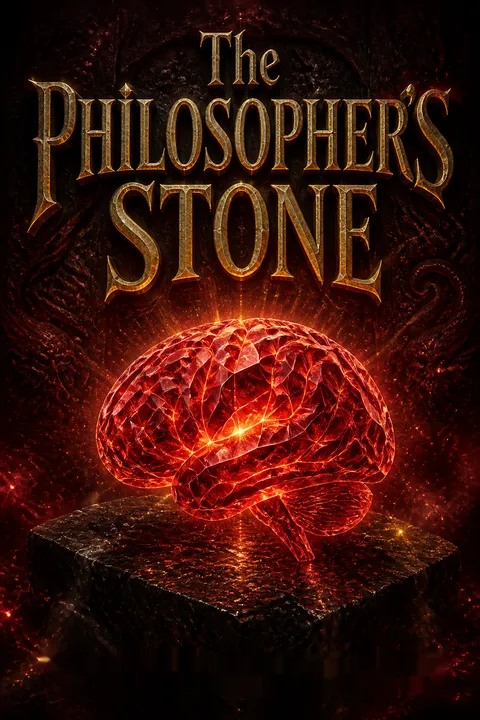
Colin Wilson's The Philosopher's Stone is a sweeping meditation on the evolution of consciousness, the quest for meaning, and the dangers and promises of human potential. At its core, the novel argues that humanity's true destiny lies in the deliberate expansion of awareness and the mastery of the mind's hidden powers. By blending science fiction, mysticism, and psychological realism, Wilson challenges the reader to reconsider the boundaries between reason and intuition, individuality and collectivity, past and future. The narrative warns that progress is not guaranteed: the same powers that can liberate can also destroy, as seen in the fate of the Ancient Old Ones and the recurring threat of regression. The book's central lesson is that the leap to a new stage of evolution requires not just knowledge, but will, self-mastery, and a sense of responsibility for the whole. In an age obsessed with technological advancement and existential anxiety, The Philosopher's Stone offers a vision of hope grounded in the transformative power of consciousness—a call to awaken before the old gods return, and to meet the future as masters, not slaves.
Review Summary
People Also Read

Characters
Howard Lester
Howard is the novel's narrator and protagonist, a brilliant, introspective man driven by an existential hunger to transcend the limitations of ordinary life. Marked by early encounters with mortality and futility, he becomes obsessed with the expansion of consciousness and the conquest of death. His psychological journey is one of oscillation between despair and insight, skepticism and mystical revelation. Howard's relationships—with mentors, lovers, and colleagues—are shaped by his restless intellect and emotional detachment. Over time, he evolves from a solitary seeker to a pioneer of a new evolutionary leap, bearing the burden of knowledge and the responsibility to guide humanity toward its next stage.
Sir Alastair Lyell
Lyell is a polymath scientist whose home becomes a sanctuary for Howard's burgeoning mind. He embodies the ideal of the Renaissance man: curious, eclectic, and passionate about both science and the arts. Lyell's influence is profound, providing Howard with the intellectual freedom and encouragement to pursue unconventional paths. His sudden death is a traumatic rupture, forcing Howard into isolation and self-reliance. Psychologically, Lyell represents both the nurturing aspect of tradition and the limitations of the old order, as his own inability to fully embrace radical ideas foreshadows the challenges Howard will face.
Sir Henry Littleway
Littleway is a psychologist and philosopher who becomes Howard's closest collaborator and intellectual equal. Together, they explore the frontiers of brain physiology, psychology, and the mysteries of consciousness. Littleway is pragmatic, cautious, and deeply analytical, often serving as a counterbalance to Howard's visionary impulses. His own transformation through the prefrontal operation mirrors Howard's, and their partnership evolves into a shared mission to guide humanity's evolution. Littleway's development reflects the tension between skepticism and faith, reason and intuition, as he gradually embraces the radical implications of their discoveries.
Roger Littleway
Roger, Henry's brother, is a troubled, emotionally unstable figure whose descent into neurosis and violence serves as a cautionary example of the dangers of unintegrated power. His susceptibility to the influence of the Ancient Old Ones and his eventual criminal acts highlight the psychological risks of evolution without self-mastery. Roger's relationship with Henry is fraught with rivalry and resentment, and his presence in the narrative underscores the thin line between genius and madness, progress and regression.
Barbara Lester
Barbara, Howard's wife, represents the integration of intellect and emotion, individuality and family. Her presence brings warmth, grounding, and a sense of purpose beyond solitary achievement. Through her, Howard experiences the possibility of telepathic connection and the transmission of evolutionary advances through heredity. Barbara's development from a supportive partner to an active participant in the new consciousness movement illustrates the novel's theme of collective and individual evolution and the importance of love and empathy in transcending isolation.
Dick O'Sullivan
Dick is a brain-injured farm laborer whose perpetual state of childlike ecstasy becomes the subject of Howard and Littleway's experiments. His innocence and vulnerability make him both a symbol of the potential and the peril of artificially induced transcendence. Dick's inability to integrate his experiences or sustain vitality ultimately leads to tragedy, serving as a warning about the limits of ecstasy without will or self-direction.
Zachariah Longstreet
Longstreet, a reformed alcoholic and criminal, undergoes the prefrontal operation and experiences a dramatic awakening of consciousness. His case demonstrates both the power and the unpredictability of the procedure, as he oscillates between moments of clarity and regression. Longstreet's journey reflects the novel's exploration of redemption, the plasticity of the mind, and the ethical complexities of radical intervention.
Honor Weiss
Honor is a young woman suffering from suicidal depression who becomes another subject of the prefrontal experiment. Her transformation is profound but fragile, as she struggles to integrate the new intensity of experience. Honor's sensitivity and artistic temperament highlight the novel's themes of creativity, suffering, and the fine balance required to sustain higher states of consciousness.
The Ancient Old Ones
The Old Ones are ancient, godlike beings who once ruled the earth and created humanity as their servants. Lacking individuality, they possess immense power but are ultimately undone by their inability to integrate self-consciousness. Their legacy is one of both guidance and oppression, and their looming reawakening represents the existential threat and opportunity facing humanity. Psychologically, they embody the shadow side of evolution: the dangers of unchecked power, regression, and the return of the repressed.
K'tholo of Souchis
K'tholo is the legendary human high priest who serves as the intermediary between the Old Ones and humanity. His extraordinary lifespan, wisdom, and leadership preserve civilization through cataclysm and transition. K'tholo's story is one of loyalty, sacrifice, and the struggle to balance the demands of power and compassion. He represents the possibility of collaboration between different orders of being and the hope that evolution can be guided by wisdom rather than force.
Plot Devices
Evolutionary Leap as Central Motif
The novel's structure revolves around the idea of an evolutionary leap—a sudden, qualitative transformation in human consciousness and potential. This motif is explored through scientific inquiry, mystical experience, and historical investigation. The narrative employs foreshadowing, as early existential crises and moments of insight hint at the coming breakthrough. The use of parallel stories—Howard's personal journey, the history of Mu, and the fate of the Old Ones—creates a layered narrative that connects individual psychology with cosmic evolution. The interplay of science and mysticism, skepticism and faith, serves as both a plot engine and a thematic exploration of the limits and possibilities of human nature.
Artifacts and Texts as Gateways
Ancient artifacts, manuscripts, and codices function as plot devices that unlock access to forgotten epochs and forbidden knowledge. The act of "reading" these objects—through time-vision, focused intention, or scientific analysis—serves as both a literal and metaphorical journey into the depths of consciousness and history. The interference and psychic defenses embedded in these objects create suspense and obstacles, dramatizing the dangers of seeking truth and the resistance of old powers to new advances.
The Double-Edged Power of Will
The development of the prefrontal cortex and the ability to focus the will are depicted as double-edged swords: they grant mastery over self and environment, but also amplify the risks of regression, madness, and unintended harm. The narrative structure uses escalating experiments and their consequences to explore the ethical and psychological complexities of power. The motif of the "Night of the Monsters" serves as a cautionary tale about the dangers of unchecked evolution and the necessity of integrating instinct and reason.
Collective and Individual Evolution
The story juxtaposes the journey of exceptional individuals with the fate of humanity as a whole. The plot device of selective initiation—choosing who is ready for the leap—raises questions about elitism, responsibility, and the spread of new consciousness. The looming reawakening of the Old Ones creates a ticking clock, adding urgency and existential stakes to the narrative. The interplay of personal relationships, telepathic connections, and the transmission of traits through heredity underscores the theme that evolution is both a collective and individual process.
About the Author

Download PDF
Download EPUB
.epub digital book format is ideal for reading ebooks on phones, tablets, and e-readers.








































