
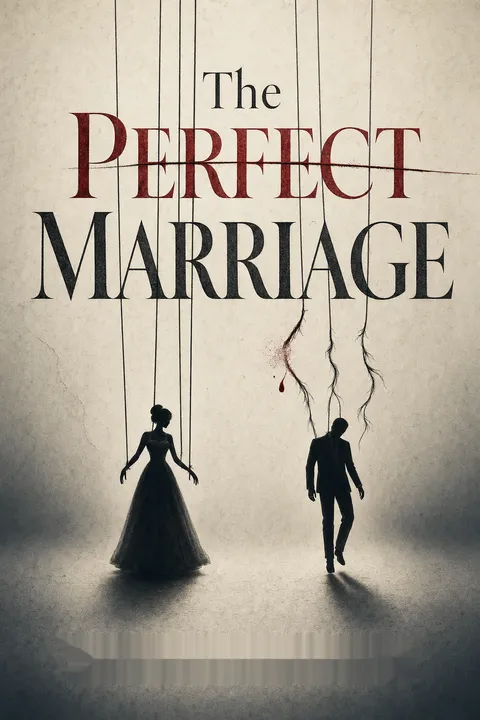


Plot Summary
Prologue
The book opens with a nameless meditation on desire. A man catalogs the physical details of a woman — her trembling lip, the arc of her back, the way her hair fell across her face. He loved parts of her, the narrator concedes. But the real question isn't love. The question is whether he killed her.
This brief, charged opening functions as the novel's foundational misdirection. The pronouns seem obvious — he must be Adam,2 she must be Kelly.3 Only in the final pages will every assumed identity in these lines shift, revealing that the book's first deception began with its very first word.
Anniversary Gifts and Secret Lives
Sarah Morgan1 has disappointed her husband again. A named partner at a D.C. defense firm, she cancels their anniversary trip to Virginia's lake house — the second home she bought to support Adam's2 flagging writing career.
She gives him a fifty-thousand-dollar watch engraved with the number of minutes in ten years of marriage. He drives to the lake house alone. But Adam2 doesn't write. Kelly Summers3 arrives that evening — a twenty-seven-year-old waitress he's been sleeping with for sixteen months.
After sex, Adam2 reads threatening texts from Kelly's husband4 on her phone, each more menacing than the last. He writes Kelly3 a love note pledging his devotion, then drives home to Sarah1 past midnight. Their marriage is a house with two doors, and Adam2 uses both.
Thirty-Seven Stab Wounds
Adam2 arrives home at nearly two in the morning. Sarah1 surprises him with unexpected words: she wants to try for a baby. They make love, and Adam2 silently resolves to end the affair. He falls asleep believing his life is finally turning.
The next morning, Sheriff Ryan Stevens5 and Deputy Marcus Hudson10 pound on the front door demanding to know his whereabouts the previous evening. Adam2 resists, fights back, and the deputy drives a knee into his face.
Handcuffed and bleeding at the station, the deputy reveals the truth with barely contained fury — Kelly3 was stabbed thirty-seven times in Adam's2 bed at the lake house. The cleaning woman found her that morning. Adam2 crumbles to the floor. His fingerprints, his DNA, his bed — everything points at him.
His Wife, His Lawyer
Sarah1 is toasting her courtroom victory in a senator's corruption trial — champagne with Anne,6 her devoted assistant, and Matthew,9 her sharp-tongued law school friend visiting from New York — when Adam's mother Eleanor8 phones. Adam2 needs help at the Prince William County sheriff's station.
Sarah1 races to Virginia. Sheriff Stevens5 questions her: was Adam2 home last night? Does she know a Kelly Summers?3 He slides crime scene photos across the desk — a woman butchered in the bed Sarah1 shares with her husband.
Sarah1 vomits, then composes herself. When a deputy announces Adam2 is demanding his lawyer, Sarah's1 response silences the room: there is no need to call anyone. She is his lawyer. The betrayed wife swallows her devastation and arms herself with the only weapon she trusts.
The Husband in Uniform
Sarah1 enters the interrogation room as defense counsel, not wife. Her notepad is aligned, her pen parallel. Adam2 confesses the sixteen-month affair — how he met Kelly3 at Seth's Coffee, slept with her the same day, couldn't stop. Sarah1 records every word without flinching.
Then the door explodes inward. A deputy in uniform vaults the table and hammers Adam's2 face with his fists. Sarah1 is thrown against the table's edge, splitting her forehead. Sheriff Stevens5 and others wrench the attacker away.
His name is Scott Summers4 — Kelly's husband3 and a member of the local police force. He shatters into heaving sobs while colleagues hold him up. Adam2 is rushed to the hospital with a broken cheekbone. Sarah1 now grasps a terrifying complication: the victim's husband carries a badge and an ungovernable temper.
Pregnant, Drugged, Three Men
On the lake house porch, Sarah1 reads the full autopsy while Sheriff Stevens5 paces. Kelly3 had Rohypnol in her system — yet Adam's2 blood reportedly showed no trace. She was four weeks pregnant. DNA confirmed Adam2 as the father.
And three distinct sets of male DNA were recovered from the victim — Adam's,2 Scott's,4 and one completely unknown. The case escalates to double homicide; the D.A. will pursue the death penalty. When Sarah1 confronts Adam2 in jail with these findings, he's shattered by the pregnancy he never knew about.
She slides his own love note across the table — words about determining an ending that a prosecutor could easily reframe as a confession. Adam2 insists he had planned to leave Sarah1 for Kelly,3 then reversed course when Sarah1 proposed starting a family.
The Hidden Ultimatum
A concealed compartment in Adam's2 writing desk yields what the police investigation missed. Sarah1 presses a hidden panel and finds a handgun alongside a manila envelope. Inside: a photograph of Adam2 and Kelly3 in an intimate embrace at the lake house, clearly shot without their awareness.
On the reverse side, someone has scrawled a threat demanding the affair end — or the writer would end it personally. Adam2 admits he found it in the mailbox weeks before Kelly's3 murder but neglected to mention it.
The photograph is the case's first concrete evidence that a third party knew about the affair and had proximity to act. Sheriff Stevens5 bags it for fingerprint analysis. The prints match no one in the criminal database. Whoever watched them remains faceless.
Jenna Way's Double Life
Anne's6 background check cracks Kelly's identity open. Kelly Summers3 was born Jenna Way. In Wisconsin, she married a man named Greg Miller, then was charged with stabbing him to death. The case collapsed during trial when critical evidence vanished — and one of the responding officers at the original crime scene was a young cop named Scott Summers.4
He apparently helped the evidence disappear, married Jenna, gave her a new name, and relocated them to Virginia. Adam2 already knew — Kelly3 confessed her past two weeks before her death, describing how Scott4 wielded it as leverage to keep her trapped.
Sarah1 is furious that Adam2 withheld this information. But the revelation carves open a powerful defense avenue: Greg Miller had family who might have waited years for the justice the courts denied them.
Not Guilty at Any Cost
Sarah1 negotiates the plea offer down to twenty years without parole. She presents Adam2 with stark arithmetic: the evidence is overwhelming, and conviction means death. As his attorney, she advises him to take the deal. Then he asks what she thinks as his wife. Fight like hell, she says. Adam2 pleads not guilty. Judge Dionne sets bail at half a million dollars, which Sarah1 pays from their accounts.
Adam2 is fitted with an ankle bracelet and confined to the lake house until trial — two weeks away. Eleanor,8 Adam's mother,2 flies in from Connecticut to hover and undermine, blaming Sarah's1 career obsession for Adam's2 infidelity and openly questioning whether her daughter-in-law possesses the competence to save her only son from execution.
Adam's Rogue Investigation
Confined to the lake house with an ankle bracelet, Adam2 grows reckless. A young woman named Rebecca Sanford12 arrives claiming to be a local reporter and former writing student. Adam2 pays her five thousand dollars to investigate Kelly's3 first husband's family, convinced someone from her past committed the murder.
Meanwhile, his literary agent Daniel14 secures competing bids for a tell-all memoir — seven figures, movie rights, the career resurrection Adam2 always craved. When Sarah1 discovers the reporter,12 the dozens of phone calls to strangers, and the book deal, she is incandescent.
Adam2 is contaminating potential jurors, spending money they don't have, and running a parallel investigation that contradicts her defense strategy. She orders the lake house phone disconnected and warns him he's sabotaging his only chance at survival.
The Handwriting Match
Rebecca12 delivers files on people connected to Kelly's3 dead first husband, including one named Nicholas Robert Miller — Greg's brother, living nearby. Adam2 recognizes the photograph but can't place the face. Then, sifting through the evidence box Sarah1 left him, he makes a devastating connection.
He compares the handwriting on the threatening photograph to a Post-it note attached to the case files — written by Anne.6 The loops, the slant, the distinctive formations: identical. Anne6 had vacation access to the lake house.
She knew about the affair and said nothing. She wrote the threat. Adam's2 hands shake with a certainty that bypasses reason. He grabs Rebecca's12 car keys, sprints outside, throws the car into drive, and tears down the driveway as his ankle bracelet begins to flash.
Bob Miller's Other Name
Adam2 storms into the law firm and lunges at Anne,6 screaming that she killed Kelly3 and framed him. Bob,7 a senior attorney at the firm, drops him with a single punch.
But sprawled on the floor, Adam2 finally places the face from Rebecca's12 file — Bob7 is Nicholas Robert Miller, the brother of Kelly's3 first dead husband, hiding at Sarah's1 firm for years. The room detonates. Scott Summers,4 present with Sheriff Stevens,5 attacks Bob7 on reflex.
Anne,6 sobbing, admits she photographed Adam2 and Kelly3 and wrote the threatening note — but insists it was an ultimatum to confess the affair, never a death threat. She maintains she couldn't bring herself to tell Sarah1 directly. Sheriff Stevens5 hauls everyone to the station. Adam2 faces fresh charges for violating house arrest.
The Fugitive's Last Hope
That night, Adam2 slips out of the police station unguarded. He walks miles through cold rain, sleeps beneath a fallen tree, steals clothes from a truck cab, and navigates by gas station map to Rebecca's12 house. She's terrified — someone has been watching her, entering her home, making threatening calls.
Police lights flood the windows before Adam2 can learn more. He's recaptured and transferred to maximum security. Sarah1 delivers the final blow during her visit: Rebecca12 was never a reporter.
She's a private investigator whose true employer had motives of his own. Every lead she fed Adam2 was curated, every hope she offered engineered. Adam's2 lifeline was a puppet string. His escape earns additional criminal charges. Sarah1 tells him his only remaining job is silence.
Five Facts from a Betrayed Wife
Sarah1 takes the courtroom floor and opens with the fact no one anticipated: Adam Morgan2 is not only her client — he is her husband. She acknowledges the affair devastated her, then pivots with surgical precision.
She enumerates five facts the prosecution cannot dismiss: Scott4 threatened Kelly's3 life the night she died; Kelly3 was really Jenna Way, once charged with stabbing a previous husband; relatives of that husband had motive for revenge; three men's DNA were found inside the victim; and a stalker named Jesse Hook11 had been surveilling her for months.
The prosecution expected a defeated woman offering a token defense. Instead, they face Sarah Morgan1 at full power — wounded enough to command sympathy, sharp enough to seed reasonable doubt in every juror's mind.
Sarah's Perfect Crime
A swift guilty verdict sealed Adam's2 fate. Eleven years later, Sarah1 visits death row in white, squeezing his hand once per minute for ten minutes. She whispers that she knows for a fact he is innocent — then promises he'll spend his final hours thinking about her while she never thinks of him again.
Adam2 is executed. Sarah's1 confession demolishes every assumption: she and Bob7 conspired after he brought her proof of Adam's2 affair. She drugged the scotch with Rohypnol, drove to the lake house while Anne6 was too drunk to notice her absence, and stabbed Kelly3 thirty-seven times as Adam2 lay unconscious beside the body.
The third DNA belonged to Sheriff Stevens,5 who had also been sleeping with Kelly3 — evidence Sarah1 suppressed to ensure conviction. Rebecca12 was Bob's7 operative, deployed to keep Adam2 erratic. Sarah1 married Bob.7 They have a daughter. They live at the lake house.
Analysis
The Perfect Marriage weaponizes the unreliable narrator by giving readers two flawed perspectives and training them to distrust the wrong one. Adam's2 chapters are confessional and openly self-loathing — the kind of transparency that registers as honesty. Sarah's1 chapters perform competence, vulnerability, and moral clarity. The reader trusts Sarah1 precisely because she appears to be the wronged party doing the righteous thing. Rose exploits a deeply gendered assumption: that a cheated-on wife defending her husband must be acting from love, not calculation. Every reader instinct about who deserves sympathy becomes the mechanism of their deception.
The novel's architecture is a masterclass in structural misdirection. Every red herring — Scott's4 violence, Jesse's11 obsession, Deputy Hudson's10 suspicious appearances, Bob's7 hidden identity — receives enough investigative attention to feel legitimate. The reader participates in Sarah's1 work, shares her frustrations, roots for her success. What makes the final revelation devastating is not simply that Sarah1 is the killer, but that her apparent competence was never in service of justice. Every move that seemed like an imperfection — the rushed trial, the suppressed DNA evidence, the failure to pursue certain leads — was precision disguised as struggle.
Rose interrogates the economics of marriage with uncomfortable specificity. Sarah1 earned the money, bought both homes, and bankrolled Adam's2 stalled career. Adam2 repaid this by spending his afternoons in someone else's bed. The novel asks who owns the life built by one partner's labor, and Sarah1 answers with terrifying logic: if you won't honor what I built, I will dismantle what you are. The mother-daughter trauma cycle completes this framework — Sarah1 mercy-killed her addicted mother at sixteen and internalized a permanent equation: weakness invites destruction, so never be weak. When betrayed, Sarah1 doesn't grieve or negotiate. She removes the problem and engineers the narrative so the world sees her as the victim. The perfect marriage was never between two people. It was between Sarah1 and control.
Review Summary
The Perfect Marriage received polarizing reviews. Many readers found it riveting and full of twists, praising its fast pace and shocking ending. However, numerous critics pointed out plot holes, unrealistic legal and police procedures, and poorly developed characters. Some felt the writing was subpar and the twist unearned. Complaints about the unlikeable protagonists and implausible plot elements were common. While some readers couldn't put it down, others found it frustrating and disappointing. The book's attempt to be a psychological thriller garnered both enthusiastic fans and harsh detractors.
People Also Read






Characters
Sarah Morgan
Defense attorney, Adam's wifeA named partner at a D.C. law firm and one of the most formidable defense attorneys in the country. Fiercely intelligent and compulsively organized, Sarah masks deep emotional wounds beneath designer suits and perfect hair. Orphaned by sixteen after her father's death and her mother's spiral into addiction, she built herself from nothing, vowing never to be vulnerable or dependent on anyone. Her marriage to Adam2 is defined by emotional distance — she works relentlessly, substituting professional achievement for intimacy. When Adam's2 affair surfaces alongside a murder charge, Sarah makes the extraordinary choice to serve as both wife and lawyer. Her ability to compartmentalize is almost inhuman. She reads people with surgical precision, maintains control in every room she enters, and never reveals her full hand.
Adam Morgan
Struggling novelist, accused killerA novelist living in the long shadow of his wife's success. His first book earned critical praise but no commercial breakthrough, and subsequent work flopped. Handsome, charming, and deeply insecure, Adam is the kind of man who needs to be needed. His affair with Kelly3 isn't merely sexual — it's existential, a way to feel relevant in a life where Sarah's1 career rendered him ornamental. He oscillates between genuine remorse and self-pitying justification, loving Sarah1 while resenting her. Trapped under house arrest, he grows increasingly erratic — drinking heavily, hiring strangers, making impulsive decisions that consistently worsen his situation. His fundamental flaw is believing he is smarter than he actually is, a conviction that drives every catastrophic choice.
Kelly Summers
The murdered mistressA twenty-seven-year-old waitress at Seth's Coffee whose carefree exterior masks a violently complicated past. Born Jenna Way, she was once charged with stabbing her first husband to death before escaping conviction and reinventing herself in Virginia. Warm and magnetic on the surface, Kelly drew men effortlessly — but the true nature of those attachments and her own honesty remain ambiguous throughout the story. Her murder becomes a prism refracting everyone else's secrets.
Scott Summers
Kelly's volatile cop husbandKelly's3 husband and a local sheriff's deputy. Physically imposing and prone to explosive outbursts, Scott attacked Adam2 in the interrogation room and later assaulted Bob7 at Sarah's1 law firm. Whether his rage stems from grief, guilt, or something darker remains an open question. His alibi for the murder night is his partner Deputy Hudson10. He denies ever abusing Kelly3, contradicting Adam's2 account, and his connection to the disappearance of evidence in Kelly's previous murder trial adds layers of suspicion.
Sheriff Ryan Stevens
The lead investigating sheriffThe lead investigator on Kelly's3 murder. A seasoned lawman with tired eyes and a commanding presence, Stevens oscillates between professional detachment and flirtatious attention toward Sarah1. He initially appears sympathetic to Adam's2 innocence but later withdraws cooperation, leaving Sarah1 to investigate alone. His shifting loyalties and unclear motivations make him one of the story's most opaque figures. He runs hot and cold — offering help one moment, shutting doors the next — and his reasons for either are never entirely transparent.
Anne
Sarah's devoted assistantSarah's1 assistant of five years, increasingly fashioned in her boss's image. Quiet, eager to please, and deeply loyal, Anne idolizes Sarah1 to a degree that blurs professional and personal boundaries. She harbors knowledge of Adam's2 affair that she lacked the courage to share, and her silence becomes a pivotal point of conflict when the truth surfaces. Anne is a follower by nature — terrified of being the messenger who destroys Sarah's1 world, yet tormented by the weight of what she knows.
Bob Miller
Sarah's rival with a secretA senior attorney at Sarah's1 firm and her professional antagonist. Outwardly smug, combative, and perpetually gunning for her partnership, Bob harbors a devastating personal connection to the murder victim that no one in the office suspects. His true identity and relationship to Kelly's3 past form one of the story's most explosive midpoint revelations. Behind his corporate bluster lies a man driven by private grief and calculated patience.
Eleanor Morgan
Adam's overbearing motherAdam's2 immaculately dressed, impossibly demanding mother. A wealthy Connecticut widow who worships her son and views Sarah1 as the root of all his failings. Eleanor weaponizes knowledge of Sarah's1 traumatic upbringing, blames her career ambition for Adam's2 infidelity, and inserts herself into the case with a suffocating maternal intensity. Her love for Adam2 is absolute, blinding, and ultimately smothering — the kind that produces men who cannot survive on their own.
Matthew Latchaw
Sarah's protective best friendSarah's1 closest friend from Yale law school, now a pharmaceutical lobbyist. Flamboyant, sharp-tongued, and fiercely protective, Matthew provides comic relief alongside genuine strategic counsel. He repeatedly challenges Sarah's1 judgment on the case while helping gather evidence. His loyalty to Sarah1 is absolute, though his methods occasionally skirt legality. He is the one person permitted to question Sarah's1 decisions to her face.
Deputy Marcus Hudson
Scott's loyal, cocky partnerScott Summers's4 partner on the force. Physically imposing and openly antagonistic toward Adam2. He serves as Scott's4 alibi for the night of the murder and appears at key investigative moments with suspicious, unexplained timing.
Jesse Hook
Kelly's obsessive stalkerA thirty-two-year-old recluse who frequented Seth's Coffee and became fixated on Kelly3. Co-workers describe him as a stalker who memorized her schedule. His DNA is tested against the unknown third sample but does not match.
Rebecca Sanford
Investigator with hidden motivesA young woman who approaches Adam2 claiming to be a reporter and former writing student. She helps investigate Kelly's3 past in exchange for cash and an exclusive interview. Her true role and actual employer prove very different from what Adam2 believes.
D.A. Josh Peters
The relentless prosecutorThe district attorney pursuing the death penalty against Adam2. Composed, confident, and professionally respectful of Sarah1, he views the case as a slam dunk and refuses to chase leads that might complicate his conviction.
Daniel
Adam's opportunistic literary agentAdam's2 long-suffering agent who sees the murder trial as a career-saving goldmine. He pitches a tell-all before Adam2 even agrees to write it, viewing the entire catastrophe through a purely commercial lens.
Plot Devices
The Lake House
Crime scene and emotional trapThe Morgans' second home on Lake Manassas in Virginia functions as the nexus of every major plot thread. Purchased ostensibly to support Adam's2 writing, it becomes the setting for his affair, the location of Kelly's3 murder, and Adam's2 prison during house arrest. The lake house embodies the physical distance in Sarah1 and Adam's2 marriage — she has barely set foot in it, while Adam2 built an entire secret life within its walls. Its isolation makes it both sanctuary and trap. Every room holds evidence: the bedroom where Kelly3 bled, the desk with the hidden compartment, the wet bar with the drugged decanter. By the story's end, the house has witnessed more truth than any courtroom.
The Rohypnol-Laced Scotch
Evidence of premeditationSarah1 discovers that the scotch decanter at the lake house contains Rohypnol, the same drug found in Kelly's3 toxicology report. This explains why Kelly3 never woke during the stabbing and why Adam2 cannot remember portions of the evening. Yet Adam's2 blood test reportedly shows no trace of the drug — a discrepancy Sarah1 flags to Sheriff Stevens5 as proof that someone else drugged Kelly3 before killing her. The investigation never resolves this contradiction. If both were drinking from the same decanter, both should have been affected. This forensic gap represents the case's most significant overlooked clue — one that could exonerate Adam2 if properly pursued but slips through the cracks of an investigation that seems content with its primary suspect.
The Threatening Photograph
Proof of a third-party threatHidden in a secret compartment in Adam's2 desk, this photograph shows Adam2 and Kelly3 embracing at the lake house, clearly taken without their knowledge. On the back, someone scrawled a threat demanding the affair end or the writer would personally ensure it. Adam2 received it weeks before the murder but forgot to mention it. When he later matches the handwriting to a note from Anne6, Sarah's assistant1, it becomes the case's most explosive physical evidence — proof that someone close to both Adam2 and Sarah1 knew about the affair, had access to the property, and issued what could be read as a death threat. The photo functions as a narrative grenade, reshaping suspicion with each new revelation about its author.
The Third DNA Set
The case's central unsolved mysteryThe autopsy reveals three distinct sets of male DNA inside Kelly3 — Adam's2, Scott's4, and one unknown. This third set becomes the investigation's white whale. Jesse Hook11, a local stalker, is tested and eliminated. Sarah1 suspects Deputy Hudson10, but Sheriff Stevens5 refuses to investigate his own deputy without evidence. The unknown DNA haunts the entire defense because identifying its owner could provide an alternative suspect. The prosecution dismisses it as circumstantial. Both sides recognize that without knowing who this third man is, the DNA becomes a Rorschach test for the jury — evidence of a wider conspiracy, or merely proof that the victim had a complicated private life. Its identity, when finally revealed, rewrites the entire case.
Kelly's Secret Identity
Foundation for alternate suspectsKelly Summers3 was born Jenna Way. In Wisconsin, she was charged with stabbing her first husband, Greg Miller, to death. The case collapsed when key evidence disappeared during trial — a disappearance that may have been orchestrated by the arresting officer Scott Summers4, who later married Jenna and gave her a new life. This hidden history serves multiple functions: it provides motive for Greg's surviving family to seek revenge, it explains Scott's4 possessive control over Kelly3, and it mirrors the manner of Kelly's3 own death — stabbing — suggesting a killer with intimate knowledge of her past. The revelation transforms public perception of the victim and becomes Sarah's1 primary tool for establishing reasonable doubt.
FAQ
Synopsis & Basic Details
What is The Perfect Marriage about?
- Betrayal and Murder: The story centers on Sarah Morgan, a successful defense attorney, whose seemingly perfect marriage is shattered when her husband, Adam, is accused of murdering his mistress, Kelly Summers.
- Complex Investigation: Sarah, despite her personal turmoil, takes on Adam's defense, navigating a complex web of lies, secrets, and hidden motives as she tries to uncover the truth behind Kelly's death.
- Twisted Relationships: The narrative explores the intricate dynamics of Sarah and Adam's marriage, as well as the relationships between Adam and Kelly, and the various other characters involved in the case.
Why should I read The Perfect Marriage?
- Intricate Plot Twists: The novel is filled with unexpected twists and turns, keeping readers guessing until the very end, challenging their assumptions about the characters and their motives.
- Psychological Depth: The story delves into the psychological complexities of its characters, exploring their motivations, desires, and the impact of betrayal on their lives, creating a compelling and thought-provoking narrative.
- Moral Ambiguity: The novel blurs the lines between right and wrong, forcing readers to question their own sense of justice and morality, as they grapple with the characters' actions and their consequences.
What is the background of The Perfect Marriage?
- Contemporary Setting: The story is set in a modern, urban environment, likely Washington D.C., where Sarah works as a high-profile defense attorney, reflecting the pressures and complexities of contemporary life.
- Legal System Focus: The narrative is heavily influenced by the legal system, with detailed descriptions of court proceedings, investigations, and the strategies employed by both defense and prosecution, providing a realistic backdrop to the story.
- Socioeconomic Disparity: The story touches on socioeconomic disparities, contrasting Sarah's affluent lifestyle with Adam's struggles as a writer, and the working-class background of Kelly, highlighting the different worlds these characters inhabit.
What are the most memorable quotes in The Perfect Marriage?
- "The question isn't whether or not he loved her. The question is… did he kill her?": This quote from the prologue sets the tone for the entire novel, immediately establishing the central mystery and the ambiguity surrounding Adam's guilt.
- "I'd wait a lifetime for you and then some. Or at least another 5,256,000 minutes…": This quote, spoken by Adam to Sarah, highlights the initial romanticism of their relationship, contrasting with the later betrayal and disillusionment.
- "When I said 'til death do us part' I meant it and I'm the only person that has any chance in hell of getting you off.": This quote from Sarah to Adam reveals her complex motivations, showing her commitment to her role as his lawyer, even as she grapples with his betrayal.
What writing style, narrative choices, and literary techniques does Jeneva Rose use?
- Alternating First-Person Narration: The story is told through alternating first-person perspectives of Sarah and Adam, providing intimate access to their thoughts and feelings, while also creating dramatic irony as readers know more than the characters.
- Foreshadowing and Red Herrings: Rose employs subtle foreshadowing and red herrings throughout the novel, creating suspense and misdirection, keeping readers guessing about the true killer and their motives.
- Fast-Paced and Suspenseful: The writing style is fast-paced and suspenseful, with short chapters and cliffhangers, creating a sense of urgency and keeping readers engaged in the unfolding mystery.
Hidden Details & Subtle Connections
What are some minor details that add significant meaning?
- The Watch Engraving: The engraving on Adam's anniversary watch, "5,256,000," representing the minutes in ten years, symbolizes Sarah's meticulous nature and her constant awareness of time, contrasting with Adam's more carefree attitude.
- The Thrown Away Card: Adam's mother's anniversary card, thrown away by Sarah, foreshadows the lack of genuine connection and the underlying tensions in their marriage, highlighting Sarah's dismissive attitude towards family.
- The Black Squirrel: The black squirrel that Adam observes at the lake house symbolizes the rare and unexpected events that are about to unfold, foreshadowing the unusual circumstances surrounding Kelly's murder.
What are some subtle foreshadowing and callbacks?
- Sarah's "Counting": Sarah's statement, "I'm always counting," foreshadows her meticulous planning and calculating nature, which is later revealed to be a key aspect of her character.
- The Lake House as a Refuge: The lake house, initially presented as a refuge for Adam's writing, becomes the scene of Kelly's murder, highlighting the dark undercurrents beneath the surface of their seemingly idyllic life.
- The "Knick-Knack" Comment: Matthew's repeated use of "knick-knack" to describe babies foreshadows Sarah's eventual decision to have a child, highlighting the shift in her priorities and her desire for a more fulfilling life.
What are some unexpected character connections?
- Scott and Deputy Hudson: The close relationship between Scott and Deputy Hudson, initially presented as a simple friendship, becomes a point of suspicion, as it provides Scott with an alibi and raises questions about their involvement in Kelly's murder.
- Bob and Kelly: The connection between Bob and Kelly, revealed through her past as Jenna Way, adds a layer of complexity to the case, as it suggests a possible motive for Bob to want her dead.
- Sarah and Sheriff Stevens: The subtle flirtation and connection between Sarah and Sheriff Stevens, despite their opposing roles, adds a layer of tension and uncertainty to the investigation, blurring the lines between professional and personal relationships.
Who are the most significant supporting characters?
- Anne: Sarah's assistant, Anne, plays a crucial role in the investigation, providing support and resources, while also serving as a foil to Sarah's more calculating nature, highlighting the importance of loyalty and friendship.
- Matthew: Sarah's friend, Matthew, offers emotional support and a different perspective on the case, challenging Sarah's decisions and providing a voice of reason, while also adding a layer of complexity to Sarah's personal life.
- Eleanor: Adam's mother, Eleanor, serves as a foil to Sarah, highlighting the different expectations and values placed on women, while also adding a layer of tension and conflict to the narrative.
Psychological, Emotional, & Relational Analysis
What are some unspoken motivations of the characters?
- Sarah's Need for Control: Sarah's unspoken motivation is her need for control, stemming from her past experiences and her desire to maintain order in her life, which ultimately leads her to manipulate those around her.
- Adam's Desire for Validation: Adam's unspoken motivation is his desire for validation, both as a writer and as a man, which leads him to seek attention and affection outside his marriage, ultimately contributing to his downfall.
- Kelly's Search for Escape: Kelly's unspoken motivation is her search for escape from her abusive marriage and her troubled past, which leads her to seek solace in multiple relationships, ultimately making her a target.
What psychological complexities do the characters exhibit?
- Sarah's Detachment: Sarah exhibits a psychological detachment, allowing her to compartmentalize her emotions and focus on her professional goals, even as her personal life is falling apart, highlighting her ability to manipulate her own feelings.
- Adam's Self-Pity: Adam displays a tendency towards self-pity and a lack of self-awareness, often blaming others for his problems and failing to take responsibility for his actions, revealing his emotional immaturity.
- Kelly's Trauma: Kelly's past trauma and her abusive relationships have left her with a deep-seated fear and a need for validation, which leads her to seek out multiple partners and ultimately makes her vulnerable to manipulation.
What are the major emotional turning points?
- Sarah's Discovery of the Affair: Sarah's discovery of Adam's affair is a major emotional turning point, shattering her perception of their marriage and setting her on a path of revenge and control.
- Adam's Realization of Kelly's Pregnancy: Adam's realization that Kelly was pregnant is a major emotional turning point, as it forces him to confront the consequences of his actions and the potential loss of a future he had always desired.
- Sarah's Betrayal of Adam: Sarah's final betrayal of Adam, revealing her role in Kelly's murder, is a major emotional turning point, highlighting the depths of her manipulation and the complete breakdown of their relationship.
How do relationship dynamics evolve?
- Sarah and Adam's Marriage: The relationship between Sarah and Adam evolves from a seemingly perfect marriage to one filled with betrayal, resentment, and ultimately, destruction, highlighting the fragility of trust and the devastating impact of infidelity.
- Sarah and Anne's Friendship: The relationship between Sarah and Anne evolves from a professional partnership to a close friendship, but is tested by Anne's betrayal and Sarah's need for control, highlighting the complexities of female relationships.
- Adam and Kelly's Affair: The relationship between Adam and Kelly evolves from a passionate affair to a dangerous entanglement, highlighting the destructive nature of infidelity and the consequences of seeking validation outside of marriage.
Interpretation & Debate
Which parts of the story remain ambiguous or open-ended?
- The Third Set of DNA: The identity of the third person whose DNA was found on Kelly's body remains ambiguous, leaving readers to speculate about their involvement in her murder and the possibility of an unknown killer.
- Scott's True Motives: Scott's true motives and his level of involvement in Kelly's murder remain ambiguous, as his actions and statements are open to interpretation, leaving readers to question his innocence or guilt.
- The Nature of Sarah's Love: The true nature of Sarah's love for Adam remains ambiguous, as her actions are driven by a complex mix of love, betrayal, and a desire for control, leaving readers to question the sincerity of her emotions.
What are some debatable, controversial scenes or moments in The Perfect Marriage?
- Sarah's Manipulation of Adam: Sarah's manipulation of Adam, particularly her decision to defend him while secretly plotting his downfall, is a controversial aspect of the story, raising questions about her morality and the ethics of her actions.
- The Portrayal of Kelly: The portrayal of Kelly as a victim with a complex past is a controversial aspect of the story, as it challenges readers to consider the complexities of her character and the extent to which she was responsible for her own fate.
- The Ending: The ending, with Sarah's true nature revealed and Adam's execution, is a controversial aspect of the story, as it leaves readers to grapple with the implications of her actions and the lack of true justice.
The Perfect Marriage Ending Explained: How It Ends & What It Means
- Sarah's Orchestration: The ending reveals that Sarah orchestrated Kelly's murder to frame Adam, driven by a desire for revenge and control, highlighting the depths of her manipulation and the lengths she was willing to go to achieve her goals.
- Adam's Execution: Adam's execution, despite his claims of innocence, serves as a tragic reminder of the flaws in the justice system and the devastating consequences of betrayal and deception.
- Ambiguous Justice: The ending leaves readers with a sense of ambiguity, as the true killer, Sarah, remains unpunished, and the line between right and wrong is blurred, challenging the notion of justice and leaving readers to question the true meaning of it.
Perfect Series
About the Author


Download PDF
Download EPUB
.epub digital book format is ideal for reading ebooks on phones, tablets, and e-readers.








































