
Key Takeaways
1. The Pastor-Theologian: Reclaiming a Lost Vision for the Church
It is not comic but tragic that we instantly understand what’s funny about the anecdote, namely, the source of the woman’s confusion.
A Vision Problem. The modern church, particularly in North American evangelicalism, suffers from a profound "vision problem" regarding the nature and role of the pastor. This confusion is so widespread that the idea of a pastor also being a theologian is often met with surprise or even amusement, a stark contrast to much of church history where the two roles were inseparable. This secularization of the pastorate, driven by cultural trends and academic divisions, has led many pastors to exchange their theological birthright for management skills, therapeutic techniques, or strategic plans.
Secularizing Influences. The separation of church and academy, coupled with theology's migration to universities, has debilitated the church's theological understanding. Pastors are often pressured to adopt secular images of leadership—such as CEO, psychotherapeutic guru, or political agitator—rather than embracing their distinct theological calling. This shift has resulted in widespread uncertainty about the pastor's unique identity and contribution, leading to a "theological anemia" within the church and a sense of disillusionment among clergy.
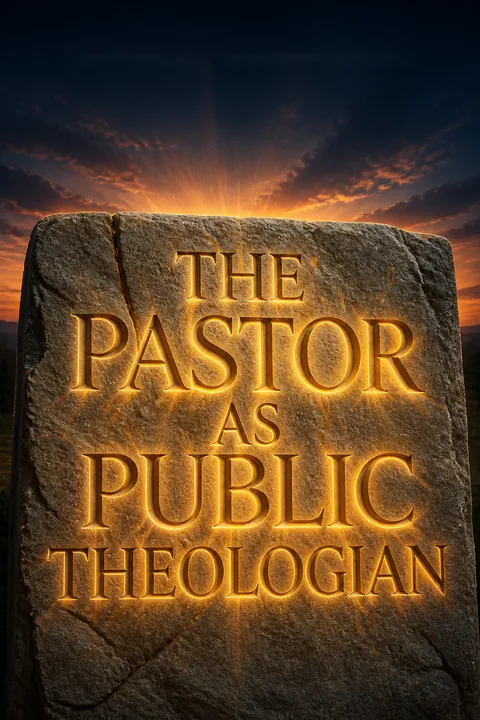
Reclaiming the Core. This book aims to reclaim the theological pedigree of the pastorate, asserting that pastors are and always have been theologians. It proposes the pastor-theologian as a "peculiar public figure" and "organic intellectual" who possesses a high "theology quotient" (TQ), not necessarily a high IQ. This vision calls for pastors, churches, and seminaries to recognize that theological minds belong in ecclesial bodies, cultivating disciples and bringing streams of living water to a parched spiritual landscape.
2. Biblical Heritage: The Pastor as Prophet, Priest, and King
The pastor is no recent innovation, but the occupant of the office that is the realization of the ministry of past figures.
Ancient Blueprints. The Old Testament offices of prophet, priest, and king provide the foundational "rough outlines" for understanding the pastor's role in the New Covenant. While Jesus Christ ultimately fulfills these roles, essential elements of their work have transferred to the pastorate. This continuity highlights that the pastor's office is deeply rooted in God's historical plan for leading His people, making it a theological office by divine appointment.
Threefold Ministry. The pastor participates in Christ's threefold messianic office:
- Priest: Like Old Covenant priests who mediated holiness and offered sacrifices, pastors minister grace by proclaiming the gospel of Christ's atoning sacrifice, leading people to draw near to God and live set-apart lives.
- Prophet: Echoing Old Testament prophets who spoke God's will with divine authority, pastors exercise a ministry of truth-telling, expositing Scripture to interpret the times from a God-centered perspective and call people to repentance and faith.
- King: Similar to righteous Israelite kings who ruled with humility and wisdom, pastors minister wisdom by personifying Christ's cruciform leadership, guiding the congregation with humility and bearing burdens in prayer, reflecting the paradox of a crucified king.
Theological Office. The pastorate is inherently a theological office, grounded in the realities of salvation, wisdom, and truth—all centered in Christ. This means that every aspect of pastoral work, from preaching to counseling, is ultimately about communicating Christ and helping God's people live according to His truth. The pastor's role is to feed God's set-apart people, ensuring they are nourished by the Word of God and equipped to advance His kingdom.
3. Historical Legacy: Scholars and Saints in the Pulpit
Most of the best theologians in the history of the church were parish pastors.
A Rich Tradition. Historically, the pastor was often the "scholar-saint," equally comfortable with books and the aches of the soul, a stark contrast to the modern perception. From the early church's Irenaeus, who used the "Rule of Faith" to define Christian doctrine, to Augustine, who saw his primary work as "public teaching" to instruct his flock, pastors were the church's primary theologians. They tilled the rich soil of Scripture within the context of pastoral work, seeing theological precision as a matter of eternal life and death.
Reformation and Puritan Flourishing. The Reformation marked a powerful reclamation of this theological pastorate. Martin Luther emphasized that the pastor's purpose was to clearly present the gospel, while John Calvin meticulously fashioned a theological pastorate in Geneva, tying all ecclesial power to the Word of God and practicing continuous expository preaching. The Puritans, like William Ames and Richard Baxter, further cemented this, defining theology as "the doctrine of living unto God" and seeing pastors as "physicians of souls" who applied biblical truth to transform hearts and lives.
The Modern Demotion. The post-Edwards era, marked by populist revivalism (e.g., Charles Finney's focus on techniques over doctrine) and the secularization of the American academy, led to a significant decline in the pastor's theological standing. Theology became a specialist's academic discipline, detached from the church, while pastors increasingly adopted a "practical profession" identity, focusing on management or therapeutic roles. However, figures like Harold Ockenga in the mid-22nd century began to reclaim the historic vision, advocating for a rigorously intellectual and theological pastorate that took dominion of all life and thought for Christ.
4. The Evangelical Mood: Joy in Being-Toward-Resurrection
Pastor-theologians cure souls by administering, not mood-altering drugs, but rather a mood-altering dose of reality: the good news that God raised Jesus from the dead, and that we too can be raised in Christ.
Coping with Death and Despair. The pastor-theologian's fundamental purpose is to cultivate life and cope with death, addressing the deep human anxieties of mortality, meaninglessness, and even acedia (existential listlessness). In a world grappling with "being-toward-death," the pastor offers a profound cure: the reality of Jesus's resurrection, which transforms the human experience of being alive. This is not about superficial happiness, but about a deep, abiding joy.
Embodying Resurrection Joy. The "evangelical mood" is an indicative declaration ("He is risen! He is Lord!") and a way of being attuned to the world as already-not-yet made new in Jesus Christ. This mood, characterized by resurrection joy, is a fundamental orientation to life that transcends circumstances, even in suffering. Pastor-theologians communicate and disseminate this mood, helping people live each moment with a "being-toward-resurrection" mindset, knowing that death has been defeated.
A Holistic Cure. This ministry addresses the human condition itself, introducing people to Christ and helping them grow into Him. It's a "particular-general contribution" to humanity, teaching individuals to redeem their limited time by living in an evangelical mood. This involves proclaiming and practicing resurrection, embodying the new creation order, and leading worship not just as an activity, but as a pervasive mood of gratitude for God's transformative work.
5. Ministry of Reality: Indicating the Truths Found "In Christ"
The gospel is a reliable indicator of reality insofar as it reveals the nature and purpose, the source and destiny, of the whole created order.
The Gospel as Reality. Christian theology operates primarily in the indicative mood, stating facts about what God has done, is doing, and will do "in Christ." This is a "ministry of reality," helping people to "get real" by aligning their understanding with the truth of the gospel. The resurrection of Jesus is the ultimate "is," reshaping our understanding of God, humanity, salvation, and the cosmos itself.
What is "In Christ":
- God: Jesus is the "image of the invisible God," the divine Logos, revealing true deity.
- True Humanity: Christ is the second Adam, the perfect image of God in human form, showing humanity's original purpose.
- Created Order: "All things were created through him and for him," and "in him all things hold together," demonstrating God's wise care for the world.
- Reconciliation & Redemption: In Christ, God is reconciling the world to Himself, fulfilling His plan to unite all things, offering new creation and redemption.
Eschatological "Is." The "is" of what is in Christ is an eschatological indicative, referring to something already but not yet fully realized. Union with Christ means believers genuinely participate in His resurrection now, even as they await its full consummation. Pastor-theologians minister this reality, requiring a "sanctified imagination" to perceive what is present-partial as future-perfect, enabling disciples to live along the re-created grain of reality.
6. Ministry of Understanding: Cultivating Biblical, Cultural, and Human Literacy
To minister understanding is to help people make connections: between the parts of the Bible and the overarching story; between the Bible and the world in which they live; between who they are and who God calls them to be.
Beyond Information. Theology is not merely about accumulating data but about fostering understanding—of God, the world, and ourselves in relation to God's redemptive work. Pastor-theologians serve as "ministers of understanding," helping people grasp the meaning of what God has done in Christ and how to respond. This involves holistic engagement with God's Word, the human world, and human words about that world.
Threefold Literacy:
- Biblical Literacy: This means canonical literacy, understanding individual passages within the whole biblical story and redemptive history. It's about thinking with the Bible, not just about it, and interpreting one's own life through its overarching narrative.
- Cultural Literacy: Pastors must "read" contemporary culture—its values, beliefs, and formative influences—to help congregations discern its spiritual (de)formation. This enables Christians to be cultural agents for Christ's kingdom, rather than passive consumers, by understanding and challenging cultural hegemonies.
- Human Literacy (Reading Fiction): Engaging with literature helps pastors understand people in all their diversity, universal human themes (love, loss, quest for happiness), and even the unique challenges of ministry. Fiction provides a "laboratory of the human condition," fostering empathy and insight into different perspectives and cultures.
Wisdom for Life. This comprehensive understanding is not merely theoretical; it is practical, leading to "know-how" in living out knowledge. Pastor-theologians build bridges between these literacies, directing congregations in ways of wisdom and human flourishing by interpreting the world in light of Scripture. This equips disciples to embody the mind of Christ and act out what is "in Christ."
7. Ministry of New Life: The Imperative for Wisdom, Love, and Christlikeness
Theology cultivates wisdom to the extent that it directs disciples in their particular contexts to correspond to the renewed created order in Christ.
From Indicative to Imperative. The gospel's indicative ("what is in Christ") inherently contains a tacit imperative, a demand to actively conform to and joyfully participate in this new reality. Being in Christ is both a gift and a task, a privilege and a responsibility. Pastor-theologians navigate this tension, urging Christians to "work out their own salvation" with fear and trembling, ensuring their lives correspond to the reality of the resurrection.
Threefold Imperative:
- "Get Wisdom": Wisdom is applied knowledge, lived out in practice. Theology cultivates wisdom by directing disciples to live according to the renewed created order in Christ, going with the grain of reality. Godliness, or the "fear of the LORD," is the beginning of this wisdom, integrating knowledge of God with a godly life.
- "Work Love": What is in Christ is essentially the love of God for the world, and "faith working through love" is the "overall shape of Christian ethics." Pastor-theologians minister new life by helping the church rightly order its loves, acting in ways that correspond to the new creation and ultimate reality, recognizing the truthfulness at stake in how we love God and neighbor.
- "Imitate Christ": The most paradoxical imperative is to "put on the Lord Jesus Christ." This is not about pretending, but about letting the Spirit realize the reality of "Christ in you." Pastor-theologians, as organic intellectuals, must exhibit the humble "mind of Christ," cultivating in themselves and their charges the cruciform pattern of self-giving love, dying daily to the old self.
Theology's Real Work. The real work of theology is public: growing persons and cultivating a people into the fullness of Christ. It's about conforming people's speech, thoughts, and actions to the mind and heart of Jesus Christ, the source and standard of all truth, goodness, and beauty. This ministry of new life is the practical outworking of doctrinal theology, making the "ought" of Christian living a reality through the "is" of Christ's presence.
8. The Great Pastoral Commission: Building God's Living House
The particular vocation of the pastor-theologian is to build up Christians in Christ.
Christ's Commission. Jesus's Great Commission to "make disciples of all nations" is fundamentally a "Great Pastoral Commission." While all Christians bear witness to Christ, pastors have the unique privilege and responsibility to baptize and teach disciples, forming a holy nation out of many. This involves "edifying" (building up) the body of Christ, a process that continues until all attain unity of faith and knowledge of the Son of God, reaching "mature manhood."
God's Field, God's Building. The church is depicted as both "God's field" (organic growth) and "God's building" (inorganic construction). Pastor-theologians are "church cultivators" and "church builders," nurturing individual souls ("feed my sheep," "cure souls") and constructing a corporate entity. This "cure of souls" involves caring for a person's deepest self, discerning God's presence in their lives, and transforming them into Christlikeness.
Artisans in God's House. The church is a living temple, composed of "living stones" united with Christ, the cornerstone. Pastor-theologians are artisans in this ongoing triune building project, participating in God's mission to reconcile humanity and renew creation. Like Ezra and Nehemiah, who rebuilt the temple, community, and walls of Jerusalem, pastors today are charged with reconstructing God's house, overcoming opposition and fostering reform through the Word of God. This "heavenly temple" is a corporate demonstration of God's triumph over darkness and a preview of the new heavens and new earth.
9. Evangelist: Proclaiming and Embodying the Word of Reconciliation
Pastor-theologians are evangelists in a broad sense: in proclaiming the gospel, they use words not only to get the Word of God to dwell richly in disciples but also to enable disciples to indwell the strange new world of the gospel.
The Word Made Flesh. Pastor-theologians minister the eschatological reality of "what is in Christ" through their words, deeds, and joyful "being-toward-resurrection." As ministers of God's Word, they proclaim the gospel—the new reality inaugurated in Jesus Christ—using language as the Spirit's means to introduce people to the living Christ and enable them to indwell the gospel's strange new world. This requires their form of life to correspond to their words, embodying the truth they preach.
Multifaceted Word Ministry:
- Counsel: Beyond formal sermons, word ministry extends to counseling, attending to the whole person—head, will, and heart. Pastors offer not just good feelings but "really good news" and abundant comfort in Christ, aiming for maturity in Christ rather than mere psychological health.
- Visitation: This is an "embodied ministry of the word," where pastors "go and see" those in their flock, ministering the gospel in the particular contexts of people's lives. It's a way of participating in Jesus's ministry to the poor, sick, and lost, building God's house one human household at a time.
- Sermon: Preaching is the pastor-theologian's most characteristic and public practice, a microcosm of their ministry. It fosters biblical and theological literacy, helps congregations interpret culture in light of God's Word, and wakes people up to the bracing reality of Christ, directing them to conform to what is in Him.
Communicative Causality. Preaching is a "means of grace" that communicates Christ, distinguished by its authoritative source (Scripture), unique content (gospel), and Spirit-empowered persuasion. It's a "frontal assault on imaginations held captive by other stories," liberating people by speaking forth the truth of what is in Christ. Pastor-theologians, as "artisans" and "stonemasons" of God's house, chisel, fit, and polish living stones, joining them with Christ and one another through the power of the proclaimed Word.
10. Catechist: Teaching Sound Doctrine for Health and Maturity
The church of God will never preserve itself without a catechism.
Indoctrination is Inevitable. Recognizing that all individuals are inevitably "indoctrinated" by various beliefs—economic, political, cultural, or theological—pastor-theologians must explicitly reclaim the role of catechist. This involves inoculating the body of Christ against "idolatrous toxins" and "ideological infections" by teaching sound doctrine that corresponds to "what is in Christ." Sound doctrine is vital for the health and proper functioning of the church.
Purpose of Catechesis:
- Equipping Saints: Pastors, as "pastors and teachers," equip saints for ministry, building up the body of Christ towards unity of faith and maturity in Christ. This ensures believers are not "tossed to and fro by every wind of doctrine."
- Fostering Literacy: Disciplined expository teaching of creeds and confessions is crucial for theological literacy, rooting students in the understanding of the gospel attained by the whole church throughout history.
- Holistic Formation: Catechism, as exemplified by Calvin's Geneva Catechism, focuses on doctrine, duty, and devotion, engaging the mind, affections, and actions. It's about learning the truth, goodness, and beauty of what is in Christ, leading to godliness and a life lived for God.
Pastor as GP. The pastor-theologian acts as a "general practitioner" for the body of Christ, overseeing its health by teaching sound doctrine. This ensures that doctrine courses through the church's bloodstream, actively shaping its members rather than remaining an abstract concept. Catechesis is a response to the command to love God with all our minds, providing the foundational understanding necessary for faithful living.
11. Liturgist: Celebrating Christ in Corporate Life and Sacraments
Liturgy literally means “the work of the people” (from Gk. leitourgia = leitos [“public”] + ergos [“work”]).
Right Praise, Right Glorifying. Pastor-theologians are responsible for leading congregations in "orthodoxa"—right praise and right glorifying—celebrating what is in Christ. This "public works administration" involves ordering the church's corporate expressions of Christian praise and worship, which are quintessential theological acts. Liturgy, whether formal or informal, is a living summa theologiae, drawing the body of Christ into the drama of redemption.
The Work of the People:
- Gathering: The church gathers to ascribe supreme worth to God, but also to be built up in Christ. Worship is not limited to Sunday services or specific activities; it's a "celebrative response to what God has done" and a "thanksgiving existence" that offers our whole selves as living sacrifices.
- Praying: Public prayer is a prime instance of public theology, teaching congregations how to address God as both holy Creator and loving Abba. It's a "dangerous act" that reorders reality, reminding us of our rightful place before the sovereign Lord and our identity "in Christ."
- Communing (Lord's Supper): This is arguably the most appropriate "quintessential public theological act." The Lord's Supper is a summary of Christ's story, a taste of His reality, and a dramatic exhibit of the unity "in Christ." It proclaims His death, enacts reconciliation, and visibly demonstrates the "communion of saints" across racial, social, and economic divides.
Embodied Theology. The church's liturgy trains for the liturgy of life, where every waking moment is an opportunity to offer ourselves to God. Corporate worship edifies a people who, individually and corporately, present their bodily lives as offerings for God's service. Celebrating the Lord's Supper, in particular, is a profound teaching moment and a concrete way of building up God's people, making the gracious logic of the gospel tangible and visible.
12. Apologist: Demonstrating the Wisdom of the Cross Through Lived Communion
The world will not believe and know that God sent Jesus because our theology is true, our doctrine correct, and our liturgy proper. The world will know and believe when it sees Jesus in us.
Defending the Gospel. Pastor-theologians function as apologists, defending Christian truth and refuting false teaching, not by being academic geniuses or miracle workers, but by demonstrating the "wisdom of the cross." This involves maintaining a faithful and credible witness to the gospel and equipping congregations to do the same. The church itself, as an embodied argument, is the most powerful apologetic.
Two Arguments from the Church:
- Argument from Joyful Endurance: Christian faith "proves" true when the people of God willingly submit to critical testing—intellectual and existential—and endure to the end, rejoicing in hope. Martyrdom and perseverance in suffering demonstrate Christ's life within believers, proving that "the gates of hell shall not prevail against" His church.
- Argument from Expanding Communion: The quality of the church's life together, its "fellowship of the Holy Spirit," serves as a "lived plausibility structure." When Christians genuinely forgive, reconcile across divides, pursue social justice, and practice sacrificial love, they enact the truth of the gospel in a way that is difficult to contradict or dismiss as abstract doctrine.
Lived Public Theology. The church's mission to the world is best fulfilled by exhibiting "what is in Christ" through its corporate life. The Lord's Supper, in particular, is both a summa and apologia of the gospel, proclaiming and enacting union and communion. The ultimate apologetic is the people of God "doing communion" and performing works of love, demonstrating the truth, power, and reality of the gospel. Pastor-theologians have the privilege and responsibility to be artisans in God's house, constructing and overseeing these embodied arguments that show the world the way things truly are in Christ.
Review Summary
Reviews of The Pastor as Public Theologian are generally positive, averaging 4.09/5. Many readers appreciate the book's call to reclaim theological depth in pastoral ministry, praising its biblical and historical arguments. Contributors' "Pastoral Perspectives" are frequently highlighted as practical strengths. Common criticisms include the book's narrow Reformed, male perspective, occasional disparagement of academia and mental health treatment, an overly idealistic vision for average pastors, and insufficient attention to non-Reformed traditions and the medieval period. Several readers found Vanhoozer's chapters stronger than Strachan's contributions.
People Also Read






About the Author
Other books by Kevin J. Vanhoozer

Download PDF
Download EPUB
.epub digital book format is ideal for reading ebooks on phones, tablets, and e-readers.








































