
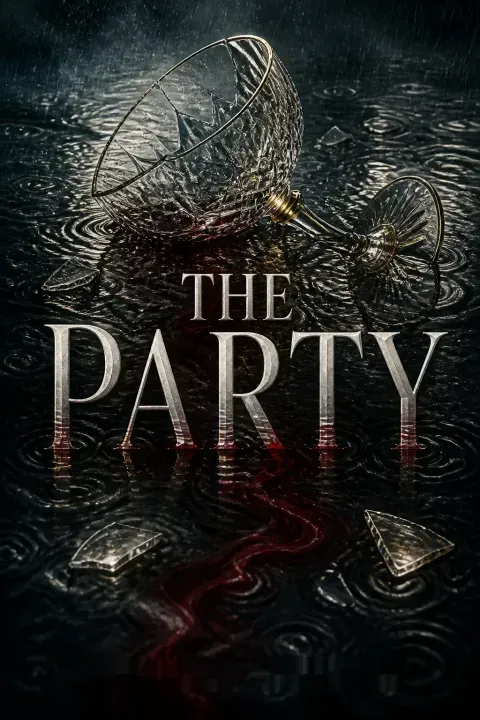


Summary Temporarily Unavailable
This summary is temporarily unavailable and is currently being updated. You can still explore the FAQs and other metadata below.
Plot Summary
The Castle Invitation
In their boarding school dormitory, Bessie1 and her best friend Kash2 finalize the elaborate deceptions: forged emails, fake itineraries, careful schedules. The Easter weekend party at Allegra Beaufort4's family castle promises four days of unsupervised freedom.
At a village supermarket, they encounter Oscar, an intense local activist who warns that some in his group would rather see the castle burn than become luxury apartments. His words linger like a chill, but the group presses on, crossing a wooden bridge over the moat into the sprawling, derelict structure.
The ballroom is decorated with ill-fitting bunting and glittering pom-poms. Later arrivals Hugo,5 Abbas,10 and Odette11 swell their number to ten. Beneath the laughter, old fissures from a car accident a year ago remain unhealed, and the storm clouds massing overhead mirror the gathering tension.
The opening establishes the fatal cocktail of adolescent arrogance and privilege. Every adult is deceived, every warning dismissed, because these teenagers believe their wealth and cleverness make them invulnerable. The castle, simultaneously magnificent and ruined, embodies their own moral decay waiting to be exposed. Oscar's activism provides an early red herring, a plausible external threat that will later distract from the homegrown evil. The careful logistics of the lie—the forged emails, the coordinated alibis—demonstrate a group accustomed to circumventing rules, a skill that becomes tragically useless against an enemy within.
A Tree Bends, Jia Falls
As the storm lashes the grounds, Jia8 wanders out alone. From an upper window, Bessie1 and Kash2 spot her near a woodshed just as lightning illuminates a massive tree trunk splintering and slamming down. They scream, sprint outside with the others, and dig frantically through wet branches.
Jia8 lies unconscious, a gash on her head seeping blood. Fergus3 carries her inside, and they strip off her soaked clothes, wrapping her in blankets. She regains consciousness, insists she is fine, but complains of a throbbing headache and aching ribs.
When the group suggests calling an ambulance, Jia8 refuses vehemently: exposure means expulsion and parental fury. She takes painkillers, sips beer at the party, and dances slowly. Bessie,1 however, cannot shake the image of a shadowy figure standing at an upper window, watching the rescue.
Jia's accident is a masterful piece of misdirection. It plants a natural-seeming cause of death that will later obscure murder, while also demonstrating the group's reckless prioritization of secrecy over safety. Her refusal of medical help is both a character note—she is a people-pleaser who cannot disappoint Allegra—and a plot mechanism that seals her fate. The glimpsed figure in the window, dismissed as a trick of the storm or Hugo exploring, retrospectively becomes the first undeniable sign of the killer's presence, already surveilling the chaos he intends to exploit.
Jia Never Wakes Again
Saturday morning: Bessie1 rubs sleep from her eyes and notices Jia8 lying rigid and unnaturally pale beside her. She touches Jia8's skin; it is ice. Her scream brings Allegra4 and Kash.2 There is no pulse, no breath.
While they reel, a second horror dawns: their phones, left beside their pillows, have vanished. They rush downstairs to find the boys equally stunned. Every device, every lifeline, has been taken. The bridge to the mainland is submerged under the swollen moat, rain still hammering the stones.
Shen,7 in disbelief, climbs the stairs to see Jia8's body for himself. The group stands paralyzed in the ballroom, the party decorations now a grotesque backdrop. Someone among them, or someone hidden within the castle walls, has killed Jia8 and cut them off from the world.
The twin discoveries of death and entrapment are the true inciting incident, transforming a weekend adventure into a survival horror. The stolen phones represent a deliberate, intelligent plan of isolation, immediately ruling out simple accident. The group's reaction—oscillating between grief, panic, and blame—mirrors the stages of collective trauma. Jia's death, whether caused by her injuries or suffocation, is the first domino; the killer has demonstrated both access to the sleeping girls and the cold patience to wait until the deepest hours of the night.
Sabotage Seals Their Fate
Fergus,3 Zeke,9 and Bessie1 battle the gale to reach the vehicles parked in the woods. Keys turn; engines refuse to catch. Zeke9 pops the hoods: starter motors on all four cars have been deliberately damaged.
Defeated, they wade back onto the submerged bridge, but halfway across, the ancient timbers groan and splinter apart, plunging them into the freezing, debris-choked moat. Bessie1 swallows foul water before clawing her way to the bank, Zeke9 and Fergus3 hauling her out. Drenched and shivering, they stumble into the castle with nothing but bad news.
The bridge was their only crossing point; now they are completely isolated. The storm shows no sign of relenting. The generator sputters, the lights flicker. The castle, once a thrilling venue, has become a prison, and the invisible warden holds all the keys.
This sequence shatters any remaining illusion of control. The sabotage is methodical, not impulsive—evidence of premeditation—while the bridge's collapse, though partially caused by the flood, carries a symbolic weight: the past is unreachable now, and the group can only move forward into the escalating horror. The physical ordeal of the icy swim depletes their stamina and resilience, making them more vulnerable to the psychological warfare ahead. They have tried the obvious escape and failed; now they must confront the killer directly or perish.
Odette Tumbles from Turret
While searching the upper floors in pairs, Hugo5 and Odette11 decide to split up to cover more rooms. Moments later, Bessie,1 looking out a lower window, sees a dark shape plummet past the glass and land with a sickening thud on the waterlogged lawn. She screams.
Outside, Odette11 lies face-down, her head twisted, arm shattered. Abbas10 collapses, howling. They carry her into the servants' kitchen, laying her on the cold flagstones. Hugo,5 pale and trembling, admits they separated. His guilt seems real, but the others fix him with hard stares.
This was no accident — the open window, the silence before the fall — and Hugo5 was the last one known to be near her. The group fractures further, the first explicit accusations muttered in corners. Abbas10 refuses to leave his girlfriend's body, sitting alone with her in the freezing dark.
Odette's death weaponizes proximity against Hugo, a theme that will recur. The fact that she was pushed—likely by Raif while Hugo was out of sight—is designed to isolate the most physically capable defender of the group. Grief here is not a unifying force but a corrosive agent: Abbas's despair, Hugo's self-blame, and the others' suspicion create a web of mutual distrust that the killer can exploit. The decision to leave Abbas alone with Odette's body is another mistake born of emotional exhaustion, one that will cost him his life.
Abbas Painted the Bathroom Red
Checking on Abbas10 some time later, they find the kitchen empty. The group fans out, calling his name. A gurgling scream draws them to a bathroom door upstairs. Fergus3 and Shen7 reach it first and try to block Hugo,5 but he shoves through, then staggers backward, retching.
In the bathtub, Abbas10 lies in a lake of his own blood, five or six deep stab wounds puncturing his torso. The white tiles are streaked crimson, the metallic stench choking. Hugo5 sinks against the wall, trembling.
The killer has abandoned all subtlety; this is pure, intimate rage. Bessie1 notices blood on Hugo5's shoe, a damning detail that she keeps to herself for now. The group's terror curdles into a desperate, angry resolve: they will hide and ambush the murderer when he returns for the bodies.
Abbas's murder is the narrative's pivot into full-throttle slasher territory. The brutality surpasses anything before, indicating an escalation driven by either panic or lust. The killer's willingness to engage in close-quarters knife work suggests physical strength and a lack of squeamishness, narrowing the suspect profile. For Hugo, this loss is cataclysmic—two of his closest people dead in a matter of hours—and his grief makes him dangerously unpredictable. The blood on his shoe is a Hitchcockian MacGuffin, a reminder that proximity to death can stain the innocent as easily as the guilty.
Ambush Misses the Blade
Bessie,1 Fergus,3 Hugo,5 and Shen7 cram into cupboards and behind counters in the cold kitchen where Odette11's body rests. After an agonizing wait, the door creaks open. A figure in baggy dark clothing and a deep hood steps toward the body.
Fergus3 bursts out first, wrapping his arms around the intruder, but a long knife flashes. The killer shoves Fergus3 into Hugo,5 sending both crashing into the table, and bolts. By the time Bessie1 scrambles free, the corridor is empty.
She glimpsed a pale hand during the struggle — not Zeke9's darker skin, not Hugo5's tan, perhaps Oscar's? But he is miles away. Fergus3 is accused of letting the killer go; he protests that the knife scared him. The failure infuriates everyone, and the cracks between them become canyons.
The failed ambush encapsulates the group's fatal flaw: they can conceive of resistance but cannot execute it under pressure. The pale hand is a classic thriller clue, eliminating Zeke and Hugo in Bessie's mind, but also raising the possibility of an outsider like Oscar. Yet the killer's familiarity with the castle layout argues for an insider. The scene is choreographed to maximize frustration—victory was within reach, then snatched away. Fergus's role is deliberately ambiguous: hero or saboteur? The performance deepens the mystery even as it accelerates the body count.
The Kill List Exposed
Searching the upper floor, Bessie,1 Kash,2 and Hugo5 discover a cabinet hinged like a door, revealing a steep staircase. At the bottom, a black backpack contains their stolen phones (all drained of battery), printed photographs of the castle grounds showing Fergus3's car, and a folded sheet of paper.
The list, written in elegant cursive, catalogues the dead and the doomed: Jia,8 Odette,11 Abbas,10 Bessie,1 Kash,2 Allegra,4 Zeke.9 Hugo5's name is conspicuously absent. Kash2's face hardens; she accuses him on the spot.
Bessie1 defends him, arguing that a real killer would never leave his own name off such damning evidence. But the seeds of distrust are sown. The list reframes the murders as a choreographed sequence, and seeing her own name in ink makes Bessie1's pulse race with pure, primal fear.
The kill list functions as a narrative roadmap and a psychological weapon. Its discovery shifts the game from reaction to anticipation, but also forces the survivors to consider who among them is safe. Hugo's exclusion is a double bluff—either he is the killer, or he is being framed to distract. The photograph of Fergus's car adds an unsettling layer of premeditated surveillance; someone has been watching them long before this weekend. The list also introduces the cold, almost bureaucratic dimension of the murders, as if the killer views his victims as items to be checked off rather than human beings.
Dead Piled in Secret
After a blazing argument, Kash2 storms off alone. Bessie1 tracks her to a shower room where she finds Kash2 catatonic, staring into a concealed chamber. Inside, the bodies of Jia,8 Odette,11 and Abbas10 are heaped together like discarded dolls. The stench of decay clings to the air.
While coaxing Kash2 to move, Bessie1 notices a green granola bar wrapper tangled in the killer's bag — the exact organic brand Allegra4 eats obsessively. Back in the ballroom, Bessie1 sees Allegra4 has placed more of those same bars on the food table.
The connection is a lightning strike: Allegra,4 the hostess whose meticulous planning made this weekend possible, may be the architect or the accomplice. Bessie1 and Kash2 resolve to escape with Allegra,4 but they know trusting anyone now is a gamble with their lives.
The hidden chamber literalizes the killer's dehumanizing project: victims are reduced to objects, stored and discarded. Kash's catatonia illustrates how trauma can short-circuit even the most analytical mind. The granola wrapper is a beautifully banal clue, the kind that in real life often goes unnoticed. Its power lies in its ordinariness—a detail so small it could only incriminate someone intimately involved. Allegra's sudden elevation to prime suspect completes the inversion of the novel's social order: the queen bee becomes the villainess, and the party she orchestrated becomes the trap she set.
Shen's Throat Is Cut
Allegra4 and Shen7 slip away to use the bathroom. While Shen7 stands by the sink, the frosted window explodes inward. A masked figure grabs Shen,7 jerks his head back, and slashes his throat in a single, brutal arc. Blood sprays across Allegra4's face. She freezes, her limbs locked, unable to scream or move. The killer climbs back out the window and disappears.
When she finally stumbles into the corridor, she runs into Fergus,3 who claims he was attacked in the cellar and stabbed in the stomach. His clothes are saturated with blood, but something about his story does not sit right. Shen7's death leaves Allegra4 shattered and the group reduced to five: Bessie,1 Allegra,4 Hugo,5 Zeke,9 and a wounded, limping Fergus.3
Shen's murder is a tactical strike aimed at the emotional core of the group. By killing Allegra's partner in front of her—making her a witness and a survivor—the killer inflicts a unique psychological wound. Allegra's paralysis is a brutally realistic depiction of trauma response, contradicting the action-hero myth. Fergus's 'injury' at this precise moment is the piece of misdirection that, in retrospect, screams his guilt. The killer needed to appear wounded to divert suspicion, and who better to play the victim than the mastermind himself?
Kash Dies in Bessie's Arms
Bessie1 creeps through the darkened corridors to retrieve Kash,2 who has been hiding alone. On the landing, she sees Kash2 pinned against a man's chest, a blade pressed to her throat. The hooded figure shakes his head when Bessie1 pleads, then deliberately stabs Kash2 in the abdomen. Blood pulses between Kash2's fingers as she crumples to the floor.
Her eyes lock on Bessie,1 and she mouths for her to run. Bessie1 sobs, hesitates, then bolts down the stairs, the sound of her best friend's dying gurgle chasing her. She screams for Allegra4 to go, but when she reaches the ballroom, the windows are filled with the silhouettes of two killers. There is no escape through the halls; the only path is through the storm outside.
Kash's death is the emotional climax of the novel, the moment when Bessie loses her anchor and is forced into a purely animal fight for survival. The deliberateness of the killing—the killer could have slit her throat but chose a slower, more painful wound—reveals sadism. The hooded figure's refusal to speak also indicates either a voice Bessie would recognize or a theatrical desire to remain anonymous and terrifying. Bessie's flight, though necessary, will haunt her forever; she abandoned her best friend in the moment of death, a guilt that layers onto the older guilt of the accident.
Fergus Casts Off His Mask
In the ballroom, Bessie,1 Allegra,4 Hugo,5 and Zeke9 stare at the two hooded figures. One lowers his hood: Fergus,3 his smirk a knife of betrayal. The wounds he claimed were faked.
He confesses to orchestrating the weekend's nightmare: he was driving the car that crashed last year, then swapped seats with the unconscious Raif6 to escape a DUI. To bury witnesses and claim the castle from his father, he manipulated Raif6 into becoming his executioner. Zeke,9 enraged, charges; Fergus3 thrusts the blade into his thigh, severing an artery.
Zeke9 bleeds out within seconds, his body crumpling onto the glitter-strewn floor. While Fergus3 is lost in his gloating confession, Bessie,1 Hugo,5 and Allegra4 crash through the door and flee, plunging into the swollen moat.
Fergus's unmasking is simultaneously devastating and, in retrospect, inevitable. Every earlier act of 'protection' toward Bessie was surveillance; every calm word was concealment. His casual murder of Zeke—practically an afterthought—demonstrates how little human life means to him. The ballroom, originally decorated for joy, becomes a theater of revelation and death. Fergus's monologue provides the missing pieces of the puzzle, but the cruelty with which he delivers it—relishing the pain he has caused—marks him as a true psychopath, not merely a desperate young man.
Bloody Reckoning in Forest
Wet and gasping, Bessie,1 Hugo,5 and Allegra4 scramble up the far bank and into the forest. Raif6 steps out from behind a tree, knife gleaming. He and Fergus3 explain their pact, their long-planned agenda, their intention to frame Hugo.5
But when Raif6 boasts of killing Allegra4 (who is alive, hidden behind a tree), Fergus3's composure breaks. He shouts that Allegra4 was the one person he wanted spared, then stabs Raif6 in the chest. Raif6 crumples, gurgling. Hugo5 charges Fergus,3 wrapping his hands around his neck and squeezing until the body goes slack.
In his death spasm, Fergus3 plunges his blade into Hugo5's side. Hugo5 collapses, his last whispered words urging Bessie1 to run. She is alone now, the five bodies of her friends scattered in the castle, and three more cooling in the mud.
This catastrophic climax is Greek in its intensity: brothers and twins killing each other over old betrayals and fresh grief. Ferguson's reaction to Allegra's (faked) death reveals the sole chink in his psychopathy—a possessiveness over his twin that was always more about ownership than love. Raif is the tragic figure, a pawn whose genuine pain was weaponized by a charismatic narcissist. Hugo's revenge is pyrrhic; he dies, but he takes the monster with him. The forest, with its darkness and rain, serves as a mythic stage where the illusions of the weekend are finally, bloodily stripped away.
The Guilt Behind the Wheel
Bessie1 bends over the dying Raif,6 not to help but to search his pockets. She finds his car key and, as he whispers pleas, tells him to go to hell, then walks away. The morning sun filters through the leaves as she trudges toward the road.
Without warning, a buried image unspools in her mind: she is behind the steering wheel, the car upside-down, her hands slick with blood. Shattered windshield glass glitters everywhere. The scream echoing is her own. Fergus3 swore she was not driving, but this memory — if it is a memory and not a trauma-induced hallucination — contradicts everything.
She cannot know the truth, and the ambiguity coats her survival in a layer of self-doubt. She stumbles toward help, the weight of the weekend pressing her shoulders down, the question of her own guilt an unanswered bell.
The novel's closing reversal recasts the entire narrative. If Bessie was the driver, then the accident that triggered Fergus's psychopathic spiral and Raif's murderous rage originated with her. She would be, in a sense, the unwitting architect of her friends' destruction. The ambiguity is the point: trauma does not yield clear answers, and memory is a palimpsest of truth and self-protection. Bessie's decision to let Raif die is her first deliberate act of cruelty, a moral fall that mirrors the killers' own descent. Having survived the literal nightmare, she must now live with the metaphysical one—the possibility that she has always been the monster in her own story.
Analysis
The Party operates as a classic slasher thriller while subverting the genre's usual moral arithmetic. On the surface, it is a story about wealthy, attractive teenagers being picked off in an isolated location — a formula as old as horror itself. But the novel's final act introduces a complexity that elevates it: the killings are not random but the logical, hideous endpoint of secrets and resentments that were planted a year before the weekend even began. Fergus's3 psychopathy is rooted in a specific cocktail of privilege and paternal neglect; he has been taught that problems can be purged with money or violence, and he applies that lesson to his friends with surgical precision. Raif,6 meanwhile, represents the weaponized victim — so consumed by misplaced guilt and rage that he becomes the perfect instrument for a smarter, colder manipulator. The novel's bleakest insight is that trauma does not always lead to healing; sometimes it is a dormant infection that waits for the right trigger to turn septic. Bessie's1 final, ambiguous memory — the image of her hands on the wheel — refuses the reader any comfortable closure. It suggests that the most dangerous monsters are the ones we cannot be sure we have seen in the mirror.
Last updated:
Report IssueReview Summary
The Party receives mixed reviews, with an average rating of 3.53/5. Some praise its suspenseful plot and unexpected twists, while others criticize the writing style, character development, and plot holes. Positive reviews highlight the locked-room mystery and atmospheric setting. Negative reviews mention inconsistencies, unrealistic dialogue, and a disappointing ending. Many readers found the book engaging but felt the resolution was unsatisfying. Despite criticisms, some fans of Preston's work still enjoyed the thrilling elements and fast-paced narrative.
Characters
Bessie
Anxious NarratorThe first-person narrator, a boarding school student recovering from PTSD after a car accident that left her with memory gaps, panic attacks, and a fractured shoulder. She is fiercely loyal to her best friend Kash2, but still entangled emotionally with her ex-boyfriend Fergus3. Initially enthusiastic about the party, she becomes the group's reluctant moral center as bodies fall, sifting clues while struggling to hold her own terror at bay. Beneath her resilience, she carries a buried guilt about the accident that the novel's final lines throw into devastating question.
Kashvi (Kash)
Meticulous Best FriendBessie1's best friend since age four, Kash is a hardcore researcher who memorized the castle's floor plans before arriving. Dark-eyed, sharp-witted, and prone to anxiety, she oscillates between fierce protectiveness and spiraling suspicion. Her investigative instincts make her the first to spot inconsistencies, but her fear sometimes overrides her judgment, causing her to lash out at allies. She loves horror movies but cannot handle them in the dark—a contradiction that foreshadows her tragic fate. Her death is the single greatest emotional blow Bessie1 endures.
Fergus Beaufort
Charming Ex-BoyfriendAllegra4's twin and Bessie1's former boyfriend from a brief, intense relationship. Pale green eyes, fair hair, and a practiced preppy charm. He nursed Bessie1 through her post-accident recovery, seeming selfless and steady. But beneath the calm exterior lies a deep resentment toward his neglectful father and a possessiveness over Bessie1 and his sister4 that curdles into pathology. His privileged upbringing has taught him that consequences can always be bought off, a belief that enables his monstrous actions. His revelations in the ballroom invert every earlier gesture of care into something sinister.
Allegra Beaufort
Controlling Party HostFergus3's twin and the architect of the weekend. Blonde, polished, and accustomed to obedience, she treats parties like branding campaigns and friends like employees. Her desire to keep the castle rather than see her father develop it is an early, misleading clue. She is dating Shen7 and genuinely loves him, but her emotional range is limited; even grief expresses itself as anger or command. Her arc from queen bee to shattered survivor is one of the novel's most brutal humblings.
Hugo
Guilt-Ridden Older BrotherRaif6's older brother, captain of the football team, with tan skin and an easy physical confidence. He arrives at the party with his close friends Abbas10 and Odette11, and their subsequent deaths nearly destroy him. He has been carrying the secret of Raif6's true role in the accident, torn between loyalty and the need for justice. Naturally protective, he becomes Bessie1's most important ally, though his solitary behavior makes him a convenient scapegoat. His final act—strangling Fergus3 to death—is both a revenge and a suicide.
Raif
Tortured Former FriendHugo5's younger brother, once a beloved member of the friend group. After the accident, he was publicly blamed as the drunk driver and withdrew from school, consumed by guilt and social exile. His suffering, genuine and deep, made him perfect material for Fergus3's manipulation. He appears in the forest as a predator but is ultimately revealed as the pawn, his desire for revenge so expertly cultivated that he never saw the real driver of his ruin. His death, refused help by Bessie1, is both pitiable and earned.
Shen
Steady, Kind-Hearted BoyfriendAllegra4's boyfriend, originally from China, with spiky black hair and unshakeable loyalty. He is the group's quiet anchor, never seeking the spotlight but always ready with a steady hand—checking pulses, calming Allegra4, keeping the peace. His medical knowledge makes him useful; his decency makes his throat-slitting death feel like an obscenity against goodness itself.
Jia
People-Pleasing Best FriendAllegra4's best friend and Shen7's childhood companion. Gentle and eager to please, she hides her pain during the party to avoid disappointing anyone. She knew the truth about the accident and was about to confess when her conscience got her killed. Her death, staged as an accident, is the first link in the chain of murders.
Zeke
Easygoing Driver and ProtectorBessie1's close friend, the designated driver for the trip. Athletic, even-keeled, and quietly observant, he often acts as the group's voice of reason—organizing search parties, calming arguments, and putting himself between danger and his friends. His death at Fergus3's hands, bleeding out from a femoral wound while trying to intervene, is a brutal extinguishing of decency.
Abbas
Loyal, Jovial Best FriendHugo5's best friend since childhood, an older student with a loud laugh and a fierce protective streak. He is devoted to Odette11 and is destroyed by her death. His own murder—the most violent of the weekend—reflects the killer's rage at someone who never wronged him except by being more talented and well-liked.
Odette
Quirky, Curious GirlfriendAbbas10's girlfriend, playful and adventurous, with an odd fascination for historical decay—she hunts through the kitchen for expired flour. Her fall from the turret is the first unambiguously committed murder, transforming the weekend from a series of strange incidents into a deliberate killing spree.
Plot Devices
The Castle
Remote, secret-filled trapA derelict 16th-century castle with a moat, turret, hidden chambers, and a single crumbling wooden bridge. Its isolated location deep in a forest and its labyrinthine interior—complete with secret staircases, false walls, and a cellar covered in threatening graffiti—provide the perfect hunting ground for a killer who knows every hidden passage. The impending development and the local activist group's opposition supply an early red herring motive. The castle's decay mirrors the moral decay of the characters, and its moat, first a picturesque feature, becomes a lethal barrier that traps the group.
The Storm
Isolates and traps the groupA severe weather system with gale-force winds, torrential rain, and lightning that floods the moat, topples trees, and washes out roads. The storm is forecast to last the entire weekend, preventing anyone from reaching the castle or leaving. It disables phone signals, eliminating any chance of calling for help. The flooding transforms the moat from a quaint barrier into a wide, debris-filled lake. The weather functions as an external antagonist, but its timing—coinciding exactly with the murders—also suggests the killer chose this weekend precisely because the storm would act as an accomplice.
The Disabled Cars and Stolen Phones
Sabotage cuts off all escapeOn the first morning after Jia8's death, the group discovers that every car's starter motor has been deliberately damaged and all mobile phones have been stolen from beside their sleeping owners. This twin act of sabotage confirms that the weekend's horrors are not accidents but part of a premeditated plan. The loss of communication and transportation forces the group to remain inside the castle with the killer, turning the party into a locked-room nightmare. The stolen phones are later found, drained of battery, in a hidden backpack, proving the killer had access to everyone's belongings.
The Kill List
Reveals a premeditated death orderA folded piece of lined paper, written in elegant cursive, that catalogues the intended victims in sequence: Jia8, Odette11, Abbas10, Bessie1, Kash2, Allegra4, Zeke9. It is found hidden inside a black backpack along with drained phones and surveillance-style photographs of Fergus3's car. The list transforms the murders from chaotic violence into a methodical execution schedule. Its most insidious function is psychological: Hugo5's name is deliberately omitted, a frame-up designed to make the others suspect him. Bessie1's name on the list accelerates her mortal fear, while the list's completeness suggests the killer will not stop until every target is checked off.
The Car Accident
Underlying trauma and secret motiveA year before the story, Bessie1, Fergus3, and Raif6 were in a serious crash after a party. Raif6 was found in the driver's seat and publicly blamed for drunk driving, though no legal charges stuck due to his family's wealth. All three survivors suffered memory gaps from head trauma, but suppressed truths festered. The accident created fractures in the friend group, burdened Raif6 with undeserved guilt, and gave Fergus3 a taste for manipulating consequences. It is the hidden fulcrum on which the entire massacre turns: Jia8 knew the real driver, and her impending confession made her the first victim. The novel's final twist suggests Bessie1 herself may have been at the wheel, a revelation that recontextualizes all preceding events.
About the Author
Natasha Preston is a #1 New York Times Bestselling Author known for her YA thrillers, including "The Cellar" and "The Cabin." She specializes in romance and young adult thriller genres. Preston is a mother and self-proclaimed Tom Hardy enthusiast. She describes herself as always immersed in books and enjoying wine. Preston actively engages with her readers through various social media platforms, including Amazon, Facebook, Twitter, and Instagram. Her writing style often features suspenseful plots, unexpected twists, and explores themes of friendship, betrayal, and survival in challenging situations.
Other books by Natasha Preston


Download PDF
Download EPUB
.epub digital book format is ideal for reading ebooks on phones, tablets, and e-readers.








































