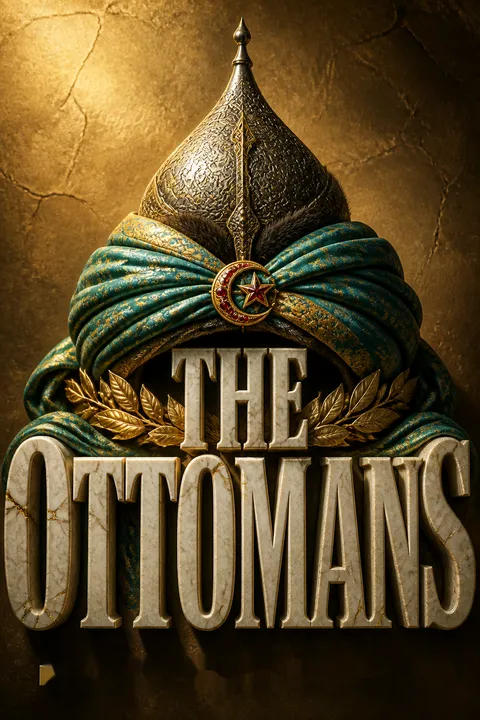

Key Takeaways
1. The Ottoman Empire: A Eurasian, Roman Legacy
Like its language, the Ottoman Empire (ca. 1288–1922) was not simply Turkish. Nor was it made up only of Muslims.
A multiethnic tapestry. The Ottoman Empire, far from being a monolithic Turkish or Muslim entity, was a vast, multiethnic, multilingual, and multireligious realm spanning Europe, Africa, and Asia. Its identity was a complex amalgam of Byzantine-Roman, Turco-Mongol, and Islamic traditions, incorporating diverse peoples and cultures into its fabric. This rich blend was evident in its administration, military, and even the royal family itself, which often had Christian mothers.
Claiming Roman inheritance. From its early expansion into Southeastern Europe, the Ottoman dynasty saw itself as the rightful inheritor of the Roman Empire, particularly after the conquest of Constantinople in 1453. Ottoman rulers adopted titles like "Caesar" and referred to their European provinces as "Rûmeli" (land of the Romans), asserting a continuous claim to Roman universal rule. This self-perception challenged the conventional Western narrative that Europe was exclusively Christian and that the Ottoman presence severed the Roman legacy.
Beyond Western narratives. The empire's dual nature, straddling East and West, has often been overlooked or negatively portrayed in Western histories, much like the Byzantine Empire it succeeded. However, acknowledging the Ottomans as a European empire compels a re-evaluation of European history's fundamental concepts, such as the Renaissance, the Age of Discovery, and the Enlightenment, recognizing their integral, rather than peripheral, role in these developments.
2. Ottoman Tolerance: A System of Hierarchy and Conversion
Tolerance is in fact the expression of a power relationship.
Conditional acceptance. Ottoman religious tolerance, established from the fourteenth century, was not a celebration of diversity or equality, but rather a pragmatic system based on Islamic and Turco-Mongol precedents. It meant "to suffer, endure, or put up with something objectionable," with the ruling Muslim elite determining the extent to which other religious groups (Christians and Jews) could exist and express their differences. This system ensured peace for centuries but maintained clear social and legal hierarchies.
Conversion as integration. While tolerating religious minorities, conversion to Islam was vital for social mobility and integration into the Ottoman elite. The devşirme (child levy) forcibly recruited Christian boys, converting them to Islam and training them for the administration and Janissary corps, ensuring loyalty to the sultan. Similarly, Christian women entered the harem, converted, and could become powerful figures, even mothers of sultans.
Maintaining difference. The Ottomans fostered institutions like patriarchates for Christians and rabbis for Jews, allowing them to manage their personal, religious, and cultural affairs with minimal interference. However, this was always within a framework where Islam was supreme, and certain groups—women, Christians, Jews, slaves—were legally subordinate. This "empire of difference" preserved distinct identities while integrating them into the imperial structure.
3. Military Innovation and Ruthless Succession Fueled Early Expansion
Murad I’s innovation was the institutionalisation of the Collection (devşirme).
From nomads to empire. The Ottoman dynasty's rise from a small Turkic principality to a formidable sultanate was driven by a combination of luck, strategic acumen, and military innovation. Early leaders like Osman and Orhan skillfully forged alliances, including through marriage, and exploited Byzantine internal divisions. Their nomadic mounted archers evolved into a more sophisticated military force capable of sieges.
The Janissary advantage. Murad I's institutionalization of the devşirme, the child levy on Christian subjects, created the Janissaries—a loyal, elite infantry corps armed with firearms. These converted slave soldiers, detached from local allegiances, proved more reliable than native Turkish Muslims and were crucial for major battles and long sieges, giving the Ottomans a decisive military edge over rivals.
Fratricide for stability. Murad I also established the brutal practice of fratricide, where a new sultan murdered all his male relatives upon accession. Codified by Mehmed II, this policy, though cruel, aimed to prevent internecine struggles and ensure the unity and stability of the dynasty, a stark contrast to the appanage system of dividing lands among sons practiced by the Mongols and Seljuks.
4. Mehmed II: A Renaissance Prince Bridging East and West
No one doubts that you are the Emperor of the Romans. Whoever holds by right the centre of the Empire is the Emperor and the centre of the Roman Empire is Constantinople.
Conqueror and cultural patron. Mehmed II, after conquering Constantinople in 1453, solidified his claim as the "Roman Caesar" and embarked on a grand project to rebuild the city as a multi-religious imperial capital. He was a true Renaissance prince, collecting ancient Greek and Latin works, commissioning portraits from Venetian masters like Gentile Bellini, and attracting scholars and artists from both East and West.
Challenging Western narratives. The conventional view of the Renaissance as a purely Western European phenomenon, sparked by Greek humanists fleeing Constantinople, is incomplete. Islamic empires had preserved and advanced ancient knowledge for centuries, transmitting it to Europe. Mehmed II's court, with its interest in cartography, astronomy (Ali Kuşçu's tables influencing Copernicus), and art, demonstrates the Ottoman Empire's active participation in a global Renaissance.
An empire of difference. Mehmed II institutionalized a system of toleration, appointing leaders for Greek Orthodox, Jewish, and Armenian Christian communities, allowing them self-governance in personal and religious affairs. While converting Hagia Sophia into a mosque, he permitted other churches and synagogues to remain and even be built, fostering a diverse metropolis. This approach, however, was rooted in a hierarchy where Islam was supreme, and the sultan's authority was paramount.
5. The Harem: A Political Powerhouse and Site of Dynastic Intrigue
If harem means “home” and that home is the home of the sultan and his family, then the private is most assuredly political, for decisions made in his home had repercussions for the entire empire.
Beyond Western fantasies. The Ottoman harem, often depicted in the West as a lascivious playground, was in reality a highly structured political center. It was the home of the sultan's family, concubines, and children, and a school for female slaves who were educated and trained to serve the dynasty. Far from being merely domestic, decisions made within its walls had profound imperial consequences.
Women's political influence. Royal women, particularly the valide sultan (mother of the sultan) and powerful concubines like Hürrem Sultan, wielded significant political power. Hürrem's unprecedented marriage to Suleiman I and her move to Topkapı Palace marked a shift, bringing royal women to the symbolic core of Ottoman power. These women influenced appointments, sponsored public works, and engaged in diplomacy, reflecting a Turco-Mongol legacy of influential female figures.
Eunuchs as power brokers. Eunuchs, particularly African eunuchs guarding the harem, also rose to positions of immense influence. They managed royal finances, oversaw endowments, and acted as crucial intermediaries between royal women and the administration. Their unique status, often castrated and converted from Christian origins, allowed them to navigate the complex hierarchies of the palace and become indispensable power holders.
6. Shared Sexual Cultures: Man-Boy Love in Ottoman and European Society
If it be sin to love a sweet-faced boy, / Whose amber locks trust up in golden trammels / Dangle adown his lovely cheeks with joy, / When pearl and flowers his fair hair enamels; / If it be sin to love a lovely lad, / Oh then sin I, for whom my soul is sad.
A common European practice. Man-boy love, or pederasty, was a socially acceptable and culturally significant practice in both the Ottoman Empire and Renaissance Europe. It was not seen as a deviation but as a normal aspect of male desire, often celebrated in lyric poetry and integrated into military and educational contexts. Poets, including sultans like Mehmed II and Sufi mystics like Rûmi, openly expressed their affection for beardless youths.
Age and status, not identity. In this pre-modern era, sexuality was understood as a power relation based on age and social status, rather than a fixed identity. Adult men desired young boys or women, with the penetrator being dominant and the penetrated (boy or woman) being passive. Once a boy matured and grew a beard, he was expected to become the lover of younger boys or women, reflecting a fluid understanding of sexual roles throughout a man's life.
Shifting moral landscapes. While openly celebrated in earlier centuries, attitudes towards man-boy love began to shift in the nineteenth century, influenced by Western European moralizing. As Ottoman elites internalized Western views of "decadence," such practices became stigmatized and suppressed, leading to a sanitization of historical narratives. This suppression erased a significant aspect of Ottoman and broader European cultural history.
7. From Warrior-Sultans to Limited Monarchy: The Empire's Transformation
The sultan’s body, unlike in the rest of Europe, was not considered sacred, and once deposed could be treated worse than any other.
The decline of sultanic power. By the seventeenth century, the sultanate underwent a profound transformation, moving from a warrior-led, expansionist model to a more sedentary and ceremonial role. Sultans like Osman II and Ibrahim I, who attempted to reclaim martial authority, faced violent resistance and were ultimately deposed and executed, marking the first regicides in Ottoman history. This shift indicated that loyalty was increasingly owed to the dynasty and the institution of the sultanate, rather than the individual ruler.
Rise of new power centers. The Janissaries and jurists emerged as significant checks on the sultan's power, capable of deposing rulers and influencing government decisions. This period saw the rise of powerful grand vizier households, provincial notables, and a monetized economy that challenged the centralized authority of Istanbul. These developments led to a form of "limited government," where the sultan's power was constrained by a coalition of elites.
A new political order. The regicides and subsequent power struggles ushered in an era where the institution of government became distinct from the person of the ruler. While not a democracy, this new polity, with its emphasis on the grand vizier's executive role and the influence of military and judicial bodies, laid foundations for a more modern state apparatus. This transformation, though distinct, paralleled contemporary shifts towards limited monarchy in parts of Europe.
8. Reform and Resistance: Modernization Amidst Internal and External Threats
The Muslim and non-Muslim subjects of our lofty Sultanate shall, without exception, enjoy our imperial concessions.
Responding to decline. Facing military defeats, economic subservience to European powers, and rising nationalism among subject peoples, Ottoman sultans from Selim III to Abdülmecid I initiated radical reforms. These aimed to modernize the military, centralize administration, and redefine the relationship between the state and its diverse citizens, often by adopting European innovations.
The Tanzimat era. Abdülmecid I's 1839 Decree of the Rose Garden and the 1856 Imperial Reform Edict promised legal equality for all subjects, regardless of religion, challenging centuries of Islamic hierarchy. This period, known as the Tanzimat, introduced secular schools, courts, and a liberalized economy, and even abolished the Istanbul slave market. The goal was to foster an "Ottoman nation" based on patriotism rather than religious or ethnic identity.
Unintended consequences. Despite noble intentions, these reforms often exacerbated tensions. The abolition of the Janissaries in 1826, while centralizing military power, alienated a powerful segment of society. The promise of equality for Christians, while intended to curb nationalism, instead fueled it, as foreign powers used the plight of Christian subjects as a pretext for intervention. This led to the loss of significant territories like Greece and Serbia, and the rise of new, semi-independent entities like Egypt.
9. Ottoman Orientalism: Internalizing Prejudice and Shaping Policy
The Ottoman elite became obsessed with their exotic image in the West and denigrated those groups that contributed to it.
The "sick man" and the "civilizing mission." As Western European powers gained global dominance in the nineteenth century, they increasingly viewed the Ottoman Empire as "the sick man of Europe," decadent and backward. This Orientalist perspective, which contrasted a superior West with an inferior East, was internalized by the Ottoman elite. They began to see their own society as needing a "civilizing mission" to become modern.
Internalizing prejudice. Ottoman Muslim administrators and intellectuals, particularly those educated in Western sciences, adopted racialized and prejudiced views towards their own subject peoples, including Albanians, Arabs, Bedouin, and Kurds. They described these groups as "wild," "primitive," and "uncivilized," in need of enlightenment and integration into a modern, centralized state. This mirrored Western colonial attitudes towards their own subjects.
Shifting identity and policy. This internal Orientalism led to policies aimed at settling nomadic groups, imposing Hanafi Sunnism, and promoting Turkish as the dominant culture. The establishment of Hamidiye cavalry regiments, composed of Kurdish troops, was intended to control the eastern frontier and suppress Armenian nationalism, but it also led to the dispossession of Armenian lands and increased inter-ethnic tensions. This marked a move away from Islam as the primary unifying force towards a more ethno-religious nationalism.
10. The Young Turks: Nationalism, Genocide, and the Empire's Demise
The people are the garden, we are the gardeners.
Revolutionary vanguard. The Committee of Union and Progress (CUP), known as the Young Turks, emerged from a diverse group of young, educated Muslim officers and bureaucrats, many from Southeastern Europe. Influenced by social Darwinism, French Enlightenment thought, and German militarism, they sought to save the empire from Abdülhamid II's autocracy and foreign encroachment. They initially advocated for constitutionalism and equality but quickly evolved into a militarist, dictatorial regime.
From Ottomanism to Turkism. The Young Turks' ideology shifted from an inclusive Ottoman Muslim nationalism to an exclusive Turkish nationalism, particularly after the Balkan Wars (1912-1913) and the loss of most European territories. They began to view Christians as foreign enemies and even some Muslim groups (like Arabs and Kurds) as obstacles to a unified Turkish nation-empire. This led to policies of forced assimilation, ethnic cleansing, and ultimately, genocide.
The Armenian Genocide. Under the cover of World War I, the CUP leadership—Mehmed Talat Pasha, Enver Pasha, and Cemal Pasha—orchestrated the annihilation of the Armenian population. Blaming Armenians for military defeats and perceived disloyalty, they implemented a systematic plan of deportation and massacre, leading to the deaths of 650,000 to 800,000 Armenians by 1916. This act, the first genocide committed by a European empire in Europe, was driven by a paranoid, social Darwinist worldview, not solely by religious or ethnic hatred.
11. The Enduring Ottoman Legacy in a New Turkish Republic
The new Turkey has absolutely no relation with the old Turkey. The Ottoman state has gone down in history. Now, a new Turkey is born.
A radical break. Following the Ottoman Empire's defeat in World War I and the subsequent occupation of Anatolia, Mustafa Kemal Atatürk, a veteran Young Turk, led the Turkish War of Independence. He abolished the sultanate and caliphate in 1922-1924, establishing the secular Turkish Republic in Ankara. Atatürk's vision was a radical break from the Ottoman past, aiming to create a Western-leaning, ethno-nationalist state for Turks alone.
Turkification and suppression. The new republic implemented sweeping reforms: disestablishing the religious class, closing Sufi lodges, banning religious dress, and replacing Arabic script with Latin. It promoted a new Turkish language and culture, actively suppressing Kurdish, Armenian, and Greek identities. The 1923 Treaty of Lausanne, while recognizing the republic, also mandated compulsory population exchanges, further homogenizing Anatolia's population by expelling Greek Orthodox Christians.
The past endures. Despite Atatürk's efforts to erase the Ottoman past, its legacy profoundly shaped modern Turkey and the broader region. The physical landscape, historical memory, and cultural practices across former Ottoman territories still bear its imprint. The unresolved issues of ethnic and religious identity, particularly for Kurds and other minorities, and the denial of the Armenian Genocide, demonstrate that the complex, entangled history of the Ottoman Empire continues to resonate today.
Review Summary
The Ottomans by Marc David Baer receives mixed reviews averaging 3.94/5 stars. Readers appreciate the comprehensive 600-year history and argument for Ottoman inclusion in European history. Positive reviews praise its accessibility, coverage of cultural topics like the harem and sexuality, and insights into tolerance and diversity. Critical reviews fault heavy reliance on questionable sources, agenda-driven narrative favoring Turkish politics, poor prose with information-dense sentences, and excessive focus on pederasty. Most agree Baer's scholarship is impressive despite debates over his "Ottomans as European" thesis and occasional dry, fact-heavy passages.
People Also Read


Download PDF
Download EPUB
.epub digital book format is ideal for reading ebooks on phones, tablets, and e-readers.








































