
Key Takeaways
1. Creativity: Humanity's Defining Quest for Self-Understanding.
Creativity is the unique and defining trait of our species; and its ultimate goal, self-understanding: What we are, how we came to be, and what destiny, if any, will determine our future historical trajectory.
Innate quest. Creativity is humanity's inherent drive for originality, fueled by an instinctive love of novelty. We seek new discoveries, solve old challenges, and delight in aesthetic surprises, judging creativity by the emotional response it evokes. This quest for understanding ourselves and the universe is boundless.
Complementary realms. The two great branches of learning, science and the humanities, are complementary in this pursuit. Science explores everything possible in the universe, while the humanities encompass everything conceivable to the human mind. Both share roots in innovative endeavor, allowing us to imagine infinite worlds, though unchecked fantasy can lead to madness.
Proximate vs. Ultimate Causes. To fully understand any phenomenon, including creativity, we must ask "what is it?" (structure/function), "how was it put together?" (origin events), and "why does it exist?" (ultimate causes). While science routinely addresses all three, the humanities traditionally focus on the "what" and "how," often leaving the "why" to spiritual or mysterious explanations, thus remaining rootless.
2. The Humanities Were Born Around Ancient Campfires.
The birth of the humanities occurred much farther back in time, closer to one thousand millennia, and it took place in the site and circumstance that upon reflection seem the most logical: the nocturnal firelight of the earliest human encampments.
Prehistory's crucible. The humanities did not begin with ancient epics or cave paintings, but in the deep prehistory of human evolution. A shift to a meat-rich diet necessitated cooperation, communal rendezvous, and the control of fire, bringing early human groups together tightly during long evening hours. This communal firelight became the crucible for early human culture.
Storytelling and language. Around the fire, with no other choice but to communicate, ancestral humans told stories, raised status, tightened alliances, and settled scores. This "firelight talk" evolved into complex oral productive language, a capacity unique to Homo sapiens. Language, defined by arbitrary symbols conferring meaning, became the substance of intelligent thought, allowing minds to travel through time and space.
Genetic and cultural. Language is both instinctive and cultural. While its capacity is globally the same, vocabulary is learned and varies drastically. The acquisition of language unfolds in predictable steps, like babbling in infants, and tone and emotion remain hardwired and universal. This foundational capacity for language, born of social necessity, enabled unprecedented creativity and culture.
3. Our Sensory Bubble Limits Human Understanding.
In our daily lives we imagine ourselves to be aware of everything in the immediate environment. In fact, we sense fewer than one thousandth of one percent of the diversity of molecules and energy waves that constantly sweep around and through us.
The human Umwelt. Our species evolved as "bright children of the African savanna," equipped with senses adequate for Paleolithic survival but limited in scope. We are primarily audiovisual, perceiving only narrow slices of the electromagnetic spectrum and a limited range of sound frequencies compared to other animals. Our sense of smell, for instance, is virtually "anosmic" compared to the "odorscapes" that organize most ecosystems.
Trapped in our perception. This "human sensory bubble" means we are largely unconscious of the vast majority of the living world around us. We cannot perceive the electric fields used by some fish, or Earth's magnetic field used by migrating birds. This limitation is akin to water striders, adapted to a two-dimensional water surface, largely unresponsive to other realms of existence.
Consequences for the humanities. The humanities, confined within this audiovisual bubble, are needlessly static and anthropocentric. They struggle to picture and safeguard the living world without understanding the "soundscapes" and "odorscapes" that organize it. Our hope for full self-understanding depends on recognizing these limitations and expanding our knowledge beyond our immediate, unaided senses.
4. Humanities Are Rootless Without Deep Evolutionary Causes.
Until a better picture can be drawn of prehistory, and by that means the evolutionary steps that led to present-day human nature can be clarified, the humanities will remain rootless.
Missing the "why." The humanities, particularly creative arts and philosophy, often lose esteem because they stubbornly remain within our narrow sensory bubble and pay scant attention to why our species acquired its distinctive traits. They focus on the "what" and "how" of cultural evolution, but neglect the "why" of genetic evolution that shaped human nature itself.
Prehistory's vital role. History, conventionally conceived, is incomplete without prehistory, and prehistory is incomplete without biology. The Neolithic revolution (10,000 years ago) is too recent to explain the hereditary origins of human nature. Understanding the deep genetic history—the 60,000 years of global settlement and millions of years of hominin evolution—is crucial for comprehending our "bizarre hairless and bipedal bodies, our globular skull crammed with an oversized brain, our apish emotions."
Anthropocentrism's hobble. The main shortcoming of humanistic scholarship is its extreme anthropocentrism, weighing everything by its immediate impact on people and valuing meaning exclusively in human terms. This limits our ability to compare ourselves with the rest of life, shrinking the ground for self-understanding. To truly understand humanity, we must measure "all things" in relation to us, not just measure us by ourselves.
5. Evolution by Natural Selection is the Bedrock of All Understanding.
Nothing in science and the humanities makes sense except in the light of evolution.
Universal process. Biological evolution, defined as hereditary change within populations over generations, is the fundamental process that unifies all life. It is driven by natural selection, where mutations that confer a survival and reproductive advantage spread through a population. This process is continuous, shaping every trait, from our physical form to our deepest emotions.
Individual vs. Group Selection. Human nature is uniquely driven by a conflict between individual selection (promoting selfishness for oneself and immediate family) and group selection (promoting altruism and cooperation for the larger society). This admixture, forged in instinct and reason, explains both our capacity for noble traits like bravery and justice, and our inherent conflicts. Inclusive fitness theory, which attempts to explain social behavior solely through kinship, is deeply flawed and mathematically incorrect.
The "Why" of Existence. Evolution by natural selection means humanity was not planned or guided by destiny, but is the product of countless generations of survival and revision. Our species was extraordinarily lucky to navigate the labyrinth of extinction. Understanding this process is crucial for both science and humanities, burning through myths of ordained purposes and meanings, and providing the ultimate explanation for why we exist.
6. Human Nature is a Chimaera of Ancient Instincts and Modern Culture.
The human condition—what we are as a species, what we wish to become, and what we fancy we can become in flesh and dreams—depends upon phenomena at four levels.
Four levels of being. Human nature operates on four interconnected levels: sensory input (sight, sound, smell), reflexes (sneezing, startle response), paralinguistic signals (facial expressions, gestures, laughter), and symbolic language. These are all influenced by emotional brain centers and subconscious decision points, forming what we call "thinking."
Gene-culture coevolution. The rapid growth of the human brain was fueled by gene-culture coevolution: cultural innovations (like language and technology) increased the spread of genes favoring intelligence and cooperativeness, which in turn increased cultural innovation. This reciprocal reinforcement shaped our unique human condition, from our lifespan (programmed aging) to our capacity for complex social behavior.
Prepared learning and instincts. Many aspects of human nature are rooted in "prepared learning," where we are genetically predisposed to learn certain behaviors quickly and intensely. Examples include the deep, often phobic, aversion to snakes and spiders, which are ancient perils. These "hair-trigger" capacities are largely limited to risks faced by our ancestors, demonstrating how prehistoric events inscribed emotions into our DNA.
7. Nature Remains Our Primal Mother, Shaping Our Deepest Instincts.
For almost all of the 100,000 years that humanity has existed, nature was our home. In our hearts, in our deepest fears and desires, we are still adapted to it.
Indelible stamp. Despite our urbanized existence, our spirits still dwell in the ecological motherland of the natural world. Evolution during our long tenure in nature has left an indelible stamp on our genes, influencing our communication, emotions, and even our preferred habitats. We are Earth's unruly children, but our future depends on Mother Nature's thriving.
Biophilia and habitat selection. Humans possess biophilia, an innate love for other living organisms and natural environments. We instinctively prefer elevated land with savanna-like expanses, scattered trees, a rear barrier of forest or rock, and a nearby body of water—a landscape closely resembling the African environment where our ancestors originated. This preference, the "savanna hypothesis," is reflected in art and garden design worldwide.
The hunter's trance. Our deep connection to nature is also evident in the "hunter's trance"—a state of heightened awareness and absorption experienced when intimately searching for prey or observing the intricate details of an ecosystem. This experience, whether for an elk hunter or a naturalist discovering rare insects, can be spiritual, fostering a sense of oneness with the natural world and revealing its seemingly infinite biodiversity.
8. Metaphors and Archetypes Reveal Our Innate Emotional Groundwork.
Words may be arbitrary in origin, but metaphors are not. Rather, they tend to fall into categories of innate human emotional response.
Language's emotional core. Metaphors, defined as the carrying over of a word to a new use, are essential for expanding language and investing it with emotion. They allow us to cross boundaries, deliver aesthetic surprises, and achieve nuance. While words are arbitrary, metaphors are constrained by instinct, often drawing on animal traits (e.g., "vulpine" for clever) or natural phenomena (sun for wisdom, sea for mystery).
Universal stories. Archetypes, composed of universal stories and images, form part of the common groundwork of human emotion. Recognized since Aristotle, their provenance is not accidental but rooted in instinctive genetic biases acquired through evolution. These stereotypical plots and characters are the "bread and butter" of literature and drama, easily detected in narratives across cultures.
Archetypes in film. The power of archetypes is vividly illustrated in cinema, where themes like "The Hero" (fighting overwhelming enemies), "The Tragic Hero" (high status undone by fatal flaw), "The Monster" (ancient fear of predators), "The Quest" (search for resources), "The Pair Bond" (heroic altruism), and "Other Worlds" (discovery/conquest of new territory) resonate deeply, reflecting our prehuman and primitive human experiences.
9. Irony: A Unique Human Victory of the Mind.
Irony is something different. It is ours alone, cerebral, pacific, and shaped substantially by cultural evolution in social environments created by language.
Beyond animal emotions. While anger, jealousy, and retribution are ancient animal emotions, irony is a uniquely human trait. It is a device in speech and literature where properties are described by their exact opposite, creating a new level of meaning. Irony amuses, emphasizes, and softens the brutality of real life, demonstrating a cerebral and culturally evolved capacity.
A sophisticated response. Stephen Sondheim's "Send in the Clowns" serves as a powerful example. The song, expressing regret and anger through ironic lyrics, showcases a cultivated, intelligent response to disappointment. The phrase "Send in the clowns" implies that when things go badly, one should "do the jokes," a sophisticated emotional deflection.
Cultural evolution's triumph. Irony's origins trace back to Greek eiröneia (dissimulation), evolving as a rhetorical, emotional trait. Its existence highlights how cultural evolution, driven by language, has shaped distinctively human ways of processing and expressing complex emotions, moving beyond the raw, instinctual responses of our animal ancestors.
10. The Third Enlightenment: Blending Science and Humanities for True Self-Understanding.
Scientists and scholars in the humanities, working together, will, I believe, serve as the leaders of a new philosophy, one that blends the best and most relevant from these two great branches of learning.
No fundamental chasm. Science and the humanities are not distinct but permeate each other. All scientific knowledge is processed and told through the human mind, making discovery a humanistic achievement. Conversely, all human thought, however subtle, has a physical basis ultimately explainable by science. This reciprocal relationship forms a continuum, not a divide.
The need for synergy. The humanities, while describing much of the human condition, have largely failed to explain what it all means, due to their narrow focus and ignorance of biology. Scientists, often specialized in "silos," lack the broad perspective. A "Third Enlightenment" is needed, where a new philosophy blends the best of both, addressing fundamental questions like the nature of consciousness, the origin of life, and the definition of a human being in the age of AI.
An enduring future. This new philosophy will bring prehistory into alignment with history, understanding human nature as a stage in long-term evolution, not just a contemporary state. By escaping our sensory bubble and diminishing anthropocentrism, this blended approach can solve philosophy's great questions, guiding humanity toward a destiny where reason and wisdom prevail, uniting us as a single species on a single Earth.
Review Summary
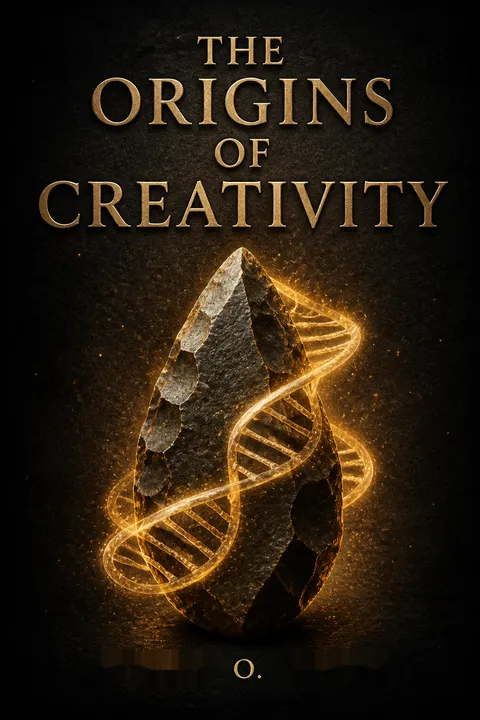
Reviews of The Origins of Creativity are mixed, averaging 3.67/5. Many praise Wilson's eloquent writing and ambitious goal of uniting science and humanities, calling it thought-provoking and inspiring. Critics argue the book fails to deliver on its title, wandering from its core theme with disorganized arguments and unsupported assertions. Several readers note Wilson's broad erudition shines through despite structural flaws. The recurring critique is that Wilson advocates for humanities while simultaneously suggesting they abandon their human-centered focus—a contradiction some found frustrating, others fascinating.
People Also Read


About the Author

Download PDF
Download EPUB
.epub digital book format is ideal for reading ebooks on phones, tablets, and e-readers.








































