
Summary Temporarily Unavailable
This summary is temporarily unavailable and is currently being updated. You can still explore the FAQs and other metadata below.
Plot Summary
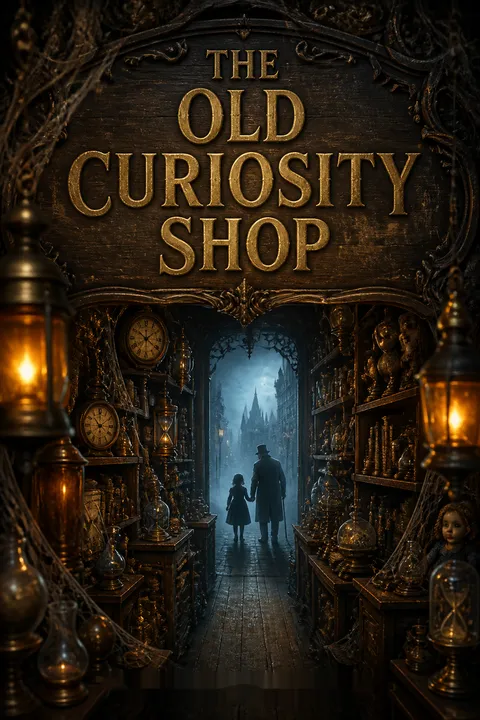
London's Gloomy Curiosity Shop
In the heart of London, a strange little shop overflows with relics and oddities, watched over by a frail old man and his gentle granddaughter, Nell. Their world is small and shadowed, but Nell's spirit brings warmth to the cold, cluttered rooms. She cares for her grandfather with devotion, her childhood sacrificed to his needs. Their only other companion is Kit, a loyal, awkward boy. The shop is both haven and prison, its treasures a poor shield against the city's lurking dangers and the old man's secret anxieties.
Secrets and Nightly Wanderings
Each night, Nell's grandfather slips away, leaving her alone in the shop's eerie silence. Nell's concern deepens as she senses the weight of secrets he will not share. The old man's love for Nell is fierce, but his mind is troubled by dreams of fortune and a desperate need to secure her future. Their poverty is real, but Nell's contentment is simple—she wants only his company. Yet, the old man's absences and anxious mutterings hint at a hidden struggle that threatens to unravel their fragile peace.
The Dwarf's Bargain
Their uneasy existence is shattered by the arrival of Daniel Quilp, a malicious dwarf with a predatory smile. He holds the old man in his power, lending him money at a terrible cost. Nell's brother, driven by greed, also appears, seeking to exploit the family's misfortune. The truth emerges: the grandfather is a compulsive gambler, risking everything in hopes of winning wealth for Nell. Quilp, relishing their misery, seizes control of the shop, and the old man's mind begins to falter under the strain of guilt and loss.
Ruin and Flight
With Quilp now master of the shop and the old man's health failing, Nell becomes his sole comfort and nurse. When Quilp's threats grow unbearable, Nell begs her grandfather to leave everything behind. In the quiet of dawn, they slip away, trembling with fear and hope. The city's grip loosens as they step into the unknown, Nell guiding her bewildered grandfather, determined to find freedom and peace, no matter the cost.
Pilgrims on the Road
The countryside offers beauty and hardship in equal measure. Nell and her grandfather walk for miles, their meager possessions dwindling. They find brief shelter with kindly villagers and encounter traveling performers, whose world is as precarious as their own. Nell's resourcefulness and gentle manners win them small mercies—a meal, a ride, a place to rest. Yet, the old man's dependence grows, and Nell's strength is tested by exhaustion and uncertainty.
Kindness in the Village
In a quiet village, they meet a compassionate schoolmaster who offers them food and shelter. Nell is moved by his kindness and the simple joys of the schoolroom, but sorrow lingers as she witnesses the death of a beloved pupil. The schoolmaster's empathy and the village's peace provide a brief respite, allowing Nell to recover her hope. But the road still calls, and with heavy hearts, they must move on.
The Waxwork Lady's Offer
On the road again, Nell and her grandfather encounter Mrs. Jarley, the flamboyant proprietor of a waxwork exhibition. She offers Nell honest work as a guide, and the old man small tasks. For a time, they find stability and even a sense of belonging. Nell's charm draws crowds, and Mrs. Jarley's affection is genuine. Yet, beneath the surface, the grandfather's old compulsions stir, threatening the fragile happiness they have found.
Nell's New Life
Nell thrives in her new role, earning praise and small coins, but her grandfather's restlessness returns. He disappears for hours, haunted by the lure of gambling. Nell's anxiety deepens as she realizes she cannot protect him from himself. The security of Mrs. Jarley's world is an illusion, and Nell's heart aches with the burden of responsibility and the fear of losing the only family she has left.
Temptations and Storms
A violent storm drives Nell and her grandfather into a tavern, where the old man is drawn into a card game by unscrupulous men. Nell's pleas cannot save him from losing their last coins. The episode leaves them destitute and shamed, and Nell's health begins to fail under the weight of worry and deprivation. The cycle of hope and despair tightens, and Nell's resolve is tested as never before.
Shadows of Despair
The old man's addiction deepens, and Nell is forced to watch as he falls in with thieves and gamblers. She fears he will be driven to crime or madness. Her own strength wanes, and she contemplates desperate measures to save them both. The world grows colder and more hostile, and Nell's innocence is shadowed by the knowledge of evil and the limits of love.
Escape from Darkness
Realizing the danger, Nell rouses her grandfather in the dead of night and flees once more. They travel through industrial wastelands, sleeping in doorways and begging for food. Nell's health deteriorates, but her determination never falters. The kindness of strangers—a laborer, a boatman—offers brief relief, but the journey is grueling, and Nell's spirit is battered by fatigue and hunger.
Ashes and Iron
In a grim foundry, a nameless worker gives them warmth and a bed of ashes. The world of fire and iron is harsh, but the man's compassion is a small light in the darkness. Nell's illness worsens, and the old man is helpless to aid her. Their journey becomes a struggle for survival, and Nell's dreams of peace seem impossibly distant.
Reunion with the Schoolmaster
By chance, Nell collapses at the feet of the schoolmaster, now on his way to a new post in the country. He cares for her with tenderness, securing food, rest, and medical help. The reunion rekindles hope, and the schoolmaster proposes they travel together to his new village, where a fresh start may be possible. Nell's gratitude is profound, but her strength is fading.
Sanctuary in the Country
The trio arrives in a tranquil village, where the schoolmaster has secured a modest position. Nell and her grandfather are offered the post of church caretakers, with a small cottage and enough to live on. The villagers welcome them, and Nell finds solace in simple tasks and the beauty of the countryside. The old man, freed from temptation, becomes docile and content, and Nell's spirit is soothed by the peace she has long sought.
A Home at Last
With the help of the schoolmaster and a kindly bachelor, Nell and her grandfather settle into their new life. The cottage is made warm and cheerful, and the villagers offer friendship and support. Nell's health improves, and the old man finds purpose in small duties. The wounds of the past begin to heal, and the future, though uncertain, is filled with hope.
The Village's Gentle Embrace
The community embraces Nell and her grandfather, and the schoolmaster's school flourishes. Nell's kindness and resilience inspire those around her, and the old man is cherished for his gentle ways. The bachelor and the clergyman become their protectors, and the village becomes a true home. The pain of their journey lingers, but is softened by the love and acceptance they find.
Peace After Suffering
In the quiet of the village, Nell and her grandfather finally find the peace that eluded them for so long. Their suffering has deepened their compassion, and their gratitude for small blessings is profound. The story closes with a sense of fulfillment and rest, as the storms of the past give way to the gentle light of a new beginning.
Analysis
Charles Dickens's The Old Curiosity Shop is a meditation on innocence, suffering, and the redemptive power of love. Through Nell's journey, Dickens explores the vulnerability of the pure-hearted in a world rife with greed, vice, and indifference. The novel's emotional arc is one of descent into darkness—poverty, addiction, and despair—followed by a hard-won ascent toward peace and belonging. Dickens's use of journey as both plot and metaphor allows for a panoramic view of Victorian society, exposing its cruelties while celebrating its capacity for kindness. The story's enduring lesson is the transformative strength of compassion: Nell's self-sacrifice and the schoolmaster's empathy offer hope even in the bleakest circumstances. Ultimately, the novel affirms that true wealth lies not in material gain, but in the bonds of love, the solace of community, and the quiet dignity of endurance.
Last updated:
Report IssueReview Summary
The Old Curiosity Shop receives mixed reviews, averaging 3.79/5 stars. Readers praise Dickens' vivid characterizations, particularly the villainous dwarf Quilp, and his social commentary on Victorian England. Many appreciate the novel's humor and the subplot featuring Dick Swiveller and the Marchioness. However, critics find Little Nell overly sentimental and angelic, lacking depth. The ending proves divisive—some find it genuinely moving while others, echoing Oscar Wilde, consider it mawkishly saccharine. Reviewers note the book's episodic structure from its serial publication causes unevenness. While not considered top-tier Dickens, most find it worthwhile for his theatrical storytelling and memorable minor characters.
People Also Read





Characters
Nell Trent
Nell is the heart of the story—a gentle, selfless girl whose compassion and strength sustain her grandfather and inspire all who meet her. Orphaned and thrust into hardship, she faces adversity with quiet courage, sacrificing her own childhood and well-being for the sake of her grandfather. Nell's psychological depth lies in her unwavering hope and her ability to find beauty and kindness even in suffering. Her journey is one of endurance, spiritual growth, and the bittersweet wisdom that comes from loving deeply in a world that often fails to protect the vulnerable.
Grandfather (Nell's Grandfather)
The old man is a tragic figure, driven by obsessive love for Nell and a desperate need to secure her future. His gambling addiction is both a symptom and a cause of his downfall, leading to ruin and exile. Psychologically, he is torn between guilt, fear, and a childlike dependence on Nell. His mental decline renders him increasingly helpless, and his redemption comes only through Nell's unwavering care and the peace they find in the countryside. His relationship with Nell is both his curse and his salvation.
Daniel Quilp
Quilp is the story's primary antagonist—a grotesque, cunning dwarf who delights in the suffering of others. His psychological makeup is defined by sadism, control, and a perverse sense of humor. He exploits the weaknesses of those around him, particularly Nell's grandfather, and revels in their misery. Quilp's presence injects fear and instability into the narrative, embodying the dangers of unchecked power and moral corruption.
Kit Nubbles
Kit is a humble, good-hearted boy who serves Nell and her grandfather with devotion. His loyalty is unwavering, and his simple, honest nature provides a counterpoint to the story's darker elements. Kit's journey is one of quiet heroism—he remains a steadfast friend even when separated from Nell, and his faith in her goodness never wavers. Psychologically, Kit represents the enduring power of kindness and the importance of community.
Mrs. Jarley
The owner of the waxwork show, Mrs. Jarley is a larger-than-life figure whose generosity and common sense offer Nell and her grandfather a temporary haven. She is shrewd but kind, and her affection for Nell is genuine. Mrs. Jarley's world is one of spectacle and survival, and she provides a glimpse of the resilience and camaraderie found among society's outsiders.
The Schoolmaster
The schoolmaster is a figure of compassion and moral clarity. His kindness to Nell and her grandfather is transformative, offering them shelter, guidance, and ultimately a new home. Psychologically, he is marked by empathy and a sense of duty, shaped by his own experiences of loss. His relationship with Nell is paternal and restorative, and he becomes the architect of their redemption.
Nell's Brother (Frederick Trent)
Nell's brother is a minor but significant antagonist, motivated by greed and resentment. He seeks to exploit his sister's misfortune for personal gain, embodying the dangers of familial betrayal. His psychological arc is one of wasted opportunity and moral failure, serving as a foil to Nell's selflessness.
Isaac List and Jowl
These two gamblers prey on the old man's weakness, drawing him deeper into addiction and despair. They represent the predatory nature of society's underbelly, exploiting vulnerability for profit. Their presence in the story heightens the sense of danger and the difficulty of escaping cycles of vice.
The Bachelor
The Bachelor is a kindly, eccentric figure in the village who helps Nell and her grandfather settle into their new life. His generosity and gentle humor make him a beloved presence, and he symbolizes the healing power of community and acceptance.
The Village Clergyman
The clergyman is a figure of stability and kindness, offering Nell and her grandfather the chance to serve as church caretakers. His approval and support are crucial to their integration into village life, and he represents the possibility of redemption and belonging.
Plot Devices
Journey as Transformation
The narrative is structured as a journey, both literal and metaphorical. Nell and her grandfather's flight from London into the countryside is a passage from darkness to light, from despair to hope. Each stage of their journey brings new challenges and opportunities for growth, and the changing landscapes reflect their shifting emotional states. The journey device allows Dickens to explore themes of innocence, suffering, and redemption, while introducing a rich tapestry of characters and settings.
Foreshadowing and Symbolism
Dickens employs foreshadowing to build tension and underscore the story's moral arc. The grandfather's secretive behavior and Nell's declining health are early signs of the trials to come. Symbolic elements—the curiosity shop, the waxwork figures, the bed of ashes—serve as metaphors for the characters' inner lives and the broader social commentary. The shop's clutter represents the weight of the past, while the waxworks embody the blurred line between life and artifice.
Contrasts and Doubling
The story is rich in contrasts: Nell's purity against Quilp's malice, the warmth of the countryside against the squalor of the city, the kindness of strangers against the cruelty of opportunists. These juxtapositions heighten the emotional impact and reinforce the central themes. Doubling is also used in the parallel journeys of Nell and her grandfather, each dependent on the other yet marked by different forms of vulnerability.
Episodic Structure
The plot unfolds through a series of episodes, each introducing new characters and challenges. These encounters function as moral tests, revealing the best and worst of human nature. The episodic structure allows for a wide-ranging exploration of Victorian society, from its underclass to its rural communities, and provides a framework for Nell's gradual transformation.
About the Author
Charles John Huffam Dickens (1812-1870) was a Victorian-era novelist and social critic, widely regarded as the greatest writer of his time. Despite leaving school to work in a factory after his father's imprisonment, Dickens became a literary colossus, writing fifteen novels including A Christmas Carol, Oliver Twist, and Great Expectations. He edited journals, campaigned for social reforms, and championed children's rights and education. His works featured memorable characters, social realism, and humor, though some critics like Oscar Wilde and Virginia Woolf criticized his sentimentality. Dickens died in 1870 and was buried in Westminster Abbey's Poets' Corner, honored as England's most popular author.
Other books by Charles Dickens







Download PDF
Download EPUB
.epub digital book format is ideal for reading ebooks on phones, tablets, and e-readers.








































