
Plot Summary
Manchester's Divided Heart
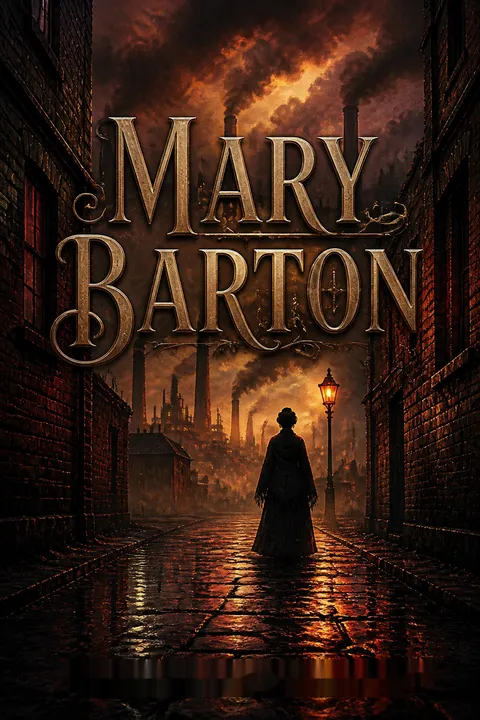
In the bustling, smoky heart of Manchester, the Barton and Wilson families live side by side, bound by friendship and hardship. John Barton, a weaver, is haunted by the injustices suffered by the working class, while his gentle wife and daughter Mary offer warmth and hope. The city's prosperity is built on the backs of laborers, yet their lives are marked by poverty, hunger, and the constant threat of unemployment. The divide between rich and poor is stark, fueling John's growing resentment. Amidst the struggle, moments of community—like tea with neighbors or walks in the fields—offer brief respite, but the shadow of want and the bitterness of social inequality loom ever larger, setting the stage for tragedy and transformation.
Shadows of Loss and Love
Tragedy strikes when Mrs. Barton dies in childbirth, leaving John and Mary alone. Grief hardens John, deepening his anger at the world's injustices, while Mary, still a child, is forced to grow up quickly. She becomes the center of her father's world, but also the object of affection for Jem Wilson, the Wilsons' son, whose quiet devotion goes unnoticed by Mary, who dreams of a better life. The memory of lost loved ones—John's wife, Mary's mother, and the vanished Aunt Esther—haunts them, shaping their choices. The city's relentless hardships and the absence of comfort drive both father and daughter to seek solace in dreams, love, and, for John, in the dangerous allure of political agitation.
The Mill Burns, Hope Flickers
A fire at Carson's mill throws the community into chaos. Amidst the flames, Jem Wilson risks his life to save others, earning admiration but also deepening his silent love for Mary. The fire, while a spectacle for some, is a disaster for many, as it means lost work and greater hardship. The event exposes the indifference of the wealthy mill owners, who are well-insured and see opportunity in rebuilding, while the workers face hunger and uncertainty. The divide between classes grows sharper, and John Barton's anger intensifies. Yet, in the midst of destruction, acts of bravery and kindness shine, hinting at the resilience and humanity of the poor.
Hunger, Death, and Despair
As work dries up and hunger gnaws, the Bartons and Wilsons face the full cruelty of poverty. Death visits again, claiming children and friends, leaving families shattered. John's bitterness deepens, and Mary's dreams of escape grow more desperate. The community rallies to help each other, but charity is no match for systemic injustice. The suffering of the poor is met with indifference by the rich, and the city's institutions offer little relief. The bonds of love and friendship are tested by want, and the specter of death becomes a constant companion, driving some to despair and others to quiet heroism.
Jem's Silent Devotion
Jem Wilson's love for Mary is steadfast, but she is blind to his devotion, caught up in dreams of a better life and the attentions of the wealthy Harry Carson. Jem's acts of kindness and bravery go unnoticed, and his heart aches as he watches Mary drift further from him. The pain of unrequited love is compounded by the hardships of daily life, but Jem remains loyal, even as hope fades. His silent suffering is a testament to the quiet strength and endurance of the working class, whose lives are marked by sacrifice and unacknowledged heroism.
Temptations and Choices
Mary, ambitious and beautiful, is courted by Harry Carson, the mill owner's son. The allure of wealth and escape from poverty tempts her, and she is drawn into a dangerous flirtation, encouraged by her friend Sally. Jem's warnings go unheeded, and Mary's choices set in motion a chain of events that will have tragic consequences. The city's moral landscape is treacherous, and the pressures of class, ambition, and desire threaten to destroy innocence. Mary's struggle to choose between love and security, between Jem and Harry, becomes a microcosm of the larger social conflicts tearing Manchester apart.
The Murder and Its Echoes
The simmering tensions between workers and masters erupt in violence when Harry Carson is murdered. Suspicion falls on Jem, whose rivalry with Harry was public, and whose gun is found at the scene. The community is thrown into turmoil, and Mary is forced to confront the consequences of her choices. The murder exposes the deep wounds of class conflict and the capacity for violence born of desperation and injustice. As Jem is arrested and faces trial, Mary's world collapses, and the true cost of ambition, love, and social division is laid bare.
Mary's Desperate Quest
Determined to save Jem, Mary embarks on a desperate quest to prove his innocence. She uncovers evidence that points to her own father as the real murderer, a revelation that shatters her. Torn between love for Jem and loyalty to her father, Mary faces an agonizing moral dilemma. Her journey takes her from the streets of Manchester to the docks of Liverpool, as she chases down witnesses and battles exhaustion, fear, and despair. The city's indifference and the machinery of justice threaten to crush her, but Mary's courage and determination drive her on, as she fights to save the innocent and redeem the guilty. The race against time and the gathering of evidence create a sense of urgency and momentum.
The Trial's Cruel Stage
Jem's trial becomes a spectacle, with the city watching as Mary is called to testify. Her confession of love for Jem, made in open court, is both a sacrifice and a declaration of truth. The evidence against Jem is overwhelming, but Mary's efforts and the last-minute arrival of a crucial witness turn the tide. The trial exposes the cruelty and indifference of the legal system, the power of love and sacrifice, and the deep wounds inflicted by poverty and injustice. Jem is acquitted, but the scars of the ordeal remain, and the true murderer's identity still haunts Mary.
Confessions and Forgiveness
John Barton, broken by guilt and suffering, confesses to the murder of Harry Carson. His confession brings relief and horror, forcing Mary and Jem to confront the reality of his crime. Mr. Carson, the victim's father, is consumed by grief and a thirst for vengeance, but in a moment of grace, he forgives John, recognizing their shared humanity and suffering. The cycle of violence is broken, and John dies, comforted by forgiveness and the love of his daughter. The power of confession, repentance, and mercy offers a path to redemption, even in the darkest circumstances.
The Cost of Justice
The aftermath of the trial and confession leaves deep wounds. Jem, though acquitted, is shunned by many, and Mary is left to care for her dying father. The community grapples with the meaning of justice, the possibility of forgiveness, and the need for social change. Mr. Carson, transformed by suffering, becomes an advocate for reform, seeking to bridge the divide between rich and poor. The cost of justice is measured not only in lives lost and saved, but in the possibility of reconciliation and the hope for a better future.
New Beginnings, Old Wounds
With John Barton's death, Mary and Jem are free to begin a new life together, but the past cannot be easily forgotten. The wounds of loss, guilt, and social injustice linger, shaping their future. The community, too, is changed, as the lessons of suffering and forgiveness inspire efforts at reform and reconciliation. Mary and Jem's love, tested by hardship and tragedy, becomes a symbol of hope and endurance, as they seek to build a life founded on compassion, honesty, and mutual support.
Across the Ocean's Promise
Seeking a fresh start and escape from the shadows of the past, Mary, Jem, and their loved ones emigrate to Canada. The journey across the ocean is both a literal and symbolic passage, offering the promise of renewal and the hope of a more just and compassionate society. The scars of Manchester remain, but the possibility of healing and happiness beckons. In their new home, surrounded by family and friends, Mary and Jem find peace, love, and the chance to build a better future, carrying with them the lessons of suffering, forgiveness, and the enduring power of hope.
Analysis
A plea for compassion and social justiceMary Barton is a pioneering work of social realism, offering a searing indictment of the inequalities and cruelties of industrial capitalism. Through the intertwined fates of the Barton and Wilson families, Gaskell exposes the human cost of progress, the suffering of the poor, and the moral blindness of the rich. The novel's emotional power lies in its deep empathy for its characters, its nuanced portrayal of love, loss, and endurance, and its insistence on the possibility of redemption through truth, forgiveness, and solidarity. In a world marked by division and injustice, Gaskell calls for compassion, understanding, and the recognition of shared humanity. The lessons of Mary Barton—the dangers of unchecked ambition, the need for social reform, and the transformative power of love and mercy—remain urgent and relevant, inviting readers to reflect on their own responsibilities in the face of suffering and to imagine a more just and compassionate society.
Review Summary
Mary Barton by Elizabeth Gaskell depicts the harsh realities of working-class life in 1840s Manchester, England, exploring poverty, starvation, and class tensions between mill owners and laborers. The novel follows Mary Barton, a beautiful but initially vain young woman caught between two suitors from different classes, while her father John Barton fights for workers' rights. A murder mystery adds suspense to the social commentary. Reviewers praise Gaskell's sympathetic portrayal of the poor and engaging storytelling, though some find it melodramatic or preachy. Most consider it an important but imperfect first novel.
People Also Read








Characters
Mary Barton
Mary is the daughter of John Barton, a working-class girl whose beauty and ambition set her apart. Orphaned young, she becomes the emotional center of her father's life, but her own dreams are shaped by poverty and longing for escape. Torn between the steadfast love of Jem Wilson and the allure of Harry Carson's wealth, Mary's choices drive the novel's central conflict. Her journey from innocence to experience is marked by suffering, courage, and moral growth. When Jem is accused of murder, Mary's desperate quest to save him reveals her strength, resourcefulness, and capacity for self-sacrifice. Ultimately, she is a symbol of the working class's resilience and the possibility of redemption through love and truth.
John Barton
John is a weaver, a man of deep feeling and strong convictions, whose life is shaped by the suffering of the poor and the indifference of the rich. The loss of his wife and son hardens him, turning his grief into bitterness and political radicalism. His involvement in the labor movement and growing resentment of the masters lead him down a dark path, culminating in the murder of Harry Carson. John's psychological journey is one of guilt, remorse, and eventual confession. His love for Mary remains a redeeming force, and his final act of truth-telling and acceptance of forgiveness offers a powerful meditation on the costs of injustice and the possibility of grace.
Jem Wilson
Jem is the son of the Wilsons, a skilled mechanic whose quiet devotion to Mary is the novel's emotional anchor. Loyal, brave, and self-sacrificing, Jem endures unrequited love, poverty, and false accusation with dignity and strength. His rivalry with Harry Carson and his willingness to risk everything for Mary reveal his deep moral character. Jem's ordeal—arrest, trial, and eventual acquittal—exposes the cruelty of the legal system and the resilience of the human spirit. His love for Mary, tested by hardship and misunderstanding, ultimately triumphs, offering hope for renewal and happiness.
Harry Carson
The son of a wealthy mill owner, Harry is handsome, charming, and accustomed to getting his way. His pursuit of Mary is marked by entitlement and disregard for the consequences of his actions. Harry's murder becomes the catalyst for the novel's central crisis, exposing the dangers of unchecked privilege and the deep wounds of class conflict. In death, he becomes a symbol of the costs of social division and the tragic consequences of desire and ambition.
Esther Barton
Mary's aunt, Esther is a cautionary figure—a woman who, seduced and abandoned, falls into prostitution and is cast out by her family. Her life is marked by suffering, shame, and longing for forgiveness. Despite her degradation, Esther's love for Mary drives her to acts of courage and self-sacrifice, as she seeks to warn and protect her niece from a similar fate. Her tragic end is a powerful indictment of society's cruelty and the need for compassion and understanding.
Jane Wilson
Jem's mother, Jane is a figure of strength and suffering, enduring poverty, loss, and the threat of her son's execution with stoic resilience. Her love for Jem is unwavering, and her faith in his innocence sustains her through the darkest moments. Jane's journey is one of endurance, hope, and the quiet heroism of working-class women.
Job Legh
An old friend of the Bartons and Wilsons, Job is a self-taught naturalist whose love of knowledge and gentle wisdom provide comfort and guidance to those around him. He is a surrogate grandfather to Mary and Margaret, offering support, counsel, and practical help. Job's scientific curiosity and moral clarity make him a voice of reason and compassion in a world marked by suffering and confusion.
Margaret Legh
Job's granddaughter, Margaret is a talented singer who loses her sight but not her spirit. Her friendship with Mary is a source of comfort and support, and her own struggles with disability and poverty mirror the novel's themes of endurance and hope. Margaret's eventual happiness with Will Wilson offers a counterpoint to the novel's tragedies, suggesting the possibility of joy and fulfillment even in the face of adversity.
Will Wilson
Jem's cousin, Will is a sailor whose adventurous spirit and loyalty play a crucial role in the novel's climax. His testimony at Jem's trial is the key to proving Jem's innocence, and his love for Margaret offers a subplot of hope and renewal. Will's character embodies the possibilities of escape and new beginnings, both literal and metaphorical.
Mr. Carson
Harry's father, Mr. Carson is a wealthy mill owner whose life is shattered by his son's murder. His initial thirst for vengeance is transformed by suffering and the recognition of shared humanity with John Barton. Mr. Carson's journey from anger to forgiveness is a powerful meditation on the costs of justice, the possibility of redemption, and the need for social reconciliation.
Plot Devices
Social Realism and Class Conflict
Gaskell employs social realism to depict the harsh realities of working-class life in industrial Manchester. The novel's structure alternates between scenes of domestic intimacy and public crisis, highlighting the impact of poverty, hunger, and injustice on individuals and families. The divide between rich and poor is not just a backdrop but a driving force, shaping characters' choices and destinies. The use of dialect, detailed descriptions of work and home, and the inclusion of songs and local customs ground the story in a specific social and historical context, making the personal political and the political personal.
Foreshadowing and Irony
Gaskell uses foreshadowing to build tension and deepen the emotional impact of the story. Early references to hunger, death, and social unrest hint at the coming tragedies, while the characters' dreams and fears often prefigure later events. Irony pervades the narrative, as characters' efforts to escape their circumstances often lead to unintended consequences. Mary's ambition to rise above her class, John's quest for justice, and Jem's silent devotion all lead to suffering and loss, exposing the limits of individual agency in a world shaped by systemic injustice.
The Alibi and the Race Against Time
The central plot device of the alibi—Mary's desperate quest to prove Jem's innocence—drives the novel's suspense and foregrounds the agency of a working-class woman. The race against time, the gathering of evidence, and the navigation of the legal system all serve to highlight Mary's courage, intelligence, and determination. The use of letters, witnesses, and journeys across the city and to Liverpool create a sense of urgency and momentum, while also exposing the barriers faced by the poor in seeking justice.
Confession and Redemption
The motif of confession—John Barton's eventual admission of guilt—serves as the novel's moral and emotional climax. The act of truth-telling, even at great personal cost, becomes a means of redemption, both for the individual and the community. The power of forgiveness, embodied in Mr. Carson's response, offers a vision of reconciliation and healing, suggesting that justice is not only a matter of punishment but of mercy and understanding.
Symbolism and Setting
The city of Manchester is more than a backdrop; it is a living, breathing character, shaping the lives and destinies of all who dwell within it. The mill, the court, the home, and the street are all charged with symbolic meaning, representing the forces of industry, law, family, and society. The recurring imagery of fire, hunger, and darkness underscores the novel's themes of suffering, endurance, and the search for light in a world of shadows.


Download PDF
Download EPUB
.epub digital book format is ideal for reading ebooks on phones, tablets, and e-readers.








































