
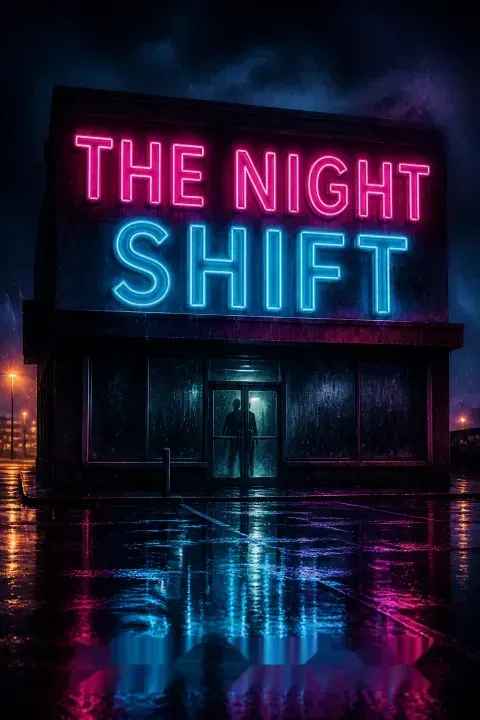


Plot Summary
Prologue
New Year’s Eve 1999 at a Blockbuster in Linden, New Jersey. Store manager Steve closes up, but two of his teenage employees, Candy and Mandy, have disappeared. He finds them dead behind the break room table.
Before he can react, an unseen attacker seizes him, slices his throat, and leaves him to die on the floor. The door bursts open, and the sound of girls chattering turns to screams as Ella1 and Katie11 walk into the bloodbath.
This prologue establishes the primal wound at the heart of the novel: a massacre that shatters a community’s innocence at the turn of the millennium. Steve’s mundane concerns about corporate policy and acne are violently erased, illustrating how ordinary life can be ambushed by extraordinary evil. The killer’s use of a knife and the targeting of night-shift workers create a template for the later ice cream shop murders. Crucially, the survivors—Ella and, indirectly, the child Katie carries—become living evidence that trauma never fully heals, only lies dormant until it is prodded awake.
Creamery Massacre Repeats History
On an April night in 2015, three teenage employees at a Dairy Creamery in Linden are lined up and stabbed to death. A fourth person, customer Jesse Duvall,4 survives a blow to the head. The crime mirrors the 1999 Blockbuster video store killings, and the lone survivor from that earlier tragedy, Ella Monroe,1 now a therapist, receives a frantic call from her former teacher Dale Steadman.5
He begs her to come to the hospital because the new survivor is catatonic. Ella1 uses her own trauma to draw Jesse4 out, and the girl reveals that just before the attacker fled, he crouched down and whispered, “Good night, pretty girl.” Ella1 has heard those exact words before, a detail she never shared with anyone.
The repetition of the whispered phrase works as a narrative hook that binds past and present into a single wound. Ella’s immediate reliving of her own horror shows how trauma collapses time; fifteen years disappear in a heartbeat. Jesse’s toughness and dark humor already distinguish her from the shattered girl Ella once was, hinting at a different kind of survivor. This section also introduces Steadman as a benign fixer, which the reader will later understand as camouflage. The hospital setting, sterile and bright, becomes a theater where two generations of victims meet and where a long-buried mystery begins to unspool.
The Fugitive’s Brother
Chris Ford,3 a young public defender in Union County, reads the Creamery news with a jolt of recognition. He is Christopher Whitaker, the younger brother of Vince Whitaker,7 the prime suspect in the Blockbuster murders who disappeared in 1999 after a public defender got him released. Chris3 was adopted and given a new name to escape his abusive father Rusty.8
For years he has obsessively followed an anonymous travel vlogger called Mr. Nirvana, convinced the wanderer is Vince.7 Flashbacks reveal the night Vince7 was arrested: their violent father’s fury, Vince7’s self-sacrificing protection of Chris.3 Chris3’s girlfriend Clare, a corporate lawyer, learns his true identity and is shaken, questioning the relationship.
Chris’s double life as a public defender descended from a notorious fugitive embodies the novel’s fascination with hidden identities and the grip of origin. His belief that Vince is innocent stems not just from loyalty but from a childhood in which Vince was the only source of tenderness, a shield against Rusty’s fists. The Mr. Nirvana vlog serves as a modern oracle, a digital thread to a lost brother. Clare’s reaction exposes the fragility of the identity Chris has constructed: no matter how far he climbs, he carries the stench of his father’s house, a theme that will resonate throughout.
Agent Keller’s Cold Case
Pregnant FBI agent Sarah Keller2 is dispatched to assist Union County with the Creamery killings. Prosecutor Hal Kowalski wants her to focus on finding Vince Whitaker7 via an old unlawful flight warrant. She is paired with Atticus Singh,6 a green but meticulous detective who has turned the Blockbuster case into a personal obsession.
Keller2 and Atticus6 interview retired lead detective Tony Grosso, who reveals that Blockbuster victim Katie McKenzie11 had been pregnant years before the murders and that the investigative team suppressed this fact at the request of a detective close to the family, later identified as Joe Arpeggio.9 Katie11’s parents slam the door on them, and Mandy Young’s father Walter behaves with twitchy hostility.
Keller and Atticus form a generational odd couple: she is a seasoned agent fighting sexism while pregnant, he is a Yale-educated idealist driven by a childhood encounter with an FBI agent who caught his father’s killer. Their excavation of the Blockbuster file demonstrates how official records can be curated to protect the powerful or the pious. The revelation of Katie’s pregnancy introduces the malevolent presence of an older man in her life, a ghost the original investigation refused to name. The fathers’ refusals are the first tremors of a vigilante crime that will soon upend the entire narrative.
Jesse’s Midnight Confession
After Ella1 bails Jesse4 out of a shoplifting incident at Target, the teenager leads her through woods to a railroad platform. As a freight train barrels past inches away, Jesse4 lifts her arms and howls, a ritual of suicidal thrill. In the aftermath, she tells Ella1 she lied to the police.
She did not randomly stop at the Dairy Creamery to use the bathroom; she went there to confront Madison Sawyer, a popular girl who was spreading rumors that Jesse4 had seduced a teacher and made a porn video with him. Jesse4 had sent angry texts, including “You’ll be sorry.” This confession gives her motive, placing her in the crosshairs.
Train-catching is the book’s most visceral metaphor for the allure of self-destruction that trauma survivors know intimately. Jesse’s confession complicates her victimhood and introduces a crucial ambiguity: she is both wounded and capable of rage, even violence. Ella’s decision to become an accomplice rather than an authority figure marks a dangerous professional boundary-crossing, but also reveals her own compulsion to protect damaged girls. The rumors about a teacher foreshadow the predatory pattern that will eventually link Jesse’s story to her birth mother’s, collapsing the distance between two generations of prey.
Katie’s Hidden Baby
Keller2 and Atticus6 track down Katie McKenzie11’s mother outside a church and pressure her with knowledge of her secret drug buys. She confesses that Katie11 was pregnant by an older man she refused to name. The family, devoutly religious, arranged for Katie11 to live elsewhere, deliver the baby, and give it up for adoption.
Detective Joe Arpeggio,9 a family friend, intervened to keep the pregnancy out of the investigation file, supposedly to spare them shame. When Keller2 confronts Arpeggio9 later, he admits the cover-up but insists he was merely being protective. Candy O’Shaughnessy’s mother independently recalls her daughter saying the girls planned to confront an abusive older boyfriend.
The suppression of Katie’s pregnancy is a study in institutional collusion between grief, faith, and law enforcement. Arpeggio’s actions, however well-intended, erased the central motive for the Blockbuster murders: a predator’s need to control and silence. The adoptive arrangement also plants the seeds for Jesse’s later revelation of her own origins. The theme of hidden children—Katie’s baby, Rusty’s sons, even the unborn twins Keller carries—begins to dominate the narrative, as characters grapple with what parents owe their offspring and what debts the living inherit from the dead.
Jesse Behind Bars
A classmate turns over screenshots of Jesse4’s threatening texts to Madison, and detectives find a victim’s cell phone hidden in Jesse4’s hospital room. Joe Arpeggio9 arrests Jesse Duvall4 for the Creamery murders. Head public defender Henry Robinson10 assigns Chris Ford3 and his colleague Julia to the case.
In the interview room, Jesse4 is eerily calm and refuses to talk until she drops a bombshell: she knows Chris3 is really Chris Whitaker. She says she will only speak to Ella Monroe.1 Fearing a conflict of interest, Henry10 nevertheless brings Ella1 on as a consultant. Chris3 is stunned that Jesse4 has seen through his identity.
Jesse’s arrest transforms her from victim into defendant, echoing the 1999 rush to judgment against Vince. The public defender’s office is immediately haunted by the ghost of Badcock, the lawyer who freed Vince and was destroyed by public outrage, making Jesse’s case radioactive. Her insistence on speaking only to Ella is strategic, revealing a mind that understands leverage. Chris’s exposed identity destabilizes the defense team and threatens his career, yet it also cracks open the possibility that two children of the same tragedy—one a Whitaker, one a McKenzie—might finally collaborate to unearth the truth.
Daughter of the Dead
With Ella1 present, Jesse4 unlocks the phone she secreted in Ella1’s car. On it is a birth certificate identifying Katie McKenzie11 as her biological mother. Jesse4 explains she was adopted at birth and, after learning her origins, began investigating the Blockbuster case to find out who murdered her mother.11
Her research file, far from being a blueprint for a copycat crime, is an amateur journalist’s attempt to uncover evidence that Vince Whitaker7 was innocent. The threatening texts to Madison were about rumors tied to Jesse4’s previous teacher, Chad Parke, not about the murders. Jesse4’s motive shifts from potential killer to traumatized daughter.
The revelation of Jesse’s parentage is the novel’s structural keystone, fusing the two crimes into a single family tragedy. It reframes Jesse’s intelligence and manipulative edge as survival skills honed by foster care and adolescent grief. The phone serves as a sacrament of modern identity: a hidden device containing the digital proof of who she is. Her amateur sleuthing also mirrors the professional investigation, questioning who has the right to seek justice. This revelation forces the legal team and Ella to reimagine the entire case, not as a search for a perpetrator but as a rescue of the maligned dead.
Mr. Nirvana Unmasked
Mr. Nirvana posts a livestream from Central Park, hinting at his location. Chris3 races to Manhattan with Ella,1 who knows the park from childhood. Following lamppost numbers and landmarks, they corner the vlogger near the Whisper Bench. Chris3 calls out his brother’s name, but when the man turns, he is not Vince.7 The letdown is crushing.
Yet in the shared disappointment, Chris3 and Ella1 recognize kindred damage: both lost someone to that night in 1999, and both have spent years trapped by its shadow. They return to New Jersey together, their connection deepened by the recognition that they are survivors of the same catastrophe from opposite sides.
The unmasking of Mr. Nirvana is a necessary disillusionment. For Chris, the vlog was an umbilical cord to his brother; cutting it forces him to confront the adult possibility that Vince may be dead or genuinely guilty. For Ella, the encounter revives memories of her own teenage romance with Vince, which she has long repressed. Their joint disappointment is oddly more intimate than a happy reunion would have been. This scene also closes a red herring with thematic purpose: the obsession with authorship and anonymity in the digital age, and how easily a charismatic image can seduce the lonely into believing in a ghost.
Rusty’s Dirty Barrel
Keller2 and Atticus6 join a Secret Service operation to arrest Rusty Whitaker8 for his role in a counterfeit cigarette ring. After the takedown, Atticus6 notices a storage unit missing from the official log. Inside, they find a rusted barrel containing a decomposed female body in a sundress.
The remains are identified as Mary Whitaker, Rusty8’s wife, who had supposedly abandoned the family in 1997. Confronted with the murder, Rusty8 panics and offers to reveal Vince7’s location in exchange for a deal. Keller2 is skeptical: Rusty8’s certainty about his son’s whereabouts after fifteen years of disappearance suggests he knows Vince7 cannot be found alive.
The discovery of Mary’s body inside a barrel at a self-storage facility literalizes the novel’s obsession with things hidden in plain sight. Rusty’s brutality is finally proven, but the revelation also horrifies Chris, who learns his mother never abandoned him but was murdered by his father. The timing of Rusty’s offer is a narrative hinge: his desperation to trade information about Vince signals to Keller that the original crime has a solution no one expected. The Secret Service subplot, with its counterfeit cigarettes, underscores how the Whitaker family’s decay is entangled with borderless crime and moral rot.
The Fathers’ Revenge
Keller2 drives to Walter Young’s home and tells him Rusty8 is about to cut a deal. The actuary crumbles and confesses that on the night after Vince7’s release, he, Katie’s father Robert McKenzie, and Ella’s wealthy father Arthur Monroe went to the Whitaker house. They dragged Vince7 to the Monroe estate garden, beat him, and demanded a confession.
When he refused, each man shot him. They buried the body, and Arthur Monroe paid Rusty8 to stay silent. Guilt eventually drove Arthur to suicide. A search warrant is executed, and excavation in the rose garden uncovers Vince7’s skeletal remains, finally exonerating him.
The vigilante pact among the fathers is the novel’s darkest commentary on grief weaponized by class and moral certainty. Each man lost a daughter and chose to become a murderer, forging a secret brotherhood sealed in Vince’s blood. Arthur Monroe’s suicide in the very garden where the body lay reveals how the crime consumed its perpetrators. For Ella, the revelation that her gentle, weeping father was a killer shatters her foundational myth. For Chris, the news that his brother died terrified and alone, not on the run but in a shallow grave, reframes his entire adult self-construction. Justice, here, is indistinguishable from vengeance.
Steadman’s Hidden Prey
Reviewing yearbooks and cell phone records, Keller2 notices that Blockbuster victim Katie McKenzie11 and Creamery victim Hannah Sawyer shared the same driving instructor: Dale Steadman,5 through his side business Steady as They Go Driving School.
Phone logs show Hannah was unreachable during her lesson times. Additional investigation reveals that Steadman5 was the older man who impregnated Katie11 in 1999, a teacher at her school. When Katie11 ended the relationship and her coworkers threatened to expose him, he stabbed them all, sparing Ella1 as a potential scapegoat.
Years later, he groomed Hannah Sawyer, and when her sister threatened to tell their mother, he replicated the original slaughter, using the whispered phrase and a planted phone to frame Jesse.4
Steadman’s unmasking reframes the entire narrative as a hunter’s careful management of his public image. The driving school is a genius cover: a legitimate business that provides isolated access to teenage girls. His role as Ella’s mentor appears now as monstrous aftercare, a predator who keeps his survivor close to monitor her memories. The link between the two massacres is not a copycat but a serial pattern: Steadman kills to cover up his serial predation. Keller’s methodical connecting of mundane data—yearbook ads, lesson schedules—demonstrates the power of old-fashioned police work over the mythology of the brilliant criminal.
The Final Lesson
Ella1 pieces together that Steadman5 knew about her father’s crime and said nothing. She drives to his Asbury house, where she finds a bleeding Atticus6 on the floor. Steadman5 attacks her, tapes her wrists, and locks her in the garage. Chris3 arrives and is stabbed while trying to intervene.
Keller2 reaches the house and exchanges gunfire with Steadman,5 who wounds her with an arrow through her chest. In a brutal struggle, Keller2 pulls the arrow from her own body and drives it upward into his throat. Ella1 grabs a spear and stabs Steadman5 in the back, finishing him. First responders flood the house and rush the survivors to the hospital.
The climax is operatically violent and redraws the map of heroism. Keller’s willingness to fight while pregnant with twins is a declaration that motherhood does not mean passivity, and that protecting the next generation sometimes requires confronting the monster directly. Ella, who has spent fifteen years as a victim, becomes an avenger, driving the spear into the man who orchestrated her life’s defining trauma. Steadman’s house, a modest ranch, becomes a gothic castle where decades of secrets are exorcized in blood. The convergence of all principal characters in one location seals the story’s themes: that violence begets violence, but that connection and courage can finally end the cycle.
Epilogue
One year later, Keller2 and her husband Bob push a double stroller through their neighborhood with twins Michael Atticus and Heather Attica, named for the detective6 who almost died that night. Jesse Duvall4 publishes a widely praised New Yorker article about the case, and on a morning show she quotes the saying a wise FBI agent once shared with her.
Chris Ford3 and Ella Monroe,1 now a couple, launch their own travel vlog called The Night Shift, delivering medical supplies and toys to an orphanage along the Amazon River, finally reaching the freedom Vince7 had called nirvana.
The epilogue offers a deliberate counterpoint to the novel’s brutal violence: healing through witness, naming, and chosen family. Keller’s twins carry Atticus’s name forward, a rebuke to the anonymity of Rusty’s barrel and Steadman’s garden grave. Jesse’s transformation from juvenile detainee to celebrated journalist reclaims the narrative from its former authors, the police and press. Chris and Ella’s travel vlog repurposes the Mr. Nirvana format from obsession to service, finally allowing both of them to leave Linden behind. The phrase “do justice today,” once the public defender’s mantra, becomes a personal creed for survivors who have learned that justice is not a verdict but a daily act.
Analysis
The Night Shift orchestrates a double helix of trauma, class, and misdirected justice across fifteen years, using the mundane setting of a New Jersey strip mall to stage a tragedy of Sophoclean proportions. The novel’s central insight is that violence is never a single event; it radiates outward, corrupting families, institutions, and memory itself. The three fathers who killed Vince Whitaker7 believed they were closing a wound, but their act only deepened it, turning them into the very monsters they sought to punish. Dale Steadman,5 meanwhile, exploited the cover-up to remain invisible, a wolf who dressed as a shepherd.
The book’s structure, alternating among Ella,1 Chris,3 and Keller,2 maps three distinct responses to trauma: self-erasure, obsessive pursuit, and professional determination. Each character is trapped by a version of the past until they converge on Steadman5’s house, where violence becomes a paradoxical form of release. Jesse Duvall,4 though legally a minor, emerges as the story’s moral engine: a child who refuses to accept the official narrative and, at considerable risk, demands the truth about her mother.11
Alex Finlay also offers a critique of the American justice system’s appetite for closure over accuracy. Vince Whitaker7 was convicted in the press because he fit a type: a poor, long-haired kid from an abusive home who sold dime bags. No one looked hard at the respected teacher5 with a driving school. The novel warns that communities are eager to bury their monsters, sometimes literally, in the gardens of the rich, and that the real predators are often the ones who appear the most helpful.
Review Summary
The Night Shift by Alex Finlay is a gripping thriller that alternates between two mass murders, 15 years apart. With short chapters and multiple perspectives, it keeps readers engaged throughout. While some found the plot predictable, many praised the character development and nostalgic 90s references. The book's fast pace and unexpected twists garnered mostly positive reviews, though some criticized plot holes and the pregnant FBI agent's implausible actions. Overall, it's a compelling read that showcases Finlay's storytelling skills.
People Also Read





Characters
Ella Monroe
Trauma therapist and survivorThe lone survivor of the 1999 Blockbuster massacre, now a therapist specializing in trauma. Despite her professional competence, she numbs herself with anonymous sexual encounters and anti-anxiety pills. The daughter of a wealthy Summit family, she rebelled by taking a public school job and lives modestly. Her engagement to a predictable man collapses early in the story. Summoned to counsel the new survivor4, she is forced to re-enter the nightmare she has spent fifteen years fleeing. Beneath her fragile self-control lies a fierce loyalty to damaged girls and a deep, unresolved grief for the friends she lost.
Sarah Keller
Pregnant FBI special agentAn FBI agent eight months pregnant with twins, assigned to assist local authorities with the Creamery killings. She is methodical, brave, and quick-witted, with a supportive husband who calls her a badass. Her father, a powerful lawyer, disapproved of her career and of her husband Bob. Keller’s pregnancy adds urgency and vulnerability to her investigation, but she refuses to be sidelined. She builds an unlikely partnership with Atticus Singh6 and earns the nickname Agent Badass after a viral video shows her walking into a SWAT standoff to protect an autistic boy.
Chris Ford
Public defender with a hidden pastA Union County public defender, born Christopher Whitaker, the younger brother of accused Blockbuster killer Vince Whitaker7. After Vince7’s disappearance, Chris was adopted by a kind couple who gave him a new name and a stable home. He graduated from Columbia Law but feels like an imposter in his relationship with Clare, a wealthy corporate lawyer. Chris carries physical scars from his father’s8 abuse and a psychological need to prove Vince7’s innocence. He has been secretly tracking an anonymous travel vlog, convinced the host is his fugitive brother7.
Jesse Duvall
Survivor and amateur investigatorThe seventeen-year-old sole survivor of the Dairy Creamery attack. Fiercely intelligent, sharp-tongued, and resourceful after years in foster care, she wants to become an investigative journalist. She has been researching the Blockbuster case independently, drawn to it by a personal connection she withholds. Her shoplifting, train-dodging, and confrontational manner mask a profound loneliness and a desperate need for answers about her origins. When she is arrested for the murders, her cool demeanor makes her an unsympathetic defendant, but it hides a strategic mind.
Dale Steadman
High school principal and mentorThe principal of Union High School, who was a young teacher in 1999 and became Ella1’s lifelong support system after the Blockbuster attack. Calm, capable, and beloved by students, he also runs a driving school as a side business. He travels to African countries during summers and keeps his personal life private. To Ella1, he is the steady presence her cold mother12 never was. His surface benevolence conceals a long history of predatory relationships with teenage girls, a secret that the investigation into the Creamery murders will finally expose.
Atticus Singh
Young detective, Keller’s partnerA youthful detective with the Union County Prosecutor’s Office and a Yale graduate who has turned the Blockbuster cold case into a personal project. His father, a bank security guard, was killed in a robbery when Atticus was a child; the FBI agent who caught the killer inspired him to enter law enforcement. He lives with his ailing mother, whom he adores. Eager, meticulous, and endearingly uncool, he drives a battered MG Midget and brings his mother’s home-cooked meals to stakeouts. Keller2 becomes a mentor and friend to him.
Vince Whitaker
Fugitive accused of Blockbuster murdersThe elder son of Rusty Whitaker8, arrested on New Year’s Eve 1999 for the Blockbuster killings based on an anonymous tip, a fingerprint, and a knife found in his locker after he fled. He was a gentle, protective older brother to Chris3, shielding him from their father’s8 abuse and pushing him toward education as an escape. He worked a small-time pot-dealing operation to keep food on the table. He had a brief, intense romance with a girl at the video store, which Chris3 remembers because Vince’s description of her was infused with hope.
Rusty Whitaker
Abusive father and killerThe violent, alcoholic father of Vince7 and Chris3, who works at a self-storage facility near the sewage plant. He beat his sons and wife habitually, scarring Chris3’s hand on a stove burner. After Mary’s disappearance, he told everyone she had run off with another man. He is also involved in a counterfeit cigarette smuggling ring. His uncooperative manner and obvious hidden knowledge make him a key, if repulsive, figure in both the FBI investigation and the eventual unearthing of his wife’s and son’s fates.
Joe Arpeggio
Lead detective, Dairy Creamery caseThe mustached chief detective for Union County, who runs the Creamery murder investigation. He is gruff, territorial, and resentful of FBI interference. He withheld critical information about the killer’s phrase from Keller2. It is later revealed that he was a close family friend of the McKenzies and suppressed evidence of Katie11’s pregnancy to protect their reputation. Despite his flaws, he is not corrupt, merely blinkered by loyalty, and he helps bring the final conspiracy to light.
Henry Robinson
Head public defenderThe veteran chief of the Union County Public Defender’s Office, regarded as one of the best criminal defense lawyers in the country. He annually tells new hires the story of Bartholomew Badcock, the lawyer destroyed for defending Vince Whitaker7, as a parable of professional courage. He assigns Chris3 to Jesse4’s defense and must manage the fallout when Chris3’s identity is exposed.
Katie McKenzie
Blockbuster victim with a secretOne of the four teenage girls murdered at the Blockbuster in 1999. A shy, devout Catholic school student who worked the night shift to earn money. She became pregnant by an older, abusive teacher5 and was forced by her religious parents to give the baby up for adoption in secret. Her friends Candy and Mandy planned to confront the father5, a decision that led to the massacre. Her biological daughter is Jesse Duvall4.
Phyllis Monroe
Ella’s wealthy, cold motherThe matriarch of the Monroe family, living on a historic Summit estate. She is imperious, emotionally withholding, and obsessed with propriety. She opposed her husband’s decision to send Ella1 to public school and blames him for the attack. Her relationship with Ella1 is a battlefield of passive-aggressive silences. She knows the dark secret of her husband’s vigilante act but kept it buried to protect the family name.
Plot Devices
"Good night, pretty girl"
Whispered phrase linking crimesThe killer’s valediction, spoken to Ella Monroe1 in 1999 and repeated to Jesse Duvall4 in 2015. Because Ella1 never publicly disclosed the words, their reappearance forces investigators to consider three possibilities: coincidence, a copycat who somehow learned the phrase, or the same perpetrator. The phrase becomes a shibboleth of shared trauma between the two survivors and a forensic thread that eventually helps Keller2 connect Dale Steadman5 to both massacres.
Mr. Nirvana’s travel vlog
Anonymized YouTube channelA popular, faceless travel vlog followed obsessively by Chris Ford3, who believes the host is his fugitive brother Vince Whitaker7. The vlogger travels to dangerous locations worldwide, steadily building a fanbase while teasing his identity. The device serves as a red herring and a vehicle for Chris3’s desperate hope. When the vlogger arrives in the U.S., Chris3 finally has a chance to confront him, only to discover he is a stranger. The vlog’s format is later reclaimed by Chris3 and Ella1 as their own project.
Jesse’s hidden iPhone
Evidence of identity and researchJesse4 secretes her phone in Ella1’s car before being taken into custody. The device, encased in a Hello Kitty cover, contains her digital research into the Blockbuster case and a scanned birth certificate proving she is Katie McKenzie11’s daughter. Once retrieved by Ella1 and examined by the defense team, the phone transforms Jesse4 from a suspect copying the original crime into a victim’s daughter seeking justice. It also contains exculpatory material that suggests Vince Whitaker7 was innocent.
Steady as They Go Driving School
Steadman’s access to victimsA side business run by Dale Steadman5, advertised in high school yearbooks from both Union High and Sacred Heart Catholic School. The driving school gave Steadman5 hours of unsupervised one-on-one time with teenage girls, including Katie McKenzie11 (who later withdrew) and Hannah Sawyer. Keller2 cracks the case when she matches Hannah’s Tuesday and Thursday lesson schedule to the gaps in her phone activity records, confirming the connection.
The Monroe estate garden
Burial site of Vince WhitakerThe rose garden on the Monroe family’s Summit estate, where Arthur Monroe tended the soil as a private sanctuary. After the vigilante fathers killed Vince Whitaker7 on New Year’s Eve 1999, they buried his body there. The garden became a constant, silent reminder for Arthur, contributing to his eventual suicide. Fifteen years later, the FBI excavation of the garden retrieves Vince7’s remains and dismantles the foundation of lies on which the Monroe family’s composure was built.
FAQ
Synopsis & Basic Details
What is The Night Shift about?
- Dual timelines converge: The story alternates between a 1999 mass murder at a Blockbuster video store and a similar crime at an ice cream shop fifteen years later, exploring the connections between the two.
- Trauma and survival: It follows the lives of the survivors of both attacks, particularly Ella Monroe and Jesse Duvall, as they grapple with their pasts and seek to uncover the truth behind the violence.
- Unraveling a mystery: The narrative delves into a complex web of secrets, lies, and hidden connections, as law enforcement and the survivors work to identify the true killer and bring justice to the victims.
Why should I read The Night Shift?
- Intricate plot twists: The novel offers a suspenseful and twist-filled narrative that keeps readers guessing until the very end, with unexpected connections and revelations.
- Compelling characters: The story features well-developed and emotionally complex characters, each grappling with their own demons and motivations, making them relatable and engaging.
- Exploration of trauma: It delves into the psychological impact of violence and trauma, exploring themes of survival, guilt, and the search for healing, offering a thought-provoking reading experience.
What is the background of The Night Shift?
- Late 90s setting: The initial crime takes place on New Year's Eve 1999, capturing the cultural anxieties surrounding Y2K and the end of the millennium, adding a layer of historical context.
- Small-town America: The story is set in Linden, New Jersey, a seemingly ordinary town with a dark underbelly, highlighting the contrast between the mundane and the horrific.
- Law enforcement procedures: The novel incorporates details about FBI and local police investigations, including crime scene analysis, witness interviews, and the challenges of solving cold cases, adding realism to the narrative.
What are the most memorable quotes in The Night Shift?
- "Good night, pretty girl.": This chilling whisper, repeated in both attacks, becomes a haunting motif, symbolizing the killer's twisted mindset and the shared trauma of the survivors.
- "The world breaks everyone and afterward many are strong at the broken places.": This quote from Ernest Hemingway, used as an epigraph, encapsulates the novel's theme of resilience and the potential for growth after experiencing trauma.
- "Do justice today.": This phrase, used by the head of the Public Defender's office, highlights the ethical dilemmas faced by the characters and the importance of seeking truth and fairness.
What writing style, narrative choices, and literary techniques does Alex Finlay use?
- Alternating perspectives: Finlay employs multiple points of view, shifting between characters like Ella, Keller, and Chris, providing a multifaceted understanding of the events and their emotional impact.
- Foreshadowing and callbacks: The author uses subtle hints and recurring details to foreshadow future events and create a sense of unease, while also providing satisfying callbacks to earlier scenes.
- Fast-paced thriller: The novel is written in a fast-paced, suspenseful style, with short chapters and cliffhangers that keep readers engaged and eager to uncover the truth.
Hidden Details & Subtle Connections
What are some minor details that add significant meaning?
- The "Student Driver" sticker: The sticker on Katie McKenzie's car in the Blockbuster parking lot photo foreshadows her connection to Dale Steadman, who ran a driving school, and highlights the vulnerability of the young victims.
- The recurring mention of "Nirvana": The word, used by both Vince Whitaker and later by Chris, symbolizes their shared desire for escape and a better life, adding a layer of emotional depth to their relationship.
- The specific brands of snacks: Jesse's shoplifting of Skittles, Bubblicious gum, Red Bull, and Flamin' Hot Cheetos at Target reveals her rebellious nature and her coping mechanisms, hinting at her troubled past.
What are some subtle foreshadowing and callbacks?
- Ella's habit of twisting her hair: This seemingly minor quirk, which developed after the Blockbuster attack, foreshadows her ongoing struggle with trauma and her need for control, and is a callback to her past.
- The mention of the "Chemical Coast": The description of Linden as being near the "Chemical Coast" foreshadows the toxic secrets and hidden dangers that lie beneath the surface of the seemingly ordinary town.
- The recurring image of the broken door: The broken doorframe at the Whitaker home after Vince's arrest is echoed by the broken door at the custodian's house, highlighting the cycle of violence and the lasting impact of trauma.
What are some unexpected character connections?
- Ella and Jesse's shared trauma: The connection between Ella and Jesse as survivors of similar attacks creates a bond that transcends their age difference, allowing them to understand each other on a deeper level.
- Chris and Ella's shared history: The revelation that Chris is Vince Whitaker's brother creates an unexpected connection with Ella, forcing them to confront their shared past and seek justice together.
- Arpeggio and Katie's family: The connection between Joe Arpeggio and Katie McKenzie's family, revealed through her mother, adds a layer of complexity to the investigation and highlights the hidden relationships within the community.
Who are the most significant supporting characters?
- Dale Steadman: As the seemingly respectable principal, Steadman's hidden dark side and connection to the victims make him a crucial character, driving the plot and revealing the true nature of the killer.
- Hal Kowalski: The Union County Prosecutor, Hal's history with the Blockbuster case and his relationship with Keller add depth to the investigation, highlighting the challenges of local law enforcement.
- Ms. May and Clint: Chris's adoptive parents, Ms. May and Clint, provide a contrasting example of a loving and supportive family, highlighting the impact of trauma and the possibility of healing.
Psychological, Emotional, & Relational Analysis
What are some unspoken motivations of the characters?
- Ella's self-destructive behavior: Ella's casual encounters and drug use stem from her unresolved trauma and a subconscious desire to punish herself for surviving the Blockbuster attack.
- Jesse's need for control: Jesse's research into the Blockbuster case and her confrontational behavior stem from a need to understand her past and take control of her own narrative, stemming from her abandonment and foster care experiences.
- Steadman's obsession with control: Steadman's actions are driven by a deep-seated need for control and a twisted sense of justice, stemming from his past and his relationships with the victims.
What psychological complexities do the characters exhibit?
- Ella's survivor's guilt: Ella's struggle with survivor's guilt manifests in her self-destructive behavior and her difficulty forming meaningful relationships, highlighting the long-lasting impact of trauma.
- Jesse's trauma and resilience: Jesse's complex personality, marked by both vulnerability and strength, reflects the psychological impact of her past trauma and her determination to overcome it.
- Steadman's dual nature: Steadman's ability to maintain a facade of respectability while harboring dark secrets reveals the complexities of human nature and the potential for evil to hide in plain sight.
What are the major emotional turning points?
- Ella's recognition of the "Good night, pretty girl" phrase: This moment forces Ella to confront her past trauma and the possibility that the killer has returned, setting her on a path to seek justice.
- Jesse's confession about her lie: Jesse's admission that she went to the ice cream shop to confront Madison Sawyer marks a turning point in her character development, revealing her vulnerability and her desire for truth.
- Chris's discovery of his brother's innocence: Chris's realization that his brother was not the Blockbuster killer and that his mother was murdered by his father, leads him to confront his past and seek redemption.
How do relationship dynamics evolve?
- Ella and Jesse's bond: Their relationship evolves from a therapist-patient dynamic to a deep connection based on shared trauma and a mutual desire for truth, highlighting the power of empathy and understanding.
- Keller and Atticus's partnership: Their professional relationship evolves into a friendship, as they learn to trust and rely on each other, showcasing the importance of teamwork and mutual respect.
- Chris and Ella's connection: Their relationship evolves from a shared past to a mutual understanding of their trauma, leading them to embark on a journey of healing and self-discovery together.
Interpretation & Debate
Which parts of the story remain ambiguous or open-ended?
- The full extent of Steadman's motives: While the novel reveals Steadman's obsession and need for control, the full extent of his motivations and the specific triggers for his actions remain somewhat ambiguous, leaving room for interpretation.
- The nature of the relationship between Katie and Steadman: The exact nature of Katie and Steadman's relationship is left open to interpretation, with hints of grooming and manipulation, but the full details are never explicitly revealed.
- The future of Ella and Chris: While the epilogue suggests a hopeful future for Ella and Chris, their long-term journey and the challenges they may face remain open-ended, leaving readers to imagine their path forward.
What are some debatable, controversial scenes or moments in The Night Shift?
- The vigilante justice of the fathers: The decision of the fathers to take justice into their own hands, resulting in Vince Whitaker's death, raises ethical questions about the limits of grief and the consequences of seeking revenge.
- Ella's relationship with Jesse: Ella's blurring of professional boundaries with Jesse, particularly her decision to take her to her mother's house, raises questions about the ethics of her actions and the potential for harm.
- The portrayal of the victims: The novel's focus on the survivors and the investigation may lead to debates about the portrayal of the victims, particularly the teenage girls, and whether their stories are fully explored.
The Night Shift Ending Explained: How It Ends & What It Means
- Steadman's downfall: The climax of the novel sees Steadman's crimes exposed, leading to his death and the resolution of the central mystery, but also highlighting the tragic consequences of his actions.
- The discovery of Vince Whitaker's body: The revelation that Vince Whitaker was murdered by the fathers of the Blockbuster victims provides a sense of closure to the original crime, but also underscores the cycle of violence and the devastating impact of false accusations.
- Ella and Chris's journey: The epilogue shows Ella and Chris embarking on a journey of healing and self-discovery, symbolizing the potential for redemption and the enduring power of the human spirit to overcome trauma.
Download PDF
Download EPUB
.epub digital book format is ideal for reading ebooks on phones, tablets, and e-readers.








































