

Key Takeaways
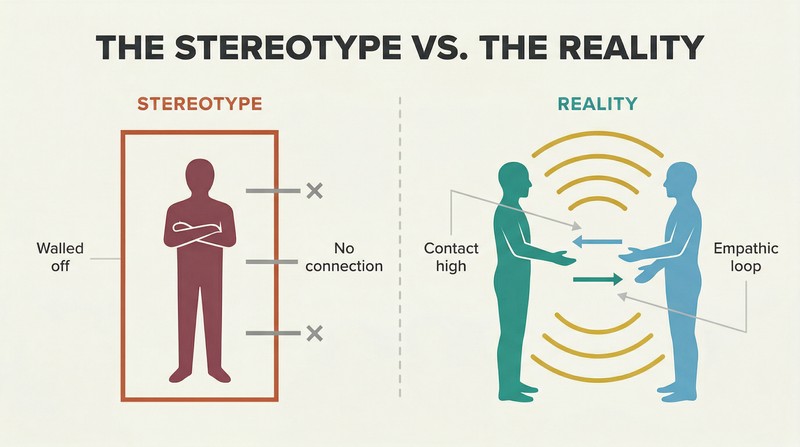
The best tops aren't cold tyrants — they're profound empaths
The stereotype is backwards. The popular image of a BDSM top is someone amoral and unfeeling. Easton and Hardy argue the opposite: the top's primary reward is a "contact high" — surfing the bottom's sensations with empathy so intense it approaches the telepathic. Both authors report enormous orgasms after hours of technically demanding topping, as if pleasure had been building inside them unseen. One top describes it as riding the bottom's experience like a wave.
Eight rewards drive topping, and empathy tops nearly everyone's list:
1. Empathy — the vicarious charge from a bottom's response
2. Creativity — being playwright, director, and lead actor at once
3. Bigness — inhabiting a role of overwhelming power
4. Nurturing — cradling someone after inflicting exquisite intensity
5. Self-knowledge — using the bottom's response as a mirror
Build a fireplace before you play with fire
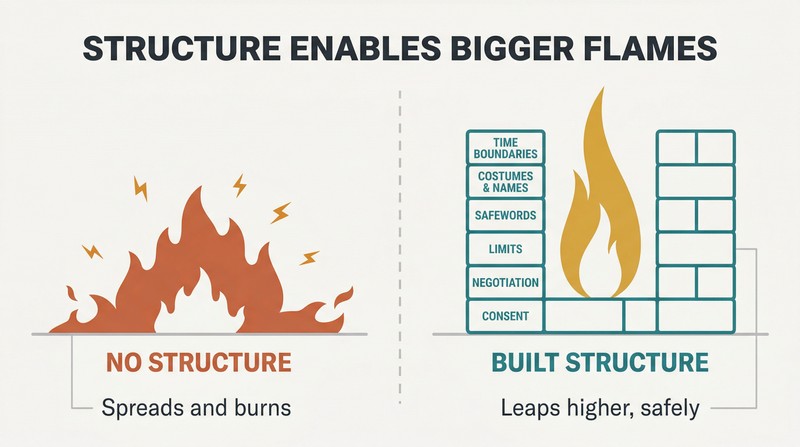
Scene space is your container. The authors compare BDSM to fire — destructive without containment, transformative within a well-built hearth. Scene space is the psychological and physical structure you create through negotiation, limits, safewords, costumes, names, and time boundaries. These elements form a "firewall" separating fantasy from reality, enabling both players to explore extreme roles while ensuring safe return.
Structure enables bigger play. Even symbolic bondage (a thread around the thumbs), names like "sir" and "boy," time agreements, and costumes all clarify roles and signal the top's commitment to awareness and control. Wise players study the structures others have developed, like art students studying the Old Masters — building on existing foundations lets you construct taller, stronger fireplaces so flames can leap higher, hotter, and safer.
Tops who won't ask for nurturance aren't tough — they're unsafe
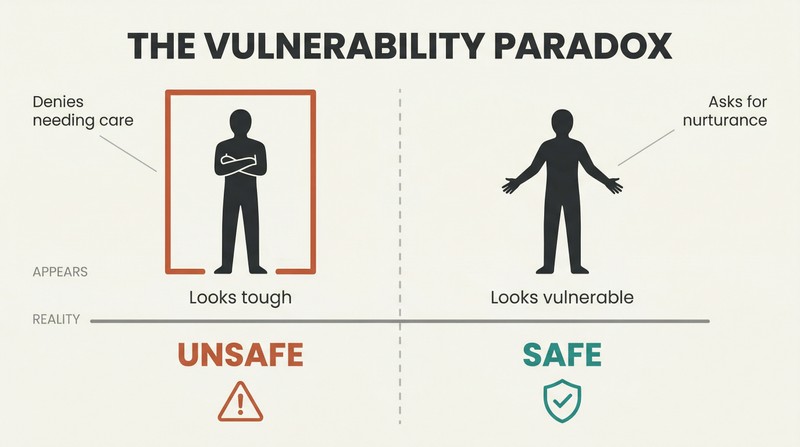
Vulnerability follows intensity. After playing a terrifying street hoodlum who kidnapped and tormented Dossie at a party, Janet sat at Dossie's feet and said, "Could you just pet me for a while, please?" She needed reassurance that Dossie still liked her after witnessing such a dark persona. The authors frame this need as normal and essential — accessing your shadow puts you into tremendous emotional vulnerability.
The Top's Bill of Rights explicitly includes the right to nurturance, support, and responsiveness. A bottom who withdraws the moment the whip goes down isn't meeting their obligations. The authors insist: a top pretending to be without vulnerability, compromise, or connection is an unsafe and unhealthy top. Emotional honesty isn't weakness — it's the foundation safe play demands.
Start lighter than you think possible, then build glacially
The leathermen lesson. Dossie recalls watching two intimidating leather-clad men at a party — aviator sunglasses, nickel studs gleaming. She expected mayhem. Instead, the top began with riding-crop taps as light as rain, flushing the skin with barely perceptible touches. Only after the bottom became entranced did he increase intensity by a single notch, pausing to establish rhythm at each new level. Eventually he was striking with full force, the bottom thrashing in wild abandon — but it took a patient, deliberate build.
The biggest novice mistake is escalating when the bottom starts responding. That response means you're doing something right — stay there. The same applies to control scenes: start with easy orders (remove clothes, kneel) before graduating to emotionally demanding ones. There is always next time.
Your bottom's body is broadcasting — learn the three channels
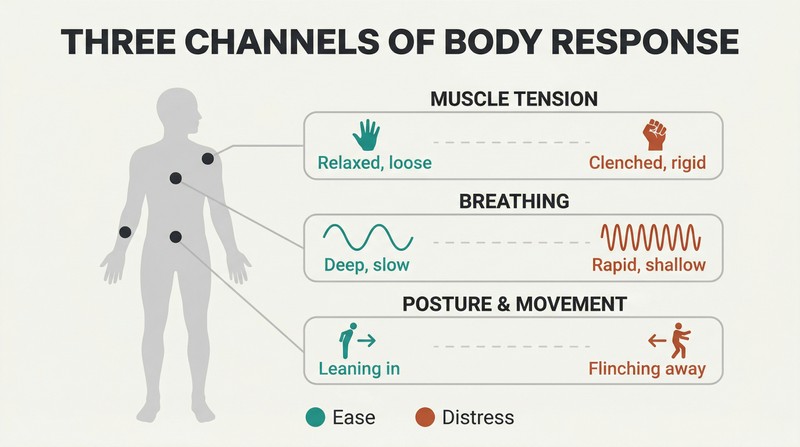
Even stoic bottoms emit signals. The authors identify three key channels to monitor constantly:
1. Muscle tension — relaxed and loose means happy; clenched fists, grimacing, and quivering muscles mean struggling
2. Breathing — deep diaphragmatic breaths signal ease; rapid shallow chest-breathing signals distress and risks hyperventilation
3. Posture and movement — leaning into sensation means "more"; flinching away means back off; rhythmic swaying signals the onset of trance
One powerful technique: Rather than verbally ordering a bottom to breathe slower, place your palm firmly on their chest or back and breathe audibly in the rhythm you want. Most bottoms instinctively synchronize. The authors note that impending orgasm looks remarkably like intense pain — context and familiarity matter enormously.
Frame needs as demands to get intel without losing authority
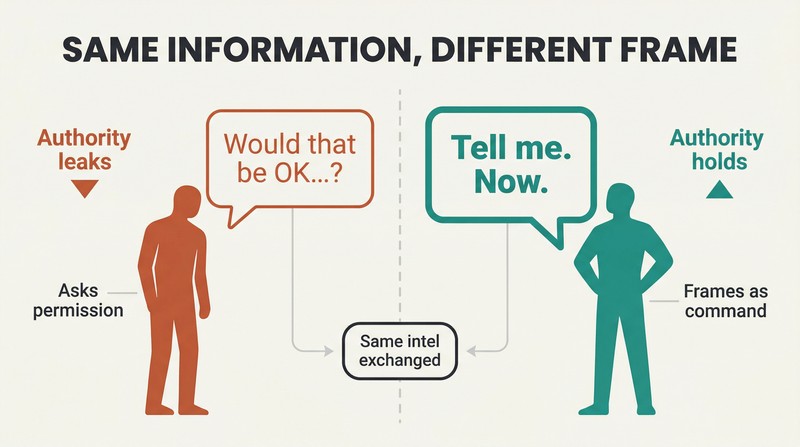
Negotiation is a top skill. Many bottoms struggle to share desires because it feels like ordering the top around. A professional dominatrix got so frustrated with a client who would only say "I only want to please you, Mistress" that she told him, "Then give me the money and leave; I'll go to a movie." Tops must actively create space for information — through letters, in-role commands, or structured out-of-role conversations.
Phrasing is everything. "I'd like to cane you now, would that be OK?" and "You're about to get a caning you'll never forget, you little slut" convey the same information but feel completely different. The art is phrasing requests so they sound like demands for your own pleasure, not fumbling for the bottom's preferences. In scene, you can even order a reluctant bottom to confess desires — embarrassment itself becomes part of the play.
Safewords belong to tops too — use them without shame
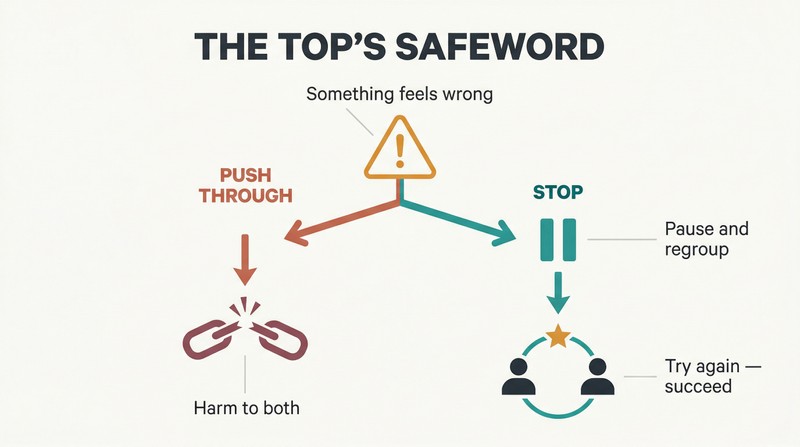
Dossie's branding story. After months of research and practice on potato slices, Dossie prepared to brand her lover at a gathering with invited friends. During the warm-up flogging, nothing felt right — connection was absent, gentle strokes landed wrong. The bottom wanted to proceed. Dossie refused, safewording out of the scene. She felt like an idiot, apologized fifty times, then reminded herself: it is never wrong to stop when something doesn't feel safe. A month later, they pulled off the branding beautifully.
S/M is not a competition. Responding to anyone's safeword with scorn or ridicule is unethical. If your bottom safewords and you feel anger or rejection — which is human — take three deep breaths and start caring for each other. The scene may not be over; often, addressing the issue lets both parties resume.
Never rank a scene by heaviness — only by whether it delivered
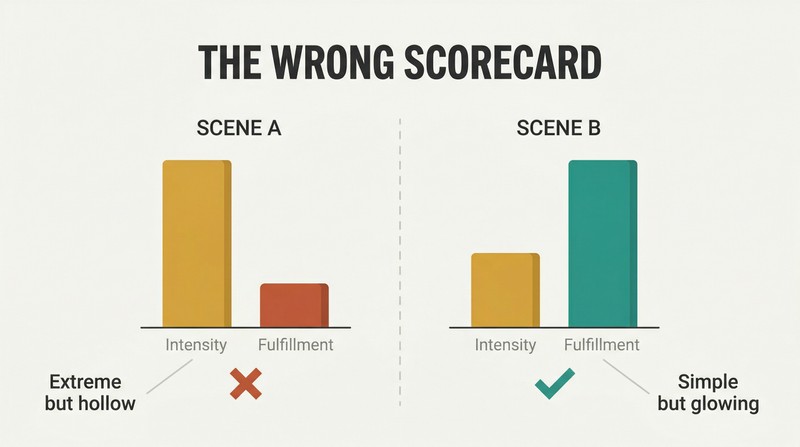
The hierarchy of hip about heaviness is the authors' term for a toxic BDSM cultural pattern where players who attempt extreme play are deemed superior to those whose gentle sessions leave partners glowing like a 200-watt bulb. The authors deplore this ranking. A handspanking that thrills both parties outranks a needle suspension that left someone cold. One player's mantra: "This is not a contest. This is not a contest."
The same poison infects identity labels. Phrases like "real dominant" or "true submissive" translate to "someone who plays in a way I approve of." The player doing a light session twice a year is doing something just as real as a 24/7 master-slave household. When you set an unattainable ideal and subtract points every time someone falls short, you guarantee disappointment.
Plan aftercare for yourself — top drop hits like postpartum crash
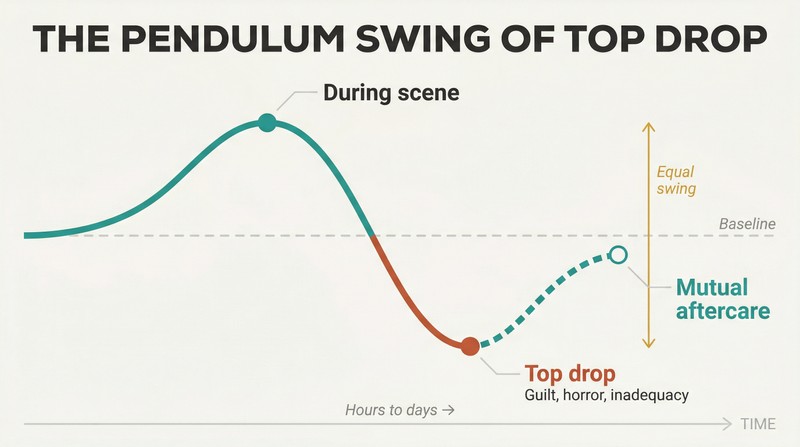
Top drop is the pendulum swinging back. Hours or days after an intense scene, many tops experience guilt, inadequacy, or horror — "What did I just do?" You may tear apart a genuinely transcendent scene, convince yourself your bottom was faking ecstasy, or question your sanity. The authors compare it to postpartum depression: you were very high, so the pendulum now swings low.
Playing parental roles cuts deepest. Coming out of daddy or mommy roles can awaken internalized messages from your own parents, making you feel like a child who did something terrible. In some cases, buried childhood memories surface as flashbacks or disturbing dreams. The practical advice: call your bottom for reassurance, share the aftercare equally, and consider therapy if old wounds keep reopening. Aftercare is mutual — bottoms should nurture their tops just as tops nurture them.
Shadow play eroticizes your forbidden selves to reclaim them
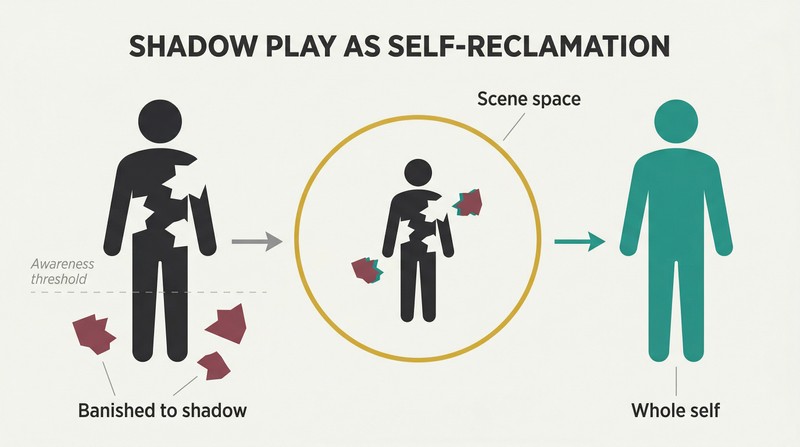
Jung's Shadow meets BDSM. The authors draw on Carl Jung's concept of the Shadow — the repository of everything we've banished from awareness: trauma, shame, rage, neediness, cruelty. Their thesis: our kinky desires may be the longing to reunite with lost parts of ourselves. When we eroticize forbidden roles, we inject self-rejection with the healing energy of Eros and confirm our enlarged selves through the affirmation of orgasm.
Dossie's workhouse scene illustrates this. Playing a pathetic orphan with Janet, she later realized she was reconnecting with a time in her twenties when she was actually destitute and pregnant — but couldn't afford to feel pathetic then. The scene, 25 years later, gave her compassion for her younger self. The shame dissolved. Not all play goes this deep, but the authors argue all BDSM is shadow play to some degree — finding acceptance for what's unacceptable outside scene space.
Analysis
The New Topping Book occupies a fascinating position in the literature on power dynamics. Published originally in 1994 and revised in 2003, Easton and Hardy anticipate by decades the mainstream conversation around consent culture, emotional labor, and the performative nature of authority that now permeates everything from corporate leadership to relationship psychology. Their central claim — that wielding power over another person is fundamentally an act of empathy, not dominance — inverts not just BDSM stereotypes but many Western assumptions about authority itself.
What makes the book intellectually significant beyond its niche is its integration of Jungian psychology, feminist power theory (power-over vs. power-with ), and practical ethics into a coherent framework for understanding human desire. The Shadow play chapters constitute a sophisticated lay treatment of projection, repression, and reintegration that many psychology texts could envy. The authors' thesis — that erotic exploration of forbidden emotions facilitates psychological healing — finds resonance in contemporary trauma research on exposure therapy and somatic experiencing, though they never make clinical claims. The book's limitations are products of its era. Written before widespread trauma-informed consent frameworks, some advice on pushing emotional boundaries reads as somewhat cavalier by current standards. The treatment of cultural trauma play, while nuanced for 2003, would benefit from contemporary discourse on power, privilege, and the ethics of engaging with others' historical suffering for personal growth.
Most striking is how the book reframes vulnerability as a core competency rather than a liability. In a culture equating dominance with invulnerability, Easton and Hardy argue that the top who cannot ask to be held, who cannot admit mistakes, who cannot cry after a scene, is not strong but dangerous. This insight extends far beyond any dungeon. Any person in authority — parent, manager, teacher — would benefit from the book's insistence that exercising power without self-knowledge and emotional openness is not strength but recklessness.
Review Summary
The New Topping Book receives mixed reviews, with ratings ranging from 1 to 5 stars. Readers appreciate its non-judgmental approach, feminist perspective, and exploration of BDSM psychology. Many find it informative for beginners, while experienced practitioners may find it repetitive. Some criticize its handling of race and cultural issues. The book is praised for its focus on communication, consent, and safety, but critiqued for lacking practical techniques. Several reviewers note its dated content and recommend it as an introductory resource rather than a comprehensive guide.
People Also Read



Glossary
Scene space
Safe container for BDSM playThe structured psychological and physical environment created through negotiation, limits, safewords, costumes, roles, and time boundaries that separates BDSM play from everyday reality. The authors compare it to a fireplace or hearth — a container that makes it safe to play with the fire of power dynamics, enabling both participants to explore extreme roles while ensuring safe return to normal life.
Power-over vs. power-with
Two models of wielding powerBorrowed from feminist theory. Power-over is a pattern where one person increases power by stealing it from others, as in rigid hierarchies. Power-with is a model where sharing power creates more for everyone. The authors argue BDSM uses power-with: the bottom lends power to the top, the top adds their own, and together they generate enormous shared voltage that both can ride.
The hierarchy of hip about heaviness
Toxic intensity-based ranking systemThe authors' coined term for a destructive pattern in BDSM culture where players are judged based on how extreme or intense their play is, rather than on whether all participants had a satisfying experience. Under this hierarchy, someone whose bullwhip scene went mediocre ranks higher than one whose gentle spanking produced profound mutual satisfaction.
The Forever Place
Deep altered state beyond judgmentA state in which a bottom becomes so endorphined out or psychologically immersed that they want to continue indefinitely and lose the ability to judge whether harm is being done. The bottom may go very still, seem fine while unable to respond to questions, or appear deceptively lucid. When a bottom enters The Forever Place, the top must provide judgment and physical monitoring for both parties.
Shadow play
BDSM exploring deep psychological territoryThe authors' term for BDSM scenes that deliberately delve into forbidden psychological territory — rage, shame, childhood trauma, cultural oppression, and other material banished to what Carl Jung called the Shadow. Drawing on Jungian theory, the authors propose that kinky desires represent a longing to reunite with rejected parts of the self, and that eroticizing these forbidden roles can facilitate psychological healing and greater wholeness.
Top drop
Post-scene emotional crash for topsA phenomenon experienced by many tops hours or days after an intense scene. Symptoms include guilt, shame, self-doubt, exhaustion, and questioning one's sanity for enjoying such activities. The authors compare it to postpartum depression — a pendulum swing after an emotional high. It may also involve triggered childhood memories, especially after playing parental roles.
Black holes
Unresponsive bottoms during playA colloquially rude term for bottoms who produce insufficient visible or audible response for the top to gauge whether the scene is working. Without feedback, the top cannot determine what is effective, when it is safe to escalate, or when to stop. Remedies include coaching the bottom to vocalize and move their body, modeling enthusiasm, and directly requesting specific responses.
Blank-paperitis
Mid-scene creative block for topsThe authors' humorous term for the brain-dead feeling a top experiences when looking at a bottom mid-scene and being unable to imagine what to do next. Remedies include falling back on a pre-planned outline of activities, repeating what worked earlier in the scene, or simply pausing to re-center and wait — the bottom isn't going anywhere, and suspense itself can be powerful.
Yes, No and Maybe
Limit-clarifying categorization exerciseAn exercise in which a player lists all sexual and BDSM activities they can think of and sorts each into Yes (known to enjoy), No (known to dislike), or Maybe (potentially appealing under right circumstances). Useful for honestly clarifying one's own limits and as a structured conversation tool with partners. The authors suggest trying it privately first if you feel pressure to appear limitless.
Two squeezes
Non-verbal safety check-in techniqueA check-in method credited to Jay Wiseman's SM 101. The top squeezes part of the bottom's body (often the hand) twice. If the bottom is OK, they squeeze back twice. If no return squeezes come after a second attempt, the top assumes something is wrong and breaks role to communicate verbally. Useful when bottoms are too non-verbal, gagged, or deeply in scene to respond to spoken questions.
FAQ
What's "The New Topping Book" about?
- Exploration of Topping: "The New Topping Book" by Dossie Easton and Janet W. Hardy is a comprehensive guide to the art and practice of topping in BDSM. It explores the psychological, emotional, and physical aspects of being a top.
- Cultural Changes: The book discusses the evolution of BDSM culture over the years, including the impact of the internet and the growing visibility of BDSM communities.
- Practical Advice: It provides practical advice on how to engage in BDSM safely and consensually, emphasizing the importance of communication, negotiation, and understanding personal limits.
Why should I read "The New Topping Book"?
- Comprehensive Guide: It offers a thorough exploration of the roles and responsibilities of a top, making it an essential read for anyone interested in BDSM.
- Ethical Framework: The book emphasizes ethical practices, ensuring that readers understand the importance of consent and mutual respect in BDSM play.
- Personal Growth: It encourages personal growth and self-discovery, helping readers to explore their desires and boundaries in a safe and informed manner.
What are the key takeaways of "The New Topping Book"?
- Consent is Crucial: Consent is the foundation of all BDSM activities, and the book stresses the importance of clear communication and mutual agreement.
- Continuous Learning: Topping is a skill that requires continuous learning and practice, and the book provides guidance on how to improve and refine these skills.
- Emotional and Physical Safety: The book highlights the importance of ensuring both emotional and physical safety for all participants, offering strategies to manage risks and handle emergencies.
How does "The New Topping Book" define BDSM?
- Consensual Power Exchange: BDSM is defined as a consensual power exchange where participants eroticize sensations or emotions that would be unpleasant in a non-erotic context.
- Diverse Activities: It encompasses a wide range of activities, including bondage, discipline, dominance, submission, sadism, and masochism.
- Not Pathological: The authors emphasize that BDSM is not an expression of pathology but a valid form of sexual expression and exploration.
What are the rights and responsibilities of a top according to "The New Topping Book"?
- Right to Clear Communication: Tops have the right to clear communication from their partners about needs, wants, and limits.
- Responsibility for Safety: Tops are responsible for ensuring the physical and emotional safety of their partners, including being prepared for emergencies.
- Right to Support: Tops have the right to expect support from their partners, both during and outside of scene space, and to have their own needs met.
How does "The New Topping Book" suggest learning to top?
- Join Support Groups: The book recommends joining BDSM support groups to learn from experienced players and attend demonstrations.
- Practice and Experiment: It encourages practicing on oneself or inanimate objects to understand sensations and improve technique.
- Learn from Bottoming: The authors suggest that many tops benefit from experiencing bottoming to better understand the sensations and emotions involved.
What is the role of intuition in topping according to "The New Topping Book"?
- Intuition as a Guide: Intuition is described as the ability to know something without knowing how you know it, and it can guide tops in reading their partners' states.
- Developing Intuition: The book suggests focusing on the moment and staying open to perceptions to develop intuition.
- Limits of Intuition: While intuition can be powerful, it has its limits, and tops should always prioritize safety and consent over intuitive impulses.
What are some ethical considerations in BDSM as outlined in "The New Topping Book"?
- Respecting Limits: Both tops and bottoms must respect each other's limits, and consent must be clear and specific.
- Confidentiality: Maintaining confidentiality is crucial to protect the privacy and safety of all participants.
- Non-Blaming Approach: The book advocates for a non-blaming approach to resolving conflicts, focusing on understanding and mutual support.
How does "The New Topping Book" address the concept of shadow play?
- Exploring Deep Emotions: Shadow play involves exploring deep psychological territory, such as trauma or forbidden emotions, in a controlled and consensual manner.
- Potential for Healing: The book suggests that shadow play can be healing, allowing participants to confront and transform difficult emotions.
- Careful Negotiation: It emphasizes the importance of careful negotiation and aftercare to ensure the safety and well-being of all involved.
What advice does "The New Topping Book" offer for finding others in the BDSM community?
- Join Communities: The book encourages joining BDSM communities, both online and offline, to connect with like-minded individuals.
- Attend Munches and Events: Munches and BDSM events are recommended as safe spaces to meet others and learn more about the community.
- Be Open and Honest: It advises being open and honest about one's interests and limits when seeking partners.
What are some recommended toys for tops in "The New Topping Book"?
- Basic Toys: The book suggests starting with basic toys like rope, restraints, blindfolds, and soft floggers for beginners.
- Advanced Toys: As tops gain experience, they might explore more advanced toys like canes, clamps, and electrical devices.
- Toy Maintenance: Proper maintenance and cleaning of toys are emphasized to ensure safety and hygiene.
What are the best quotes from "The New Topping Book" and what do they mean?
- "Consent is only meaningful if it can be withdrawn without risking undue criticism, judgment or rejection." This quote highlights the importance of respecting a partner's right to withdraw consent at any time without fear of negative consequences.
- "In S/M, the participants have one another’s wellbeing as their paramount goal." This emphasizes the mutual responsibility of all participants to prioritize each other's safety and well-being.
- "S/M is play, theater, communication, intimacy, sexuality." This quote encapsulates the multifaceted nature of BDSM, combining elements of performance, connection, and eroticism.
About the Author
Other books by Dossie Easton

Download PDF
Download EPUB
.epub digital book format is ideal for reading ebooks on phones, tablets, and e-readers.








































