
Key Takeaways
1. Laying an economic foundation through industrial education is vital for initial progress.
Without industrial development there can be no wealth; without wealth there can be no leisure; without leisure no opportunity for thoughtful reflection and the cultivation of the higher arts.
Building from the ground up. Booker T. Washington argues that true racial advancement must begin with practical, economic self-reliance. By mastering agricultural and industrial trades, individuals secure property, establish bank accounts, and foster habits of thrift. This material foundation is not an end in itself, but the necessary precursor to higher cultural, artistic, and intellectual pursuits.
Dignifying manual labor. The transition from being forced to work under slavery to choosing to work as free citizens requires a psychological shift. Industrial education elevates manual labor from mere drudgery to a dignified, scientific endeavor.
- Shifting focus from abstract "mental gymnastics" to practical community needs.
- Utilizing modern technology to make the forces of nature work for the laborer.
- Establishing local enterprises like dairies, carpentry shops, and farms.
Tangible results over rhetoric. Washington asserts that concrete economic achievements speak louder than political agitation. A single successfully run farm, a well-built home, or a growing bank account does more to dismantle racial prejudice than any amount of abstract eloquence. By proving their indispensable economic value to their local communities, Black Americans can secure long-term respect and civil rights.
2. The "Talented Tenth" must be cultivated to provide intellectual and moral leadership.
The Negro race, like all races, is going to be saved by its exceptional men.
The necessity of elite leadership. W.E.B. Du Bois contends that a group's progress is driven from the top down by its most intellectually gifted members. This "Talented Tenth" must be thoroughly educated in the liberal arts and sciences to act as guides, teachers, and moral exemplars for the masses. Without this educated vanguard, the community risks falling prey to demagogues and social stagnation.
Higher education as a foundation. To establish a functioning system of common and industrial schools, there must first be highly trained teachers. Du Bois argues that focusing solely on manual training without supporting universities is a self-defeating strategy.
- Liberal arts colleges supply the teachers who staff industrial and primary schools.
- Higher education preserves the transmission of culture, history, and philosophy across generations.
- Intellectual centers prevent a community from prioritizing material wealth over human character.
The true purpose of education. For Du Bois, the ultimate goal of schooling is not merely to produce efficient workers, but to develop complete human beings. Education must look beyond the immediate demands of the marketplace to cultivate broad sympathies, critical thinking, and moral clarity. By focusing on manhood rather than money-making, the Talented Tenth can uplift the entire social order.
3. Political enfranchisement is an indispensable shield against systemic oppression.
To wilfully neglect the suffrage, to hold it lightly, is to tamper with a sacred right; to yield it for anything else whatever is simply suicidal.
The protective power of the ballot. Charles W. Chesnutt argues that the right to vote is the fundamental safeguard of all other civil and economic liberties. When a class of citizens is systematically disfranchised, they are left entirely defenseless against legal exploitation, unfair taxation, and physical violence. The ballot is not a luxury to be earned through wealth or education, but a primary tool of self-defense.
The fallacy of silent submission. Chesnutt strongly critiques the idea that Black Americans should temporarily surrender their political rights in exchange for economic peace. History demonstrates that yielding fundamental rights only invites further aggression and codifies a permanent caste system.
- Disfranchisement leaves communities without representation in legislatures, courts, and school boards.
- It enables the rise of exploitative labor systems like peonage under the cover of law.
- It reduces citizens to a status lower than that of aliens, dependent entirely on the favor of others.
A national constitutional duty. The struggle for voting rights is not merely a local or racial issue, but a test of the nation's commitment to its own constitutional principles. Chesnutt calls on public opinion, Congress, and the federal courts to aggressively enforce the Fourteenth and Fifteenth Amendments. True progress cannot occur when a republic tolerates the open subversion of its supreme law.
4. True justice requires equal representation in the administration and enforcement of law.
It is mainly in the enforcement, or the administration of the laws, however fair and equal they may appear on their face, that the constitutional rights of negroes to equal protection and treatment are denied...
The gap between law and practice. Wilford H. Smith highlights how discriminatory practices undermine the constitutional guarantees of the Reconstruction amendments. Even when state laws appear neutral on their face, their biased administration by local officials effectively denies equal protection. True equality before the law cannot exist when the judicial system is weaponized against a specific group.
The critical role of jury representation. A major source of legal injustice is the systematic exclusion of Black citizens from grand and petit juries. Without representation on juries, individuals face biased trials where their testimony is routinely discounted in favor of white litigants.
- Jury exclusion deprives the accused of a trial by a fair cross-section of their peers.
- It allows malicious prosecutions and wrongful convictions to proceed unchecked.
- It undermines public trust in the integrity of the entire judicial branch.
The danger of legal helplessness. When a group has no voice in making, administering, or enforcing laws, they are left vulnerable to predatory economic contracts and physical violence. Smith warns that relying on the paternalistic goodwill of a dominant class is a dangerous substitute for enforceable legal rights. Only through rigorous, persistent legal challenges can the promise of equal protection be made a reality.
5. Progress requires distinguishing between inherent racial traits and the negative heritages of slavery.
Inborn qualities are ineradicable; they belong to the blood... Inbred qualities are acquired, and are the result of experience.
Analyzing character traits. H.T. Kealing provides a psychological framework for understanding the social condition of Black Americans by separating "inborn" traits from "inbred" habits. Inborn qualities, such as deep religious devotion, imagination, and physical endurance, are permanent strengths. In contrast, negative behaviors like shiftlessness, improvidence, and mutual suspicion are not inherent, but are the direct, learned survival mechanisms of slavery.
Overcoming the legacy of bondage. Because negative traits are "inbred" through centuries of oppression, they can be systematically unlearned and replaced through targeted education and social reform.
- Replacing emotional religious paroxysms with stable, ethical principles.
- Transforming a survival-based disregard for property into habits of strict honesty and business reliability.
- Overcoming the mutual distrust sown by slavery to build strong cooperative institutions.
The role of character education. Kealing argues that schools must focus heavily on moral and practical training to correct these historical deformities. Education must teach self-reliance, long-term planning, and the sanctity of the home alongside academic subjects. By consciously cultivating positive social habits, the community can fully unlock its inherent creative and spiritual potential.
6. Exceptional individual achievements in science, art, and leadership inspire collective advancement.
To have achieved something for the betterment of his race rather than for the aggrandizement of himself, seems to be a man’s best title to be called representative.
The power of exemplary figures. Paul Laurence Dunbar highlights the vital role that outstanding individuals play in shifting public perception and inspiring their peers. True representatives are not merely those who hold political office, but those who achieve excellence in fields like science, art, literature, and medicine. Their success provides undeniable proof of the group's intellectual and creative capacities.
Broadening the scope of achievement. Dunbar showcases a diverse array of figures who have excelled far beyond the limitations of manual labor. These individuals demonstrate that the community's contributions to civilization extend into the highest realms of human endeavor.
- Scholars and educators who challenge intellectual skepticism through rigorous academic work.
- Artists, writers, and musicians who translate the unique emotional experience of their people into universal masterpieces.
- Inventors, surgeons, and entrepreneurs who excel in highly technical and competitive fields.
Inspiration for the next generation. The achievements of these pioneers serve as a powerful counter-narrative to racial prejudice and self-doubt. By celebrating genuine excellence rather than superficial political status, the community establishes healthy, attainable ideals for its youth. Ultimately, these individual triumphs pave a golden path toward broader social integration and mutual respect.
7. The path to full citizenship relies heavily on individual character, thrift, and home-building.
There can be no healthy growth in the life of a race or a nation without a self-reliant spirit animating the whole body...
The primacy of self-reliance. T. Thomas Fortune emphasizes that sustainable progress cannot be bestowed from the outside; it must be generated from within through a self-reliant spirit. While legal and political battles are necessary, the ultimate foundation of an honorable status in society is the development of individual character, economic independence, and stable family lives.
The transformative power of the home. Fortune identifies the creation of a comfortable, moral, and happy home life as one of the greatest achievements of the post-emancipation era. The home serves as the primary incubator for the civic virtues required for true citizenship.
- Accumulating land and property to transition from economic dependency to self-employment.
- Reducing illiteracy through an insatiable, self-funded thirst for knowledge.
- Building robust, independent religious and civic institutions that command external respect.
A gradual but assured evolution. Despite the severe setbacks of the post-Reconstruction era, Fortune remains optimistic about the long-term future. He argues that as individuals steadily acquire wealth, education, and moral standing, the barriers of prejudice will inevitably erode. By focusing on personal excellence and economic utility, Black Americans are gradually and irreversibly securing their rightful place in the nation.
8. True education must teach both the skills to make a living and the wisdom of how to live.
Education must not simply teach work—it must teach Life.
Synthesizing the educational debate. The ongoing debate between industrial training and liberal higher education is resolved by recognizing that both are essential components of a complete educational system. While manual and technical skills are vital for immediate economic survival, they must be guided by a deeper understanding of human culture, ethics, and civic responsibility.
The danger of one-sided training. Overemphasizing either side of the educational spectrum creates dangerous social imbalances. A community trained only for labor risks becoming a servile class, while a community focused only on theory may lack the practical means to sustain itself.
- Industrial training provides the physical tools and economic independence needed to survive.
- Liberal education provides the critical thinking and moral vision needed to lead.
- A balanced approach ensures that workers are not merely efficient machines, but active, thoughtful citizens.
A unified vision for progress. Ultimately, the goal of all education is to elevate the individual and the community simultaneously. By combining the practical discipline of the hand with the moral and intellectual cultivation of the mind, a struggling people can build a secure, self-reliant, and culturally rich future.
Review Summary
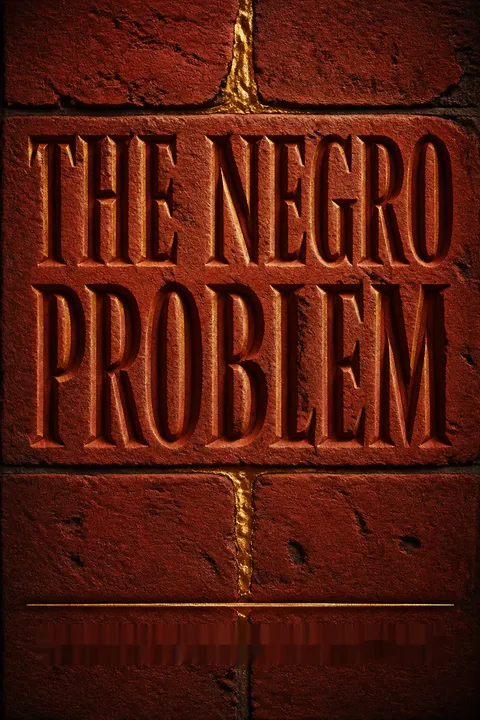
Readers generally find The Negro Problem to be an insightful and still-relevant collection of essays, praising its perspectives on education, racism, and upward mobility for African Americans. Many note that despite being written over a century ago, its themes remain applicable today. Reviewers appreciate the diverse viewpoints from prominent Black scholars, though some find the unchanged nature of racial issues disheartening. The book is frequently described as a must-read for all races and nationalities.

Download PDF
Download EPUB
.epub digital book format is ideal for reading ebooks on phones, tablets, and e-readers.








































