
Key Takeaways
1. Nationalism is a Modern Invention, Not an Ancient Truth
The idea that national character is fixed for all time in a simpler, distant past is groundless, he argues in this unflinching reconsideration of European nationhood.
Nineteenth-century origins. Modern nationalism, as we understand it today, is largely a product of the nineteenth century. This era saw intellectuals and politicians actively "inventing" national communities, transforming earlier romantic traditions into potent political ideologies. This process was not merely an acknowledgment of pre-existing peoples but often the very creation of them.
Tools of invention. The development of "scientific" history and Indo-European philology provided the intellectual tools for this invention. Scholars, often funded by states, meticulously edited and published "monuments of national history," defining national canons and projecting them into a distant, often mythical, past. This academic endeavor, while appearing neutral, was deeply intertwined with nationalist aims.
Dangerous legacy. This "scientific" approach to history, particularly ethnoarchaeology, sought to link distinct material cultures to linguistic groups, thereby justifying territorial claims. The resulting myths of static, homogeneous peoples with ancient, immutable territories have created a "toxic waste dump" of ethnic nationalism, fueling conflicts and violence across Europe for over a century.
2. Ancient "Peoples" Were Fluid, Not Fixed
Few of the peoples that many Europeans honor as sharing their sense of "nation" had comparably homogeneous identities; even the Huns, he points out, were firmly united only under Attila's ten-year reign.
Dynamic and heterogeneous. Contrary to nationalist narratives, the "peoples" of Late Antiquity and the early Middle Ages were far from homogeneous or stable. Groups like the Goths, Franks, or Alamanni were complex, polyethnic confederations, constantly shifting in composition, language, and cultural practices. Their identities were fluid, adaptable, and often situational.
Beyond simple classifications. Roman observers, despite their attempts to categorize barbarians neatly, often noted the internal diversity of these groups. For instance, Ammianus Marcellinus described the Alamanni as a complex confederation, and Priscus observed the Huns as a composite of various peoples speaking different languages. These firsthand accounts reveal a messiness that defied rigid ethnographic theories.
Names as flexible vessels. What often remained constant across centuries were the names of these "peoples," but the social, cultural, and political realities they represented changed radically. These names were "renewable resources," appropriated and reinterpreted by new leaders to rally followers, claim continuity, and legitimize new power structures, masking radical discontinuities.
3. Roman Identity Was Constitutional, Not Ethnic
The populus Romanus alone, unlike foreign "peoples," had a history. That history was the story of how the Roman people, as a body of individuals who lived according to a single law, came into being.
A legal construct. Roman identity, embodied in the populus Romanus, was fundamentally constitutional, not ethnic. It was based on law, allegiance, and a shared political and cultural tradition, making it theoretically accessible to all. This contrasted sharply with the biological, immutable categories Romans often applied to "barbarian" outsiders.
Layered loyalties. For most inhabitants of the Roman Empire, "Roman" was not their primary self-identifier. Instead, individuals felt stronger attachments to their:
- Class (slave vs. free, honestiores vs. humiliores)
- Occupation
- City or region (patria)
This multilayered identity meant Romanitas was a context within which local particularities could flourish, rather than a singular, exclusive ethnicity.
Evolving citizenship. The universalization of Roman citizenship in 212 CE, primarily for fiscal and military reasons, paradoxically diminished its significance as a unique identifier. As the Empire faced internal and external pressures, local elites increasingly prioritized regional security and wealth over abstract imperial unity, foreshadowing the eventual fragmentation of the West.
4. Barbarian Identities Were Politically Constructed
The constitutional integrity of these peoples, then, was dependent on warfare and conquest for their identity and continuity: They were armies, although their economies remained dependent on raiding and a combination of animal husbandry and slash-and-burn agriculture.
Charismatic leadership. Barbarian "peoples" were often fluid military confederations, coalescing around charismatic warrior leaders whose legitimacy stemmed from their ability to lead armies to victory. These leaders, like the Goth Cniva or the Frank Clovis, could attract diverse warriors, forming new groups that might claim ancient, divinely sanctioned pasts to legitimize their rule.
Fluid social structures. Barbarian societies were typically small communities of farmers and herders, organized into nuclear households and wider kin groups (clans). However, membership in these larger circles was elastic, allowing individuals to choose affiliations based on circumstances. This inherent fluidity meant that "ethnic" identity was extraordinarily adaptable, with groups emerging and disappearing rapidly.
Roman influence. Roman imperial policy actively shaped barbarian identities by creating client buffer-states and supporting pro-Roman chieftains with wealth and military experience. This destabilized the barbarian world, fostering both large, unstable confederations and the rise of leaders who could manipulate dual Roman and barbarian identities to their advantage.
5. The Hunnic Impact Reshaped Europe's Peoples
The Hunnic confederation was the first of a long series of steppe movements that would terrify China and Europe from the fourth to the fifteenth centuries.
Unprecedented force. The arrival of the Huns in 375 CE was a cataclysmic event that fundamentally altered the political and social landscape of Europe. Their unique nomadic lifestyle, mounted warfare, and ability to rapidly absorb defeated warriors created a new, terrifying model of power that shattered existing barbarian confederations like the Goths.
Polyethnic empire. The Hunnic confederation, especially under Attila, was a highly heterogeneous entity. Its leadership included warriors from various backgrounds, and its court used multiple languages. While some conquered peoples were fully assimilated, many were kept as subservient populations, providing food and troops, highlighting the pragmatic, rather than purely ethnic, nature of Hunnic rule.
Disintegration and new ethnogenesis. The Hunnic Empire's fragility was exposed after Attila's death, leading to its rapid disintegration. This collapse, however, was not an end but a catalyst for new ethnogenesis. Remnants of the Hunnic confederation, along with previously subjugated groups like the Gepids, Rugii, Skiri, and Ostrogoths, formed new polities, often entering Roman service as federates.
6. Kingdoms Forged New, Amalgamated Identities
The great strength of the Frankish synthesis was the creation of a unified society, drawing on the legacies of Roman and barbarian traditions.
Beyond dual societies. The model of barbarian kingdoms maintaining two distinct communities—one Roman and civilian, the other barbarian and military—ultimately failed, as seen with the Vandals and Ostrogoths. More enduring were kingdoms like those of the Franks and in Britain, where Roman and barbarian distinctions rapidly blurred or disappeared entirely.
Lombard Italy's fusion. The Lombard conquest of Italy, though violent, led to a gradual amalgamation of Lombard and Roman society. Initially, Lombards subordinated the Roman elite, but over time, they adopted Roman customs, intermarried, and integrated legal traditions. By the eighth century, "Lombard" became a designation of class and wealth, while "Roman" referred to inhabitants of Byzantine-controlled territories.
Frankish synthesis. In northern Gaul, Clovis's orthodox conversion facilitated a swift amalgamation of Franks and Romans. The Frankish kingdom did not create a strong, distinct identity separate from Rome but rather emphasized commonalities, even claiming Trojan ancestry. This led to a unified society where the elite population rapidly identified as Frankish, regardless of their original lineage.
7. Law and Religion Became Tools of Identity
Arianism was neither a proselytizing faith nor a persecuting one. At the most, Arians demanded the use of one or more churches for their worship.
Religious markers. For many barbarian kingdoms, Arian Christianity became a crucial element of their self-identity, distinguishing them from the orthodox Roman majority. While not always a proselytizing or persecuting faith, it served as a cultural border. However, the eventual conversion of these Arian elites, like the Visigoths under Reccared, removed a significant barrier to assimilation.
Legal frameworks. Barbarian kings used legal codes to forge new identities for their peoples. Codes like the Visigothic Code of Euric or the Lombard Laws sought to regulate relations between barbarians and Romans, and eventually applied to all inhabitants. These laws, often drawing on local traditions while asserting royal authority, became a means of defining who belonged to the "people" of the kingdom.
Law as a resource. Over time, legal identity became less about birthright and more about choice or privilege. In Lombard Italy, individuals could choose to follow Lombard or Roman law, and in the Carolingian Empire, royal agents retained their own legal autonomy wherever they settled. This "personality principle" created a patchwork of legal systems, where law was a resource rather than an immutable ethnic fact.
8. "Roman" and "Barbarian" Terms Evolved Dramatically
With the disappearance of barbarians from the Empire, Romans vanished as well.
Shifting definitions. As barbarian kingdoms consolidated and their populations amalgamated, the traditional Roman dichotomy of "Roman" versus "barbarian" lost its meaning. "Barbarian," once a term for non-Romans, began to signify "foreigner" or "pagan foreigner," reflecting the Christianization of the former imperial territories.
The vanishing Roman. Simultaneously, the term "Roman" ceased to be a primary self-identifier for the elites of the former Western Empire. Historians like Gregory of Tours used regional or class designations instead. By the eighth and ninth centuries, "Romanus" in the Frankish realm primarily referred to inhabitants of the city of Rome or specific regions like Aquitaine, no longer a universal identity.
New political labels. The old "gentile" names, like Frank, Lombard, or Goth, transformed into labels for geographically defined kingdoms, encompassing all their Christian inhabitants. These terms became political and territorial designations, reflecting the new realities of stable polities rather than distinct ethnic or cultural groups.
9. The Slavic Ethnogenesis: A Decentralized Transformation
Their spread was slow but violent, followed by the absorption of indigenous populations into their linguistic and social structures.
Unique expansion. Unlike the Germanic migrations, the Slavicization of Central and Eastern Europe between the fifth and seventh centuries occurred without powerful kings, heroic migrations, or grand battles. It was a decentralized, agrarian process, with Slavic warrior-settlers moving across the Danube and into the Balkans, absorbing indigenous populations into their linguistic and social structures.
Lack of centralization. Early Slavic societies were characterized by a remarkable unity in language and material culture across Eastern Europe, yet a radical lack of indigenous political centralization. Byzantine historians noted their democratic, non-monarchical organization. This decentralization made them difficult for the Byzantine Empire to either destroy or co-opt.
External catalysts. Large-scale, hierarchical organization among Slavic groups often arose from external influences, particularly the Avars. The Avar confederation, a powerful steppe empire, provided the context for the ethnogenesis of specific Slavic groups like the Croats, Serbs, and Bulgars. These groups, often bearing non-Slavic names derived from Avar titles, formed in opposition to or under the influence of their Avar lords.
10. History is a Continuous Process, Not a Static Origin
The history of European peoples in Late Antiquity and the early Middle Ages is not the story of a primordial moment but of a continuous process.
Against static history. Contemporary nationalist appeals to history often rely on a static, ahistorical notion of a "moment of primary acquisition," where a people's sacred territory and national identity were supposedly fixed. This perspective fundamentally misunderstands history as a dynamic, ever-changing process of political appropriation and cultural transformation.
Constant change. The reality of European peoples in Late Antiquity and the early Middle Ages was one of constant change, radical discontinuities, and political zigzags. Old words were repeatedly re-appropriated to define new realities, masking the fluidity of identities. The Franks of Clovis were not the Franks of Charlemagne, nor were the Serbs of the Avar Empire the Serbs of Milosevic.
A work in progress. Ethnogenesis is an ongoing process, not a completed event. No effort can preserve an "essential soul" of a people or nation for all time. Historians have a duty to challenge these enduring myths, recognizing that the past sets parameters for the future but does not determine it. Peoples are processes, not atomic structures.
11. The Zulu Story Mirrors European Myth-Making
This memory is indeed powerful, but it is also imaginary. The "history" of the Zulu ethnogenesis is a modern creation, constructed from internal views of how the world ought to be and from external schemas of how a people's history ought to read.
Parallel narratives. The "classic" story of Zulu ethnogenesis, recorded by missionary A. T. Bryant, strikingly parallels European narratives of migration and nation-building. Bryant consciously molded Zulu oral traditions into a framework familiar to European readers, drawing explicit comparisons to biblical Exodus narratives and the histories of Germanic peoples.
Colonial lens. Bryant's work, like that of early medieval "narrators of barbarian history," was shaped by his own cultural and political preconceptions. He assumed a single, correct Zulu past and projected European notions of enduring, ethnically united clans onto his subject, effectively creating a "real history" that resonated with European imperialist views.
Revising the myth. Modern African historians have reinterpreted Zulu history, recognizing oral traditions as "political statements" and past polities as fluid. They show that the homogeneous "Nguni" never existed and that migration stories were mythic "founding charters." Zulu ethnogenesis was a complex process, driven by factors like European trade and the militarization of social structures, leading to a three-tiered society with an invented ethnic identity for its ruling class.
Review Summary
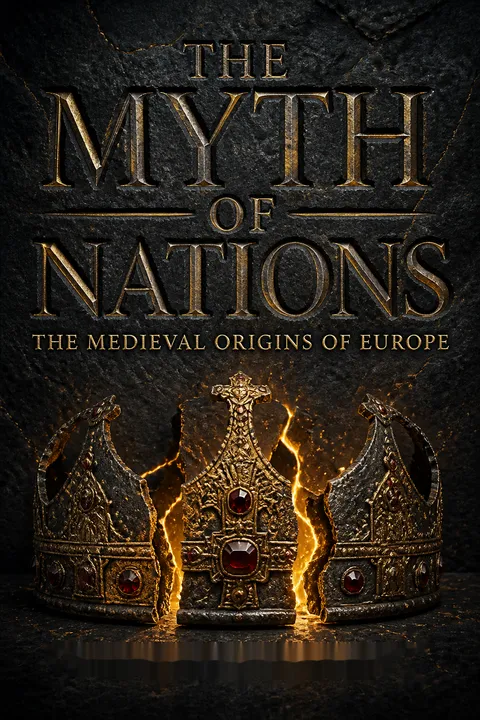
The Myth of Nations examines how European national identities are modern constructs rather than ancient continuities. Patrick J. Geary argues that 18th and 19th-century historians manipulated medieval history to create nationalist myths, projecting contemporary ideas onto fluid past populations. Reviewers praise the book's deconstruction of ethnic nationalism and its demonstration that peoples constantly evolved through migration and amalgamation. While some find the middle sections on late antiquity dense or unfocused, most appreciate Geary's argument that national identities emerged from political manipulation rather than historical reality. The work remains highly relevant for understanding modern nationalism's false claims to ancient origins.
People Also Read

Download PDF
Download EPUB
.epub digital book format is ideal for reading ebooks on phones, tablets, and e-readers.








































