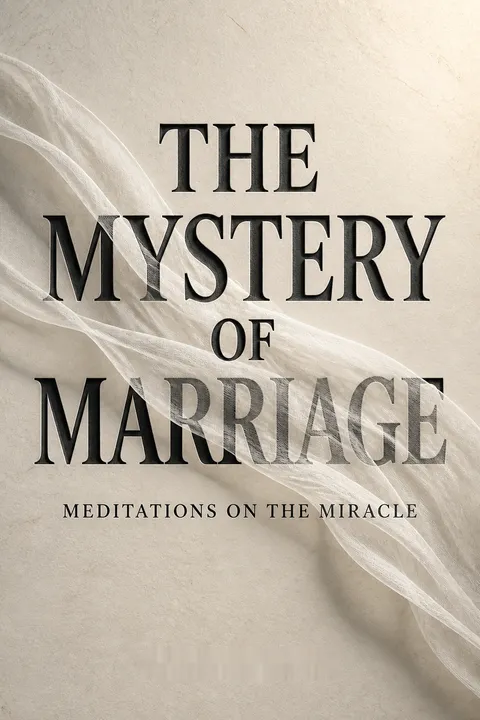

Key Takeaways
1. Marriage is a Spiritual Crucible, Not a Sanctuary
A man’s home is not his castle so much as his monastery, and if he happens to be treated like a king there, then it is only so that he might better be enabled to become a servant.
A drastic course. Marriage is often mistakenly viewed as a comfortable retreat from the world's harshness, a personal castle where one can be oneself without challenge. However, it is, in truth, a rigorous spiritual discipline, a "monastery" designed for profound self-sacrifice and growth. It systematically confronts individuals with their sinfulness, urging daily repentance and change.
Vigorous self-denial. This holy order demands a life of vigorous self-denial, a disciplined path of renunciation and retreat from worldly self-interest. It's an audacious attempt at cooperation between two powerful, self-assertive wills, inevitably becoming a "furnace of conflict" where wills are melted down and purified. The goal is not to win these struggles but to willingly diminish oneself for God's glory.
Embracing diminishment. The journey of marriage is one of profound acquiescence, a willing compliance with both God and one's partner in the process of personal subdual. It requires accepting a "state of personal siege" and realizing that one's own self must not emerge victorious. This "one-downmanship" is the Lord's design, leading to peace and joy through diminishment, mirroring John the Baptist's declaration: "He must increase, but I must decrease."
2. Love Demands Everything and Demolishes the Ego
Love is spiritual warfare.
An invasive force. From the moment two people fall in love, a process of "interior disintegration" begins, challenging everything one's life has stood for. Love is not merely delightful; it's a "terrible decision to live with," an immense pressure that can only be handled by ever-increasing doses of love itself. It's a "trap of pure love," imprisoning us by our own free will, with the key swallowed by our partner.
Demolishing self-will. Love's purpose is a "worldwide revolution" where everything is transformed into pure love. It achieves this by backing people into impossible situations, forcing them to respond with more love. This process is an "unrelenting guerrilla war against selfishness," attacking vanity and pride, tirelessly exposing the necessity of giving and sharing. It touches us "where we hurt most, in the place of our lovelessness."
The only legitimate egoism. Love beats the ego at its own game by making the concept of self obsolete. It demonstrates that total self-sufficiency is achieved only through total self-sacrifice. Love alone is truly self-sufficient because it has nothing to lose in spilling itself out. It destroys pride by eliminating the need for it, creating a safe ground where self-assertion can be surrendered, as the self knows it is unconditionally loved.
3. The "Otherness" of Your Spouse Mirrors God's Mystery
For a person is the single most limitless entity in creation, and if there is anything that is even more unlimited and unrestrained in its possibilities than is a person, it is two people together.
A unique encounter. Marriage is built upon the archetypal encounter of Adam and Eve, a profound recognition of a creature "as close as possible to being like himself and yet was different." This "mysterious, compelling combination of identity and otherness" is the reason for marriage, revealing a kinship deeper than personality, a "blood tie, an affinity of the heart."
Living with glory. Marriage is an act of contemplation, a "divine pondering, an exercise in amazement." It's a "living with glory," a daily unveiling of love's mystery through another human being. This person is "fully visible" yet "utterly and impenetrably mysterious, infinitely contemplable," reflecting God's own essential otherness and challenging our egocentricity.
The distance of God. The profound distance we sometimes feel from our dearest loved one paradoxically measures God's overwhelming closeness. Our need for intimacy far outstrips human capacity, as the holiest part of us is reserved for God alone. This "alien, unknowable place" in our spouse points us to the even more overwhelming reality of God, who is a true Other, yet intimately knowable.
4. Marriage Vows are Divine Promises, Sustained by Grace
In purely human terms the marriage vows are impossible: impossible to keep, and impossible to walk away from.
Impossible promises. The marriage vows are simple yet remarkable for their "extremity of their loftiness" and "foolhardiness of their altruism." They are not mere promises but sacred pledges, a "confession of inadequacy and an automatic calling upon the only adequacy there is, which is the mercy and power of God." To keep a vow means dedicating one's life to discovering its meaning and growing accordingly.
A kept person. A married person is "kept in the profound protection of vows that have been taken before the Lord." These vows, not fleeting emotions, truly hold a marriage together, undergirding love itself. They ask, "How dark a night are you prepared to pass through?" Marriages that consistently look back to these "wild promises made before God" find continuous strength and renewal.
Choosing eternity. Marriage is a supreme earthly way God enables individuals to choose eternity, slowly acquiring the "constancy of the heart, the constancy of loving faithfulness." It's a deliberate claiming of the Lord's promises, freely admitting our inability to keep them, yet confessing "unreserved faith in and dependence upon the God who can." This love is a "deep, continuous, growing, and ever-renewing activity of the will, superintended by the Holy Spirit."
5. Intimacy Requires Radical Disclosure and Vulnerability
For hiding is not what marriage is about.
Nowhere to hide. Marriage is the "most persistent and ineluctable reminder of the presence of other people in the world." It's an intimate, day-after-day confrontation with the mystery of "other life," at closer range than ever imagined. There is "nowhere to hide in marriage, no way to escape its searing demands," as it challenges even the "last vestiges of privacy."
The armor of worth. People crave closeness but are repelled by the sin intimacy uncovers. Only God can give the desire and courage to live exposed lives. His love is an "armor of forgiveness and acceptance" that shields us from the horror of our true selves. In marriage, God's love shields partners through the "searing experience of self-revelation," allowing them to forgive each other's wrongs and courageously expose their own sinfulness.
Discovery and disclosure. True intimacy is a "two-way channel involving both discovery and disclosure." We are insatiably curious about others, but insight is only possible when we submit to the humility of being known—in all our phoniness, pride, frailty, and sin. This process is a "fire of righteous purification," tolerable only with the assurance of being loved, an assurance bought at the price of our faithfulness and self-disclosure.
6. Sex is a Sacred Act, Reflecting Divine Incarnation
To me her body is the most awesome thing in creation.
Inexhaustible contemplation. Nakedness in marriage is "inexhaustibly contemplable," a revelation and a darkness, a shining and a secret. Human nakedness is unique, a "bizarre unveiling" that cannot be imitated, a "curtain of the holy of holies" pulled aside. This "shining glory" of the body is a "marvelous harbinger of His own infinitely more lustrous glory."
Healing of shame. Sex within marriage is the "one exception" to the rules of nudity, a "two-person sanctuary" where taboos are relaxed in freedom. It's a symbolic demonstration of "perfect honesty, perfect trust, perfect giving and commitment." The marriage bed is a "fleshly counterpart of the confessional," where bonds of love and trust contend with the "deepest and most fundamental sin of all"—shame.
Touching the Creator. Sex is the "deepest communion possible between human beings," essential for the race's survival. It's a "touching of the source of our being, of our Creator." In the act, the "incredible dancing horse, the beast with two backs, the two-gendered, one-fleshed human creature of Genesis, becomes a literal reality." This physical union resonates deeply, creating a "total nakedness" of flesh, feelings, and soul, where "what one knows, the other knows also."
7. Mutual Submission is the Heart of Marital Love and Growth
To love is to submit, and to submit is to love.
A path of acquiescence. Marriage is a "systematic program of deliberate and thoroughgoing self-sacrifice," a "drastic course of action" that dedicates individuals to a life of vigorous self-denial. It demands "a profound acceptance of the conditions of struggle" and an "ever-growing realization that one’s own self cannot and must not emerge as the winner." This spirit of acquiescence, of continual giving in, is crucial for success.
Personal authority. People more readily submit to impersonal authority than personal. Marriage, however, demands compliance to another individual's will, a power we ourselves authorized. This makes it the authority we are quickest to rebel against. Christian love, however, acknowledges God's authority by surrendering to worldly authority, including a spouse. This means "curbing of our own freedoms wherever they prove offensive to the other person."
Winning through surrender. The demands of marriage are specific and moral, focusing on tiny, everyday issues that reveal our "petty, selfish desires." The goal is not who wins, but that "each tries to surrender as much as possible for the sake of the other so that the love between them may be honored and built up." This mutual submission, where "to love is to submit, and to submit is to love," mirrors Christ's own self-emptying obedience.
8. Marriage Confronts Mortality, Pointing to Resurrection
Death has its own eroticism, for the nerve center of the erotic lies not in the sexual organs, but in mortality itself.
Love's urgency. Life is a "long and painful series of subtractions," a steady progress of death. Marriage, however, is a "conspiracy against" death, intensifying its shadow while also affirming life. Love gives death "an urgency, a poignancy, and even a clarity that might not otherwise be there." It forces us to confront mortality, transforming suffering into something deeply human and purposeful.
Buried into one another. A wedding is like the opposite of a funeral: "Instead of one person being buried in the earth, two people are buried into one another." Death hovers over marriage, doubling its potential impact. This heightened sensitivity to death in marriage becomes an opportunity to lift thoughts to God, translating "memento mori" into "memento Dei," leading to contemplation of eternity and the Lord.
The seed of faith. Contemplating the skull beneath the "living, beautiful, glowing flesh" is not morbid but thrilling, revealing the "breathtaking artistry" of creation. This puzzle—why such beauty, why so brief, why live if only to die—is the "ground into which the seed of faith must fall." It reminds us that our "poor, dear bodies" are destined for resurrection, a promise that what God has done once, He can do again.
9. Oneness in Spirit is a Gift, Nurtured by Unconditional Love
To live in oneness is to walk on the edge of a sword, yet never to fear of slipping, for the only wound we'll ever suffer is to our pride.
A divine given. Oneness in marriage is not about sameness but about differences fitting together, like a glove to a hand. It's a gift from God, a "hypostatic union" where distinct identities amalgamate into one new identity. This unity is established at the moment of vows, just as a believer is united with Christ at conversion, and the work of marriage is to "fully realize this oneness in daily life."
State of realization. Progress in marriage, like in the Christian life, comes not from striving for unity but from realizing and accepting the oneness that already exists. This "state of realization" is continually refreshed by simple acts of love and recognition. When the "glorious gift lies buried beneath the mundanity and stress," the task is to recover the "original miracle," to "be thankful, and live in the joy of oneness."
Shared prayer and unconditional love. Two prerequisites nurture this oneness: shared prayer and unconditional love. Daily prayer together strengthens the bond, allowing couples to "draw water from the same well" and enter a place of unity. Unconditional love, which "initiates growth by always taking the first step—being first to understand, first to soften the heart, first to forget a wrong, first to shoulder blame," is the only kind that works, mirroring Christ's love for us.
Review Summary
The Mystery of Marriage receives overwhelmingly positive reviews (4.25/5) for its contemplative, poetic approach to Christian marriage. Readers praise Mason's profound theological reflections on intimacy, vows, submission, and oneness, noting it differs from typical "how-to" marriage books. Many recommend it for couples married 10+ years who can appreciate its depth. Some criticisms include excessive wordiness, lack of practicality, and questionable theology in places. The book resonates differently at various life stages, with readers returning to it repeatedly for deeper insights into marriage as a reflection of Christ's love.
People Also Read

Download PDF
Download EPUB
.epub digital book format is ideal for reading ebooks on phones, tablets, and e-readers.








































